 TD
TD
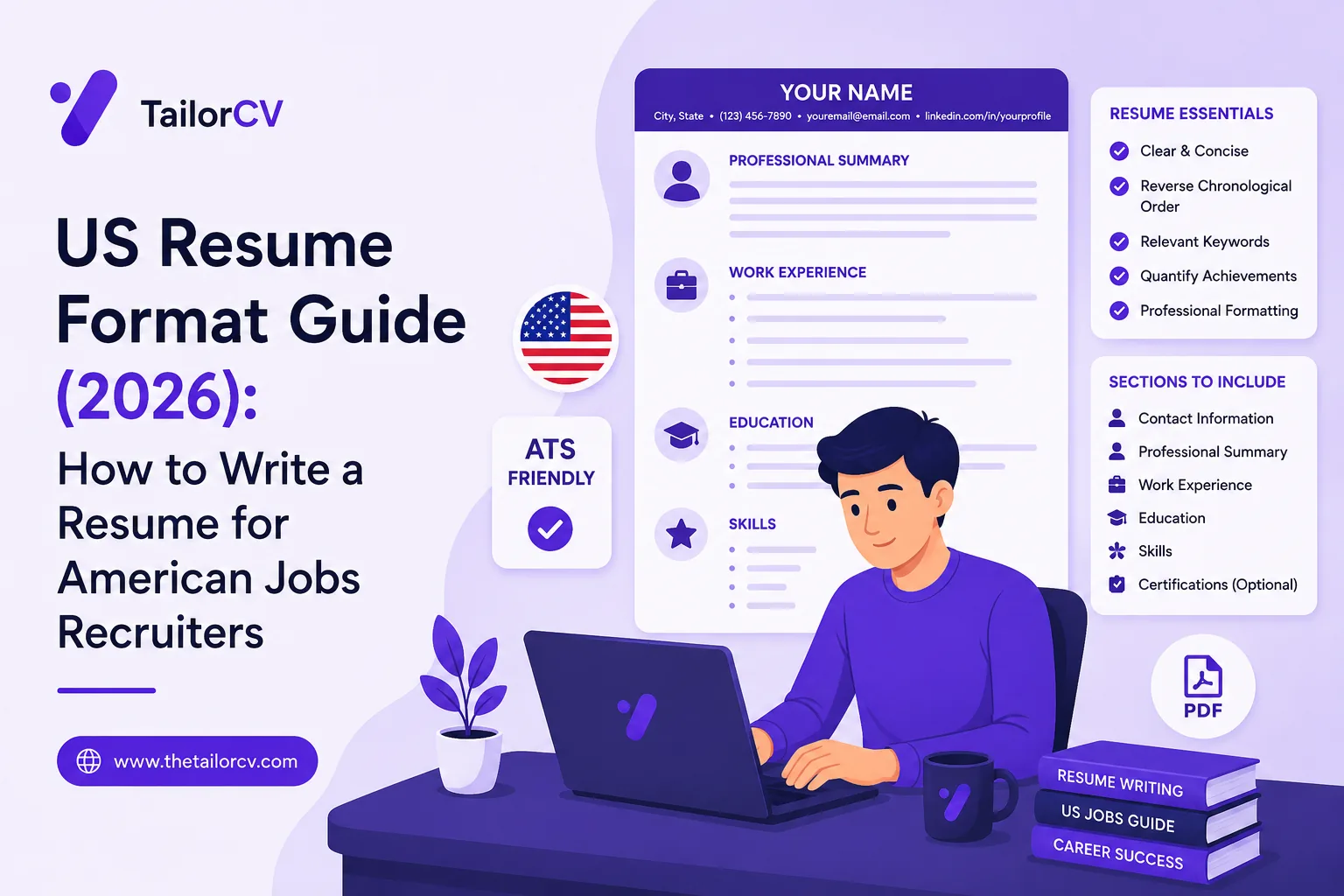
Key Takeaways
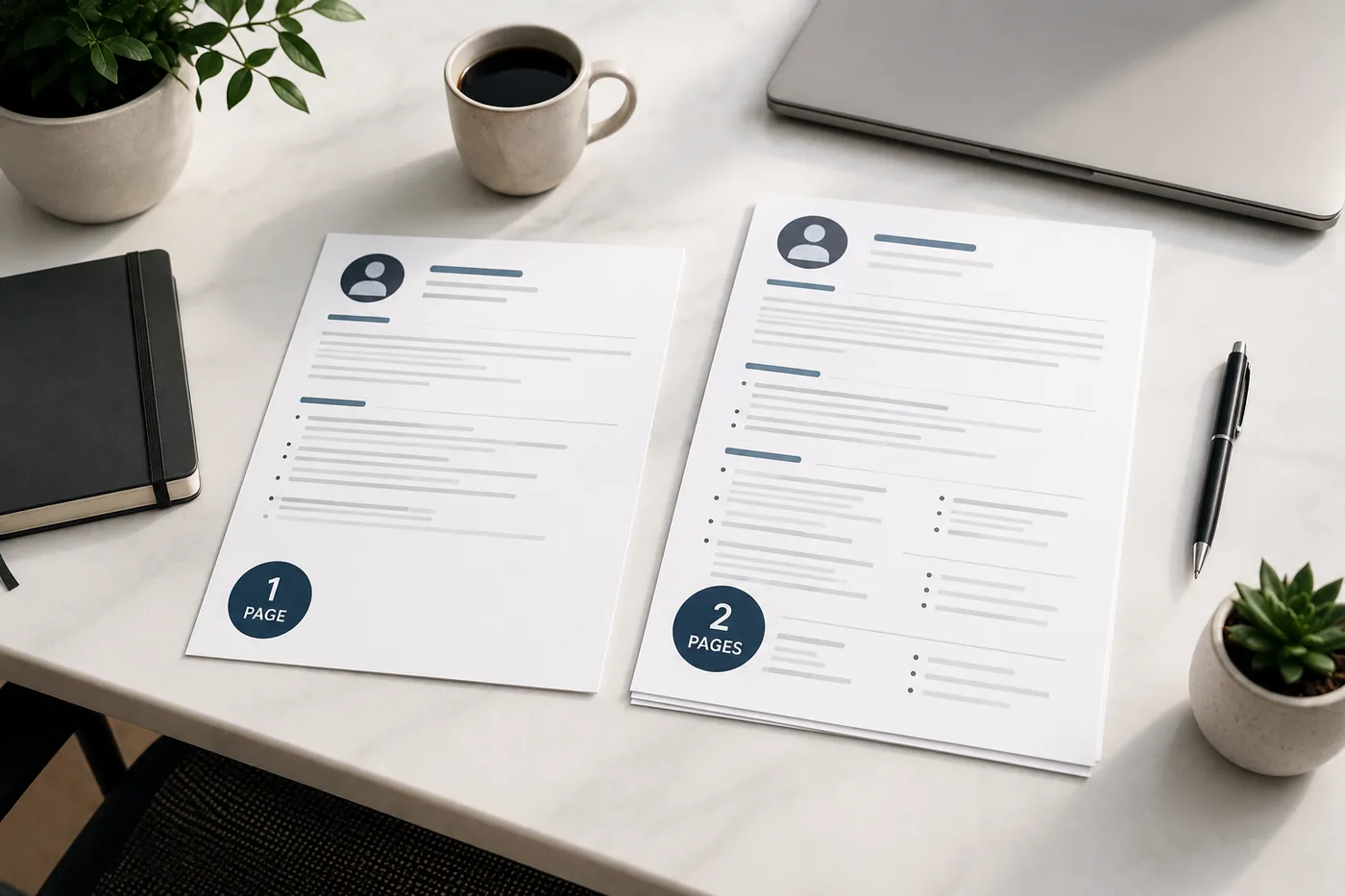
- Resumes for early-career professionals should be one page, while experienced candidates may extend to two pages.
- Include only essential personal information: name, phone number, email, and LinkedIn profile; avoid photos and personal details like age.
- Start bullet points with strong action verbs and quantify achievements to provide context and scale.
- Organize your resume with clear sections: Contact Information, Summary/Objective, Education, Work Experience, Skills, and optional Additional Sections.
- Optimize your resume for Applicant Tracking Systems by using standard headings, avoiding graphics, and incorporating relevant keywords from the job description.
Writing a resume for the American job market can be a daunting task, especially for new graduates, international candidates, and those seeking visa sponsorships. The U.S. has specific resume norms that differ significantly from practices in other countries. Understanding these norms is crucial for crafting a compelling resume that stands out to hiring managers and passes through Applicant Tracking Systems (ATS). This guide will walk you through the essential components of a U.S. resume, providing practical tips and examples to help you create a document that effectively showcases your skills and experiences.
Understanding U.S. Resume Norms
In the U.S., resumes typically follow a specific format and structure. Here are some key points to keep in mind:
| Rule | What it means |
|---|---|
| Length | Early-career professionals should aim for a one-page resume. More experienced candidates can extend to two pages if necessary |
| Personal Information | Do not include a photo, age, or marital status. Just your name, phone number, email address, and LinkedIn profile link are usually sufficient |
| Format | Use a clean, professional layout with clear headings and bullet points for easy readability |
| Action Verbs | Start each bullet point with a strong action verb to convey your achievements and responsibilities effectively |
| Quantification | Whenever possible, quantify your accomplishments to provide context and scale (e.g., “Increased sales by 20% in Q2”) |
Essential Components of a U.S. Resume
1. Contact Information
Your resume should start with your contact information at the top. Include:
- Full Name
- Phone Number (use U.S. format: (XXX) XXX-XXXX)
- Email Address
- LinkedIn Profile URL (optional but recommended)
2. Summary or Objective Statement
A brief summary or objective statement can set the tone of your resume. Tailor this section to reflect your career aspirations and what you bring to the table. Here’s an example:
Objective: "Detail-oriented marketing graduate with a passion for digital marketing and a proven track record in social media campaigns. Seeking to leverage skills in a dynamic marketing role at XYZ Company."
3. Education
List your educational background, starting with the most recent. Include:
- Degree(s) obtained
- Institution name
- Graduation date (or expected graduation date)
- Relevant coursework or honors (if applicable)
Example:
Bachelor of Arts in Marketing
University of California, Los Angeles (UCLA)
Graduated: June 2026
Relevant Coursework: Digital Marketing, Consumer Behavior, Marketing Analytics
4. Work Experience
This is the most crucial section of your resume. List your work experience in reverse chronological order. Each entry should include:
- Job title
- Company name
- Location (City, State)
- Dates of employment
- Bullet points detailing your responsibilities and achievements
Example:
Marketing Intern
ABC Marketing Agency, Los Angeles, CA
June 2025 – August 2025
- Developed and executed social media campaigns, increasing engagement by 30% over three months.
- Assisted in the creation of marketing materials that contributed to a 15% rise in client inquiries.
5. Skills
Include a skills section that highlights your relevant competencies. Focus on both hard and soft skills that match the job description. Examples include:
- Digital Marketing
- Data Analysis
- Communication
- Project Management
6. Additional Sections
Depending on your background, you might want to include additional sections such as:
- Certifications: List any relevant certifications (e.g., Google Analytics Certified).
- Volunteer Work: Highlight any volunteer experience, especially if it relates to the job you are applying for.
- Languages: If you speak multiple languages, include this information as it can be an asset in diverse workplaces.
Making Your Resume ATS-Friendly
Many employers use ATS to filter resumes before they reach human eyes. To optimize your resume for ATS:
- Use standard headings (e.g., "Work Experience," "Education").
- Avoid images and graphics, as ATS cannot read them.
- Use keywords from the job description to help your resume get noticed.
- Check your ATS score using our free ATS score checker.
Tailoring Your Resume for Specific Jobs
A one-size-fits-all approach will not work in the competitive U.S. job market. Tailor your resume for each application by:
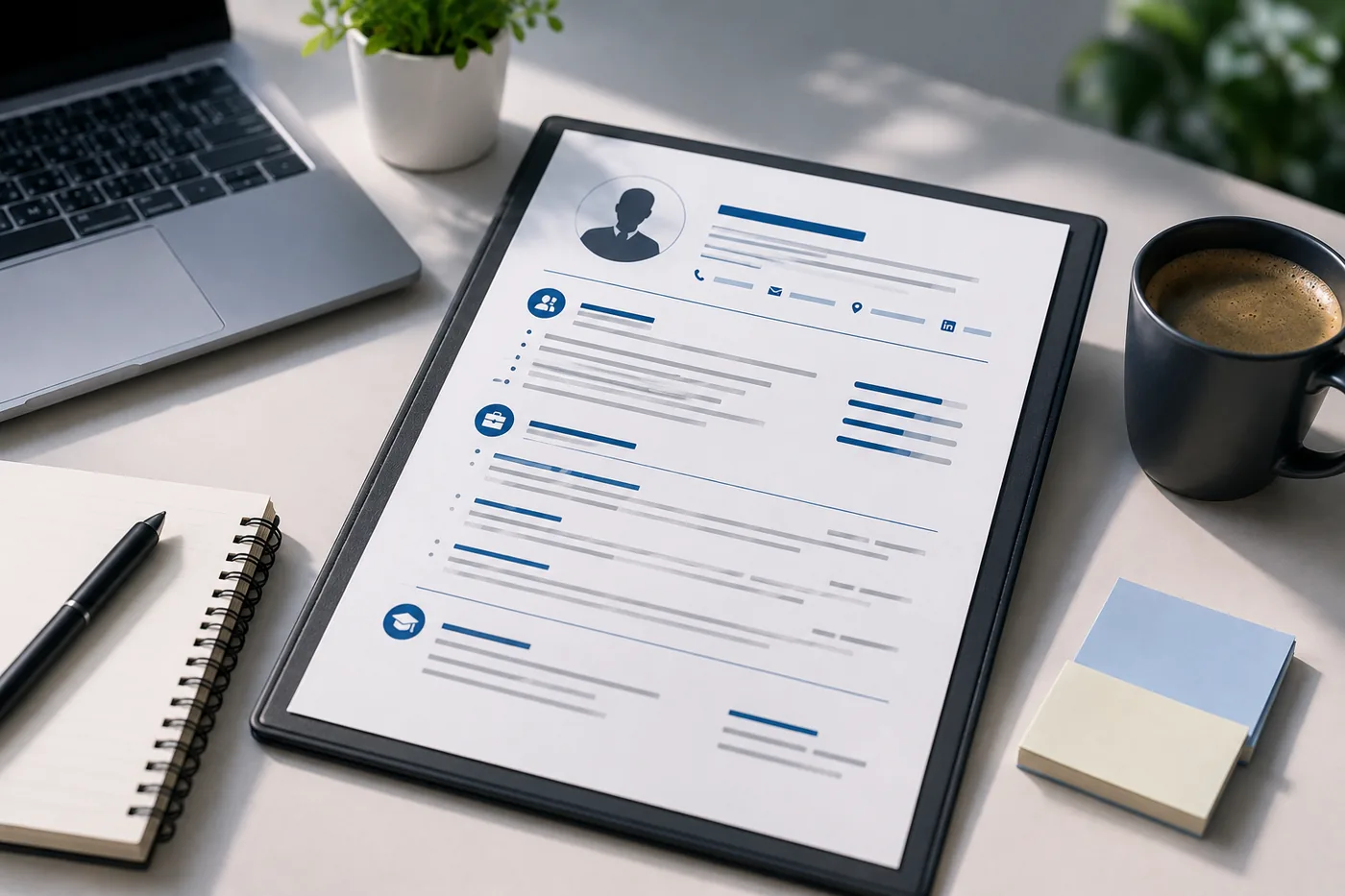
Your resume after optimization
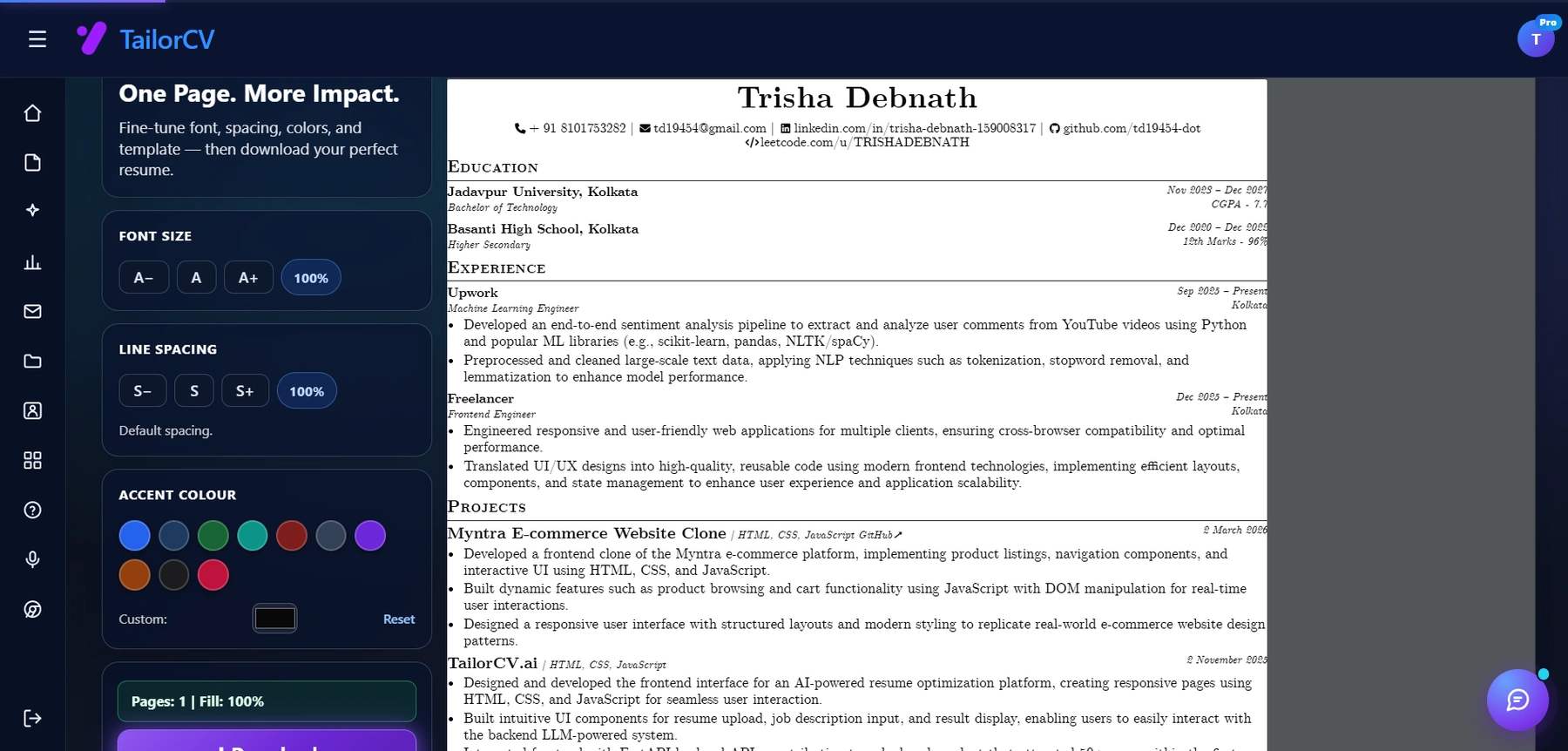
This is the resume after tailoring - the content is already matched, and these controls are how you fit it onto one page.
- Analyzing the job description for keywords and required skills.
- Adjusting your summary and experience sections to align with the job’s expectations.
- Using our guide on resume matching with job description for detailed strategies.
Writing a Cover Letter
A well-crafted cover letter can significantly enhance your application. Use our AI cover letter generator to create a tailored cover letter that complements your resume.
Preparing for Interviews
Once your resume secures you an interview, preparation is key. Consider using our AI mock interview tool to practice common interview questions and improve your confidence.
Common Resume Mistakes to Avoid
Avoiding common pitfalls can significantly enhance your resume's effectiveness. Here are some key mistakes to steer clear of:
-
Using a One-Size-Fits-All Approach: Many applicants submit the same resume for multiple positions. This generic approach can lead to rejection. Tailor your resume to each specific job by incorporating relevant keywords and experiences. For more insights, check out How Recruiters Spot Generic Resumes - And Reject Them in 6 Seconds.
-
Ignoring Formatting Guidelines: A cluttered or overly complex format can distract from your qualifications. Stick to standard fonts like Arial or Times New Roman, use bullet points for clarity, and ensure consistent formatting throughout.
-
Overloading on Text: A resume should be concise. Aim for a one-page document (or two pages if you have extensive experience). Use clear, impactful language and avoid long paragraphs.
-
Neglecting Proofreading: Spelling and grammatical errors can create a negative impression. Always proofread your resume multiple times and consider asking a friend or using tools available at TailorCV.
-
Omitting Important Information: Ensure that all relevant experience, skills, and achievements are included. Don’t forget to mention certifications, volunteer work, or side projects that demonstrate relevant skills.
How to Format Your Resume for Different Job Types
Different job types may require distinct resume formats. Here’s how to adapt your resume based on the position you’re applying for:
-
Traditional Corporate Roles: Use a reverse-chronological format, focusing on your most recent job experiences. Highlight measurable achievements and relevant skills.
-
Creative Positions: For roles in creative fields (like design or marketing), consider a visually appealing layout that showcases your creativity while still maintaining professionalism. Include a link to your portfolio.
-
Technical Positions: Emphasize technical skills and certifications prominently. Use specific keywords related to the technologies and methodologies relevant to the job.
-
Entry-Level Positions: If you lack extensive experience, focus on education, internships, and relevant coursework. Highlight transferable skills gained through part-time jobs or volunteer work.
-
Career Changers: If you're transitioning to a new field, consider a functional resume format that emphasizes your transferable skills rather than your work history.
Quick Checklist for a Winning Resume
Before submitting your resume, ensure you’ve covered all the bases:
- unchecked: Contact Information: Is your contact information up to date and professional?
- unchecked: Objective or Summary: Have you included a strong objective or summary that aligns with the job?
- unchecked: Experience: Are your work experiences listed in reverse chronological order with clear job titles and dates?
- unchecked: Achievements: Have you quantified your achievements with metrics where possible?
- unchecked: Skills Section: Does your skills section reflect the keywords from the job description?
- unchecked: Formatting: Is the formatting consistent throughout? Are there no typos or grammatical errors?
- unchecked: Length: Is your resume one page (or two pages for extensive experience)?
- unchecked: Tailored Content: Have you tailored your resume for this specific job? For more on this, read How Much Should You Change Your Resume for Every Job?.
Step-by-Step Guide to Writing an Impactful Resume
-
Research the Job Description: Identify key skills and experiences that the employer values. Make a list of these requirements and note how your background aligns.
-
Choose the Right Format: Select a resume format that highlights your strengths—reverse-chronological for experience, functional for skills, or combination for a balanced view.
-
Craft a Compelling Summary: Write a summary statement that encapsulates your professional identity and aligns with the job. Use strong action verbs and specific achievements.
-
Detail Your Work Experience: List your past jobs with bullet points that focus on achievements rather than duties. Use quantifiable outcomes to demonstrate your impact.
-
Highlight Relevant Skills: Create a skills section that includes both hard and soft skills relevant to the job. Be sure to use keywords from the job description.
-
Include Additional Sections: Depending on your experience, consider adding sections for certifications, volunteer work, or professional affiliations to bolster your resume.
-
Final Review and Tailoring: Before sending your resume, review for clarity and impact, and ensure it’s tailored to the job. Use tools at TailorCV to check for ATS compatibility.
Scenarios: Resume Adjustments Based on Job Changes
-
Scenario: Job Hopping: If you’ve changed jobs frequently, consider combining roles or focusing on skills gained rather than the number of positions. For effective strategies, refer to How to Handle Job Hopping on Your Resume.
-
Scenario: Returning to Work: If you’ve taken a career break, address this in your cover letter and briefly mention any relevant activities during your time off in your resume, such as freelance work or volunteering.
-
Scenario: Applying for Executive Roles: For higher-level positions, emphasize leadership roles and strategic accomplishments. Use a more sophisticated format and include a professional summary that highlights your vision and leadership style.
-
Scenario: Entry-Level Applicants: If you’re just starting out, focus on internships, academic projects, and relevant coursework. Highlight any volunteer experience that demonstrates your commitment and skills.
By following these guidelines, you can create a polished and effective resume that stands out to potential employers in the competitive U.S. job market. For more tips on writing a compelling cover letter, visit TailorCV's Cover Letter Guide.
Related Guides
Keep building your US job search with these related TailorCV guides:
- How to Get a Job in the USA in 2026: A Step-by-Step Guide
- Resume for H-1B Visa Sponsorship Jobs: How to Stand Out
- How ATS Works in the USA: Beating Applicant Tracking Systems for US Jobs
- How to Write a Cover Letter for US Jobs (With Structure and Examples)
- How to Handle Job Hopping on Your Resume - Tailoring Strategies That Actually Work (2026)
- Resume Tailoring for Job Seekers Over 50 - How to Overcome Age Bias and Win Interviews in 2026
- 10 Generic Resume Mistakes That Are Costing You Interviews in 2026
- How Much Should You Change Your Resume for Every Job? (The Honest Answer)
You can also check your resume's ATS score for free, generate a tailored cover letter, or build a portfolio website in minutes.
Frequently Asked Questions
How do I format my resume for U.S. employers?
Your resume should be formatted cleanly with clear headings and bullet points. Avoid using photos, personal information like age or marital status, and keep it to one page for early-career positions.
What should I include in my resume if I have no work experience?
Focus on your education, skills, and any internships, volunteer work, or relevant projects. Highlight transferable skills and use quantifiable achievements where possible.
How can I make my resume stand out?
Tailor your resume for each job application by using keywords from the job description, showcasing relevant achievements, and using a clean, professional format.
Is it necessary to include references on my resume?
References are typically provided upon request, so you can simply state "References available upon request" at the bottom of your resume.
What is a good ATS score?
A good ATS score is typically 80% or higher. You can check your score using our ATS score checker to ensure your resume meets industry standards.
Does your formatting survive the parser?
Upload your resume and see what an ATS actually reads back.
Drop your resume here or choose a file
PDF only. Max 2 MB.
We never share your data or use it to train AI models.

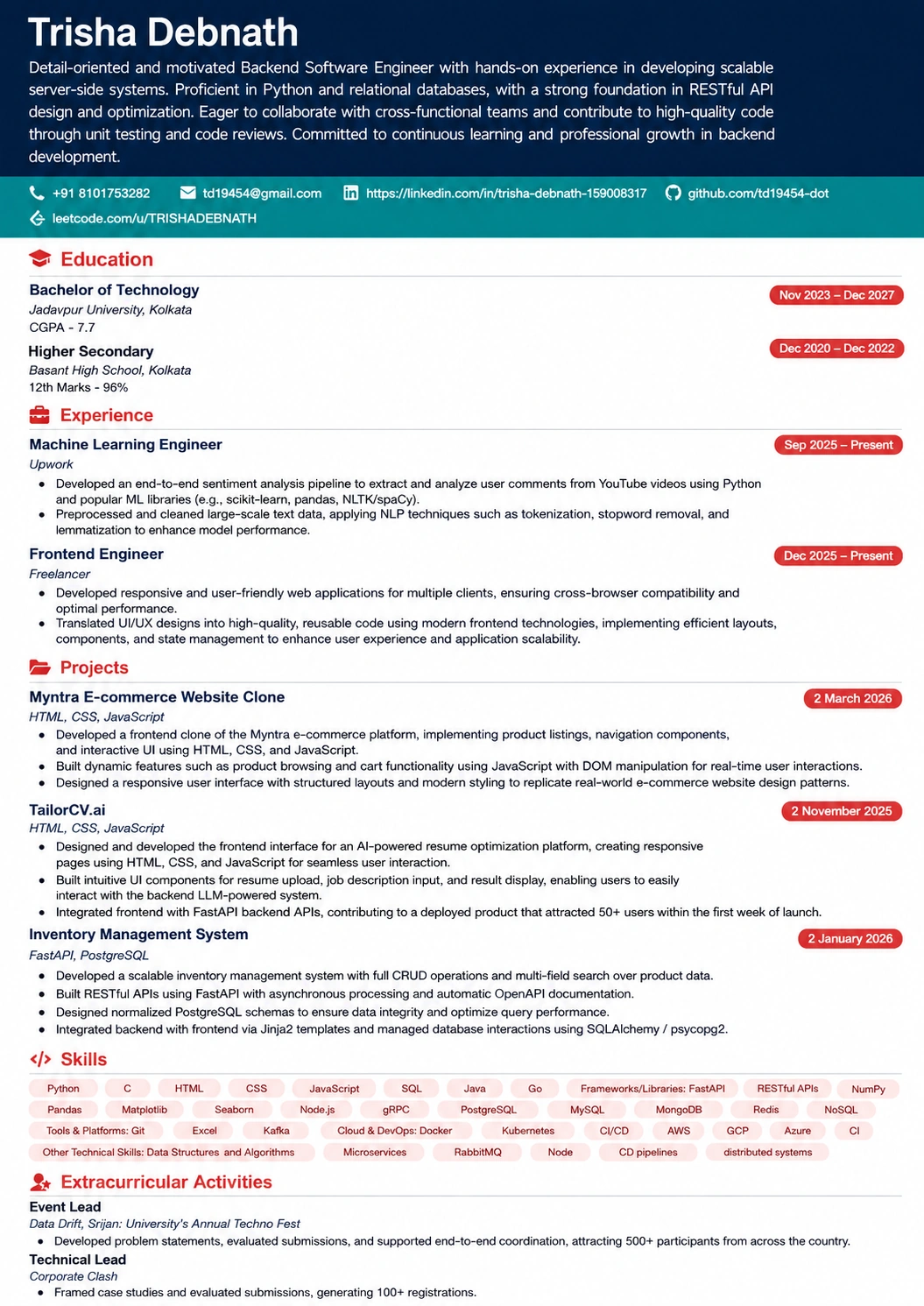
A layout that parses cleanly
Single column, standard headings, no text boxes — the formatting rules in this guide, already applied.
Was this guide useful?
Be the first to rate it.