 SS
SS

Key Takeaways
- Personal branding is essential for professionals in 2026, as it shapes how recruiters and clients perceive you online.
- A strong personal brand communicates your expertise, builds genuine relationships, and positions you as the go-to person in your field.
- Define your positioning by identifying your expertise, target audience, and unique perspective to create a specific and memorable brand.
- Optimize your LinkedIn profile with a professional photo, a clear headline, and consistent content to enhance your personal brand visibility.
- Consistently create helpful content that demonstrates your expertise, as regular engagement builds reputation and attracts opportunities over time.
Personal branding is no longer optional for ambitious professionals. In 2026, your online presence is often the first thing recruiters, clients, and collaborators encounter. A strong personal brand attracts opportunities to you - inbound job offers, speaking invitations, partnerships, and clients - rather than you constantly chasing them.
Personal branding is not about self-promotion or vanity. It is about clearly communicating your expertise, building genuine professional relationships, and being known for something specific in your field.
This guide covers how to build a meaningful personal brand that advances your career.
A personal brand complements a strong resume and LinkedIn profile. Optimize your resume with the TailorCV ATS score checker and your profile with the LinkedIn profile optimization guide.
What Is a Personal Brand?
Your personal brand is what people think and say about you professionally when you are not in the room. It is the combination of:
- Your expertise and what you are known for
- Your online presence (LinkedIn, portfolio, content)
- Your reputation among peers and in your industry
- The value you consistently provide
A strong personal brand makes you the obvious choice - the person who comes to mind when someone needs expertise in your area.
Step 1: Define Your Positioning
Before creating content, define what you want to be known for. Answer:
- What is my area of expertise?
- What specific problems do I solve?
- Who is my audience (peers, recruiters, clients, industry)?
- What perspective or angle is uniquely mine?
Your positioning should be specific. "software engineer" is generic. "Backend engineer who writes about building reliable payment systems at scale" is a brand.
Positioning Examples
- "data scientist demystifying machine learning for business audiences"
- "UX designer focused on accessibility and inclusive design"
- "DevOps engineer sharing practical Kubernetes and cloud cost optimization"
- "Marketing leader teaching B2B SaaS growth strategies"
Step 2: Optimize Your LinkedIn Presence
LinkedIn is the primary platform for professional personal branding. Ensure:
- Professional photo and branded banner
- A headline that states your positioning, not just your job title
- An About section that communicates your expertise and value
- Featured content showing your best work
- Consistent activity
Read the LinkedIn profile optimization guide for the complete profile setup.
Step 3: Create Content Consistently
Content is how you demonstrate expertise at scale. You do not need to go viral - you need to be consistently helpful to your specific audience.
Content Types That Build Authority
- How-to posts: Teach something specific you know well
- Lessons learned: Share insights from your projects and mistakes
- Industry commentary: Add your perspective on news and trends
- Behind-the-scenes: Show your real work and process
- Frameworks and tips: Distill your expertise into actionable advice
Content Consistency Over Virality
Posting 2 valuable posts per week consistently for a year builds a far stronger brand than one viral post. Consistency compounds - your audience grows, your reputation builds, and opportunities accumulate.
Where to Publish
- LinkedIn (best for most professionals)
- X (Twitter) - for tech, startups, real-time discussion
- A personal blog or newsletter - for depth and ownership
- YouTube - for those comfortable with video
- Industry-specific platforms (GitHub for developers, Behance/Dribbble for designers, Medium/Dev.to for writers)
Step 4: Engage and Network Genuinely
Personal branding is not just broadcasting - it is building relationships.
- Comment thoughtfully on others' content (not just "Great post!")
- Support peers' work and celebrate their wins authentically
- Reach out to people you admire with genuine interest
- Participate in industry communities and discussions
- Help others without expecting immediate returns
Read the networking tips for job search guide for relationship-building strategies.
Step 5: Build Supporting Assets
Beyond LinkedIn and content, build assets that reinforce your brand:
- Portfolio website - Showcases your work (essential for designers, developers, writers). Read the portfolio building guide.
- GitHub profile - For developers, an active, well-organized GitHub is part of your brand.
- Speaking and writing - Conference talks, podcast appearances, guest articles.
- A consistent professional resume - Keep it updated with the TailorCV ATS score checker.
Step 6: Be Authentic and Consistent
The strongest personal brands are authentic. Do not copy someone else's voice or pretend to be something you are not. Your genuine perspective, experience, and personality are what differentiate you.
What optimizing actually does to your resume
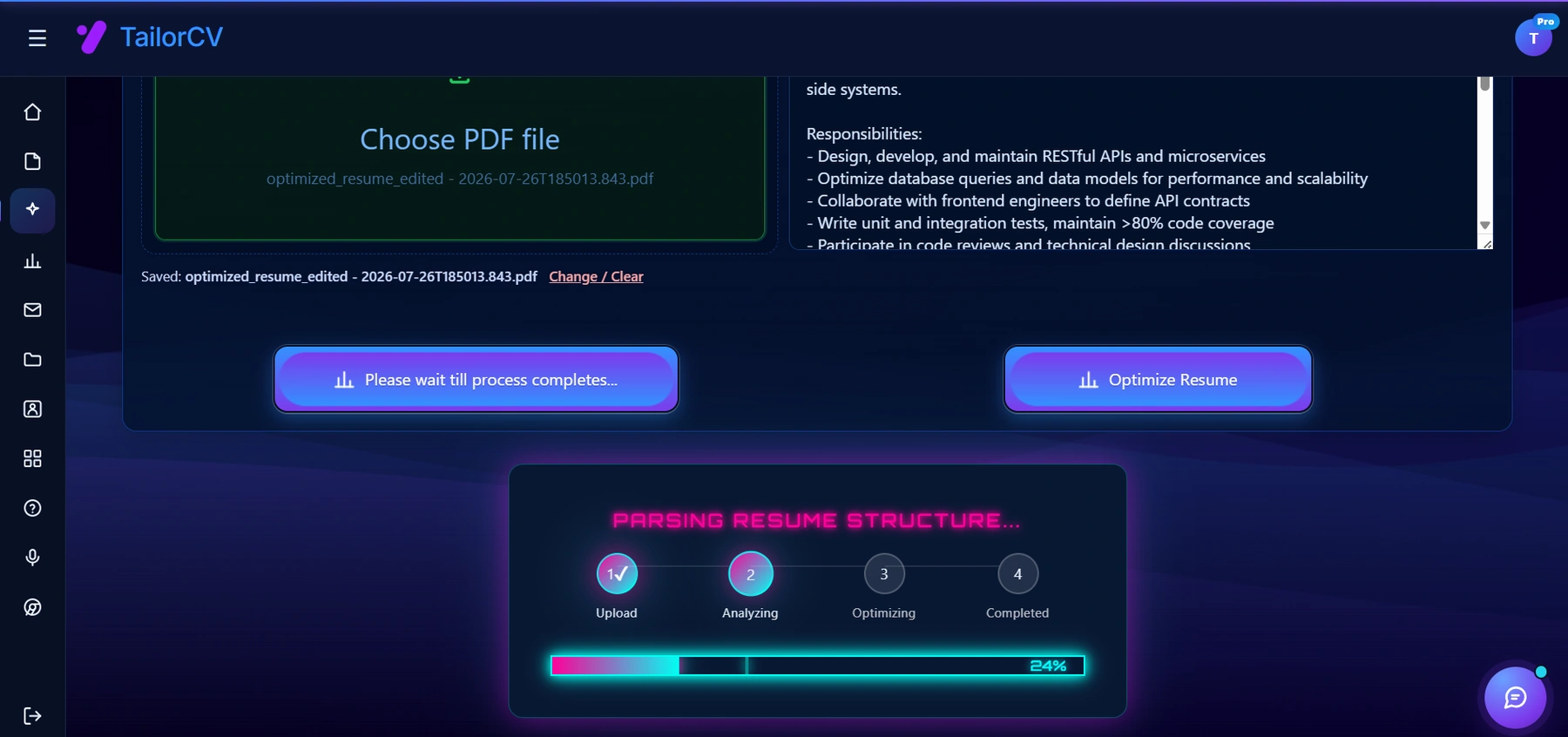
Optimising runs against the specific job description you paste in, not in the abstract.
Consistency matters across:
- Your message and positioning
- Your visual identity (photo, colors, style)
- Your posting cadence
- Your values and how you show up
Measuring Your Personal Brand
Signs your personal brand is working:
- Inbound opportunities (recruiters, clients, collaborations) reaching out to you
- Growing, engaged audience
- People referencing or sharing your content
- Being invited to speak, write, or contribute
- Peers recognizing your expertise
These take months to build. Personal branding is a long game with compounding returns.
Common Personal Branding Mistakes
Mistake 1: Inconsistency
Posting for 2 weeks then disappearing for 3 months kills momentum. Consistency is everything.
Mistake 2: Pure self-promotion
A brand that only talks about itself is unfollowable. Provide value to your audience first.
Mistake 3: Trying to appeal to everyone
A brand for everyone is a brand for no one. Pick a specific positioning and audience.
Mistake 4: Inauthenticity
Copying others or performing a fake persona is transparent and unsustainable. Be genuinely yourself.
Mistake 5: Neglecting the fundamentals
A great personal brand cannot compensate for a weak resume or profile. Get the foundations right first.
Related Guides
- First 90 Days at a New Job
- How to Get a Promotion
- How to Ask for a Raise
- Why Am I Not Getting Interviews for Jobs I'm Qualified For?
- Career Change to Tech
- How to Build a Professional Portfolio
- How to Get Your First Tech Job
- Freelancing vs Full-Time Employment
- How to Decline a Job Offer Professionally
- How to Prepare for Campus Placement
- How to Quit Your Job Professionally
- How to Use LinkedIn for Job Search
- ATS Mistakes Experienced Professionals Make (And Why Your Resume Stops Working After 5+ Years)
- MBA Resume 2026 - Complete Guide with Examples
- Behavioral Interview Questions and Answers - Complete 2026 Guide
- How to List Education on a Resume in 2026 - Complete Guide with Examples
- How to Prepare for a Job Interview in 2026 - Complete Guide for Every Industry
Make This Practical
Turn the career advice into a stronger application system. Start by checking your resume with the free ATS score checker, align it with the role using How to Tailor Your Resume for Every Job, and keep your profile consistent with LinkedIn Resume Tailoring Sync.
When you are ready to apply, build the supporting pieces around the resume. Use the AI cover letter generator for targeted outreach, practice with the AI mock interview tool, and review Why Your Resume Gets No Responses if applications are not converting.
Conclusion
Personal branding in 2026 is about clearly communicating your expertise, consistently providing value, and building genuine relationships in your field. It attracts opportunities to you over time and compounds throughout your career.
Start with strong foundations: optimize your resume with the TailorCV ATS score checker, optimize your LinkedIn profile, and build your portfolio. Then define your positioning, create content consistently, and engage genuinely.
Frequently Asked Questions
What are the key components of a personal brand in 2026?
A personal brand in 2026 consists of your expertise, online presence, reputation, and the value you provide. It's essential to define what you want to be known for and to ensure that your online profiles, especially on LinkedIn, reflect this positioning effectively. Establishing a strong online presence helps others recognize you as a thought leader in your field.
How can I effectively use LinkedIn for personal branding?
To enhance your personal branding on LinkedIn, focus on optimizing your profile with a compelling summary and relevant experience. Utilize your profile as a portfolio by following our guide on how to turn your LinkedIn profile into a portfolio website. Engaging with content and connecting with industry peers will further solidify your brand.
What strategies can I use to create content that builds my personal brand?
Creating valuable content involves sharing insights related to your expertise and addressing the specific problems your audience faces. Start by answering questions that are frequently asked in your industry and consider writing articles or posts that showcase your unique perspective. For more tips on building your presence, check our guide on the first 90 days at a new job.
How do I define my audience for personal branding?
Identifying your audience is crucial for effective personal branding. Ask yourself who you want to reach - peers, recruiters, or clients - and tailor your messaging accordingly. Understanding your target audience will help you create content that resonates with them and positions you as a go-to expert in your field.
Why is personal branding essential for career growth in 2026?
In 2026, personal branding is vital because it creates opportunities that come to you rather than you having to chase them. A strong personal brand can lead to inbound job offers, speaking engagements, and collaborations. For a deeper understanding of how personal branding can impact your career, explore our guide on how to get a promotion.
What is your resume scoring right now?
Scan it against a job description and get your ATS match score in about a minute.
Drop your resume here or choose a file
PDF only. Max 2 MB.
We never share your data or use it to train AI models.

Was this guide useful?
Be the first to rate it.