 SS
SS
Key Takeaways
- Secure your next step before resigning; always have a signed offer letter if moving to a new job.
- Inform your manager first about your resignation in a private meeting, avoiding casual announcements or text messages.
- Keep the resignation conversation brief and positive, clearly stating your last day and expressing appreciation for your time at the company.
- Write a formal resignation letter that is concise, professional, and free of complaints to document your departure.
- Maintain professionalism during your notice period by continuing to work diligently and assisting with the transition.
How you leave a job matters almost as much as how you perform in it. The world is smaller than it seems - former managers become references, ex-colleagues become future hiring managers, and industries have long memories. Quitting professionally protects your reputation and your network. Quitting badly can follow you for years.
Before you quit, make sure your next step is secure. If you are job searching, optimize your resume with the TailorCV ATS score checker and read the salary negotiation guide to ensure your new offer is solid.
Before You Quit: Get Your Next Step Secured
The golden rule: do not resign until you have a signed offer letter in hand (if you are moving to a new job). Verbal offers fall through. Get it in writing before you give notice.
If you are quitting without a job lined up, make sure you have:
- Financial runway (ideally 6+ months of expenses)
- A clear plan for what's next
- Health insurance continuity if applicable
Step 1: Tell Your Manager First (In Person or Video)
Your direct manager should hear it from you first - before colleagues, before HR, before it leaks. Schedule a private meeting (in person or a video call for remote roles).
Do not:
- Announce your resignation to colleagues before telling your manager
- Resign over text, Slack, or a casual mention
- Let your manager hear it secondhand
Step 2: The Resignation Conversation
Keep it brief, positive, and clear. You do not need to over-explain or justify.
Script
"Thank you for meeting with me. I wanted to let you know that I've decided to resign from my position. My last day will be [date], giving [notice period] notice. I've really valued my time here and what I've learned, and I want to make this transition as smooth as possible."
Key points:
- Be clear and direct (do not be vague or wishy-washy)
- State your last day
- Express genuine appreciation
- Offer to help with the transition
What If They Ask Why?
You can be honest but diplomatic:
- "I've found an opportunity that aligns better with my long-term goals."
- "I'm looking for a new challenge in [area]."
You do not have to share salary details, the new company, or air grievances. Stay positive even if your reasons are negative. Never badmouth the company, your manager, or colleagues.
Step 3: Write a Resignation Letter
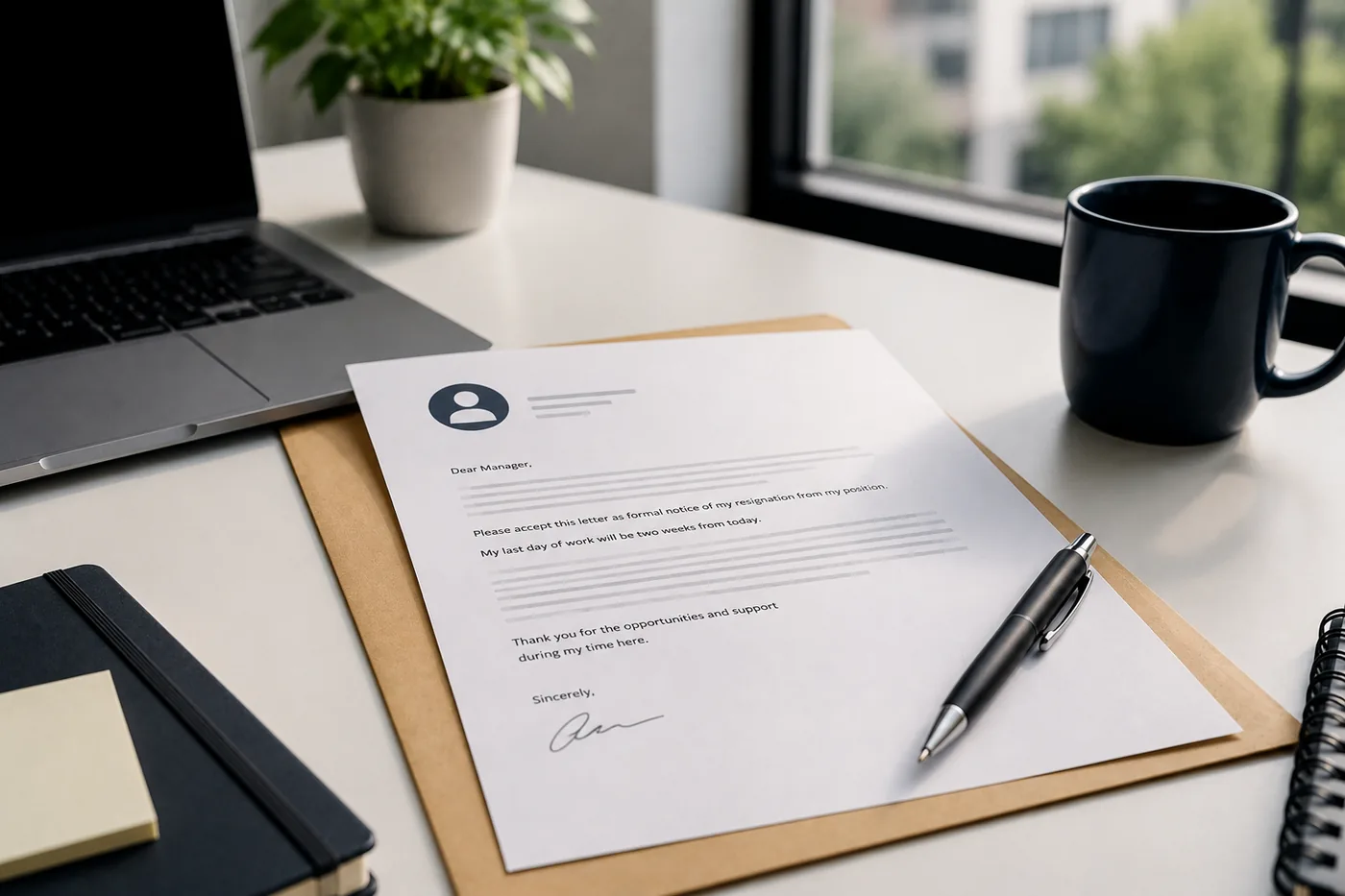
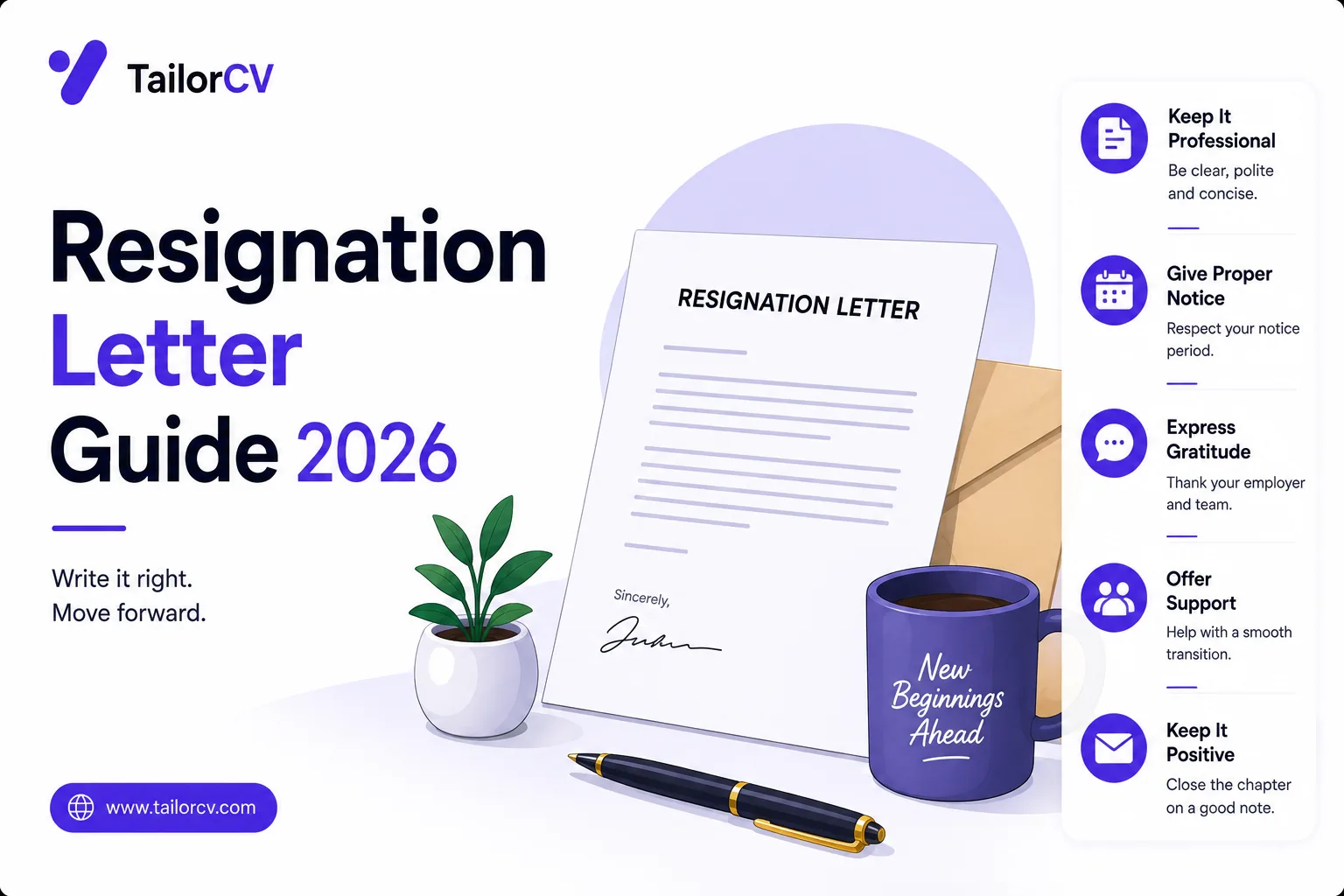
A formal resignation letter documents your departure. Keep it short and professional.
Resignation Letter Template
[Date]
Dear [Manager's Name],
I am writing to formally notify you of my resignation from my position as [Job Title] at [Company]. My last day of work will be [date], in accordance with my [notice period] notice.
I am grateful for the opportunities I have had during my time at [Company], and I appreciate the support and experience I have gained. I am committed to ensuring a smooth transition and am happy to assist in handing over my responsibilities.
Thank you for your understanding.
Sincerely, [Your Name]
Keep it positive and free of complaints. This document may end up in your file and could be referenced later.
Step 4: Serve Your Notice Period Well
Your notice period is your last impression. Make it a good one.
- Continue working diligently - do not check out mentally
- Document your work and processes for your successor
- Offer to train your replacement or hand over to colleagues
- Complete or responsibly transition your projects
- Be gracious and helpful
Standard notice periods:
- Most professional roles: 2 weeks to 1 month
- Senior roles: 1-3 months
- Some countries/contracts: specific legal notice periods (check your contract)
Honor your contractual notice period unless there are exceptional circumstances.
Step 5: Handle Counteroffers Carefully
When you resign, your employer may make a counteroffer - more money, a promotion, or new responsibilities to keep you.
Before accepting a counteroffer, consider:
- Why did it take resigning to get this offer? (If they valued you, why not before?)
- Will the underlying reasons you wanted to leave actually change?
- Studies suggest a majority of people who accept counteroffers leave within 12 months anyway
- Your loyalty may now be questioned by your employer
Counteroffers are often about the cost and disruption of replacing you, not a genuine change in how you are valued. Accept one only if it genuinely addresses your reasons for leaving - and that is rare.
Step 6: Conduct a Graceful Exit
In your final days:
- Say genuine goodbyes to colleagues
- Thank people who helped you
- Connect with valuable contacts on LinkedIn before you lose access
- Return company property
- Complete the exit interview professionally (be constructive, not bitter)
- Leave your contact information for those who want to stay in touch
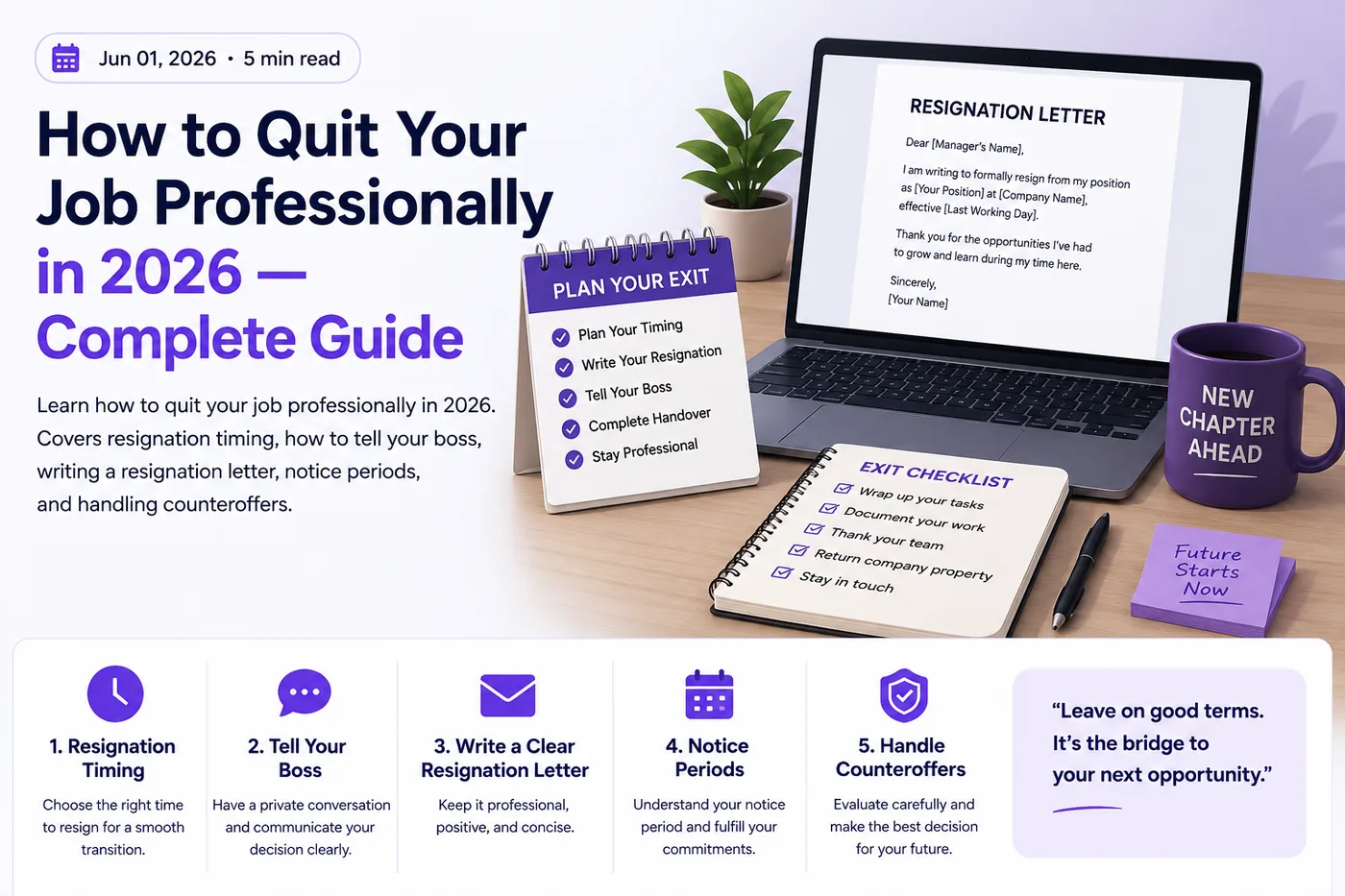
This guide covers exactly how to resign professionally: timing, the conversation, the resignation letter, notice periods, and handling counteroffers.
Your network is one of your most valuable career assets. Leave it stronger than you found it.
Common Quitting Mistakes
Mistake 1: Resigning before having a signed offer
Verbal offers fall through. Get it in writing first.
Mistake 2: Burning bridges
Venting frustrations, badmouthing, or checking out during notice damages your reputation permanently. The industry is small.
Mistake 3: Not giving adequate notice
Leaving without proper notice (when contractually required) is unprofessional and can affect references.
Mistake 4: Oversharing in the exit interview
Be constructive and professional. The exit interview is not the place to settle scores.
Mistake 5: Accepting a counteroffer reflexively
Counteroffers rarely fix the underlying reasons for leaving. Think carefully.
Related Guides
- How to Write a Two Weeks Notice
- How to Decline a Job Offer Professionally
- Cover Letter Guide
- How to Build a Professional Portfolio
- Networking Tips for Job Search
- How to Get a Job With No Experience
- How to Handle Job Rejection
- How to Negotiate a Salary Offer
- How to Use LinkedIn for Job Search
- How to Write a Cold Email to a Recruiter
- LinkedIn Profile Optimization Guide
- Remote Job Search Guide
- Behavioral Interview Questions and Answers - Complete 2026 Guide
- Career Change to Tech in 2026 - Complete Guide for Switchers
- Data Analyst vs Data Scientist in 2026 - Which Career Is Right for You?
- Freelancing vs Full-Time Employment in 2026 - Honest Comparison
- Ideal Resume Length in 2026 - One Page or Two? Complete Guide
- Personal Branding for Professionals in 2026 - Complete Guide
Make This Practical
Turn the career advice into a stronger application system. Start by checking your resume with the free ATS score checker, align it with the role using How to Tailor Your Resume for Every Job, and keep your profile consistent with LinkedIn Resume Tailoring Sync.
When you are ready to apply, build the supporting pieces around the resume. Use the AI cover letter generator for targeted outreach, practice with the AI mock interview tool, and review Why Your Resume Gets No Responses if applications are not converting.
Conclusion
Quitting professionally protects your reputation, references, and network. Secure your next step first, tell your manager directly, write a gracious resignation letter, serve your notice well, and leave on good terms. The way you exit is remembered long after you are gone.
If your departure is part of a job search, make sure your next move is strong: optimize your resume with the TailorCV ATS score checker, negotiate your new offer with the salary negotiation guide, and prepare for your fresh start.
Frequently Asked Questions
What should I do before quitting my job?
Before you quit your job, it's essential to secure your next step. Ensure you have a signed offer letter if you're moving to a new job, as verbal offers can fall through. If you're resigning without a new position, make sure you have a clear plan for what's next and ideally a financial runway of 6+ months of expenses. For more details, check out our guide on how to write a two weeks notice.
How do I inform my manager about my resignation?
You should inform your manager about your resignation in a private meeting, either in-person or via video call for remote roles. It's crucial that your manager hears the news from you first, rather than through colleagues or HR. Keeping the conversation brief and positive is key; you don’t need to provide extensive explanations.
What should I include in my resignation letter?
Your resignation letter should be concise and to the point. Include the date of your last working day, express gratitude for the opportunities you've had, and keep it professional. For guidance on crafting your letter, refer to our article on how to write a two weeks notice.
How should I handle a counteroffer from my employer?
If you receive a counteroffer, take time to evaluate it against your reasons for leaving. Consider whether the counteroffer addresses your concerns and if it aligns with your career goals. It's important to remain professional and express gratitude, regardless of your decision. For tips on declining offers, you can read our post on how to decline a job offer.
What if I don’t have another job lined up?
If you don’t have another job lined up, it’s crucial to have a clear plan for your next steps. Ensure you have financial stability, ideally a runway of 6+ months, and consider how you will maintain health insurance coverage. It's also a good time to enhance your job search tools, such as optimizing your resume with our free ATS score checker.
What is your resume scoring right now?
Scan it against a job description and get your ATS match score in about a minute.
Drop your resume here or choose a file
PDF only. Max 2 MB.
We never share your data or use it to train AI models.

Was this guide useful?
Be the first to rate it.