 TD
TD

Key Takeaways
- A UX designer resume in 2026 should demonstrate measurable outcomes of design decisions, such as improved task completion rates and user satisfaction scores.
- The competitive UX job market requires candidates to showcase a clear design process, research discipline, and quantified impact to stand out.
- Use clean resume templates and an ATS score checker to ensure your resume is optimized for applicant tracking systems.
- A well-structured UX designer resume should include a portfolio link, summary, skills, work experience, projects or case studies, education, and certifications.
- Effective resume bullet points should clearly articulate the design artifact, context, and resulting user or business impact.
A UX designer resume in 2026 must balance design craft with business impact. Companies do not hire designers to make things beautiful - they hire designers to make things easy, useful, and effective for real users. Your resume needs to prove that your design decisions improved measurable outcomes: task completion rates, conversion rates, user satisfaction scores, or support ticket volumes.
The UX job market is more competitive than it has ever been. Design tools have become easier to learn, which means more people claim UX skills. What separates strong candidates is evidence - a clear design process, research discipline, cross-functional collaboration, and quantified impact.
Before applying, use the ATS score checker to compare your resume against the job description. Use clean resume templates and read the resume optimization guide to ensure your resume passes parsing before a human reads it.
Best UX Designer Resume Format
- Header with portfolio link
- Summary
- Skills
- Work experience
- projects or case studies (if freelance or entry-level)
- education
- certifications
One page is preferred. Two pages are acceptable for senior designers with leadership, design systems, or research ops experience. The portfolio link is not optional - it is your primary evidence.
UX Designer Resume Summary
Formula:
UX designer with X years of experience in [product type or industry]. Led design for [product or feature] from [research to delivery]. Improved [conversion, task completion, NPS, support tickets, or satisfaction] by [metric].
Example for Experienced UX Designer
UX designer with 5 years of experience designing B2B SaaS dashboards, mobile applications, and consumer e-commerce flows. Led end-to-end design for a checkout redesign that increased conversion by 23% and a dashboard revamp that reduced user errors by 41%. Strong in user research, prototyping in Figma, usability testing, and cross-functional collaboration with engineering and product teams.
Example for Entry-Level UX Designer
UX designer with foundations in user research, wireframing, prototyping, and usability testing. Completed 4 end-to-end case studies covering mobile apps, e-commerce flows, and SaaS onboarding. Proficient in Figma, Maze, and UserTesting. Seeking a junior UX or product design role.
UX Designer Skills Section
Design Tools: Figma, Sketch, Adobe XD, InVision, Zeplin, Principle, Framer Research Methods: User interviews, usability testing, card sorting, tree testing, surveys, contextual inquiry, diary studies Prototyping: Low-fidelity wireframes, high-fidelity interactive prototypes, clickable Figma prototypes Design Systems: Component libraries, atomic design, design tokens, style guides Analytics: Google Analytics, Hotjar, FullStory, Mixpanel, Amplitude Collaboration: Jira, Confluence, Notion, Miro, FigJam, Linear Accessibility: WCAG 2.1, color contrast, screen reader testing, keyboard navigation Methods: Design thinking, Jobs-to-be-Done, double diamond, lean UX
Best ATS Keywords for UX Designer Resume
- User experience design
- Figma
- Wireframing
- Prototyping
- Usability testing
- User research
- Information architecture
- User flows
- Design system
- Interaction design
- Visual design
- Mobile design (iOS, Android)
- Responsive design
- Accessibility
- A/B testing
- Heuristic evaluation
- Cross-functional collaboration
- Product thinking
- Conversion rate optimization
- NPS / CSAT
How to Write UX Designer Resume Bullet Points
Formula:
Designed / Led / Conducted + [design artifact or research] + [context] + [user or business result]
Weak Bullet Points
- Created wireframes and prototypes
- Conducted user research
- Worked with developers to implement designs
- Improved the user interface
Strong Bullet Points
- Led end-to-end redesign of a 12-step enterprise onboarding flow, reducing new user time-to-first-value from 11 days to 3 days and increasing 14-day activation from 41% to 67%.
- Conducted 24 usability tests on a mobile checkout flow and identified 6 critical friction points - implementing fixes reduced checkout abandonment from 71% to 53%.
- Designed a component library of 80+ reusable Figma components with design tokens synced to the engineering design system, reducing design-to-development handoff time by 55%.
- Ran a tree testing study with 200 participants to diagnose navigation failures in a SaaS app, leading to a restructured IA that improved task success rate from 52% to 84%.
- Collaborated with 4 engineering teams on a mobile app redesign using FigJam workshops, delivering prototypes 3 weeks earlier than the previous release cycle.
UX Designer Resume Example
Senior UX designer HealthTech Platform | Jan 2023 - Present
- Owned the patient portal design for a telehealth platform used by 180K patients and 3K clinicians across 5 specialties.
- Led a 3-month research initiative including 30 interviews, 2 diary studies, and a card sort, producing a research synthesis report that reshaped the Q2 product roadmap.
- Redesigned the appointment booking flow, reducing drop-off from 62% to 38% and increasing completed bookings by 28K per month.
- Built and maintained a Figma design system adopted across 3 product squads, ensuring visual consistency and reducing component duplication.
- Presented design rationale and research insights monthly to C-suite executives and board members.
UX Case Study Format for Portfolio
Each portfolio case study should cover:
Your resume after optimization
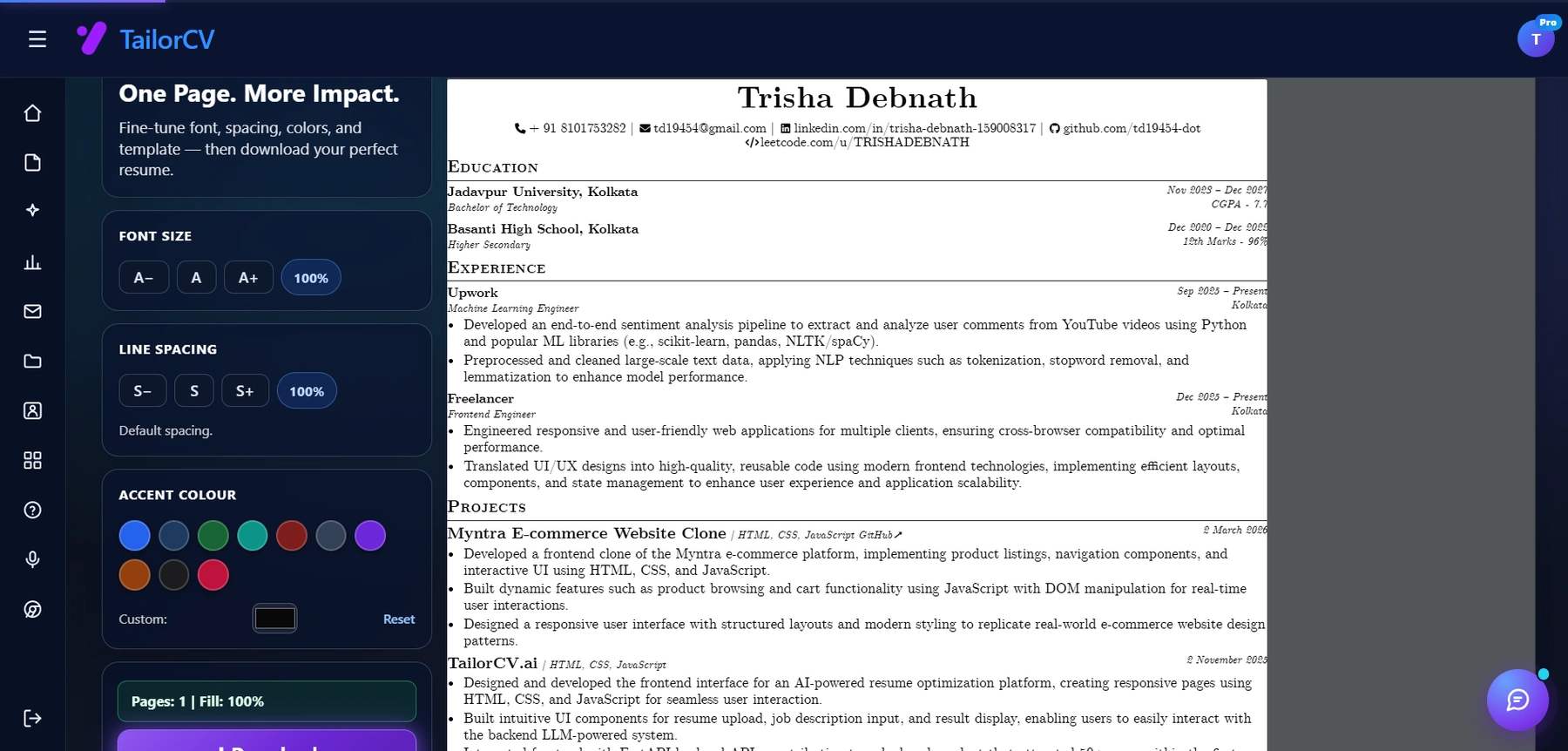
This is the resume after tailoring - the content is already matched, and these controls are how you fit it onto one page.
- Problem statement - what user problem were you solving?
- Research - how did you understand users and the problem?
- Insights - what did you learn?
- Design process - sketches, wireframes, iterations
- Final design - prototype or live screenshots
- Outcome - what improved?
Strong case study outcomes to mention:
- Task completion rate increase
- Error rate decrease
- Time-on-task reduction
- Conversion improvement
- Support ticket volume decrease
- NPS improvement
- Accessibility compliance achieved
Common UX Designer Resume Mistakes
Mistake 1: No portfolio link
A UX resume without a portfolio link will almost never advance. If your portfolio is not ready, fix that before applying.
Mistake 2: Describing deliverables, not outcomes
"Created wireframes, user flows, and prototypes" is a deliverable list. "Designed wireframes that led to a 34% increase in checkout conversion after A/B testing" is an outcome.
Mistake 3: No research evidence
Companies want designers who understand users, not just tools. Show user interviews, usability tests, surveys, or data analysis.
Mistake 4: Too much visual design focus
In product design roles, thinking process and business impact matter as much as visual execution. Balance both on your resume and in your portfolio.
Related Guides
- Graphic Designer Resume
- Electrical Engineer Resume
- Product Manager Resume
- Accountant Resume
- Android Developer Resume
- Backend Developer Resume
- Business Analyst Resume
- Chemical Engineer Resume
- Civil Engineer Resume
- Cloud Engineer Resume
- Consultant Resume
- Content Writer Resume
- Marketing Manager Resume 2026 - Complete Guide with Examples
- Interior Designer Resume Guide 2026
Make This Practical
If this topic connects to your work samples, turn the advice into a live proof page with the TailorCV portfolio builder. After publishing, add the link correctly using How to Add Your Portfolio Link to Your Resume, tighten the page with the Portfolio Checklist Before Applying, and make sure recruiters can contact you through a clean Portfolio Contact Section.
Your portfolio works best when it supports the resume, not when it replaces it. Run the resume through the free ATS score checker, choose an ATS-friendly resume template, and use Portfolio SEO: Get Found so your name, role, and strongest projects are easier to discover.
Conclusion
A strong UX designer resume in 2026 connects your design process to measurable user and business outcomes. Show your research methods, your design system contributions, and the metrics that changed because of your work.
Test your resume against the job description with the TailorCV ATS score checker. Once your resume is ready, prepare for portfolio walkthroughs and case study interviews using the interview preparation guide.
Frequently Asked Questions
What should I include in my UX designer resume summary for 2026?
Your UX designer resume summary should concisely highlight your years of experience, key skills, and the impact of your past work. For example, you might say, "UX designer with 5 years of experience in creating user-centered designs that improved task completion rates by 30%." This summary sets the tone for your resume and aligns with the need to demonstrate measurable outcomes.
How can I optimize my UX designer resume for ATS?
To optimize your resume for ATS, include relevant keywords from the job description and ensure a clean format. You can use the free ATS score checker to assess how well your resume matches the job requirements. This tool helps you identify areas for improvement, ensuring your resume passes initial screenings before it reaches hiring managers.
What is the best way to showcase my design portfolio in my resume?
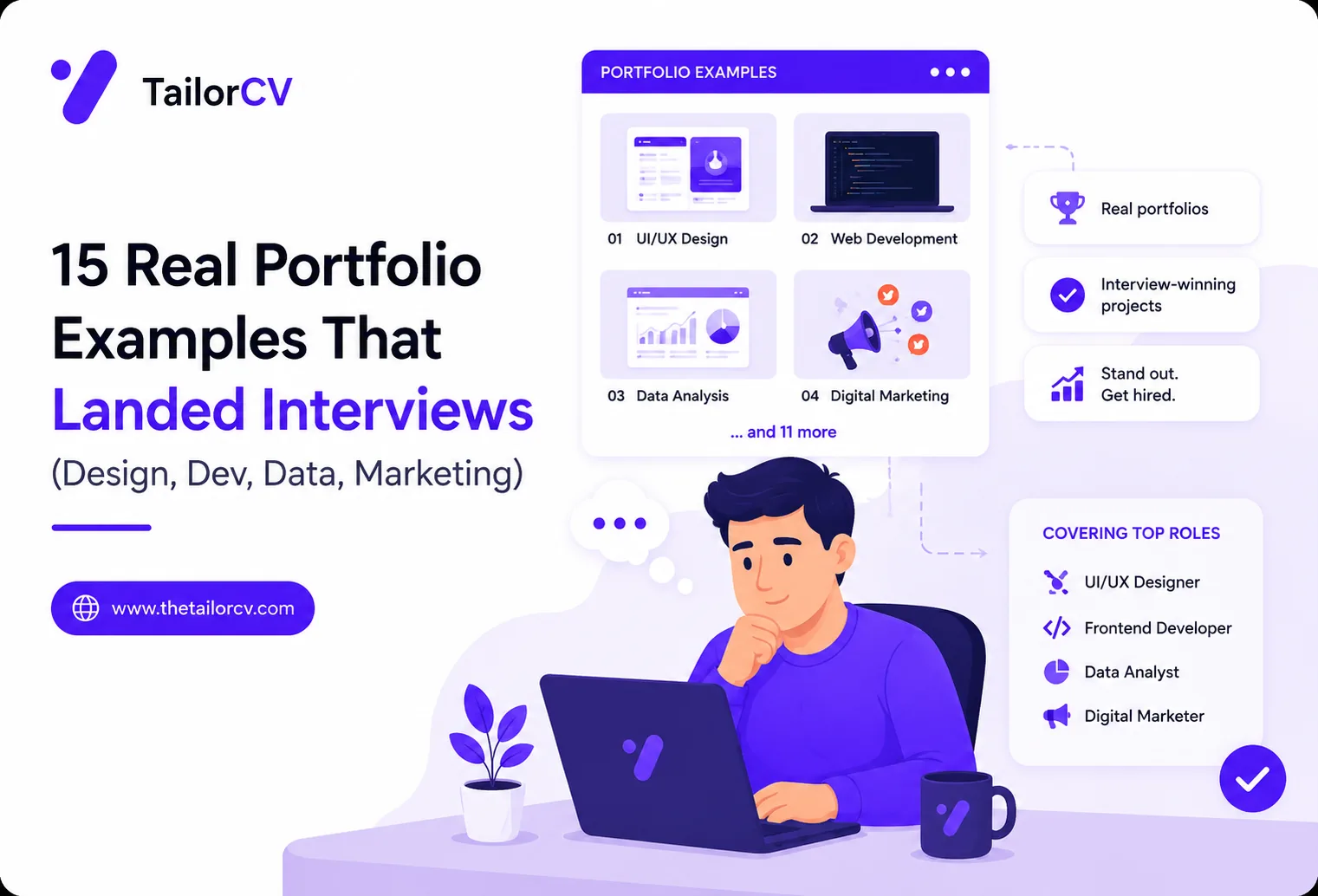
Your design portfolio should be prominently linked in your resume header. It serves as your primary evidence of skills and past work. Make sure your portfolio includes a variety of projects that demonstrate your design process and user impact, as discussed in our guide on 15 Real Portfolio Examples That Landed Interviews.
What are the key skills to highlight in a UX designer resume?
Key skills to include in your resume are user research, wireframing, prototyping, and usability testing. Additionally, mention any specific tools you are proficient in, such as Figma. Tailor these skills to match the job description, emphasizing those that demonstrate your ability to impact user experience positively.
How can I demonstrate my impact as a UX designer on my resume?
To demonstrate your impact, use quantifiable metrics in your bullet points under work experience. For instance, you could state, "Redesigned the onboarding process, resulting in a 25% increase in user satisfaction scores." This type of evidence showcases your ability to deliver real results, which is crucial in a competitive job market for UX designers. Consider referencing examples from our Recruiter Resume 2026 - Complete Guide with Examples for inspiration on presenting your achievements effectively.
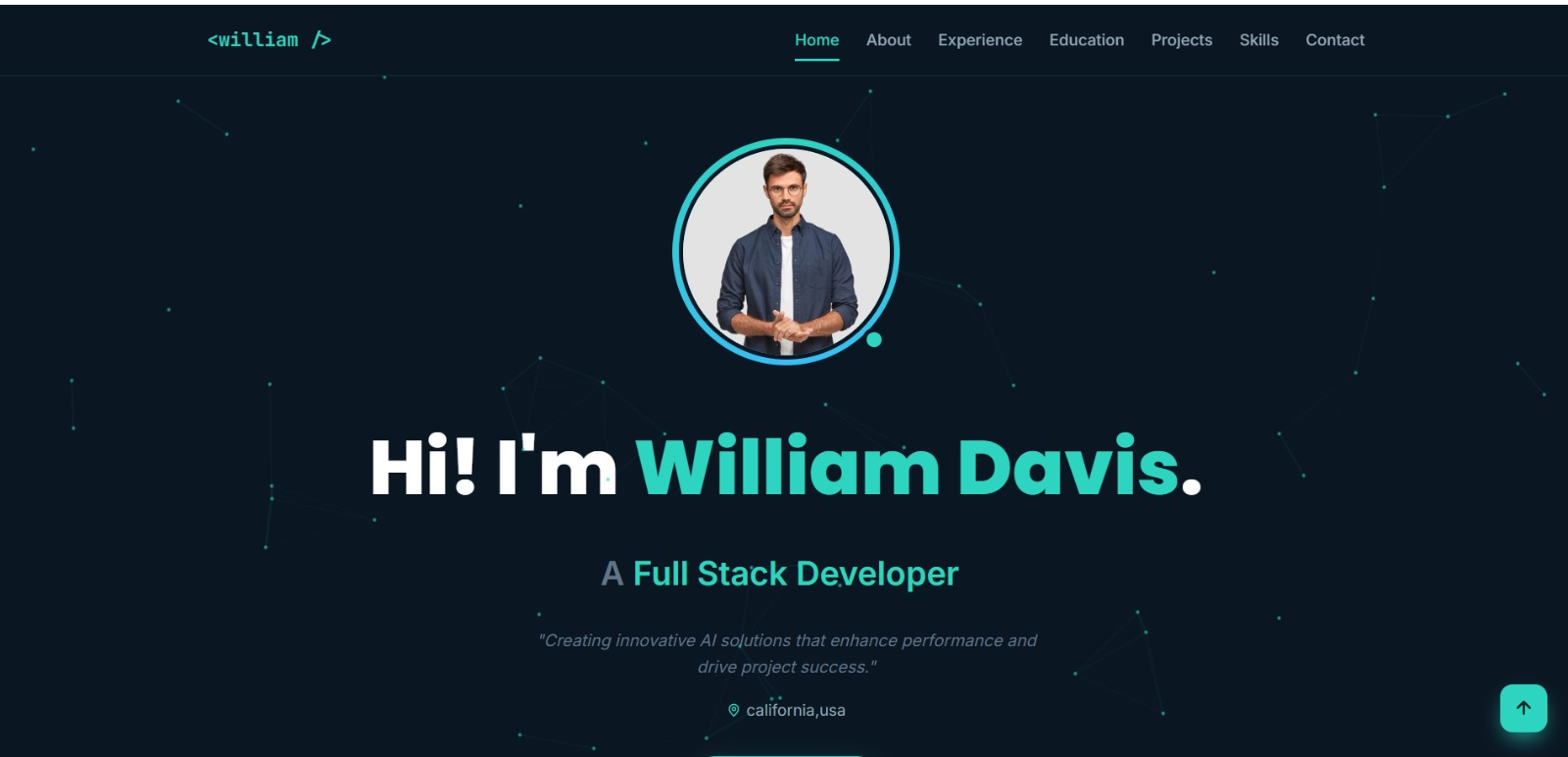
See what your portfolio could look like
This theme is built straight from your resume — pick one and your portfolio is live in minutes.
Was this guide useful?
Be the first to rate it.