 TD
TD
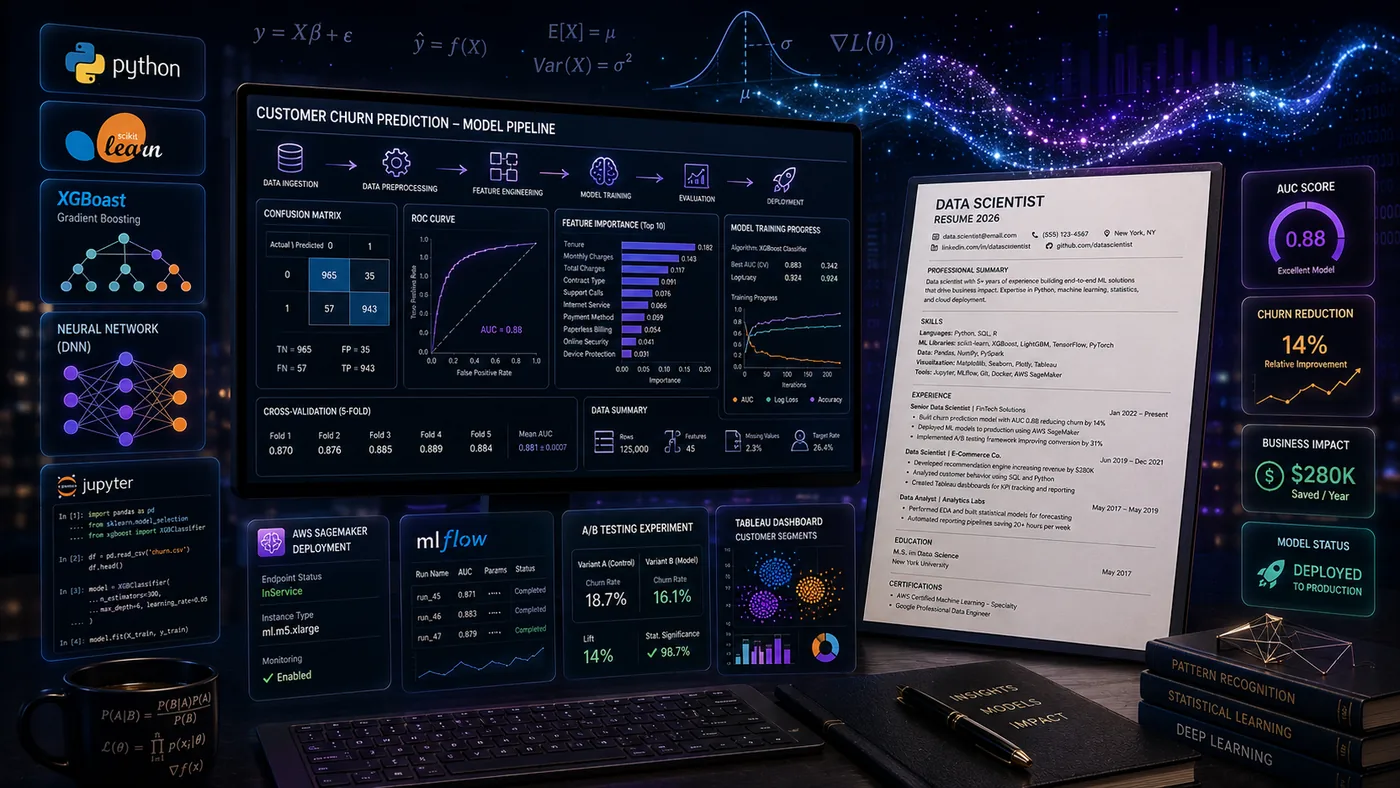
Key Takeaways
- A 2026 data scientist resume must demonstrate the ability to solve business problems with deployed models and communicate findings effectively to non-technical stakeholders.
- The data science job market is increasingly specialized, with distinct roles requiring tailored resume focuses, particularly for applied data scientists.
- An effective resume should include a clear structure: header, summary, technical skills, work experience, projects, education, and publications or certifications.
- For candidates with less than six years of experience, a one-page resume is ideal, while two pages are acceptable for those with advanced degrees or extensive publications.
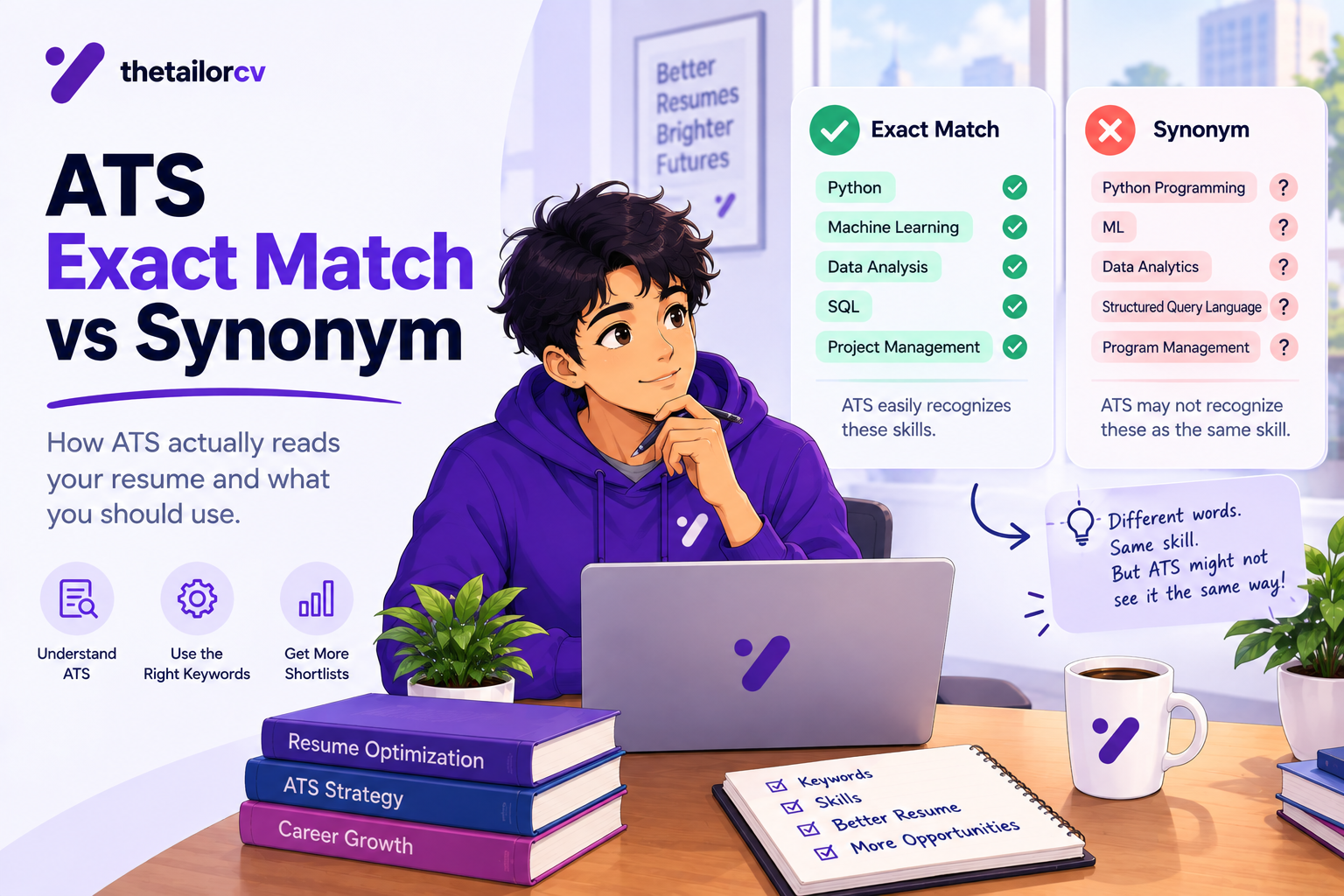
- Use relevant ATS keywords from job postings to enhance resume visibility and ensure alignment with the desired role.
A data scientist resume in 2026 must prove that you can formulate a business problem as an ML or statistical question, build a solution, validate it rigorously, and put it into production. Companies are no longer impressed by Jupyter notebooks alone - they want to see deployed models, business impact, and the ability to communicate findings to non-technical stakeholders.
The data science job market remains strong but has become more specialized. Roles split into ML engineering, research science, applied science, and analytics engineering - and each requires a slightly different resume emphasis. This guide focuses on the applied data scientist role that most candidates pursue.
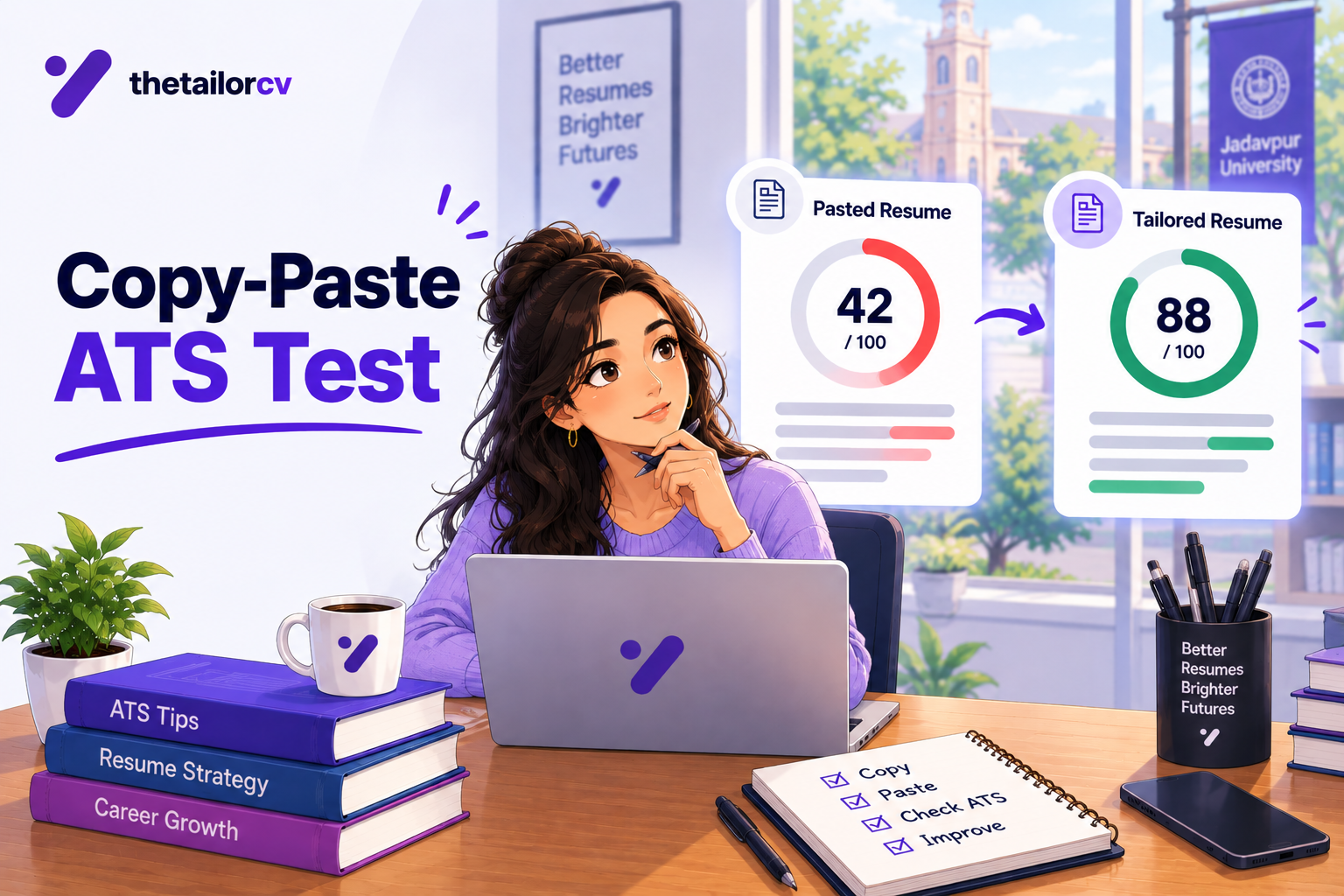
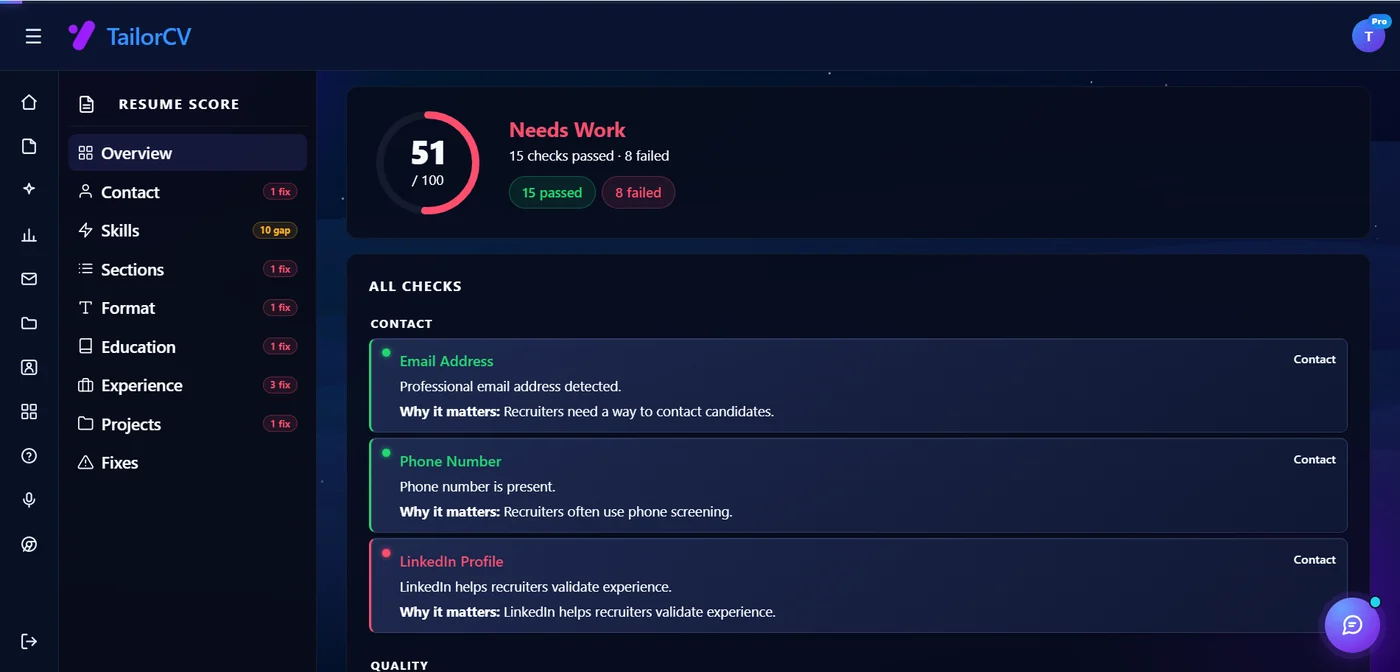
Before applying, test your resume against the job description with the ATS score checker. Read the ATS score guide to understand how resume parsing works, and use ATS-friendly resume templates if your current format has columns or graphics that parsers miss.
Best Data Scientist Resume Format for 2026
- Header
- Summary
- Technical skills
- Work experience
- projects
- education
- Publications or certifications
Your resume after optimization
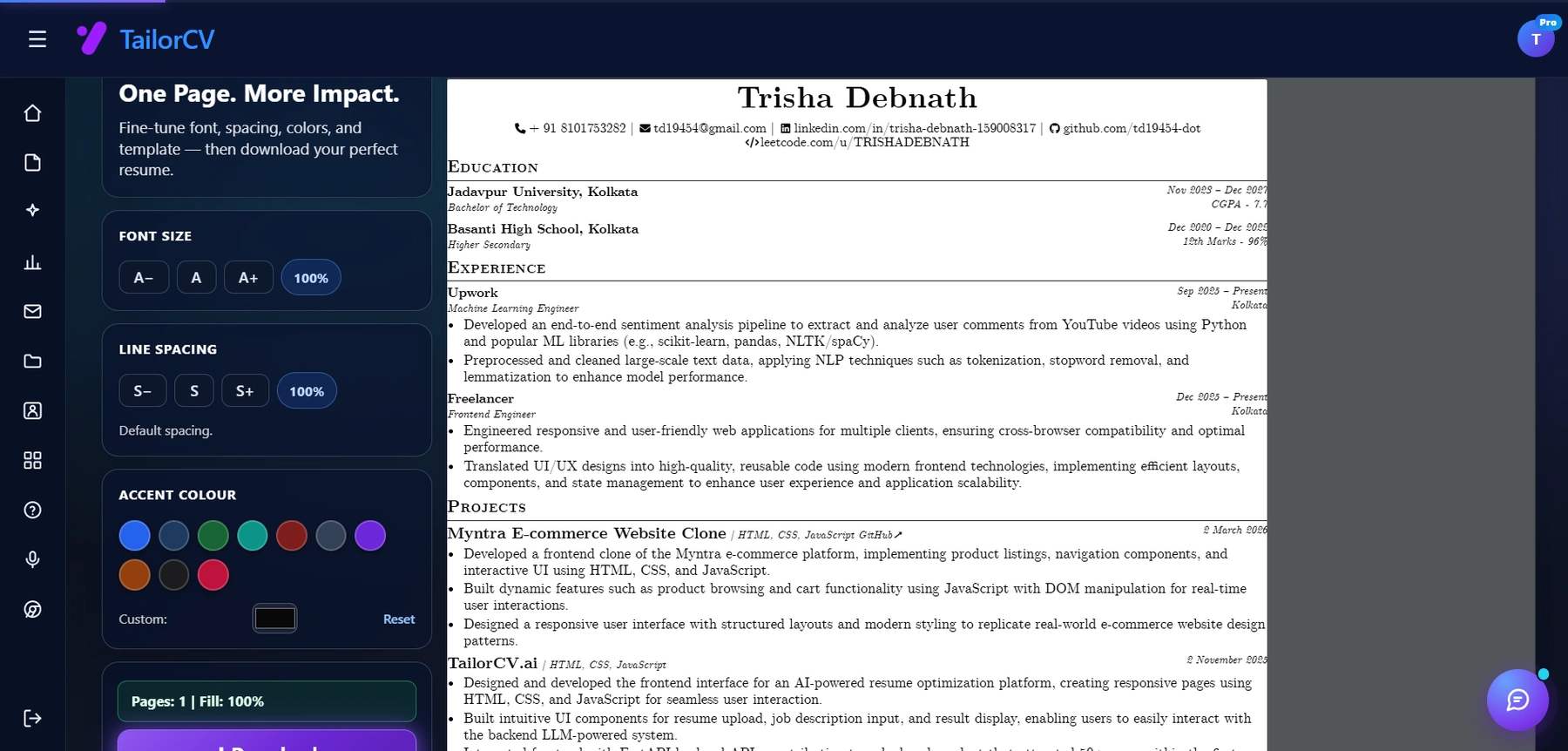
This is the resume after tailoring - the content is already matched, and these controls are how you fit it onto one page.
One page is ideal for candidates with under six years of experience. Two pages are acceptable for PhD researchers or scientists with publications and multiple deployed model systems.
Data Scientist Resume Summary
Formula:
data scientist with X years of experience in [ML domain or industry]. Built and deployed [model types] using [stack] with impact on [business metric]. Strong in [statistics, NLP, CV, recommendation systems, time series, etc.].
Example for Experienced Data Scientist
data scientist with 4 years of experience building recommendation systems and churn prediction models for SaaS and e-commerce platforms. Deployed ML pipelines using Python, scikit-learn, XGBoost, and AWS SageMaker. Improved 90-day customer retention by 19% through targeted intervention models and reduced weekly reporting time by 7 hours through automated dashboards.
Example for Entry-Level Data Scientist
Entry-level data scientist with strong foundations in statistics, machine learning, and Python. Built classification, regression, and clustering models across healthcare, retail, and finance datasets. Experienced with Pandas, NumPy, scikit-learn, TensorFlow, and SQL. Seeking a data science role with a focus on applied ML and business impact.
Data Scientist Technical Skills Section
Languages: Python, R, SQL ML Frameworks: scikit-learn, TensorFlow, PyTorch, XGBoost, LightGBM, Keras Data Processing: Pandas, NumPy, Dask, PySpark Visualization: Matplotlib, Seaborn, Plotly, Power BI, Tableau Databases: PostgreSQL, MySQL, BigQuery, Snowflake, MongoDB Cloud and MLOps: AWS SageMaker, GCP Vertex AI, MLflow, Airflow, Docker, Kubernetes Statistics: Hypothesis Testing, A/B Testing, Regression, Bayesian Methods, Time Series
Only list tools you can defend in a technical interview.
Best ATS Keywords for Data Scientist Resume
- machine learning
- Statistical modeling
- Python
- SQL
- Feature engineering
- Model evaluation
- Cross-validation
- A/B testing
- Natural language processing (NLP)
- Deep learning
- Neural networks
- Scikit-learn
- TensorFlow / PyTorch
- Random forest
- Gradient boosting
- XGBoost
- Regression analysis
- Classification
- Clustering
- Recommendation system
- Time series forecasting
- Data pipeline
- MLflow
- Model deployment
- Churn prediction
- Customer segmentation
Use keywords that appear in the actual job posting you are applying to.
How to Write Data Scientist Resume Bullet Points
Formula:
Built / Trained / Deployed + [model or system] + [dataset or context] + [business or technical result]
Weak Bullet Points
- Worked on machine learning models
- Used Python for data analysis
- Built predictive models
- Analyzed customer data
Strong Bullet Points
- Trained an XGBoost churn prediction model on 2.1M customer records with 87% precision and 0.84 AUC, enabling targeted retention campaigns that reduced 90-day churn by 14%.
- Built an NLP pipeline using spaCy and BERT to classify 50K+ monthly support tickets, reducing manual routing time from 6 hours to 20 minutes per day.
- Deployed a real-time product recommendation engine using collaborative filtering and AWS SageMaker, increasing average order value by 11% for 1.4M monthly users.
- Designed an A/B testing framework that standardized experiment tracking across 5 product teams, reducing experiment setup time from 3 days to 4 hours.
- Automated weekly reporting with Python and BigQuery, replacing 9 manual Excel reports and saving the analytics team 12 hours per week.
Data Scientist Resume Example
data scientist Health-Tech Company | Aug 2023 - Present
- Built a patient readmission risk model using logistic regression and XGBoost on 180K patient records, achieving 79% recall on high-risk patients and informing discharge planning protocols for 12 hospitals.
- Created a time series forecasting model for drug demand prediction, reducing inventory shortages by 31% and overstock costs by $280K quarterly.
- Developed an NLP sentiment classifier on patient feedback data to surface recurring care quality issues, presented findings monthly to clinical leadership.
- Engineered 40+ features from EHR data, improving baseline model performance by 9 AUC points.
- Deployed all models to AWS SageMaker with automated retraining pipelines, MLflow tracking, and Slack alerting for model drift.
Data Science Project Ideas for Freshers
Projects are how freshers prove applied ability. Good project topics:
- Churn prediction model
- Sentiment analysis on product reviews
- Recommendation system
- House price prediction
- Credit risk scoring
- COVID or health outcome prediction
- Stock price forecasting
- Image classification project
- Customer segmentation with clustering
- Text classification with transformers
Strong Project Example
Customer Churn Prediction | Python, scikit-learn, XGBoost, SQL, Tableau
- Built a binary classification model on 80K telecom customer records to predict 30-day churn.
- Performed feature engineering including tenure, usage patterns, payment history, and support ticket volume.
- Compared logistic regression, random forest, and XGBoost - XGBoost achieved best AUC of 0.88 with SMOTE for class imbalance.
- Created a Tableau dashboard showing high-risk customer segments by region, plan type, and contract length.
- Documented findings in a write-up with actionable retention recommendations.
Read how to add projects in resume for formatting tips.
Common Data Scientist Resume Mistakes
Mistake 1: Listing tools without impact
Employers do not care that you used TensorFlow. They care what it predicted, how accurately, and what business decision it enabled.
Mistake 2: Only academic projects
projects on MNIST, Iris, or Titanic datasets are overused. Build something on a real or novel dataset relevant to an industry.
Mistake 3: No deployment experience
In 2026, data scientists who can only build models in notebooks but not deploy them to production are at a disadvantage. Add MLflow, Docker, or any deployment context you have.
Mistake 4: Weak summary
Your summary should immediately show your domain (NLP, recommendation, time series, computer vision) and your measurable impact - not just "passionate about data."
Related Guides
- Machine Learning Engineer Resume
- Product Manager Resume
- Backend Developer Resume
- Data Engineer Resume
- Python Developer Resume
- Accountant Resume
- Android Developer Resume
- Business Analyst Resume
- Chemical Engineer Resume
- Civil Engineer Resume
- Cloud Engineer Resume
- Consultant Resume
- Data Analyst Resume 2026
- ATS Mistakes Tech Professionals Make in 2026 (Software Engineers, Data Scientists and Developers Guide)
- 10 Powerful Resume Templates for Beginners With No Experience That Actually Get Interviews
Make This Practical
Once you draft this resume, test it against a real job post with the free ATS score checker. Then improve fit using Resume Matching With Job Description, polish the layout with ATS-friendly resume templates, and make the bullets stronger with How to Write Resume Bullet Points.
A complete application needs more than one document. Pair the resume with a targeted letter from the AI cover letter generator, practice role-specific questions with the AI mock interview tool, and publish proof of work with the portfolio website builder when your role benefits from projects or case studies.
Conclusion
A strong data scientist resume in 2026 shows domain expertise, production-grade ML experience, and measurable business impact. Do not just list libraries - show what your models predicted, how accurately, and what changed because of the insight.
Run your resume through the TailorCV ATS score checker, compare it with the job description, and rewrite every bullet to connect model performance to business outcome. Then use the technical interview preparation guide to prepare for ML system design and coding rounds.
Frequently Asked Questions
What should I include in my data scientist resume summary for 2026?
Your resume summary should highlight your years of experience in the data science field, the specific machine learning domains you've worked in, and key achievements. For example, you might write, “Data scientist with 5 years of experience in predictive analytics. Built and deployed multiple machine learning models using Python that increased revenue by 20%.” This is a great way to showcase both your technical skills and your impact on business outcomes.
How do I make my resume ATS-friendly for a data scientist position?
To ensure your resume is ATS-friendly, use a simple layout without complex graphics or columns that can confuse parsing software. Incorporate relevant keywords from the job description, focusing on skills like Python, machine learning, and data analysis. You can use the free ATS score checker to test your resume against specific job descriptions to improve your chances of getting noticed.
What types of projects should I showcase in my data scientist resume?
Highlight projects that demonstrate your ability to solve real-world business problems using data science techniques. Include any deployed models, analytics dashboards, or contributions to significant research. For inspiration, check out our guide on fresher resume projects that get interviews to see examples of impactful projects.
How can I quantify the impact of my machine learning models on my resume?
Quantifying your impact involves specifying metrics that showcase the effectiveness of your models. For instance, mention improvements in accuracy, speed, or revenue generated from your solutions. Phrases like “increased predictive accuracy by 30%” or “reduced processing time by 50%” can significantly enhance your resume's appeal and demonstrate your contributions to potential employers.
What is the best format for a data scientist resume in 2026?
The ideal format for a data scientist resume in 2026 includes a clear header, a strong summary, technical skills, relevant work experience, projects, and education. For candidates with less than six years of experience, one page is typically sufficient, while two pages may be appropriate for those with extensive research or multiple deployed models. For examples, refer to the machine learning engineer resume guide for formatting ideas.
What is your resume scoring right now?
Scan it against a job description and get your ATS match score in about a minute.
Drop your resume here or choose a file
PDF only. Max 2 MB.
We never share your data or use it to train AI models.
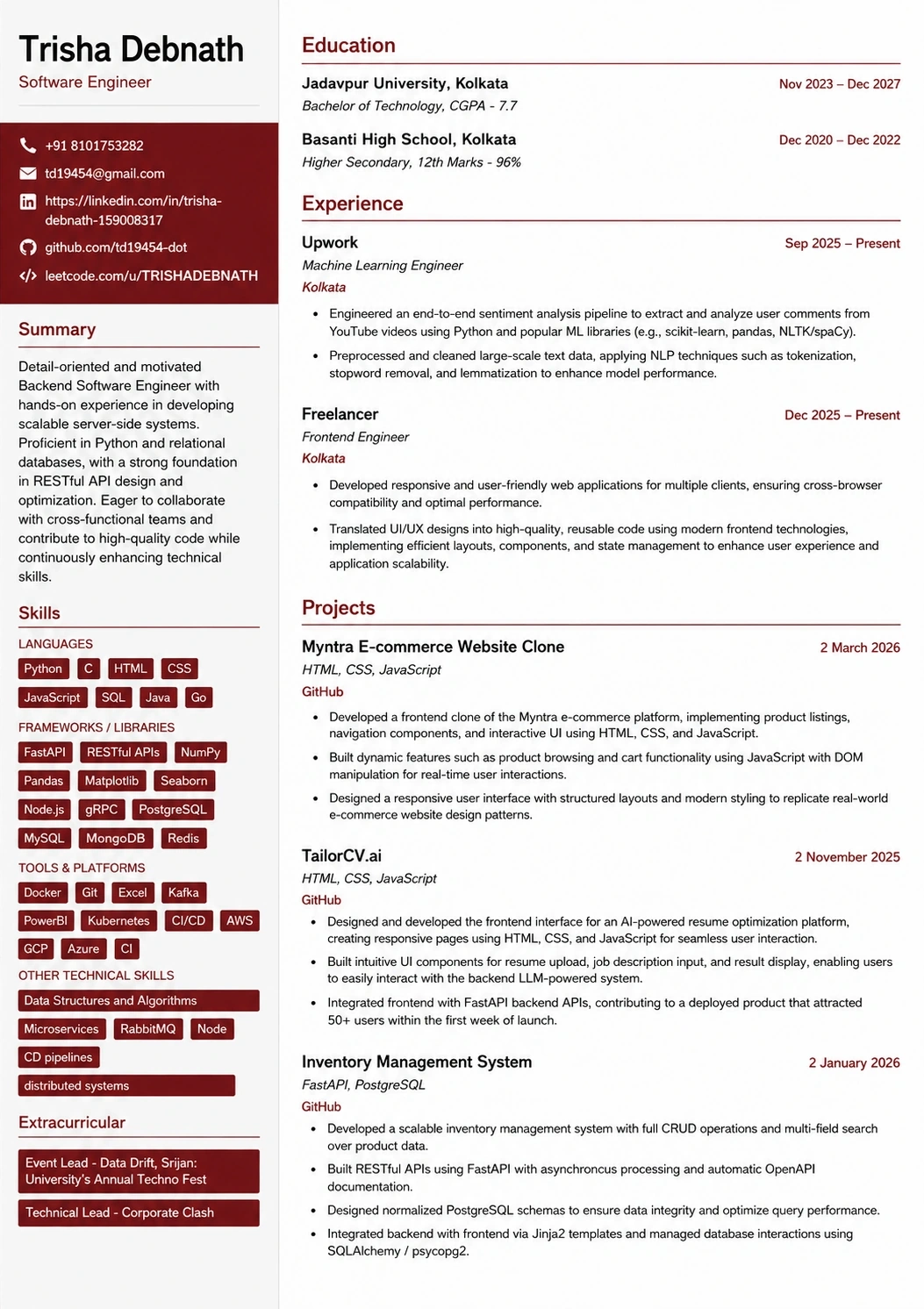
Templates that keep this structure intact
This template is ATS-tested — start from it and the formatting rules in this guide are already handled.
Was this guide useful?
Be the first to rate it.