 TD
TD
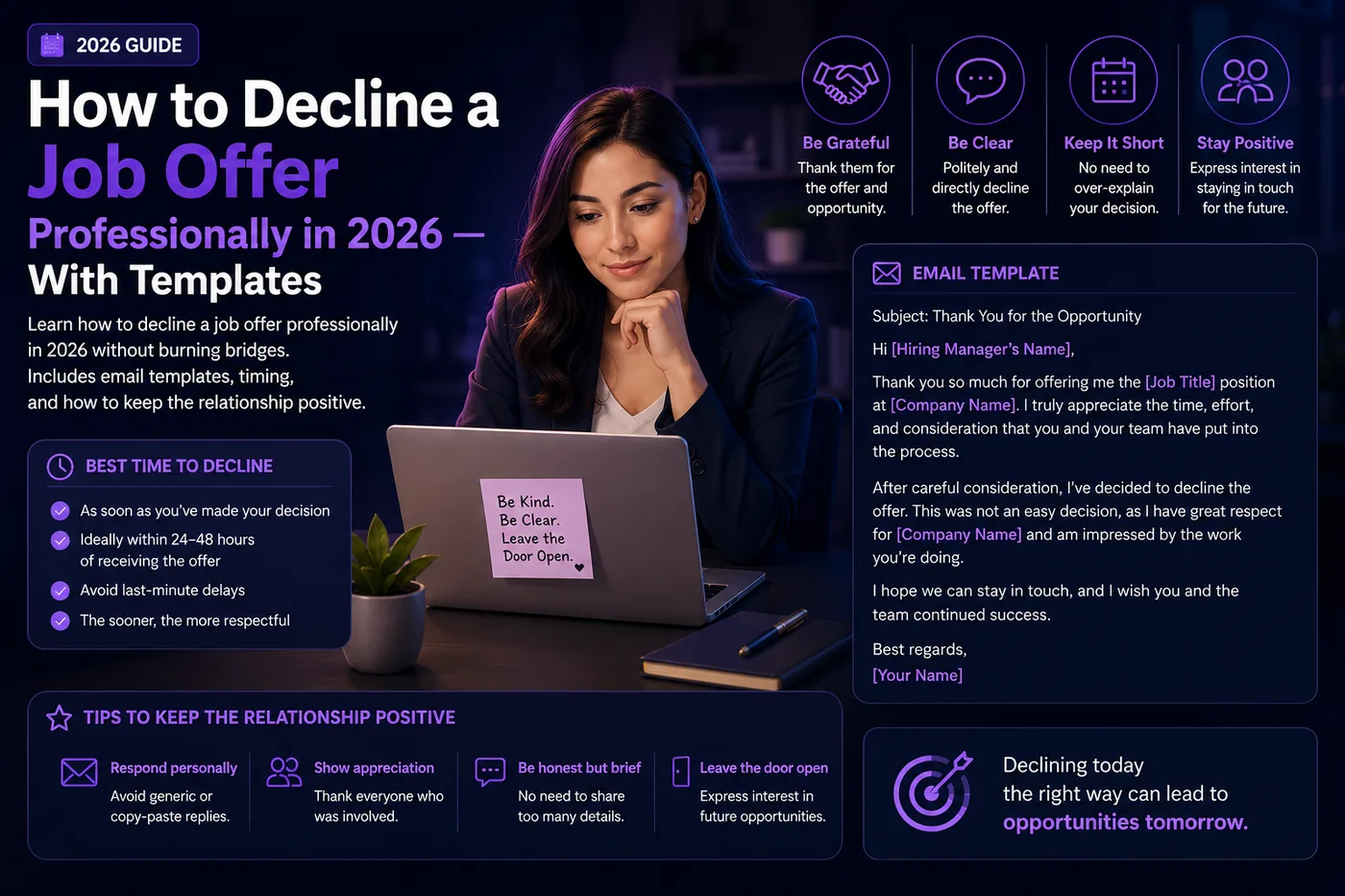
Key Takeaways
- Decline a job offer promptly to show professionalism and respect for the company's time.
- Use email as the standard method for declining, but consider a phone call for strong relationships or senior roles.
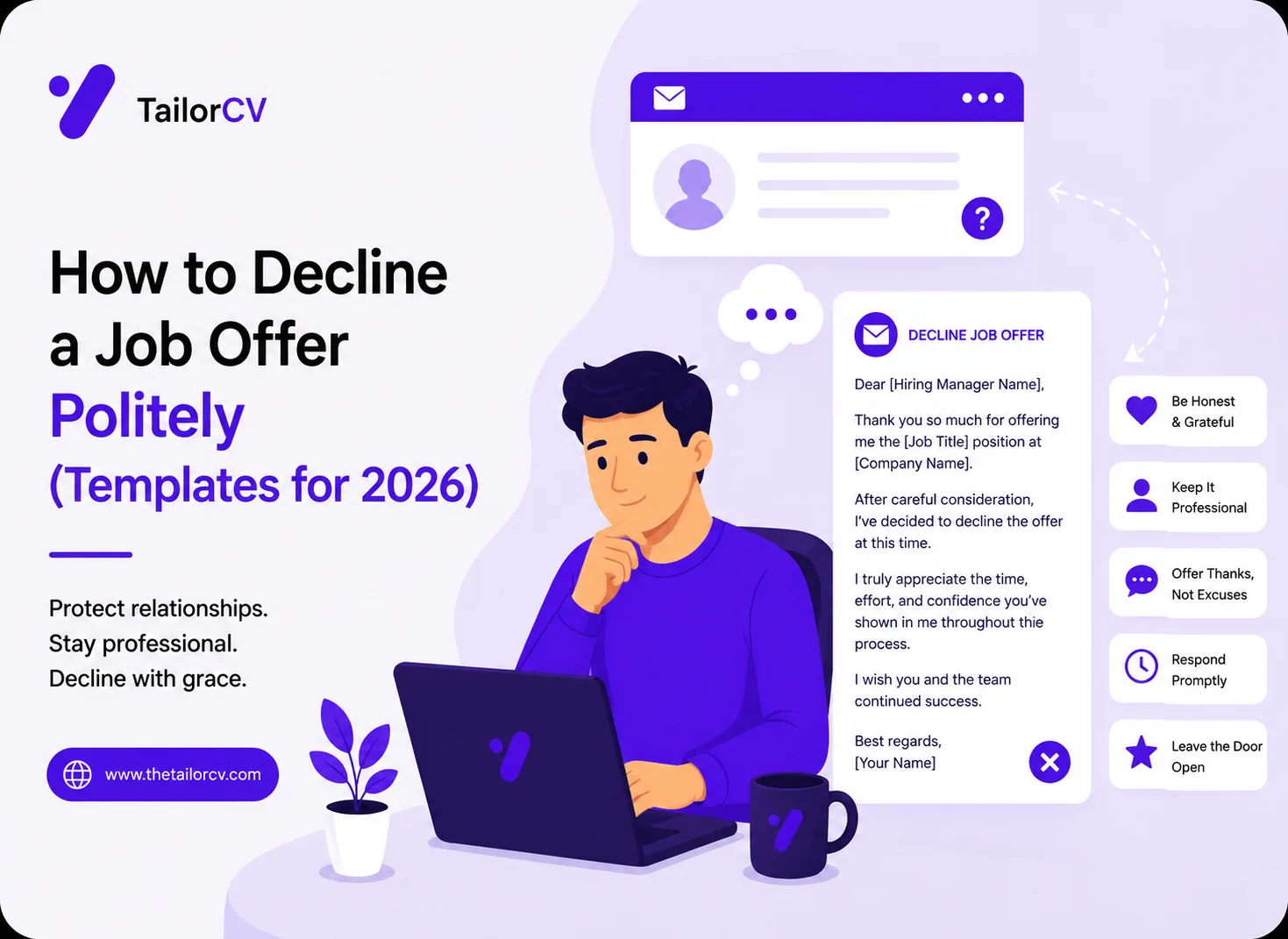
- A professional decline should include gratitude, a clear statement of decline, a brief positive reason, and an invitation to keep the relationship open.
- Sharing a reason for declining is optional; if chosen, keep it positive and avoid criticizing the company or offer.
- Maintaining good relations can lead to future opportunities with the company or within your network.
Declining a job offer is a delicate but common situation. You may have received a better offer, decided the role is not the right fit, or chosen to stay at your current job. However you decline, doing it professionally protects your reputation and keeps the door open - the company may be a future employer, client, or part of your network.
This guide shows you how to decline a job offer gracefully, with templates.
If you are deciding between offers, read the salary negotiation guide to make sure you are choosing well. Keep your resume current for future opportunities with the TailorCV ATS score checker.
When and How to Decline
Timing
Decline as soon as you have made your decision. Do not leave the company waiting - they may be holding the role for you or have other candidates in the pipeline. Prompt communication is professional and respectful.
Method
- Email is standard and acceptable for declining an offer.
- A phone call to the recruiter or hiring manager before (or instead of) the email is a thoughtful touch, especially if you built a strong rapport or for senior roles.
- For roles where you developed a close relationship, a call first followed by a confirming email is ideal.
How to Decline Professionally
A good decline includes:
- Genuine thanks for the offer and their time
- A clear, polite statement that you are declining
- A brief, gracious reason (optional, kept positive)
- A note keeping the relationship open
- Best wishes
Keep it short, warm, and professional. You do not need to over-explain.
Job Offer Decline Templates
Template 1: Accepted Another Offer
Subject: [Your Name] - [Role] Offer
Dear [Name],
Thank you so much for offering me the [Role] position at [Company]. I genuinely appreciate the time you and the team invested in the process, and I was impressed by [specific positive thing].
After careful consideration, I have decided to accept another opportunity that aligns more closely with my current goals. This was not an easy decision, as I have a lot of respect for [Company] and the team.
I hope our paths cross again in the future, and I wish you and the team continued success.
Warm regards, [Your Name]
Template 2: Staying at Current Job
Dear [Name],
Thank you for the generous offer to join [Company] as [Role]. I truly enjoyed getting to know the team and learning about the work you are doing.
After much reflection, I have decided to remain in my current role at this time. This was a difficult decision given how much I appreciated [specific positive about the company].
I would love to stay in touch, and I wish you and the team all the best.
Sincerely, [Your Name]
Template 3: Role Not the Right Fit
Dear [Name],
Thank you very much for offering me the [Role] position and for the time the team spent with me throughout the process.
After careful thought, I have decided that this role is not the right fit for me at this point in my career. I have great respect for [Company] and what you are building, and this was a thoughtful decision.
I appreciate the opportunity and hope we might have the chance to work together in the future.
Best regards, [Your Name]
Template 4: Brief and Polite
Dear [Name],
Thank you so much for the offer to join [Company]. After careful consideration, I have decided to pursue a different opportunity. I sincerely appreciate your time and the chance to learn about the role and team. I wish you all the best and hope to stay in touch.
Kind regards, [Your Name]
Should You Share Your Reason?
You are not obligated to share why you are declining. If you choose to:
- Keep it positive and brief
- "Accepted a role that better aligns with my goals" is enough
- Avoid criticizing the company, role, or compensation
- Never say "your offer was too low" (even if true - you can negotiate before declining instead)
If you are declining due to a low offer, consider negotiating first using the salary negotiation guide before declining outright. The company may improve the offer.
Keeping the Door Open
The professional world is small. The company you decline today could be:
- A future employer
- A client or partner
- Connected to people in your network
- A place you want to apply to again later
Always decline graciously. Connect with the recruiter or hiring manager on LinkedIn. Express genuine appreciation. Leave them with a positive final impression.
What NOT to Do
- Don't ghost the company (never responding is unprofessional and burns the bridge)
- Don't decline rudely or with criticism
- Don't lie about your reasons
- Don't delay your decision unnecessarily once you have decided
- Don't decline before exploring whether negotiation could change your decision
- Don't badmouth the company to others afterward
After Declining
- The company may ask for feedback - share it constructively if you wish
- They may make a counteroffer - consider it if it addresses your reasons
- Connect on LinkedIn to maintain the relationship
- Move forward professionally
Related Guides
- How to Write a Cold Email to a Recruiter
- How to Write a Two Weeks Notice
- How to Quit Your Job Professionally
- How to Build a Professional Portfolio
- How to Handle Job Rejection
- How to Negotiate a Salary Offer
- Networking Tips for Job Search
- Cover Letter Guide
- How to Use LinkedIn for Job Search
- LinkedIn Profile Optimization Guide
- Remote Job Search Guide
- How to Follow Up After a Job Interview
- Why Am I Not Getting Interviews for Jobs I'm Qualified For?
- Data Analyst vs Data Scientist in 2026 - Which Career Is Right for You?
- Freelancing vs Full-Time Employment in 2026 - Honest Comparison
- How to Get a Job With No Experience - 10 Strategies That Actually Work in 2026
- Work-Life Balance Tips for Professionals in 2026 - Practical Guide
- ATS Mistakes Experienced Professionals Make (And Why Your Resume Stops Working After 5+ Years)
Make This Practical
Turn the career advice into a stronger application system. Start by checking your resume with the free ATS score checker, align it with the role using How to Tailor Your Resume for Every Job, and keep your profile consistent with LinkedIn Resume Tailoring Sync.
When you are ready to apply, build the supporting pieces around the resume. Use the AI cover letter generator for targeted outreach, practice with the AI mock interview tool, and review Why Your Resume Gets No Responses if applications are not converting.
Conclusion
Declining a job offer professionally is about gratitude, clarity, and grace. Thank them genuinely, decline clearly, keep your reason positive and brief, and leave the relationship open. The company may be part of your future, so protect the connection.
If you are choosing between offers, use the salary negotiation guide to evaluate them well. Keep your resume ready for future opportunities with the TailorCV ATS score checker, and maintain your network with the networking tips guide.
Frequently Asked Questions
When should I decline a job offer?
You should decline a job offer as soon as you've made your decision to ensure prompt communication. Leaving the company waiting can hinder their recruitment process, as they may be holding the role for you or considering other candidates. For more insights on managing multiple offers, check out our guide on Negotiating Multiple Job Offers.
What is the best way to decline a job offer?
The best way to decline a job offer is through an email, as it provides a written record of your communication. If you developed a strong rapport with the recruiter or hiring manager, a phone call followed by a confirming email can add a personal touch. For tips on maintaining professionalism, refer to our Salary Negotiation Guide.
Should I provide a reason for declining the offer?
While it's not mandatory to provide a reason for declining a job offer, including a brief and gracious explanation can help keep the conversation positive. If you're comfortable sharing, you might mention that you've accepted another offer or that the role wasn't the right fit for you. For guidance on communicating your decisions gracefully, explore our post on How to Explain a Career Gap in a Job Interview.
How can I keep the relationship open after declining an offer?
To keep the relationship open, express genuine appreciation for the opportunity and convey your desire to stay in touch. You might mention that you hope to connect again in the future, as this can lead to potential opportunities down the line. For tips on maintaining professional relationships, consider reviewing our article on Recession-Proof Jobs in 2026.
Are there templates available for declining a job offer?
Yes, this guide includes several templates for declining a job offer professionally. These templates provide a structured way to express your gratitude, communicate your decision, and maintain a positive tone. If you need additional support with your application materials, check out our AI cover letter generator for tailored assistance.
Does your formatting survive the parser?
Upload your resume and see what an ATS actually reads back.
Drop your resume here or choose a file
PDF only. Max 2 MB.
We never share your data or use it to train AI models.

Was this guide useful?
Be the first to rate it.