TD
TD

Key Takeaways
- UK recruiters search CV databases constantly, so the keywords that matter are the ones a consultant types into a search box.
- British and American terminology diverges in ways that break search - "CV" not "resume", "annual leave" not "PTO", "turnover" not "revenue".
- Standard job titles are the highest-value keyword on the page; creative internal titles make you invisible.
- UK-specific qualifications - degree classification, chartered status, professional body membership - are frequently screened fields.
- Every keyword is a claim you will be asked to defend in a competency interview.
Keyword advice written for the US market transfers to the UK imperfectly, and the gaps are specific rather than general. Some terms simply differ. Some UK qualifications have no American equivalent and are screened on heavily. And because recruitment agencies place a large share of UK roles, a great deal of hiring starts with a consultant searching a CV database rather than an employer reviewing applications.
That last point reframes the exercise. You are optimising to be found, not only to be read.
This guide covers the terminology, the qualifications, and where to put them.
Start by checking what a parser currently extracts from your CV with the free ATS score checker.
Job Titles Come First
The highest-leverage keyword on your CV, and the one most often wasted.
Recruiters search by title. If your role was internally called "Customer Delight Champion" and the market calls it "Customer Service Team Leader", database search will not return you.
Use the standard market title. Put the internal one in brackets if it carries meaning:
Customer Service Team Leader (internal title: Customer Delight Champion)
Watch the UK/US title differences, which are real and cost you search hits:
- Managing Director in the UK often means what CEO means in the US
- Solicitor and Barrister rather than Attorney or Lawyer
- Chartered Accountant rather than CPA
- Shop floor / Retail Assistant rather than Sales Associate
- Reception / Front of House rather than Front Desk
If your background is American and you are applying to UK roles, translating your titles is a quick, high-value edit.
British Terminology That Differs
Small vocabulary differences that affect both search and how the CV reads:
| Use in the UK | Not |
|---|---|
| CV | Resume |
| Curriculum vitae | Résumé |
| Annual leave / holiday | PTO / vacation |
| Turnover | Revenue (for company size) |
| Programme (a scheme) | Program |
| Organised, analysed, specialised | Organized, analyzed, specialized |
| Maths | Math |
| Line manager | Supervisor |
| Notice period | Two weeks' notice |
| Redundancy | Layoff |
| Fixed-term contract | Temp role |
Consistent UK spelling throughout matters more than any single word. Mixed spelling is noticed, particularly in traditional sectors, and reads as a CV recycled from another market. The full formatting picture is in the UK CV format guide.
UK Qualifications Recruiters Screen On
These have no direct American equivalent and are frequently required fields.
Degree classification. First, 2:1, 2:2. Many graduate schemes screen at 2:1 minimum and some application forms require the field. If your degree is foreign, state your own grading plus the UK equivalent where you know it. See the UK graduate scheme guide.
A-levels and GCSEs. Worth including early career - some employers screen specifically on GCSE Maths and English at grade C/4 or above.
Chartered status. A genuine differentiator across several professions - CEng (Chartered Engineer), CIPD for HR, ACCA and ACA for accounting, CFA for investment roles, RICS for surveying. If you hold it, the postnominals belong next to your name and in the skills section.
Professional registration. For healthcare, NMC and GMC registration is a hard gate rather than a nice-to-have. For teaching, QTS. Name the registration and its status.
Right to work. Not a qualification, but a screening field - "UK citizen", "settled status", "Graduate visa valid until [date]", or "requires Skilled Worker sponsorship". Recruiters filter on it early; the mechanics are in the UK Skilled Worker visa guide.
Security clearance. SC or DV clearance is highly searchable for defence, government, and some technology roles. If you hold it, say so and note whether it is current.
Driving licence. Genuinely relevant for field-based roles, and searched on.
Keywords by Sector
Technology. Name the specific technology rather than the family - Python, Java, React, AWS, Azure, Kubernetes, Terraform, SQL. Include methodology terms recruiters actually search: Agile, Scrum, CI/CD, DevOps. The London market's specifics are in London tech jobs.
Finance and accounting. IFRS, UK GAAP, ACCA, ACA, CIMA, management accounts, statutory reporting, audit, FP&A, Making Tax Digital.
Healthcare. NMC/GMC registration, CQC, safeguarding, clinical governance, named specialties.
Public sector. Competency frameworks, the Civil Service behaviours by name, procurement frameworks, GDPR and data protection.
Marketing. SEO, PPC, Google Analytics 4, HubSpot, Salesforce, CRM, paid social, marketing automation.
Engineering. CEng or IEng status, named standards and codes, CAD packages by name, CDM regulations.
Cross-sector. Stakeholder management, budget ownership with a figure, line management with a headcount, project delivery, P&L responsibility.
The general method for extracting these from a posting rather than guessing is in best resume keywords to beat ATS.
Where to Put Them
Job titles carry the most weight in database search. Fix these first.
The skills section is where explicit terms belong, grouped so they are scannable rather than run into a paragraph - see the resume skills section guide.
Experience bullets are where keywords earn credibility, because the term appears attached to a result: "Delivered the CRM migration to Salesforce across three sites, cutting duplicate records by 60%."
The personal statement should carry your target title verbatim.
Not in headers, footers, or images. Text there is routinely lost in extraction, taking the keyword with it - see ATS resume formatting mistakes.
The Honesty Constraint
UK interviews are overwhelmingly competency-based, which makes keyword inflation unusually risky. "Tell me about a time you used Terraform" arrives about ten minutes into the conversation.
Include a term if you have genuinely used the thing. If your experience is light, keep the term but qualify it in the bullet rather than inflating it. A skills block that no experience bullet supports is a recognisable pattern - see how recruiters spot generic resumes.
Common Mistakes
Creative job titles. Invisible to database search.
American spelling and terminology. Marks the CV as recycled from another market.
Skill categories instead of skills. "Cloud platforms" is not searchable; "AWS" is.
Omitting degree classification on early-career applications where it is expected.
Leaving out chartered status or professional registration. Frequently a screening field.
No right-to-work line as a non-UK applicant.
Burying keywords in prose. Recruiters scan; group them.
Stuffing terms you cannot defend. Competency interviews find them.
Frequently Asked Questions
Do UK employers use ATS software?
Widely, particularly large employers, graduate schemes, and recruitment agencies. Agencies add a second layer, since your CV also sits in their searchable database - which is why parsing cleanly matters twice over.
How many keywords should I include?
There is no target number. Get your job titles standard, name specific tools rather than categories, and make sure each significant skill also appears in an experience bullet with a result attached.
Should I use British or American spelling?
British, consistently, for UK applications. Mixed spelling is noticed and reads as a CV written for another market.
Do I need to include my degree classification?
For graduate and early-career roles, yes - many schemes screen at 2:1 and some forms require it. It matters less once you have several years of experience.
Will keyword stuffing get me more interviews?
It may get you more database hits and fewer offers. UK interviews are competency-based, so every listed skill is likely to be tested with "tell me about a time when".
How do I find the right keywords for a specific role?
Take them from the advert itself - the requirements section names the terms the recruiter will search. The method is in how to tailor your resume for every job.
See which keywords your CV is missing against a real job advert. Check your ATS score free.
Make This Practical
Fix the job titles first, translating any American or internal title into the standard UK market term. That single edit changes whether database search returns you at all.
Then switch the vocabulary and spelling throughout to UK usage, and add the qualification fields recruiters screen on - degree classification, chartered status, professional registration, security clearance, and right to work.
Finally, make each keyword defensible. Move significant skills into experience bullets with a result attached using how to write resume bullet points, run the file through the free ATS score checker against a real advert, and upload it where consultants will find it - see the best job sites in the UK.
See which keywords you are missing
Scan your resume against the posting and get the exact terms it did not find.
Drop your resume here or choose a file
PDF only. Max 2 MB.
We never share your data or use it to train AI models.

Where those keywords actually go
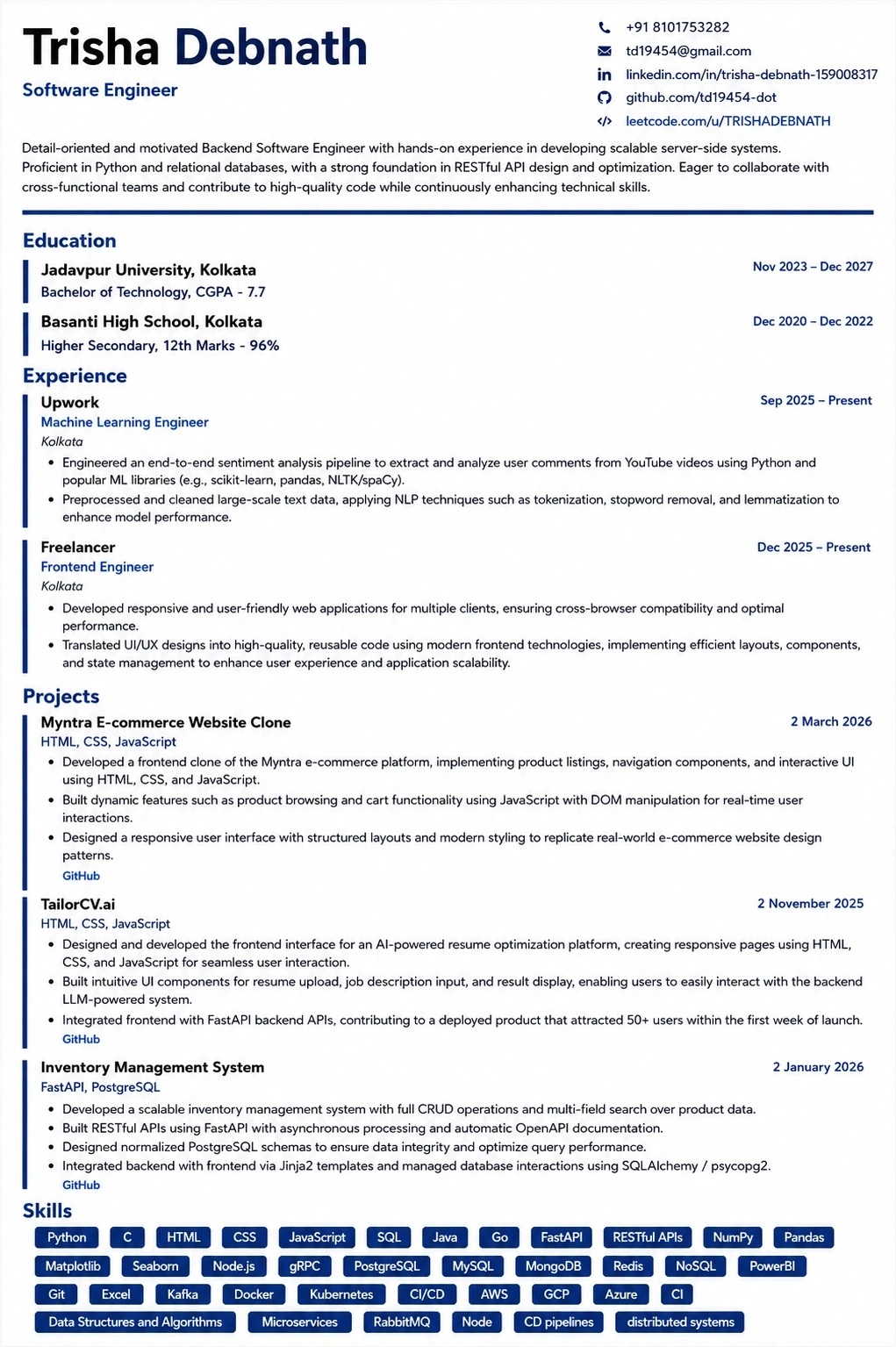
A layout with a real skills section gives the parser somewhere clean to find every term you just added.
Was this guide useful?
Be the first to rate it.