 SS
SS

Key Takeaways
- Resume keywords are crucial for ATS systems and recruiters to match candidates with job descriptions; using the right terminology can significantly impact your application success.
- Identify keywords by carefully reading job descriptions, highlighting hard skills, qualifications, and repeated phrases that indicate importance.
- Analyze multiple job postings for the same role to find universal keywords and include both full terms and variations to improve ATS matching.
- Utilize tools like the TailorCV ATS score checker to compare your resume against job descriptions and identify missing keywords.
- Place keywords strategically in the skills section, work experience bullets, and summary to enhance visibility and context in your resume.
Resume keywords are the specific words and phrases that ATS systems and recruiters use to match candidates to jobs. Getting your keywords right is one of the highest-impact things you can do - a perfectly qualified candidate using the wrong terminology can score lower than a less-qualified candidate using the exact right words.
This guide shows you how to find the right keywords for any job and how to use them naturally and effectively.
The fastest way to identify keyword gaps is to run your resume through the TailorCV ATS score checker against a specific job description - it shows you exactly which keywords you are missing. Pair this with the ATS-friendly resume guide and ATS-friendly templates.
Why Keywords Matter So Much
When you apply through an ATS:
- The system parses your resume into structured data
- It compares your resume against the job description requirements
- It scores or ranks you partly based on keyword match
- Recruiters often search the ATS database using specific keywords to find candidates
If your resume says "developed software applications" but the job and recruiter searches use "software development," you may not surface for that search - even though you are qualified.
Types of Resume Keywords
1. Hard Skills
Specific, teachable abilities and tools:
- Python, SQL, AWS, Excel, SolidWorks, Salesforce, Figma
2. Job Titles
The roles you have held and the role you want:
- Software Engineer, data analyst, Product Manager
3. Certifications
- PMP, CPA, AWS Solutions Architect, CISSP, Google Analytics
4. Industry Terms
Domain-specific vocabulary:
- ATS, MEDDICC, HAZOP, GAAP, MTM, SLO
5. Action and Competency Keywords
- Stakeholder management, cross-functional collaboration, agile, KPI tracking
How to Find the Right Keywords
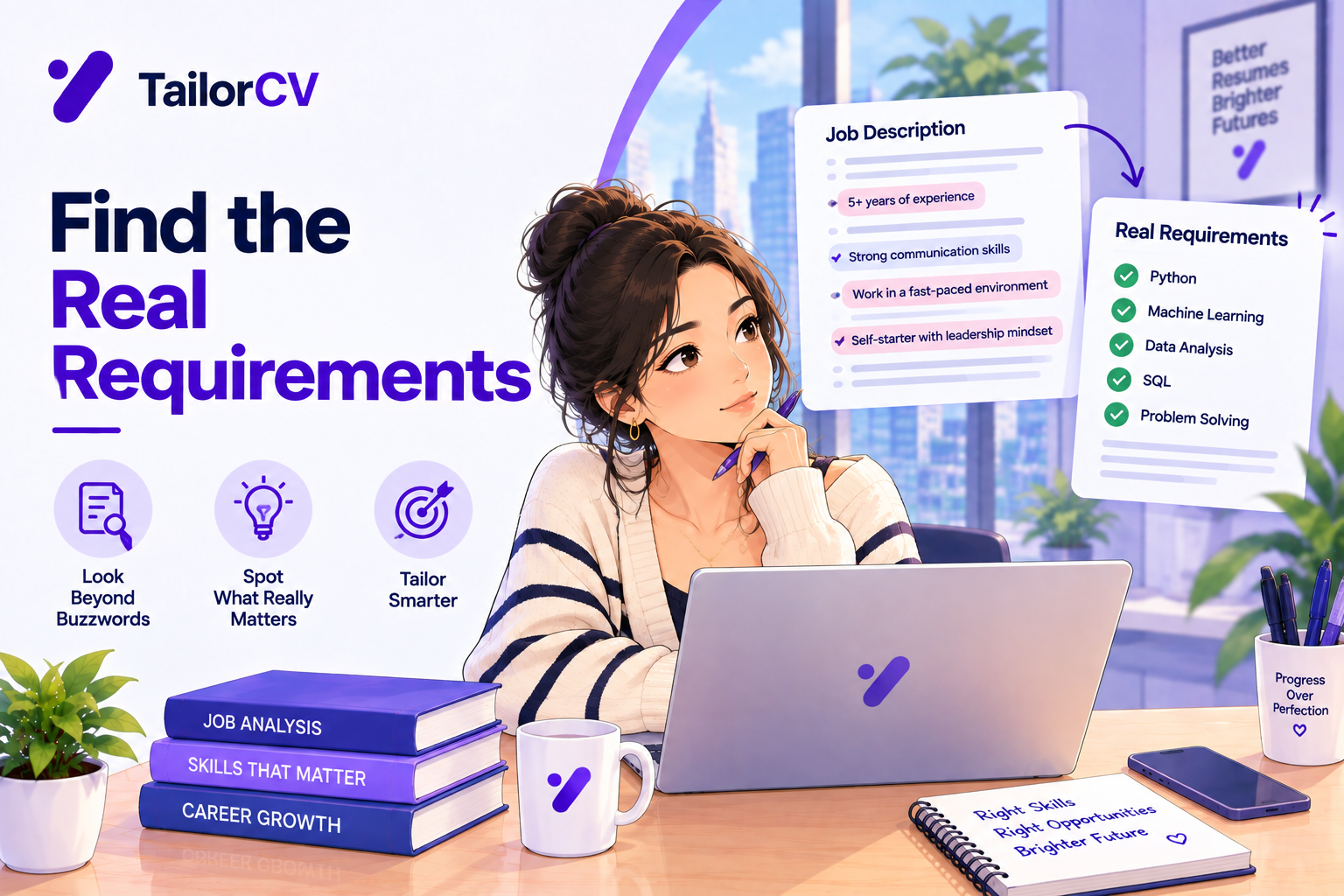
Step 1: Read the Job Description Carefully
The job description is your primary keyword source. Read it 2-3 times and highlight:
- Every hard skill and tool mentioned
- Required qualifications and certifications
- Repeated words and phrases (repetition signals importance)
- The exact phrasing used (note "customer relationship management" vs just "CRM")
Step 2: Analyze Multiple Job Postings
Look at 5-10 job postings for the same role across different companies. Keywords that appear repeatedly across postings are the universal keywords for that role. Include these even if a specific posting omits them.
Step 3: Note Exact Phrasing and Variations
ATS matching can be literal. Include both:
- Full terms and acronyms: "Search Engine Optimization (SEO)"
- Variations: "project management" and "managed projects"
Step 4: Use a Keyword Tool
The TailorCV ATS score checker compares your resume directly against the job description and lists missing keywords. This removes the guesswork.
Where to Place Keywords
Skills Section (highest density)
This is where most hard-skill keywords should appear. Organize by category for readability.
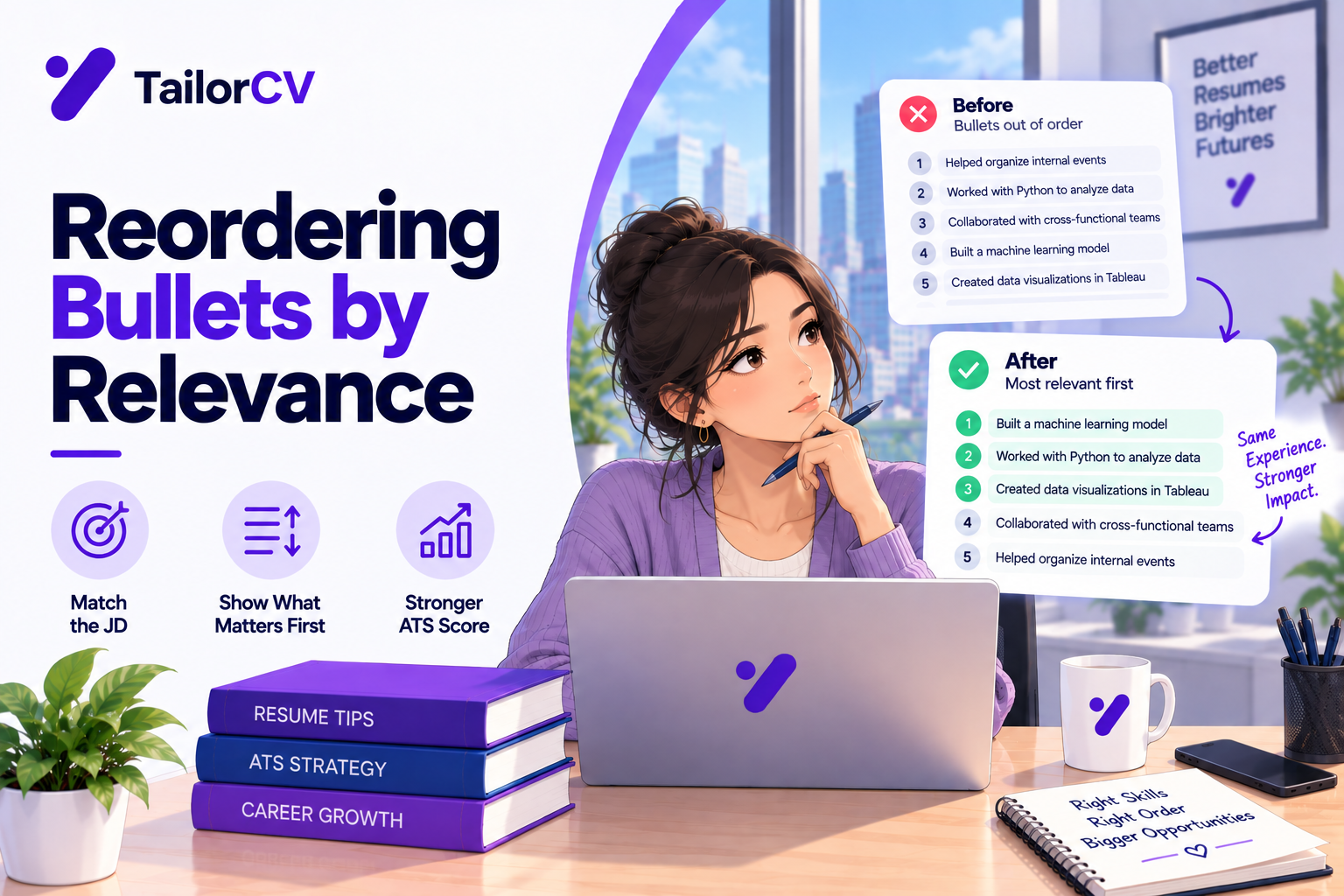
Work Experience Bullets (context + proof)
Place keywords within achievement bullets to provide context. "Built REST APIs using Python and FastAPI handling 2M daily requests" embeds Python, FastAPI, REST API, and scale.
Summary (top keywords)
Your summary should include the 3-5 most important keywords for your target role.
Job Titles
Use standard, recognizable job titles. If your official title was "Code Ninja," add a parenthetical standard title: "Code Ninja (software engineer)."
How to Use Keywords Naturally
Keywords must read naturally. Forced keyword cramming hurts readability and can trigger spam detection in modern ATS systems.
Weak (keyword stuffing): "Skilled in Python, Java, SQL, AWS, Docker, Kubernetes, React, Node.js, MongoDB, PostgreSQL, Redis, Kafka, microservices, REST API, GraphQL, CI/CD, Agile, Scrum, machine learning, data analysis."
Better (organized and contextual): "Languages: Python, Java, SQL Backend: Node.js, FastAPI, REST APIs, microservices Databases: PostgreSQL, MongoDB, Redis Cloud/DevOps: AWS, Docker, Kubernetes, CI/CD"
Then prove the most important ones in your experience bullets.
Keyword Mistakes to Avoid
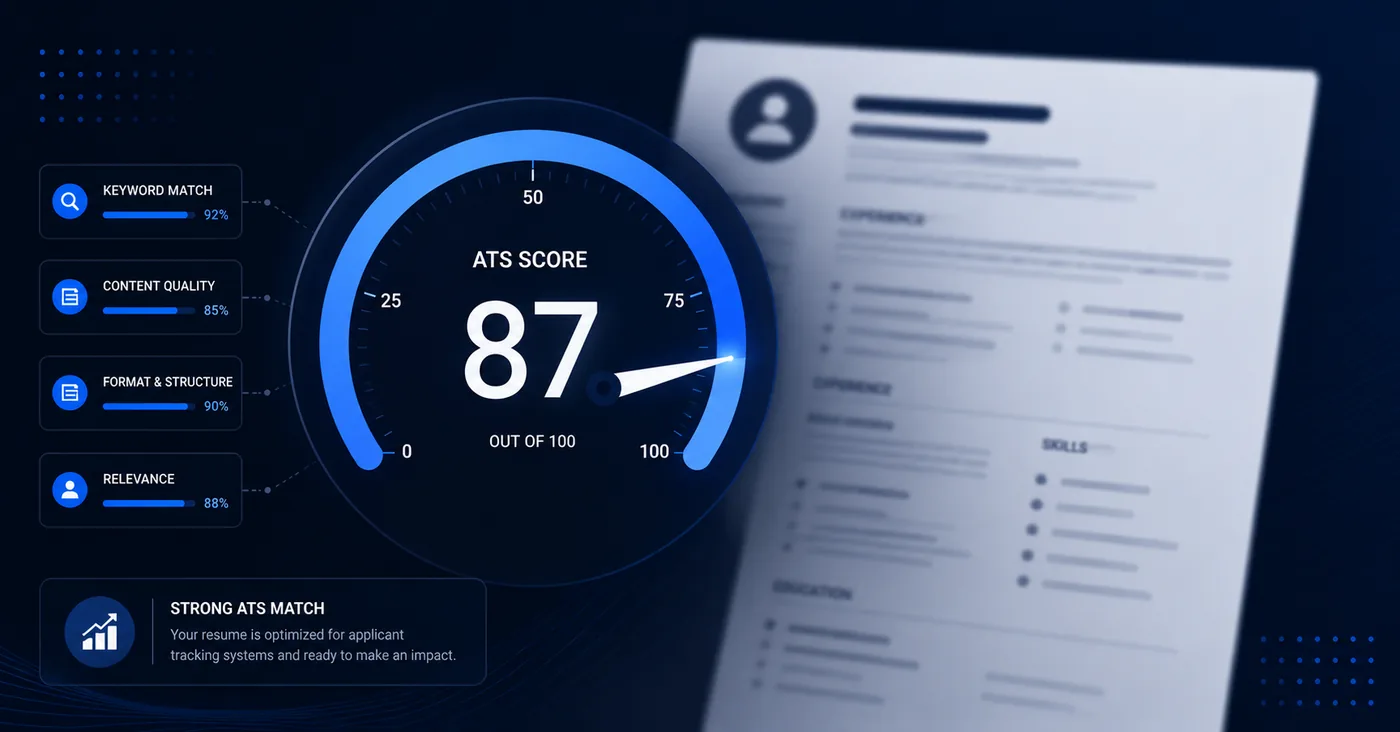
What an ATS score report actually shows you

Passed and failed checks are listed individually, so you can see which part of the resume is costing you points.
Mistake 1: Using only synonyms, not the exact term
If the job says "Kubernetes" and you write "container orchestration," you might not match. Use both - the exact term and the descriptive phrase.
Mistake 2: Keyword stuffing
Hidden white text, repeated keyword blocks, or unnatural cramming gets flagged. Use keywords genuinely.
Mistake 3: Listing keywords you cannot back up
If you list a keyword, you must be able to discuss it in an interview. Listing skills you do not have is a fast way to fail interviews.
Mistake 4: Ignoring acronyms or full forms
Some recruiters search "CPA," others "Certified Public Accountant." Include both forms for important terms.
Mistake 5: Not updating keywords per application
Different jobs use different keywords. Tailoring your keywords to each job description significantly improves your match rate.
Keyword Tailoring Workflow (5 Minutes Per Application)
- Paste the job description into the TailorCV ATS score checker along with your resume
- Review the missing keywords it identifies
- Add the genuinely applicable missing keywords to your skills section and experience bullets
- Re-check your score
- Submit the tailored version
This 5-minute process can be the difference between getting filtered out and getting an interview.
Related Guides
- How to Improve Your ATS Score
- 35 Powerful Technical Skills in Resume for Freshers With No Experience (2026 Guide)
- ATS Score Guide for
- How to Tailor Your Resume for Every Job Application (Step-by-Step)
- How to Write a Resume with AI
- What is an ATS Score and Why Does It Decide Your Job Application Before Any Human Reads It
- Chronological vs Functional Resume
- How to Explain Resume Gaps
- How to Use LinkedIn for Job Search
- Top Skills to Add to Your Resume
- Why Am I Not Getting Interviews for Jobs I'm Qualified For?
- 200 Best Action Verbs for Resume
- How to Match Resume Keywords to Job Description - 2026 Guide
- Why Your Resume Never Gets a Response - 12 Hidden ATS Mistakes Killing Your Job Search in 2026
- Job Description Keyword Extraction - Complete Guide for 2026
- ATS Keyword Mistakes That Are Costing You Interviews (And How to Fix Them in 2026)
- How to Improve Your Resume-to-Job Match Score - 10 Proven Strategies for 2026
Make This Practical
Do not guess whether the resume is ready. Upload it to the free ATS score checker, compare the result with the ATS Score Guide, and fix formatting issues using ATS Resume Formatting Mistakes and ATS Resume Parser Friendly Format.
After the technical cleanup, improve relevance. Use Resume Matching With Job Description, strengthen keyword coverage with the Resume Keywords Guide, and avoid overdoing it by checking ATS Keyword Mistakes. If the layout itself is weak, rebuild with an ATS-friendly resume template.
Conclusion
resume keywords are how you get matched to jobs in 2026. Find them in the job description, use the exact phrasing, place them in your skills section and experience bullets, and use them naturally. Tailor your keywords to each application.
Use the TailorCV ATS score checker to identify missing keywords for every job. Read the ATS-friendly resume guide for formatting and the resume optimization guide for the complete picture.
Frequently Asked Questions
Why are resume keywords important for ATS?
Resume keywords are crucial because they help your application get noticed by Applicant Tracking Systems (ATS). These systems parse your resume and compare it against job descriptions to rank candidates. If your resume lacks the right keywords, even a highly qualified candidate can be overlooked. To understand more about how ATS scores work, check out what an ATS score is.
How can I find the right keywords for my resume?
To find the right keywords for your resume, analyze the job descriptions of positions you're interested in. Look for frequently mentioned skills, qualifications, and industry-specific terms. You can also use the Free ATS score checker to identify keyword gaps in your resume compared to specific job postings.
What types of keywords should I include in my resume?
You should include both hard skills and soft skills as keywords in your resume. Hard skills are specific, teachable abilities like software languages (e.g., Python, SQL), while soft skills include traits like communication and teamwork. For a comprehensive understanding of how to analyze job descriptions for keywords, refer to our Job Description Analysis Checklist.
How often should I update the keywords in my resume?
You should update the keywords in your resume for each job application you submit. Tailoring your resume to include the specific terms and phrases from the job description can significantly enhance your chances of passing ATS filters. To ensure your resume is optimized for each application, consider using our resume templates.
Can using the wrong keywords hurt my job application?
Yes, using the wrong keywords can negatively impact your job application. If your resume contains terminology that doesn't align with the job description, you risk being filtered out by ATS, even if you're qualified. To avoid this, make sure to analyze your resume against the job description to ensure a good match.
See which keywords you are missing
Scan your resume against the posting and get the exact terms it did not find.
Drop your resume here or choose a file
PDF only. Max 2 MB.
We never share your data or use it to train AI models.
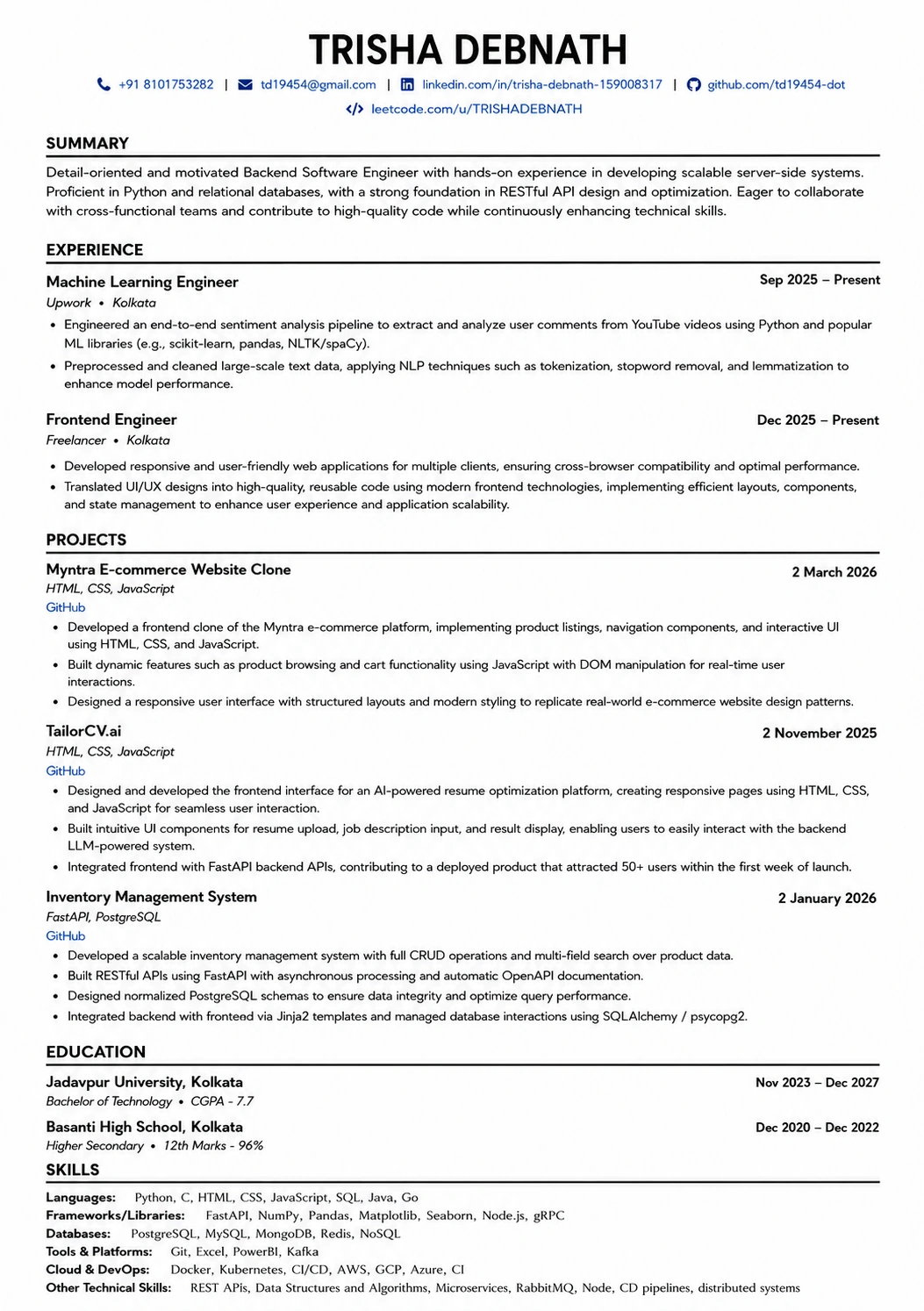
Where those keywords actually go
A layout with a real skills section gives the parser somewhere clean to find every term you just added.
Was this guide useful?
Be the first to rate it.