 TD
TD

Key Takeaways
- Always ensure your resume headline matches the exact job title from the job posting to catch the recruiter's attention.
- Incorporate keywords from the job description into your summary and emphasize what you deliver rather than just listing your past roles.
- Include all required and preferred skills from the job posting in your skills section, using both acronyms and full terms for key skills.
- Prioritize the most relevant experience and ensure your bullet points highlight results rather than just tasks, embedding key keywords from the posting.
- Regularly check your resume against the job description to ensure alignment and increase your chances of passing ATS screenings.
Most candidates submit a resume they are "pretty confident" about. The candidates who consistently get callbacks run a structured check every time. This checklist covers 15 things to verify before every application - broken into sections so you can stop wherever your time allows and still come out ahead of the average applicant.
After the checklist, verify your score automatically with the free ATS checker.
Before You Start: Pull Up the Job Description
Have the job posting open beside your resume. You will use it for comparison on almost every item below.
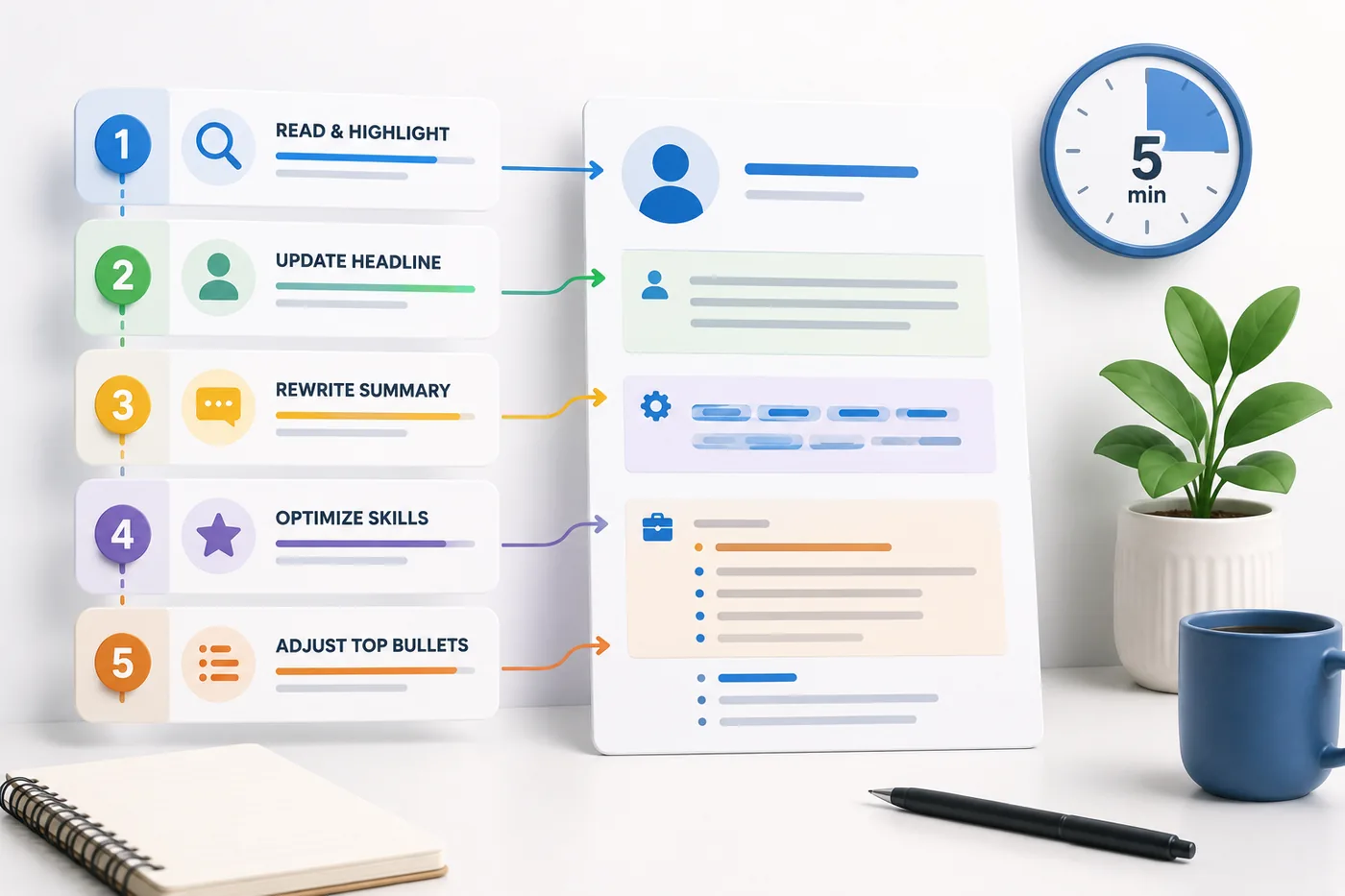
Section 1 - Headline and Summary (2 Minutes)
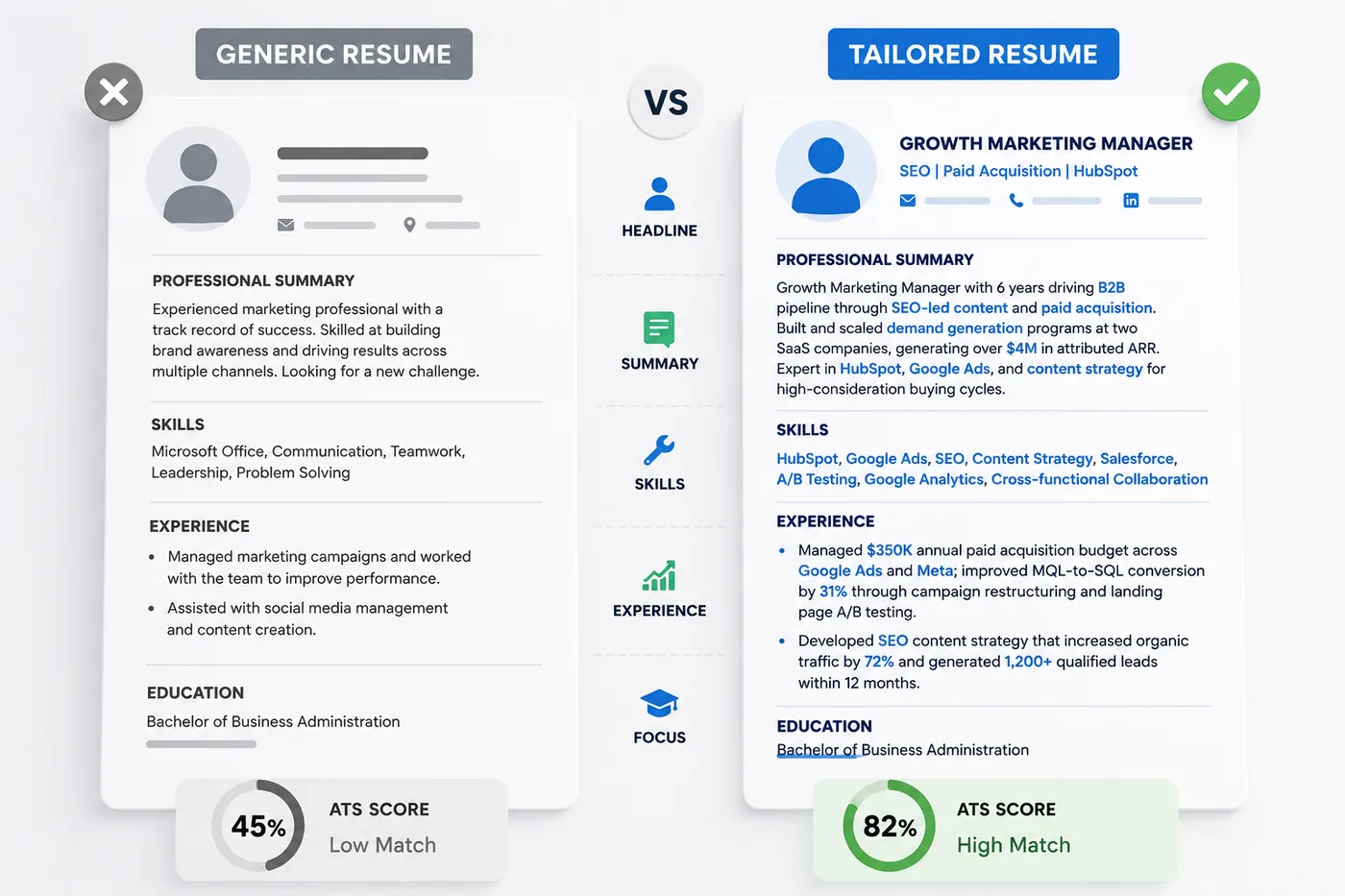
1. Does your headline match the exact job title?
Your headline should be the job title from the posting - not a variation, not a category. Recruiters and ATS both read this first.
- Posting: "UX designer" -> Headline: "UX designer"
- Posting: "UX designer" -> Headline: "Creative Professional" ✗
Read how to write a resume headline.
2. Does your summary use keywords from the posting?
Read your summary and the posting side by side. Your summary should contain the 2-3 most prominent skills/tools the posting emphasizes.
3. Does your summary say what you deliver, not just what you've done?
"Experienced analyst with 6 years of experience" is what you are. "data analyst who has driven 3x faster reporting cycles through SQL automation and Tableau dashboards" is what you deliver.
See how to write a resume summary.
Section 2 - Keywords and Skills (3 Minutes)
4. Are all "Required" skills from the posting in your skills section?
Highlight every skill under the "Requirements" section of the posting. Confirm each one you genuinely have is on your resume - using the exact terminology from the posting.
5. Are any "Preferred" skills from the posting visible?
Even preferred (non-mandatory) skills contribute to your ATS keyword score. Surface any you have.
6. Are you using acronyms AND full terms for key skills?
Write "Search Engine Optimization (SEO)" so you match both the acronym and full-form versions the ATS might look for. Same for "Agile (Scrum)," "CRM (Salesforce)," etc.
7. Is your skills section ordered by relevance to this role?
Move the most job-relevant skills to the top of the section. ATS weights position of terms and recruiters scan the top of lists.
For a comprehensive list of high-value keywords by industry, see best resume keywords to beat ATS systems.
Section 3 - Experience Bullets (3 Minutes)
8. Does the top bullet of your most recent role reflect this job's priorities?
If the posting emphasizes revenue growth and your top bullet is about process improvement, swap the order. You are not changing your history - you are leading with what is most relevant.
9. Do your bullets contain results, not just tasks?
Check every bullet: does it say what happened as a result of your work? If it starts with "Responsible for" or "Helped with," flag it for an upgrade.
Read how to quantify resume achievements.
10. Are the posting's key keywords embedded in at least 2-3 experience bullets?
Keywords in the experience section score higher than keywords in the skills section alone because they appear in a meaningful context. Find 2-3 bullets where you can naturally work in a required term.
11. Have you removed or deprioritized experience irrelevant to this role?
If you have bullets about skills completely unrelated to the posting, move them down or remove them if space is tight. White noise hurts readability.
Section 4 - Formatting and Parsing (2 Minutes)
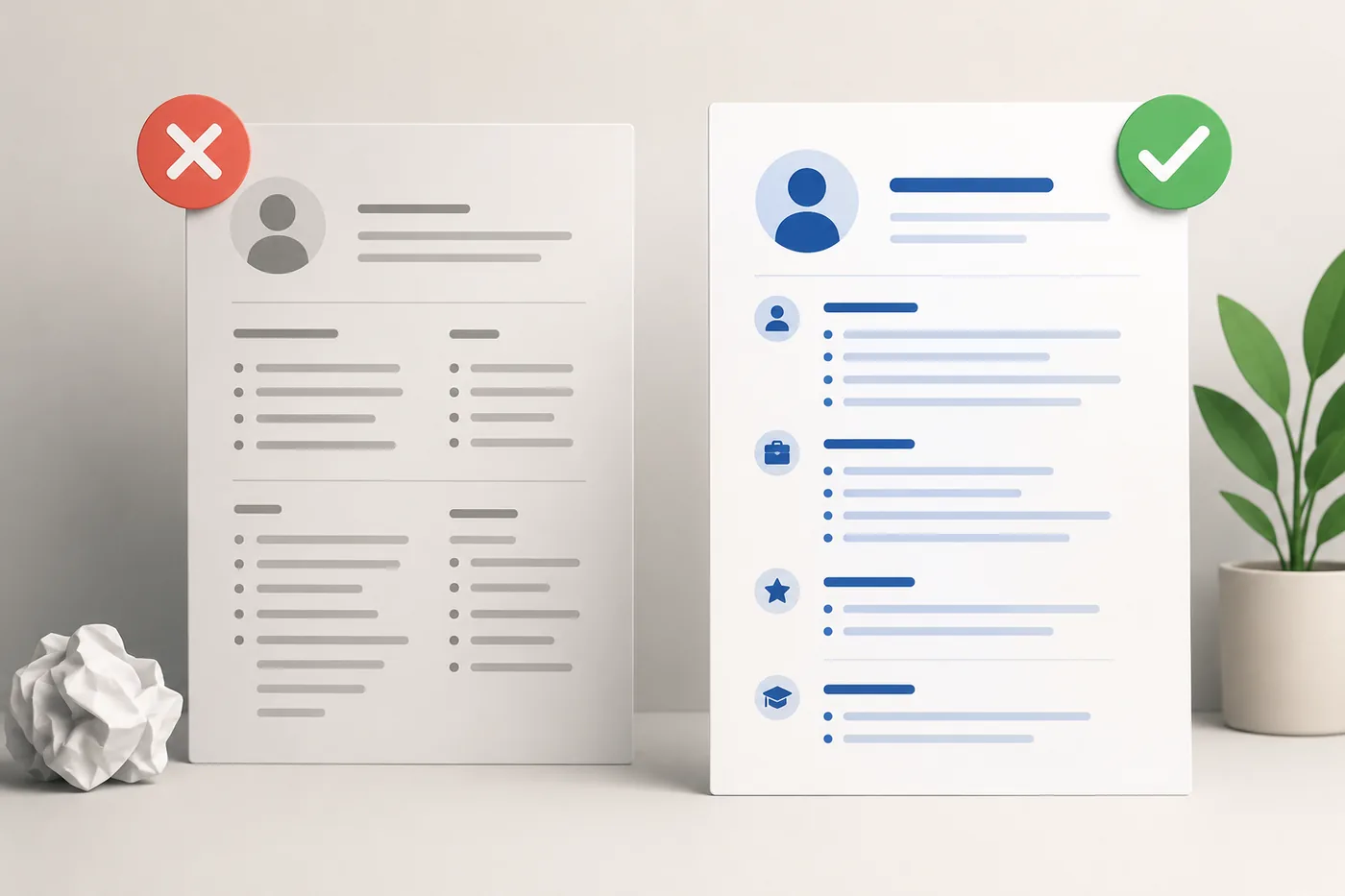
12. Is your resume in a single-column, ATS-safe layout?
No text boxes, tables, headers in graphics, columns, or unusual fonts. See ATS resume formatting mistakes.
13. Are your section headers standard?
Use: Summary, Experience, Skills, Education, Certifications. Non-standard headers ("Where I've Been," "My Arsenal") confuse ATS parsers and get skipped.
14. Is your contact information in the main body (not a header graphic)?
ATS parsers often miss content in page headers and footers. Your name, email, phone, and LinkedIn should be in the regular document flow.
Section 5 - Final Verification (1 Minute)
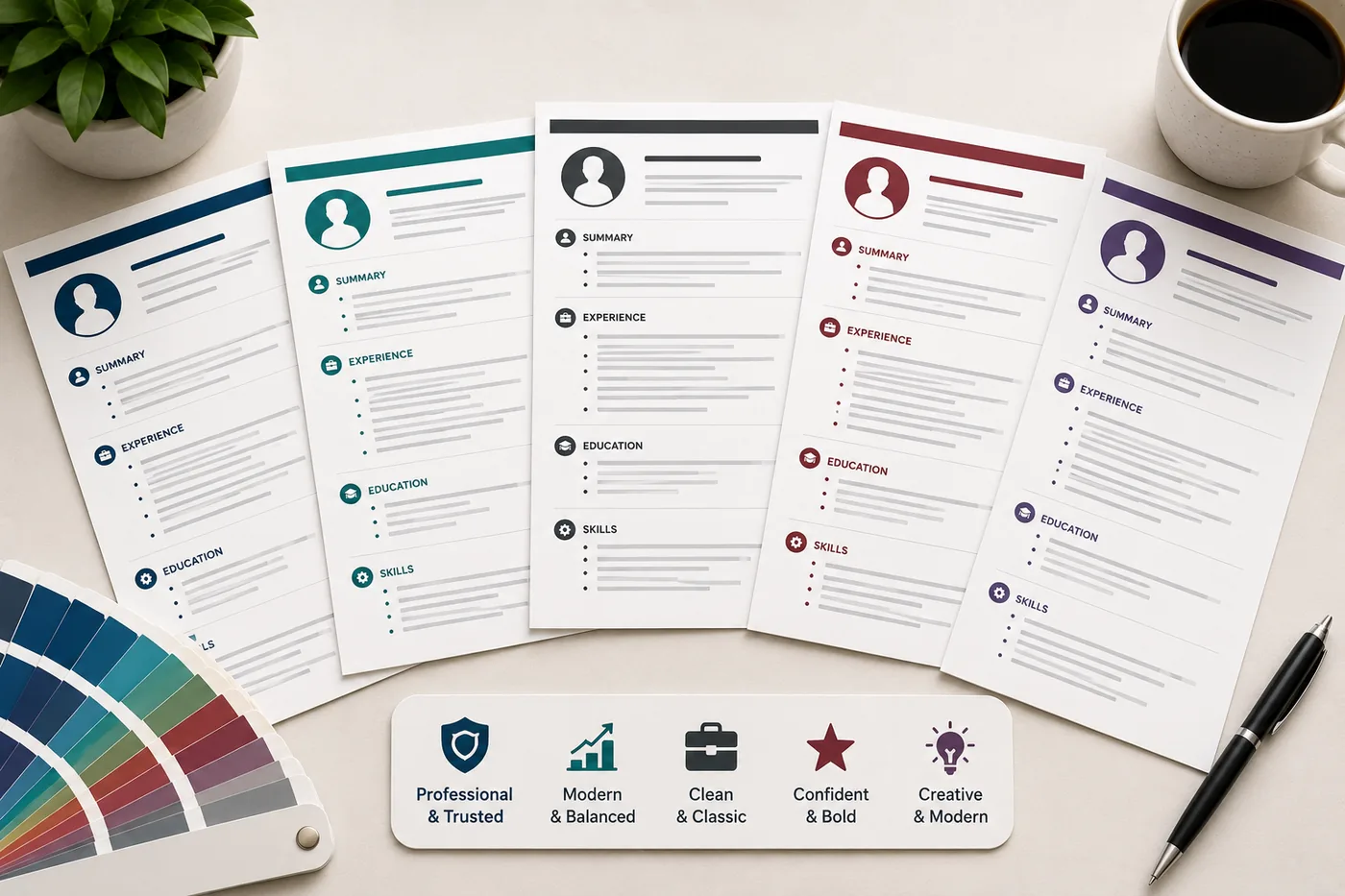
Your resume after optimization
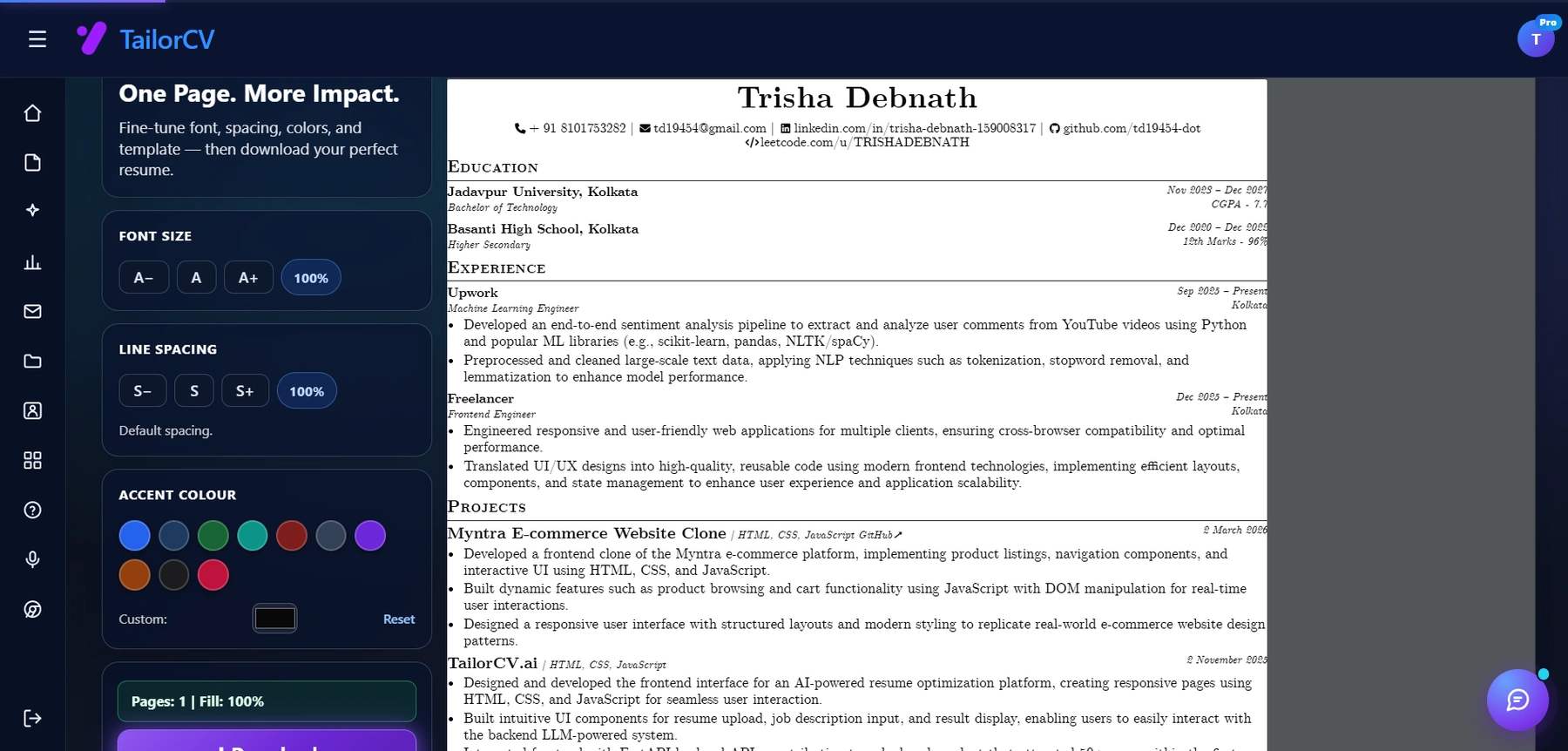
This is the resume after tailoring - the content is already matched, and these controls are how you fit it onto one page.
15. Have you run the ATS check?
This is the only step that objectively confirms whether the previous 14 steps worked. Paste your resume and the job description into TailorCV's free ATS checker. You'll see your keyword match score, your overall ATS score, and the specific terms you are still missing - in under 60 seconds.
A score above 75% means you are well-positioned. Below 70% means there are still fixable gaps.
See how to check your ATS score for free and does my resume pass ATS.
The Tiered Approach: How Many Items to Check
| Application Priority | Steps to Complete | Time Required |
|---|---|---|
| Low priority / volume | 1-7 (headline, summary, skills) | 5 minutes |
| Medium priority | 1-11 (above + experience bullets) | 10-15 minutes |
| High priority (dream role) | All 15 | 20-30 minutes |
For how to calibrate your tailoring effort, read how much you should change your resume for every job.
Frequently Asked Questions
Do I need to run this checklist every time?
At minimum, complete items 1-7 for every application. Those cover the areas that drive 80% of ATS score differences.
What if I run out of time?
Items 1 (headline), 4 (required skills), and 15 (ATS check) are the three highest-impact checks. If you only have 3 minutes, do those.
Should I save different versions of my resume?
Yes. Build a "master" version tailored for each role type you target. Apply the checklist on top of the relevant master version for each application. See resume matching for multiple jobs and consider how much you should change your resume for every job.
Related Guides
- How to Tailor a Resume in 5 Minutes
- How Much Should You Change Your Resume for Every Job
- How Recruiters Spot Generic Resumes
- How ATS Detects a Generic Resume
- Best Resume Keywords to Beat ATS Systems
- How to Quantify Resume Achievements
- ATS Resume Formatting Mistakes
- How to Write a Resume Summary
- How to Write a Resume Headline
- Resume Matching Checklist
- Resume Matching With Job Description - Complete Guide
- Does My Resume Pass ATS? A 12-Point Checklist
Make This Practical
Use this guide as part of a complete job-search workflow. Check your resume with the free ATS score checker, improve targeting with the Resume Optimization Guide, and choose a clean format from the ATS-friendly resume templates.
After the resume is ready, strengthen the rest of the application. Draft a targeted letter with the AI cover letter generator, practice interviews with the AI mock interview tool, and create a project-backed proof page with the portfolio website builder if you need a stronger online presence.
Conclusion
The candidates who consistently get callbacks are not the most talented in the applicant pool - they are the ones whose resumes most clearly communicate their fit for the specific role. This checklist makes that systematic. Run through it, verify with a tool, and submit with confidence instead of guesswork.
What is your resume scoring right now?
Scan it against a job description and get your ATS match score in about a minute.
Drop your resume here or choose a file
PDF only. Max 2 MB.
We never share your data or use it to train AI models.

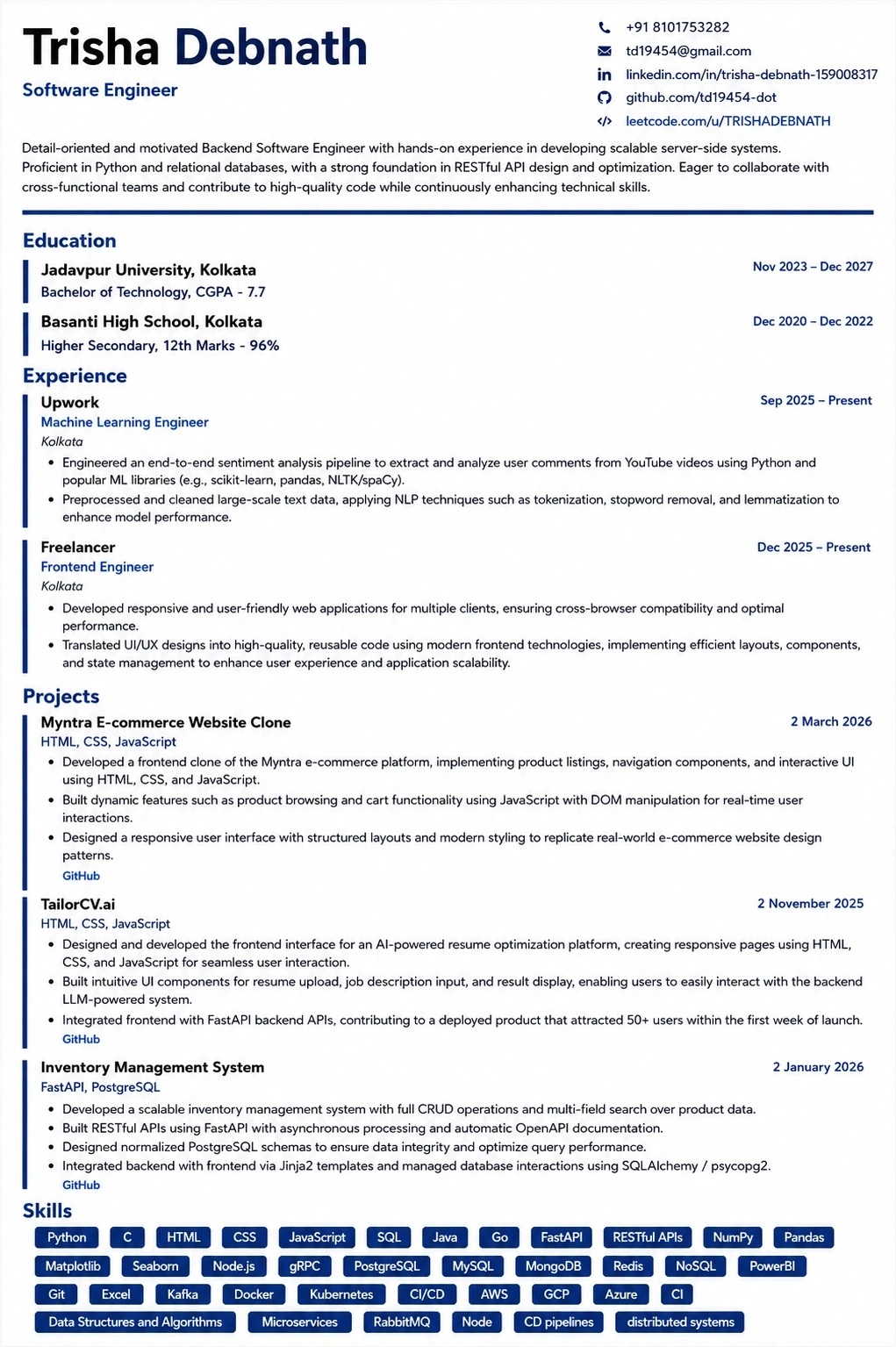
Templates that keep this structure intact
This template is ATS-tested — start from it and the formatting rules in this guide are already handled.
Was this guide useful?
Be the first to rate it.