TD
TD

Key Takeaways
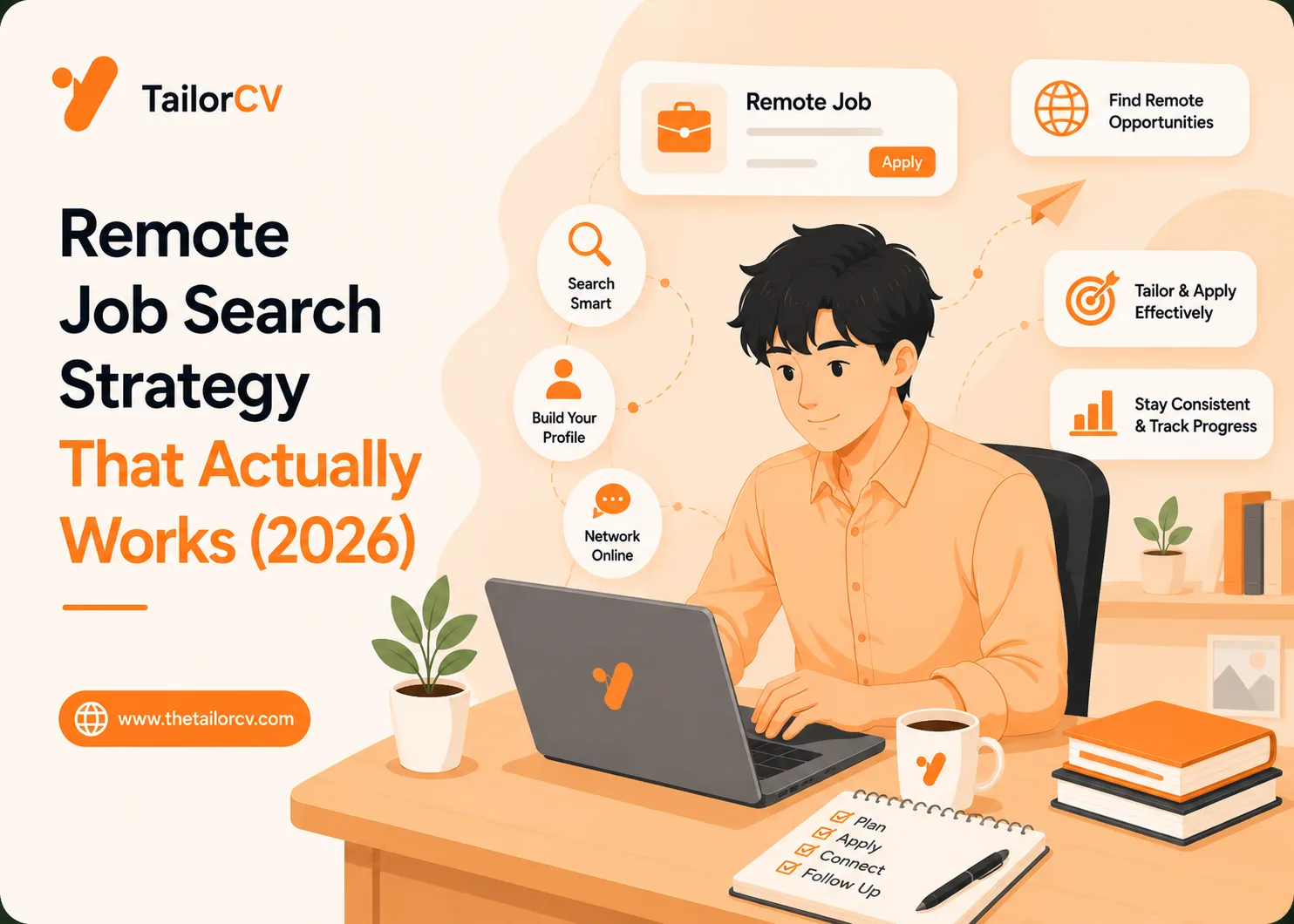
- Remote work is a permanent aspect of the job market in 2026, with global competition for roles across various fields.
- Optimize your resume for remote positions by highlighting remote experience, asynchronous communication tools, and self-management skills.
- Utilize specialized job boards like Remote.co, We Work Remotely, and tech-specific sites like Turing.com and Toptal to find remote opportunities.
- Use LinkedIn effectively by filtering for remote roles, setting job alerts, and leveraging connections at remote-first companies.
- Prepare for remote interviews by familiarizing yourself with video conferencing tools and understanding common remote-specific interview questions.
Remote work is no longer a pandemic-era experiment - it is a permanent feature of the global job market. In 2026, millions of roles across software engineering, data science, marketing, design, writing, finance, and operations are fully remote or hybrid. The competition for these roles is also global - you are not just competing with local candidates, but potentially with engineers from every continent.
This guide covers how to find remote jobs, how to position yourself for them, and how to succeed in a remote-first hiring process.
Before applying to any remote role, optimize your resume for the job description using the TailorCV ATS score checker. Use ATS-friendly resume templates. For virtual interview preparation, read the virtual interview tips guide.
Best Remote Job Boards in 2026
Tailoring without leaving LinkedIn
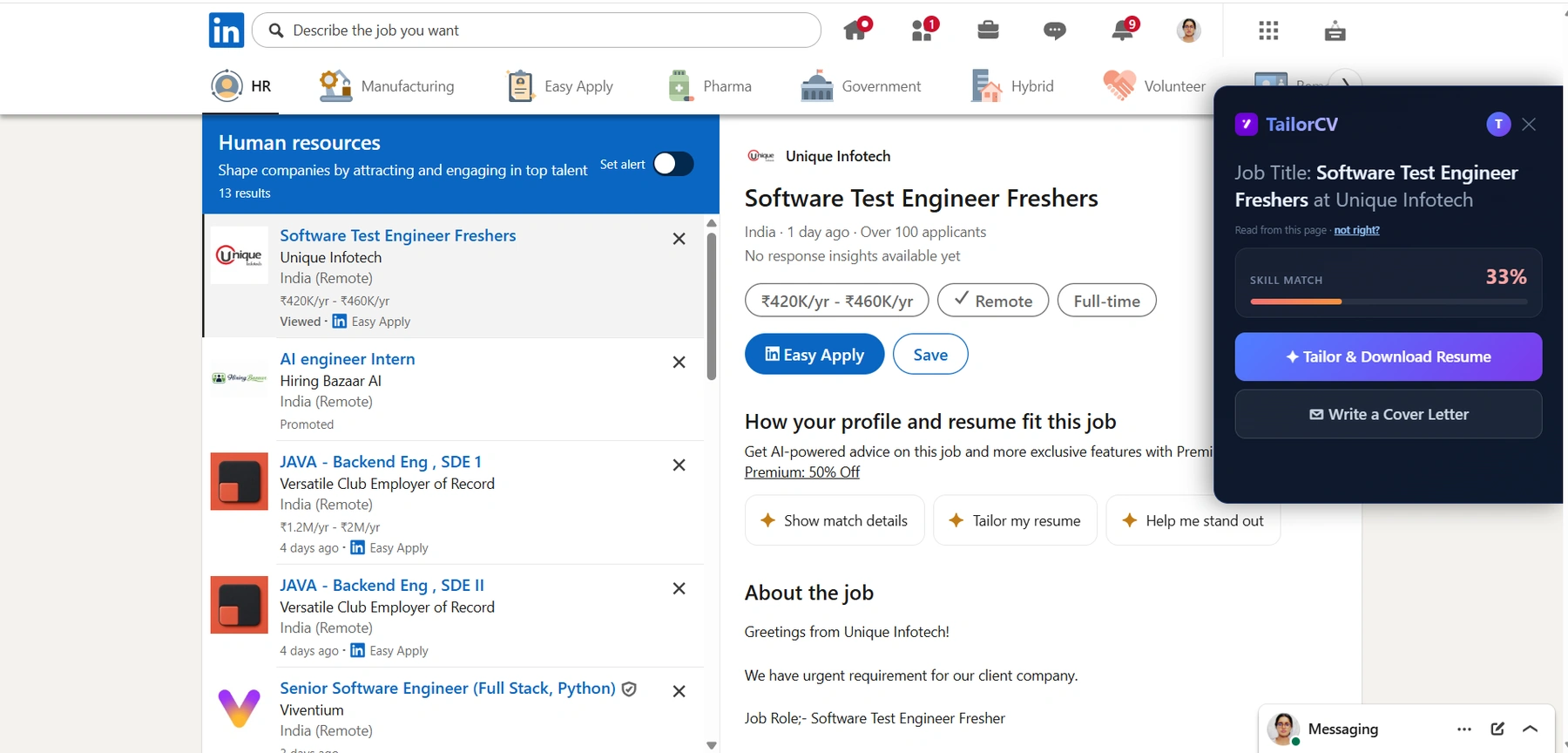
The panel reads the description straight off the listing you are already on and scores your resume against that role, so tailoring per application is a click rather than a detour.
General Remote
- Remote.co - Curated remote jobs across all categories
- We Work Remotely - High-quality remote roles, especially tech
- Remotive.io - Tech and startup remote jobs
- FlexJobs - Screened remote and flexible jobs (paid subscription)
- LinkedIn - Filter by "Remote" in location search
- Indeed - Filter by "Remote" - high volume but less curated
Tech-Specific Remote
- Turing.com - Senior developer roles for global clients
- Toptal - Top 3% engineer claim - rigorous screening, high pay
- Arc.dev - Remote developer roles
- Hired - Tech roles, including remote
- AngelList (Wellfound) - Startup remote roles
Design
- Dribbble Jobs - Designer-focused remote roles
- Behance Jobs - Creative remote roles
Writing and Marketing
- ProBlogger - Content writing remote roles
- Content Collective - Content marketing roles
- Workew.com - Marketing remote jobs
Finance and Operations
- Accountingfly - Remote accounting roles
- Robert Half - Finance and operations remote placements
How to Optimize Your Resume for Remote Roles
Remote employers specifically look for candidates who can work independently, communicate asynchronously, and manage their own time. Your resume should signal these qualities.
What optimizing actually does to your resume
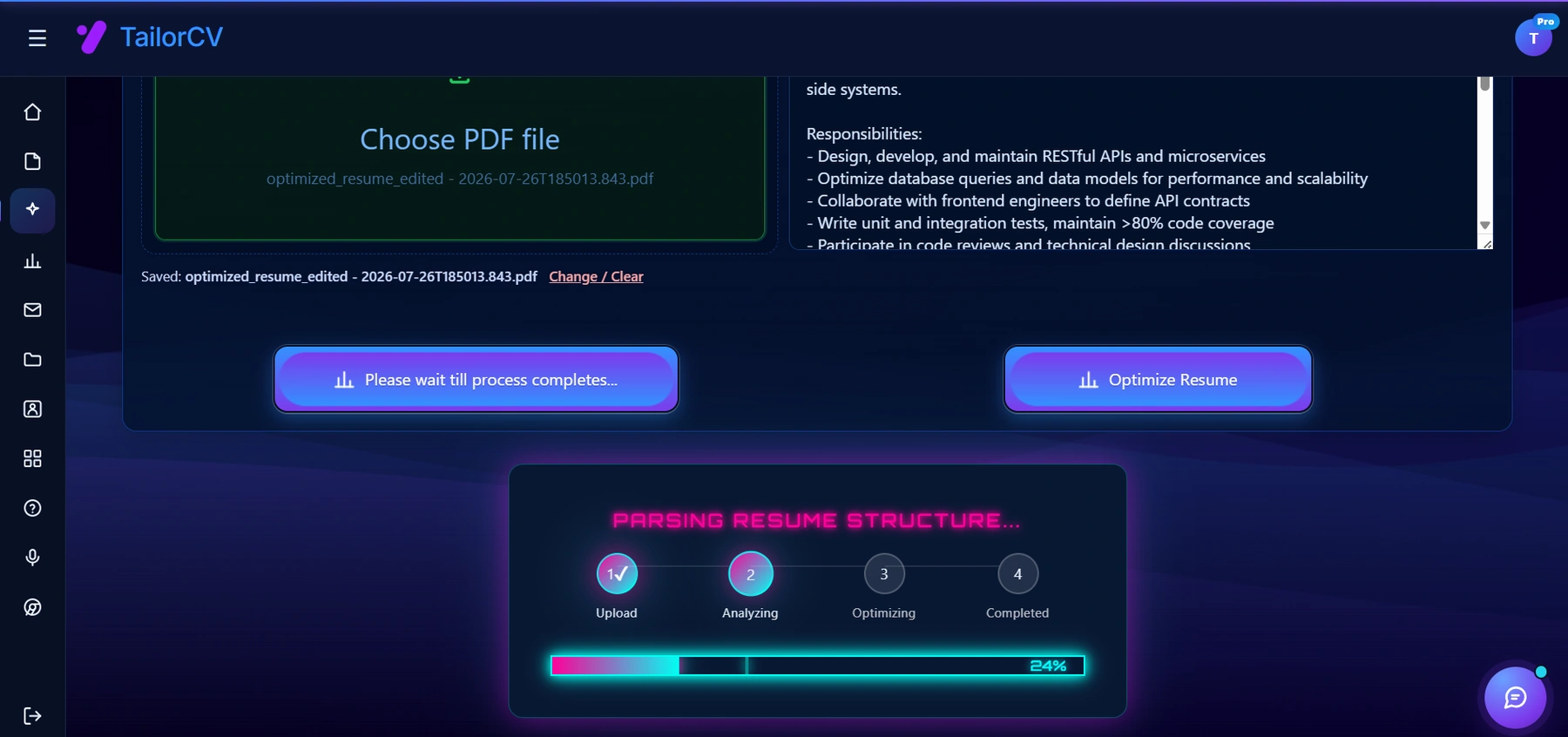
The tool parses your resume the way an ATS would before it changes anything, so the edits it suggests are grounded in the posting itself.
Add "Remote" to your experience
If you have worked remotely before, say so explicitly:
software engineer | TechCorp | Remote | Jan 2023 - Present
If your role was hybrid, you can still write:
software engineer | TechCorp | Bengaluru (Hybrid - 2 days/week remote)
Highlight asynchronous communication tools
Remote teams use Slack, Notion, Jira, Linear, Loom, GitHub, and Confluence for async collaboration. List the tools you use for distributed teamwork.
Show self-management evidence
Remote roles value engineers who can scope work, estimate accurately, and deliver without hand-holding. Bullets that show you owned a project end-to-end or delivered independently are strong for remote roles.
Write a remote-ready summary
"4 years of remote software engineering experience across UTC+5 and UTC+8 time zones. Experienced with async collaboration using Slack, Notion, and GitHub. Delivered 3 major features independently without co-location with teammates."
How to Find Remote Jobs on LinkedIn
- Search your target role (e.g., "data scientist")
- In the location field, type "Remote" or filter by "Remote" under "On-site/Remote/Hybrid"
- Set a job alert for this exact search combination
- Sort by "Most recent" to apply early
Also check:
- LinkedIn's "Open to Work" preferences - set "Remote" as your preferred work location
- Your connections at remote-first companies (Automattic, GitLab, Zapier, Buffer, Basecamp, Stripe, Shopify, etc.)
Remote Job Interview Preparation
Remote interviews happen on video - usually Zoom, Google Meet, or Teams. Read the complete virtual interview tips guide for full setup and delivery preparation.
For remote-specific interview questions, prepare answers for:
- "How do you stay productive when working from home?"
- "How do you communicate with teammates across time zones?"
- "How do you handle unclear requirements or blockers when you can't tap someone on the shoulder?"
- "What does your home setup look like?"
- "How do you avoid burnout when work and home are in the same space?"
Strong answers share specific systems you use - morning routines, time-blocking, async update templates, Loom video updates, etc.
Remote Work Resume Bullet Point Examples
- Led product development on a distributed team of 8 engineers across 4 time zones, coordinating through async Slack updates, weekly Loom video standups, and Notion project documentation.
- Delivered a full backend API project independently over 10 weeks as the sole engineer on a remote engagement, meeting all milestones without co-location with the client team.
- Improved async team communication by introducing structured daily written standups in Slack that replaced chaotic DMs, reducing blockers from "stuck for 2 days" to "stuck for 4 hours."
Salary Negotiation for Remote Roles
Remote salaries can vary enormously based on where the employer is headquartered and your location. There are three common approaches:
Location-based pay - Employer pays based on your local market cost of living. Living in a lower-cost area earns less than the US-based team.
Location-agnostic pay - Employer pays all employees at the same role level the same salary regardless of location. Companies like Basecamp and Buffer publish their salary formulas publicly.
Senior roles at US/EU rate from a lower-cost location - Many engineers in India, Eastern Europe, and Latin America earn $60-120K USD working for US companies remotely - far above local market rates.
Research salaries for your specific target market using Levels.fyi (tech), Glassdoor, and LinkedIn Salary - filtered by company headquarters, not your location.
Read the salary negotiation guide for full negotiation tactics applicable to remote offers.
Common Remote Job Search Mistakes
Mistake 1: Only using local job boards
Remote jobs are often found on global job boards, company career pages, and remote-specific platforms - not local portals. Expand your search.
Mistake 2: Not mentioning remote experience
If you have worked remotely, say so explicitly. Remote employers filter for candidates who have done it before.
Mistake 3: Poor virtual interview setup
A bad video, noisy background, or unstable internet connection during a remote interview sends the signal that your remote work setup will have the same problems. Invest in your setup.
Mistake 4: Not researching the company's remote culture
Some companies are remote-first (fully distributed, async-first culture). Others are remote-allowed (team is in office, you are the odd one out). Know which you are applying to and whether it fits how you work.
Related Guides
- How to Get a Job With No Experience
- How to Get Your First Tech Job
- How to Handle Job Rejection
- How to Negotiate a Salary Offer
- Work-Life Balance Tips for Professionals
- How to Build a Professional Portfolio
- How to Decline a Job Offer Professionally
- How to Use LinkedIn for Job Search
- How to Write a Cold Email to a Recruiter
- LinkedIn Profile Optimization Guide
- Networking Tips for Job Search
- Virtual Interview Tips
- How to Explain Resume Gaps in 2026 - Honest Strategies That Work
- Cover Letter Guide 2026 - How to Write a Cover Letter That Gets Read
- Freelancing vs Full-Time Employment in 2026 - Honest Comparison
- How to Match Your Resume to a Remote Job Description in 2026
- Career Change to Tech in 2026 - Complete Guide for Switchers
- Data Analyst vs Data Scientist in 2026 - Which Career Is Right for You?
Make This Practical
Turn the career advice into a stronger application system. Start by checking your resume with the free ATS score checker, align it with the role using How to Tailor Your Resume for Every Job, and keep your profile consistent with LinkedIn Resume Tailoring Sync.
When you are ready to apply, build the supporting pieces around the resume. Use the AI cover letter generator for targeted outreach, practice with the AI mock interview tool, and review Why Your Resume Gets No Responses if applications are not converting.
Conclusion
Remote jobs in 2026 offer unparalleled geographic freedom but come with real competition and specific expectations. Position yourself with remote-experience language, async tool proficiency, and a great virtual interview setup.
Optimize your resume with the TailorCV ATS score checker, use an ATS-friendly template, and prepare your remote interview with the virtual interview guide. For LinkedIn strategy, read the LinkedIn job search guide.
Frequently Asked Questions
What are the best job boards for finding remote jobs in 2026?
In 2026, some of the best job boards for remote jobs include Remote.co, We Work Remotely, and FlexJobs. These platforms offer a variety of remote roles across different sectors, ensuring you can find opportunities that match your skills. For tech-specific roles, consider sites like Turing.com and AngelList for startup positions. Utilizing these platforms effectively can significantly enhance your job search.
How can I optimize my resume for remote job applications?
To optimize your resume for remote job applications, tailor it to match the job description closely. Use the Free ATS score checker to ensure your resume is ATS-friendly and highlights relevant skills. Additionally, consider using resume templates designed for remote positions to make a strong impression on hiring managers.
What should I include in my cover letter for remote jobs?
When crafting a cover letter for remote jobs, focus on your ability to work independently and communicate effectively in a virtual environment. Highlight relevant experiences and skills that demonstrate your remote work capabilities. For detailed tips, check out our guide on what hiring managers want to see in a cover letter for remote jobs.
How do I handle job rejection while searching for remote work?
Job rejection can be tough, especially in a competitive remote job market. It’s important to view rejection as a learning opportunity. Reflect on any feedback you receive and consider reading our practical guide on how to handle job rejection to maintain motivation and improve your future applications.
What are effective strategies for salary negotiation for remote jobs?
When negotiating a salary for a remote job, research industry standards and be prepared to discuss your unique qualifications. Use data to support your request and consider the benefits of working remotely. For more specific tactics, refer to our detailed guide on how to negotiate a salary offer in 2026.
What is your resume scoring right now?
Scan it against a job description and get your ATS match score in about a minute.
Drop your resume here or choose a file
PDF only. Max 2 MB.
We never share your data or use it to train AI models.

Templates that keep this structure intact
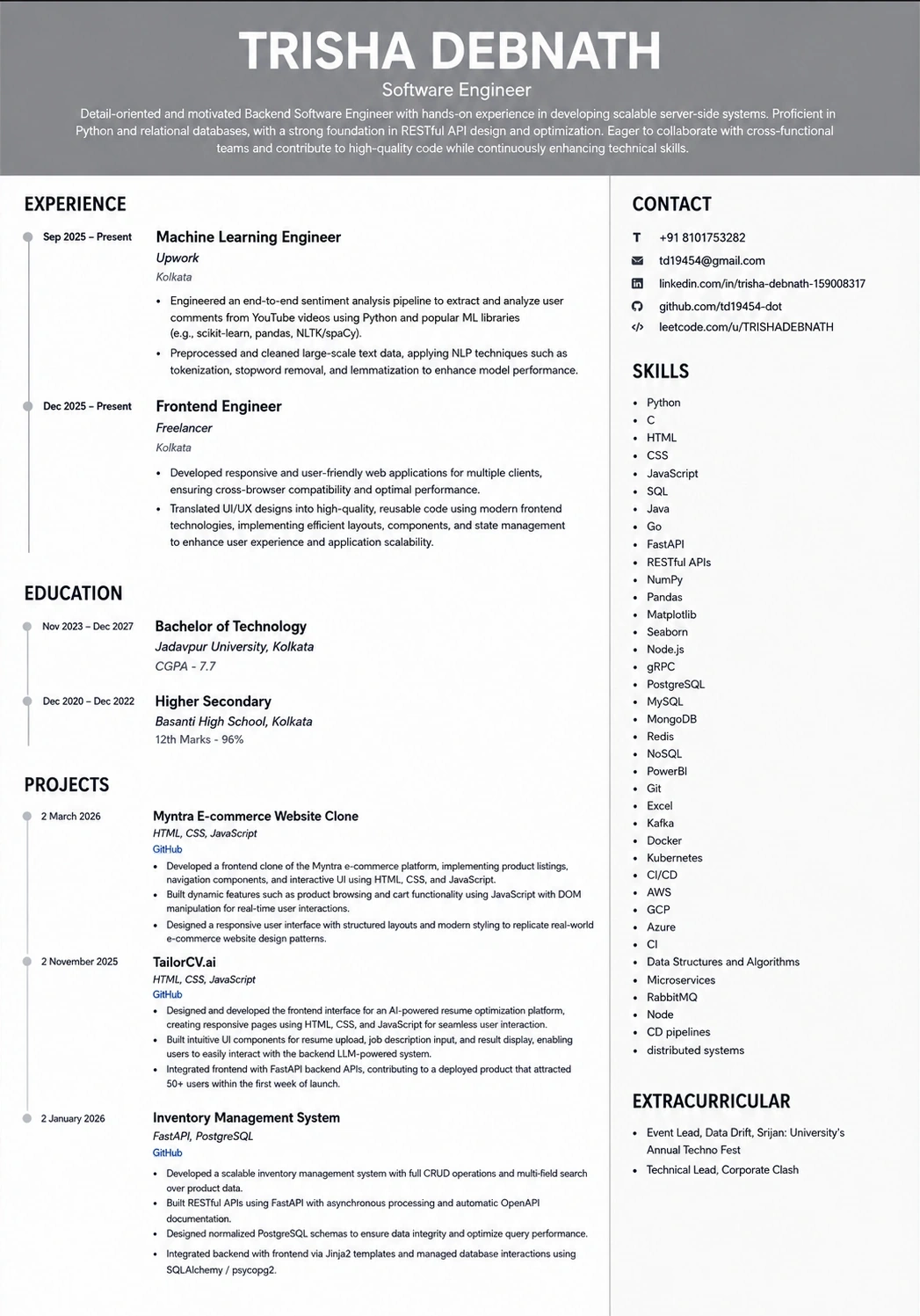
This template is ATS-tested — start from it and the formatting rules in this guide are already handled.
Was this guide useful?
Be the first to rate it.