 SS
SS
Key Takeaways
- Reverse-chronological is the default and the safest choice for almost everyone.
- Functional resumes hide your timeline, which makes recruiters and ATS suspicious.
- A combination format is the right tool for genuine career changers.
- Whatever the format, keep it single-column and parseable.
The Three Formats
Reverse-chronological lists your jobs newest first, with dated bullets under each. It is what recruiters expect and what an ATS parses most reliably.
Functional groups your abilities by skill theme and downplays dates and job titles. It was designed to mask gaps or job-hopping.
Combination (or hybrid) opens with a skills-and-highlights summary, then still lists a dated work history underneath.
Why Reverse-Chronological Wins
Recruiters read hundreds of resumes and have a mental template: where did you work, when, and doing what. Reverse-chronological answers all three instantly. An ATS also parses it best, because dates and titles sit in the structure the parser expects. For maybe 85% of candidates, this is simply the correct format.
Why Functional Resumes Backfire
A functional resume removes the one thing a recruiter looks for first: the timeline. In practice, that reads as "this person is hiding something." Worse, many ATS parsers cannot attach your skills to any employer, so your experience gets dropped into a void. Even if you have gaps, a well-worded chronological resume handles them better than hiding the timeline entirely.
When a Combination Format Fits
The one strong case for moving away from pure chronological is a genuine career change, where your most relevant experience is not your most recent. A combination format lets you lead with a skills summary and relevant projects, then still show a dated history — so you get the framing benefit without triggering the "what are they hiding" reflex.
The Layout Rules That Apply to All Three
- Single column.
- Standard section headings.
- Consistent date format.
- Newest and most relevant content near the top, where it gets read.
Side-by-Side Comparison
| Factor | Reverse-Chronological | Functional | Combination |
|---|---|---|---|
| Recruiter familiarity | Highest — the expected default | Low — reads as unusual | Medium |
| ATS parsing | Excellent | Poor — skills float free of employers | Good |
| Shows career progression | Yes, clearly | No, hides it | Partly |
| Handles gaps | Well, with wording | Attempts to hide them (backfires) | Reasonably |
| Best for | Most candidates | Almost no one | Genuine career changers |
| Risk | Very low | High | Low to medium |
The table makes the decision easy: unless you are a true career changer, reverse-chronological is the format with the highest upside and the lowest risk.
What Each Format Actually Looks Like
Reverse-chronological opens with a short summary, then a work-experience section where each job appears newest-first with dated, results-driven bullets, followed by skills and education. The reader's eye travels down a clear timeline.
Functional opens with a summary, then groups accomplishments under skill themes ("Leadership," "Analysis," "Communication"), with the actual employers and dates relegated to a bare list at the bottom — or omitted. The problem is immediate: a bullet that says "led a team of 12" is disconnected from where and when you did it, which is exactly the context a recruiter needs to trust it.
Combination opens with a stronger summary and a "Key Skills" or "Selected Projects" block that front-loads your most relevant material, then still presents a dated, reverse-chronological work history underneath. You get to frame your relevance without hiding your timeline.
The Career-Changer's Dilemma, Solved
The reason functional resumes exist is a real problem: when your most relevant experience is not your most recent, a pure timeline buries your best material under your current, unrelated job. But the solution is not to hide the timeline — it is to add a framing layer above it.
A combination format handles this cleanly. Lead with a summary that states your target direction, add a "Relevant Experience" or "Selected Projects" section that surfaces the transferable work, and then show your full dated history. The recruiter sees your relevance first and your honesty right after. For more on this, see our career change resume guide.
Format Mistakes That Cost Interviews
- Choosing functional to hide a gap. It removes the timeline recruiters look for and triggers suspicion. A well-worded chronological resume handles gaps better.
- Two columns for "design." They look modern and parse terribly.
- Inconsistent date formats. "Jan 2024" in one place and "2024/01" in another looks careless and can confuse parsers.
- Burying recent, relevant work. Even in chronological format, lead each role with its most impressive, relevant bullet.
- A five-page history. Length is not depth. Two pages maximum for most, one for early-career.
Your resume after optimization
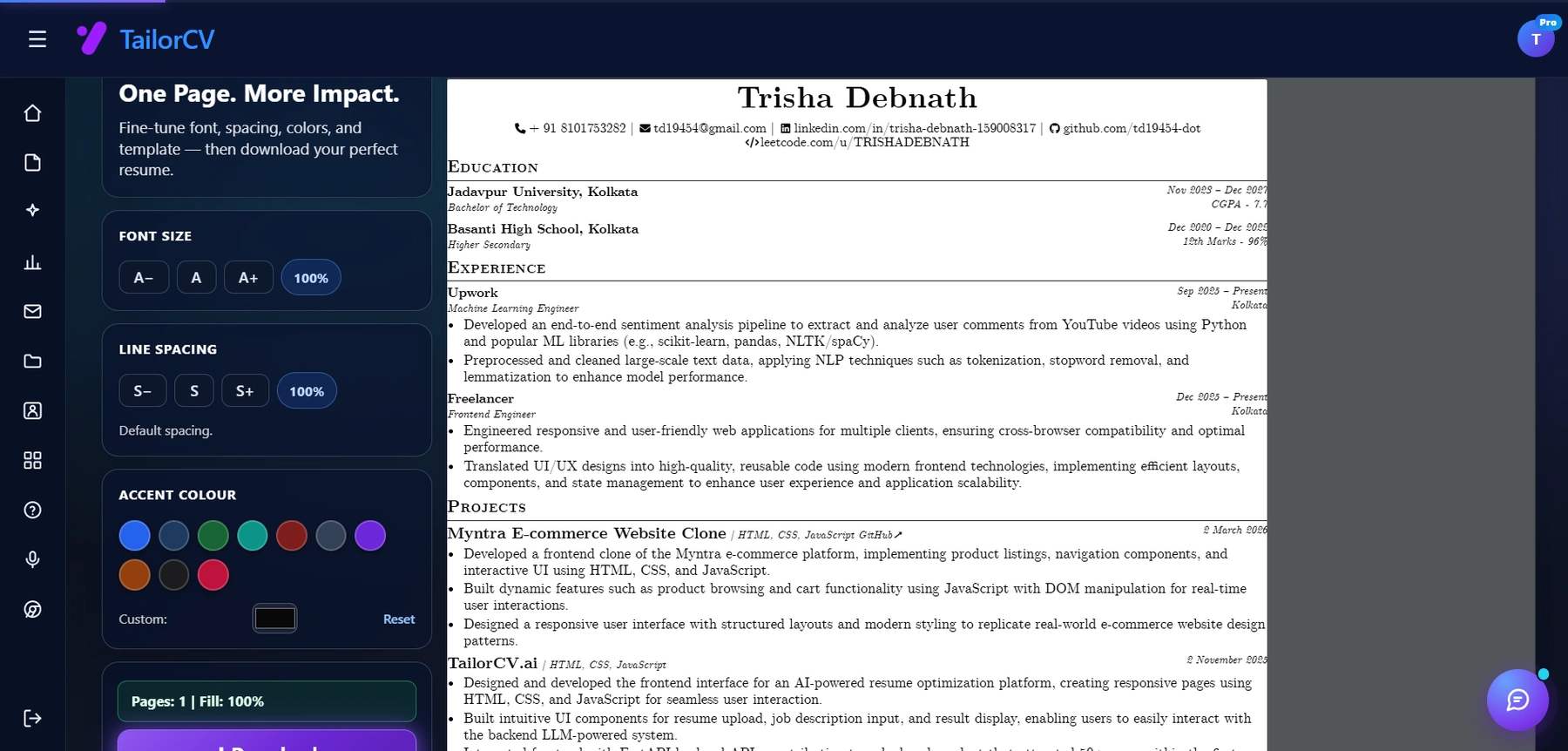
Font size, spacing, accent colour and template are all adjustable, with a live page counter.
How the ATS Reads Each Format
Format is not just an aesthetic choice — it directly affects whether an applicant tracking system can read you at all. A parser tries to attach your accomplishments to employers and dates so it can build a structured work history. Reverse-chronological hands it exactly that: title, company, dates, bullets, in a predictable order. The parser succeeds, your experience is scored, and you advance.
A functional resume actively breaks this. When your accomplishments float under skill headings with employers relegated to a bare list at the bottom, the parser often cannot tell where you did anything. Your carefully described leadership and analysis end up disconnected from any job, and the system may score you as having little real experience — the opposite of what you intended. This is the hidden cost of the functional format: even when a human might forgive it, the software frequently does not.
Choosing Your Format: A Decision Guide
- Steady career in one field? Reverse-chronological, without question. It shows your progression and parses perfectly.
- A few short gaps? Still reverse-chronological — use year-only dates or a brief dated bridge entry rather than hiding the timeline.
- Genuine career change? Combination — lead with a skills-and-projects section that surfaces your transferable work, then keep a dated history underneath.
- First job, no experience? A standard layout that leads with skills and projects but keeps clear structure and dates.
- Frequent job-hopping you want to downplay? Reverse-chronological still, but consider grouping short contract roles under one "Contract & Freelance Work" heading with a date range.
Notice that in almost every case, the answer is reverse-chronological or combination — never pure functional.
Formatting Rules That Apply to Every Format
Whatever structure you choose, these rules keep it parseable and readable:
- One column. Two-column layouts scramble in many parsers.
- Standard section headings the software recognizes: Experience, Education, Skills.
- Consistent date formatting throughout — pick one style and hold it.
- Contact details in the body, not in a header or footer that parsers skip.
- Real text, not images or text boxes. A resume saved as an image cannot be parsed at all.
- A common font and simple bullets, so nothing gets mangled in translation.
Get the format and these fundamentals right, and you have cleared the mechanical hurdles before a human ever reads a word — which frees your content to do its job.
Building a Reverse-Chronological Resume Section by Section
Since this is the format almost everyone should use, here is how to structure it well from top to bottom:
- Contact block. Name, phone, email, city, and links (LinkedIn, portfolio, GitHub) — in the body, never in a header or footer a parser might skip.
- Summary. Two or three lines stating who you are, your strongest quantified proof, and your target — tuned to the specific role.
- Experience. Newest job first. For each: title, company, location, dates, then three to five bullets led by strong verbs and quantified results. Lead each role with its most impressive, relevant bullet.
- Skills. A clean, grouped list of genuine hard skills that mirror the posting's language.
- Education. Degree, institution, graduation year, and relevant honors or coursework if early-career.
- Optional sections. Certifications, projects, or publications, if they strengthen your case for this role.
The order can flex slightly — technical and early-career candidates often move skills or projects higher — but the reverse-chronological experience section stays the backbone, because it is what recruiters and parsers both expect.
Common Questions About Ordering and Emphasis
Within the reverse-chronological format, a few ordering decisions come up repeatedly. If your most recent role is less relevant than an older one, you still keep the chronological order but lead the relevant role with stronger, fuller bullets so it draws the eye. If you have a standout project or a prestigious certification, it is fine to surface a "Selected Projects" or "Certifications" section above older experience. And if your education is your strongest asset — a fresh graduate from a strong program — education can sit near the top until your work history outgrows it. The principle underneath all of these: keep the honest chronological structure, but use section placement and bullet emphasis to guide attention toward your most relevant, most impressive material. That is the entire art of the format — clarity of timeline, with your best foot deliberately forward.
Frequently Asked Questions
I'm changing careers — should I use a functional resume?
No — use a combination format. Lead with relevant skills and projects, but keep a dated work history so the timeline stays visible.
Does the format affect my ATS score?
Yes. Chronological and combination formats parse cleanly; pure functional formats often lose the link between skills and employers, hurting your match.
Where do dates go?
Right-aligned or immediately after each job title, in a consistent format. Year-only is fine and can smooth over short gaps.
Is a combination resume the same as a hybrid resume?
Yes — "combination" and "hybrid" are two names for the same format: a skills-and-highlights section on top of a dated, reverse-chronological history underneath.
Which format do recruiters prefer?
Reverse-chronological, by a wide margin. It matches the mental template they use to scan quickly. Anything that deviates makes their job harder, and a harder-to-read resume gets less attention.
Can I use a functional resume for a first job with no experience?
Better to use a standard layout that leads with skills and projects but keeps clear structure. A pure functional format still confuses the ATS; a projects-forward chronological resume gives you the framing benefit without the parsing risk.
Does the format change for senior roles?
The format stays reverse-chronological, but the emphasis shifts: a senior resume leads with a strong summary and lets recent, high-impact roles dominate, with early-career jobs compressed to a line or two.
How do I handle many short contract roles?
Keep reverse-chronological order, but consider grouping related short contracts under one heading like "Contract & Freelance Work" with an overall date range, then listing each engagement beneath. This preserves the timeline while preventing a fragmented, job-hopping appearance.
Should a two-page resume repeat my name on page two?
Yes — add your name and "page 2" in the body of the second page (not a header/footer that a parser skips), so if the pages are separated, the second is still identifiable. Keep the format identical across both pages.
Is a one-page resume always better?
Not always. One page is right for early-career candidates; experienced professionals with a decade of relevant work can use two. The rule is relevance, not length — every line should earn its place, whether you fill one page or two.
Putting It All Together
For almost everyone, reverse-chronological is the right choice: recruiters expect it, the ATS parses it cleanly, and it shows your progression at a glance. Reserve the combination format for genuine career changes, where you need to surface transferable work above your timeline — not hide the timeline. And avoid the pure functional format entirely; the very thing it tries to conceal is the thing every reader looks for first.
What is your resume scoring right now?
Scan it against a job description and get your ATS match score in about a minute.
Drop your resume here or choose a file
PDF only. Max 2 MB.
We never share your data or use it to train AI models.

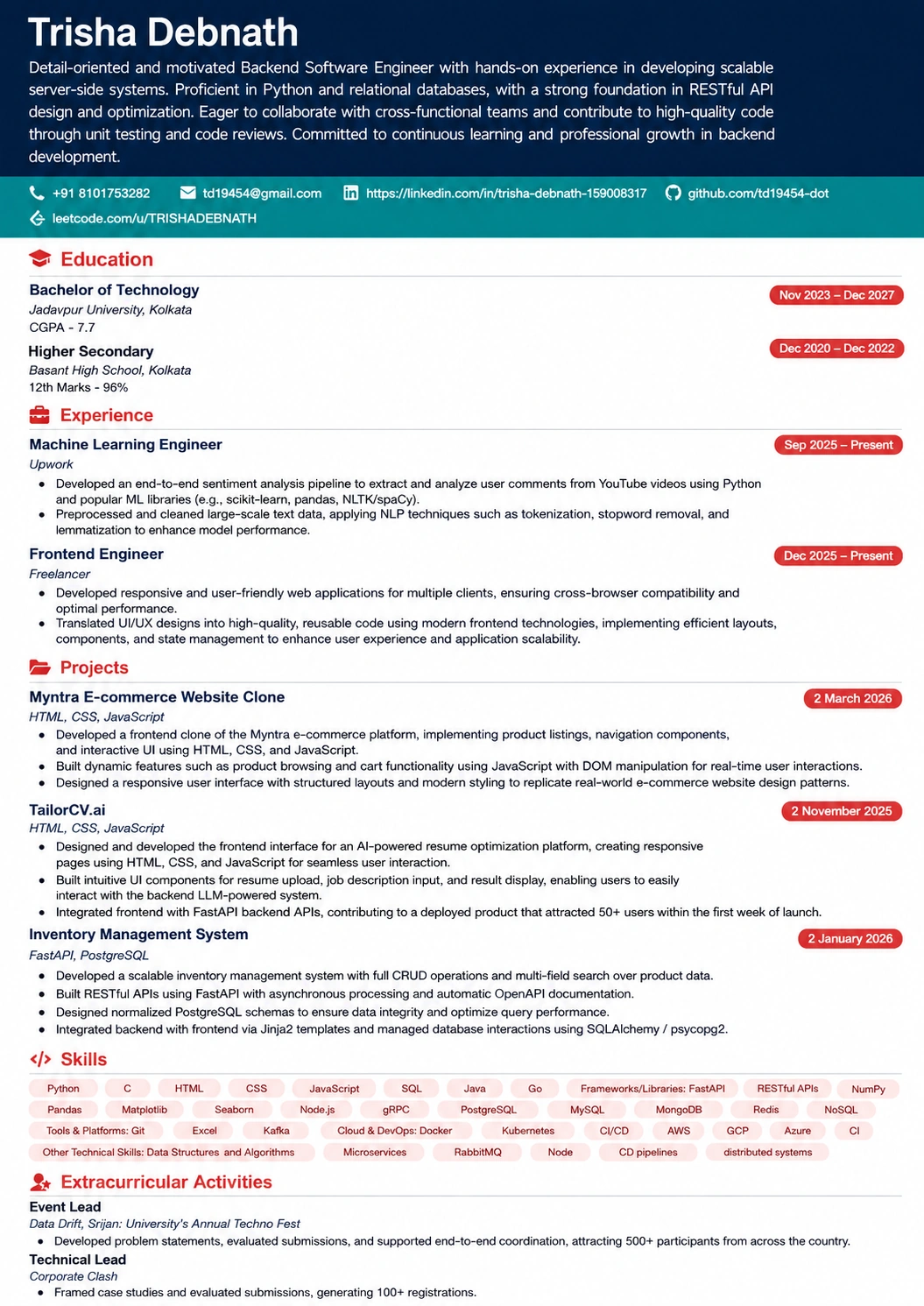
Templates that keep this structure intact
This template is ATS-tested — start from it and the formatting rules in this guide are already handled.
Was this guide useful?
Average 5.00 / 5.00 · 1 rating