 SS
SS
Key Takeaways
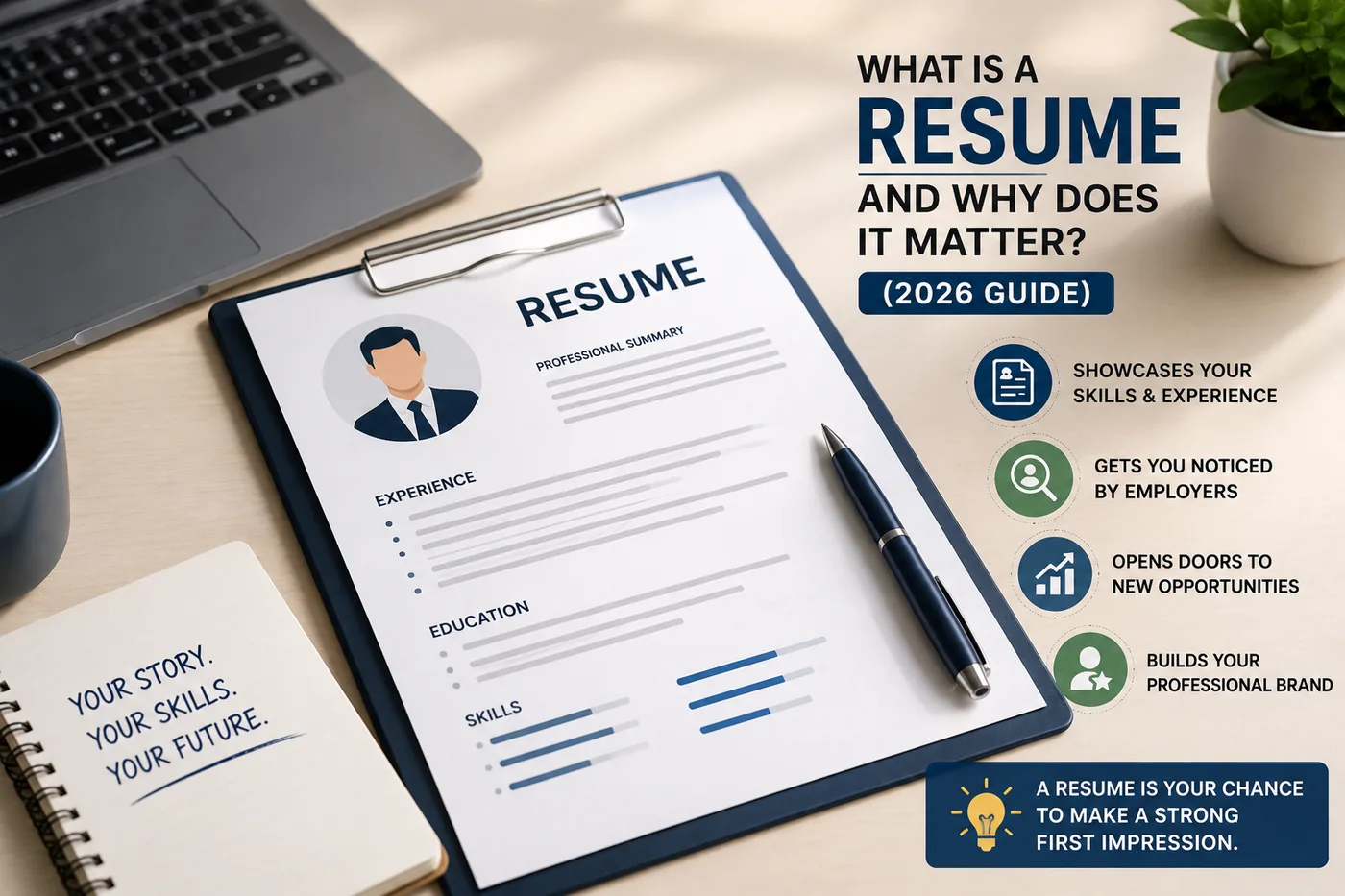
- A resume is a targeted marketing document that summarizes your relevant work experience, skills, and accomplishments to secure an interview.
- Its primary purpose is to convince hiring managers to invite you for an interview, not to get you the job itself.
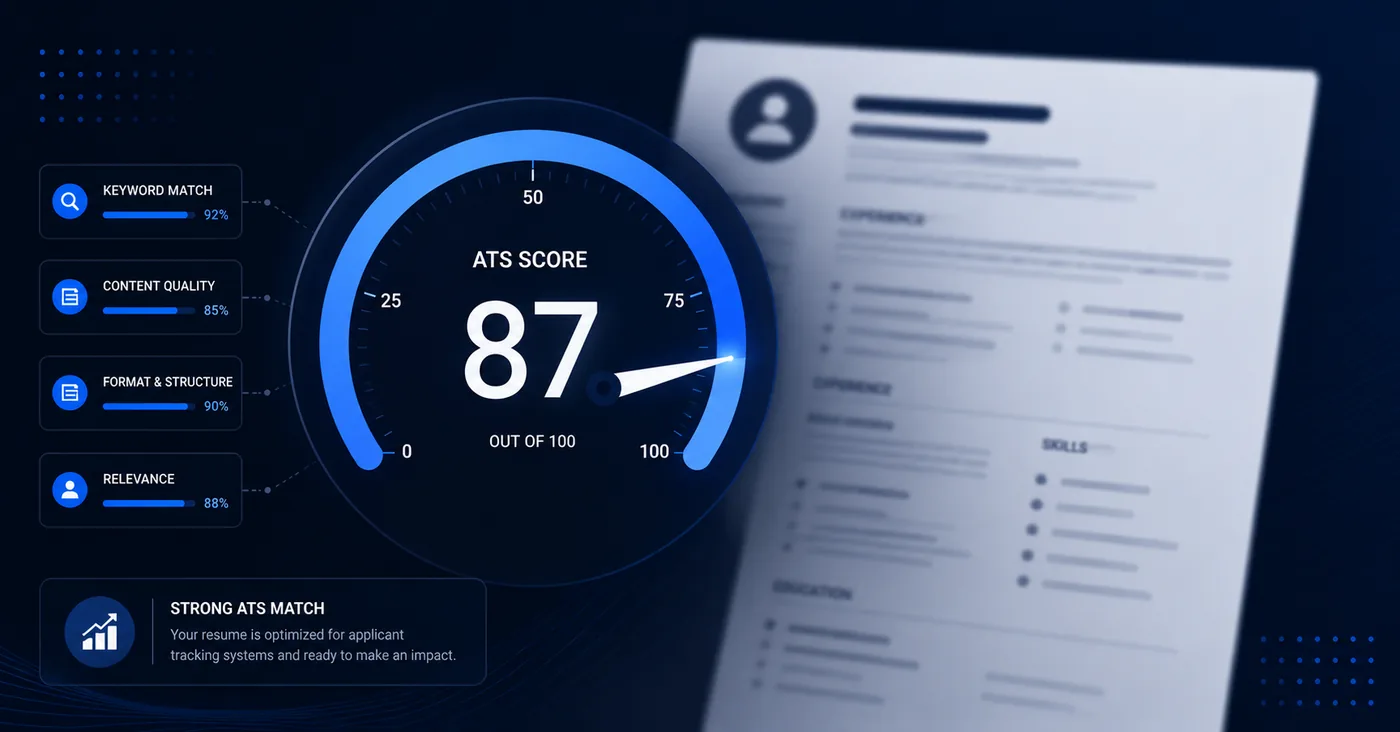
- Resumes first pass through Applicant Tracking Systems (ATS), which filter them based on keywords and formatting, making ATS optimization essential.
- After ATS, recruiters and HR professionals quickly scan resumes for role match and standout accomplishments, often in under 10 seconds.
- Only resumes that pass through ATS and receive positive reviews from recruiters and hiring managers lead to interview invitations.
A resume is the single most important document in your job search. Yet most people have never been taught what it actually is, what it is supposed to do, or why getting it right matters so much. This guide gives you the full picture - what a resume is, how it travels through the hiring process, and why your resume quality directly controls your interview rate.
Once you understand what a resume is supposed to do, use the TailorCV ATS score checker to measure how well yours performs, and start from an ATS-friendly template built for the modern hiring process.
What Is a Resume?
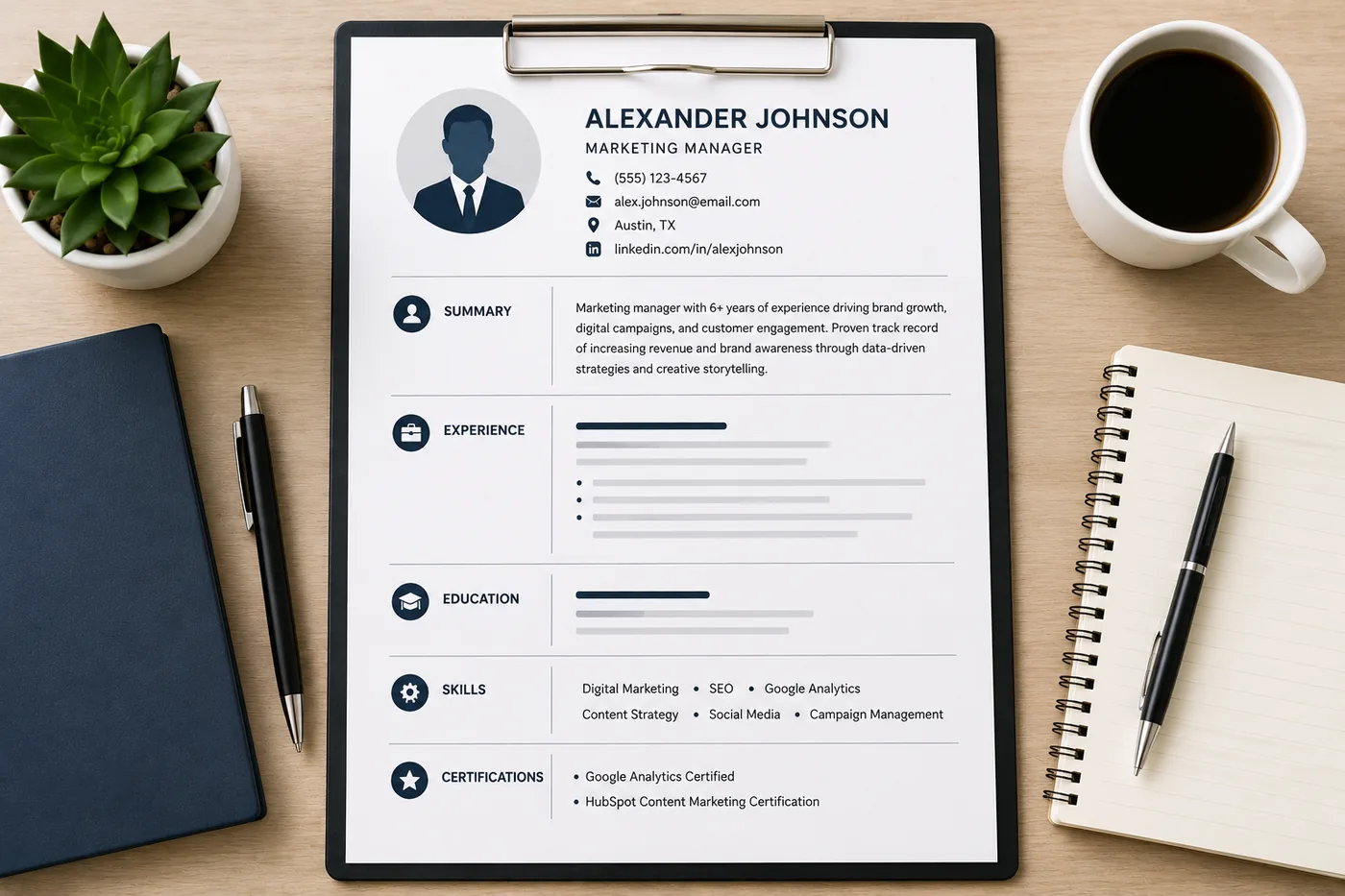
A resume is a one-to-two page professional document that summarizes your work experience, skills, education, and accomplishments in a format designed to convince a specific employer to interview you.
It is not a complete life history. It is not a list of everything you have ever done. It is a targeted marketing document - a curated selection of your most relevant experience, written to show that you are the right person for a specific role.
The word "resume" comes from the French word for "summary." That captures it well. A resume summarizes who you are professionally in the fewest, most impactful words possible.
What a Resume Is Supposed to Do
A resume has one job: get you an interview.
That's it. It doesn't get you the job. It doesn't fully represent your personality. It doesn't replace a conversation. Its sole purpose is to convince a hiring manager that you are worth speaking to.
This is why the quality of your resume directly determines how many interviews you receive. A weak resume - even for a strong candidate - produces few callbacks. A well-optimized resume for the right role produces a consistent interview rate.
How a Resume Travels Through the Hiring Process
Understanding the journey your resume takes helps you optimize it correctly.
Step 1: Applicant Tracking System (ATS)
For most companies today, your resume is first read by software, not a human. An Applicant Tracking System (ATS) automatically scans resumes for relevant keywords, required qualifications, and proper formatting.
Resumes that fail the ATS scan are rejected before any human ever sees them. Research suggests that over 75% of resumes are filtered out at this stage. This is why ATS optimization is no longer optional - it is the first gate your resume must pass through.
Read what is an ATS score and why it decides your application to understand this system in depth. Then run your resume through the free ATS score checker to see exactly how you score.
Step 2: Recruiter or HR Screen
If your resume passes ATS, a recruiter or HR professional reviews it - typically spending less than 10 seconds on the first pass. They scan for role match, career progression, and standout accomplishments. Read how recruiters read resumes in under 10 seconds to understand what they look at first.
Step 3: Hiring Manager Review
If the recruiter shortlists you, the hiring manager reviews your resume more carefully, looking at the depth of your experience, the quality of your achievements, and how well your background matches the team's specific needs.
Step 4: Interview Invitation
Only candidates whose resumes survive all three stages receive interview calls.
What a Strong Resume Looks Like
A high-performing resume has these qualities:
| Mistake | Why it costs you |
|---|---|
| Targeted | Written for the specific role and company, not generic |
| Keyword-optimized | Contains the key terms from the job description so ATS systems match it correctly |
| Achievement-focused | Uses quantified accomplishments, not just job duties |
| Clean formatting | Readable, scannable, ATS-compatible |
| Concise | One page for under 10 years of experience, two pages maximum for senior professionals |
| Error-free | No typos, no inconsistencies, no formatting glitches |
Resume vs CV: Are They the Same?
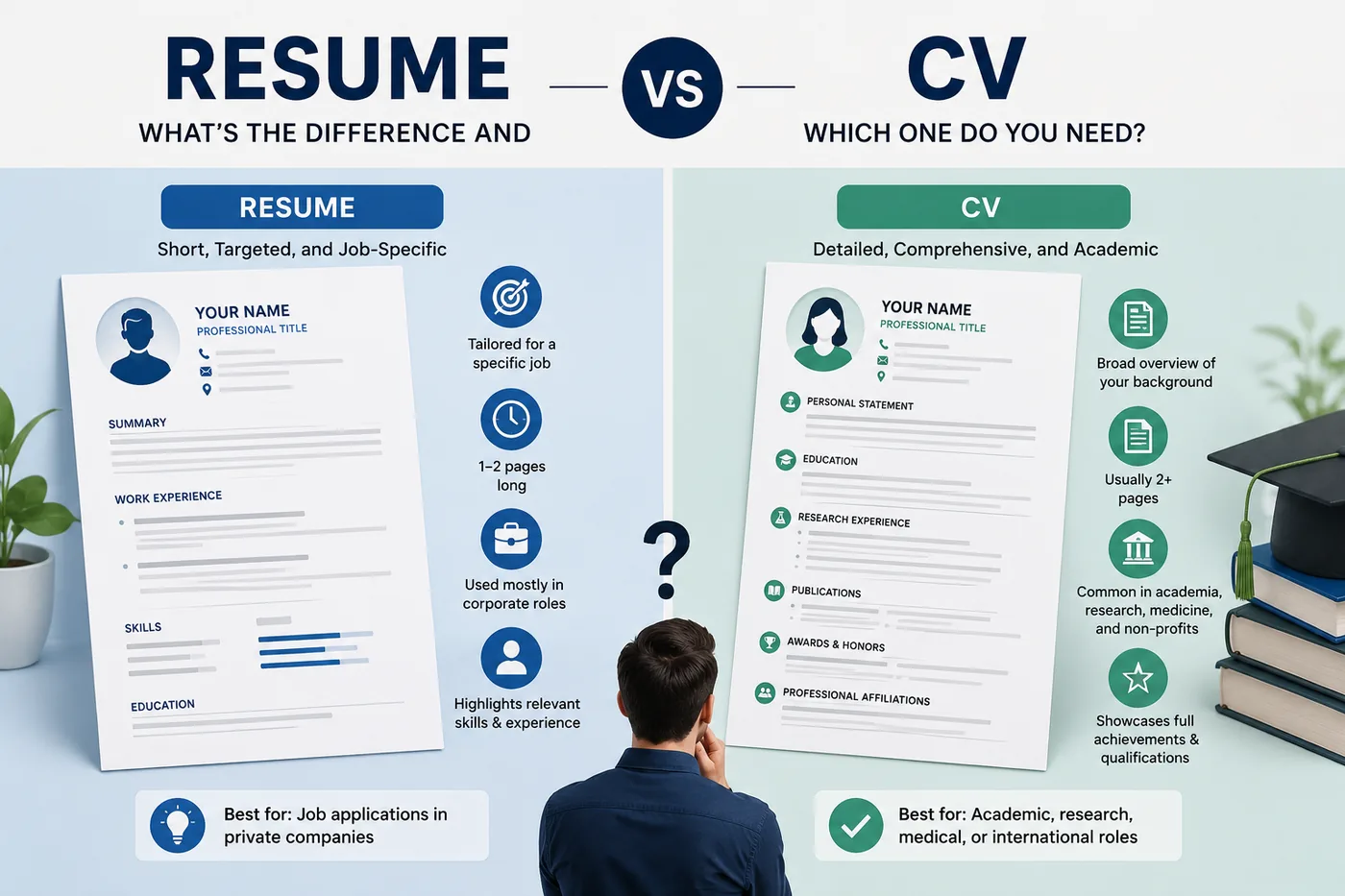
No. In most of the world (especially the US and Canada), a resume and a CV are different documents. A resume is a short, job-targeted document. A CV (curriculum vitae) is a comprehensive academic record that can run many pages. Read the resume vs CV guide for a full comparison.
Why Your Resume Matters More Than You Think
Competition Has Never Been Higher
A single job posting on LinkedIn can attract 200-1,000+ applicants. Most of them have similar qualifications. Your resume is the only differentiator before a conversation happens.
Your Resume Controls Your Interview Rate
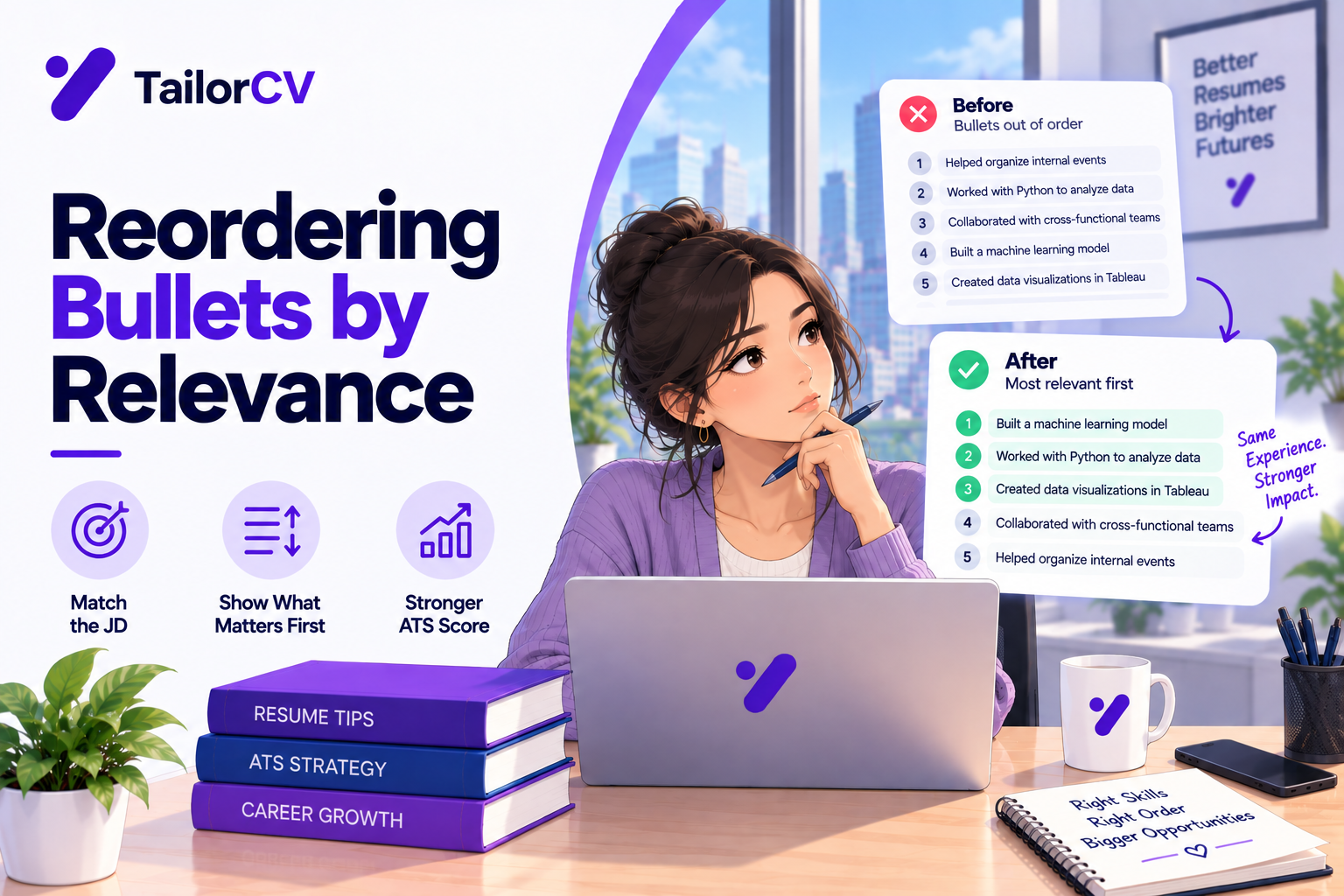
The interview rate for a well-optimized resume is 3-5x higher than a generic one for the same candidate. Tailoring your resume for each application - matching keywords, highlighting relevant experience, using the right format - directly multiplies your callbacks. Use how to tailor your resume for every job as your guide.
ATS Filtering is Ruthless
Without proper ATS optimization, even a strong candidate gets filtered out automatically. This is not about gaming the system - it is about communicating your qualifications in the language the system understands. The ATS score guide covers this in full.
The Core Sections of a Resume
Every resume should include:
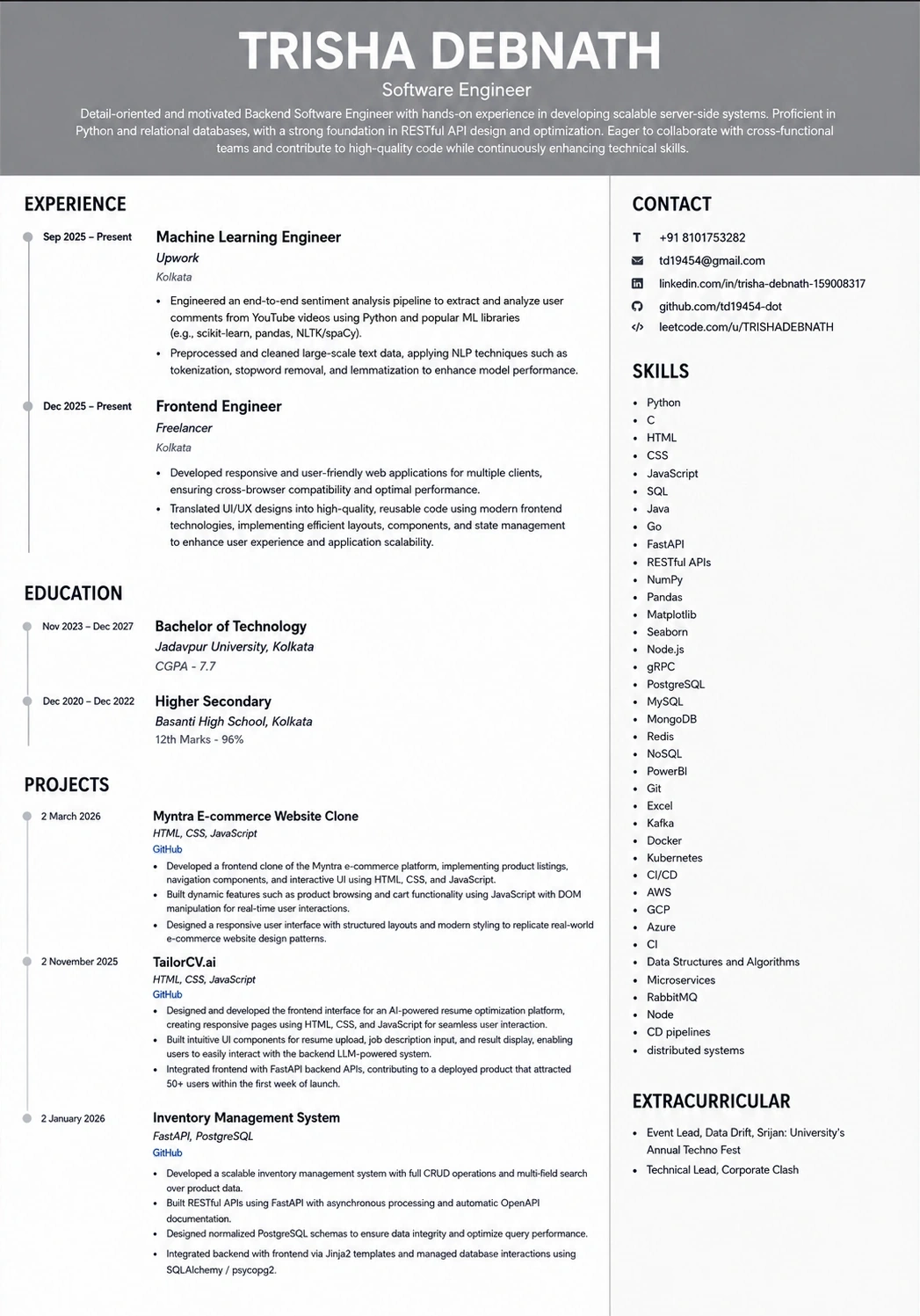
Your resume after optimization
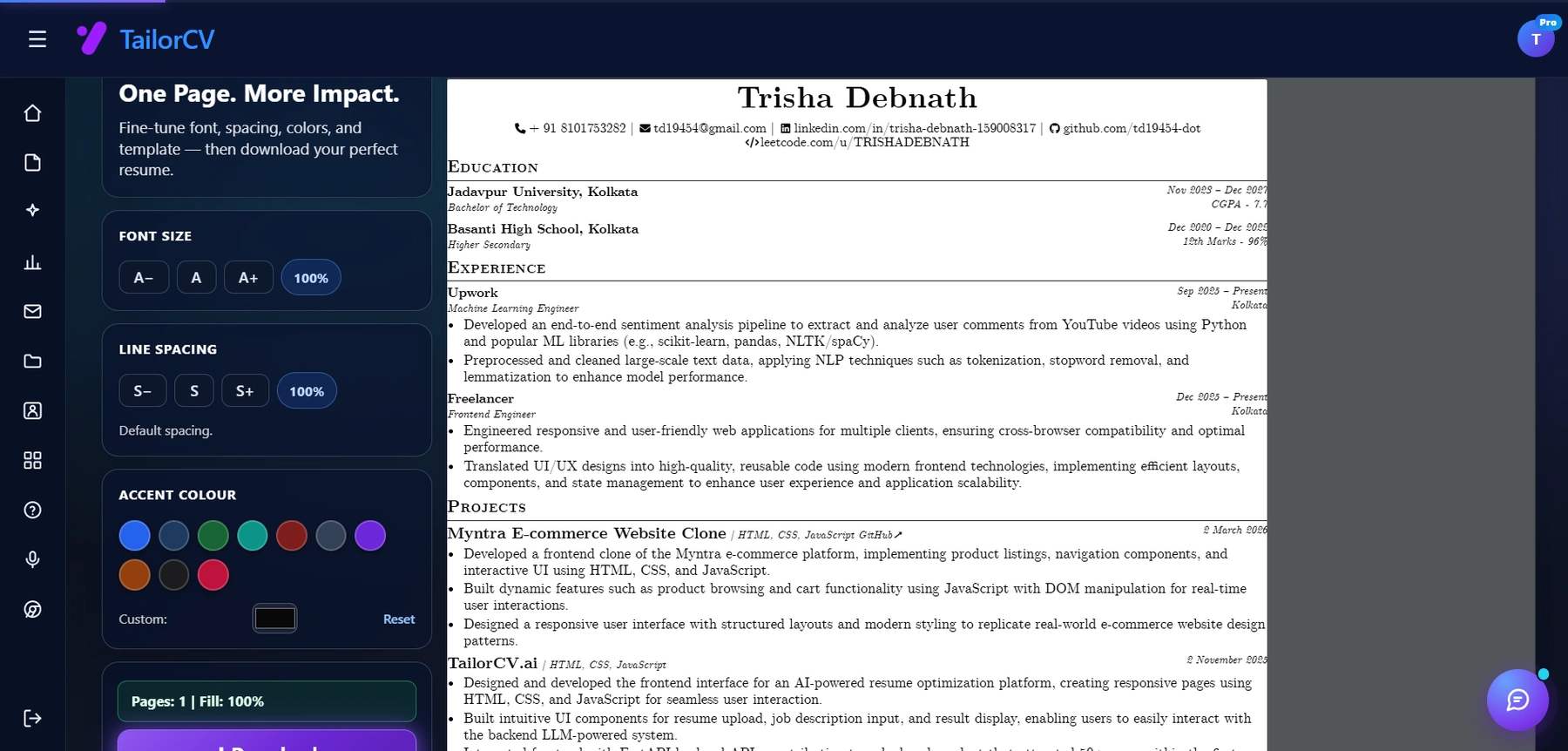
Font size, spacing, accent colour and template are all adjustable, with a live page counter.
- Contact information - Name, email, phone, LinkedIn, city
- Professional summary - 2-3 sentences that frame your value
- Skills - Key technical and professional skills
- Work experience - Roles with achievement-based bullets
- education - Degrees, institutions, dates
- Optional sections - projects, certifications, awards, volunteer work
Read the anatomy of a perfect resume for a complete breakdown of every section.
Common Resume Misconceptions
"My resume just needs to look good"
Visual design matters, but ATS cannot read fancy graphics, columns, or tables reliably. An ATS-friendly template beats a beautifully designed resume that fails the scan.
"I should list everything I've done"
A resume is not a complete work history - it is a curated selection. Relevance over completeness, always.
"One resume works for all jobs"
No. The highest-performing resumes are tailored per application. Generic resumes score lower on ATS and impress fewer hiring managers.
"My resume needs to be one page"
Only for under 10 years of experience. See the ideal resume length guide for the full rules.
How to Make Your Resume Work in 2026
- Start with an ATS-friendly template - formatting that parses correctly
- Write achievement-focused bullets using best action verbs for resume
- Add quantified results - read how to quantify resume achievements
- Tailor keywords to each job - use the resume keywords guide
- Check your ATS score - run it through TailorCV's ATS checker
- Practice your interview - once your resume gets you in, use the mock interview tool to prepare
Conclusion
A resume is a targeted marketing document with one purpose: earn you an interview. In 2026, that means passing ATS filters, surviving a 10-second recruiter scan, and convincing a hiring manager your background is worth exploring. Every word, format choice, and keyword selection either helps or hurts that goal.
Start with an ATS-friendly template, build your content using the guides above, and run everything through the TailorCV ATS score checker before you apply. When your resume lands you interviews, use the mock interview tool to make sure you are ready.
Related Guides
- Resume vs CV: What's the Difference?
- The Anatomy of a Perfect Resume
- How Recruiters Read Resumes in Under 10 Seconds
- How to Write a Resume from Scratch
- Ideal Resume Length Guide
- How to Write a Resume Summary
- Best Action Verbs for Resume
- How to Quantify Resume Achievements
- Resume Keywords Guide
- How to Make Your Resume ATS-Friendly
- ATS Score Guide
- Resume Optimization Guide
Make This Practical
Use this guide as part of a complete job-search workflow. Check your resume with the free ATS score checker, improve targeting with the Resume Optimization Guide, and choose a clean format from the ATS-friendly resume templates.
After the resume is ready, strengthen the rest of the application. Draft a targeted letter with the AI cover letter generator, practice interviews with the AI mock interview tool, and create a project-backed proof page with the portfolio website builder if you need a stronger online presence.
Weak vs. Strong Resumes: A Comparison
Understanding the difference between a weak and a strong resume can help you tailor your document for maximum impact.
| Feature | Weak Resume | Strong Resume |
|---|---|---|
| Focus | Generic job descriptions | Tailored achievements relevant to the job |
| Length | Over two pages with excessive detail | Concise, one page with essential information |
| Formatting | Unorganized layout, inconsistent fonts | Clean, professional design with clear sections |
| Keywords | Lacks industry-specific terminology | Includes relevant keywords for ATS optimization |
| Action Verbs | Uses passive language (e.g., "Responsible for...") | Strong action verbs (e.g., "Led," "Developed") |
| Results | Lists duties without quantifiable outcomes | Highlights measurable achievements and impact |
| Personalization | One-size-fits-all approach | Customized for specific job applications |
Frequently Asked Questions
What are the key components of a resume?
A resume typically includes several key components: contact information, a professional summary or objective, work experience, education, and skills. Each section should be tailored to highlight your most relevant qualifications for the specific job you’re applying for. For guidance on what to include in your resume contact section, check out our detailed post.
How does a resume differ from a CV?
While both a resume and a CV serve the purpose of showcasing your qualifications, they differ in length and detail. A resume is typically one to two pages and is tailored for a specific job, while a CV is more comprehensive and can be multiple pages long, detailing your entire academic and professional history. For a deeper understanding of these differences, see our article on resume vs CV.
What is the purpose of a resume in the hiring process?
The primary purpose of a resume is to secure an interview by convincing hiring managers of your suitability for a role. It acts as a marketing tool that summarizes your qualifications and achievements. To improve your chances, consider using our free ATS score checker to ensure your resume meets modern hiring standards.
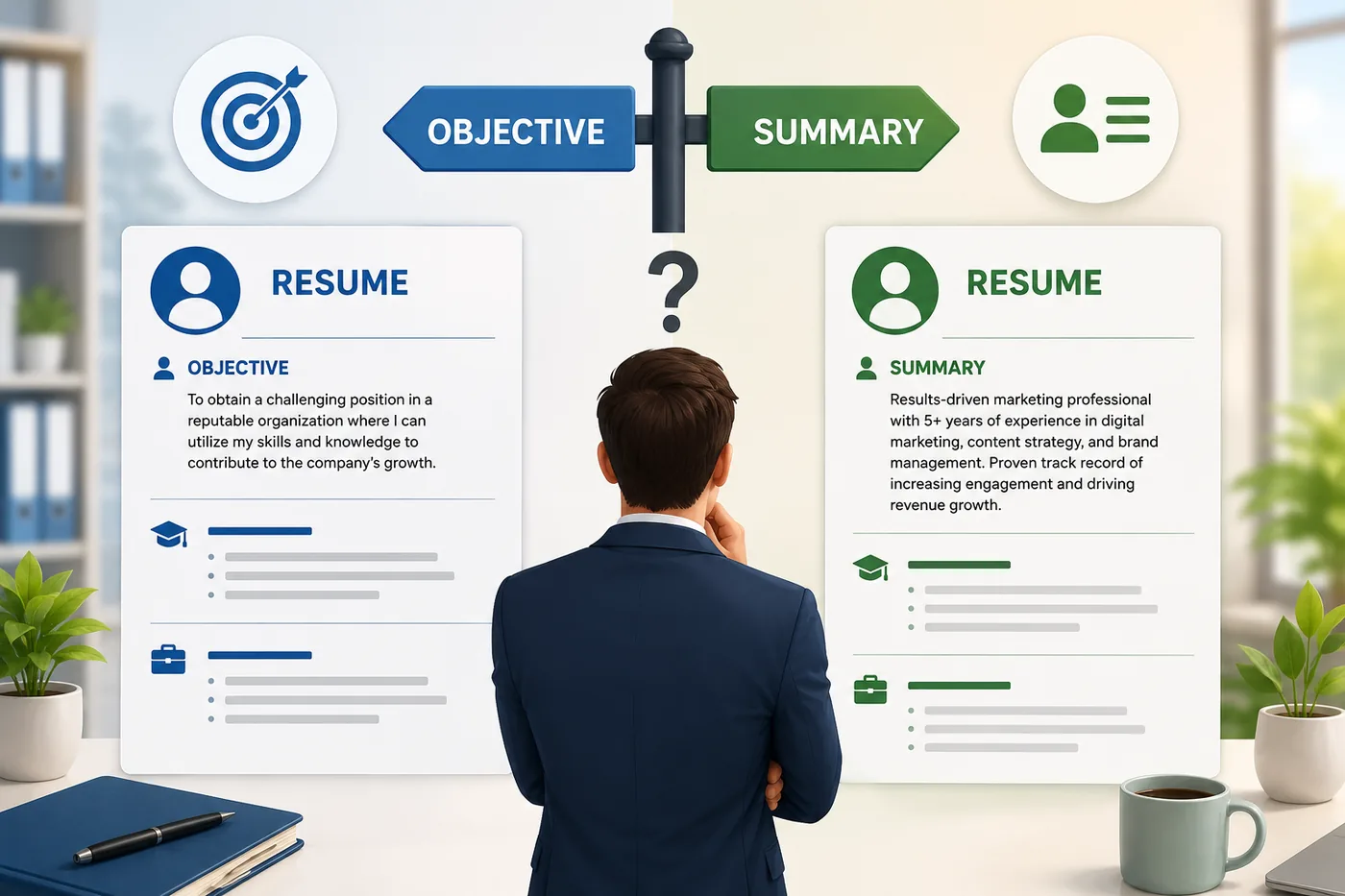
Should I use a resume objective or a summary?
Choosing between a resume objective and a summary depends on your career stage and focus. A resume objective is more suitable for entry-level candidates or those changing careers, while a summary is better for experienced professionals who want to highlight their skills and accomplishments. For more insights, read our article on resume objective vs summary.
What common mistakes should I avoid on my resume?
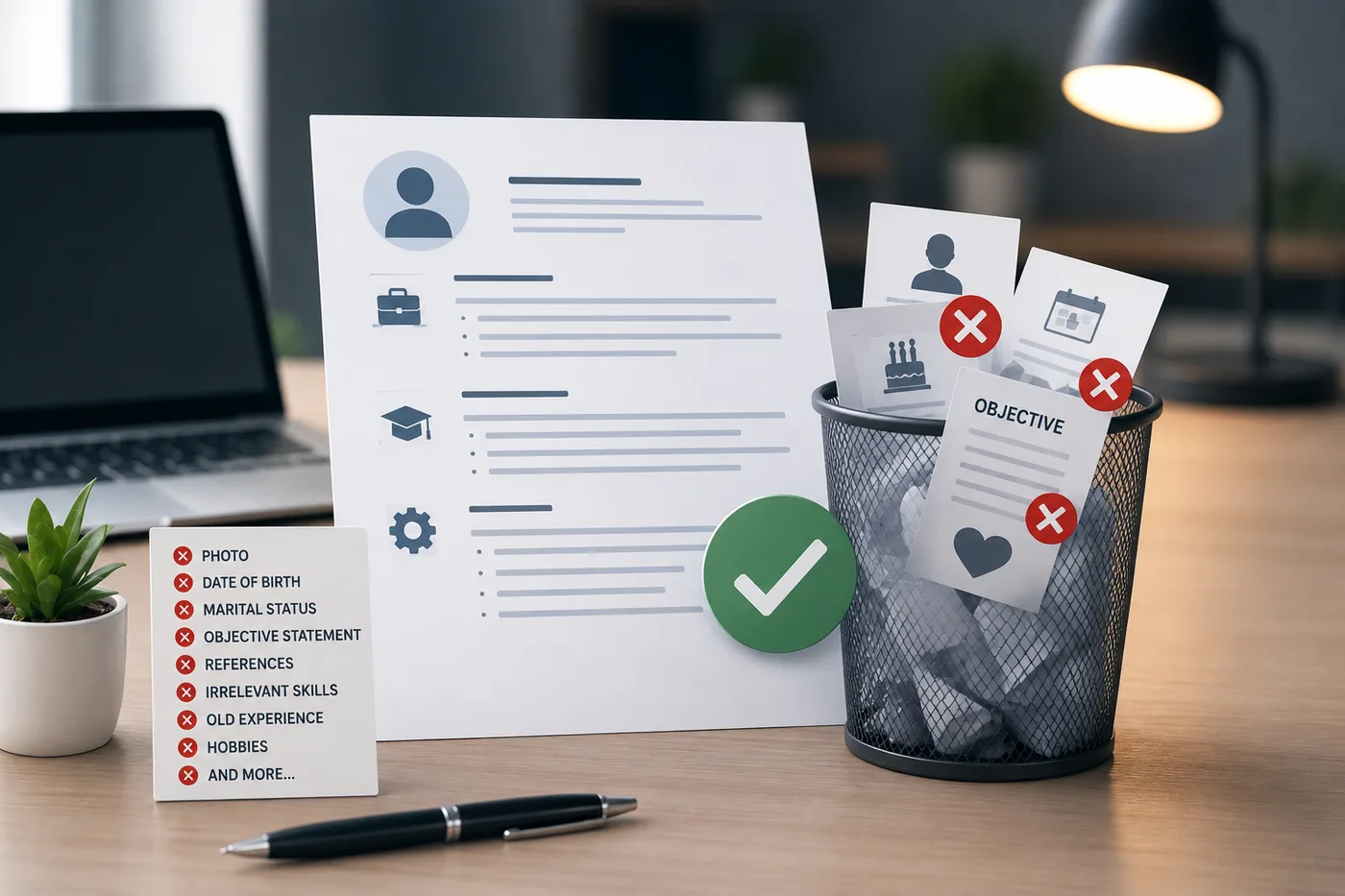
There are several common mistakes to avoid, such as including irrelevant information, using outdated formats, or failing to tailor your resume to the job description. Additionally, be cautious about including too much personal information or overly generic phrases. For a comprehensive list of what not to put on your resume, check out our guide on what not to put on a resume in 2026.
What is your resume scoring right now?
Scan it against a job description and get your ATS match score in about a minute.
Drop your resume here or choose a file
PDF only. Max 2 MB.
We never share your data or use it to train AI models.

Templates that keep this structure intact
This template is ATS-tested — start from it and the formatting rules in this guide are already handled.
Was this guide useful?
Be the first to rate it.