 TD
TD

Key Takeaways
- Job descriptions are often wishlists, and most candidates do not need to meet every requirement to be considered.
- Apply for roles when you meet at least 60-70% of qualifications, especially if missing skills are learnable and you have strong transferable experience.
- Create a side-by-side comparison of job requirements and your qualifications to identify strengths, areas for growth, and skills to omit.
- Lead your resume with your strengths and relevant achievements rather than focusing on what you lack.
- Highlight your ability to learn and grow, as hiring managers often seek candidates who can develop into the role.
You see the job description.
It asks for 5 years of experience. You have 2.5.
It lists 8 required skills. You have 6 of them.
You close the tab.
This is the decision that keeps millions of qualified people stuck.
Here is what most candidates do not know: job descriptions are wishlists. They are written by someone imagining the perfect candidate who does not exist. The person who gets hired almost never meets every requirement.
Studies consistently show that women apply only when they meet 100% of the criteria. Men apply when they meet around 60%. The result: the more hesitant candidates often miss roles they could have won.
This guide shows you how to tailor your resume when you are underqualified - honestly, specifically, and in a way that gets real interviews. Understanding why your resume gets no responses often comes back to not applying at all, or applying with a generic resume when tailoring would have made the difference.
The Truth About "Required" Qualifications
"Required" in a job description rarely means "required to be considered."
It means "required to do the job at full competency, ideally from day one."
Most hiring managers are realistic. They know the perfect candidate is not applying. They are hiring the best available candidate who can grow into the role.
If you can demonstrate:
- Core skill match (even at 70%)
- A clear ability to learn the rest
- Motivation and genuine fit
-
Evidence of growth in previous roles
-
you are competitive. Even if you do not check every box.
The question is not whether you qualify perfectly. The question is whether you are the most compelling candidate who applied.
When to Apply Anyway
Apply when you meet at least 60-70% of the required qualifications and:
- The missing skills are learnable quickly (not advanced certifications requiring years of study)
- You have strong transferable experience from adjacent areas
- The "required" items include things like "5+ years experience" for a role that clearly does not need a decade of work
- The role is one level above your current position (a stretch, not a leap of faith)
Do not apply when:
- The missing requirements are regulatory (you cannot practice law without a bar license)
- The technical skill gap is foundational and would take years to close
- More than half the core requirements are genuinely missing
How to Tailor Your Resume When You're Underqualified
Your resume after optimization
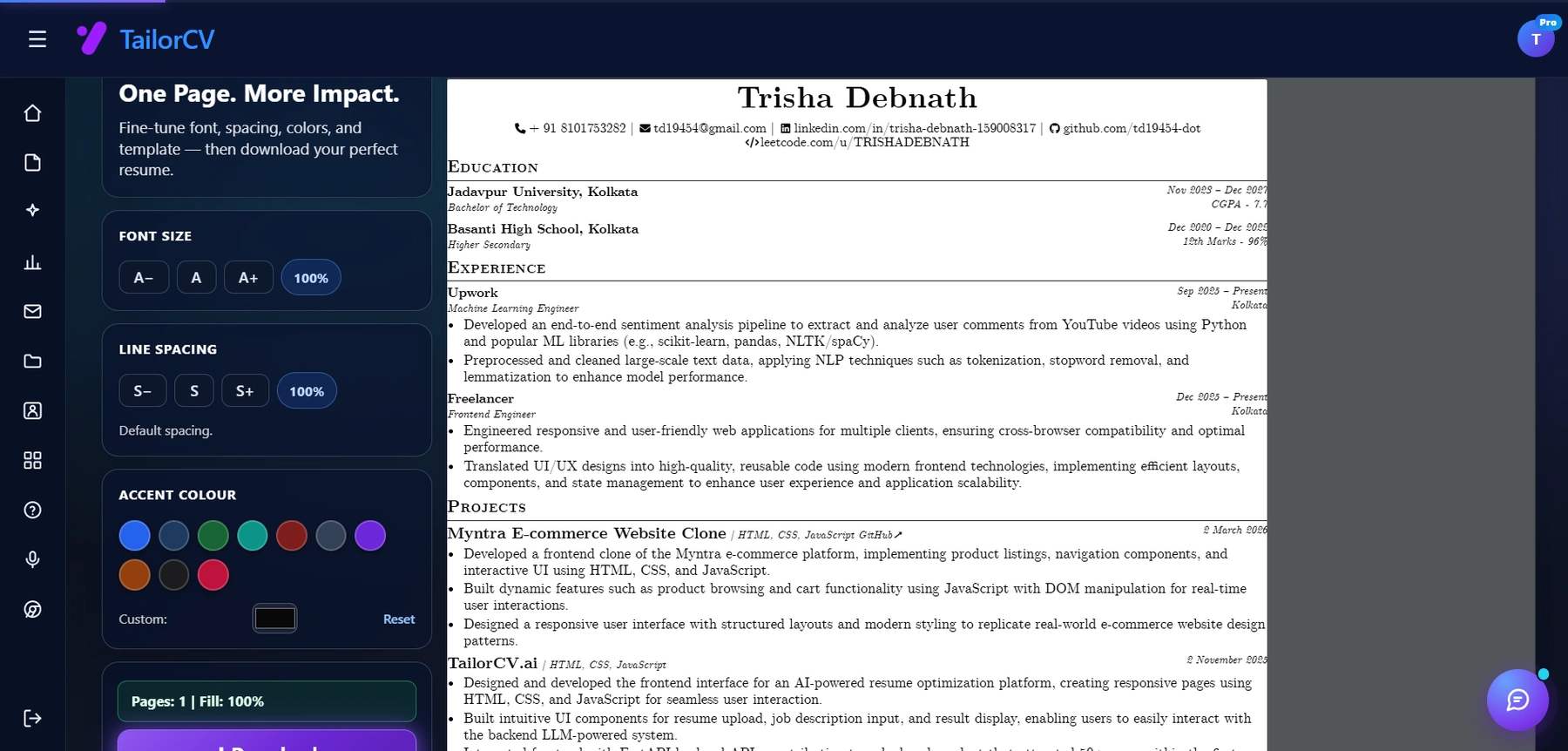
The optimized resume renders live beside the controls, so you see the page count change as you adjust.
Step 1: Map What You Have Against What They Need
Create a simple side-by-side comparison.
| Job Requirement | Your Status |
|---|---|
| 5 years experience in digital marketing | 2.5 years - frame as intensive + measurable impact |
| Proficiency in Google Analytics 4 | Intermediate - address directly in skills |
| Experience with paid social campaigns | Strong - lead with this |
| HubSpot CRM experience | No - omit from skills, learn before interview |
| Cross-functional campaign management | Yes - multiple examples |
This map tells you:
- Where you are strong (lead with these)
- Where you are close (frame as developing)
- What to honestly omit (do not fabricate)
Use the job description keyword extraction guide to make sure you are not missing hidden requirements buried in the posting.
Step 2: Lead With What You Have
Your resume summary sets the tone. If you lead with what you lack, you start at a disadvantage.
Instead, lead with what you bring that is most relevant.
Weak (leads with limitation):
"Junior marketing professional with 2 years of experience looking to grow into a Senior Marketing Manager role."
Strong (leads with strength):
"Digital marketer who has driven 3x organic growth and led multi-channel campaigns producing $400k in pipeline. Strong in content strategy, SEO, and campaign analytics. Currently deepening expertise in paid social and CRM automation."
The second version leads with real results. The one missing skill is acknowledged briefly - not apologized for.
Step 3: Translate Transferable Experience
You may not have the exact experience - but you probably have adjacent experience.
The ATS score and the recruiter both respond to translation.
If the job asks for "enterprise SaaS sales experience" and you have SMB sales: "Managed full-cycle sales for 80+ SMB accounts, building the foundational CRM systems and discovery frameworks that scale to enterprise relationships."
If the job asks for "machine learning" and you have data analysis: "Built predictive models using scikit-learn for customer churn analysis - foundational ML work applied to production business outcomes."
You are not lying. You are showing how your real experience connects to what they need.
Step 4: Use Keywords Strategically
The skills section you do have should be front and center. The ATS looks for keyword matches - if you are strong on 6 of 8 required skills, those 6 should appear clearly.
Do not bury your strengths under a long list. List the matching skills first.
Use TailorCV's keyword gap analyzer to see exactly which required keywords you are hitting and which are missing - so you can make intentional choices about what to include.
Step 5: Address the Gap Without Drawing Attention to It
If you are missing a skill or two, you have three options:
Option A: Omit silently - do not list it in skills, do not mention it. If asked, discuss it in the interview.
Option B: Frame as in-progress - "Actively learning [skill] - completed [X course/project]." This shows initiative.
Option C: Reframe as related - If you have the adjacent skill, include that instead and be ready to connect the dots in the interview.
Never put a skill on your resume you cannot discuss confidently in an interview. That creates problems you cannot recover from.
Step 6: Let Your Bullet Points Do the Heavy Lifting
Strong quantified results make gaps feel smaller.
A recruiter who sees "Increased email open rates by 78% through A/B testing and segmentation strategy" is less focused on the missing 6 months of experience.
Lead every bullet with a result. Make the results specific, measurable, and relevant to what the new role cares about.
Read how to write resume bullet points for the exact framework. Read how to quantify resume achievements if you are struggling to put numbers on your impact.
Before and After: Underqualified Candidate
Job requires: Senior data analyst, 5+ years, advanced SQL, Tableau, Python, stakeholder management
Candidate has: 2.5 years as analyst, strong SQL and Excel, basic Python, no Tableau, 1 stakeholder presentation experience
Before resume summary:
"data analyst with 2.5 years of experience. Skilled in SQL and Excel. Learning Python and Tableau."
After resume summary:
"Data Analyst with 2.5 years of progressive experience building SQL-based reporting systems that directly informed executive decisions at a 200-person SaaS company. Strong in data modeling, Excel-based dashboards, and stakeholder communication. Actively developing Python automation and Tableau visualization skills with 3 live projects in progress."
Same person. Completely different impression.
The Cover Letter Is Your Secret Weapon
When you are underqualified, a strong cover letter can bridge the gap your resume cannot.
Use it to:
- Acknowledge the stretch directly (without apologizing)
- Show genuine enthusiasm for the company and role
- Highlight two or three specific ways your background is uniquely relevant
- Signal how quickly you have grown in the past
Also consider whether you might be applying for a role that overlaps with a career change scenario - in which case the same cross-industry reframing techniques apply.
Common Mistakes
Lying about experience or skills Interviewers will find out. Always. The short-term gain of getting an interview leads to embarrassment or worse.
Copying the job description into your resume ATS and recruiters recognize keyword stuffing. Natural use of relevant resume keywords works. Copy-paste does not.
Focusing only on what you are missing Most candidates do this in their head and it shows in the resume. Lead with strengths. Let your results speak louder than your gaps.
Not checking your ATS score You may have more keywords matched than you think - or fewer. Know your score before you apply using TailorCV. Understanding how to improve your resume job match score is especially important when you are already stretching to meet the requirements.
Skipping the interview preparation If you do get an interview despite being underqualified, you need to prepare more carefully than average. Your first impressions have to compensate for what's missing on paper.
Make This Practical
Use this advice as interview practice, not just reading material. Start a role-specific session with the AI mock interview tool, prepare your opening with How to Answer Tell Me About Yourself, and structure evidence-heavy answers with the STAR Method Interview Answers Guide.
Before the interview, make sure the resume that earned the call is still aligned with the role. Check it with the free ATS score checker, review Common Interview Mistakes to Avoid, and use How to Follow Up After an Interview once the conversation is over.
FAQ
Is it worth applying if I am missing 30% of the requirements?
Yes, if the missing skills are learnable and the matching skills are strong. A 70% match with strong results often beats a 100% match with weak results. For more on identifying key skills, check out our guide on hidden keywords in job descriptions.
What if they ask about my missing skills in the interview?
Be honest and forward-looking. "I don't have direct experience with [X], but I've been working on [related thing] and learn tools quickly - for example, I picked up [Y] in [timeframe]." Then move on. If you're interested in how to present your skills effectively, consider reading about resume keyword density.
Should I include learning-in-progress skills on my resume?
Yes, with a clear label. "Currently completing Google Analytics 4 certification" is honest and shows initiative. This approach aligns with current resume trends that emphasize transparency and growth.
Does applying when underqualified hurt my chances for other roles at that company?
No. Each application is independent. If you want to ensure your resume aligns well with your LinkedIn profile, check out our guide on syncing your LinkedIn profile with your tailored resume.
Related Guides
- Resume Matching with No Experience
- How to Match Your Resume When Overqualified
- How to Tailor Your Resume for Every Job
- How to Write Resume Bullet Points
- How to Quantify Resume Achievements
- Cover Letter Guide 2026
- ATS Score Guide
- Resume Keywords Guide
- How to Explain Resume Gaps
- Why Your Resume Gets No Responses
Conclusion
Stop reading "Required Qualifications" like a checklist that locks you out.
Read them like a description of the ideal candidate.
Then build the most honest, compelling case for why you are the best available person for this role - even if you are not the theoretical perfect one.
Lead with your strengths. Translate your experience. Use the job description language. Let your results speak. Check your ATS score.
You do not have to meet every requirement. You have to be more compelling than everyone else who applied.
Tailor My Resume for This Role - Free
See what tailoring is worth on your resume
Score your current resume against a real job description before you change a word.
Drop your resume here or choose a file
PDF only. Max 2 MB.
We never share your data or use it to train AI models.

Was this guide useful?
Be the first to rate it.