 SS
SS
Key Takeaways
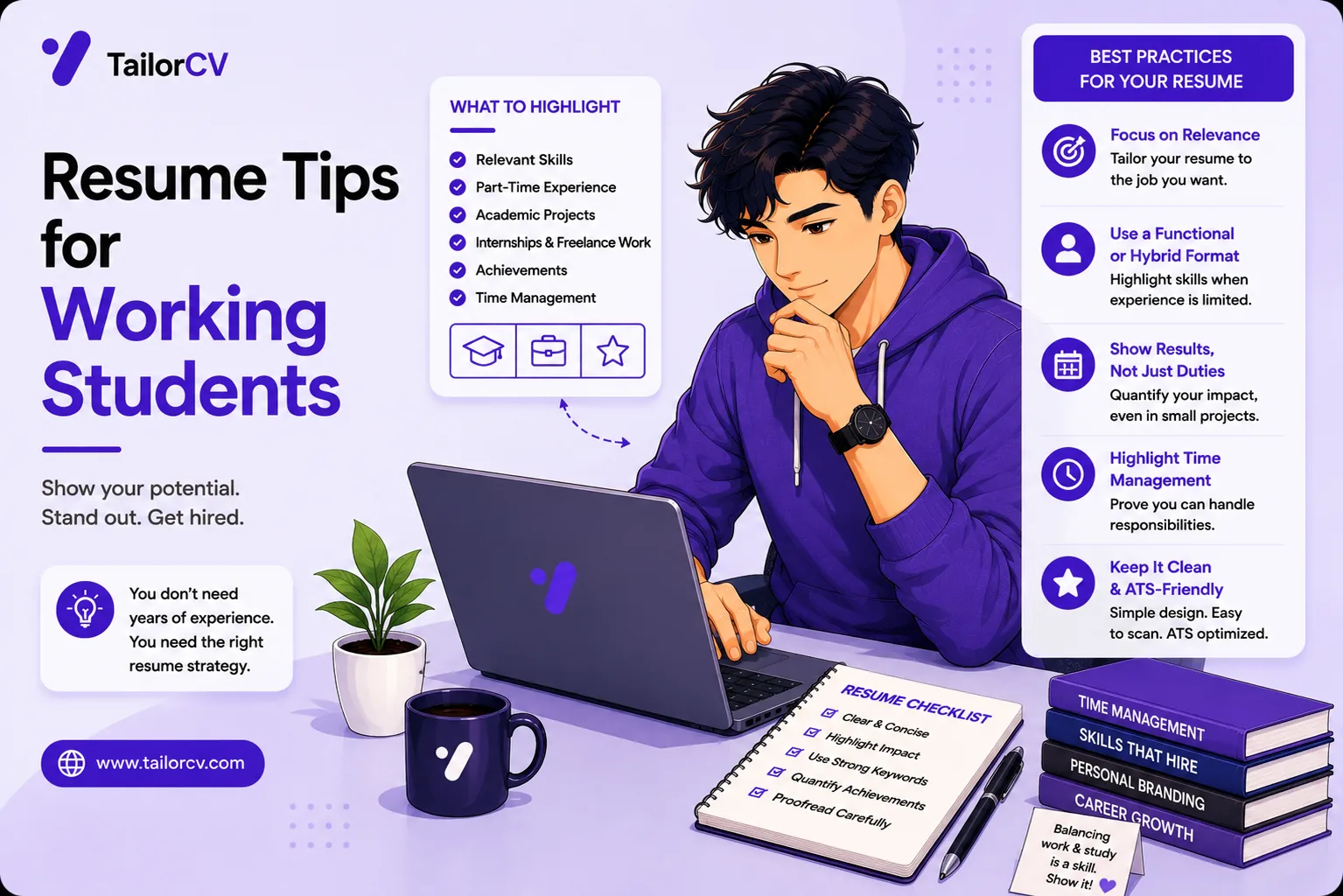
- Part-time jobs, campus roles, internships, freelance gigs, volunteer work and class projects all count as experience.
- A slightly different structure works best for early-career students.
- The skill that transforms a student resume is reframing routine work as impact.
- When paid experience is thin, academic and extracurricular work fills the gap convincingly.
- One clean page is ideal at this stage, tailored so the most relevant material sits first.
Juggling school and a job is genuinely impressive, and your resume should say so. Working students often undersell exactly the experience hiring managers value most — time management, reliability, and real-world skills built while carrying a full course load. This guide shows you how to turn part-time jobs, campus roles, and class projects into a resume that lands interviews, even when your "professional" experience is limited.
The principles here overlap with the resume with no experience guide, scaled to a student's reality. Build your resume in the free resume builder, keep it to one page, and score it with the ATS checker for online applications.
Lead with what you've actually done
You have more material than you think. Part-time jobs, campus roles, internships, freelance gigs, volunteer work, and class projects all count as experience. Frame each with an action verb and a result, exactly like professional experience. The fact that you did any of it while studying full-time is itself a selling point — it proves you can handle competing priorities, which is what employers mean when they say they want someone reliable.
Structure a working student's resume
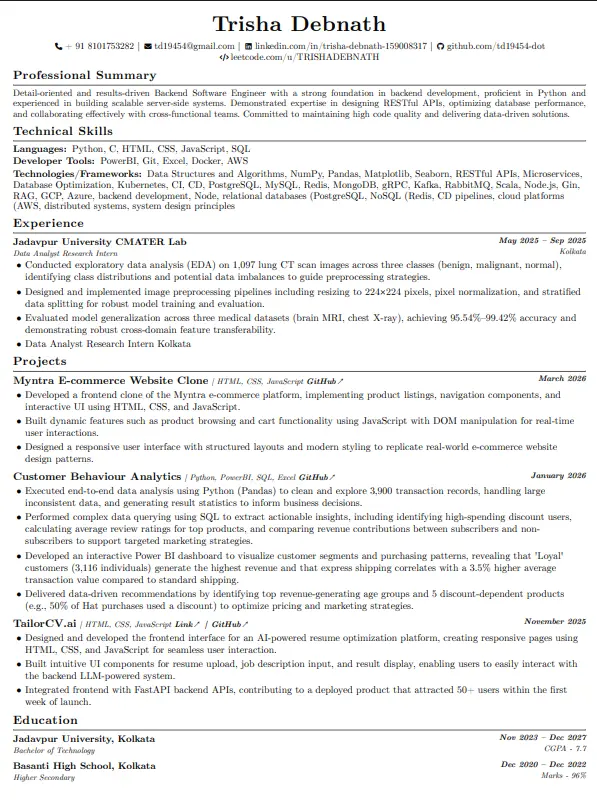
For early-career students, a slightly different structure works best:
- Summary or objective — one line on your field and goal. See resume objective vs summary.
- Education — near the top while you're a student, with your degree, expected graduation, and GPA if strong. See how to list education.
- Experience & projects — combined if needed, with quantified bullets.
- Skills — tools, software, and languages you actually use, per the skills section guide.
Use a clean, ATS-friendly template, and for section order see the resume section order guide.
Turn ordinary jobs into achievements
The skill that transforms a student resume is reframing routine work as impact. "Cashier" becomes "Handled 100+ transactions per shift with zero register discrepancies." "Campus tour guide" becomes "Led tours for groups of 20+ prospective students and families." "Barista" becomes "Trained three new hires on drink preparation and service standards." The role is ordinary; the framing isn't. This is the same quantifying-achievements skill you'll use your whole career, and a number always beats a vague claim.
Use class projects and campus involvement
When paid experience is thin, academic and extracurricular work fills the gap convincingly. A capstone project, a research assignment, a hackathon, or a club leadership role all demonstrate real skills — present them like projects with your role, tools, and outcome, as the projects in resume guide and fresher resume projects that get interviews show. Leadership in a club ("Treasurer, managed a $5K budget") or a sports team ("Captain of a 15-person team") signals responsibility just as strongly as a job. Volunteer work counts too — see volunteer work on a resume.
Show the skills employers want
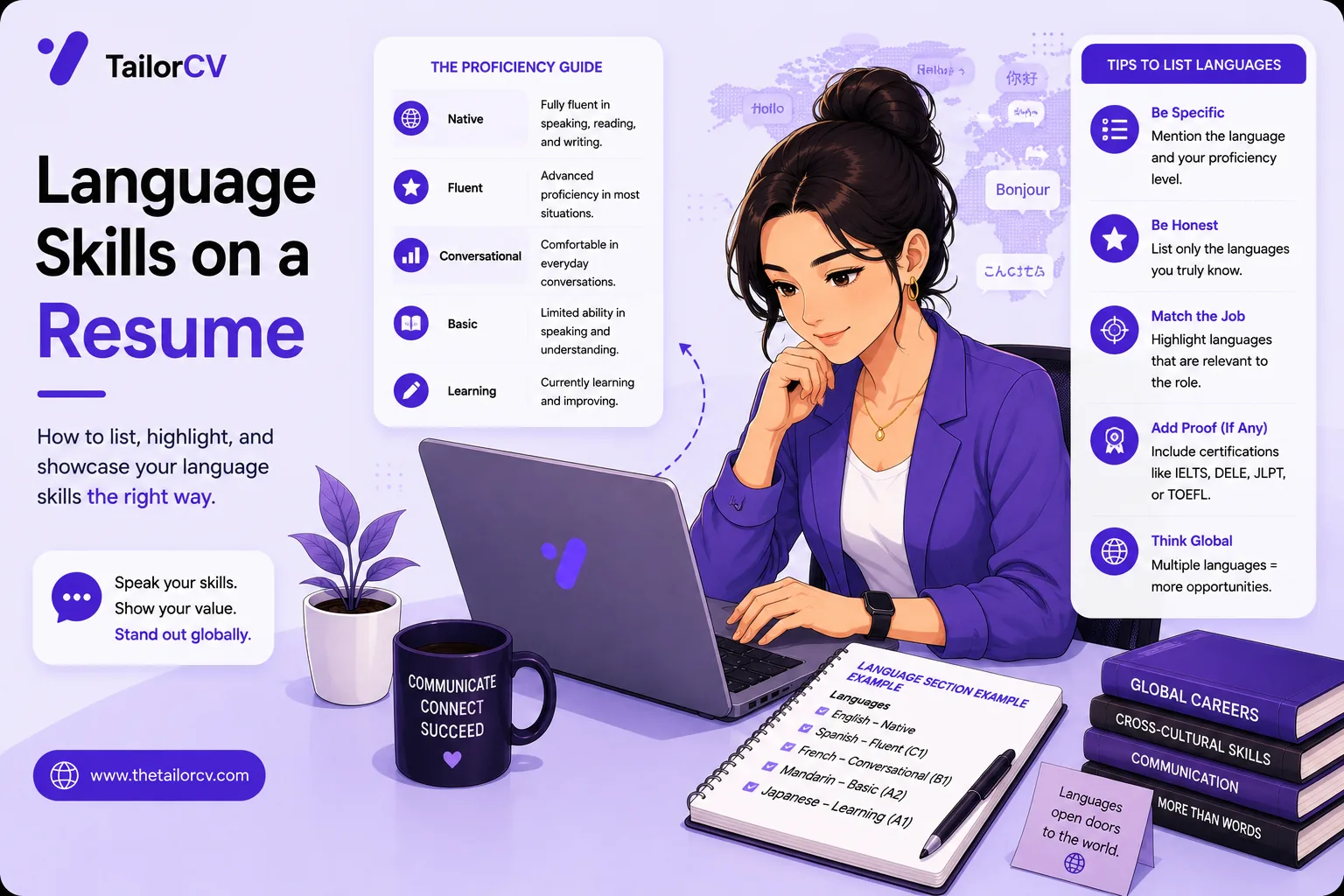
Include the practical skills that make you useful: software, tools, languages (listed honestly, per how to list language skills), and any certifications you've earned. Mirror the keywords in the job description where they're genuinely true for you, and confirm the match with the ATS score checker. For campus placement in particular, the campus placement resume guide and how to prepare for campus placement go deeper.
Your resume after optimization
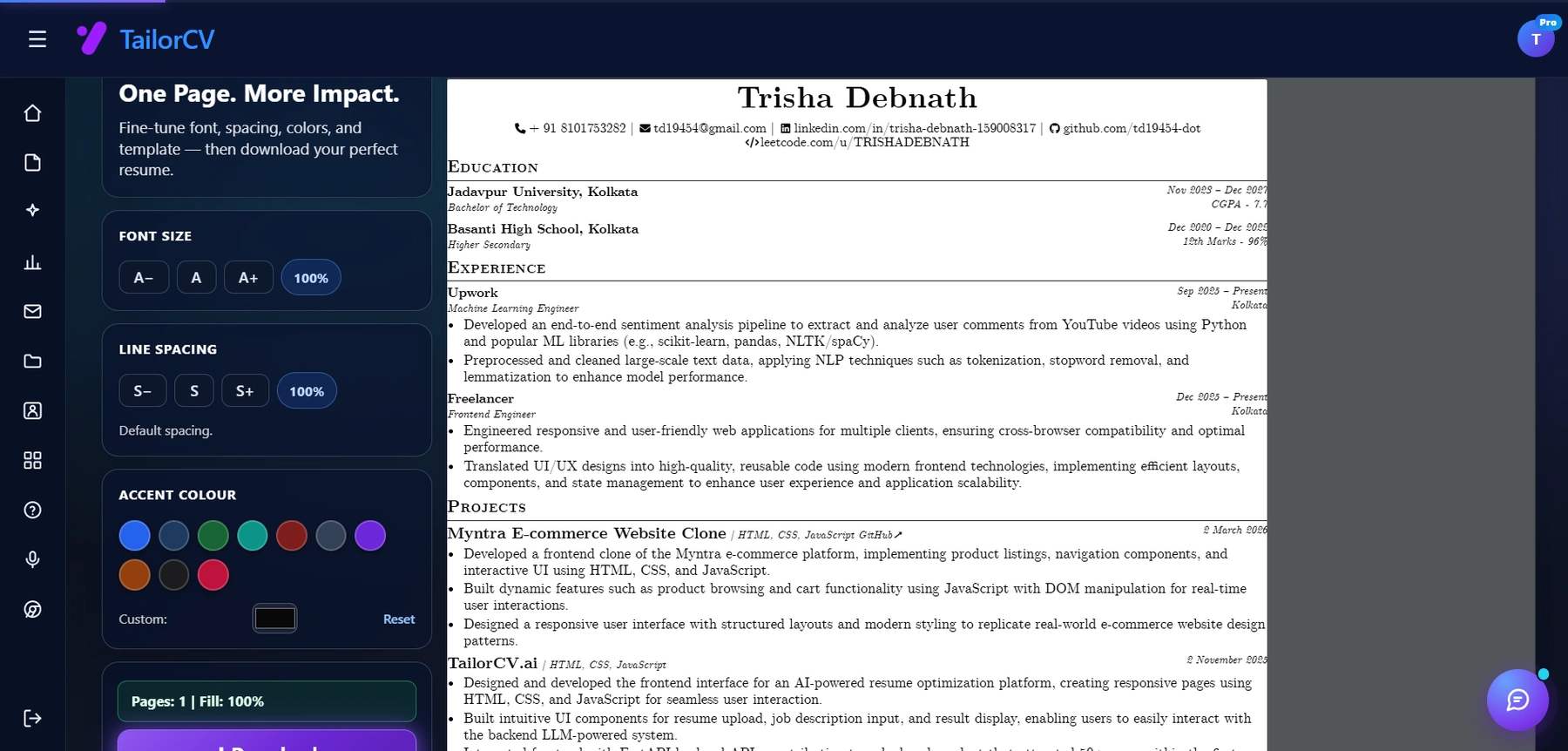
Font size, spacing, accent colour and template are all adjustable, with a live page counter.
Keep it one page and tailored
At this stage, one clean page is ideal — you don't need more, and a tight page respects the reader's time. Tailor each application so the most relevant experience is up top, use a readable font, and proofread carefully. Whether you're applying for an internship or your first full-time role, the internship resume guide and first resume for Gen Z offer more targeted advice.
Prepare for the interview, too
Once your resume lands an interview, a little practice sets you apart from other students. Rehearse with a free AI mock interview, review first job interview tips, and know what to bring. Afterward, send a thank-you email.
Working student resume checklist
Your resume is ready when it:
- unchecked: Leads with what you've done — jobs, projects, and campus roles — as skill-focused bullets.
- unchecked: Puts education near the top with a clear structure.
- unchecked: Turns ordinary roles into quantified achievements.
- unchecked: Is one page, tailored, and passes the ATS check.
Balancing work and study is hard-won proof you can handle a real job. Build your resume in the resume builder, score it with the ATS checker, and let your effort show.
Find out where a fresher resume stands
Score yours against a real posting - no account, no cost.
Drop your resume here or choose a file
PDF only. Max 2 MB.
We never share your data or use it to train AI models.

A layout that works with a short history
Leads with skills and projects instead of years of experience you do not have yet.
Was this guide useful?
Average 5.00 / 5.00 · 1 rating