 TD
TD
Key Takeaways
- Resume gaps are common in 2026 and can be effectively addressed by framing them positively and confidently.
- Avoid dishonest date manipulations or overly defensive explanations; be honest, brief, and forward-looking.
- Use year-only dates to minimize the visibility of short gaps, and provide a clear explanation for longer gaps.
- Common reasons for gaps include layoffs, caregiving, and health breaks, each requiring specific, honest explanations on resumes and in interviews.
- Maintain a strong overall resume to ensure that any gaps are perceived in a more favorable light.
A gap in your resume is not a deal-breaker. In 2026, career breaks for caregiving, health, relocation, education, personal growth, or layoff are common and widely understood. What matters is how you frame the gap - specifically, that you remained engaged during it and that you can speak about it confidently and briefly in an interview.
The worst thing you can do with a resume gap is try to hide it with dishonest date manipulations. The second worst thing is to over-explain it defensively. The right approach is honest, brief, and forward-looking.
Before addressing gaps, make sure the rest of your resume is strong. Use the ATS score checker to optimize keyword matching, use an ATS-friendly template, and read the resume optimization guide to make sure your experience is well-framed. A gap in a strong resume reads very differently than a gap in a weak one.
How Long Is "Too Long" for a Resume Gap?
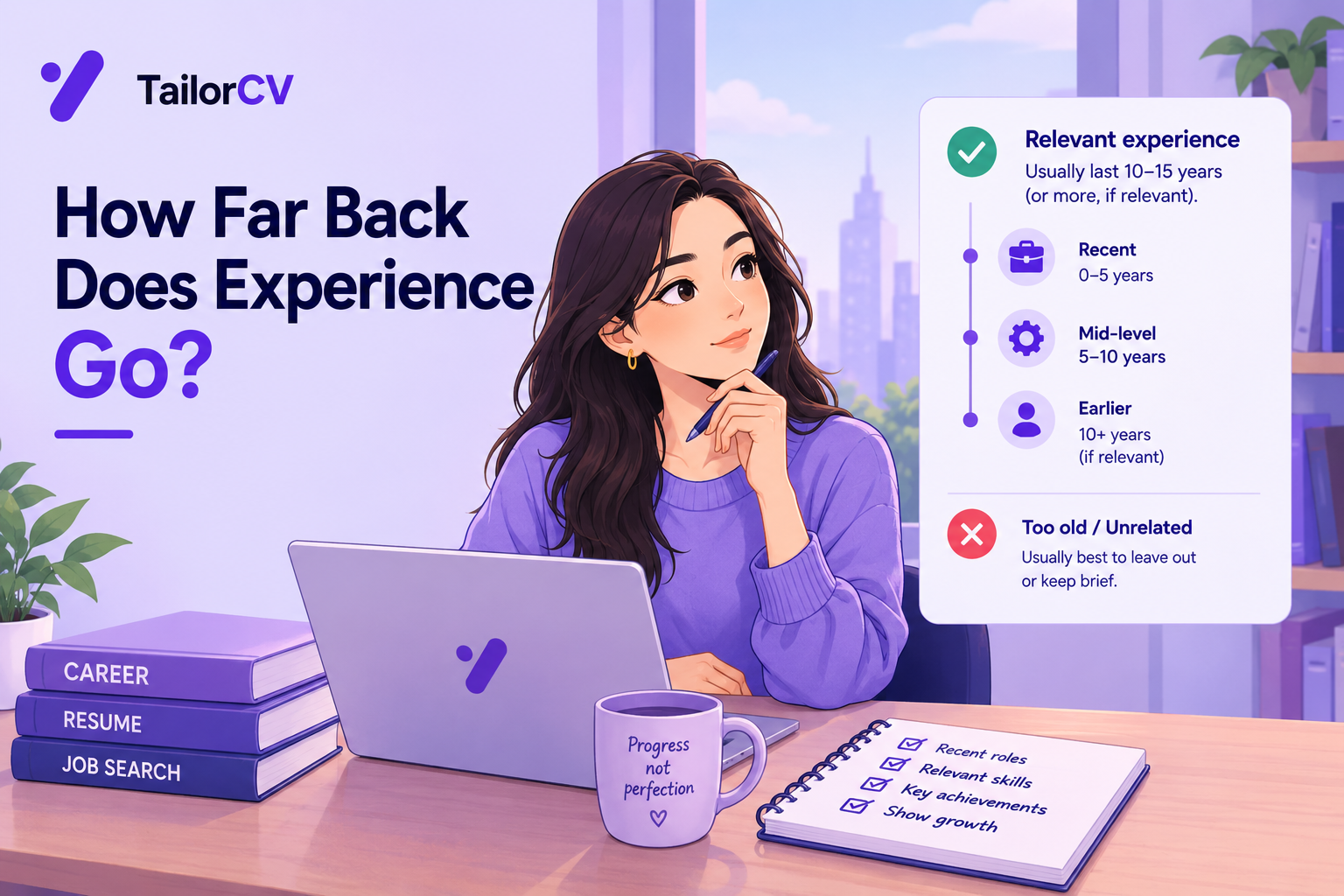
There is no universal rule, but general guidance:
| Rule | What it means |
|---|---|
| Under 3 months | Usually not noticed or asked about. No explanation typically needed |
| 3-6 months | May come up. One-sentence explanation on resume or in cover letter is helpful |
| 6-12 months | Should be addressed proactively on resume, cover letter, or LinkedIn |
| Over 12 months | Needs an honest, clear explanation with evidence of what you did during the time. Upskilling, freelancing, certifications, or caregiving context helps significantly |
Should You List the Gap on Your Resume?
In most cases, using year-only dates (rather than month and year) can compress the appearance of short gaps:
Month format: Mar 2023 - Jan 2024 (makes a 9-month gap visible) Year format: 2023 - 2024 (compresses the gap significantly)
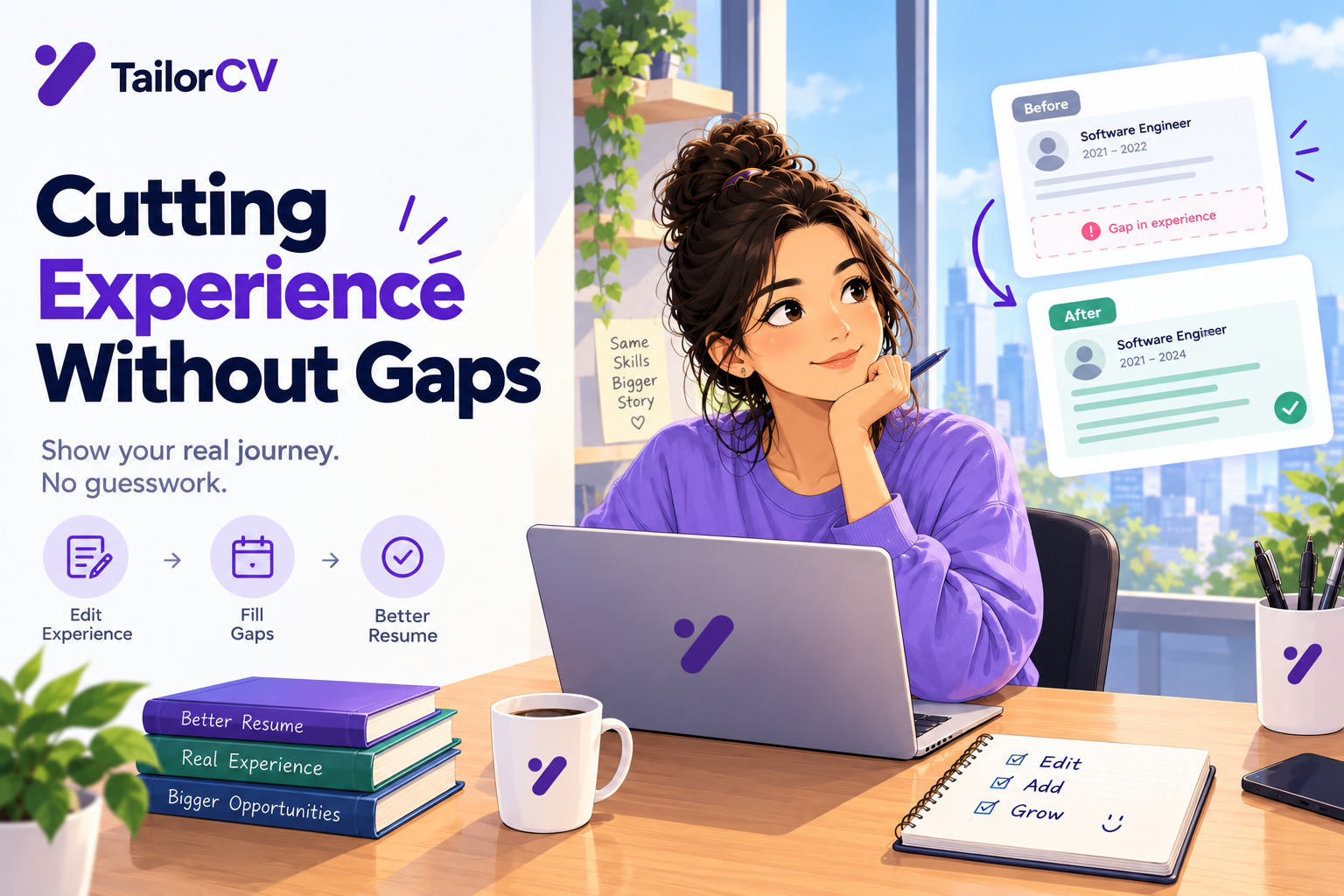
For longer gaps (over a year), consider adding a line item:
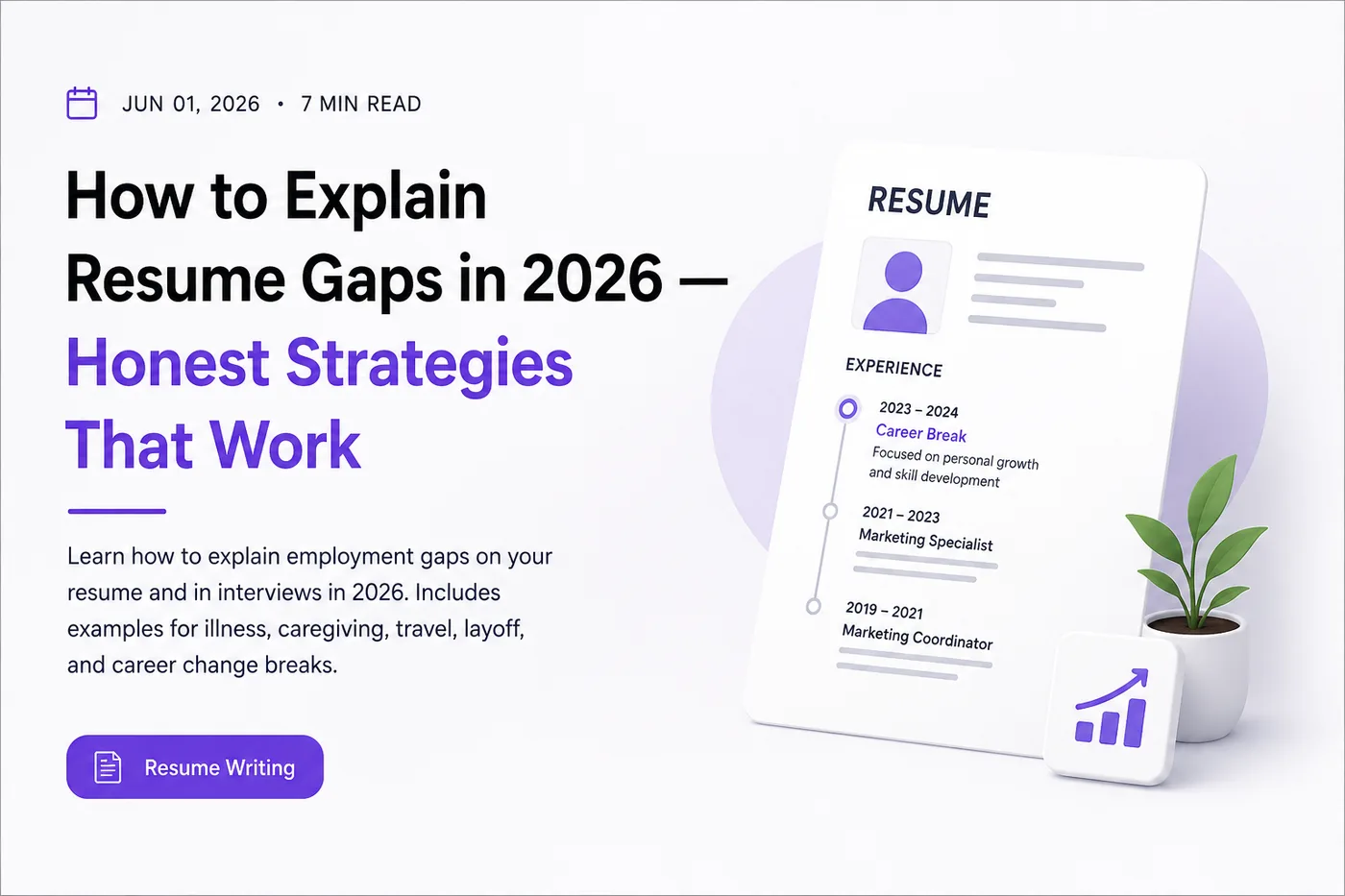
Career Break | 2023 - 2024 Full-time caregiver for a family member with a chronic illness. Maintained professional skills through online courses in data analysis and SQL certification.
This is honest and forward-looking. It addresses the gap without requiring the interviewer to ask.
Common Reasons for Resume Gaps - What to Say
1. Layoff or Redundancy
What happened: Your role was eliminated due to restructuring, economic conditions, or company closure.
On the resume: No special notation needed if under 3 months. For longer searches, add: job search Period | 2024 Actively seeking a [role] position following a company-wide layoff. Completed [certification or project] during this time.
In the interview: "My role was eliminated as part of a broader restructuring when [company] reduced its engineering team by 30%. I used the time productively - I completed [X certification] and worked on [Y project] - and I'm now focused on finding a team where I can contribute long-term."
2. Caregiving (parent, child, partner, family member)
What happened: You left or paused work to care for a family member.
On the resume: Career Break - Family Caregiving | Jan 2023 - Sep 2024 Full-time caregiver for a family member. Maintained professional skills through [online learning, freelance consulting, volunteer work, etc.].
In the interview: "I took a planned career break to care for [family member]. That chapter is now complete, and I'm fully committed and ready to return to full-time work. I stayed current by [doing X] during that time."
3. Health or Mental Health Break
What happened: Illness, burnout, surgery, or recovery required time away from work.
On the resume: "Medical leave" or "health-related career break" is sufficient. You are not required to share diagnosis details.
In the interview: "I took time off for a personal health matter that required my full attention. I've fully recovered and am ready to return to work with energy and focus."
Keep it brief. You do not owe medical details.
4. Travel or Sabbatical
What happened: You deliberately took time to travel, pursue personal growth, or recover from burnout.
On the resume: Sabbatical | 2023 - 2024 Extended travel and personal development across Southeast Asia. Completed [relevant course, language certification, or skill].
In the interview: "I made a deliberate decision to take a sabbatical after several years of high-intensity work. I traveled, recharged, and came back with significantly more perspective. I also used the time to [relevant learning or project]."
This is increasingly normalized, especially in tech and creative industries. Own it confidently.
5. Education or Upskilling
What happened: You went back to school, completed a certification program, or did a bootcamp.
On the resume: Just list the education or certification with dates. The gap is self-explanatory.
If it was informal learning: Self-directed Learning and Skill Development | 2023 - 2024 Completed [Google Data Analytics Certificate, AWS Solutions Architect, etc.]. Built [portfolio projects]. Seeking [target role].
6. Business Attempt or Freelancing
What happened: You started a business, did freelance consulting, or ran a side project full-time.
On the resume: List it as work experience.
Self-Employed Consultant / Freelancer | 2023 - 2024 Provided [marketing strategy / engineering consulting / financial modeling] to 4 clients. Delivered [project outcomes].
Do not leave freelance work as a gap - it is experience.
7. Relocation or Immigration
What happened: You moved countries and your work authorization or credential recognition took time.
In the interview: "I relocated from [country] in [year] and it took some time to have my credentials recognized and secure work authorization. I used the time to [learn the local market, complete certifications, network professionally]."
How to Address Resume Gaps in Cover Letters
A cover letter is an excellent place to briefly pre-empt the question. One sentence is enough:
"After a planned career break for family caregiving, I am now returning to full-time work and am actively seeking a role where I can apply my 7 years of software engineering experience."
One sentence. Honest. Forward-looking. Then move on to why you are a great fit.
How to Answer the Gap Question in Interviews
The three-part formula:
- State what happened briefly and honestly
- Describe what you did during the gap (productive framing)
- Pivot to why you are ready and excited now
"I took 10 months off after a difficult year professionally and personally. I used the time to recharge, complete my AWS Solutions Architect certification, and work on two personal software projects. I am now fully ready to commit to a new role and I'm excited about this opportunity in particular because [specific reason]."
Avoid:
- Sounding apologetic or defensive
- Giving excessive personal detail
- Badmouthing your former employer
- Claiming you were "just looking" for 14 months with nothing to show for it
Common Resume Gap Mistakes
Mistake 1: Trying to hide gaps with fake dates
Do not overlap employment dates to cover a gap. This is dishonest and background checks often reveal it. Being caught in a lie is far worse than any gap.
Mistake 2: Not addressing long gaps at all
Leaving a 2-year unexplained gap on your resume forces the recruiter to draw their own conclusions. Address it briefly and honestly.
Mistake 3: Over-explaining in the resume
Your resume is not the place for a paragraph about your gap. A brief line item or date with one-sentence explanation is enough. Save detail for the interview.
Mistake 4: Not adding any upskilling to your gap
If you have a long gap, do something during it - even a free Google certificate or an online project. It gives you something to point to and shows you stayed engaged.
Conclusion
resume gaps are common in 2026 and they will not automatically disqualify you. What matters is honesty, a brief explanation, and evidence that you used the time in some way.
Make sure the non-gap parts of your resume are strong. Use the TailorCV ATS score checker to optimize your keywords, use an ATS-friendly template, and read the resume optimization guide. Then prepare your gap explanation for interviews using the behavioral interview guide.
Related Guides
- Freelancing vs Full-Time Employment
- How to Get a Job With No Experience
- How to Negotiate a Salary Offer
- Networking Tips for Job Search
- Remote Job Search Guide
- Top Skills to Add to Your Resume
- 200 Best Action Verbs for Resume
- How to Build a Professional Portfolio
- How to Decline a Job Offer Professionally
- How to Follow Up After a Job Interview
- How to Get Your First Tech Job
- How to Handle Job Rejection
- How to List Certifications on a Resume in 2026 - With Examples
- How to List Education on a Resume in 2026 - Complete Guide with Examples
- How to Quantify Resume Achievements - With 50 Examples
Make This Practical
Use this guide as part of a complete job-search workflow. Check your resume with the free ATS score checker, improve targeting with the Resume Optimization Guide, and choose a clean format from the ATS-friendly resume templates.
After the resume is ready, strengthen the rest of the application. Draft a targeted letter with the AI cover letter generator, practice interviews with the AI mock interview tool, and create a project-backed proof page with the portfolio website builder if you need a stronger online presence.
Effective vs. Ineffective Ways to Address Resume Gaps
How you choose to explain your resume gap can significantly impact how potential employers perceive your candidacy.
| Approach | Effective Example | Ineffective Example |
|---|---|---|
| Honesty | "Took a year off for family caregiving." | "I was between jobs." |
| Proactivity | "During my gap, I completed an online certification in digital marketing." | "I didn't do anything during that time." |
| Brevity | "I relocated for personal reasons, which I believe will enhance my work-life balance." | "I had to move, and it was complicated." |
| Focus on Growth | "I volunteered at a local non-profit, gaining valuable skills in project management." | "I was just volunteering." |
| Forward-Looking Mindset | "This experience has given me a new perspective that I can bring to my next role." | "I hope to find a job soon." |
Frequently Asked Questions
How should I address a gap in my resume during an interview?
When discussing a gap in your resume during an interview, focus on being honest and concise. Briefly explain the reason for the gap, such as caregiving or upskilling, and emphasize what you learned or how you stayed engaged during that time. This proactive approach shows your potential employer that you are forward-looking and resilient. For more tips on handling interview questions, check out our guide on how to explain job hopping.
Is it necessary to mention short gaps (under 3 months) on my resume?
In most cases, short gaps of under three months go unnoticed and do not require explanation on your resume. However, if you feel it might raise questions, a brief mention in your cover letter can be helpful. Focus on your skills and experiences, ensuring that your resume remains strong. For more insights on resume concerns, visit our post on resume red flags.
What if my employment gap was due to a layoff?
If your gap was due to a layoff, it's essential to address it clearly and honestly. Mention the layoff in your resume or cover letter, and highlight any relevant activities you engaged in during that period, such as upskilling or freelance work. This demonstrates that you remained proactive, which is crucial for potential employers. You can also explore our how to get a job with no experience strategies for further guidance.
Should I list my gap on LinkedIn?
Yes, if your gap is significant (over 6 months), it’s advisable to address it on your LinkedIn profile. You can add a brief description of what you did during that time, such as volunteering or taking courses. This transparency can help mitigate concerns and show potential employers that you were active during your employment break. For more tips on enhancing your online presence, consider creating a portfolio website.
How can I strengthen my resume if I have a gap?
To strengthen your resume despite a gap, ensure that the rest of your experience is well-framed and showcases your skills. Utilize tools like the free ATS score checker to optimize your resume for keywords and ensure it meets industry standards. A strong resume can help diminish the impact of any gaps you may have.
What is your resume scoring right now?
Scan it against a job description and get your ATS match score in about a minute.
Drop your resume here or choose a file
PDF only. Max 2 MB.
We never share your data or use it to train AI models.

Templates that keep this structure intact
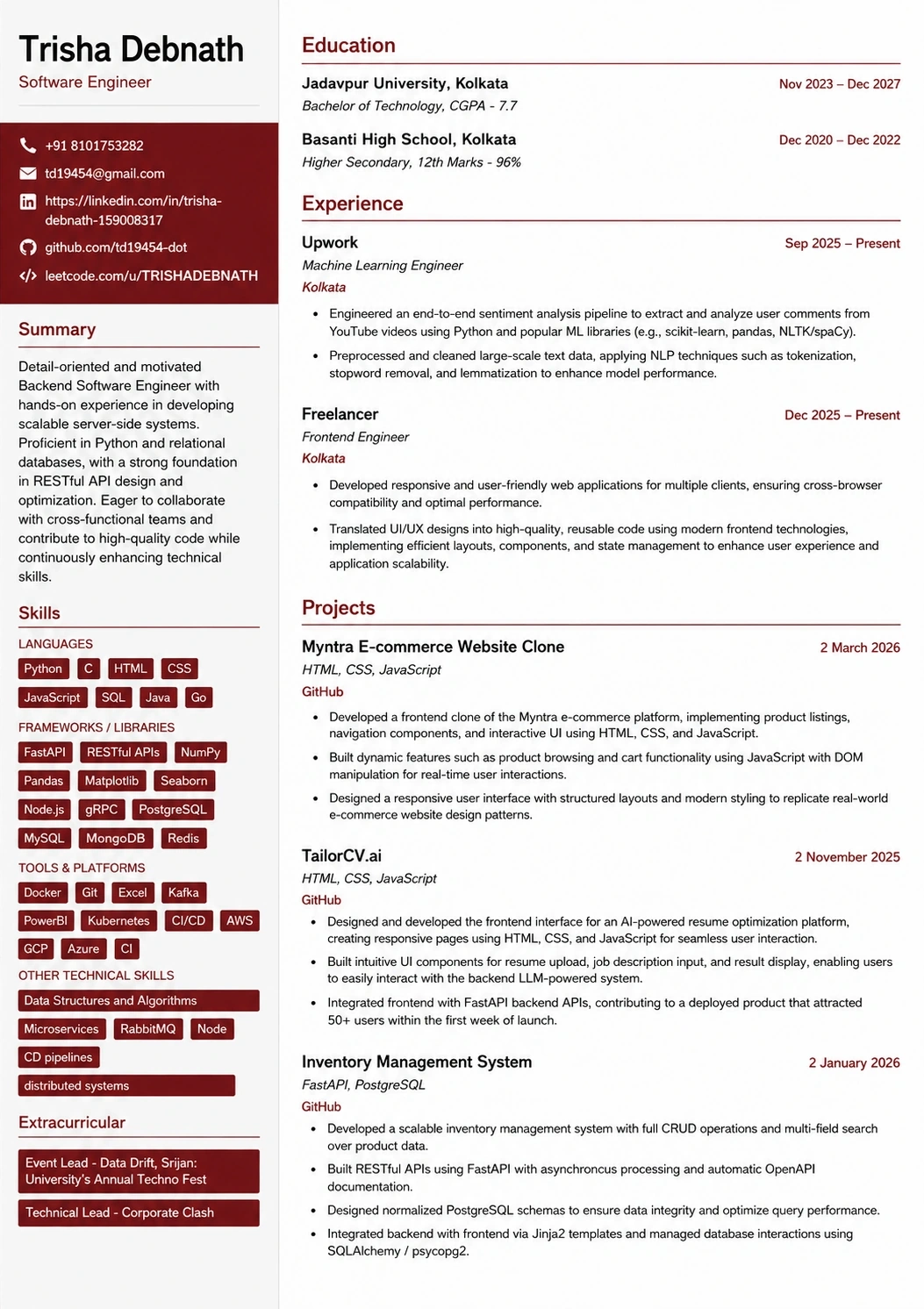
This template is ATS-tested — start from it and the formatting rules in this guide are already handled.
Was this guide useful?
Be the first to rate it.