 SS
SS
Key Takeaways
- Tailoring resumes to specific job descriptions is crucial in 2026, as ATS engines have become more precise and recruiters expect customized applications.
- AI tools enable faster resume tailoring, allowing candidates to adjust their resumes for each application without starting from scratch.
- Emphasizing skills and evidence of capabilities is now more important than traditional qualifications like titles and degrees.
- Portfolios are becoming standard in resumes, moving from optional to essential for showcasing relevant work.
- Cosmetic trends, such as video resumes and frequent visual redesigns, are less impactful and should be approached with skepticism.
Resume conventions shift every year, but 2026 has produced a sharper split than usual between changes that actually affect whether you get an interview and changes that are purely cosmetic. Two forces are driving most of it: AI tools now sit on both sides of the hiring process, and hiring signals are shifting away from pure title-and-degree gatekeeping toward evidence of what you can actually do. Based on patterns across thousands of resumes optimized through TailorCV, here is what's genuinely changing this year, what's overstated, and what you should actually act on. Check where your own resume stands against these shifts with the free ATS score checker before you change anything based on a trends article.
The Signal-vs-Noise Problem With "Resume Trends" Articles
Trend pieces have a built-in incentive problem: "ten brand-new rules for your resume" is more shareable than "most of this hasn't actually changed." Worth naming upfront, so you can calibrate how much weight to put on the rest of this article.
Some of what shifts every year is real and durable - it reflects how ATS software parses a document, how recruiters spend the few seconds they give each resume, and how hiring managers actually make decisions. Other "trends" get repeated in listicles because they're novel to write about, not because they move outcomes. A resume with a QR code linking to a 90-second video pitch makes for an interesting paragraph in a trends article. It rarely changes whether you get a callback.
This post tries to separate the two. The durable shifts below - faster JD-specific tailoring, AI-assisted drafting paired with human verification, skills and evidence outranking pure pedigree, portfolios becoming standard rather than optional, and formatting that survives ATS parsing - are worth actually changing your process for. The more fad-adjacent trends, like video resumes and constant visual redesigns, get a shorter and more skeptical treatment, because acting on them is optional at best and a time sink at worst.
If you only have twenty minutes, skip straight to the Make This Practical section near the end and run your resume through the ATS score checker first. Everything else here is context for what to do once you have that baseline.
In: Faster, Sharper Tailoring to Each Job Description
Sending one resume to every job has been bad advice for years, but it's becoming actively counterproductive in 2026. ATS matching engines are more precise about how they score a resume against a job description, and recruiters who scan dozens of near-identical, non-tailored resumes a day get faster at spotting one that clearly wasn't customized for their posting.
What's changed isn't the principle - tailor your resume - it's the speed at which it's now possible to do it. Candidates who used to tailor two or three applications a week because rewriting a resume by hand was slow can now realistically tailor every application, because AI tools compress a 30-minute editing pass into a few minutes. That raises the bar for everyone else: a generic resume increasingly reads as generic by comparison, not just in isolation.
Tailoring well in 2026 does not mean rewriting your resume from scratch for each job. It means:
- Adjusting your summary line to reflect the specific role and its priorities
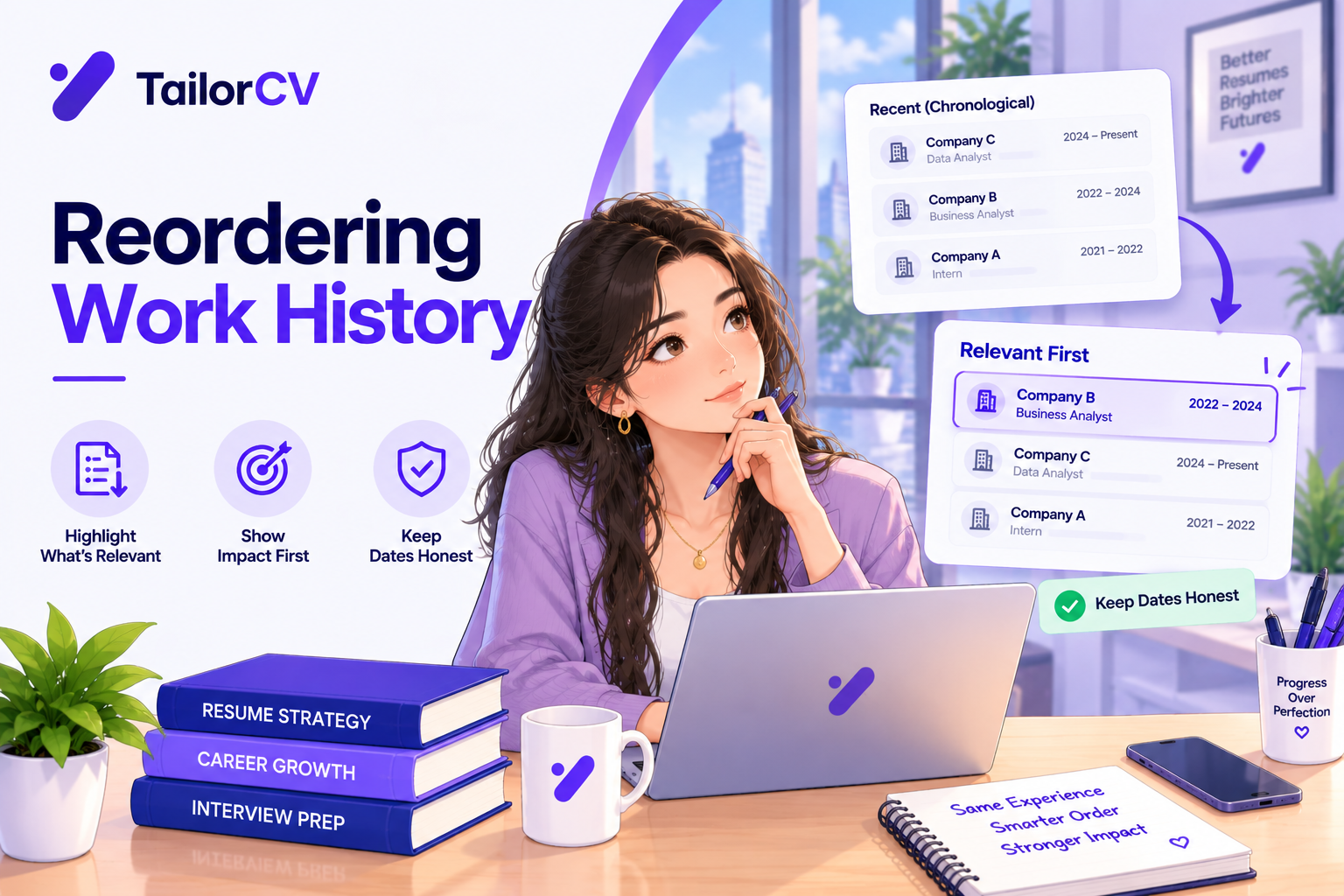
- Reordering your skills list so the most JD-relevant items sit first
- Rewriting your top two or three bullets per role to echo the language and priorities of the posting
- Swapping which achievements you lead with based on what the job actually emphasizes
Generic: "Experienced marketing professional with a background in campaigns and analytics."
Tailored to a growth marketing role: "Growth marketer who has run 15+ paid acquisition campaigns and cut customer acquisition cost by tracking funnel drop-off in weekly cohort analysis."
See how to tailor your resume for every job and how to tailor a resume in 5 minutes for the mechanics, and job description keyword extraction for how to pull out what actually matters from a posting instead of guessing.
In: AI-Assisted Drafting, But Verified and De-Generalized
AI-assisted resume writing has gone from a novelty to a default habit for a large share of job seekers, and that's created a genuine arms race. Candidates use AI to draft faster. Recruiters and ATS tooling, in turn, are getting noticeably better at recognizing the telltale patterns of unedited AI output - the same handful of overused verbs, the same rhythm of sentences, the same vague "responsible for" phrasing dressed up in slightly fancier language.
The practical result is that generic AI-sounding resumes are starting to work against candidates rather than for them, especially at companies that read a meaningful volume of resumes and have started noticing the pattern. That doesn't mean AI tools are a liability - it means the winning move has shifted from "use AI to write the resume" to "use AI to draft faster, then inject the specifics only you have."
Generic AI output: "Spearheaded cross-functional initiatives to drive impactful results and foster collaborative synergy across departments."
Verified and specific: "Led a 6-person cross-functional team to launch a new onboarding flow, cutting new-user drop-off from 34% to 19% within two release cycles."
The second version is not longer or more elaborate - it's more specific, and specificity is exactly what generic AI drafts lack by default. A reliable process looks like this:
- Write down your raw facts first: numbers, scope, tools, outcomes - before any AI tool touches the page.
- Use AI to help structure, phrase, and tighten those facts, not invent new ones.
- Read every generated line back and cut anything you couldn't defend, unprompted, in an interview.
This is also increasingly relevant because interviewers are getting more comfortable probing specifics on the spot precisely because they suspect AI involvement - see can recruiters tell if your resume was written by AI for what actually gives it away. For the drafting process itself, how to write a resume with AI, ChatGPT resume prompts, and AI resume tailoring without losing your voice all walk through how to keep the process fast without producing something anonymous-sounding.
In: Skills and Evidence Over Titles and Degrees
Skills-based hiring signals are gaining real ground, particularly in technical, creative, and operational roles where a portfolio, a certification, or a work sample can demonstrate capability more directly than a job title ever could. This isn't a wholesale replacement of traditional credentials - a degree still matters in plenty of fields and at plenty of companies - but the range of roles where "show me you can do this" outweighs "tell me where you studied" is expanding.
For your resume, this shows up in a few concrete ways:
- Skills sections are moving away from generic, alphabetized lists toward a shorter set of tools and competencies that directly mirror the language in the target job posting
- Certifications and demonstrable project work carry more weight when a candidate lacks a traditional credential in that exact field
- ATS and recruiter screening increasingly look for skills evidenced by context (a bullet that shows the skill in use) rather than just a skill listed in isolation
Weak skills section: "Skills: Excel, communication, teamwork, Python, leadership"
Stronger, JD-mapped version: "Skills: SQL, Python (pandas, matplotlib), A/B testing, dashboarding in Looker, stakeholder reporting"
The second version reads as evidence because it's specific enough that a recruiter can picture it being used, and it can be scanned and matched by an ATS parser far more reliably than a generic list. See skills to add to resume 2026, resume keywords guide, and how AI resume matching actually works for the mechanics behind why this matters more than it used to. If you want a deeper look at how this shift is playing out across hiring more broadly, resume matching in a skills-based hiring market covers it directly.
In: Portfolios and External Proof as the Default, Not the Exception
A resume alone increasingly reads as an incomplete pitch, especially outside pure operational roles. More candidates - not just designers and developers - are attaching a link to a simple portfolio website, a GitHub profile, a writing sample, or a case study that backs up what the resume claims.
This trend is real and worth acting on, but it's field-dependent. A portfolio link adds clear value when:
- You work in a field where output is visual, written, or code-based (design, development, content, marketing, data)
- You can point to two or three specific pieces of work rather than a vague "portfolio in progress"
- The link is genuinely easy to review in under a minute - a clean landing page, not a maze
It adds less value, or can even be a distraction, when:
- Your field has no natural artifact to show (some operations, finance, or compliance roles)
- The portfolio is thin, outdated, or clearly assembled in a rush right before applying
- It duplicates the resume instead of adding something the resume can't show, like process, range, or scale
For technical roles specifically, a well-organized GitHub profile is functioning more and more like an informal second resume - see GitHub portfolio optimization and developer portfolio project ideas. For the broader question of when a portfolio adds real signal versus when it's unnecessary overhead, see portfolio website vs resume and add a portfolio link to your resume.
Emerging, With Caveats: Video Resumes and Async Intros
Video resumes and short async video introductions show up in nearly every "2026 trends" list, and they deserve a more grounded take than most of those lists give them. They are real, they are growing in specific niches, and they are far from universal - treating them as a must-have for every job seeker is the kind of overstatement this article is trying to avoid.
Video works best as a supplement in a narrow set of situations:
- Roles where communication style is itself part of the job, like sales, customer-facing, or on-camera positions
- Early-career applications where a short intro can add personality that a one-page resume can't
- Companies or platforms that explicitly request or support one, rather than sending an unsolicited video link nobody asked for
It adds friction, or gets ignored outright, when:
- It's sent to a large company running high-volume ATS screening, where nobody may ever click the link
- It replaces resume content rather than supplementing it - recruiters still need a scannable, parseable document first
- The production quality or length (anything over 60-90 seconds) works against you instead of for you
The safest way to use this trend is as an optional add-on referenced from your resume or application, never as a substitute for a clean, ATS-readable document. See video resume guide 2026 for when it's worth the effort and how to keep it short and specific rather than rehearsed and generic.
Out: Keyword Stuffing, Objective Statements, and Decorative Templates
Three older tactics are firmly out in 2026, and none of them are close calls anymore.
Your resume after optimization
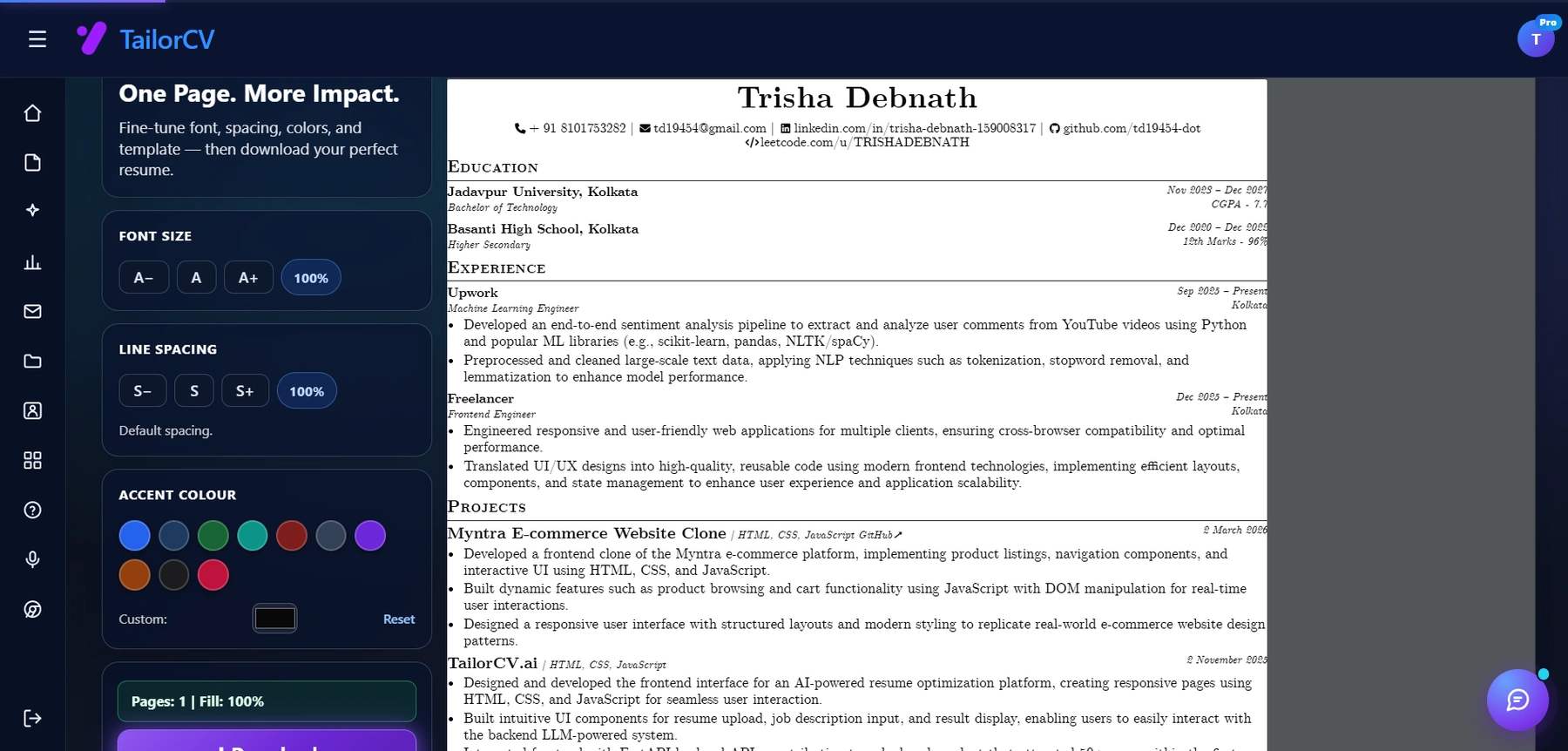
Font size, spacing, accent colour and template are all adjustable, with a live page counter.
Keyword stuffing. Early ATS advice pushed candidates to cram keywords anywhere they'd fit, including in white text or hidden sections. Modern ATS parsing and human reviewers both catch this quickly, and it now reads as a red flag rather than a clever workaround. See ATS keyword mistakes for what natural keyword usage looks like instead.
Objective statements. "Seeking a challenging position that utilizes my skills and allows for growth" tells a recruiter nothing they can act on. 2026 resumes lead with a short, specific summary that states who you are and what you bring, not what you're hoping to get out of the job. See resume objective vs summary.
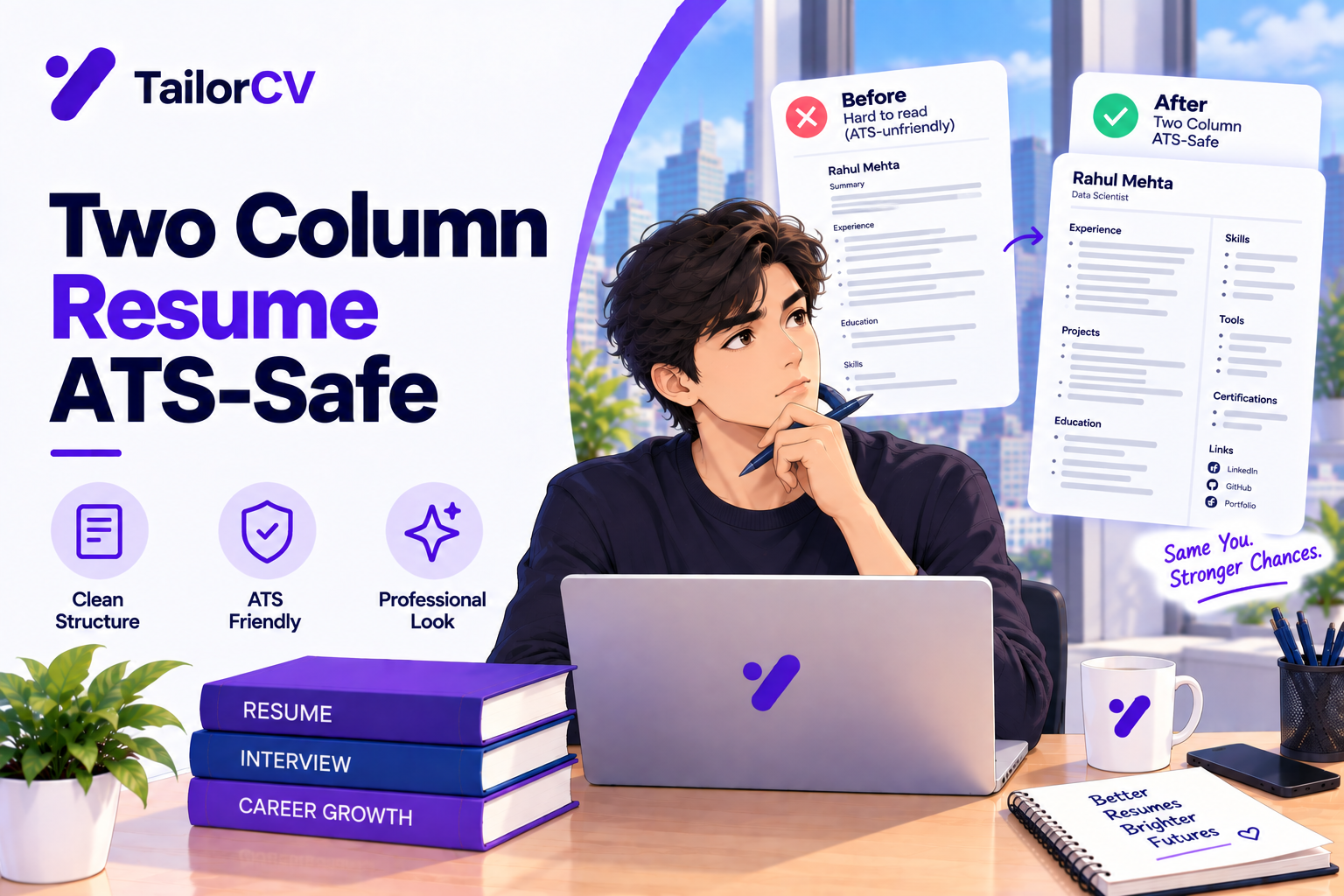
Decorative, graphic-heavy templates. Multi-column layouts, embedded icons, and heavy graphics still cause ATS parsers to misread or drop content in 2026, despite years of tools claiming to have "solved" this. It's not that ATS software hasn't improved - it's that visually elaborate resumes remain a worse bet than a clean one, because the downside (unreadable content) is asymmetric with the upside (looking modern). See ATS resume formatting mistakes and use an ATS-friendly resume builder instead.
Risky formatting choice: a two-column resume with a graphic skills-bar chart and an icon next to each section header.
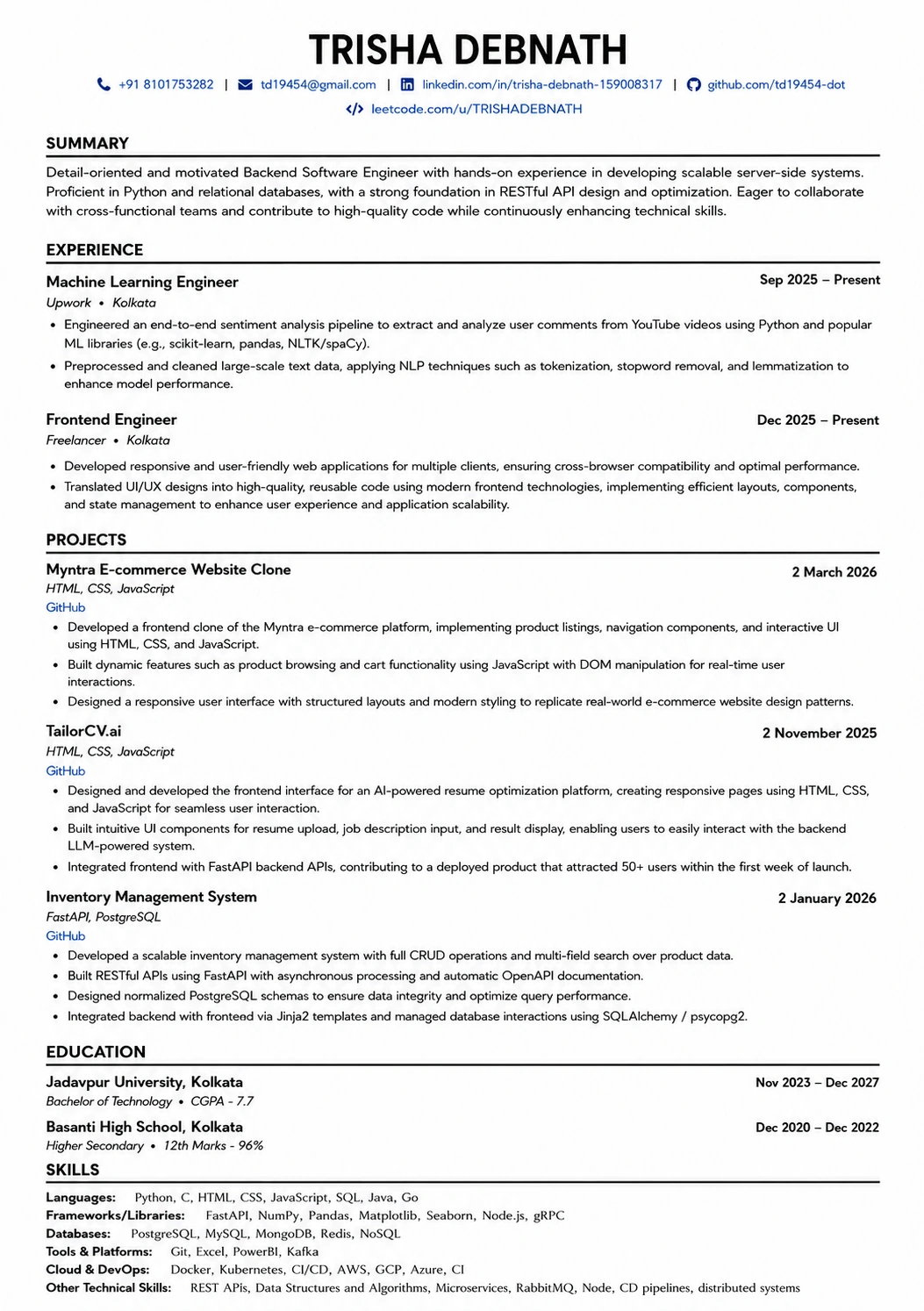
Safer, equally modern choice: a single-column layout with clear headers, standard fonts, and bullet points - visually clean without anything that can break a parser.
Why Clean ATS Formatting Still Wins, Even as Design Trends Change
Visual resume trends come and go - colored sidebars, bold header bars, minimalist serif fonts - but the underlying parsing layer that most ATS platforms run on has not fundamentally changed in step with those design trends. That gap is worth understanding, because it's the reason formatting advice looks conservative compared to what's visually trendy on résumé template sites.
An ATS is, at its core, still extracting text from a document into fields it can search and rank: contact info, work history, skills, dates. Anything that interferes with that extraction - text inside images, content split across columns in a way that scrambles reading order, tables the parser can't interpret, unusual fonts - creates risk regardless of how good it looks to a human eye. That risk hasn't gone away just because templates have gotten more visually sophisticated.
Practical takeaways that hold up regardless of which visual trend is popular this year:
- Stick to a single column for anything the parser needs to read in order
- Use standard section headers (Experience, Education, Skills) rather than creative renamed ones an ATS may not recognize
- Avoid embedding key information - job titles, dates, contact details - inside graphics, headers/footers, or text boxes
- Save and submit in the file format the application actually requests, usually PDF or DOCX, and check that formatting survives the conversion
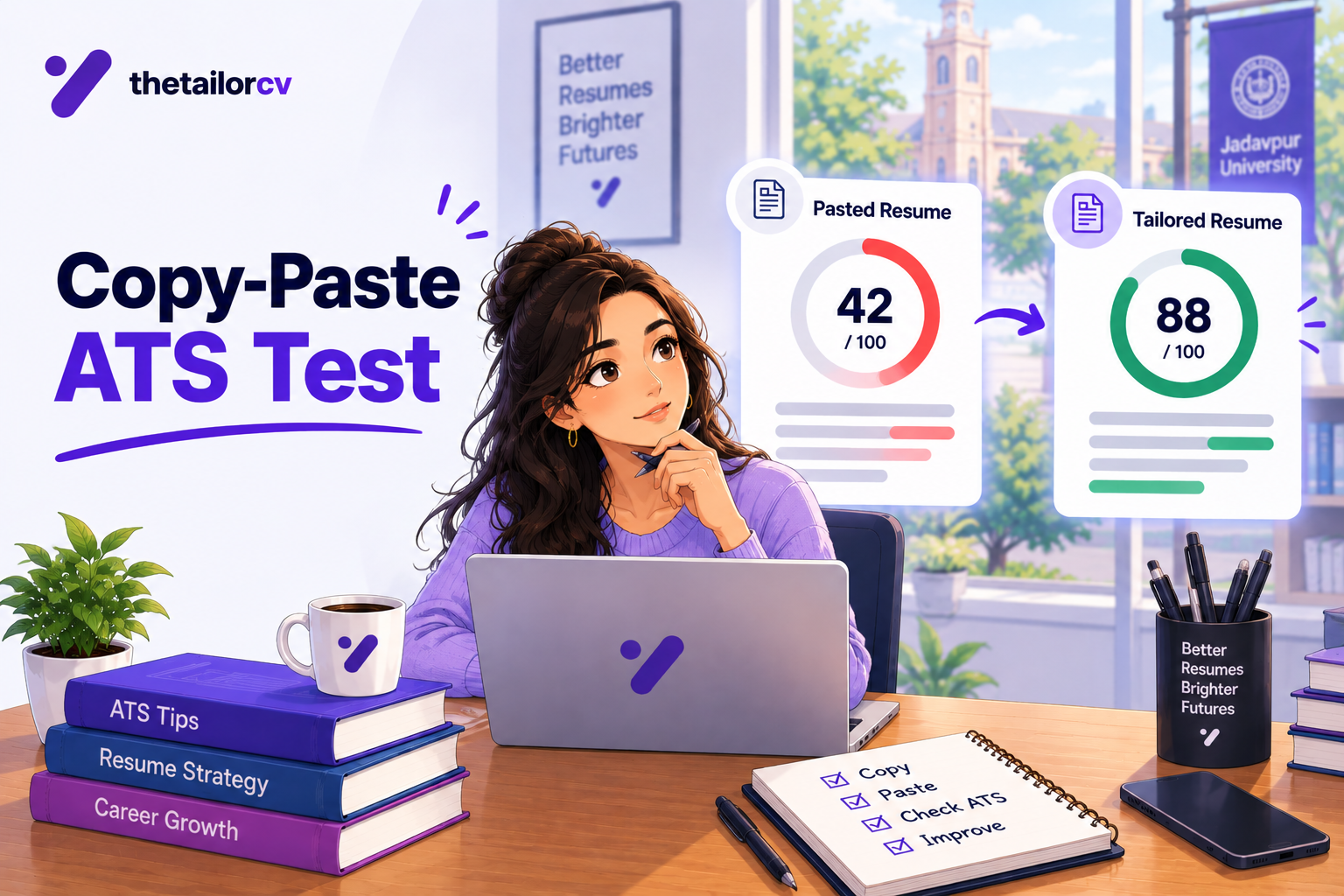
None of this means your resume has to look plain. Clean typography, sensible whitespace, and a clear visual hierarchy can look modern without ever risking the parsing layer. Run a real check rather than guessing with the free ATS score checker, or see does my resume pass ATS for a deeper diagnostic walkthrough.
What's Overstated: Trends to Watch, Not Act On Yet
A few things get repeated often enough in 2026 hiring content that they're worth naming directly, along with why they don't belong in the "change your resume now" category.
- "AI will read your resume, so write for the algorithm." ATS and AI-assisted screening tools are getting more sophisticated, not less, which means writing for a human reader who happens to be assisted by software is still the right target. Gaming an algorithm is a shrinking strategy as the tools improve.
- "Everyone needs a video resume now." As covered above, this is real in specific niches and unnecessary noise for most applications. Don't let a trends list convince you it's mandatory.
- "Resumes are becoming obsolete in favor of LinkedIn/portfolios/AI agents." Supplementary channels are growing in importance, but the resume (or its equivalent structured document) remains the artifact most ATS platforms, recruiters, and hiring managers still ask for first. Emerging tools like AI job search agents change how applications get submitted, not what still needs to be true about the document itself.
- "You need a completely different resume format every year to stay current." Content trends move faster than format trends. A well-structured, ATS-clean resume from two years ago with updated content is still a strong resume today.
The pattern across all four: novelty gets attention, but the resumes that actually convert to interviews in 2026 look a lot like well-executed versions of resumes that worked in 2023 - just tailored faster, backed by more evidence, and written with more specificity.
What the Data Shows
Across resumes scored on TailorCV, the biggest factor separating high-scoring resumes from low-scoring ones isn't design - it's specificity. Quantified results, JD-matched keywords, and clean, parseable formatting consistently outperform polished-looking but generic resumes, and that pattern has held steady even as surface-level trends have shifted around it. See ATS resume data study 2026 for the full breakdown of what actually separates the two groups.
Make This Practical
Turn these trends into an actual audit instead of a reading exercise. Score your current resume with the free ATS score checker, rewrite weak bullets using how to quantify resume achievements, and rebuild your skills section so it maps to a real job posting rather than a generic list. If your field supports it, add a portfolio link backed by two or three real work samples. Once your resume is in good shape, pair it with a tailored AI-generated cover letter and practice defending your bullet points out loud with the AI mock interview tool - since interviewers are increasingly probing for the specifics behind what's on the page. For roles where AI skills themselves are the qualification, resume tips for AI engineer roles in 2026 applies several of these trends directly.
FAQ
Do resume trends actually affect ATS scoring?
Some do directly, like formatting and keyword usage, while others - like portfolio links or video intros - affect human impression more than automated scoring. Check your resume's real score with the free ATS score checker rather than assuming.
Is a one-page resume still the standard in 2026?
For most early-to-mid career professionals, yes. Senior executives and academic or research roles remain common exceptions - see ideal resume length guide for where the line sits.
Should I redesign my resume every year to stay current?
No - focus on content trends (tailoring, quantified results, clean ATS formatting) over cosmetic redesigns. A dated-looking but well-structured resume with strong content will consistently outperform a trendy-looking but generic one.
Will using AI to write my resume hurt my chances in 2026?
Using AI to draft is fine and increasingly common; the risk is submitting unedited, generic AI output that reads the same as everyone else's. Verify every claim, add real specifics, and see can recruiters tell if your resume was written by AI for what stands out as a red flag.
Do I actually need a portfolio if I'm not in a design or dev role?
Not always - it depends on whether your field has a natural artifact worth showing. If it does, a link with two or three specific samples adds real signal. If it doesn't, a resume and cover letter can carry the full weight instead. See portfolio website vs resume.
Is a video resume worth making in 2026?
Only in specific cases - customer-facing or on-camera roles, early-career applications where personality helps, or when a company explicitly requests one. It should supplement a strong written resume, never replace it. See video resume guide 2026.
What's the biggest resume mistake in 2026 specifically?
Sending one generic resume to every job without any tailoring, at a time when both ATS systems and recruiters have gotten noticeably better at spotting it. See tailored vs generic resume for the measurable difference tailoring makes.
How do I know which trends actually apply to my situation?
Start from your field and seniority level rather than a generic list. A software engineer, a nurse, and an accountant will weight tailoring, portfolios, and formatting differently - check your resume against a real job posting with the ATS score checker to see which gaps actually matter for you.
Next Step
Reading about trends doesn't move your application forward - testing your resume against a real job posting does. Run it through the free ATS score checker and fix what it flags before you submit anything else.
What is your resume scoring right now?
Scan it against a job description and get your ATS match score in about a minute.
Drop your resume here or choose a file
PDF only. Max 2 MB.
We never share your data or use it to train AI models.

Templates that keep this structure intact
This template is ATS-tested — start from it and the formatting rules in this guide are already handled.
Was this guide useful?
Be the first to rate it.