SS
SS
Key Takeaways
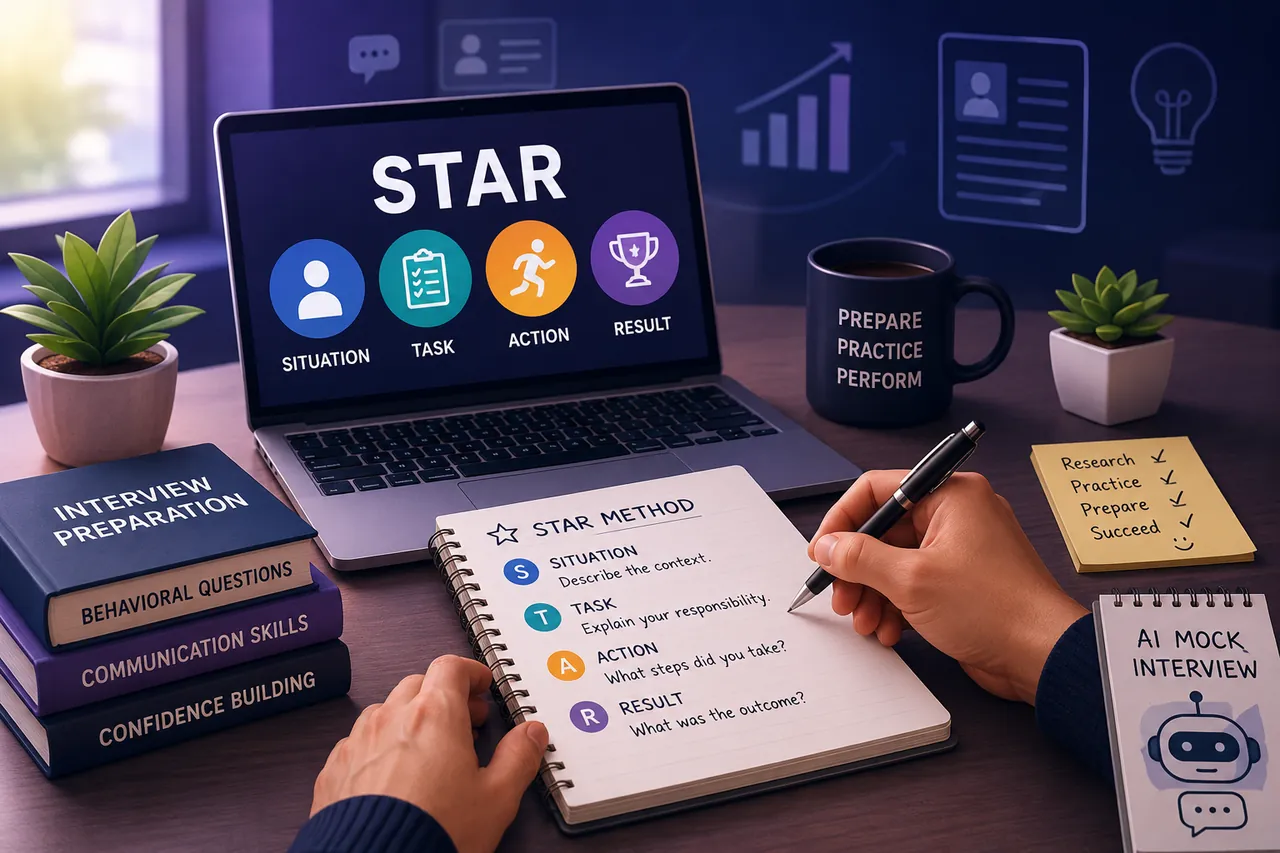
- The STAR method stands for Situation, Task, Action, and Result, providing a structured approach to answering behavioral interview questions.
- Using STAR helps keep answers focused and concise, typically under two minutes, making it easier for interviewers to evaluate responses.
- In 2026, interviewers assess specific competencies like leadership and problem-solving, which STAR effectively highlights through clear context and measurable results.
- Prepare a bank of 8-10 STAR stories covering various themes such as leadership and conflict resolution to enhance interview readiness.
- Practice storytelling with AI mock interviews to refine and polish your responses for different question types.
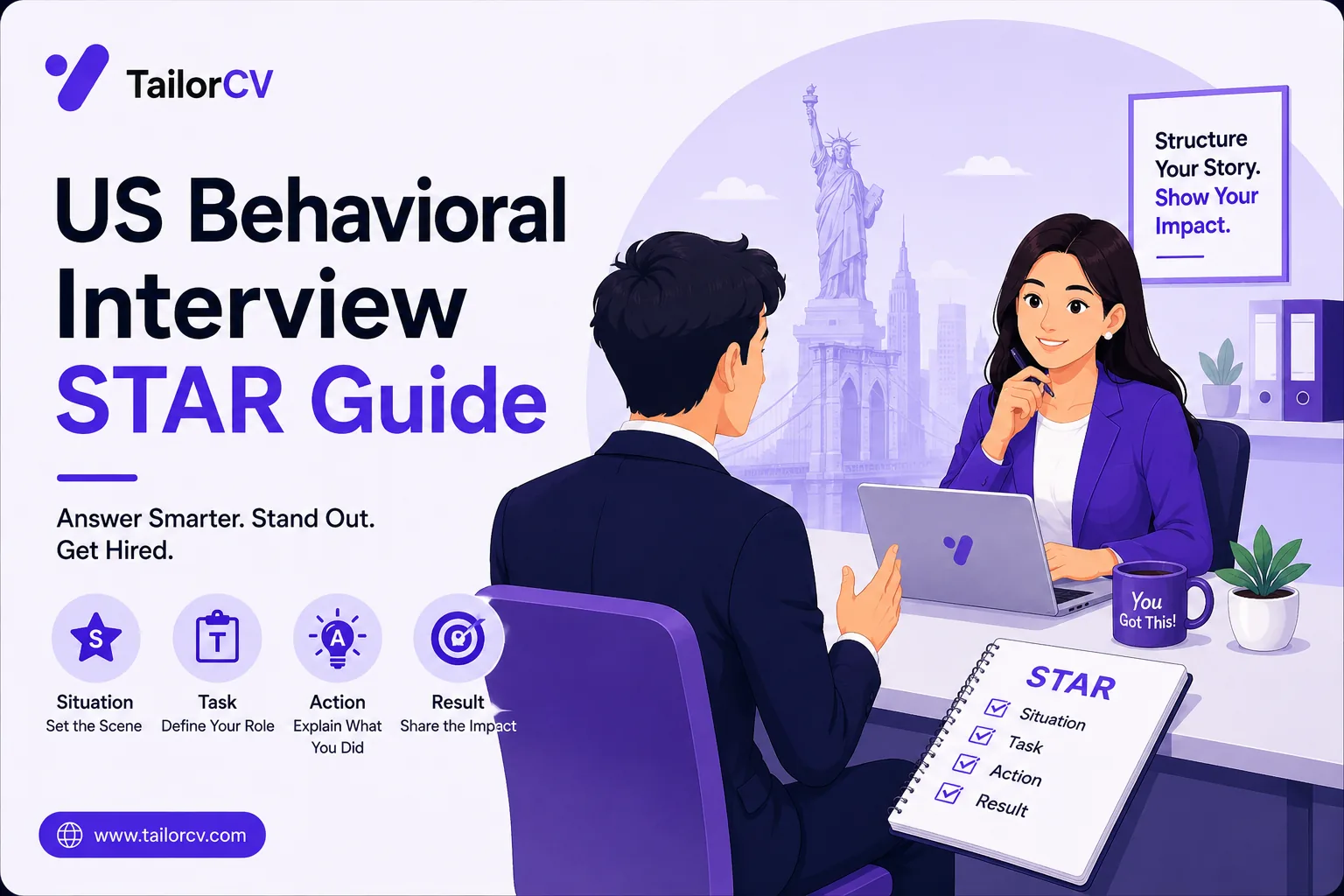
behavioral interview questions - "Tell me about a time when..." - appear in nearly every hiring process. The difference between a forgettable answer and a compelling one is almost always structure. That structure is STAR: Situation, Task, Action, Result.
This guide explains how to use STAR in 2026, with examples for common questions and a practice plan using AI mock interviews.
Before your next interview, review the behavioral interview questions guide, common interview mistakes, and the complete interview preparation guide. Make sure your resume highlights the stories you will tell - optimize it with the TailorCV ATS checker.
What Is the STAR Method?
S - Situation: Set the scene. Where were you? What was the context? T - Task: What was your specific responsibility or challenge? A - Action: What did you do? Use "I" not "we." R - Result: What happened? quantify when possible.
See it in action: a resume-based mock interview
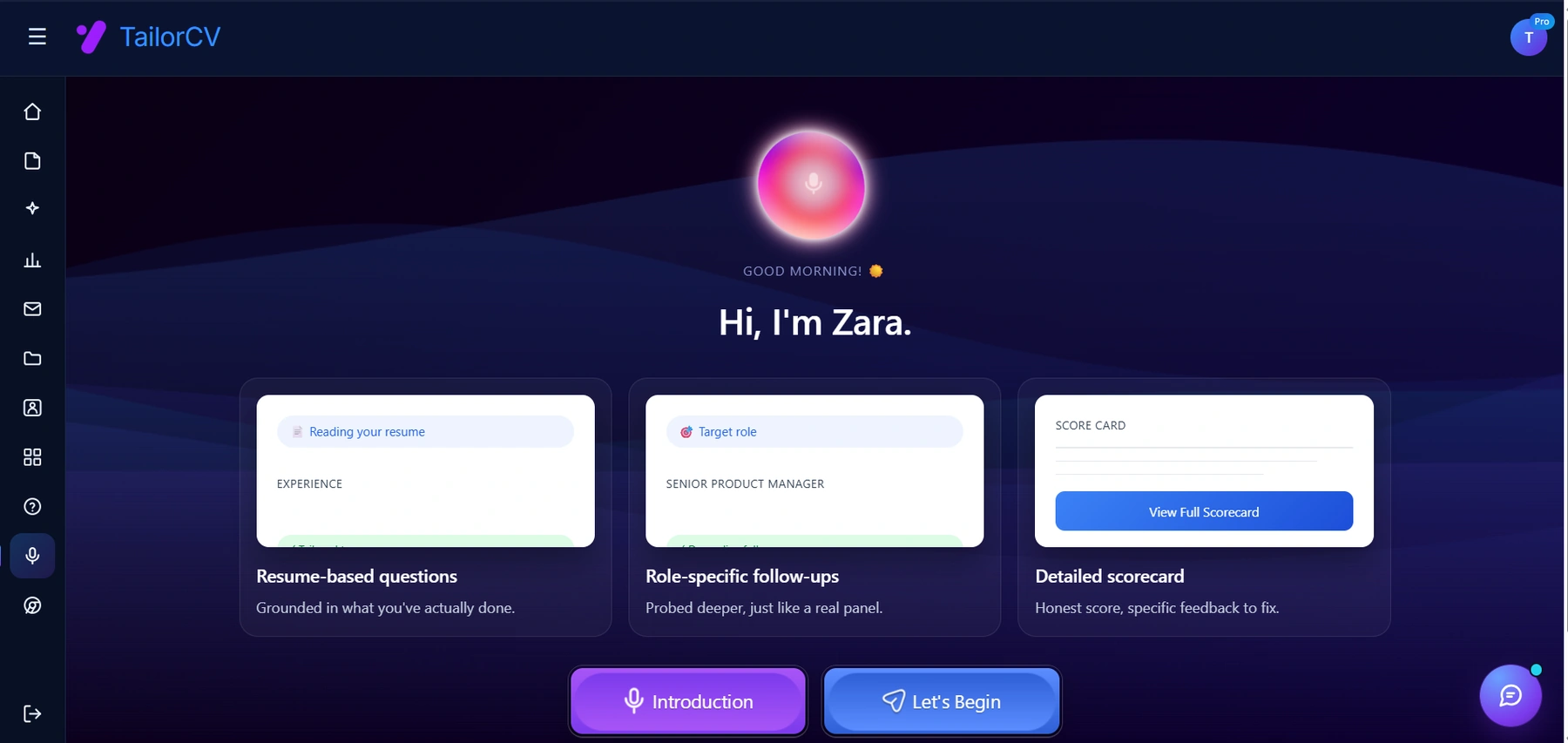
You can rehearse this before the real thing. The interviewer reads your resume first, so the questions come from your actual experience rather than a generic list.
STAR keeps answers focused, usually under two minutes, and easy for interviewers to evaluate. It is essential for HR round questions, manager rounds, and competency-based interviews.
Why STAR Works in 2026 Interviews
Interviewers in 2026 are trained to assess specific competencies: leadership, problem-solving, collaboration, adaptability. Unstructured stories make that hard. STAR gives them exactly what they need:
- Clear context (Situation)
- Your ownership (Task + Action)
- Proof of impact (Result)
Pair STAR with situational interview questions prep and AI mock interview practice to build a library of polished stories.
STAR Method Examples
"Tell me about a time you handled a conflict"
Situation: "On my previous team, two engineers disagreed on the architecture for a new payment feature - one wanted a monolith extension, the other wanted a new microservice."
Task: "As the tech lead, I needed to resolve the disagreement without delaying our two-week sprint deadline."
Action: "I scheduled a focused design review, had each person document trade-offs in writing, and created a decision matrix against our latency, cost, and maintenance requirements. I facilitated a 45-minute discussion focused on data, not opinions."
Result: "We chose the microservice approach, delivered on time, and reduced payment processing latency by 22%. The process became our team's standard for architecture decisions."
Practice this aloud with the mock interview tool.
"Describe a time you failed"
Situation: "I launched a feature without enough user testing in my second month at a startup."
Task: "I owned the rollback and needed to rebuild trust with the product team."
Action: "I immediately documented what went wrong, implemented a mandatory staging review checklist, and personally tested edge cases for the next three releases."
Result: "We had zero critical bugs in the following quarter, and the checklist is still used by the team today."
For more on framing failures, see how to answer greatest weakness.
How to Build Your STAR Story Bank
- Review your resume - every bullet point is a potential story. Use resume optimization tips to make bullets STAR-ready.
- Prepare 8-10 stories covering leadership, conflict, failure, success, teamwork, and deadline pressure.
- Map stories to question types - one story can answer multiple questions with different emphasis.
- Practice with AI - run mock interview sessions until answers feel natural, not memorized.
- Watch your delivery - read interview body language tips and manage interview nerves.
Common STAR Mistakes to Avoid
- Too much Situation, not enough Action - interviewers care what you did
- Using "we" for everything - clarify your individual contribution
- No Result or metrics - "it went well" is not a result
- Rambling past 2.5 minutes - practice trimming with tell me about yourself pacing
- Memorizing word-for-word - sounds robotic; know the structure, not a script
Avoid these and more in the 20 common interview mistakes guide.
STAR for Different Interview Types
| Interview type | How to use STAR |
|---|---|
| Phone interview | Shorter STAR - 90 seconds max |
| Virtual interview | STAR + strong eye contact on camera |
| Panel interview | Make eye contact with each panelist during Result |
| Group interview | STAR helps you stand out without dominating |
| Final round | Emphasize Results that align with company goals |
Crafting Compelling STAR Stories: A Step-by-Step Approach
To effectively utilize the STAR method in interviews, you need to develop well-structured stories that clearly illustrate your skills and experiences. Follow this step-by-step approach to create compelling STAR stories:
-
Identify Key Competencies: Review the job description and identify the key skills and competencies required. Focus on areas such as teamwork, problem-solving, or leadership.
-
Select Relevant Experiences: Choose past experiences that showcase these competencies. Aim for a mix of professional, academic, and volunteer experiences to show versatility.
-
Outline Your STAR Components:
| Step | What to do |
|---|---|
| Situation | Start with a brief context. Who was involved? What was the setting? |
| Task | Define your role and responsibilities. What was the challenge you faced? |
| Action | Detail the specific steps you took. Highlight your thought process and any collaboration |
| Result | Share the outcomes. Use quantifiable results when possible, such as percentages or dollar amounts |
-
Practice Your Delivery: Rehearse your stories aloud. Aim for clarity and conciseness, keeping your responses under two minutes.
-
Tailor to the Interview: Adjust your STAR stories based on the interviewer's questions. Flexibility is key to demonstrating your fit for the role.
By following this structured approach, you'll be well-prepared to impress interviewers with your STAR stories.
Common STAR Method Mistakes to Avoid
While the STAR method is a powerful tool, there are common pitfalls that candidates often encounter. Here’s a list of mistakes to avoid:
-
Lack of Specificity: Avoid vague descriptions. Instead of saying you “helped a team,” specify what your contribution was and the impact it had.
-
Overly Complex Situations: Keep it simple. Choose scenarios that are straightforward and easy to follow. Complicated stories can confuse interviewers.
-
Neglecting the Result: Always conclude with a strong result. Failing to articulate the outcome of your actions can leave your story feeling incomplete.
-
Not Practicing Enough: Even the best stories can fall flat without practice. Rehearse your stories multiple times to gain confidence.
-
Ignoring the Job Context: Ensure your stories are relevant to the position you’re applying for. Tailor your examples to the skills highlighted in the job description.
By avoiding these common mistakes, you'll present your experiences more effectively and leave a positive impression on your interviewers.
STAR Method Checklist for Interview Preparation
As you prepare for your interviews, use this checklist to ensure you’re fully equipped to utilize the STAR method:
- unchecked: Review Job Description: Identify key competencies needed for the role.
- unchecked: Develop 3-5 STAR Stories: Create a bank of stories that illustrate your skills and experiences.
- unchecked: Practice Your Stories: Rehearse each story aloud, focusing on clarity and conciseness.
- unchecked: Customize for the Role: Tailor your STAR stories based on the specific interview questions.
- unchecked: Prepare for Follow-Up Questions: Anticipate follow-up questions and be ready to provide additional details.
- unchecked: Stay Positive: Focus on positive outcomes, even when discussing challenges or failures.
- unchecked: Gather Feedback: If possible, conduct mock interviews with friends or career coaches to refine your delivery.
By using this checklist, you can ensure that you are thoroughly prepared to effectively utilize the STAR method during your interviews.
Short Scenarios for Practice
Practicing with hypothetical scenarios can help you refine your STAR responses. Here are a few short scenarios to consider:
- Scenario: You had a conflict with a coworker over project priorities.
| Question | What they are checking |
|---|---|
| Situation | Describe the workplace environment and the project |
| Task | Explain your role in addressing the conflict |
| Action | Detail how you initiated a conversation to resolve the issue |
| Result | Share how the resolution led to a successful project completion |
-
Scenario: You were tasked with improving a process that was inefficient. - Situation: Outline the existing process and its issues. - Task: Discuss your responsibility in identifying improvements. - Action: Explain the steps you took to implement changes. - Result: Highlight the improvements in efficiency or cost savings.
-
Scenario: You led a team on a challenging project with a tight deadline. - Situation: Set the scene for the project and team dynamics. - Task: Describe your leadership role. - Action: Detail how you motivated the team and managed resources. - Result: Share the successful outcome and any recognition received.
By practicing with these scenarios, you can better prepare for real interview questions and deliver your STAR responses with confidence.
Using STAR for Virtual Interviews
As virtual interviews become more common, adapting your STAR responses for a digital format is essential. Here are some tips to enhance your performance:
-
Test Your Technology: Ensure your camera, microphone, and internet connection are working well before the interview.
-
Maintain Eye Contact: Look at the camera instead of the screen to create a sense of connection with the interviewer.
-
Use Visual Aids: If appropriate, prepare a brief PowerPoint slide or notes summarizing your STAR stories to reference during the interview.
-
Stay Engaged: Nod and react to the interviewer’s comments to show you’re actively listening.
-
Follow Up: Send a thank-you email after the interview, reiterating your interest and summarizing a key STAR story that aligns with the discussion.
By adapting your STAR method responses to the virtual format, you can ensure that you leave a lasting impression, regardless of the interview setting.
Interviewers probe team results for your specific role; team vs individual credit on your resume helps you set those answers up on paper first.
Frequently Asked Questions
How long should a STAR answer be?
Aim for 90 seconds to 2.5 minutes. Practice timing with AI mock interviews.
Can I use STAR for "Tell me about yourself"?
STAR is for behavioral questions. For introductions, use the Present-Past-Future formula in the tell me about yourself guide.
How many STAR stories should I prepare?
Prepare 8-10 versatile stories. Freshers can draw from internships, projects, and volunteer work - see first job interview tips.
Practice STAR answers with TailorCV's AI mock interview - free to start.
Make This Practical
Use this advice as interview practice, not just reading material. Start a role-specific session with the AI mock interview tool, prepare your opening with How to Answer Tell Me About Yourself, and structure evidence-heavy answers with the STAR Method Interview Answers Guide.
Before the interview, make sure the resume that earned the call is still aligned with the role. Check it with the free ATS score checker, review Common Interview Mistakes to Avoid, and use How to Follow Up After an Interview once the conversation is over.
Was this guide useful?
Be the first to rate it.