TD
TD

Key Takeaways
- In 2026, most companies utilize Applicant Tracking Systems (ATS) to filter resumes before human review, making it crucial for resumes to impress both software and recruiters.
- An ATS score indicates how well a resume matches a job description, based on factors like keywords, skills, experience, and formatting.
- Understanding ATS scores is essential, as a low score can prevent qualified candidates from getting interviews.
- Modern ATS systems employ AI, semantic keyword matching, and predictive algorithms, making resume optimization a necessity for job seekers.
- Tools like ATS score checkers and resume optimizers can significantly enhance a resume's compatibility with job requirements.
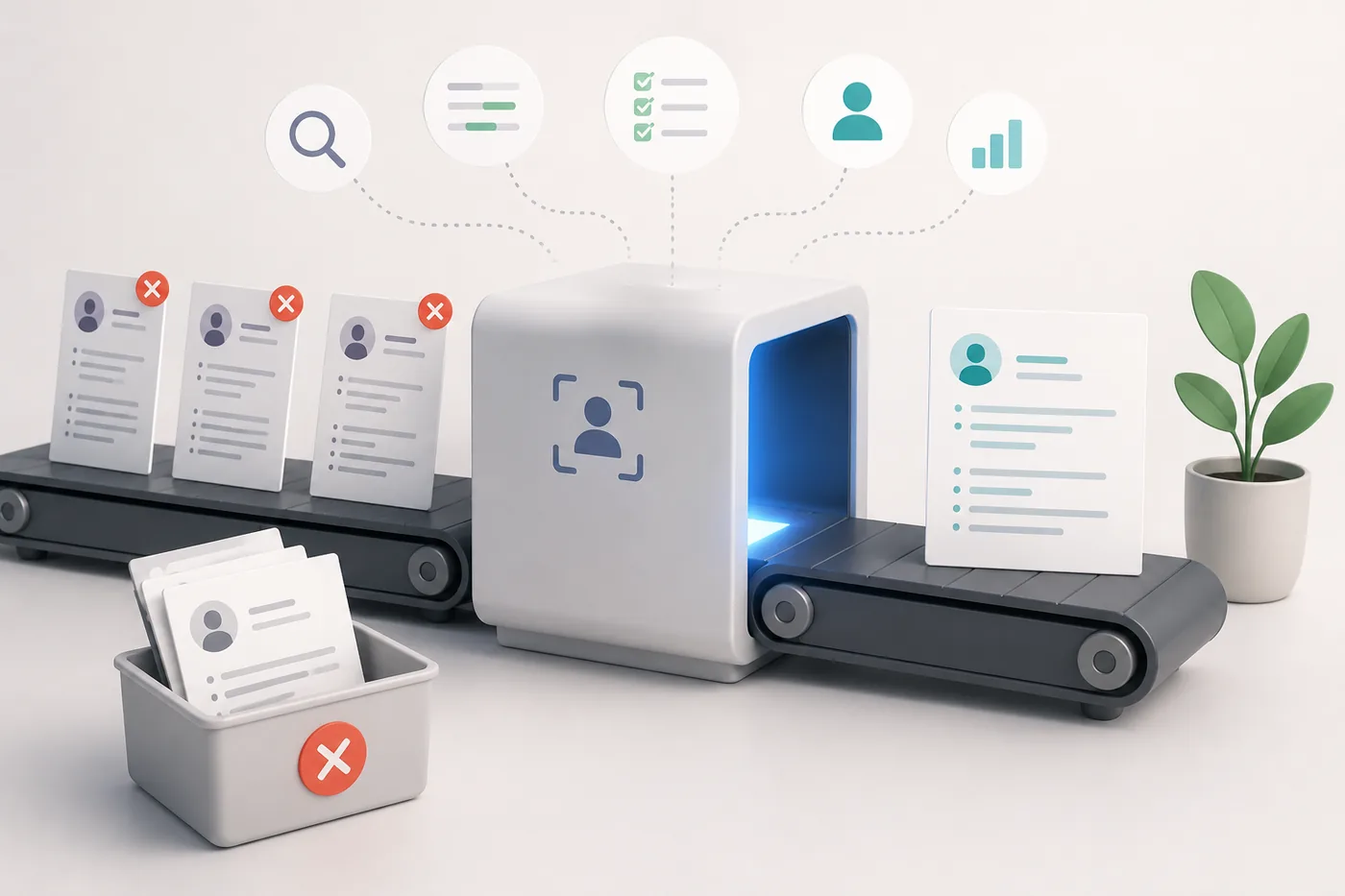
The hiring process has changed dramatically over the last few years. In 2026, most companies use Applicant Tracking Systems (ATS) to filter resumes before a recruiter ever sees them. That means your resume needs to impress not just humans, but software too.
If you want to go deeper after this guide, read the resume optimization guide, compare your resume with the ATS score checker, and use ATS-friendly resume templates before applying. For role-specific examples, see the FAANG software engineer resume and data analyst resume 2026 guides.
If your resume fails ATS screening, you may never get an interview - even if you're qualified.
That's why understanding ATS scores is now essential for job seekers.
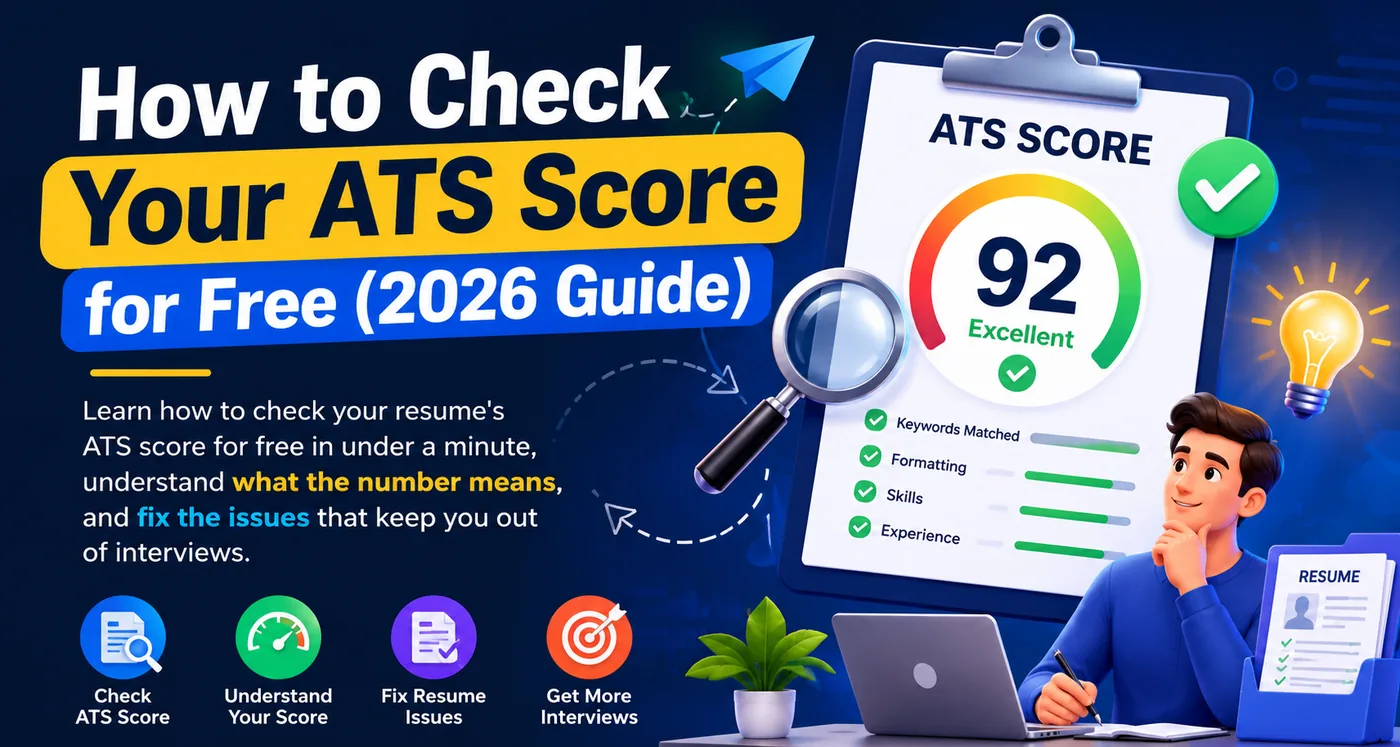
In this complete ATS score Guide (2026), you'll learn:
- What ATS scores really mean
- How ATS systems calculate resume scores
- The biggest resume mistakes to avoid
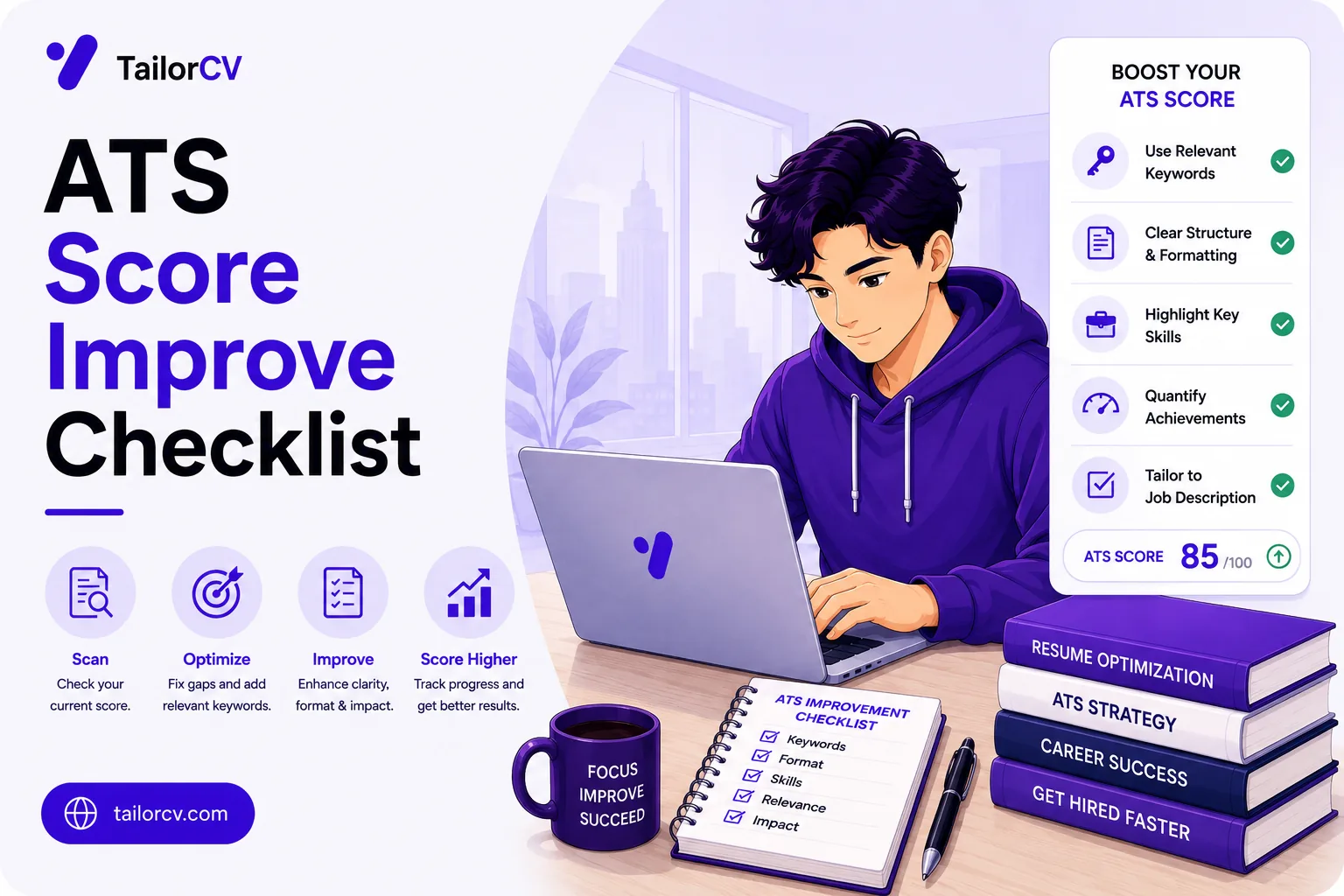
- Proven ATS score improvement tips
- How to optimize your resume faster using modern AI tools
You'll also discover how tools like the ATS score checker and Resume Optimizer from The Tailor CV can help improve your resume instantly.
What Is an ATS Score?
An ATS score is a compatibility rating that shows how well your resume matches a specific job description.
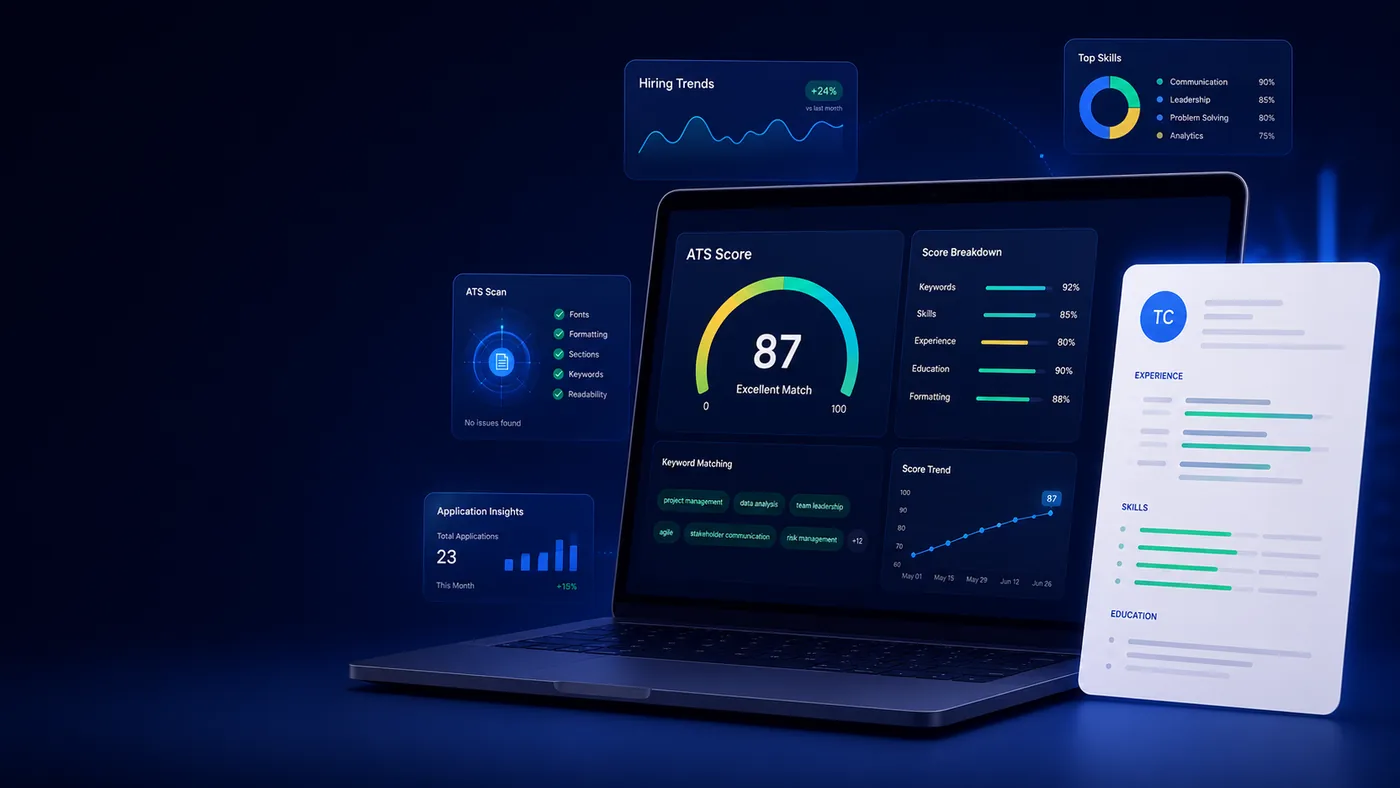
What an ATS score report actually shows you

The score itself matters less than the breakdown beside it: each check names what passed, what failed, and why it matters - which is the list you actually work through.
Applicant Tracking Systems scan resumes and analyze several factors, including:
- Keywords
- Skills
- Experience
- Formatting
- Job titles
- education
- certifications
The software then generates a score or ranking based on how closely your resume aligns with the employer's requirements.
In simple words:
The higher your ATS score, the better your chances of getting shortlisted.
Why ATS Scores Matter More in 2026
ATS software has become smarter than ever. Modern systems now use:
- Artificial Intelligence (AI)
- Semantic keyword matching
- Natural Language Processing (NLP)
- Predictive hiring algorithms
Companies receive hundreds or even thousands of applications for a single role. ATS software helps recruiters narrow the pool quickly.
Studies consistently show that over 90% of large companies use ATS software in hiring.
That means optimizing your resume is no longer optional.
How ATS Systems Actually Work
Understanding how ATS systems work gives you a huge advantage.
Resume Parsing Explained
ATS software first "parses" your resume. Parsing means extracting information such as:
- Name
- Skills
- Work history
- education
- certifications
- Contact details
If your formatting is too complex, the ATS may fail to read critical sections.
Keyword Matching Technology
Next, the system compares your resume with the job description.
It looks for:
- Exact keywords
- Skill variations
- Industry terminology
- Relevant tools and technologies
For example, if the job requires:
- Project Management
- Agile
- Scrum
...your resume should naturally include those terms where relevant.
AI-Based Resume Ranking
Modern ATS platforms now rank candidates using AI.
They analyze:
- Experience depth
- Skill relevance
- Career progression
- Industry fit
- Resume quality
This means stuffing keywords randomly no longer works.
Context matters.
How ATS Scores Are Calculated
ATS scores are based on multiple weighted factors.
Here's a breakdown of the most common scoring components in 2026:
| ATS Factor | Estimated Weight |
|---|---|
| Keyword Match | 30-40% |
| Skills Alignment | 20-25% |
| Resume Formatting | 10-15% |
| Job Title Relevance | 10-15% |
| Experience Quality | 10-20% |
| Education & Certifications | 5-10% |
Let's examine each one.
1. Keyword Relevance
Keywords remain the biggest ATS ranking factor.
Recruiters often configure ATS systems to prioritize resumes containing specific:
- Skills
- Tools
- Technologies
- certifications
- Job functions
Pro Tip
Use the exact terminology from the job description whenever appropriate.
2. Resume Formatting
ATS systems prefer simple, clean layouts.
Avoid:
- Tables
- Graphics
- Text boxes
- Multiple columns
- Fancy fonts
Instead, use:
- Standard headings
- Clear bullet points
- Simple formatting
- Chronological layouts
3. Skills Match Percentage
The ATS evaluates how closely your skill set matches the employer's requirements.
Strong resumes typically include:
- Technical skills
- Soft skills
- Industry-specific tools
- certifications
4. Job Title Alignment
Your previous job titles matter.
If your title differs significantly from the target role, ATS systems may score you lower.
Example:
- "Marketing Specialist" may match "digital marketing Executive"
- But "Content Creator" may not rank as highly
5. Education and Certifications
Some ATS systems filter candidates based on:
- Degree requirements
- certifications
- Licenses
- Specialized training
Relevant certifications can significantly boost ATS scores.
Common ATS Mistakes That Lower Scores
Many candidates unknowingly sabotage their resumes.
Here are the biggest ATS mistakes in 2026:
Using Fancy Resume Templates
Beautiful resumes often confuse ATS systems.
Keyword Stuffing
Overloading your resume with keywords appears unnatural.
Missing Important Skills
Even qualified candidates lose points by omitting critical terms.
Using Images or Icons
ATS software cannot reliably read graphics.
Submitting Generic Resumes
One-size-fits-all resumes rarely score well.
15 Best ATS Score Improvement Tips
Here are the most effective ways to improve your ATS score.
1. Tailor Every Resume
Customize your resume for each application.
This dramatically increases relevance.
2. Use ATS-Friendly Formatting
Stick to:
- Single-column layouts
- Standard fonts
- Simple section headings
3. Add Relevant Keywords Naturally
Use keywords strategically throughout:
- Summary
- Experience
- Skills
- certifications
Avoid unnatural repetition.
4. Optimize Your Skills Section
Create a dedicated skills section with:
- Technical skills
- Software tools
- Industry expertise
- certifications
5. Include Measurable Achievements
ATS systems increasingly value quantified accomplishments.
Example:
- Increased sales by 32%
- Managed $500K budget
6. Match the Job Description Language
Use the same terminology employers use.
If the posting says "Customer Success," avoid replacing it with "Client Relations."
7. Use Standard Headings
Preferred headings include:
- Work Experience
- Skills
- education
- certifications
Avoid creative alternatives.
8. Save in the Right File Format
Most ATS systems prefer:
- DOCX
Always check employer instructions.
9. Avoid Headers and Footers
Critical information inside headers may be ignored.
10. Keep Your Resume Concise
Aim for:
- 1 page for entry-level
- 2 pages for experienced professionals
11. Prioritize Relevant Experience
Highlight experience directly related to the target role.
12. Add Industry Certifications
Certifications can significantly increase ATS relevance.
13. Include Both Acronyms and Full Terms
Example:
- Search Engine Optimization (SEO)
- Customer Relationship Management (CRM)
14. Improve Resume Readability
Readable resumes help both ATS systems and recruiters.
Use:
- Short paragraphs
- bullet points
- White space
15. Use an ATS Score Checker
One of the fastest ways to improve your resume is using an AI-powered ATS analysis tool.
The ATS score checker from The Tailor CV analyzes your resume against ATS standards and highlights improvement opportunities instantly.
It helps identify:
- missing keywords
- Formatting issues
- Weak skill matches
- Optimization gaps
Check it here:
Best ATS Resume Formats in 2026
The best ATS-friendly format is the reverse chronological resume.
Why?
Because ATS systems can easily understand:
- Recent experience
- Career progression
- Employment dates
Recommended Structure
- Contact Information
- Professional Summary
- Skills
- Work Experience
- education
- certifications
ATS Score Benchmarks
Here's a general ATS score guide:
| ATS Score | Meaning |
|---|---|
| 80-100 | Excellent Match |
| 70-79 | Strong Candidate |
| 60-69 | Moderate Match |
| Below 60 | Needs Optimization |
Aim for at least 80 whenever possible.
How to Check Your ATS Score
The easiest way to evaluate your resume is using an ATS checker tool.
The ATS score checker available at The Tailor CV helps job seekers understand how recruiters and ATS systems see their resumes.
Benefits include:
- Instant resume analysis
- ATS compatibility scoring
- Keyword recommendations
- Resume formatting checks
- AI-powered optimization insights
Try it here:
Why Use The Tailor CV ATS Score Checker
Unlike basic resume scanners, The Tailor CV focuses on practical optimization.
Its ATS checker can help you:
- Improve keyword relevance
- Identify missing skills
- Fix formatting problems
- Increase interview chances
This saves hours of manual editing and guesswork.
Resume Optimization Tools That Actually Help
Modern AI tools can dramatically improve resume performance.
The Resume Optimizer from The Tailor CV helps tailor resumes for specific jobs automatically.
Key benefits include:
- AI-powered resume tailoring
- Job-specific optimization
- Better ATS compatibility
- Enhanced readability
- Faster resume customization
For job seekers applying to multiple roles, this can be a massive time saver.
Use it here:
ATS Optimization for Different Industries
Different industries prioritize different keywords.
Technology
Focus on:
- Programming languages
- Frameworks
- certifications
Marketing
Highlight:
- SEO
- Analytics
- Campaign management
Finance
Include:
- Financial modeling
- Risk analysis
- Compliance
Healthcare
Emphasize:
- Licenses
- Clinical systems
- certifications
ATS-Friendly Resume Example
Here's a simplified ATS-friendly summary example:
"Results-driven digital marketing Specialist with 5+ years of experience in SEO, content marketing, PPC campaigns, and analytics. Proven success increasing organic traffic by 45% and improving conversion rates."
Notice how it includes:
- Relevant keywords
- Metrics
- Industry terminology
Frequently Asked Questions
What is a good ATS score in 2026?
A score above 80 is generally considered strong and competitive.
Can ATS reject resumes automatically?
Yes. Many ATS systems automatically filter out resumes that fail minimum requirements.
Do PDF resumes work with ATS systems?
Usually yes, but only if the formatting is ATS-friendly.
How important are keywords for ATS scores?
Keywords are one of the biggest ranking factors in ATS scoring.
Can AI improve ATS scores?
Absolutely. AI-powered tools can optimize resumes faster and more accurately.
What's the best ATS score checker?
The ATS score checker from The Tailor CV is a strong option for analyzing resume compatibility and improving ATS performance.
Related Guides
- How to Check Your ATS Score for Free
- What Is a Good ATS Score?
- Why Is My ATS Score So Low?
- How to Increase Your ATS Score
- ATS Resume Checker - How It Works
- Does My Resume Pass ATS?
- ATS Score for Freshers
- Free ATS Resume Scan
- ATS Keywords to Boost Your Score
- ATS Score vs Resume Score
- What is an ATS Score and Why Does It Decide Your Job Application Before Any Human Reads It
- How to Improve Your ATS Score
- How to Tailor Your Resume for Every Job Application (Step-by-Step)
- Resume Keywords Guide
- 35 Powerful Technical Skills in Resume for Freshers With No Experience (2026 Guide)
- Why Am I Not Getting Interviews for Jobs I'm Qualified For?
- How to Use LinkedIn for Job Search
- LinkedIn Profile Optimization Guide
- Accountant Resume
- Android Developer Resume
- Backend Developer Resume
- 15 Best Free Online Certificates That Actually Look Good on a Resume
Make This Practical
Do not guess whether the resume is ready. Upload it to the free ATS score checker, compare the result with the ATS Score Guide, and fix formatting issues using ATS Resume Formatting Mistakes and ATS Resume Parser Friendly Format.
After the technical cleanup, improve relevance. Use Resume Matching With Job Description, strengthen keyword coverage with the Resume Keywords Guide, and avoid overdoing it by checking ATS Keyword Mistakes. If the layout itself is weak, rebuild with an ATS-friendly resume template.
Conclusion
ATS optimization is now a critical part of job searching in 2026.
Even highly qualified candidates can miss opportunities if their resumes are not ATS-friendly.
The good news?
Small improvements can dramatically increase your ATS score and interview chances.
By:
- Using relevant keywords
- Improving formatting
- Tailoring resumes
- Leveraging AI optimization tools
...you can stand out in competitive hiring markets.
If you want faster results, tools like the ATS score checker and Resume Optimizer from The Tailor CV can help you identify weaknesses, optimize your resume, and improve your chances of landing interviews.
Start optimizing today:
What is your resume scoring right now?
Scan it against a job description and get your ATS match score in about a minute.
Drop your resume here or choose a file
PDF only. Max 2 MB.
We never share your data or use it to train AI models.
Templates that keep this structure intact
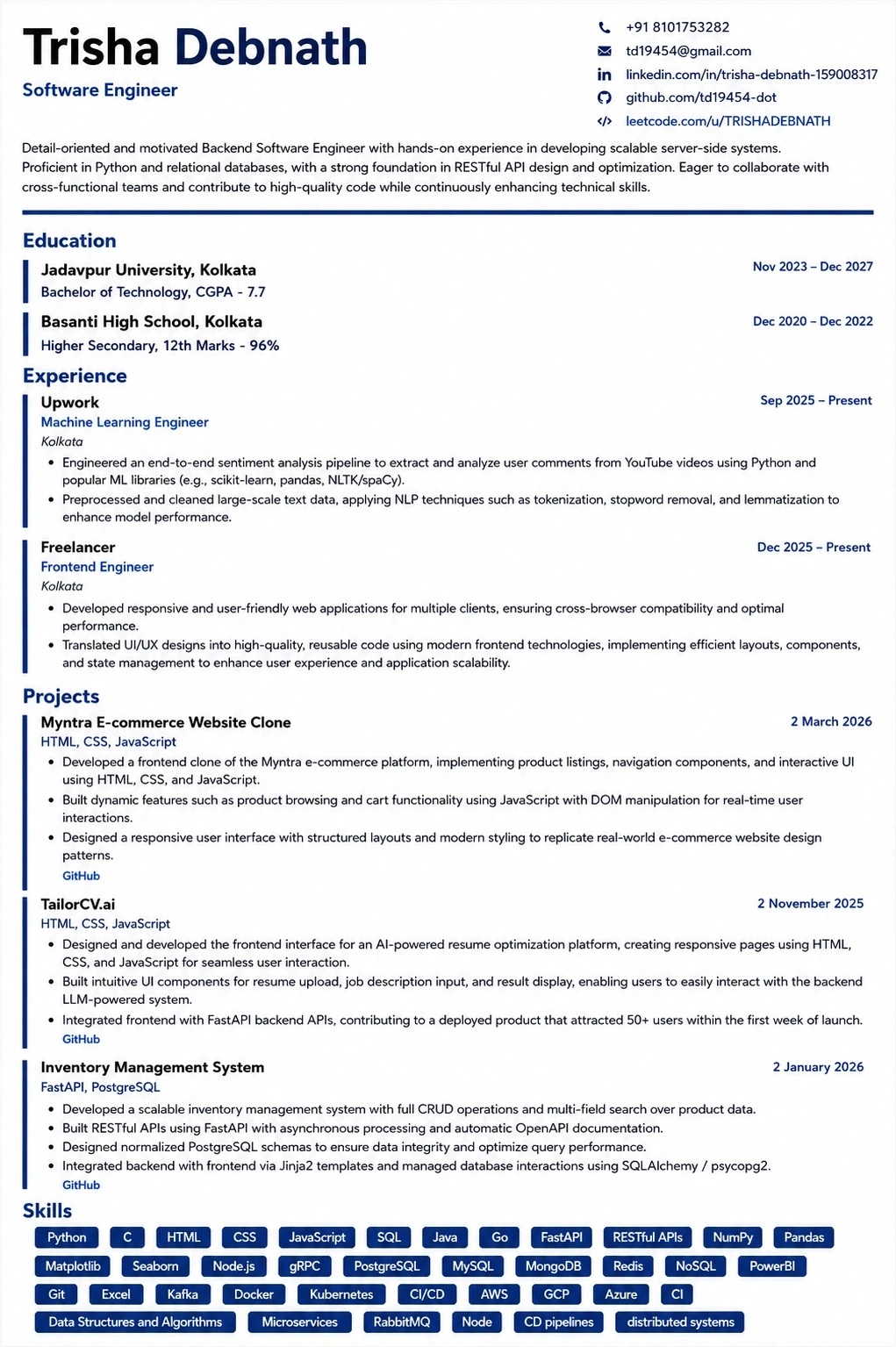
This template is ATS-tested — start from it and the formatting rules in this guide are already handled.
Was this guide useful?
Be the first to rate it.