 SS
SS
Key Takeaways
- Take time to reset and assess your situation before applying for jobs to avoid panic-driven decisions.
- Consolidate all resume versions into one accurate document and update it with recent roles and dates.
- Tailor your resume for each job application and utilize tools to check its effectiveness against target roles.
- Network with former colleagues and apply to a limited number of tailored roles daily to maintain focus and quality.
- Prepare to discuss your layoff confidently and practice interview skills to rebuild your confidence before real interviews.
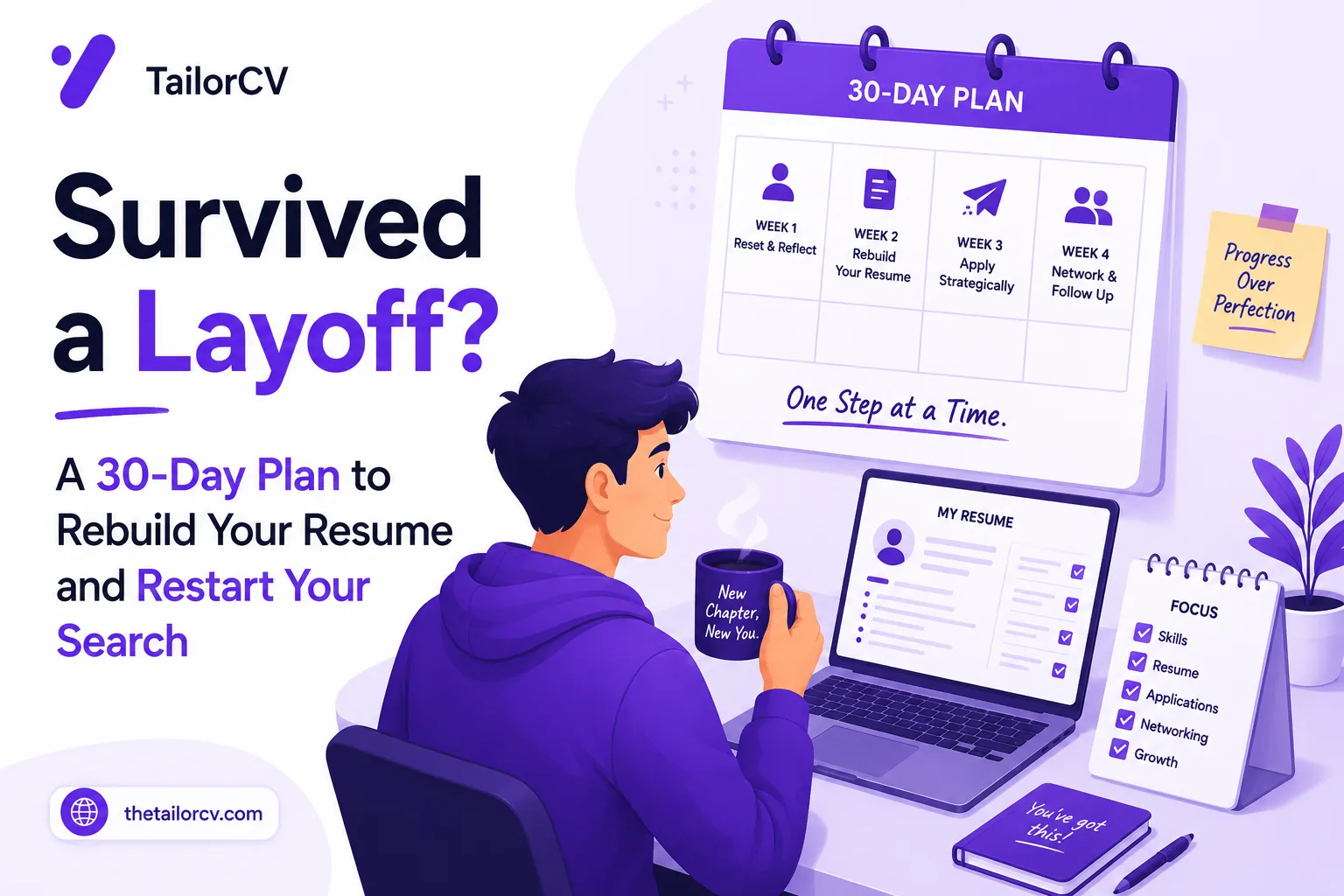
A layoff is disorienting - one day you have a routine and a role, the next you're staring at a blank calendar. The candidates who bounce back fastest aren't the ones who panic-apply to fifty jobs on day one; they're the ones who follow a structured plan that rebuilds momentum in stages. Here's a realistic 30-day framework.
Start with a quick win: check your current resume against a role you actually want with the free ATS score checker - seeing a concrete score is a better first step than staring at a blank document.
Week 1: Reset and Assess
- Take at least a few days before applying anywhere - decisions made in the first 48 hours after a layoff are rarely your best ones
- Review your finances and timeline realistically so your job search decisions aren't driven purely by panic
- Pull together every version of your resume and consolidate into one current, accurate document - see managing multiple resume versions
- Update your resume's dates and most recent role with how to explain a career gap language ready in case you need it later
Week 2: Rebuild the Resume and Online Presence
- Rewrite your summary and recent role bullets with specific, quantified outcomes - see how to quantify resume achievements
- Run your resume through the free ATS score checker against 2-3 real target roles to see where it's weak
- Update your LinkedIn profile to match your resume and signal you're open to opportunities
- If your field supports it, build or refresh a portfolio to show recent work
Your resume after optimization
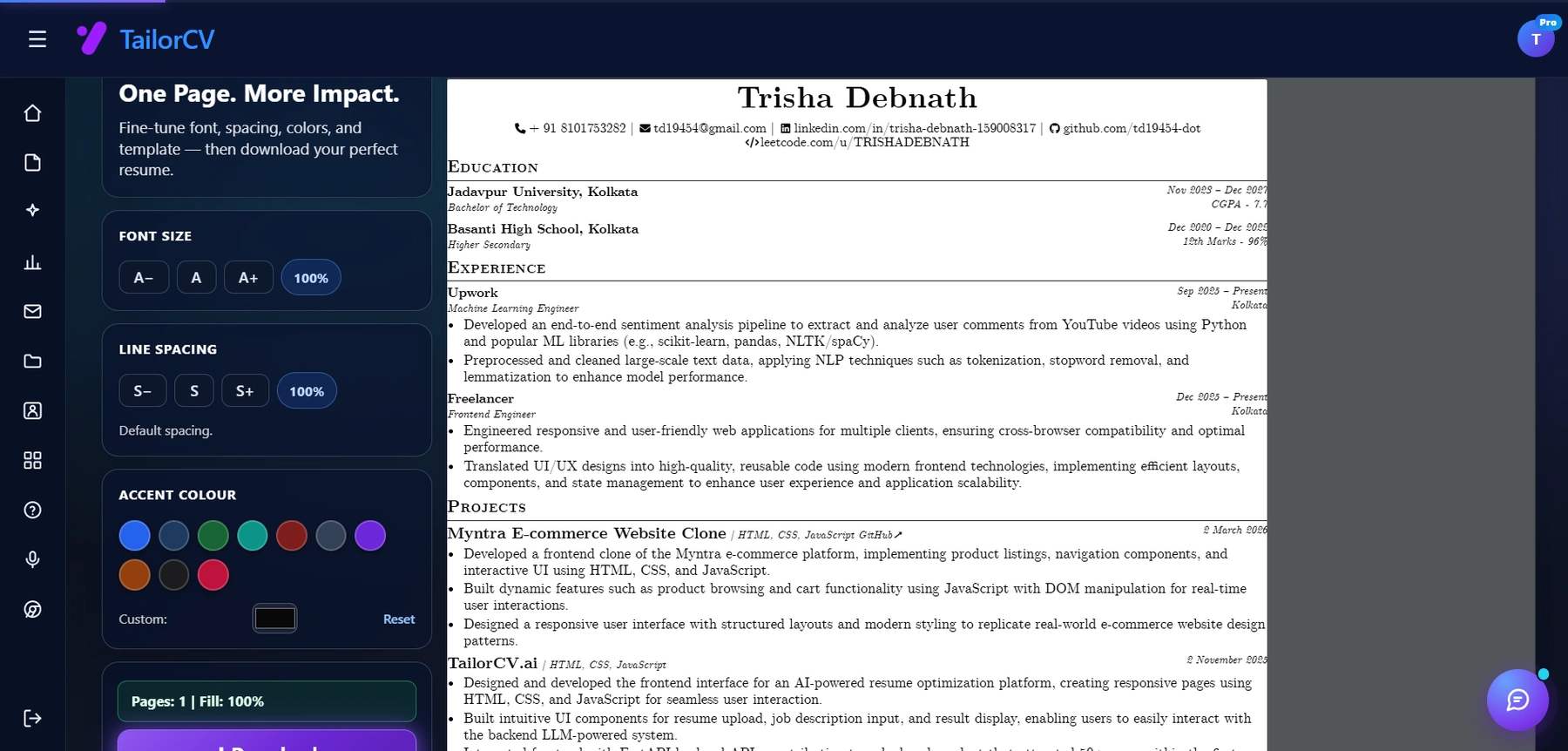
Font size, spacing, accent colour and template are all adjustable, with a live page counter.
Week 3: Network and Apply Strategically
- Reach out to former colleagues and managers - see networking tips for job search and how to write a cold email to a recruiter
- Begin applying to 3-5 tailored roles per day rather than mass-applying - see how many jobs should you apply to per day
- Tailor each application using how to tailor your resume for every job
- Track every application in the job application tracker template
Week 4: Interview Readiness and Momentum
- Practice explaining the layoff clearly and confidently - see how to explain a career gap in an interview
- Run mock interview sessions with the AI mock interview tool to rebuild confidence before real interviews start
- Prepare a tailored cover letter template you can adapt quickly for each application
- Set weekly (not daily) targets so momentum feels sustainable, not frantic - burnout is the biggest risk to a long search
How to Talk About the Layoff
Be factual and brief: "My role was eliminated as part of a company-wide restructuring" is honest and requires no further defense. Layoffs, especially company-wide ones, rarely raise concern with interviewers - see how to explain resume gaps for exact phrasing options.
Common Mistakes to Avoid When Rebuilding Your Resume
Rebuilding your resume after a layoff can be daunting, and it's easy to make mistakes that could hinder your job search. Here are some common pitfalls to avoid:
-
Neglecting to Update Your Skills: After a layoff, industries evolve and new skills become desirable. Ensure your resume reflects any new skills or certifications you acquired during your time away from work.
-
Using a Generic Resume: Tailoring your resume for each job application is crucial. A one-size-fits-all approach can decrease your chances of catching a recruiter's eye. Instead, focus on how your experience aligns with the specific job requirements.
-
Ignoring Keywords: Many companies use Applicant Tracking Systems (ATS) to filter resumes. Make sure to include relevant keywords from the job description. Tools like the ATS checker can help you optimize your resume for these systems.
-
Overloading with Jargon: While industry-specific terms can be beneficial, too much jargon can alienate hiring managers. Aim for clarity and ensure your resume is easily understandable by someone outside your field.
-
Focusing Solely on Responsibilities: Instead of listing tasks, emphasize your achievements. Use metrics and quantifiable results to demonstrate your impact in previous roles.
Do’s and Don’ts for Networking After a Layoff
Networking is a critical component of your job search, especially after a layoff. Here are some effective do’s and don’ts to guide you:
Do’s:
- Do Reach Out to Former Colleagues: They can provide valuable insights about job openings or refer you to potential employers.
- Do Attend Industry Events: Networking events, webinars, and conferences can help you meet new contacts and learn about job opportunities.
- Do Leverage LinkedIn: Regularly update your profile and engage with your network by sharing relevant content or commenting on posts.
- Do Offer Help: Networking is a two-way street. Be open to assisting others in your network; it can lead to reciprocal support.
Don’ts:
- Don’t Be Overly Aggressive: While it's important to be proactive, coming across as desperate can be off-putting. Approach networking with a genuine, collaborative mindset.
- Don’t Limit Yourself to Online Networking: While virtual connections are valuable, in-person meetings can often lead to stronger relationships.
- Don’t Forget to Follow Up: After meeting someone, send a thank-you note or a follow-up message. This keeps the conversation going and shows appreciation for their time.
Mini Checklist for a Successful Job Application
Use this checklist to ensure you’re covering all your bases when applying for jobs:
- unchecked: Resume Tailored for Each Job: Ensure your resume highlights relevant skills and experiences for the specific role.
- unchecked: Cover Letter Included: Always include a personalized cover letter. For guidance, refer to our Cover Letter for an Internal Job Application - Template and Tips.
- unchecked: Portfolio Ready and Accessible: If applicable, ensure your portfolio is updated and accessible. Consider using our guide on How to Share Your Portfolio Privately With Recruiters Only.
- unchecked: Keywords Incorporated: Double-check that your resume includes relevant keywords from the job description.
- unchecked: Mock Interviews Scheduled: Practice makes perfect. Schedule mock interviews using our mock interview tool to prepare for real ones.
- unchecked: Networking Follow-ups: Have you followed up with any contacts? Make sure to keep your network engaged.
Scenarios to Practice Your Responses
When preparing for interviews, it’s essential to be ready for common questions, especially about your layoff. Here are some scenarios to practice:
-
Scenario 1: A recruiter asks, "Can you explain the circumstances around your layoff?" - Response Tips: Keep it brief and focus on the positive. For example, mention how the layoff was due to company restructuring, and emphasize what you learned during that time.
-
Scenario 2: An interviewer asks, "What have you been doing since your layoff?" - Response Tips: Highlight any courses, freelance work, or volunteer activities you’ve undertaken. This shows initiative and keeps your skills sharp.
-
Scenario 3: If asked, "Why should we hire you over other candidates?" - Response Tips: Use this opportunity to showcase your unique skills and experiences. Tailor your response to align with the company’s values and the specific role.
Build One Job Search System
Creating a cohesive job search system can streamline your efforts and enhance your effectiveness. Here's how to integrate various components:
-
Centralized Document Hub: - Create a folder on your computer or cloud storage with subfolders for resumes, cover letters, job descriptions, and networking contacts.
-
Tracking Applications: - Use a spreadsheet to track job applications, including the date applied, company name, position, status, and follow-up dates. This will help you stay organized and manage your applications effectively.
-
Portfolio Management: - Regularly update your portfolio to include new projects or accomplishments. Use the Using Portfolio Analytics to Gauge Recruiter Interest to track engagement with your portfolio.
-
Mock Interview Preparation: - Schedule time each week to practice interviews. Use the Build One Job Search System: Resume, Portfolio, and Mock Interview Prep framework to prepare for different types of interviews.
-
Ongoing Learning: - Dedicate time each week to learning new skills related to your field. This demonstrates your commitment to professional development, especially in industries facing disruption, as discussed in our article on AI-Proof Jobs - Careers Least Likely to Be Replaced by AI in 2026.
By following these detailed guidelines, you can effectively navigate your job search post-layoff and position yourself for success.
Frequently Asked Questions
How long should I take off before applying again?
There's no universal answer - a few days to a week is common, but don't let avoidance stretch into months without at least resume prep. Balance rest with steady, structured progress.
Will a layoff hurt my chances with future employers?
Rarely, especially if it was part of a broader restructuring rather than a performance issue. Frame it factually and move the conversation toward your readiness now.
Should I take the first offer I get after a layoff?
Not automatically - evaluate it the same way you would any offer. See how to negotiate a salary offer and negotiating multiple job offers if you have more than one option.
What if my whole industry is doing layoffs right now?
Consider whether a related, more stable field might be worth exploring - see recession-proof jobs in 2026 for options that tend to hold up better during downturns. You might also want to explore AI-proof jobs that are less likely to be affected by industry fluctuations.
Make This Practical
Turn this plan into daily action instead of a vague intention. Start with the free ATS score checker to see exactly where your resume stands, rebuild your story with how to explain resume gaps, and get interview-ready with the AI mock interview tool.
Conclusion
A layoff is a setback, not a verdict on your ability. Follow a structured plan, protect your energy, and let steady weekly progress - not panic - carry you to the next role.
What is your resume scoring right now?
Scan it against a job description and get your ATS match score in about a minute.
Drop your resume here or choose a file
PDF only. Max 2 MB.
We never share your data or use it to train AI models.

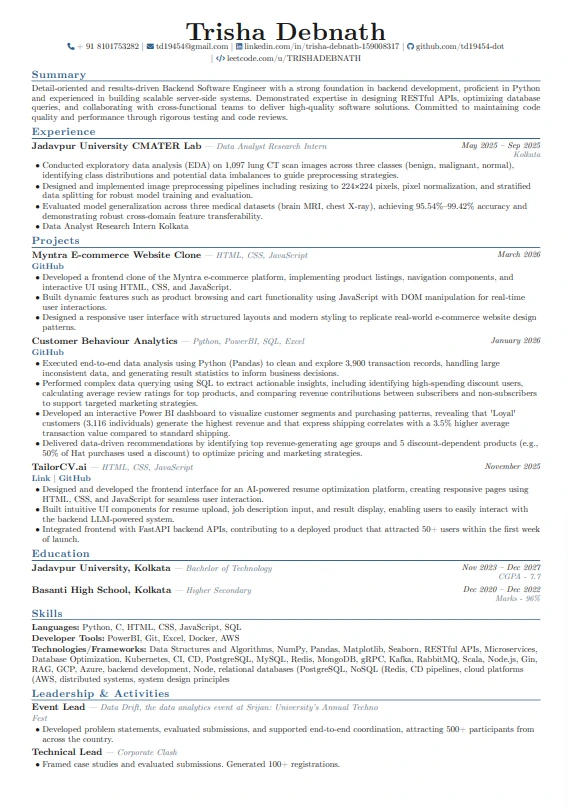
Templates that keep this structure intact
This template is ATS-tested — start from it and the formatting rules in this guide are already handled.
Was this guide useful?
Be the first to rate it.