 TD
TD
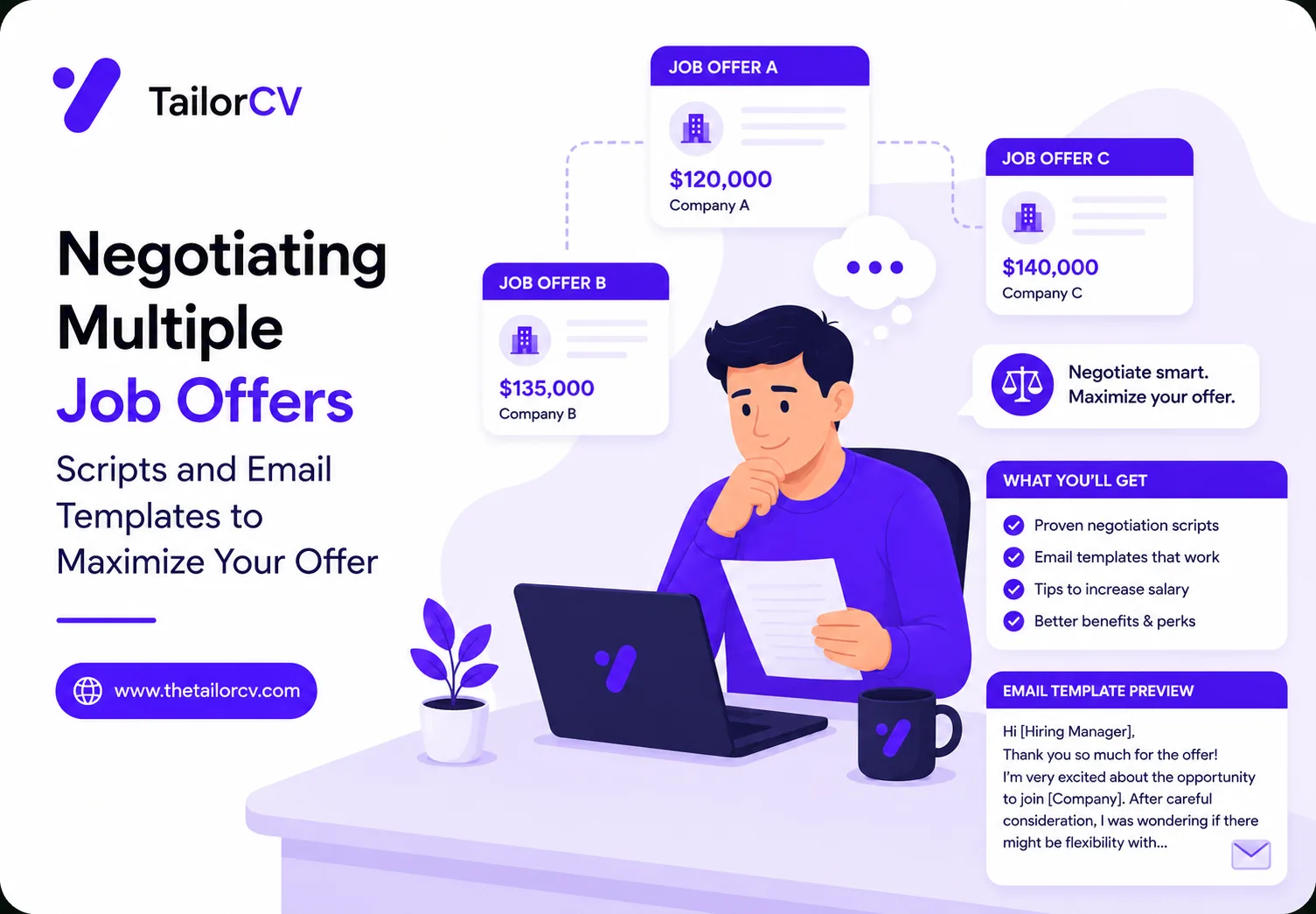
Key Takeaways
- Always obtain written offers before negotiating to ensure clarity and leverage during discussions.
- Compare job offers on multiple factors beyond salary, including company culture, career development, and work-life balance.
- Determine your priorities privately to avoid over-leveraging a role you may not truly want.
- Negotiate transparently by honestly communicating about competing offers while expressing genuine interest in the preferred role.
- Use provided email scripts to request extensions, leverage competing offers, and decline offers gracefully.
Having multiple job offers at once is the strongest negotiating position you'll ever be in - but it's also easy to mishandle. Done well, mentioning a competing offer is a normal, expected part of the process. Done poorly, it can come across as manipulative or make a company walk away entirely. Here's how to navigate it cleanly.
Before any negotiation conversation, make sure you're comparing offers on equal footing - re-check both roles against your resume and priorities with the free ATS score checker and your own notes from each interview.
Step 1: Get Every Offer in Writing First
Never negotiate against a verbal offer alone. Ask for the full written offer - base salary, bonus structure, equity, benefits, and start date - from every company before starting any negotiation conversation. A written offer provides you with a concrete basis for negotiation and helps ensure that all parties are on the same page.
What optimizing actually does to your resume
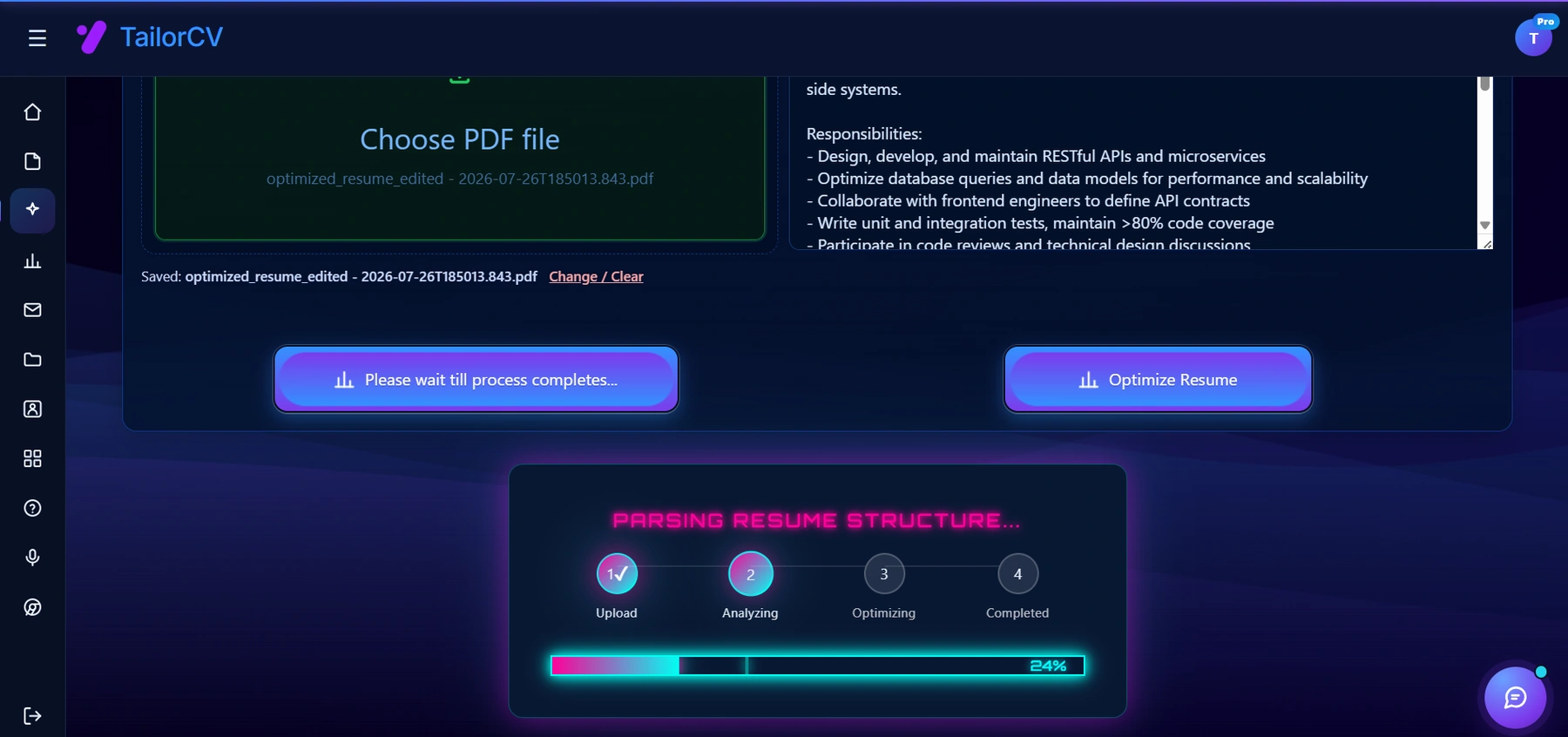
The tool parses your resume the way an ATS would before it changes anything, so the edits it suggests are grounded in the posting itself.
Why Written Offers Matter
- Clarity: Written offers reduce the risk of misunderstandings about what was discussed.
- Proof: They serve as documentation if discrepancies arise later.
- Leverage: A written offer can be referenced during negotiations to support your case.
Step 2: Compare on More Than Salary
Build a simple side-by-side: base pay, bonus, equity, benefits, remote flexibility, growth trajectory, and team fit. If you're unsure how to evaluate a role beyond compensation, see how to negotiate a salary offer and salary negotiation guide for a fuller framework.
Additional Factors to Consider
| Factor | What it covers |
|---|---|
| Company Culture | Does the company align with your values and work style? |
| Career Development | What opportunities for growth and learning are available? |
| Work-Life Balance | Are there policies in place that support a healthy work-life balance? |
| Job Security | How stable is the company and its industry? |
Step 3: Decide Your Real Priority Order
Know privately which offer you'd take if neither improved at all - this keeps you grounded and prevents you from over-leveraging a role you don't actually want more. Be honest with yourself about your priorities, which can include:
| Step | What to do |
|---|---|
| Salary and Benefits | What is your minimum acceptable salary? |
| Role and Responsibilities | Which position excites you the most? |
| Location | Is remote work or a specific location more important to you? |
| Team and Leadership | Who will you be working with, and how do you feel about them? |
Step 4: Negotiate Transparently, Not Deceptively
Being honest that you have a competing offer is normal and expected. Never invent a fake offer - it's easy to get caught and it damages your credibility permanently, especially in smaller industries. Transparency builds trust, which is invaluable in any professional relationship.
Tips for Transparent Negotiation
- Be Direct: Clearly state that you have another offer and where it stands.
- Express Enthusiasm: Make sure to communicate your interest in the role you're negotiating for.
- Be Professional: Keep the tone respectful and avoid aggressive tactics.
Email Script: Asking for More Time to Decide
Subject: [Role] Offer - Requesting a Short Extension
Hi [Name],
Thank you again for the offer for the [Role] position - I'm genuinely excited about the opportunity. I'm currently finalizing a decision between a couple of strong options and would appreciate a short extension, if possible, to make sure I'm making the right long-term decision. Would [specific date, 3-5 business days out] work on your end?
Thanks so much for your understanding.
Best,
[Your Name]
Email Script: Leveraging a Competing Offer
Subject: [Role] Offer - Quick Question Before I Confirm
Hi [Name],
I wanted to be transparent: I've received another offer with a base salary of [$X], and [Company] is my preferred choice based on the team and role. Is there any flexibility on the compensation to help me confirm my decision?
I'd love to accept and get started as soon as we can align on the details.
Best,
[Your Name]
Email Script: Declining One Offer Gracefully
Once you've decided, decline the other offer professionally and promptly - see the full how to decline a job offer guide for templates that keep the relationship open for the future.
Key Points for Declining an Offer
- Express Gratitude: Thank them for the opportunity.
- Keep it Short: You don’t need to provide extensive details.
- Leave the Door Open: Indicate you’d like to keep in touch for future opportunities.
Common Mistakes to Avoid
- Don't Fabricate a Competing Offer: It can lead to a loss of credibility.
- Don't Drag Out the Decision: Respect the timeline agreed upon with the employer.
- Don't Play Offers Against Each Other Publicly: Avoid mentioning specific companies unnecessarily.
- Don't Accept Verbally and Then Keep Negotiating: This can damage trust before you even start.
Additional Strategies for Successful Negotiation
Create a Negotiation Checklist
- List Your Offers: Include details like salary, benefits, and work culture.
- Identify Non-Negotiables: What aspects are crucial for you?
- Prepare Your Questions: What do you need to know before deciding?
- Set a Timeline: When do you need to make your decision?
Use Data to Support Your Negotiation
- Research industry standards for salaries in your field and location.
- Use salary calculators to gauge fair compensation.
- Reference data from Salary Negotiation After a Job Interview - Complete Guide for 2026 for additional insights.
Practice Your Approach
- Mock Negotiations: Role-play with a friend or mentor to refine your delivery.
- Prepare for Objections: Anticipate pushback and prepare responses.
Final Thoughts on Negotiating Multiple Job Offers
Navigating multiple job offers can be a daunting yet rewarding process. By approaching negotiations with transparency and preparation, you can maximize your offers while maintaining professionalism. Remember, the goal is not just to secure the highest salary but to find a role that aligns with your career aspirations and personal values.
For more detailed strategies, check out our Salary Negotiation Guide — How to Negotiate Pay With Confidence (2026) and How to Answer Salary Expectations Without Underselling Yourself.
The right approach can lead to a fulfilling career and a mutually beneficial relationship with your new employer.
Building Your Negotiation Strategy: A Step-by-Step Approach
-
Research and Prepare
Before you engage in negotiations, gather data on industry standards for salaries and benefits. Use resources like Salary Negotiation Guide — How to Negotiate Pay With Confidence (2026) to understand what others in similar roles are earning. This data will empower you to make informed decisions and set realistic expectations. -
Identify Your Leverage Points
Think about the unique skills and experiences you bring to the table. Are there certifications, special projects, or leadership experiences that make you stand out? List these out and be prepared to discuss how they contribute to the value you provide. This will help you articulate why you deserve a better offer. -
Practice Your Pitch
Role-play negotiation scenarios with a friend or mentor. This practice can help you articulate your points clearly and confidently. Consider scenarios where the employer might push back and prepare counterarguments. The more comfortable you are with your talking points, the more effective your negotiation will be.
Common Mistakes to Avoid During Negotiation
-
Focusing Solely on Salary
Many candidates make the mistake of concentrating only on the salary figure. Remember to consider other elements like benefits, work-life balance, and career advancement opportunities. For tips on how to express your salary expectations, see How to Answer Salary Expectations Without Underselling Yourself. -
Being Unprepared for Counteroffers
When negotiating, expect the employer to counter your request. If you haven’t prepared for this, you may accept an offer that falls short of your needs. Always have a minimum acceptable offer in mind. -
Ignoring Company Culture
Sometimes candidates get so caught up in the numbers they forget to consider if the company culture aligns with their values. A higher salary in a toxic environment may not be worth it. Reflect on your priorities and what you truly want from a workplace.
Mini Checklist for Successful Negotiation
- unchecked: Gather industry salary data.
- unchecked: List your unique selling points.
- unchecked: Prepare responses for common objections.
- unchecked: Identify your non-negotiables (salary, benefits, flexibility).
- unchecked: Role-play negotiation scenarios.
- unchecked: Prepare a gracious decline script for any offers you choose to reject. For help with this, check out How to Decline a Job Offer Professionally in 2026 - With Templates.
Short Scenarios to Consider
-
Scenario 1: The Higher Offer
You receive two offers: Offer A at $70,000 with limited benefits and Offer B at $65,000 with excellent health insurance and a generous retirement plan. You prefer Offer B for its long-term benefits. In this case, prepare to negotiate with Offer A using the benefits of Offer B to make your case for a higher salary or better benefits. -
Scenario 2: The Timing Dilemma
You have a verbal offer but are waiting for another company’s decision. You want to let the first company know that you’re considering multiple offers without jeopardizing your standing. In this case, use the Email Script: Asking for More Time to Decide to extend your decision deadline while you await a response. -
Scenario 3: A Counteroffer from Your Current Job
If you’re currently employed and receive an offer from another company, your employer may present a counteroffer. Carefully evaluate whether the counteroffer meets your goals or if it’s simply a temporary solution to keep you.
By applying these strategies and avoiding common pitfalls, you can navigate the complexities of multiple job offers and secure the best possible outcome for your career.
Frequently Asked Questions
Is it okay to tell a company I have another offer?
Yes - it's a normal, expected part of professional negotiation as long as it's true and communicated respectfully.
How much time can I reasonably ask for?
Most companies will grant a few extra business days for a genuine competing decision. Asking for multiple weeks without strong justification can strain goodwill.
Should I always take the highest-paying offer?
Not necessarily - factor in growth trajectory, team fit, and stability alongside compensation. See recession-proof jobs in 2026 if long-term stability is a bigger priority for you right now.
What if both companies won't budge on offers?
That's fine - use your own priorities to decide, and decline the other gracefully with the how to decline a job offer templates so the door stays open for the future. For more insights on maximizing your offer, check out our salary negotiation guide and learn how to negotiate a salary offer effectively.
Make This Practical
Enter every negotiation with a clear picture of your value. Confirm your resume and story are airtight with the free ATS score checker, review the full salary negotiation guide before the call, and practice the actual conversation with the AI mock interview tool so you sound confident, not rehearsed.
Conclusion
Multiple offers are leverage, not a trap - use them honestly, compare on more than salary, and negotiate directly instead of guessing what each company will accept.
Does your formatting survive the parser?
Upload your resume and see what an ATS actually reads back.
Drop your resume here or choose a file
PDF only. Max 2 MB.
We never share your data or use it to train AI models.

Was this guide useful?
Be the first to rate it.