 TD
TD
Key Takeaways
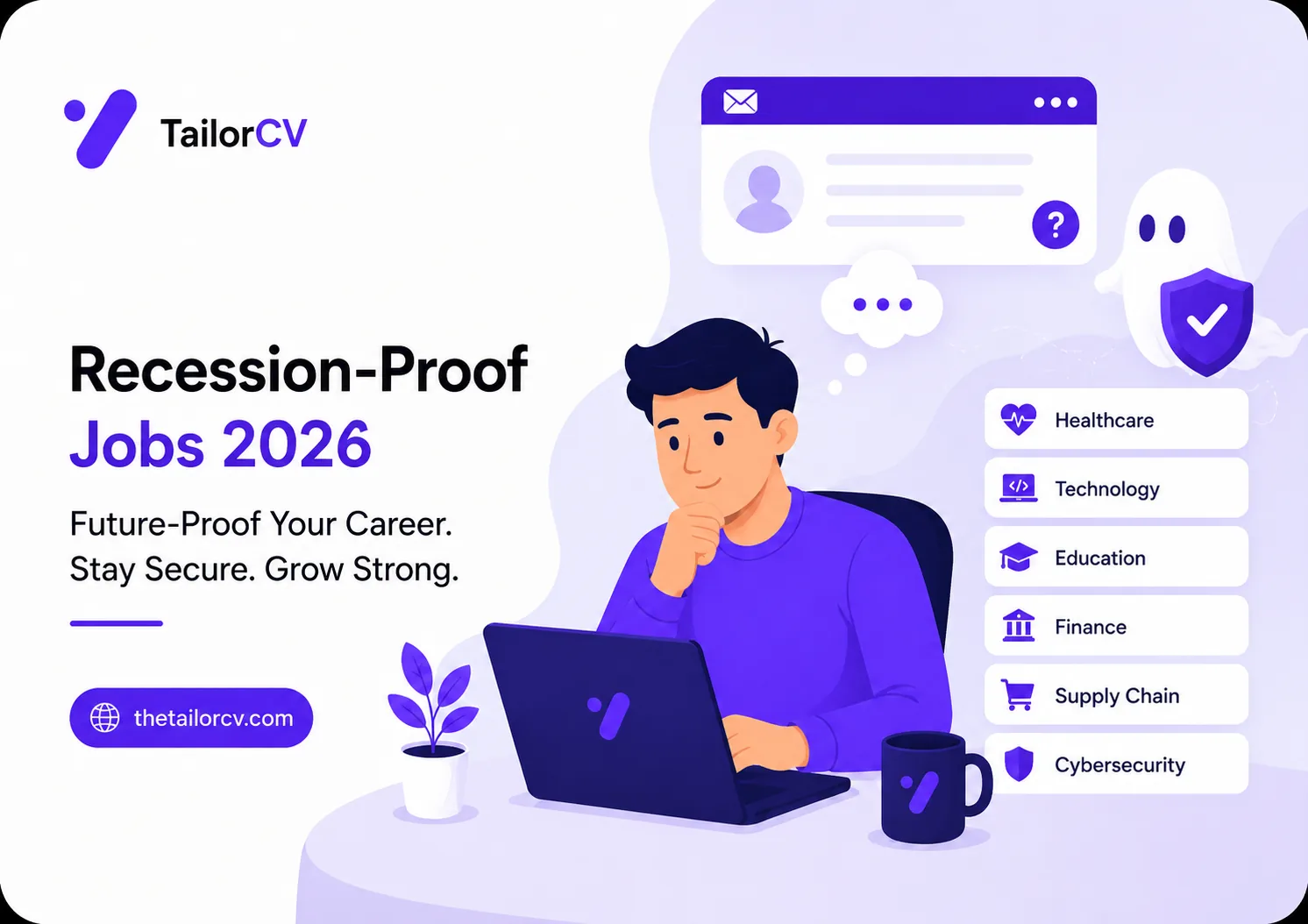
- No job is completely "recession-proof," but certain fields like healthcare and essential infrastructure are more resistant to layoffs due to consistent demand.
- Jobs with non-discretionary demand, regulatory requirements, counter-cyclical demand, and maintenance spending are generally more resilient during economic downturns.
- Healthcare roles, particularly nursing and pharmacy, remain in demand regardless of economic conditions, with most spending backed by insurance or government funding.
- Skilled trades benefit from both non-discretionary demand and the trend of repairing rather than replacing, keeping them busy during recessions.
- Evaluating roles based on their alignment with these resilience patterns can help identify more stable career options.
No job is truly "recession-proof," but some fields are consistently more resistant to mass layoffs than others - because the demand for them doesn't disappear when budgets tighten. Healthcare, essential infrastructure, and cost-saving roles tend to hold steady while discretionary spending categories get cut first, which is a very different risk profile than jobs tied to AI-proof careers or other emerging-risk categories.
If you're evaluating a move into a more stable field, start by checking how your current resume would score against roles in that industry with the free ATS score checker.
What Actually Makes a Job Recession-Resistant
"Recession-resistant" isn't a fixed list of job titles - it's a pattern. Once you understand the pattern, you can evaluate any role or industry yourself instead of relying on someone else's list. Four forces tend to drive resilience:
- Non-discretionary demand. People and businesses keep paying for things they cannot postpone - electricity, water, food, medical care, basic repairs. Nobody delays a root canal or skips paying the utility bill because the economy is uncertain. Contrast that with discretionary spending: new furniture, vacations, luxury retail, and event planning, which get cut almost immediately when budgets tighten.
- Regulatory or compliance-driven demand. Some work exists because the law requires it, not because a company chooses to fund it. Financial audits, safety inspections, tax filings, and certain engineering sign-offs don't stop just because revenue is down - if anything, regulators scrutinize struggling companies more closely.
- Counter-cyclical demand. A small number of fields actually see demand rise during downturns. Debt collection, bankruptcy and restructuring law, discount retail, repair services (people fix instead of replace), and cost-cutting consulting all tend to get busier, not quieter, when the economy slows.
- Recurring maintenance spending versus discretionary growth spending. Budgets get split into "keep the lights on" spending and "grow the business" spending. Growth spending - new marketing campaigns, new product lines, expansion into new markets - is the first thing cut. Maintenance spending - keeping existing systems running, staying compliant, servicing existing customers - is much harder to cut without immediate consequences.
When you're sizing up a role or industry, ask which of these four buckets it falls into. A role that hits two or three of them (say, a compliance-driven maintenance function in healthcare) is meaningfully safer than a role that hits none of them (say, a growth-marketing hire at a consumer app).
Healthcare and Allied Health
Healthcare is the clearest example of non-discretionary demand. People get sick, age, and need care regardless of GDP growth, and most healthcare spending is either insurance-backed or government-funded rather than tied directly to consumer discretionary budgets.
- Nursing and allied health - staffing shortages in many regions mean demand rarely evaporates even when hospital systems trim budgets elsewhere. See the nursing resume guide and, if you want to showcase clinical work visually, the healthcare and nurse portfolio guide.
- Pharmacy - prescription demand is inelastic; people don't stop taking maintenance medications because of a downturn. See the pharmacist resume guide.
- Caveat: elective procedures, cosmetic specialties, and some private-pay wellness services are more discretionary and do get squeezed. "Healthcare" isn't uniformly safe - the closer a role is to essential, insurance-covered, or regulatory-required care, the more resilient it tends to be.
Skilled Trades and Essential Repair Work
Skilled trades benefit from two of the four resilience patterns at once: non-discretionary demand and the "repair instead of replace" counter-cyclical effect. When people can't afford a new roof, a new HVAC system, or a new car, they pay to fix the one they have - which keeps electricians, plumbers, HVAC technicians, and auto mechanics busy even as new construction and big-ticket purchases slow down.
- Utilities and infrastructure maintenance (power, water, telecom) rarely see deep cuts because service interruptions are politically and operationally unacceptable.
- Building and facilities maintenance holds up because deferred maintenance eventually becomes an emergency repair, which can't be postponed indefinitely.
- New construction and large capital projects are more cyclical - if you're in a trade tied heavily to new builds rather than repair and maintenance, your risk profile looks more like discretionary spending than essential spending.
If your background touches adjacent technical fields, the electrical engineer resume guide and civil engineer resume guide show how to frame technical, infrastructure-adjacent experience clearly.
Accounting, Finance, Audit, and Compliance
This is the classic example of a cost-saving function becoming more valuable, not less, when times get tough. When revenue is uncertain, leadership wants tighter financial visibility - not looser - and regulatory filings don't pause for a downturn.
- Accounting and bookkeeping stay in demand because every company, in growth or contraction, still needs accurate books, tax filings, and financial statements. See the accountant resume guide.
- Financial analysis and FP&A roles often get busier during downturns as companies model scenarios, reforecast budgets, and look for savings. See the financial analyst resume guide.
- Audit and compliance roles are regulatory-driven almost by definition - external audits, SOX compliance, and industry-specific regulatory reporting don't stop because a company is struggling financially.
- Caveat: deal-driven finance roles (M&A advisory, IPO-focused investment banking) are much more cyclical, since transaction volume itself drops sharply in downturns. The safer sub-fields are the ones focused on ongoing operations and reporting, not one-off growth transactions.
Government and Public Sector
Government hiring is generally more insulated from the fast, sentiment-driven layoffs that hit private companies, because public budgets are set annually or biennially and don't react to a single bad quarter the way a public company's stock price does.
- Federal, state, and local government roles - especially in essential services like public safety, courts, permitting, and administration - tend to see slower, more predictable hiring cycles.
- Hiring processes are often slower to start with, but once you're in, the job is typically more insulated from abrupt headcount cuts than an equivalent private-sector role.
- Budget-driven cuts do happen in government, especially at the state and local level during severe or prolonged downturns, and hiring freezes are common even when actual layoffs are rare - so "insulated" doesn't mean "immune to a hiring slowdown."
See the federal government resume guide for how to adapt a private-sector resume to public-sector application formats, which are stricter and more literal than most corporate ATS systems.
Education
Education demand is largely decoupled from short-term economic cycles - children still need to be taught, and enrollment in public schools doesn't shrink because the stock market is down. Community colleges and vocational training programs sometimes see enrollment rise in downturns, as laid-off workers retrain.
- Public K-12 teaching positions are funded through relatively stable local and state budgets, though funding fights and enrollment shifts do happen.
- Higher education is more mixed: public universities are somewhat insulated, while some private institutions and for-profit programs are more exposed to enrollment swings and endowment performance.
- Corporate training and L&D budgets, by contrast, are discretionary and are often among the first line items cut - so "education" as a category spans very different resilience levels depending on the funding source.
See the teacher resume guide if you're coming from another field and want to frame classroom-adjacent or instructional experience clearly.
Software, Infrastructure, and Cybersecurity Roles
Not all tech jobs behave the same way in a downturn - and tech has proven that no field, including a fast-growing one, is immune to large layoffs. The roles that hold up better are the ones tied to keeping existing systems running and secure, rather than building new discretionary features.
- Cybersecurity spending rarely gets cut, because a single breach is far more expensive - in direct cost, regulatory fines, and reputational damage - than the cost of prevention. See the cybersecurity engineer resume guide.
- Core infrastructure, reliability, and platform engineering roles keep existing revenue-generating systems online, which makes them harder to cut than teams building net-new, unproven products.
- Growth-stage product teams, experimental R&D, and roles tied directly to new feature launches are more discretionary and are usually the first technical teams trimmed when a company slows hiring.
- If you're trying to break into tech specifically because it feels more stable than your current field, read how to get your first tech job and career change to tech guide before assuming tech itself is a safe label - it isn't, uniformly.
Insurance and Counter-Cyclical Roles
Insurance is a useful case study in regulatory-driven, non-discretionary demand: most insurance products (auto, health, homeowners, commercial liability) are legally or contractually required, so premiums keep getting paid even when household budgets are tight elsewhere.
- Underwriting, claims processing, and actuarial roles tend to be stable because the core function of the industry - assessing and paying out risk - doesn't pause in a downturn. See resume matching for insurance jobs for how to tailor your resume to this industry's specific keyword patterns.
- Beyond insurance, a handful of other roles are genuinely counter-cyclical: debt collection and recovery, bankruptcy and restructuring, discount and value retail, and cost-cutting or efficiency consulting all tend to see increased demand exactly when the broader economy contracts.
- These counter-cyclical roles are worth knowing about even if they aren't your first choice - they're useful fallback categories if you're actively trying to de-risk a job search during a downturn.
No Field Is Fully Immune
Every category above comes with a real caveat, and it's worth saying plainly: resilience is relative, not absolute.
- Entry-level hiring slows first, everywhere. Even in healthcare, government, and accounting, the first thing companies do in a downturn is freeze new-grad and entry-level hiring, not cut experienced staff. If you're early-career, "recession-resistant industry" doesn't fully protect you from a slow hiring market.
- Severe or prolonged downturns eventually touch every sector. Government budgets get cut in bad enough recessions. Hospital systems do layoffs. Even utilities restructure. "Resistant" means slower and smaller cuts, not zero cuts.
- Company-level risk still matters more than industry-level risk in many cases. A poorly run company in a resilient industry can still lay you off; a well-run, well-capitalized company in a more cyclical industry can still be a safe bet for years. Don't let the industry label substitute for actually researching the specific employer.
- Geographic and regulatory context changes everything. "Government jobs are stable" plays out very differently depending on the country, state, or agency in question.
The honest takeaway: chasing a single "safe" industry label is less useful than building skills and a network that keep you employable regardless of which sector gets hit next.
Sector Resilience vs. Transferable-Skill Resilience
There are really two separate kinds of job security, and the strongest position combines both.
Sector resilience is about being in an industry that doesn't cut headcount as fast - healthcare, government, essential infrastructure, insurance. You benefit from this passively, just by working in that industry, regardless of your specific role.
Transferable-skill resilience is about having skills that are valuable across many industries, so that even if your current employer or sector struggles, you can move somewhere else quickly. Examples include:
- Financial analysis, budgeting, and forecasting - useful in every industry, not just finance.
- Data analysis and reporting - valuable to any company that wants to make decisions with evidence.
- Project and program management - needed whether a company is growing or cutting costs.
- Compliance, risk, and quality assurance - relevant anywhere there's regulation or operational risk.
- Sales and account management tied to renewals and retention (as opposed to pure new-logo growth) - companies protect revenue-preserving roles longer than growth-only roles.
The strongest position is combining both: transferable skills, deployed inside a resilient sector. A financial analyst in healthcare is more insulated than a financial analyst in a venture-backed consumer app, even though the skill set on their resumes might look nearly identical. When you're evaluating a move, ask both questions separately - "is this sector resilient?" and "would these skills transfer if it weren't?" - rather than treating them as the same question.
Repositioning Your Resume for a More Stable Field
You don't need to start over to move toward a more resilient field. Most people already have more relevant experience than they think - it's just framed for their old industry instead of the one they're targeting.
- Identify your industry-agnostic achievements first. Cost savings, process improvements, error reduction, compliance wins, and efficiency gains read the same way in almost any industry. Pull these to the top of your resume rather than burying them under industry-specific jargon.
- Quantify everything you can. "Reduced processing errors" is forgettable. "Reduced processing errors by 22%, cutting rework time by 6 hours per week" is not. See how to quantify resume achievements for a full framework.
- Reframe your summary and bullets around the target industry's priorities, not your old one. A downturn-focused employer wants to see cost discipline, reliability, and risk reduction - even if your actual day-to-day work involved something else framed differently.
- Use the target job description as your editing checklist, not just a source of keywords. See how to tailor your resume for every job for a repeatable process.
- If the pivot is a genuine industry change (not just a title change), use the career change resume guide to structure the transition narrative so it reads as a logical move, not a random one.
Example reframe - a retail operations manager repositioning toward healthcare operations: Before: "Managed daily store operations and staff scheduling for a 40-person team." After: "Managed operations and staffing for a 40-person team, reducing labor cost variance by 15% and maintaining 98% schedule compliance in a highly regulated, customer-facing environment - directly transferable to healthcare or facilities operations roles requiring similar staffing discipline and compliance tracking."
The second version keeps every fact from the first but foregrounds the parts that map onto the new industry's actual concerns: cost control, compliance, and reliability.
Once you've rewritten your resume, run it through the free ATS score checker against a real job posting in the target field - resilient industries like healthcare, government, and finance often use stricter ATS filtering than fast-moving startups, so keyword alignment matters more here, not less.
Practical Moves If You're Worried About a Downturn Now
If you're not actively job hunting but you're worried about your industry or company, the goal isn't to panic-apply everywhere - it's to reduce the time it would take you to react if things changed.
- Build an "applications and network" emergency fund, not just a cash one. A financial cushion matters, but so does having a resume that's already current, a list of target companies you'd apply to, and a handful of relationships you could reach out to without a cold introduction. See networking tips for job search for how to build this before you need it.
- Keep a current resume on file, even when you're not looking. Update it every few months with new accomplishments while they're fresh, rather than trying to reconstruct two years of work from memory the week after a layoff notice.
- Track layoff and hiring-freeze signals at your own company and sector, not to induce anxiety, but so a downturn doesn't catch you completely flat-footed - hiring freezes, leadership departures, and repeated re-orgs are earlier and more specific signals than general economic news.
- Diversify your skill set deliberately, not just your resume. If you only know one tool, one internal system, or one narrow specialty, you're more exposed than someone with adjacent, transferable skills - even within the same resilient sector.
- Consider whether freelance or contract work makes sense as a hedge. It won't suit everyone, but having even one client relationship outside your main job changes your risk profile. See freelancing vs. full-time employment for an honest comparison.
- Practice interviewing before you need to, not during the stress of an active job search. The AI mock interview tool lets you rehearse without the pressure of a live loss-of-income situation.
None of this requires assuming the worst is coming. It just means the difference between reacting in a panic and reacting with a plan is preparation you do months in advance, not the week it becomes urgent.
Make This Practical
If you're considering a move toward a more stable field, start with the free ATS score checker to see how your resume matches target roles today, tailor your story with the career change resume guide, and prepare your pivot narrative with the AI mock interview tool. Once your resume is aligned, use the resume templates library to format it in a style that reads cleanly in more traditional, ATS-heavy industries like healthcare, government, and finance, and if you're building a supporting case study or work sample, the portfolio builder can help even in fields that don't traditionally expect one.
FAQ
Is any job truly recession-proof?
No - even essential fields see hiring slowdowns in severe downturns. "Recession-resistant" is a more accurate term than "recession-proof." The goal is reducing risk, not eliminating it entirely.
Should I switch careers just for job security?
Only if the field also genuinely interests you or uses skills you already have - forced pivots into unfamiliar fields without preparation often backfire. See the career change to tech guide for a realistic transition framework.
How do I know if my current industry is at risk?
Watch for signals like shrinking discretionary budgets, high correlation to consumer spending, or repeated rounds of layoffs in your sector. If you've already been affected, see survived a layoff - a 30-day plan.
Do recession-resistant jobs pay less?
Not necessarily - many, like cybersecurity and financial analysis, pay competitively. Stability and compensation aren't mutually exclusive; see highest-paying jobs without a degree for options that combine both.
What's the difference between sector resilience and skill resilience?
Sector resilience comes from being in an industry that doesn't cut headcount fast, like healthcare or government. Skill resilience comes from having abilities - like financial analysis , compliance, or data skills - that transfer across many industries. The strongest position combines both rather than relying on either alone.
Is it worth taking a pay cut to move into a more stable field?
It depends on your risk tolerance and how exposed your current role actually is. A modest pay cut for meaningfully lower layoff risk can be a rational trade, especially if you're supporting dependents or have limited savings - but don't assume every "stable" role pays less, since many don't.
Do entry-level jobs in stable industries still get cut in a downturn?
Entry-level hiring is usually the first thing frozen, even in resilient industries, because it's easier to simply not backfill or not hire new grads than to lay off experienced staff. If you're early-career, focus on building transferable skills and a strong network in addition to targeting a stable sector.
How often should I update my resume if I'm not job hunting?
Every few months, or immediately after any measurable win - a completed project, a cost saving, a process improvement. Waiting until you need it means reconstructing accomplishments from memory under time pressure, which produces a weaker resume than updating it as things happen. Consider using our free ATS score checker to ensure your resume stays competitive.
Next Step
Start by seeing exactly where your resume stands today with the free ATS score checker.
What optimizing actually does to your resume
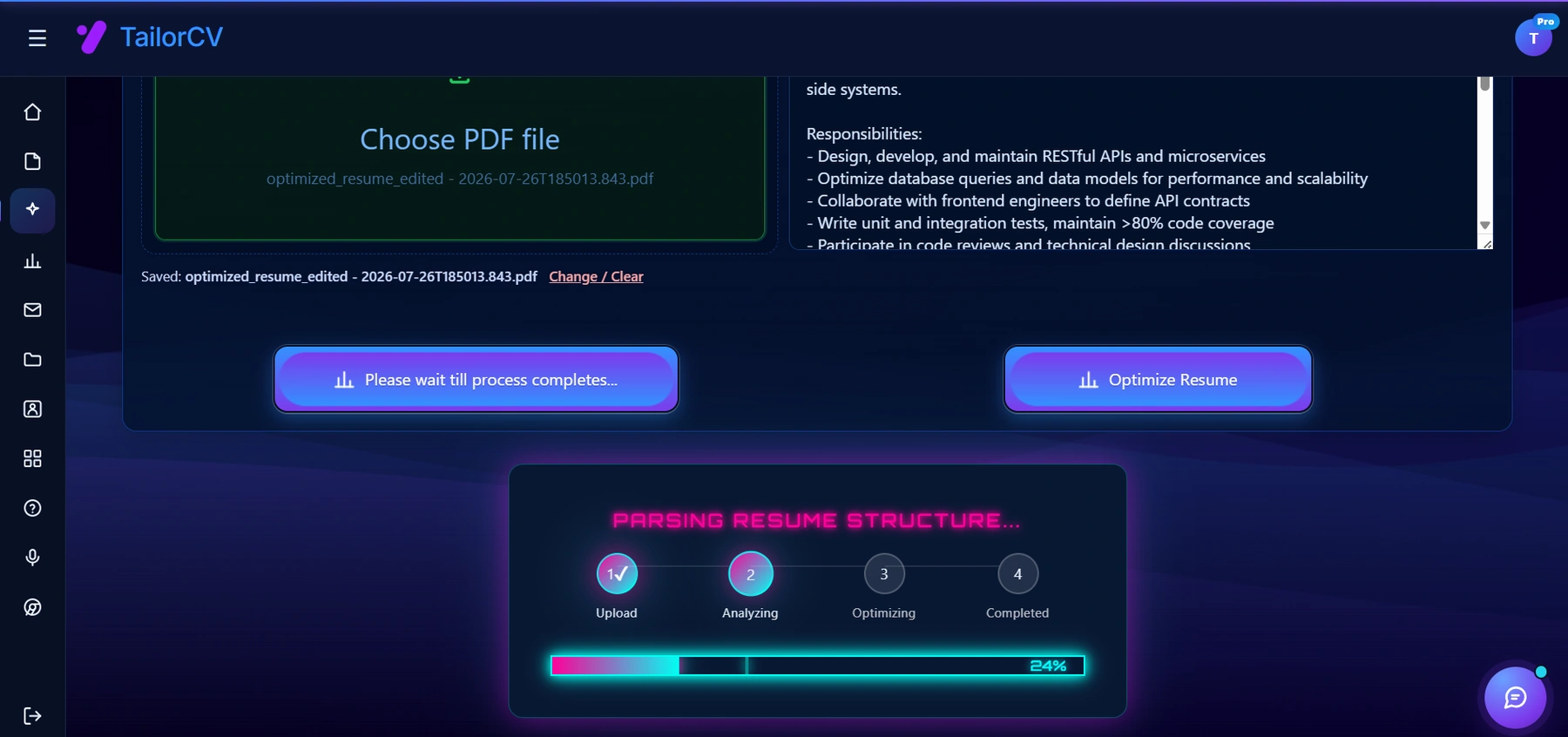
The tool parses your resume the way an ATS would before it changes anything, so the edits it suggests are grounded in the posting itself.
What is your resume scoring right now?
Scan it against a job description and get your ATS match score in about a minute.
Drop your resume here or choose a file
PDF only. Max 2 MB.
We never share your data or use it to train AI models.

Was this guide useful?
Be the first to rate it.