 TD
TD

Key Takeaways
- A two weeks notice is a formal resignation letter given at least two weeks before your last working day to maintain professionalism.
- It is best practice to inform your manager in person before submitting the written notice to formalize the conversation.
- A professional two weeks notice should include the date, a clear resignation statement, last working day, gratitude, and an offer to assist with the transition.
- Avoid including complaints, detailed reasons for leaving, or any negativity in your notice to protect your professional reputation.
- Use one of the provided templates to ensure your letter is concise, positive, and professional.
A two weeks notice is the standard professional courtesy when leaving a job - a formal notification to your employer that you are resigning and will work for two more weeks before departing. Writing it correctly protects your professional reputation, keeps your references intact, and ensures a smooth transition.
This guide gives you templates, examples, and the rules for writing a professional two weeks notice.
This complements the broader how to quit your job professionally guide. If your resignation is part of a job move, make sure your next step is secure first - optimize your resume with the TailorCV ATS score checker.
What Is a Two Weeks Notice?
A two weeks notice is:
- A formal, written resignation notification
- Given to your manager (and often HR)
- Stating your intent to resign and your last working day
- Provided at least two weeks (10 business days) before you leave
Two weeks is the conventional minimum in many countries and industries. Some roles or contracts require longer notice (1-3 months) - always check your employment contract.
Should You Give Notice in Person First?
Yes. Best practice is to tell your manager in person (or by video for remote roles) before submitting the written letter. The written notice then formalizes the conversation. Do not let a written letter be the first your manager hears of your departure.
Read the resignation conversation guide for how to have that conversation.
What to Include in a Two Weeks Notice
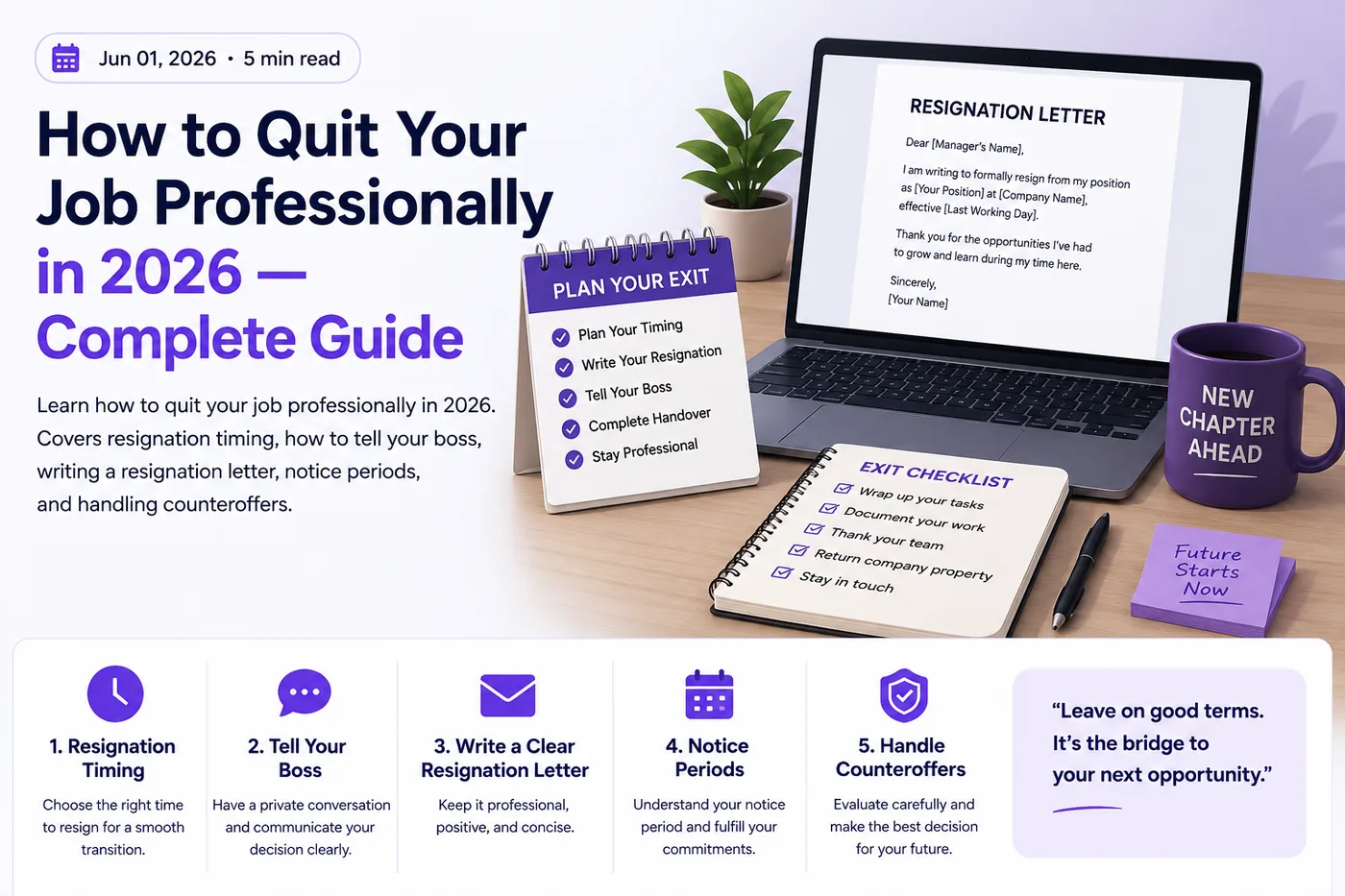
A professional two weeks notice includes:
- The date
- A clear statement of resignation
- Your last working day
- A brief expression of gratitude
- An offer to help with the transition
- Your signature
Keep it short, professional, and positive. It does not need to explain why you are leaving.
Two Weeks Notice Templates
Template 1: Standard Professional
[Date]
Dear [Manager's Name],
Please accept this letter as formal notice of my resignation from my position as [Job Title] at [Company Name]. My last day of work will be [date, two weeks from today].
I am grateful for the opportunities and experiences I have had during my time here. I am committed to ensuring a smooth transition and am happy to assist in handing over my responsibilities and training others as needed.
Thank you for your support and understanding.
Sincerely, [Your Name]
Template 2: Brief and Simple
[Date]
Dear [Manager's Name],
I am writing to formally notify you of my resignation from my role as [Job Title], effective [last day]. I appreciate the opportunities I have had at [Company] and will do everything I can to ensure a smooth handover during my final two weeks.
Thank you.
Best regards, [Your Name]
Template 3: Warm and Appreciative
[Date]
Dear [Manager's Name],
After careful consideration, I have decided to resign from my position as [Job Title] at [Company]. My last working day will be [date].
These past [time period] have been incredibly valuable to my growth, and I am genuinely grateful for the mentorship and opportunities I have received from you and the team. I am fully committed to making this transition as seamless as possible and will ensure my projects and responsibilities are properly handed over.
Thank you for everything.
Warm regards, [Your Name]
Template 4: Email Version
Subject: Resignation - [Your Name]
Dear [Manager's Name],
I am writing to formally resign from my position as [Job Title] at [Company], with my last day being [date]. I want to thank you for the opportunities I have had here. I am committed to a smooth transition over the next two weeks and am happy to help train my replacement or document my work.
Please let me know how I can make this transition easier.
Best regards, [Your Name] [Phone / personal email if appropriate]
What NOT to Include
- Complaints about the company, manager, or colleagues
- Detailed reasons for leaving
- Where you are going (optional - you may share or not)
- Negativity of any kind
- Demands or conditions
- Salary or compensation grievances
Your two weeks notice may be kept in your personnel file and could be seen by future reference-checkers. Keep it 100% positive and professional.
After You Submit Your Notice
- Continue working diligently - your final impression matters
- Document your work and processes for whoever takes over
- Offer to train your replacement
- Complete or responsibly transition your projects
- Stay positive and professional with colleagues
- Connect with valuable contacts on LinkedIn before losing access
Read the how to quit your job professionally guide for full transition advice.
Common Two Weeks Notice Mistakes
Mistake 1: Submitting it before telling your manager in person
Have the conversation first; the letter formalizes it.
Mistake 2: Including complaints
Even if you are leaving for negative reasons, keep the notice entirely positive.
Mistake 3: Burning out during notice
Your last two weeks shape your lasting reputation. Stay engaged and helpful.
Mistake 4: Not checking your contract
Some roles require more than two weeks. Honor your contractual notice period.
Mistake 5: Making it too long
A two weeks notice is brief. A few sentences is enough - do not write an essay.
Related Guides
- How to Quit Your Job Professionally
- How to Decline a Job Offer Professionally
- Cover Letter Guide
- How to Write a Cold Email to a Recruiter
- How to Build a Professional Portfolio
- Networking Tips for Job Search
- How to Get a Job With No Experience
- How to Handle Job Rejection
- How to Negotiate a Salary Offer
- How to Use LinkedIn for Job Search
- LinkedIn Profile Optimization Guide
- Remote Job Search Guide
- How to Write a Resume Headline in 2026 - With 30 Examples
- How to Write a Resume Summary in 2026 - With 20 Examples
- Data Analyst vs Data Scientist in 2026 - Which Career Is Right for You?
- Freelancing vs Full-Time Employment in 2026 - Honest Comparison
- Work-Life Balance Tips for Professionals in 2026 - Practical Guide
- ATS Mistakes Experienced Professionals Make (And Why Your Resume Stops Working After 5+ Years)
Make This Practical
Turn the career advice into a stronger application system. Start by checking your resume with the free ATS score checker, align it with the role using How to Tailor Your Resume for Every Job, and keep your profile consistent with LinkedIn Resume Tailoring Sync.
When you are ready to apply, build the supporting pieces around the resume. Use the AI cover letter generator for targeted outreach, practice with the AI mock interview tool, and review Why Your Resume Gets No Responses if applications are not converting.
Conclusion
A professional two weeks notice is short, positive, and clear: state your resignation, your last day, your gratitude, and your offer to help with the transition. Tell your manager in person first, then submit the written letter. Keep it 100% professional - it protects your reputation and references.
For the full resignation process, read the how to quit your job professionally guide. If you are moving to a new role, ensure your resume is strong with the TailorCV ATS score checker and your offer is solid with the salary negotiation guide.
Frequently Asked Questions
What is the purpose of a two weeks notice letter?
A two weeks notice letter serves as a formal notification to your employer that you are resigning from your position. It outlines your intent to leave, specifies your last working day, and offers a professional way to maintain relationships and protect your reputation. For more insights on resigning gracefully, check out our complete guide on how to quit your job professionally.
How should I format my two weeks notice letter?
Your two weeks notice letter should be concise and professional. It should include the date, a clear statement of resignation, your last working day, a brief expression of gratitude, and an offer to assist with the transition. For templates and examples, refer to our post on writing a two weeks notice in 2026.
Is it necessary to give a two weeks notice?
While it's not legally required, providing a two weeks notice is considered a professional courtesy in most industries. It allows your employer to plan for your departure and helps maintain a positive relationship, which could be beneficial for future references. For tips on how to handle your resignation conversation, see our guide on how to quit your job professionally.
What should I say in my two weeks notice letter?
In your two weeks notice letter, you should clearly state your resignation, mention your last working day, express gratitude for the opportunities you had, and offer assistance during the transition period. Keeping the tone positive is crucial, and you can find more detailed guidance on what to include in our two weeks notice guide.
Can I resign without giving two weeks notice?
Yes, you can resign without giving two weeks notice, but it may not be advisable. Leaving abruptly can harm your professional reputation and relationships with colleagues. If you're considering this option, it's best to weigh the potential consequences and consult our resources on professional etiquette when resigning.
Does your formatting survive the parser?
Upload your resume and see what an ATS actually reads back.
Drop your resume here or choose a file
PDF only. Max 2 MB.
We never share your data or use it to train AI models.

Was this guide useful?
Be the first to rate it.