TD
TD
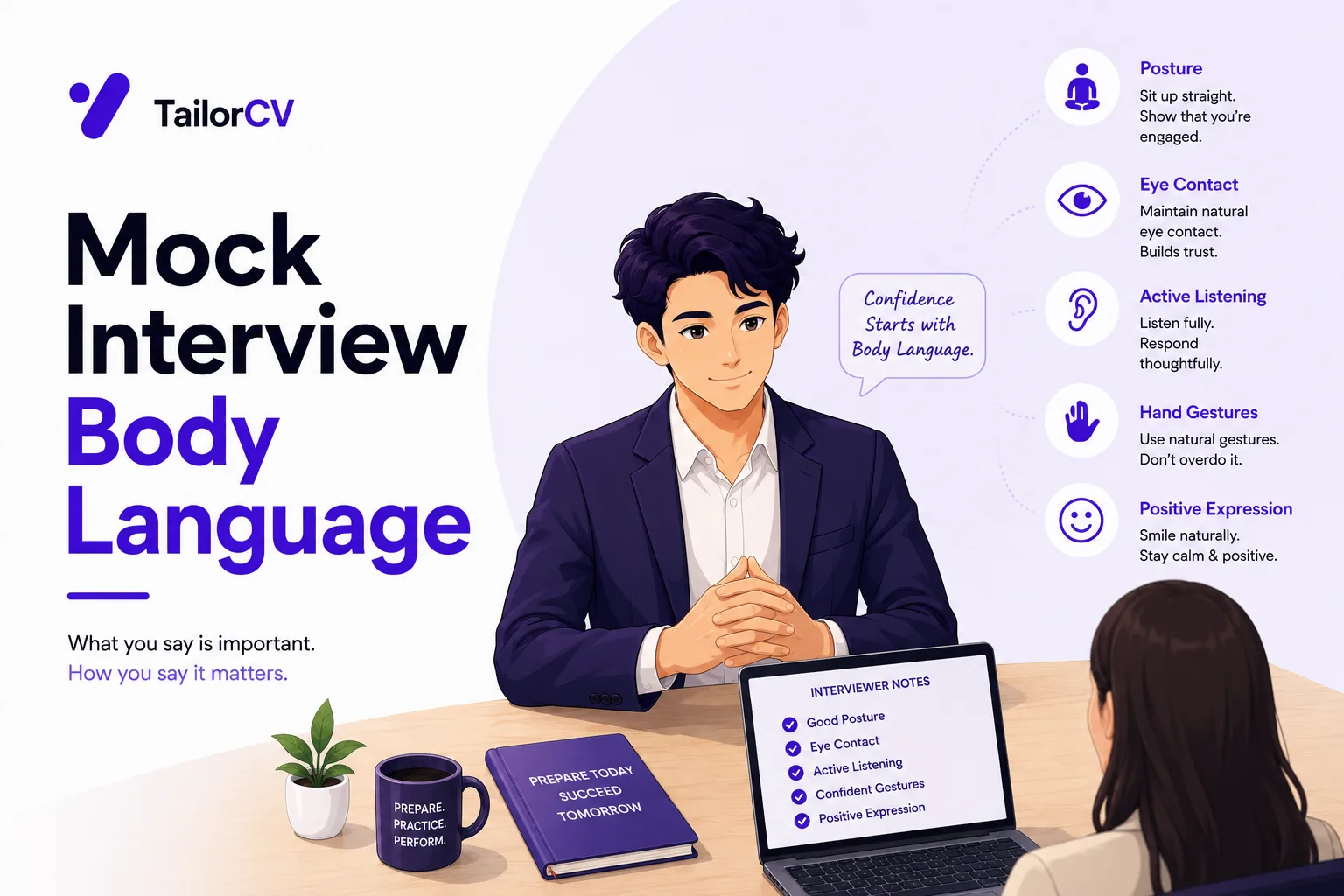
Key Takeaways
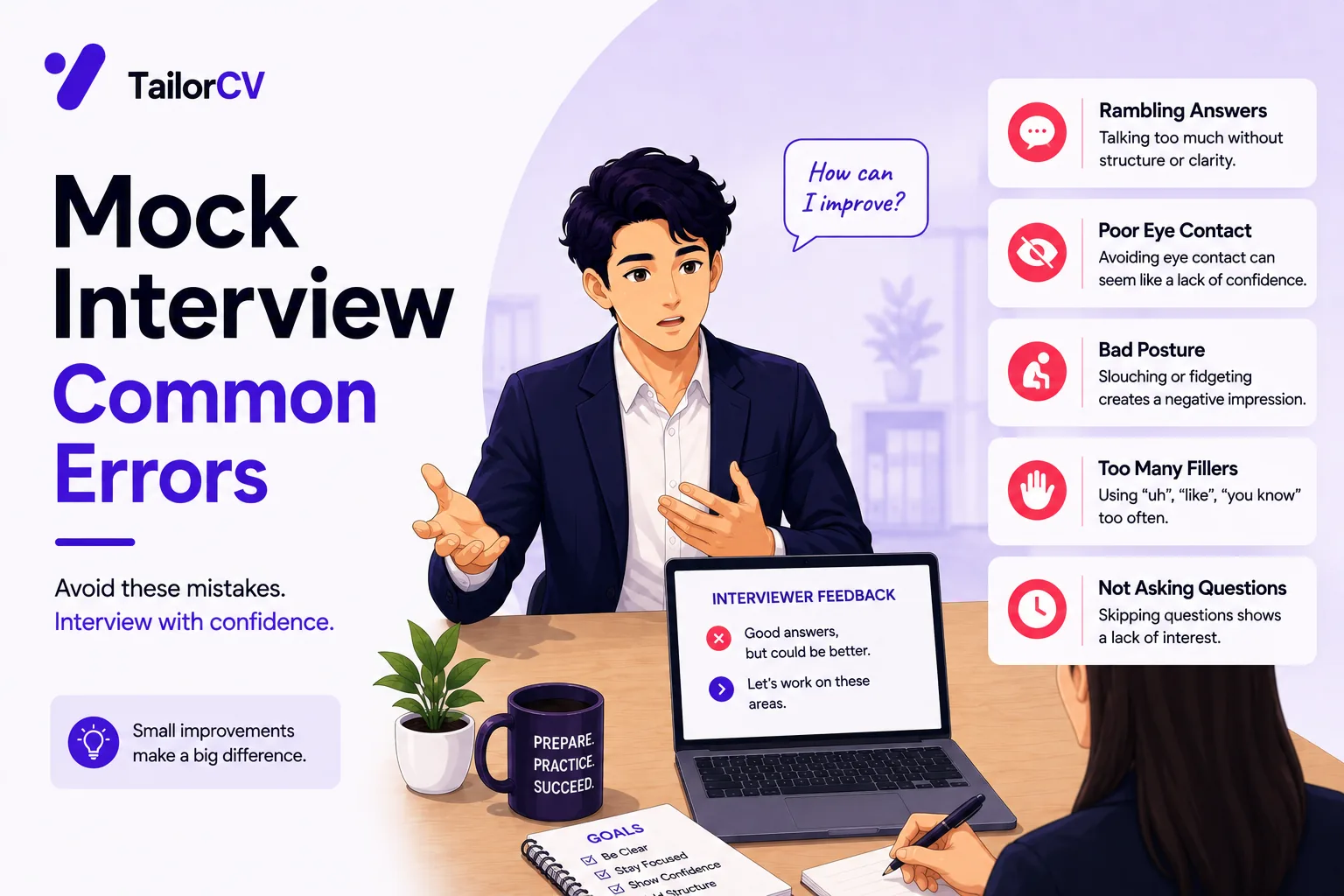
- Most body language advice is overstated — interviewers are assessing your answers, not decoding your posture.
- A handful of things genuinely register: eye contact, visible nervous habits, energy and how you handle silence.
- Nervous fidgeting is distracting rather than damning, and it is the most fixable item.
- On video, looking at the camera and having your face lit matter more than posture.
- Recording yourself is the only reliable way to find your own habits.
Body language occupies more space in interview advice than it deserves. Interviewers are not analysing your posture for hidden meaning; they are trying to work out whether you can do the job.
That said, a small number of things genuinely affect how you come across, mostly by distracting from what you are saying. Those are worth fixing, and the rest is worth ignoring.
This guide separates the two.
Before the interview, make sure your resume got you there — the free ATS score checker.
What actually registers
Eye contact. Not staring — natural contact while speaking and listening. Consistently looking away reads as discomfort or evasion, whether or not it is.
In a panel, address whoever asked the question primarily, with periodic contact across the others. Speaking only to the most senior person is noticed.
Nervous habits. Clicking a pen, jiggling a leg, touching your face repeatedly, playing with your hair. These are distracting rather than damning — the interviewer starts watching the habit instead of hearing the answer.
Energy. Speaking with some animation reads as interest. Flat delivery reads as disengagement, even from a candidate who genuinely wants the role. This is worth more than any posture adjustment.
Handling silence. Filling every pause with "um" while thinking is more noticeable than a brief silence. A short pause before answering reads as considered.
Speaking pace. Nervousness speeds people up, and fast delivery costs comprehension. Deliberately slowing down improves clarity more than any other single change — see campus placement communication skills.
What to ignore
Power poses and dominance postures. Not assessed, and forcing them makes you uncomfortable, which is assessed.
Mirroring the interviewer. Attempting it consciously is distracting for you and occasionally visible to them.
Precise handshake technique. Firm, brief, done. Nobody scores it.
Elaborate rules about hand placement. Natural gestures while speaking are fine and better than rigid stillness.
Trying to project confidence through posture while your answers are disorganised. Structure fixes far more than posture does.
Fixing a habit by removing its object
Most nervous habits need an object. Take the object away and the habit has nowhere to go, which works far better than deciding to stop.
| The habit | What to do before you sit down |
|---|---|
| Clicking a pen | Do not hold one. If you need to write, use a pencil or a non-click pen |
| Fiddling with your phone | In your bag, not your pocket, not the table |
| Twisting a ring or watch | Take it off before you walk in |
| Playing with your hair | Tie it back |
| Picking at your sleeve or cuff | Wear something without loose cuffs |
| Jiggling your leg | Both feet flat on the floor — it is physically harder to bounce |
| Fidgeting with a water bottle label | Pour into a glass, or leave the bottle out of reach |
| Tapping the table | Hands resting in your lap between gestures |
This is the whole trick. Willpower fails under stress; an empty hand does not.
The realistic version
Sit reasonably upright — leaning back reads as disengaged, hunching forward reads as tense. Comfortable and alert.
Let your hands do what they naturally do while talking, but keep them off your face and away from objects you can fiddle with.
Remove the fidget objects. Do not hold a pen you do not need. Put your phone away rather than in your hand. This solves most nervous habits mechanically rather than through willpower.
Nod while listening, which signals engagement without interrupting.
Smile at the start and end, naturally rather than continuously.
On video
Different priorities, because the frame changes what is visible.
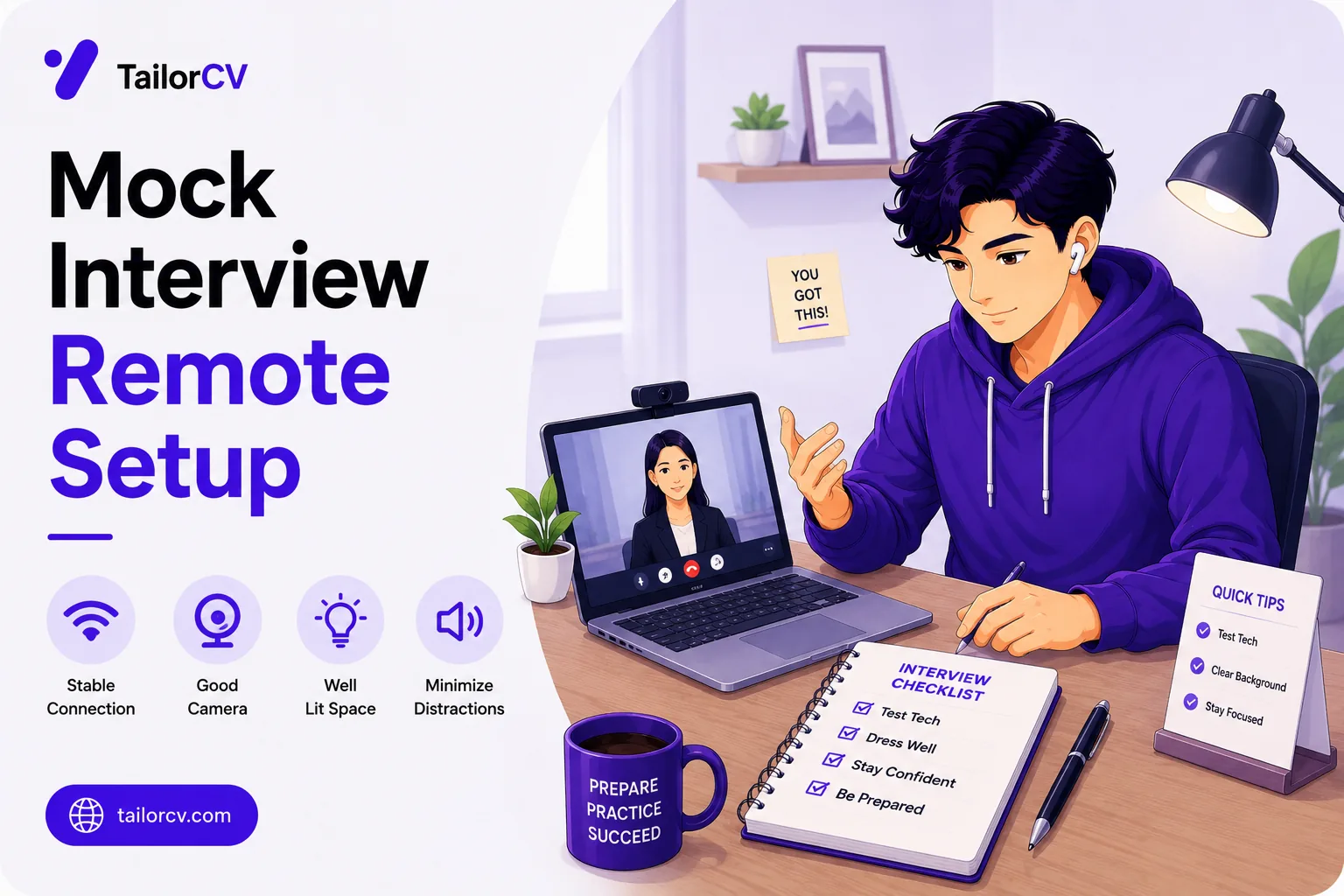
Look at the camera when speaking, not at the faces on screen. Looking at their video appears as looking down — see remote interview setup.
Your face must be lit. A dark silhouette makes expression invisible, which removes most of your nonverbal communication entirely.
Camera at eye level. An upward angle reads as less engaged regardless of your actual posture.
Sit slightly further back than feels natural, so your hands are visible when you gesture. Gestures cropped out of frame are lost.
Posture below the shoulders is invisible, so the effort belongs in framing and lighting rather than in how you sit.
The camera-eye-contact problem, and the cheap fix
Everyone knows they should look at the camera. Almost nobody can, because a human face on screen pulls your eyes to it automatically.
The fix that actually works: drag the interviewer's video window to the top of your screen, directly under your webcam. Then shrink it. Your eyes now sit within a few degrees of the lens, and looking at their face and looking at the camera become nearly the same thing.
Turn off your own self-view once the call starts, or at least move it away from the lens. Watching yourself is the single biggest cause of drifting eye contact, and you do not need it after the first thirty seconds.
If you use notes, put them in a text file directly beneath the webcam rather than on paper beside you. Glancing down at a desk is obvious; glancing at the top of your screen is not.
Nerves
Body language problems are usually nerves, so treating the nerves is more effective than managing the symptoms.
Preparation reduces them most. Knowing your six stories cold removes the underlying source — see how to practise mock interviews.
Arrive early enough to settle, in person or on the call.
Slow your breathing before starting. Two slow breaths measurably steadies your voice.
Accept some nervousness. Interviewers expect it and largely discount it. Trying to appear completely relaxed usually produces something stranger than mild visible nerves.
Nerves fade once you are talking about something you know, which is another argument for a well-prepared introduction.
The first ninety seconds
Nerves peak at the start and drop sharply once you are speaking about something familiar. So make the opening the part you have rehearsed most.
Have your first answer ready. "Tell me about yourself" opens most interviews. If that runs smoothly, the rest of the interview happens to a calmer person.
Speak your first two sentences deliberately slowly. Nerves speed you up, and consciously slowing the opening resets your pace for everything after it.
Do not apologise for being nervous. It draws attention to something the interviewer was discounting anyway.
If your voice shakes, pause and take one breath rather than pushing through. A one-second pause is invisible; a wobbling sentence is not.
Finding your own habits
You cannot fix what you have not seen.
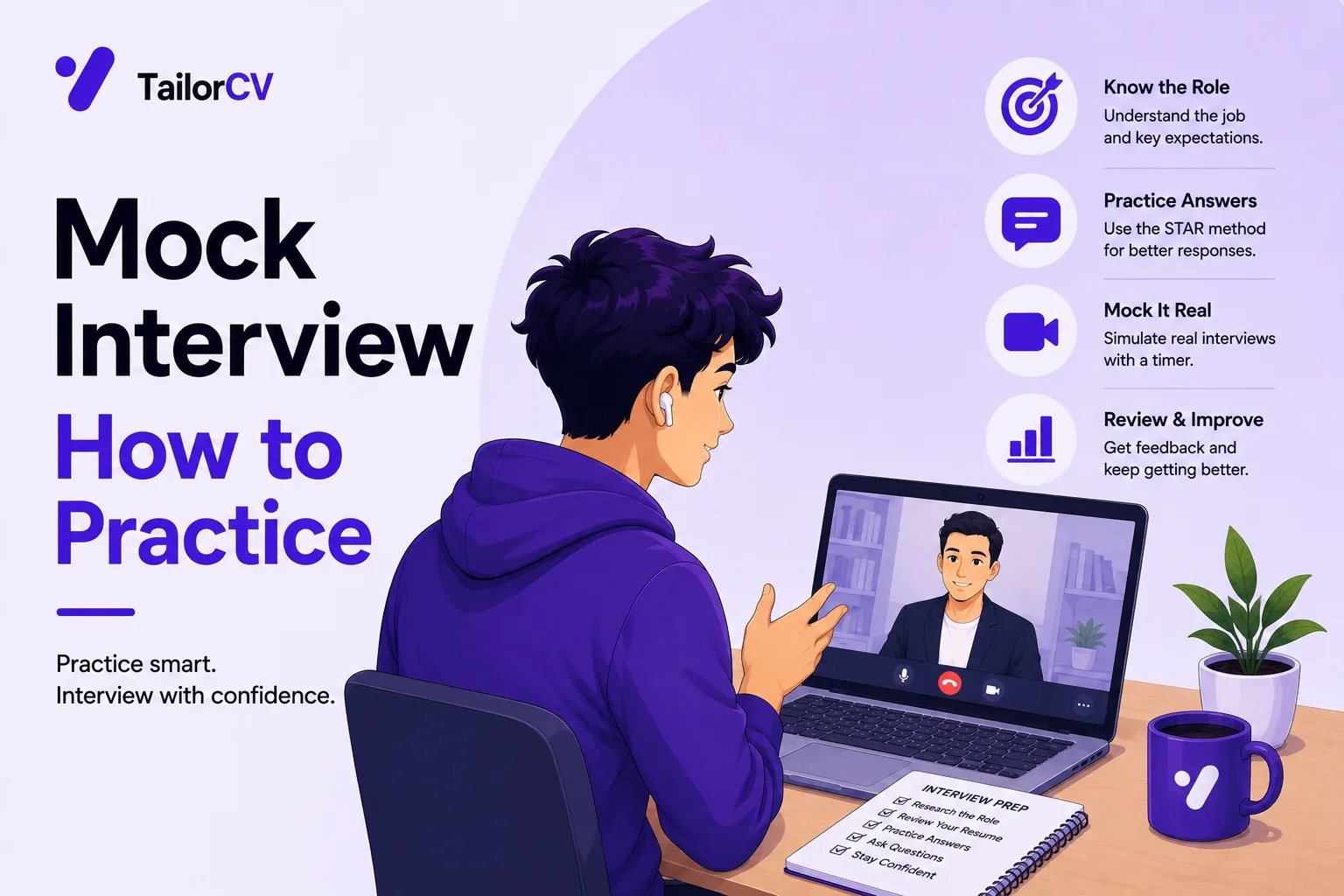
Record yourself answering two questions and watch it back. Your habits will be immediately obvious to you and were invisible before — this is the same mechanism that makes recorded practice the highest-return preparation available.
Ask a practice partner to note any repeated movement.
Fix one at a time. Correcting several simultaneously produces someone visibly managing themselves rather than answering questions.
Common Mistakes
Overthinking posture while under-preparing answers. Structure and content are what is assessed; posture only matters when it distracts.
Holding a pen or phone. Removing the object solves most fidgeting mechanically, which works better than trying to stop.
Flat, low-energy delivery. It reads as disinterest even from candidates who want the role badly.
Looking at the screen rather than the camera on video. It appears as looking down for the whole interview.
Leaving your self-view on. Watching yourself is the biggest single cause of drifting eye contact on a call.
Sitting in the dark on a video call. An unlit face removes your expression entirely, which is most of your nonverbal communication.
Filling every pause with "um". A brief silence reads as considered; verbal filler reads as uncertain.
Apologising for being nervous. It draws attention to something that was being discounted.
Attempting power poses or deliberate mirroring. Neither is assessed, and forcing them creates visible discomfort that is.
Trying to appear entirely relaxed. Interviewers expect nerves and discount them; overcorrection looks stranger than the nerves would have.
Frequently Asked Questions
Does body language really affect interview outcomes?
Less than most advice suggests. It matters mainly when it distracts from your answers — visible fidgeting, flat energy or avoided eye contact.
How much eye contact is right?
Natural contact while speaking and listening, without staring. In a panel, address whoever asked while periodically including the others.
What should I do with my hands?
Whatever they naturally do while you speak. Remove pens and phones so there is nothing to fidget with, and keep hands away from your face.
How do I actually look at the camera on a video call?
Move the interviewer's window directly under your webcam and shrink it, then turn off your self-view. Their face and the lens end up in nearly the same place.
Do interviewers notice nervousness?
Yes, and they largely discount it. Attempting to appear completely relaxed usually reads stranger than mild visible nerves.
Should I mention that I am nervous?
No. It draws attention to something the interviewer was already discounting. Pause, breathe, and carry on.
What matters most on video?
Looking at the camera rather than the screen, and having your face properly lit. Posture below the shoulders is not even visible.
Can I keep notes on a video interview?
Yes, in a text file directly beneath your webcam. Glancing at the top of your screen is invisible; looking down at a desk is not.
How do I find my own nervous habits?
Record yourself answering two questions and watch it back. Habits invisible from the inside are immediately obvious on playback.
Should I smile throughout?
No — naturally at the start and end, and where it fits. Continuous smiling looks forced.
Body language matters only once your resume gets you the interview. Check your ATS score free.
Make This Practical
Record yourself answering two questions and watch it back. Your own nervous habits are invisible from the inside and immediately obvious on playback, and this is the only reliable way to find them.
Then remove the objects rather than relying on willpower. Take the ring off, tie your hair back, leave the pen alone and put the phone in your bag — a habit with nothing to grip usually stops on its own, which is more than can be said for deciding to stop.
Finally, fix the two things that dominate a video round: drag the interviewer's window directly under your webcam and turn off your self-view so your eyes stay near the lens, and get a light on your face. Both take one minute and both do more than any amount of posture correction.
Was this guide useful?
Be the first to rate it.