 TD
TD

Key Takeaways
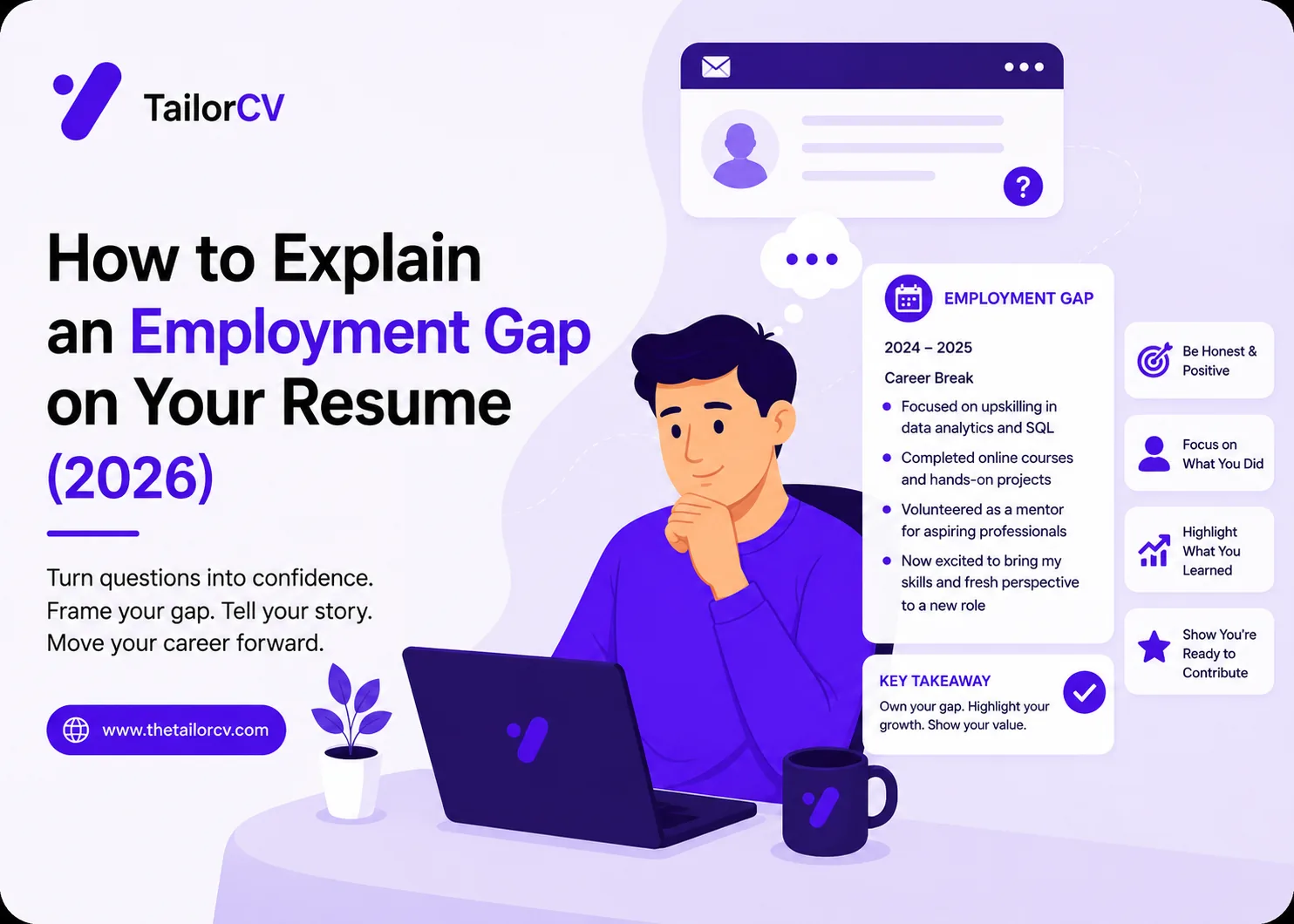
- Employment gaps are increasingly common and can be explained effectively in interviews.
- Honesty is crucial; interviewers prefer clear explanations over vague responses.
- Use a three-part formula to explain gaps: acknowledge the reason, highlight productive activities during the gap, and express readiness for the role.
- Different types of gaps (layoffs, caregiving, health issues, travel) can be addressed with specific, honest statements that focus on growth and learning.
- Engage in skill-building activities during a gap, such as online courses, freelance work, or volunteering, to stay competitive in the job market.
How to Explain a Career Gap in a Job Interview - Honest Answers That Work (2026)
Employment gaps are more common than ever - parental leave, health issues, caregiving, layoffs, travel, upskilling, or simply a difficult job market. Yet "Explain this gap in your resume" still makes candidates nervous.
The good news: gaps do not automatically disqualify you. How you explain them determines whether they become a non-issue or a red flag.
This guide covers honest, effective ways to explain career gaps in 2026 - and how to practice with AI mock interviews.
First, address gaps on your resume using how to explain resume gaps. Then prepare interview answers with the behavioral interview guide and STAR method. Check resume alignment with the TailorCV ATS checker.
Do Interviewers Care About Career Gaps?
Yes - but not as much as you think. Interviewers care about:
- Honesty - vague or evasive answers raise suspicion.
- What you did during the gap - growth, learning, or relevant activity.
- Readiness now - are you prepared and motivated to return?
A well-explained gap with a strong current profile beats a candidate who job-hops without impact. For job-hopping concerns, see how to explain job hopping.
How to Explain Different Types of Gaps
Layoff / Company Closure
"I was part of a company-wide reduction when [Company] restructured their engineering division. Since then, I've completed [certification/project], updated my skills in [technology], and I'm actively interviewing for roles where I can contribute immediately."
Parental / Family Caregiving
"I took time to care for [family member / new child]. During that period, I stayed current by [online courses, freelance, open source]. I'm now fully available and excited to return to [role type] work."
Health-Related Gap
"I took time to address a personal health matter, which is now fully resolved. I'm grateful for the recovery time and I'm energized to return to work - I've already been [studying, building projects, networking] to stay sharp."
You do not owe medical details - brief and honest is enough.
Travel / Sabbatical
"I took intentional time to [travel / recharge / pursue personal project]. It gave me perspective and I used part of that time to [learn skill, volunteer, build portfolio]. I'm ready to commit fully to my next role."
Difficulty Finding Work
"The job market in [industry/location] was challenging, but I used the time productively - I completed [courses], built [project], and refined my job search strategy including resume optimization with tools like the ATS score checker."
The 3-Part Gap Explanation Formula
- Acknowledge briefly - state the reason without over-explaining.
- Show productive activity - what you did during the gap.
- Pivot forward - why you are ready and excited for this role.
Practice this structure in AI mock interview sessions.
What to Do During a Gap (Before the Interview)
| What | Details |
|---|---|
| Take Online Courses | Enhance your skills with relevant online courses and list them on your resume. Websites like Coursera or Udemy offer a plethora of options |
| Build Portfolio Projects | Create and showcase portfolio projects that reflect your skills. For guidance, see how to build a professional portfolio |
| Freelance or Volunteer | Engage in freelance work or volunteer opportunities to keep your skills sharp and gain new experiences. Refer to volunteer work on resume for tips |
| Stay Interview-Ready | Regularly practice your interview skills with mock interview practice |
| Optimize Your Resume | Ensure your resume remains ATS-friendly. Check out our ATS-friendly resume guide for tips |
Common Mistakes to Avoid
| Mistake | Why it costs you |
|---|---|
| Lying About Dates | Background checks will catch this, and dishonesty can cost you the job |
| Apologizing Excessively | A brief explanation suffices. Focus on your strengths and confidence afterward |
| Blaming Others | Maintain professionalism. Instead of blaming, focus on what you learned |
| No Forward Momentum | Ensure you can demonstrate how you used your time productively |
| Ignoring the Question | If they ask, answer directly and confidently |
For more pitfalls, see common interview mistakes.
Gap Explanations by Interview Round
| Round | Focus |
|---|---|
| HR round | Brief, honest, compliant. |
| Manager round | Skills currency and readiness. |
| Panel interview | Same answer to all - stay consistent. |
| Final round | Emphasize long-term commitment. |
Additional Tips for Each Interview Round
- HR Round: Prepare for broader questions about your career trajectory. Be ready to discuss your entire work history, including the gap.
- Manager Round: Focus on how your skills developed during your gap can benefit the team. Use specific examples to illustrate your readiness.
- Panel Interview: Consistency is key. Make sure your explanation aligns with what you've told HR and the manager.
- Final Round: Convey your long-term vision and commitment to the role. Share how you've prepared to ensure a successful transition back into the workforce.
For career changers after a gap, read career change to tech guide.
Real Examples of Successful Gap Explanations
-
Example from a Marketing Professional: "I took a year off to care for my aging parents. During that time, I enrolled in online marketing courses and volunteered to manage social media for a local charity. This not only kept my skills sharp but also deepened my understanding of community engagement."
-
Example from a Software Developer: "I was laid off due to company downsizing. I used the time to complete a full-stack development bootcamp and worked on personal coding projects. I even contributed to open-source software, which helped me stay updated with the latest technologies."
-
Example from a Teacher: "I stepped away from teaching to travel and explore educational systems in different countries. I returned with a fresh perspective on curriculum development and have since taken courses in digital learning tools to enhance my teaching methods."
Data Points on Career Gaps
- Prevalence: According to a 2023 study by the Bureau of Labor Statistics, nearly 60% of professionals have experienced at least one significant career gap in their lifetime.
- Perception: A survey by Jobvite found that 75% of hiring managers consider a well-explained career gap to be acceptable, especially if the candidate demonstrates continuous learning or skill development during that time.
- Impact on Hiring: A LinkedIn report indicates that candidates who address their career gaps candidly in interviews are 30% more likely to receive job offers compared to those who do not.
See it in action: a resume-based mock interview
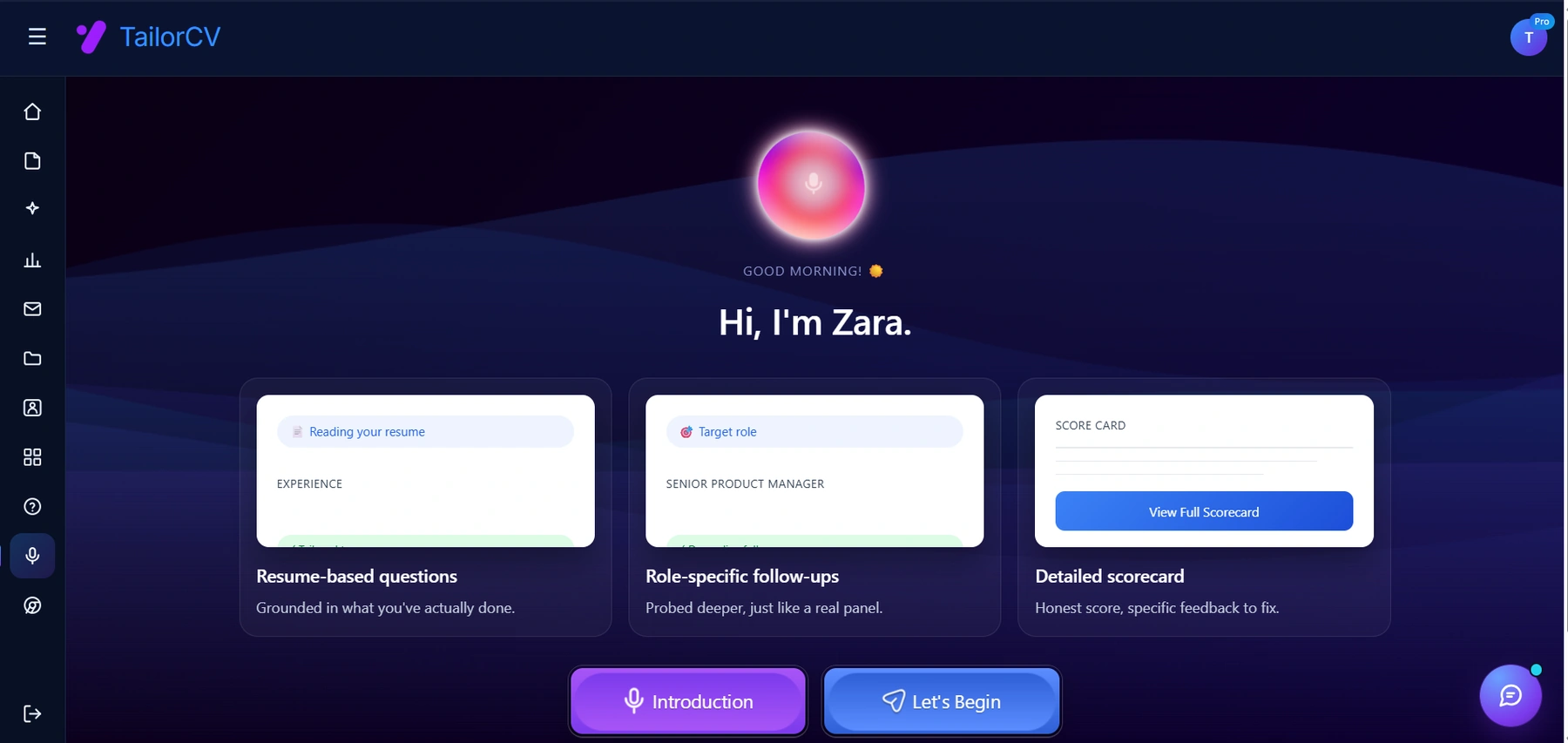
You can rehearse this before the real thing. The interviewer reads your resume first, so the questions come from your actual experience rather than a generic list.
Crafting Your Personal Narrative
When addressing a career gap, it's essential to frame your experience as a personal narrative that reflects growth and resilience. Here’s how to craft a compelling story:
-
Identify Key Themes: Reflect on the reasons for your gap. Was it personal development, caregiving, or pursuing further education? Identify a central theme that ties your experiences together.
-
Use the STAR Method: Structure your narrative using the Situation, Task, Action, and Result (STAR) method. Describe the situation that led to your career gap, the actions you took during this time, and the positive outcomes that resulted.
-
Practice Your Delivery: Rehearse your narrative to ensure it flows naturally during the interview. You can use resources like mock interviews to refine your delivery.
Example Scenario:
Imagine you took a year off to care for a family member. Your narrative could begin with the situation: "I took a year off to care for my elderly parent, which taught me time management and prioritization." You can then share how you maintained your skills through online courses or volunteer work during this period.
Checklist for Discussing Your Career Gap
Having a checklist can help you stay focused and confident when discussing your career gap. Here’s a mini checklist to guide you:
- unchecked: Be Honest: Prepare to discuss the reason without over-explaining.
- unchecked: Focus on Skills: Highlight any skills or experiences gained during the gap that are relevant to the position.
- unchecked: Reinforce Your Commitment: Emphasize your eagerness to return to the workforce and contribute to the company.
- unchecked: Prepare Questions: Anticipate potential follow-up questions and prepare thoughtful responses.
- unchecked: Stay Positive: Maintain an optimistic tone throughout your explanation.
Do's and Don'ts When Explaining a Career Gap
Navigating the conversation around your career gap can be tricky. Here’s a quick guide of do's and don'ts to help you:
Do's:
- Do Frame it Positively: Focus on what you learned or accomplished during the gap.
- Do Keep It Brief: Provide a concise explanation and move on to your qualifications.
- Do Use Relevant Examples: If applicable, mention any freelance work or projects (see freelancing vs full-time employment) that kept your skills sharp.
Don'ts:
- Don’t Over-Explain: Avoid going into excessive detail about personal matters.
- Don’t Appear Defensive: Stay calm and confident; remember that many people have gaps in their employment history.
- Don’t Ignore the Gap: Acknowledge it upfront instead of hoping the interviewer won't notice.
Real-Life Examples of Career Gap Narratives
Here are some real-life examples to inspire your narrative construction:
-
Example for Education: "During my two-year career gap, I enrolled in a coding bootcamp to enhance my technical skills. This experience led me to develop a portfolio of projects, which I’m excited to share with you today."
-
Example for Family Care: "I took a year off to care for my mother during her recovery from surgery. This experience taught me invaluable lessons in empathy and resilience, which I believe are essential in any workplace."
-
Example for Travel: "I spent six months traveling and volunteering abroad, which expanded my cultural awareness and adaptability. These experiences have made me more effective in diverse team environments."
Additional Resources for Job Seekers
To further enhance your job application and interview skills, consider checking out the following resources:
- Resume Templates: Use our templates to ensure your resume highlights your skills effectively.
- Cover Letter Writing: A well-crafted cover letter can complement your resume. Learn more about creating one here.
- ATS Checker: Before submitting your application, run your resume through our ATS checker to ensure it meets the necessary criteria.
By integrating these strategies and insights into your preparation, you can confidently address your career gap in interviews and present yourself as a strong candidate.
Conclusion
Explaining a career gap in a job interview can be a daunting task, but with the right approach and preparation, you can turn what might be perceived as a negative into a positive. Focus on honesty, demonstrate how you've stayed productive, and convey your enthusiasm for the role you're applying for. By following the tips and examples in this guide, you'll be well-equipped to tackle any questions about your career gaps confidently. Remember, your unique experiences can set you apart in a competitive job market.
Frequently Asked Questions
Should I explain a gap on my resume or only in the interview?
Address it briefly on the resume if the gap is 6+ months. Use a line like "Career break - professional development and family care" rather than leaving unexplained blank space.
Can AI mock interviews help with gap questions?
Yes. TailorCV's mock interview lets you practice gap explanations until they sound natural and confident, not defensive.
How long a gap is too long?
There is no universal rule. A strong explanation plus recent relevant activity matters more than the number of months.
Practice explaining your career gap with AI mock interviews - build confidence before the real conversation.
Make This Practical
Use this advice as interview practice, not just reading material. Start a role-specific session with the AI mock interview tool, prepare your opening with How to Answer Tell Me About Yourself, and structure evidence-heavy answers with the STAR Method Interview Answers Guide.
Before the interview, make sure the resume that earned the call is still aligned with the role. Check it with the free ATS score checker, review Common Interview Mistakes to Avoid, and use How to Follow Up After an Interview once the conversation is over.
Was this guide useful?
Be the first to rate it.