 SS
SS
Key Takeaways
- Body language accounts for 50-60% of communication impact in interviews, making it crucial for success.
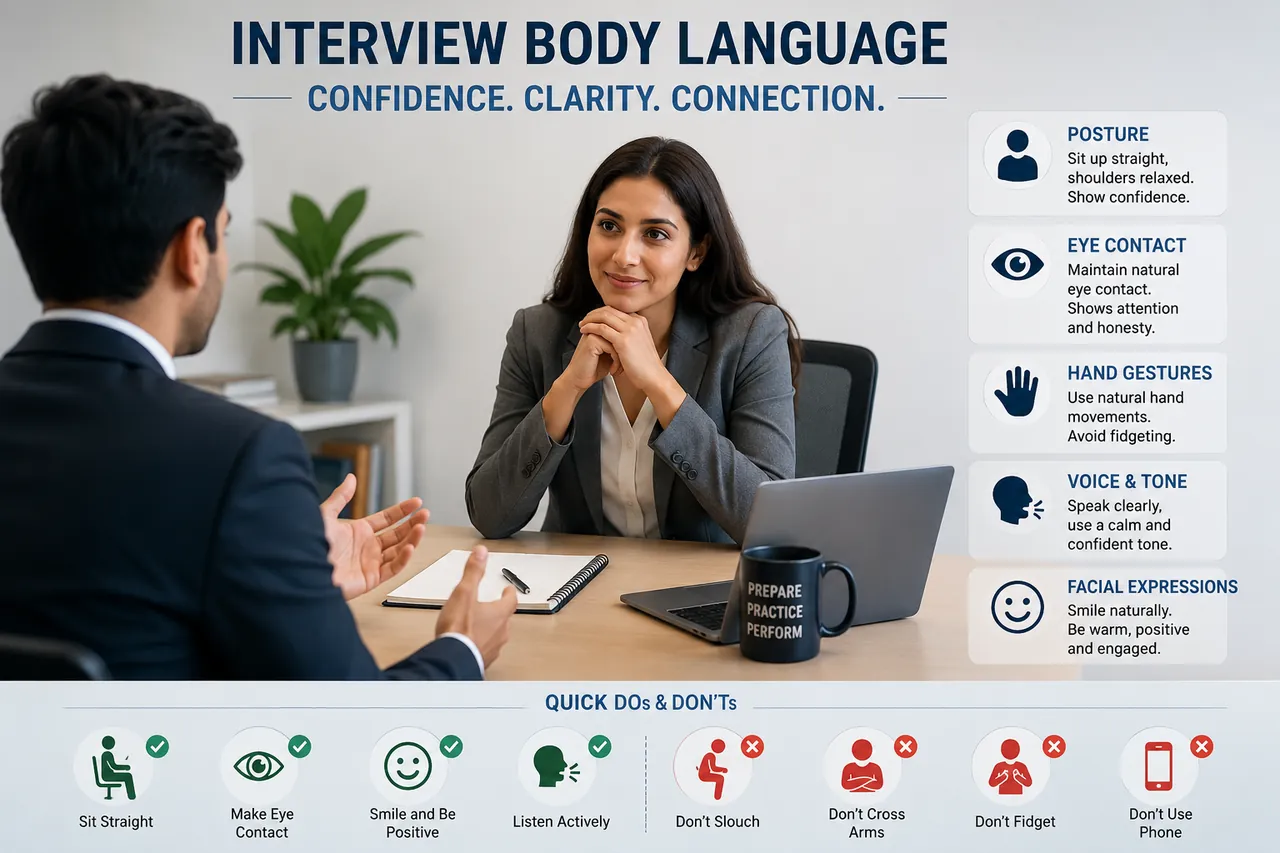
- Maintain an upright posture and lean slightly forward to show engagement during in-person interviews.
- Make eye contact 60-70% of the time while speaking, and distribute your gaze among all interviewers in panel settings.
- Use natural hand gestures to emphasize points, avoiding crossed arms and excessive fidgeting.
- For video interviews, position the camera at eye level and look at the lens to create the illusion of eye contact.
Interview Body Language and Communication Tips - What Interviewers Notice in 2026
You can give a perfect answer on paper and still lose the interview if your body language says something different. Interviewers notice posture, eye contact, facial expressions, and vocal tone - often subconsciously - and use them to assess confidence, engagement, and cultural fit.
This guide covers body language and communication for in-person, virtual, and remote interviews in 2026.
Pair this with AI mock interview practice where you can rehearse delivery, not just content. Also read the complete interview guide, interview anxiety tips, and optimize your resume with the TailorCV ATS checker.
Why Body Language Matters in Interviews
Research consistently shows that communication impact comes from:
- Words - ~7-10% of perceived message (context-dependent)
- Tone of voice - ~30-40%
- Body language - ~50-60%
Your STAR method answers need strong delivery to land. Content gets you considered; communication gets you hired.
Understanding the percentages behind communication can help you prioritize your interview preparation. Focus on your body language, as it will often speak louder than your words.
In-Person Interview Body Language
Posture
- Sit upright with shoulders relaxed - not rigid, not slouched
- Lean slightly forward to show engagement
- Keep feet flat on the floor
Example: Imagine you're in a meeting with a hiring manager. If you sit upright with a slight lean, it signals that you're interested and attentive, while slouching can give off an impression of disinterest.
Eye Contact
- Maintain eye contact 60-70% of the time while speaking
- Look away briefly to think - natural, not evasive
- In panel interviews, distribute eye contact across interviewers
Tip: If you're in a panel interview, make a conscious effort to engage all members by making eye contact with each of them throughout the conversation.
Hand Gestures
- Use natural hand gestures to emphasize points
- Avoid crossed arms (reads as defensive)
- Do not fidget with pen, hair, or jewelry
Common Mistake: Excessive fidgeting can distract the interviewer from your message. Keep your hands visible and use them to complement your speech rather than as a nervous habit.
Handshake (when applicable)
- Firm but not crushing
- Match gender-neutral professional standard
- Warm smile with eye contact
A confident handshake can set a positive tone for the entire interview. Practice this with friends or family to ensure you feel comfortable.
Facial Expressions
- Smile when appropriate - especially during introductions and tell me about yourself
- Nod to show you are listening
- Avoid blank stares or excessive frowning
Facial expressions can convey warmth and approachability. A genuine smile can help create rapport with your interviewer.
Video Interview Body Language
Video interviews amplify some signals and hide others. Read virtual interview tips and remote job interview preparation.
Camera Setup
- Camera at eye level - not looking up or down at the lens
- Face a light source - window or ring light in front of you
- Clean, neutral background
Checklist for Video Setup:
- Check your camera angle to ensure it captures your face clearly.
- Position a light source in front of you to avoid shadows.
- Choose a tidy, uncluttered background to minimize distractions.
Eye Contact on Video
Look at the camera lens, not the screen, when speaking. This creates the illusion of eye contact.
Upper Body Visibility
Frame from mid-chest up. Hand gestures should stay in frame.
Tip: Practice in front of a camera to find your best angle and ensure your gestures are visible without being distracting.
Minimize Distractions
Close notifications. Silence phone. Tell household members you are interviewing.
Real-World Example: A candidate once lost an opportunity because their cat jumped on their lap during a video interview. Make sure your environment is as distraction-free as possible.
Vocal Delivery Tips
- Pace: Speak slightly slower than normal conversation
- Volume: Clear and audible - especially on phone interviews
- Pauses: Use pauses for emphasis instead of filler words ("um," "like," "you know")
- Energy: Match the interviewer's energy without being flat or overly hyper
- Enthusiasm: Genuine interest in the role - reference company research
Practice vocal delivery in mock interview sessions. Recording yourself can provide insights into your vocal habits.
Common Mistake: Speaking too quickly can make you sound anxious or unprepared. Practice slowing down your speech to convey confidence.
Body Language Mistakes That Cost Offers
- Slouching - reads as disinterest
- No eye contact - reads as dishonesty or low confidence
- Over-nodding - agreeable but can seem insincere
- Checking phone or watch - disrespectful
- Monotone voice - makes strong answers sound boring
- Interrupting - wait for the interviewer to finish
- Negative micro-expressions - eye-rolling when discussing past employers
See all 20 mistakes in 20 Common Interview Mistakes to Avoid in 2026.
Example: A candidate who repeatedly checked their watch during an interview was perceived as impatient and uninterested, which ultimately cost them the offer.
Body Language by Interview Type
| Type | Key Focus |
|---|---|
| HR round | Warmth, professionalism, openness |
| Manager round | Confidence, competence, collaboration signals |
| Technical interview | Think aloud - show your process |
| Group interview | Balance participation without dominating |
| Final round | Executive presence, strategic tone |
Tip: Tailor your body language to the type of interview you're facing. For instance, in a technical interview, demonstrating your thought process through gestures can be beneficial.
How to Practice Body Language
- Record yourself answering behavioral questions
- Watch without sound - what does your body say?
- Practice with AI mock interviews
- Get feedback from a friend or mentor
- Do one full dress rehearsal 24 hours before
See it in action: a resume-based mock interview
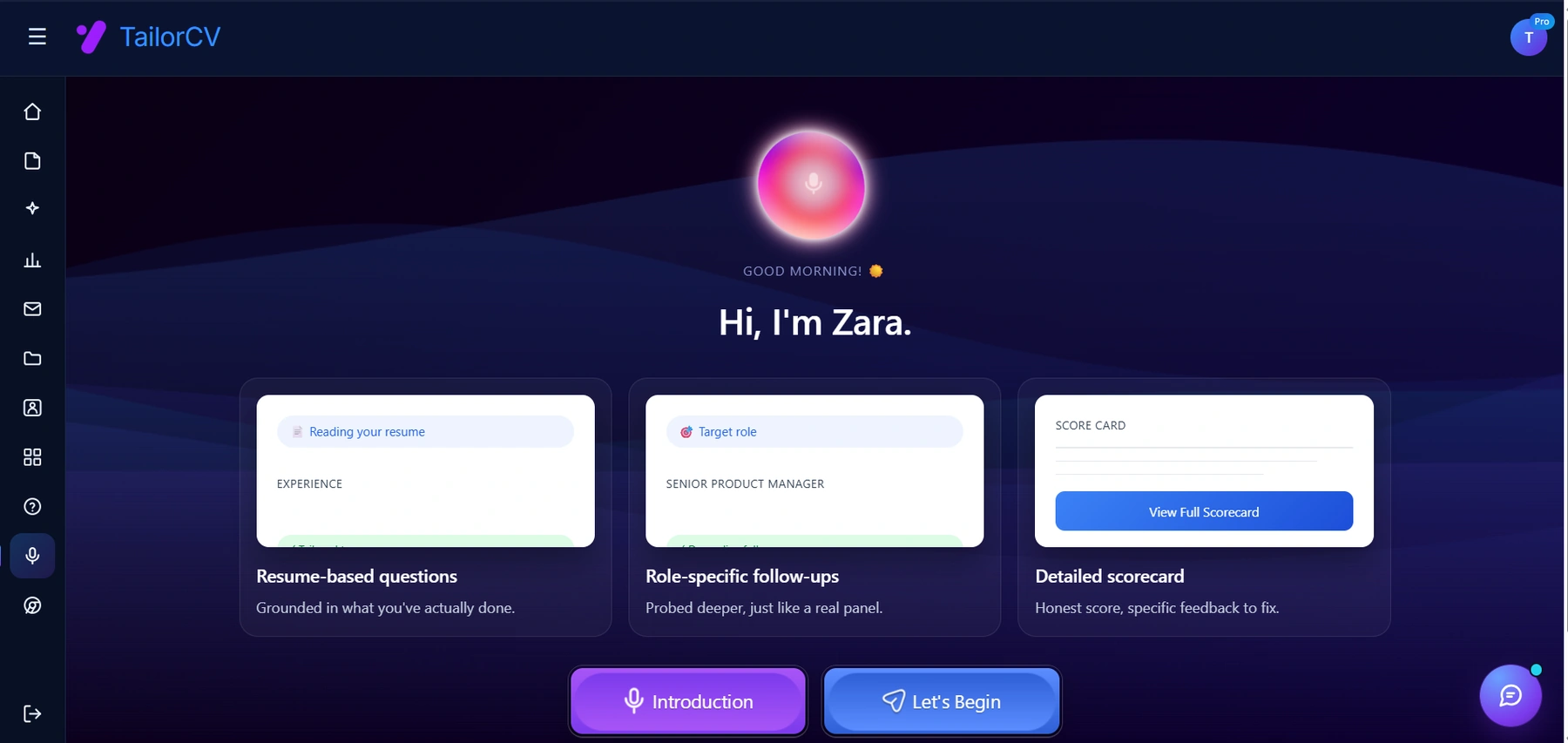
You can rehearse this before the real thing. The interviewer reads your resume first, so the questions come from your actual experience rather than a generic list.
Checklist for Dress Rehearsal:
- Choose your interview outfit in advance.
- Set up your interview space (in-person or virtual).
- Practice your answers and body language in front of a mirror or camera.
Example: Candidates who rehearse their body language often exhibit more confidence and poise compared to those who don’t.
By mastering these body language and communication tips, you'll be better prepared for any type of interview in 2026. Remember, your body language can significantly influence an interviewer's perception of you, so practice and prepare accordingly!
Common Body Language Scenarios and How to Respond
Understanding body language is essential, but knowing how to react to common scenarios during an interview can further enhance your communication. Here are a few scenarios you might encounter and tips on how to respond effectively:
-
The Interviewer is Distracted
Scenario: The interviewer appears distracted, checking their phone or looking away frequently.
Response: Maintain your composure. Continue speaking clearly and confidently. If the distraction persists, consider briefly pausing and asking if they need a moment. This shows your awareness and respect for their time. -
Overly Aggressive Body Language
Scenario: The interviewer leans forward with crossed arms and a stern expression.
Response: Instead of mirroring their closed-off posture, open your stance by uncrossing your arms and leaning slightly back. Use open gestures when you speak to convey confidence and invite engagement. -
Nervous Energy
Scenario: You notice the interviewer tapping their fingers or fidgeting.
Response: Acknowledge this by taking a deep breath and speaking slowly. This can help to ease the tension in the room. Focus on maintaining steady eye contact and a calm demeanor. -
Positive Engagement
Scenario: The interviewer is nodding and leaning in while you speak.
Response: Use this positive feedback to reinforce your points. Utilize affirmative gestures, like smiling and nodding in return, to create a rapport and encourage further engagement.
Step-by-Step Guide to Perfecting Your Body Language
Improving your body language can be a game-changer in interviews. Here’s a step-by-step guide to help you refine your non-verbal communication:
-
Self-Assessment
- Record yourself practicing interview responses. Pay attention to your gestures, posture, and facial expressions. - Identify any negative body language habits, such as slouching or excessive fidgeting. -
Practice in Front of a Mirror
- Stand in front of a mirror and practice your answers. Observe your posture and facial expressions. - Adjust your stance to be open and confident: shoulders back, chin up, and feet shoulder-width apart. -
Use Mock Interviews
- Engage in mock interviews with friends or use mock interview tools. - Focus on maintaining eye contact and using appropriate gestures. Ask for feedback on your body language. -
Record and Review
- After mock interviews, record the session and review it. Look for areas to improve, such as excessive hand movements or lack of engagement. - Make a list of specific body language cues you want to work on. -
Incorporate Feedback
- Utilize constructive criticism from peers to refine your body language. - Set specific goals for your next interview, such as maintaining eye contact for a certain percentage of the conversation.
Do's and Don'ts of Interview Body Language
To ensure your body language communicates confidence and professionalism, consider these do's and don'ts:
Do's
- Do Maintain Eye Contact: This shows confidence and helps establish a connection with the interviewer.
- Do Use Open Gestures: Keep your hands visible and use them to emphasize points, which can make you appear more engaged.
- Do Smile Naturally: A genuine smile can create a positive atmosphere and convey enthusiasm for the position.
- Do Sit Up Straight: A good posture reflects confidence and readiness. Lean slightly forward to show interest.
Don'ts
- Don't Fidget: Avoid tapping your feet, playing with your hair, or excessive movements that can distract from your message.
- Don't Cross Your Arms: This can signal defensiveness. Instead, keep your arms relaxed at your sides or use them to gesture.
- Don't Check Your Watch or Phone: This conveys disinterest. Keep your phone silent and out of sight.
- Don't Overdo Gestures: While gestures can enhance your message, excessive or erratic movements can be distracting.
Mini Checklist for Body Language Preparation
Before heading into an interview, use this checklist to ensure your body language is on point:
- unchecked: Posture: Sit or stand tall with shoulders back.
- unchecked: Eye Contact: Plan to maintain eye contact without staring down the interviewer.
- unchecked: Gestures: Have a few natural hand gestures ready to emphasize key points.
- unchecked: Facial Expressions: Practice a warm, approachable smile.
- unchecked: Breathing: Take deep, calming breaths before entering the interview room.
- unchecked: Clothing Choice: Wear professional attire that fits well, as it can affect your confidence and body language.
- unchecked: Mock Practice: Have at least one mock interview before the actual interview to practice body language.
By incorporating these practical tips and strategies, you'll be better equipped to use body language effectively during your next interview. Remember, confident body language can significantly enhance your overall communication and leave a lasting impression on your interviewer.
Frequently Asked Questions
Does body language matter for remote jobs?
Yes - video interviews still evaluate presence, engagement, and professionalism. Remote interview guide.
How do I stop fidgeting in interviews?
Hold a pen (not clicking it) or rest hands on the table. Practice reduces unconscious fidgeting.
Can AI mock interviews help with body language?
AI mock interviews primarily help with answer content and speaking practice. Combine with video self-recording for full body language review.
Practice interview answers and delivery with TailorCV's AI mock interview.
Make This Practical
Use this advice as interview practice, not just reading material. Start a role-specific session with the AI mock interview tool, prepare your opening with How to Answer Tell Me About Yourself, and structure evidence-heavy answers with the STAR Method Interview Answers Guide.
Before the interview, make sure the resume that earned the call is still aligned with the role. Check it with the free ATS score checker, review Common Interview Mistakes to Avoid, and use How to Follow Up After an Interview once the conversation is over.
Was this guide useful?
Be the first to rate it.