 SS
SS
Key Takeaways
- Most employers give no substantive feedback, largely for legal caution rather than indifference.
- Recruitment agencies are the exception — they receive candid client feedback and will frequently share it.
- Asking a specific question gets a real answer far more often than asking for general feedback.
- "We went with someone with more experience" is usually genuine rather than a brush-off.
- Self-assessment immediately after each interview is the feedback you can always get.
Interview feedback is the thing candidates most want and least often receive. Employers are cautious about saying anything that could be construed as discriminatory, so the default response is a polite non-answer.
That is frustrating and it is not the whole picture. There are ways to ask that work better than others, sources that are more forthcoming, and a self-assessment habit that gives you most of the value regardless.
This guide covers all three.
Before the interviews, make sure your resume is doing its job — the free ATS score checker.
Why you rarely get it
Legal caution. Anything specific could theoretically support a discrimination claim, so many companies have a blanket policy of declining.
Volume. A recruiter processing many candidates cannot write considered feedback for each.
Discomfort. Telling someone why they were not good enough is unpleasant, and people avoid it.
Sometimes there is no clean reason. Two candidates were close and one edged it. That is genuinely hard to articulate as feedback.
Understanding this helps because it stops you reading silence as a judgement about you specifically.
Asking so that you get something
Ask a specific question, not for general feedback.
"Do you have any feedback?" invites the standard non-answer. A narrow question is easier to answer honestly and frequently gets a real reply.
Instead of: "Could you share any feedback on my interview?"
Try:
Thank you for letting me know. Was there a particular area where you'd have wanted to see more depth — the system design round in particular is one I'm working on.
Why it works: you have named the area, given them permission to be specific, and made it easy to answer in one line.
Other framings that work:
- "Was there anything in my background that raised a concern I could address better next time?"
- "If a similar role came up in six months, what would you want to see that isn't there yet?"
- "Was the gap technical, or more about fit for this particular team?"
Ask promptly — within a day or two of the outcome — and ask once.
A message you can send today
If you have just been rejected and want something usable, this is roughly the shape that works. Short, specific, and easy to reply to in one line.
Hi [Name],
Thanks for letting me know, and for the time your team spent with me.
One quick question if you have a moment: the round I felt least sure about was the SQL exercise. Was that where the gap was, or was it more about the depth of my reporting experience?
Either way I appreciated the process, and I would be glad to be considered if something similar opens up.
Best, [You]
Why this gets answered when a general request does not: it offers two specific options, so replying costs one word rather than a paragraph. It also gives them an honest exit if the real answer is neither.
Do not: argue with the decision, list your qualifications again, ask who got the role, or send a second message when the first is not answered.
Who actually gives feedback
Recruitment agencies. The most forthcoming source by a wide margin. Consultants receive candid feedback from clients that would never be given to a candidate directly, and they share it because they want to place you next time. Always ask your consultant — this is one of the genuine advantages of applying through an agency, and most candidates never use it. See the UK recruitment agencies guide.
Internal recruiters, sometimes, particularly if you built rapport during the process.
The hiring manager, occasionally, if you interviewed with them directly and ask well.
Smaller companies more often than large ones, which tend to have stricter policies.
Your university placement cell, which frequently receives round-wise outcome data from campus recruiters even when individual feedback is not shared — see how to get shortlisted for campus placement.
Your seniors who were placed at that company. For campus recruitment specifically, this is the most underused source available. Someone a year or two ahead of you who cleared the same process knows the round structure, the kind of questions asked, and often what the panel cares about. That is not feedback on your interview, but it is better than feedback — it arrives before you sit the interview rather than after.
Interpreting what you get
"We went with someone with more experience." Usually literally true. It is not always code for something else.
"It was a very close decision." Frequently genuine, and worth taking as a signal to stay in contact — these candidates get called back when the next role opens.
"We're looking for someone with more [specific skill]." The most useful answer you can receive. Take it at face value and address it.
"You weren't quite the right fit." The least useful, and worth one gentle follow-up: "Was that about the team's working style, or more about the technical scope?"
Silence. Not a judgement. Most rejections are silent, and the volume involved makes it administrative rather than personal.
What each answer should change
The point of feedback is a decision about what to do next. Most answers map onto one.
| What they said | What to actually do |
|---|---|
| "More experience" | Nothing about your interviewing. Target roles one level down, or wait |
| "More depth in [skill]" | Build it, and get one project you can discuss. This is the actionable one |
| "Very close decision" | Stay in contact. Message the recruiter in three months |
| "Not the right fit" | Ask once whether it was style or scope. If no answer, ignore it |
| "Concerns about the gap on your CV" | Prepare a two-sentence answer for it before the next interview |
| "We paused the role" | Genuinely not about you. Ask to be told when it reopens |
| Silence | Self-assess and move on. Do not extrapolate |
The distinction that matters: feedback about a skill is a task. Feedback about experience or timing is not a task, and treating it as one wastes weeks.
Self-assessment, which always works
The feedback you can guarantee, and most people skip it.
Immediately after every interview, before the details fade, write down:
- Every question you were asked, as precisely as you remember
- Which answers went well, and which did not
- Where you hesitated or lost your thread
- What you wish you had said
- Any question that caught you unprepared
Why this is so valuable:
Questions repeat. Across companies and across years. By your fourth interview you are preparing from real data rather than from a generic list.
Patterns emerge. If you have stumbled on "tell me about a conflict" three times, that is a clear signal no employer was going to give you.
It is immediate. No waiting for a reply that will not come.
Keep it in one file
A single document, one section per interview, written within an hour of finishing. It takes ten minutes and compounds.
Company, role, date, round Questions asked — listed exactly, including follow-ups Went well — which answers landed Went badly — where you hesitated, rambled, or blanked Caught unprepared by — the question you had not considered What I would say next time — written out properly, not as a note
The last line is the one that does the work. Writing the better answer while the question is fresh means you have it ready when it comes up again, and it will come up again.
After five interviews, read the whole file in one sitting. The pattern is usually obvious and usually not what you expected — most people find it is the same two questions, not a general weakness.
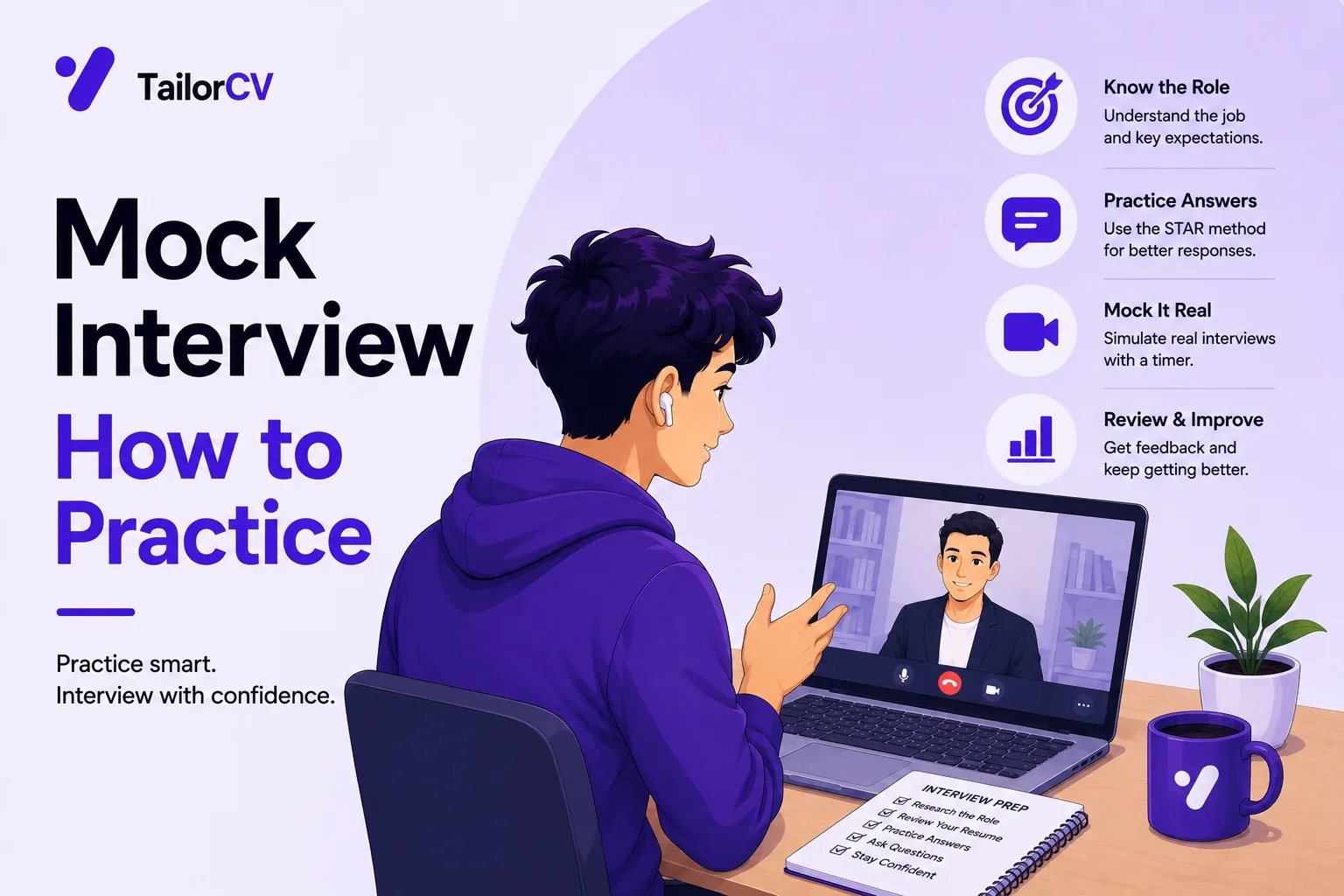
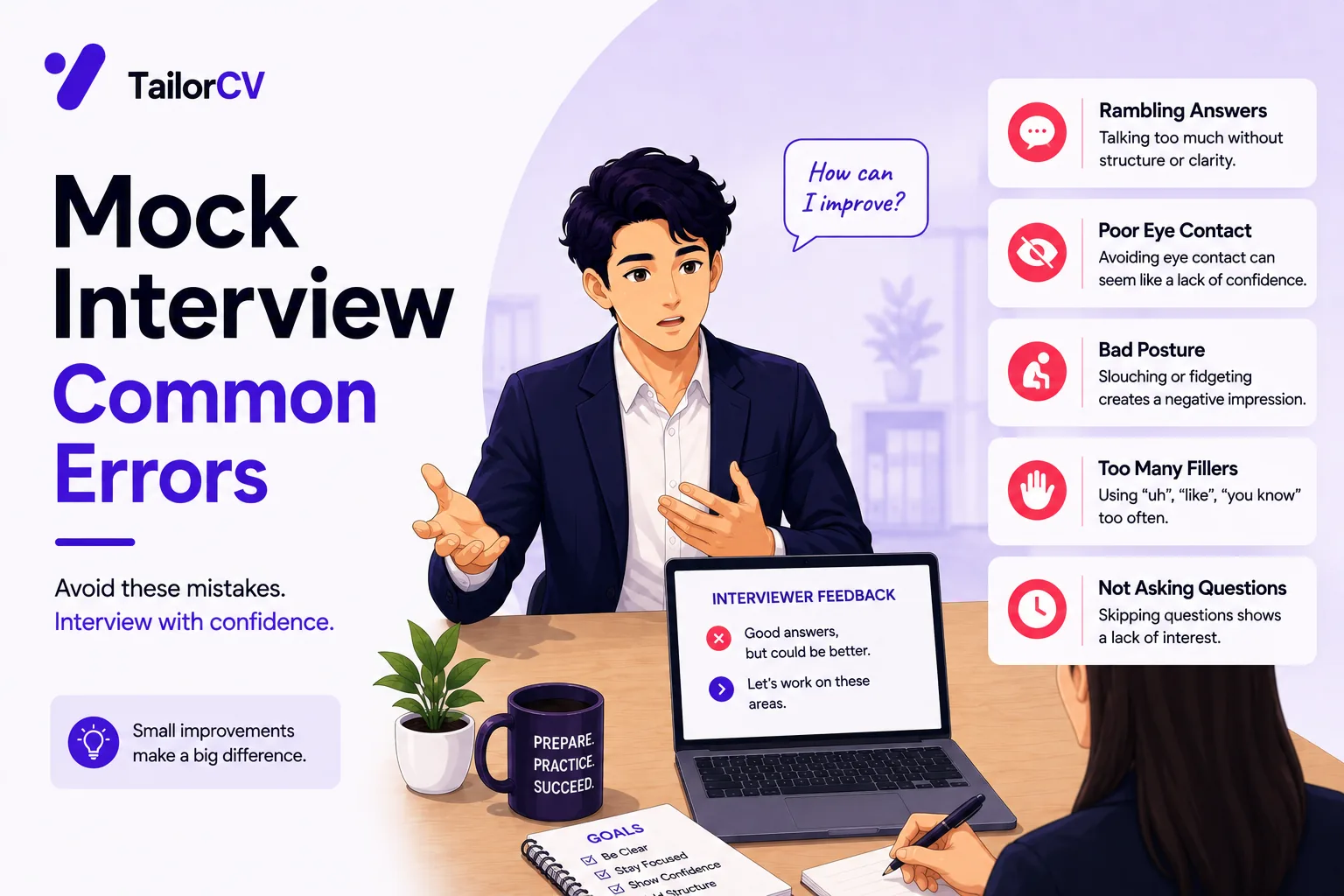
Combine it with recorded practice on the weak areas — see how to practise mock interviews and mock interview common errors.
Feedback in mock interviews
Where you can actually demand it.
Ask your practice partner for specifics, not encouragement. "That was good" is useless. Ask them to note length, structure, whether you said "I" or "we", and whether the point arrived early.
Ask them to be uncomfortable. Politeness is the main failure mode in peer practice.
Ask what they would have asked next — that reveals where your answer left an obvious gap.
Give them something to score rather than something to judge. "Was that good?" gets a kind answer. "How long was that answer, and when did the result arrive?" gets a number, and a number is hard to soften.
Common Mistakes
Asking for general feedback. It invites the standard non-answer; a narrow, specific question gets a real reply far more often.
Not asking your recruitment consultant. They receive candid client feedback that would never reach you directly, and it is the most reliable source available.
Reading silence as a verdict. Most rejections are silent for volume and legal reasons rather than because something was badly wrong.
Pushing after a non-answer. One gentle follow-up is fine; repeated requests damage a relationship you may need later.
Arguing with the decision in your reply. It closes the door on the referral or the next opening.
Not writing down the questions afterwards. They repeat across companies and years, and this is the only feedback you can guarantee.
Treating "more experience" as a task. It is frequently literal and not something you can fix this month, so acting on it wastes weeks.
Never asking seniors who cleared the same process. For campus roles this arrives before the interview, which beats feedback after it.
Asking a practice partner who will not be critical. Encouragement teaches nothing, and politeness is the main failure in peer practice.
Waiting for feedback before continuing to apply. It usually does not come, and pausing costs you opportunities.
Frequently Asked Questions
Why do employers not give interview feedback?
Mainly legal caution — specific comments could theoretically support a discrimination claim — plus volume and simple discomfort.
How should I ask for feedback?
With a specific question about one area rather than a general request. Offering two options makes it answerable in a single word, which is why it gets answered.
Who is most likely to give useful feedback?
Recruitment consultants, by a wide margin. They receive candid client feedback and share it because they want to place you next time.
Is "we chose someone with more experience" a real reason?
Usually literally true rather than a euphemism. Taking it at face value is generally correct.
Which feedback should actually change what I do?
Feedback about a specific skill is a task worth acting on. Feedback about experience or timing is not something you can fix quickly, and treating it as a task wastes weeks.
What if I get no response at all?
Normal, and not a judgement. Most rejections are silent. Fall back on self-assessment and keep applying.
How do I self-assess after an interview?
Write down every question asked, which answers went well, where you hesitated, and what you wish you had said — immediately, before the detail fades. Then write the better answer out in full.
Where can students get feedback if employers will not give it?
From seniors who cleared the same process. For campus recruitment they know the rounds and the question style, and it reaches you before the interview rather than after.
How many times should I follow up?
Once. A single gentle follow-up after a non-answer is reasonable; more damages a relationship you may need later.
Feedback helps, but the resume is what gets you interviewed at all. Check your ATS score free.
Make This Practical
Write down every question you were asked immediately after each interview, in one file you keep adding to, along with where you hesitated and the better answer written out in full. Questions repeat across companies and years, so by your fourth interview you are preparing from real data — and this is the only feedback guaranteed to arrive.
Then ask employers properly when you do ask. Offer two specific options rather than a general request, so replying costs them one word instead of a paragraph, and always ask your recruitment consultant, who receives candid client feedback that would never reach you directly.
Finally, sort what you receive into tasks and non-tasks. A named missing skill is something to go and build; "more experience" or "a close decision" is not, and spending weeks trying to fix it is the most common way good feedback gets wasted.
Was this guide useful?
Be the first to rate it.