 SS
SS

Key Takeaways
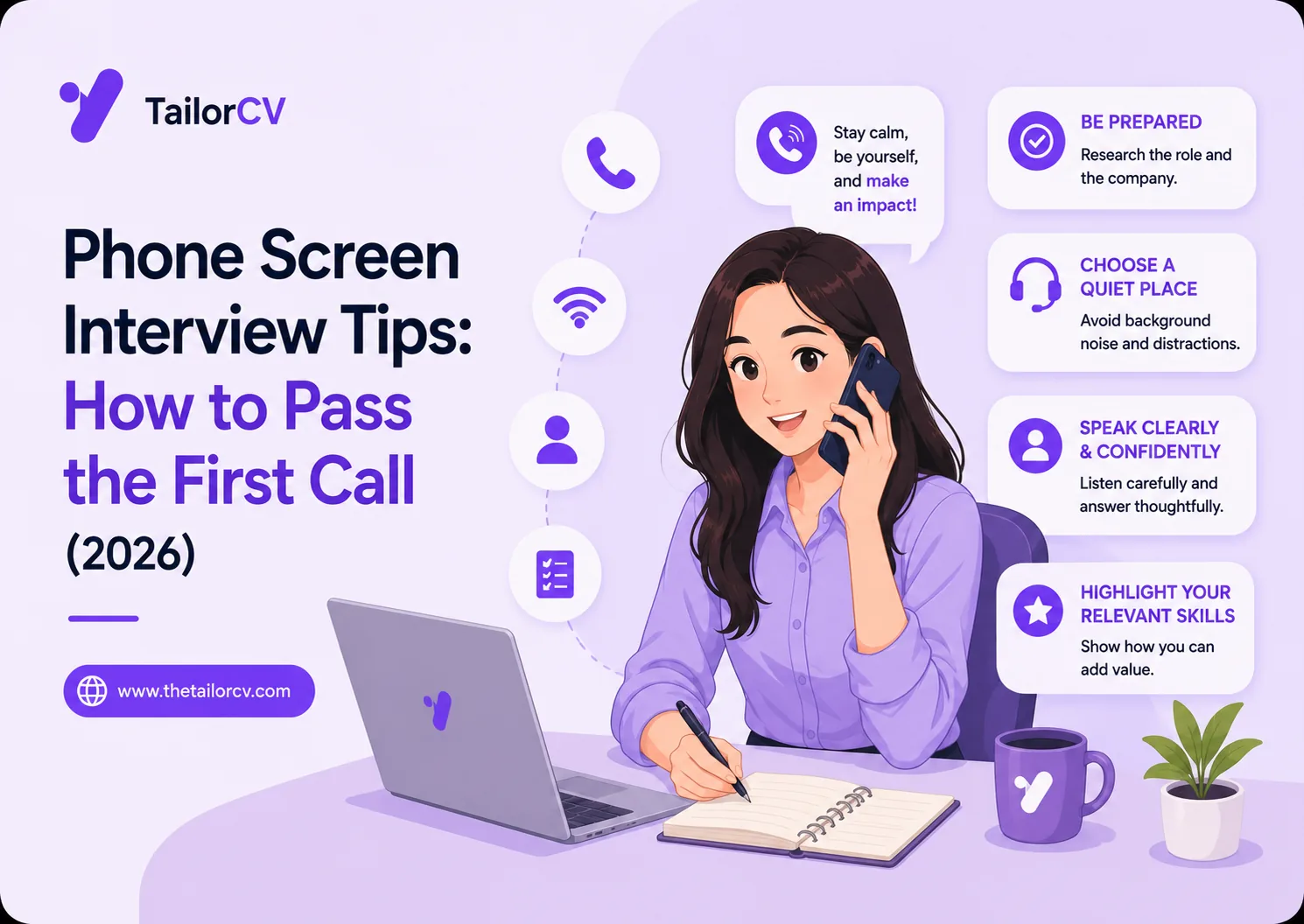
- The phone interview serves as a preliminary filter to verify qualifications, assess interest, and discuss logistics before advancing to deeper interview rounds.
- Prepare by researching the company, reviewing the job description, and formulating answers to common questions, especially "Tell me about yourself."
- Set up a quiet environment, ensure a stable phone connection, and have all relevant materials readily available during the call.
- Speak clearly and with energy, maintain good posture, and keep answers concise to fit the short time frame of the phone screen.
- When discussing salary, either defer the question for more information or provide a researched range while remaining flexible.
The phone interview (or "phone screen") is usually the first live conversation in a hiring process. It is typically conducted by a recruiter or HR professional, lasts 15-30 minutes, and serves as a filter - determining whether you advance to the more in-depth interview rounds. Many qualified candidates get eliminated here simply because they treat it casually.
This guide covers how to prepare for and ace the phone interview.
Before the phone screen, make sure your resume got you here for the right reasons - run it through the TailorCV ATS score checker. Prepare your answers with the behavioral interview guide and the tell me about yourself guide.
What Is the Purpose of a Phone Interview?
The phone screen typically aims to:
- Verify your basic qualifications and interest
- Confirm logistics (location, availability, work authorization, notice period)
- Discuss salary expectations
- Assess communication and professionalism
- Gauge genuine interest in the role and company
- Decide whether to advance you to the next round
It is a filter, not a deep evaluation. Your goal is simply to advance to the next round.
How to Prepare for a Phone Interview
See it in action: a resume-based mock interview
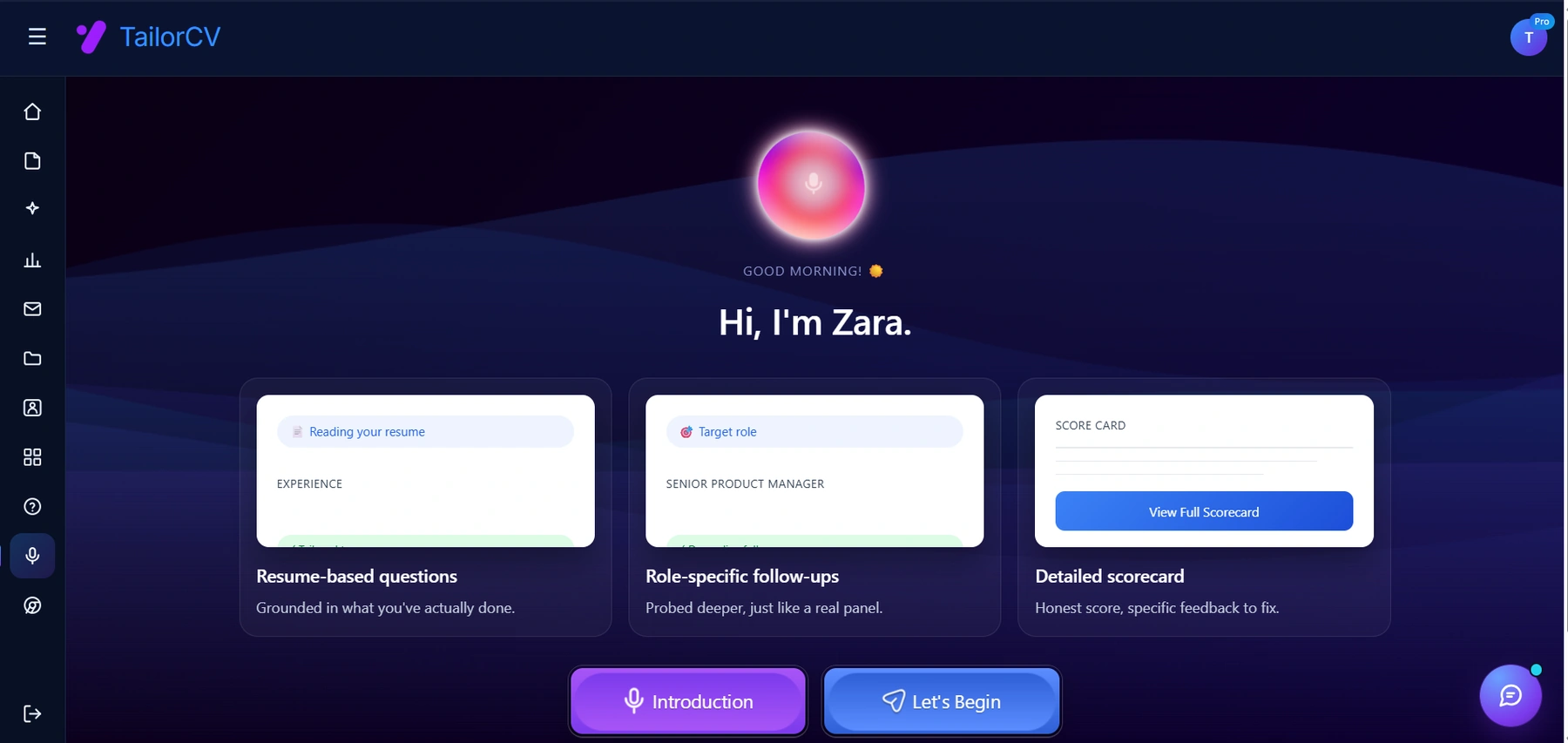
Practising out loud is the part most people skip. Here the session is built from your own resume and target role, and ends with a scorecard naming what to fix.
Before the Call
- Research the company (read the company research guide)
- Re-read the job description and your own resume
- Prepare your "Tell me about yourself" answer
- Research salary range for the role and decide your number
- Prepare 2-3 questions to ask
- Have your resume, the job description, and notes in front of you (a key advantage of phone interviews)
Logistics Setup
- Find a quiet location with no background noise
- Ensure strong phone signal or a stable connection
- Use headphones/earbuds for better audio and to free your hands
- Have water nearby
- Charge your phone
- Be ready 5 minutes early
Common Phone Interview Questions
Background and Fit
- "Tell me about yourself."
- "Why are you interested in this role?"
- "Why are you looking to leave your current position?"
- "What do you know about our company?"
Logistics
- "What is your availability / notice period?"
- "Are you authorized to work in [location]?"
- "Are you open to [on-site / hybrid / remote] work?"
- "What are your salary expectations?"
Experience
- "Walk me through your experience with [key skill]."
- "Tell me about a recent project you worked on."
- "What are you looking for in your next role?"
How to Answer the Salary Question on a Phone Screen
Recruiters often ask about salary early. You can:
Defer (if you want more information first): "I'd love to learn more about the role before discussing compensation. Could you share the budgeted range for this position?"
Give a researched range (if pressed): "Based on my research and experience, I'm targeting the $X to $Y range, but I'm flexible depending on the full package."
Read the salary negotiation guide for full strategy.
Phone Interview Best Practices
Use a Strong, Clear Voice
Without visual cues, your voice carries everything. Speak clearly, with energy and warmth. Smile while you talk - it genuinely changes your tone for the better.
Stand Up or Sit Upright
Your posture affects your voice and energy. Standing up can make you sound more confident and engaged.
Listen and Don't Interrupt
Phone audio has slight delays. Let the interviewer finish before responding to avoid talking over them.
Keep Answers Concise
Phone screens are short. Keep answers focused - 60-90 seconds for most questions. Rambling is the most common phone screen mistake.
Use Your Notes Advantage
Unlike in-person interviews, you can have notes in front of you. Keep your resume, key talking points, company facts, and questions visible. Do not read robotically, but use them as prompts.
Show Enthusiasm
Recruiters screen out candidates who seem disinterested. Convey genuine enthusiasm for the role and company.
How to Close a Phone Interview
At the end:
- Ask your prepared questions
- Express genuine interest: "This sounds like a great fit, and I'm very interested in moving forward."
- Ask about next steps: "What are the next steps in the process?"
- Thank the interviewer
Send a brief thank-you email within 24 hours - read the how to follow up after interview guide.
Common Phone Interview Mistakes
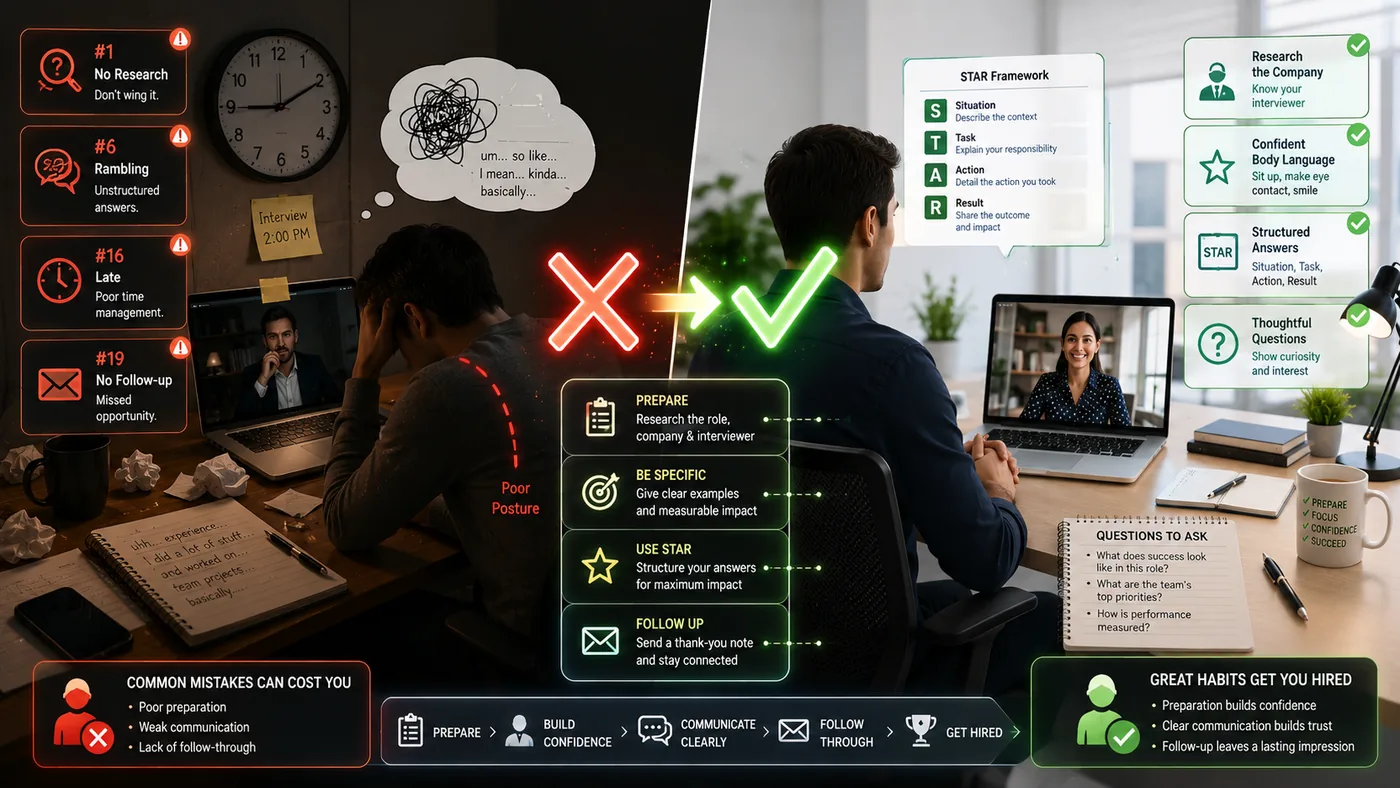
Mistake 1: Treating it casually
It is a filter. Prepare as seriously as you would for any interview.
Mistake 2: Bad environment
Background noise, poor signal, or distractions create a terrible impression. Set up properly.
Mistake 3: Rambling
Without visual feedback, it is easy to talk too long. Keep answers concise.
Mistake 4: Low energy
Phone audio flattens enthusiasm. Compensate with extra energy and a warm tone.
Mistake 5: No questions
Always have 2-3 questions ready. "No questions" signals disinterest.
Related Guides
- How to Prepare for a Job Interview
- Behavioral Interview Questions and Answers
- Coding Interview Preparation Guide
- 20 Common Interview Mistakes to Avoid
- Final Round Interview Tips
- How to Answer "Tell Me About Yourself"
- How to Research a Company Before Your Job Interview
- Best Questions to Ask in a Job Interview
- System Design Interview Guide
- Virtual Interview Tips
- Group Discussion Tips
- How to Follow Up After a Job Interview
- How to Prepare for Campus Placement in 2026 - Complete Guide
- Technical Interview Preparation Guide 2026 - Complete Roadmap
- Why Am I Not Getting Interviews for Jobs I'm Qualified For?
Make This Practical
Use this advice as interview practice, not just reading material. Start a role-specific session with the AI mock interview tool, prepare your opening with How to Answer Tell Me About Yourself, and structure evidence-heavy answers with the STAR Method Interview Answers Guide.
Before the interview, make sure the resume that earned the call is still aligned with the role. Check it with the free ATS score checker, review Common Interview Mistakes to Avoid, and use How to Follow Up After an Interview once the conversation is over.
Conclusion
The phone interview is your gateway to the rest of the process. Prepare seriously, set up a quiet environment, use your notes advantage, keep answers concise, and convey genuine enthusiasm. Your goal is simply to advance to the next round.
Prepare your answers with the behavioral interview guide and tell me about yourself guide. Make sure your resume is strong with the TailorCV ATS score checker, and prepare for video rounds with the virtual interview tips.
Frequently Asked Questions
What should I research before my phone interview?
Before your phone interview, it's crucial to research the company thoroughly. Familiarize yourself with its mission, values, and recent news, as this will help you answer questions more effectively and demonstrate your genuine interest. Refer to our company research guide for tips on what to look for and how to leverage this information during your conversation.
How can I prepare for common phone interview questions?
To prepare for common phone interview questions, you should practice your responses using the behavioral interview guide and the "Tell Me About Yourself" framework. These resources will help you structure your answers and present your experiences clearly and confidently, which is vital for making a strong impression in the initial screening.
What are some mistakes to avoid during a phone interview?
Many candidates make common mistakes during phone interviews that can jeopardize their chances of advancing. Some pitfalls include being unprepared, speaking too casually, or not being able to articulate their qualifications. To learn about other prevalent mistakes, check out our article on 20 Common Interview Mistakes to Avoid in 2026.
How can I ensure good communication during the call?
Effective communication during a phone interview is essential. Ensure you speak clearly, listen actively, and avoid interrupting the interviewer. Additionally, pay attention to your tone and pace, as these non-verbal cues can influence how your message is received. For more insights, explore our tips on interview body language and communication.
What should I do if I'm asked about salary expectations?
When asked about salary expectations during a phone interview, it's important to be prepared with a researched range based on industry standards and your experience level. This shows that you are informed and serious about the position. If you're unsure how to approach this topic, consider reviewing our Final Round Interview Tips 2026 for guidance on discussing compensation effectively.
Was this guide useful?
Be the first to rate it.