 SS
SS
Key Takeaways
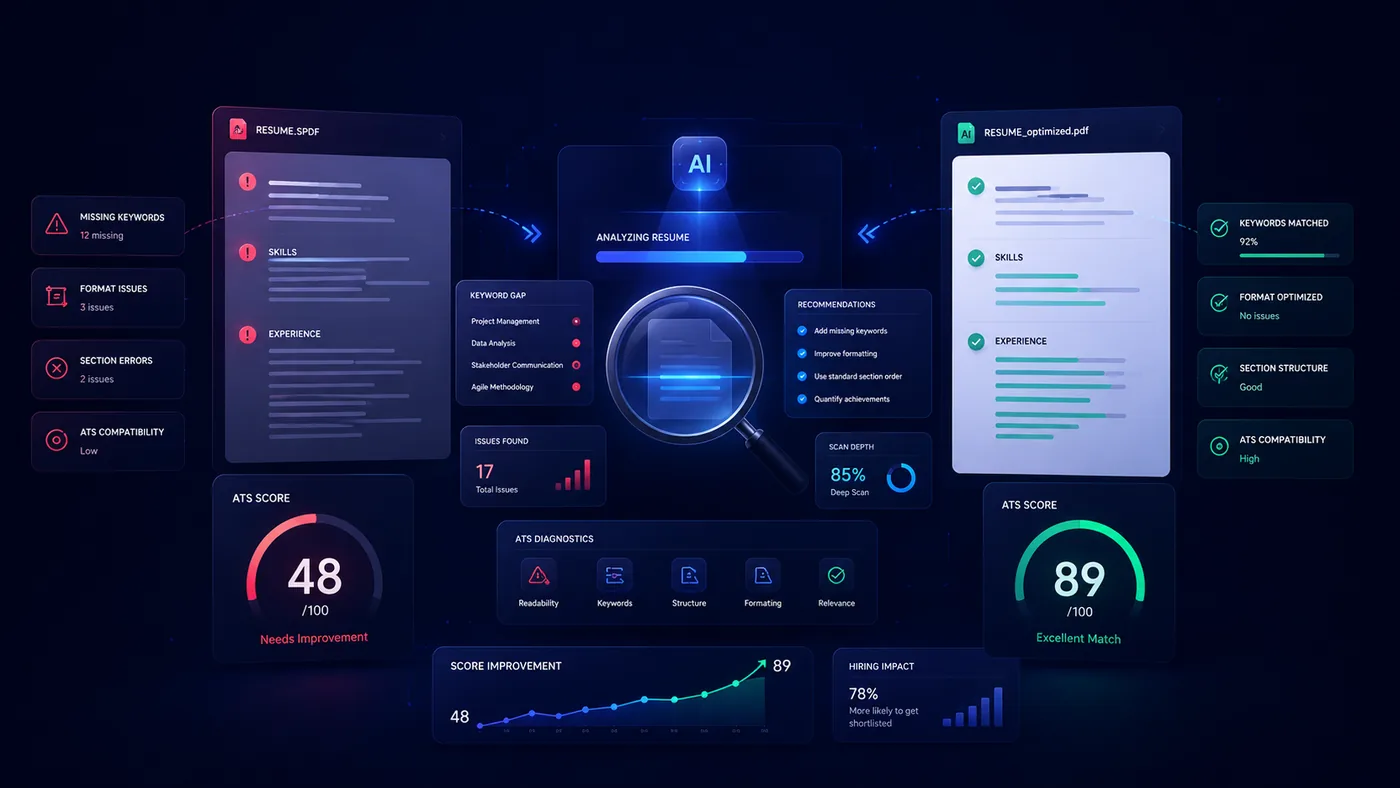
- A low ATS score is often due to missing keywords from the job description, which can be fixed by incorporating relevant terms throughout your resume.
- Using complex templates or image-based PDFs can hinder ATS parsing; opt for a clean, single-column, text-based format instead.
- Tailor each resume to specific job postings and use standard section headings to improve ATS readability.
- Include measurable achievements and a dedicated skills section to enhance your resume's effectiveness in ATS evaluations.
You checked your resume and the ATS score came back low. The good news: a low score is almost always caused by a short list of fixable problems - not by your qualifications. This guide walks through the 12 most common reasons your ATS score is low and how to fix each one.
Re-check your progress anytime with the free ATS score checker.
1. Your Resume Is Missing Keywords
This is the number one cause of a low score. ATS software matches your resume against the keywords in the job description. If you do not use those exact terms, you lose points.
Fix: Read the job posting and add the relevant skills, tools, and phrases naturally throughout your resume. See the resume keywords guide.
2. You Used a Complex Template
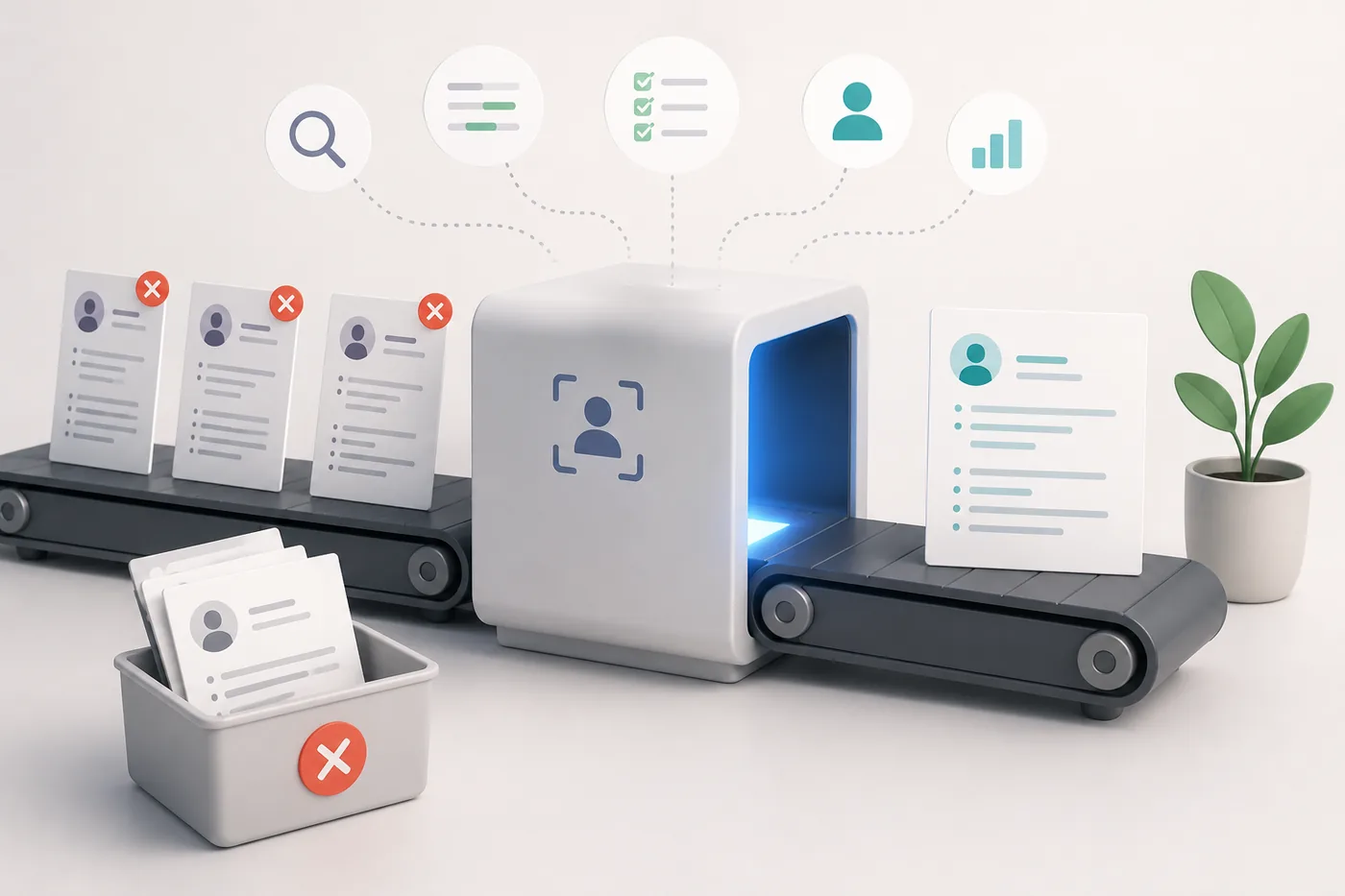
Tables, columns, text boxes, sidebars, and graphics often break ATS parsing. The software cannot read the content, so it scores you low.
Fix: Switch to a clean, single-column ATS-friendly template.
3. Your Resume Is an Image-Based PDF
If you exported your resume as an image or scanned it, the ATS sees a picture with no readable text.
Fix: Always export as a text-based PDF or DOCX from your editor.
4. You Are Using a Generic Resume
Sending the same resume to every job means it is not tailored to any of them, so the keyword match stays low.
Fix: Tailor each resume to the specific posting. Learn how in how to tailor your resume for every job.
5. Non-Standard Section Headings
Creative headings like "Where I've Made an Impact" confuse the parser, which is looking for standard sections.
Fix: Use standard headings: Summary, Skills, Experience, Education, certifications.
6. Critical Info Is in the Header or Footer
Many ATS systems ignore content placed in the document header or footer, so your contact details or title may be lost.
Fix: Put all important information in the main body of the document.
7. Your Job Titles Don't Match
If your title is very different from the target role, the ATS may rank you lower on title relevance.
Fix: Where accurate, align your titles with industry-standard language (for example, "Software Developer" instead of an internal label).
8. No Measurable Achievements
bullet points without numbers read as weak and generic.
Fix: Add metrics - percentages, dollars, time saved, scale. See how to quantify resume achievements.
9. Missing a Dedicated Skills Section
Without a clear skills section, the ATS struggles to confirm you have the required competencies.
Fix: Add a skills section listing technical skills, tools, and soft skills that appear in the posting.
10. Keyword Stuffing
The opposite problem - cramming in keywords unnaturally - can be flagged and also hurts readability for human reviewers.
Fix: Use keywords in context, within real sentences and accomplishments.
11. Spelling Variations and Acronyms
If the posting says "Search Engine Optimization" and you only write "SEO" (or vice versa), you can miss a match.
Fix: Include both the full term and the acronym: "Search Engine Optimization (SEO)."
12. Wrong File or Corrupted Export
Unusual file types, special characters, or broken exports can lower parseability.
Fix: Stick to standard PDF or DOCX and avoid special symbols in headings.
How to Diagnose Your Low Score Fast
| Symptom | Likely Cause | Quick Fix |
|---|---|---|
| Very low keyword match | Generic resume | Tailor to the job |
| Sections missing in report | Complex formatting | Use single-column template |
| Score won't read at all | Image-based PDF | Re-export as text PDF |
| Weak experience score | No metrics | Add quantified results |
Run the ATS score checker, apply the fixes above, and re-scan. Most people gain 15-30 points in one editing session.
Common Mistakes to Avoid When Optimizing for ATS
When working to improve your ATS score, it's essential to avoid common pitfalls that can undermine your efforts. Here’s a list of mistakes to steer clear of:
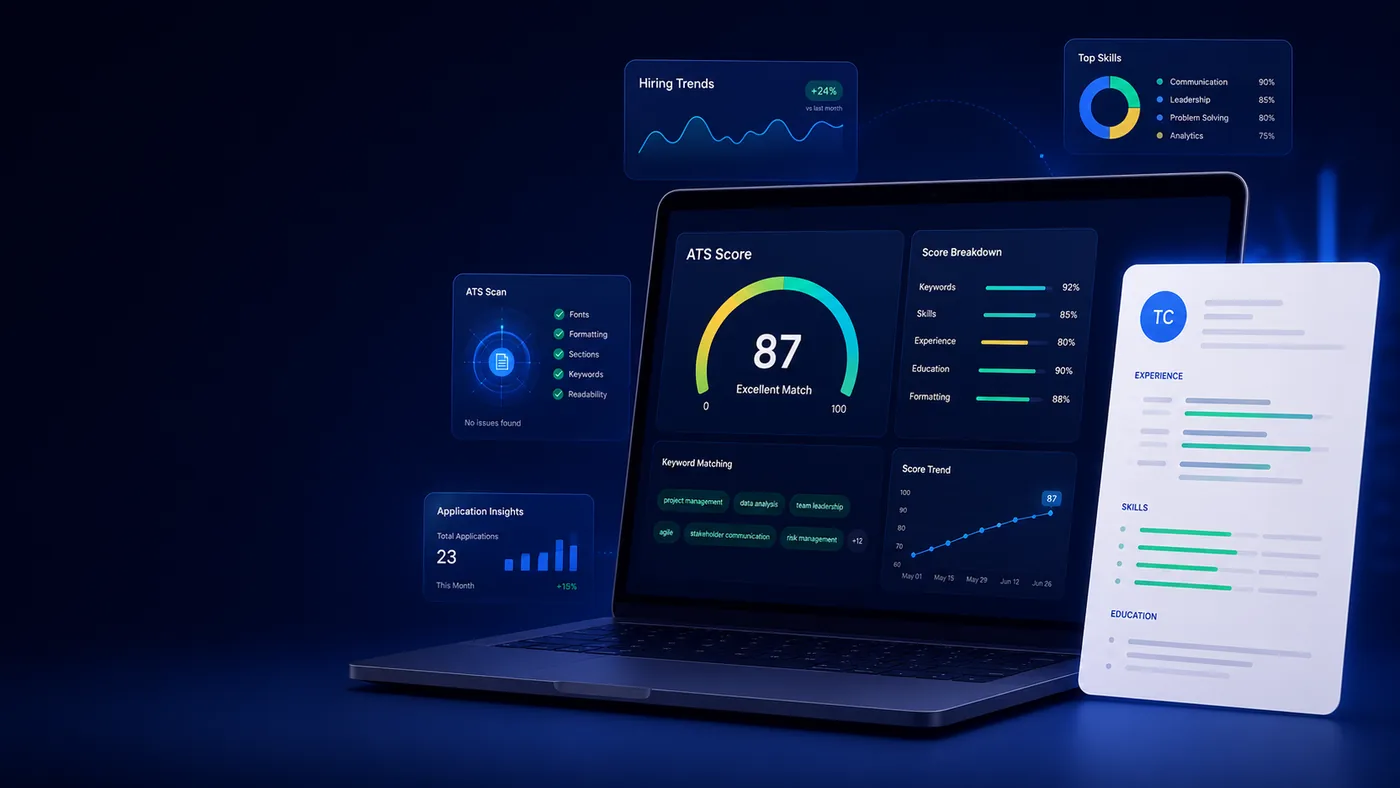
What an ATS score report actually shows you

The score itself matters less than the breakdown beside it: each check names what passed, what failed, and why it matters - which is the list you actually work through.
-
Overusing Jargon: While industry-specific terms can be beneficial, excessive jargon may confuse ATS algorithms. Use clear language that's easily understood, focusing on keywords that are relevant to the job description.
-
Ignoring Job Descriptions: Tailoring your resume to the specific job description is crucial. Failing to do so can lead to a mismatch in keywords and phrases. Always align your resume with the job you're applying for—Why Your Resume Doesn't Match the Job Description explains this in detail.
-
Neglecting Formatting: ATS systems can struggle with unconventional formatting. Avoid using tables, text boxes, or unusual fonts. Stick to standard section headings and simple bullet points for clarity.
-
Forgetting to Update Your Resume: Regularly updating your resume with new skills and achievements is vital. An outdated resume may not reflect your current qualifications, leading to a lower score.
-
Not Using Synonyms: Different companies may use different terms for the same skills or experiences. If you’re applying for various roles, ensure you include synonyms of critical skills to capture a broader range of keyword variations.
Step-by-Step Guide to Tailoring Your Resume for ATS
Follow these steps to create a targeted resume that maximizes your ATS score:
-
Analyze the Job Description: - Highlight essential keywords and phrases related to skills, qualifications, and experiences. - Note any specific software or tools mentioned.
-
Match Your Resume Content: - Incorporate the identified keywords naturally into your resume. - Ensure your job titles and responsibilities align closely with the language of the job description.
-
Customize Your Skills Section: - Create a dedicated skills section that includes both hard and soft skills relevant to the job. - Use bullet points for easy readability.
-
Quantify Achievements: - Add numbers and metrics to demonstrate your accomplishments. For example, “Increased sales by 30% in Q2” is more impactful than “Responsible for increasing sales.”
-
Run Your Resume Through an ATS Checker: - Use tools like the ATS Resume Checker to assess your resume's compatibility. - Make adjustments based on the feedback provided.
Mini Checklist for ATS Optimization
Use this quick checklist to ensure your resume is ATS-friendly:
- unchecked: Is my resume tailored to the specific job description?
- unchecked: Have I included relevant keywords from the job listing?
- unchecked: Are my section headings standard (e.g., Experience, Education, Skills)?
- unchecked: Is my resume saved as a .docx or .pdf file (not image-based)?
- unchecked: Do I have measurable achievements listed in my experience section?
- unchecked: Is my skills section comprehensive and relevant?
- unchecked: Have I avoided complex formatting or unconventional fonts?
- unchecked: Did I proofread for spelling and grammatical errors?
Worked Example: From Low to High ATS Score
Consider a scenario where a candidate named Alex applies for a marketing manager position. Initially, Alex’s resume scores low due to generic content and formatting issues. Here’s how Alex improves the score:
-
Original Score: 55/100 - Issues: Generic job titles, no measurable achievements, and missing keywords.
-
Steps Taken: - Analyzed the job description for keywords like “digital marketing,” “SEO,” and “content strategy.” - Updated the job title from “Marketing Professional” to “Digital Marketing Manager.” - Added measurable achievements, such as “Increased website traffic by 40% through targeted SEO campaigns.” - Reformatted the resume to use standard headings and bullet points.
-
Final Score: 92/100 - Result: Alex receives interview invitations, showcasing the importance of tailoring and optimizing for ATS.
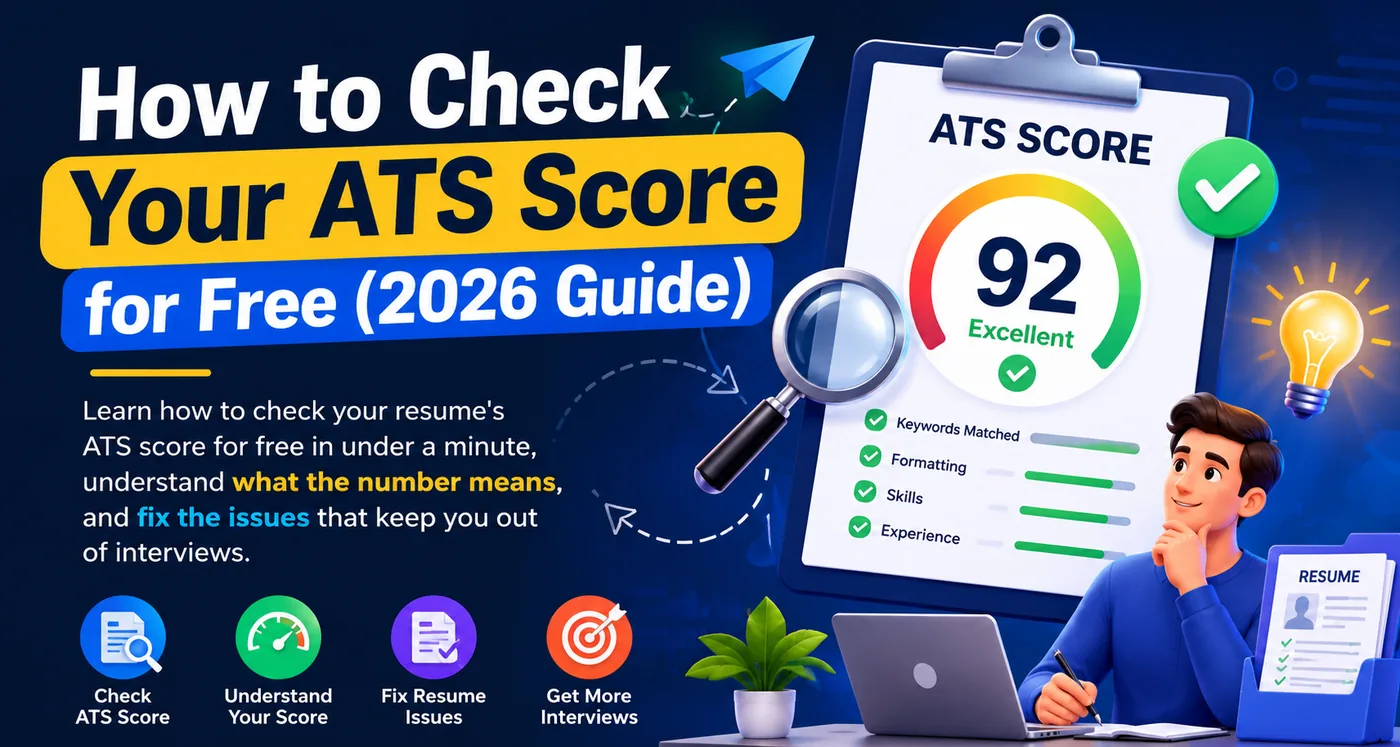
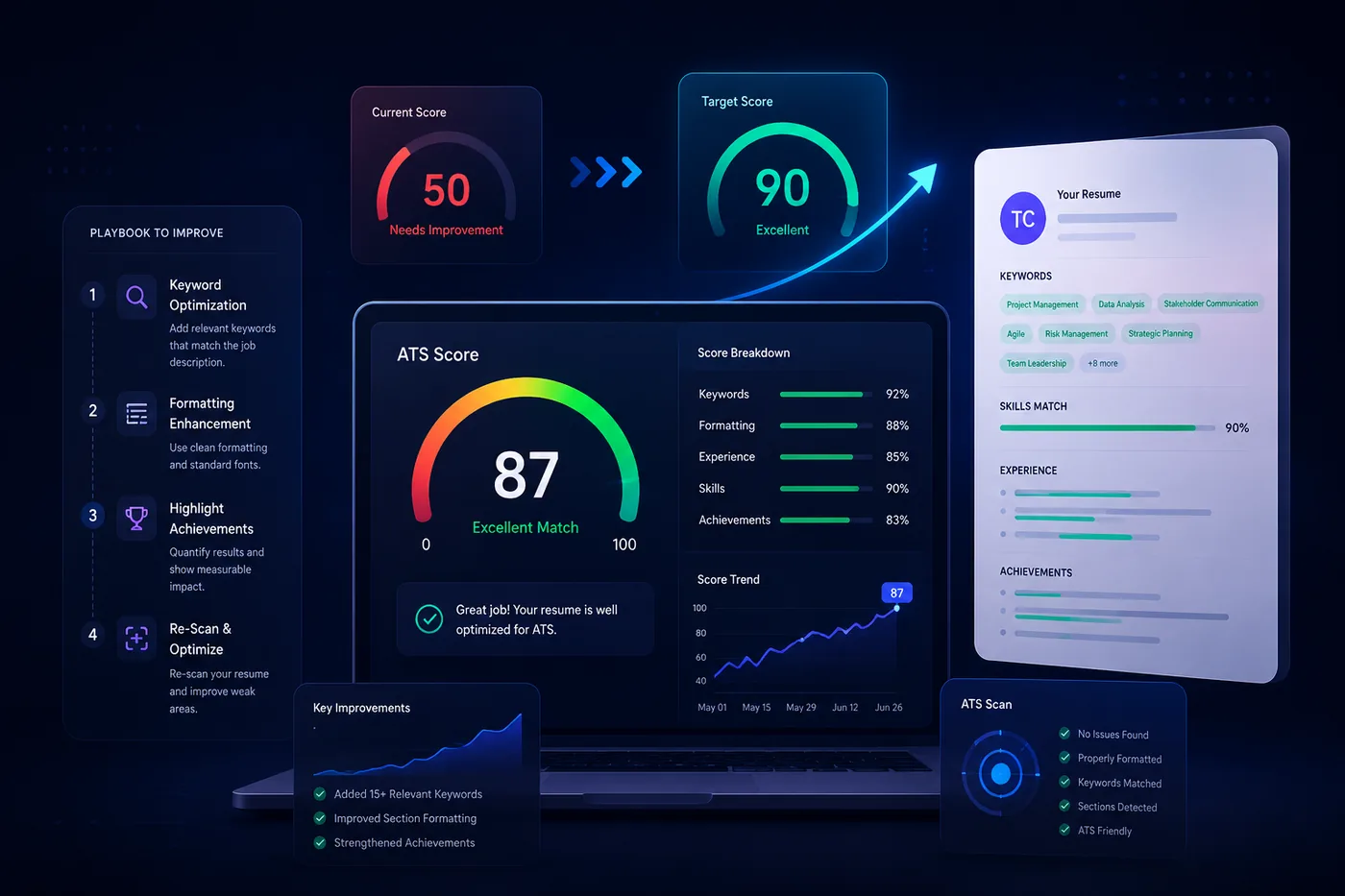
By applying these practical strategies, you can significantly enhance your ATS score and increase your chances of landing interviews. For further guidance, check out How to Increase Your ATS Score From 50 to 90 and How to Check Your ATS Score for Free.
To fix a low score without over-editing, turning a scan result into three concrete edits gives a 20-minute routine.
Frequently Asked Questions
What is considered a low ATS score?
Anything below 60 is at high risk of being filtered out. Aim for 80+. See what is a good ATS score.
Can a qualified candidate still get a low score?
Yes. Qualified people get low scores all the time because of formatting and missing keywords - not lack of ability. That is exactly why optimizing matters.
How quickly can I raise my score?
Often within an hour. Fixing formatting and adding the right keywords usually produces the biggest jump. You can check your score using our free ATS score checker.
Related Guides
- How to Increase Your ATS Score
- How to Check Your ATS Score for Free
- What Is a Good ATS Score?
- How to Make Your Resume ATS-Friendly
- ATS Score Guide for 2026
- ATS Resume Checker - How It Works and How to Pass (2026)
- ATS Score vs Resume Score - What's the Difference? (2026)
- Does My Resume Pass ATS? A 12-Point Checklist (2026)
- Free ATS Resume Scan - Test Your Resume in 60 Seconds (2026)
- ATS Keywords - How to Find and Add Them to Boost Your Score (2026)
- What is an ATS Score and Why Does It Decide Your Job Application Before Any Human Reads It
- Why Your Resume Never Gets a Response - 12 Hidden ATS Mistakes Killing Your Job Search in 2026
- Resume to Job Description Match Percentage - What Score Do You Need in 2026?
Make This Practical
Do not guess whether the resume is ready. Upload it to the free ATS score checker, compare the result with the ATS Score Guide, and fix formatting issues using ATS Resume Formatting Mistakes and ATS Resume Parser Friendly Format.
After the technical cleanup, improve relevance. Use Resume Matching With Job Description, strengthen keyword coverage with the Resume Keywords Guide, and avoid overdoing it by checking ATS Keyword Mistakes. If the layout itself is weak, rebuild with an ATS-friendly resume template.
Conclusion
A low ATS score is rarely about your qualifications - it is about how your resume is written and formatted. Work through the 12 fixes above, re-scan, and watch your score climb into the competitive range.
Find out why your score is low
Scan your resume against the job description and see exactly which checks fail.
Drop your resume here or choose a file
PDF only. Max 2 MB.
We never share your data or use it to train AI models.
Templates that keep this structure intact
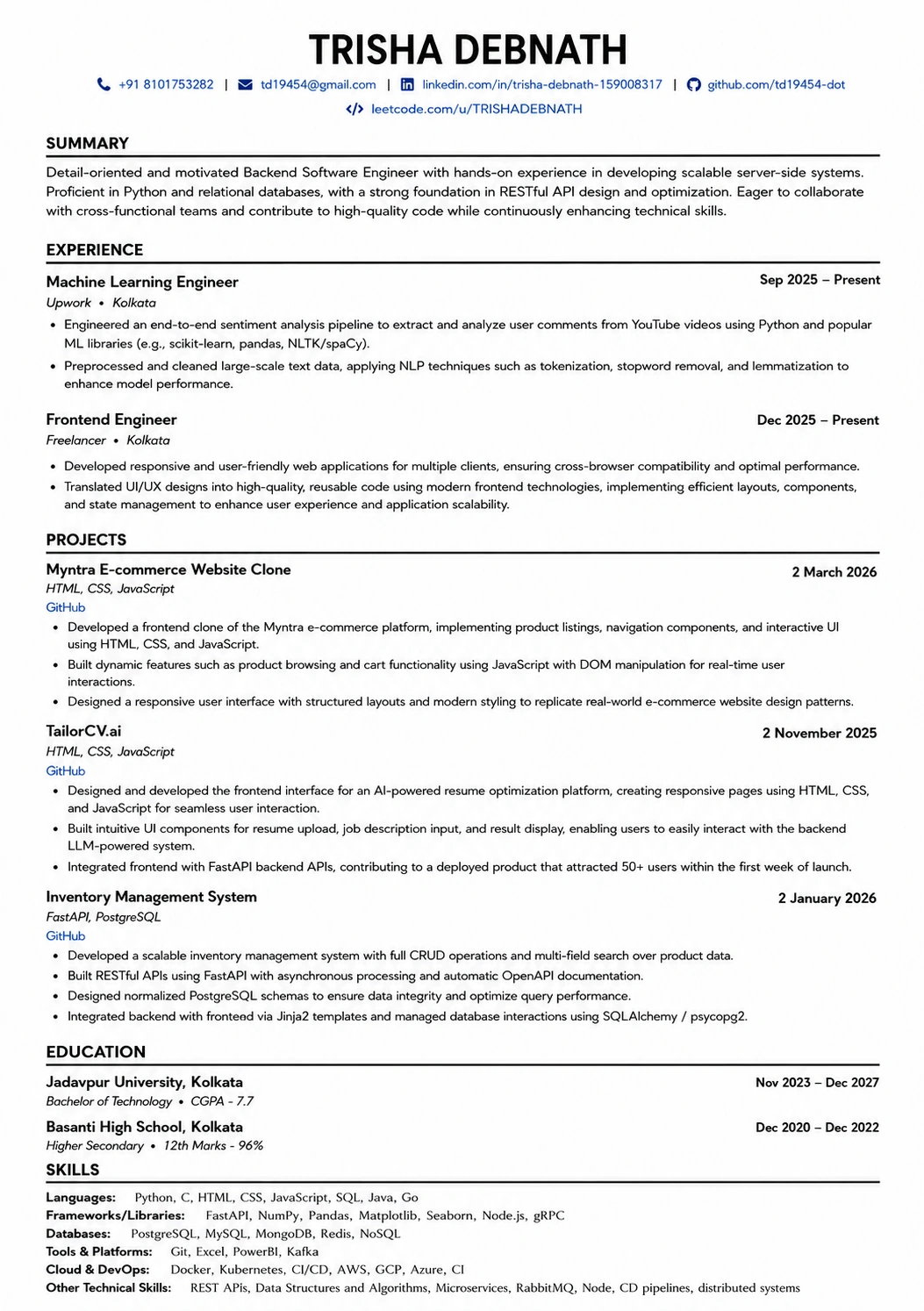
This template is ATS-tested — start from it and the formatting rules in this guide are already handled.
Was this guide useful?
Be the first to rate it.