 TD
TD
Key Takeaways
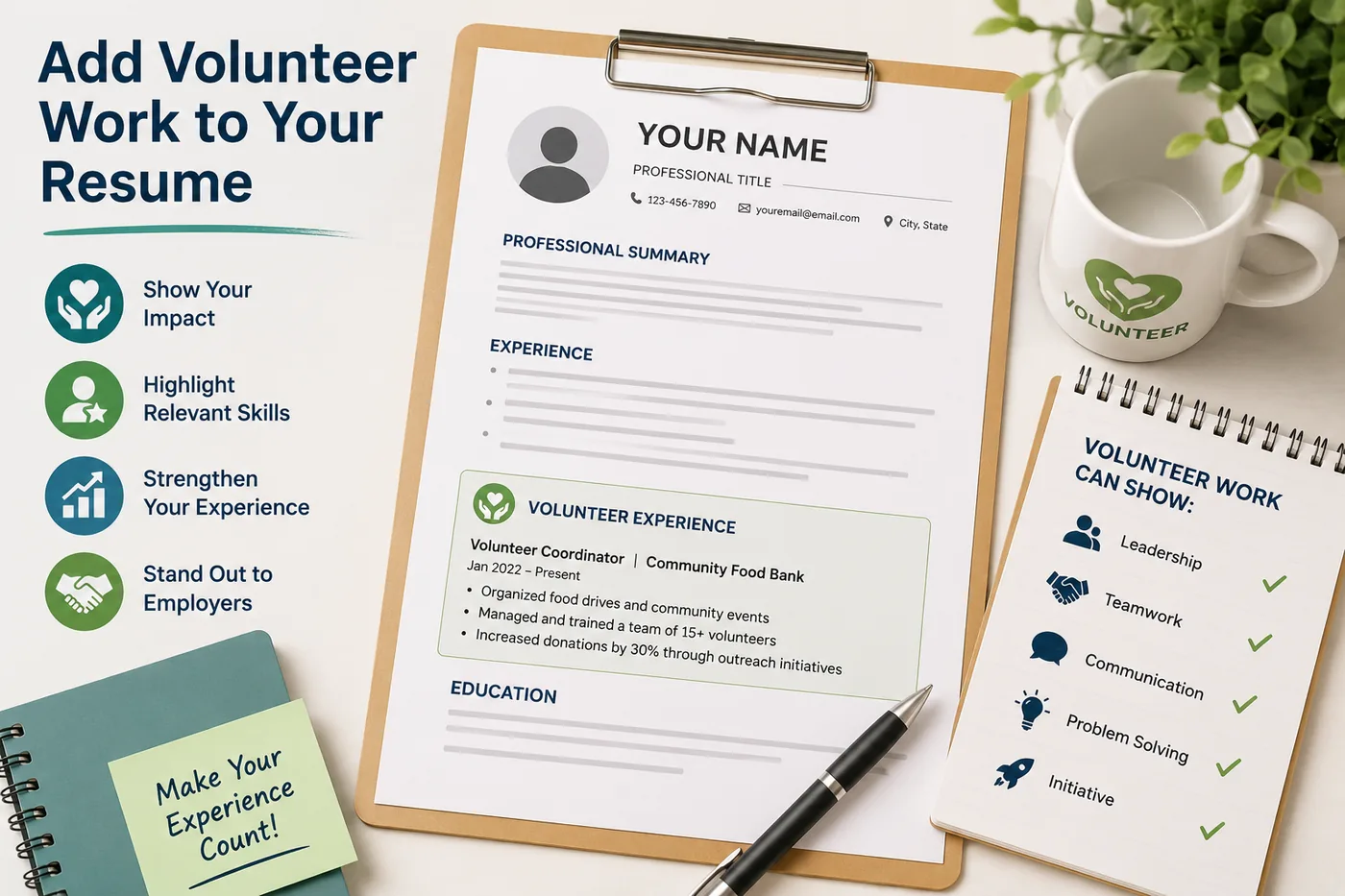
- Volunteer experience can showcase transferable skills, fill employment gaps, and reflect strong character traits to employers.
- Fresh graduates and career changers can leverage volunteer work to gain relevant experience and credentials in their target fields.
- Experienced professionals can enhance their resumes by including leadership roles in volunteer positions, demonstrating community involvement.
- Volunteer work should be integrated with paid experience if it involves significant responsibilities and is relevant to the desired role.
- Alternatively, a separate "Volunteer Experience" section can be created if there is substantial volunteer history alongside solid paid work experience.
Volunteer experience is one of the most underused assets on a resume. Many candidates either omit it entirely or bury it at the bottom of the page where no one sees it. Done right, volunteer work demonstrates skills, fills gaps, shows character, and - for freshers and career changers - can directly substitute for paid experience.
This guide tells you exactly when to include volunteer work, where to put it, and how to write it so it adds real value.
Start building your resume on an ATS-friendly template and verify your score with the TailorCV ATS checker.
Why Volunteer Experience Matters to Employers
Employers care about volunteer experience for three reasons:
-
It demonstrates skills: Volunteer work often requires real professional skills - leadership, project management, communication, technical work - that are directly transferable.
-
It fills gaps: Volunteer work during employment gaps (caregiving periods, between jobs, during school) shows you stayed productive and engaged.
-
It signals character: Choosing to contribute time and skills to a cause signals values alignment, community orientation, and work ethic.
When Volunteer Work Is Especially Valuable
Fresh Graduates and Candidates With No Work Experience
If you have limited paid experience, volunteer work can provide the experience section you would otherwise be missing. A student who volunteered as a web developer for a nonprofit organization has genuine, demonstrable technical experience.
Read resume with no experience and internship resume guide for related guidance.
Career Changers
If you are transitioning to a new field and lack formal paid experience in it, volunteer work in the target field is the fastest way to build legitimate credentials. A finance professional transitioning to UX design who volunteers for a nonprofit redesigning their website has real UX project experience to reference.
Read career change resume guide.
Anyone With Employment Gaps
A gap in your paid employment timeline is less concerning when volunteer work fills it and shows continued professional engagement.
Read how to explain resume gaps.
Experienced Professionals
For senior professionals, volunteer work adds a dimension of leadership and community involvement - board service, nonprofit advisory roles, mentoring programs, and professional association leadership all signal credibility beyond the day job.
Where to Put Volunteer Work on Your Resume
Option 1: Integrate with Work Experience (For High-Value Volunteer Roles)
If your volunteer work involved professional-level responsibilities and is directly relevant to the target role, treat it the same as paid work in your experience section. List it in reverse chronological order with other roles.
Format it exactly like a paid position:
Volunteer Web Developer | Teach for America | Remote | Jun 2024 - Present - Redesigned the organization's main website using React and Tailwind CSS, improving mobile responsiveness and reducing page load time by 45% - Mentored 3 junior volunteers on front-end development practices
When to use this approach:
- Significant time commitment (6+ months)
- Real responsibilities and measurable outcomes
- Directly relevant to the target role
- Limited paid experience to fill the section
Option 2: A Dedicated Volunteer Experience Section
If you have paid work experience that carries the main section and also have notable volunteer work, add a separate "Volunteer Experience" section after your main Experience and education sections.
When to use this approach:
- You have solid paid work experience but meaningful volunteer history
- The volunteer work uses different skills than your paid work
- You have multiple volunteer roles worth mentioning
Option 3: Brief Mention in Education or Extracurricular Section
For students, volunteer work on campus or through student organizations can be listed under an "Activities & Leadership" or "Extracurricular" section alongside other campus involvement.
How to Write Volunteer Experience Bullets
Use exactly the same formula as paid work experience: action verb + what you did + quantified result.
Your resume after optimization
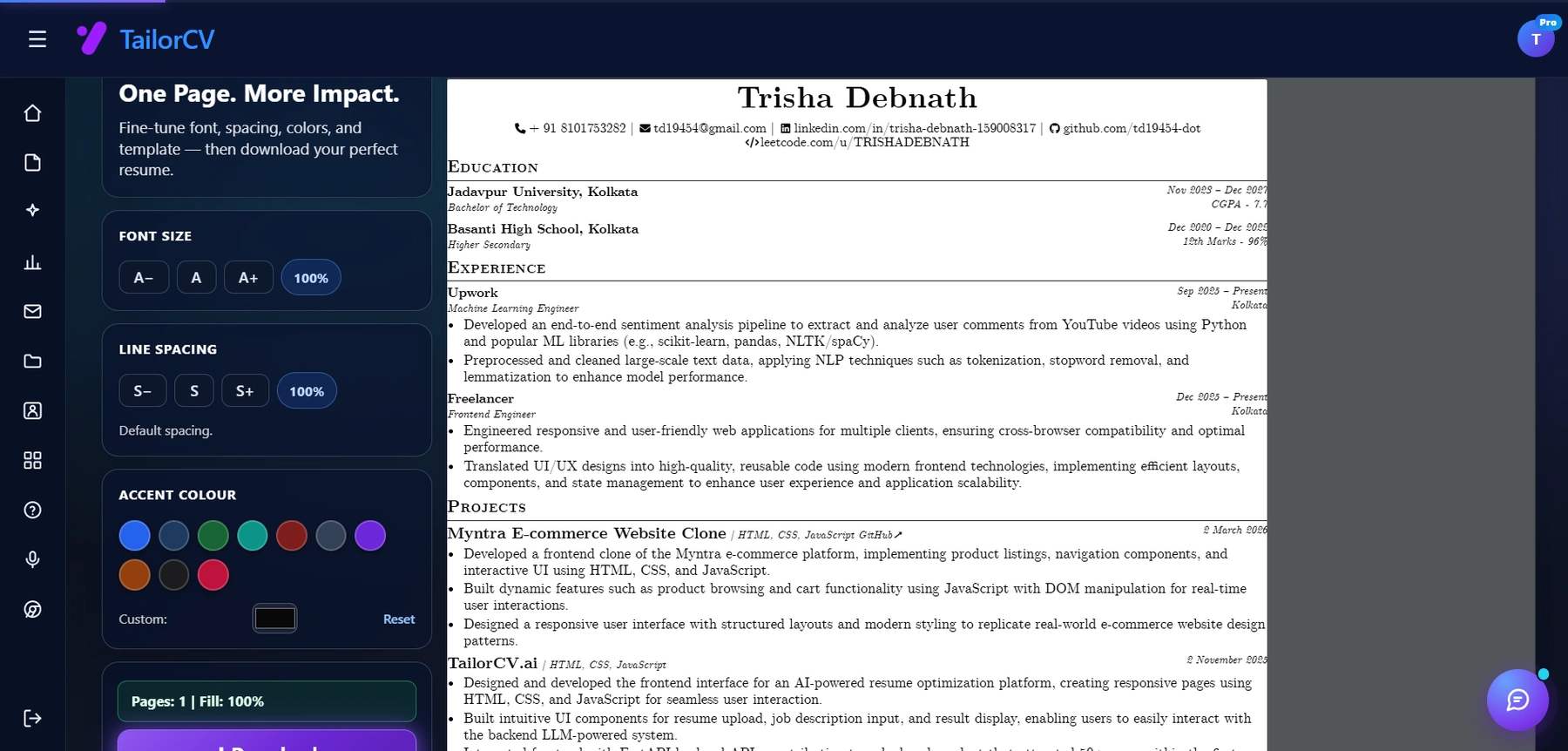
This is the resume after tailoring - the content is already matched, and these controls are how you fit it onto one page.
Volunteer experience does not get weaker treatment just because it was unpaid. Write it with the same achievement-oriented language.
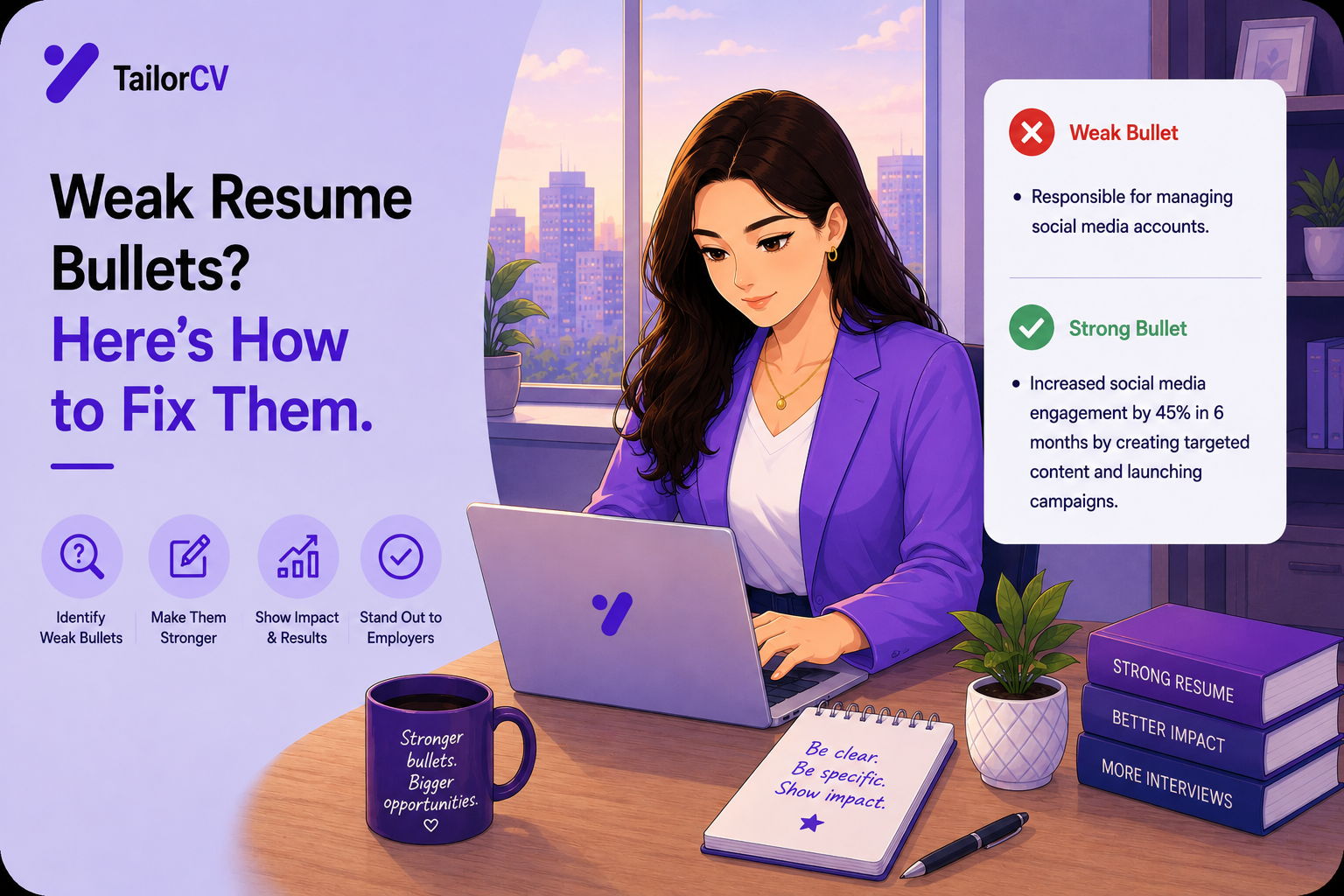
Weak:
"Helped at a local food bank"
Strong:
"Coordinated volunteer logistics for weekly food bank operations serving 300+ families, managing a rotating team of 25 volunteers and reducing setup time by 30%"
Weak:
"Volunteered as a tutor"
Strong:
"Tutored 8 high school students in SAT math for 6 months; 7 of 8 students improved scores by an average of 120 points"
Read how to write resume bullet points that get results for the full formula and examples.
What to Include for Each Volunteer Role
- Role title (create a descriptive title if the organization did not give you one: "Volunteer Web Developer," "Community Outreach Coordinator," "Pro Bono Marketing Consultant")
- Organization name
- Location (or "Remote")
- Dates (month and year start/end)
- 2-4 achievement-based bullets
Types of Volunteer Experience That Add Value
Technical Volunteering
- Web development for nonprofits
- Data analysis for NGOs
- IT support for community organizations
- App development for social causes
Leadership and Management
- Board member or trustee roles
- Committee chair or event organizer
- Team leader for volunteer programs
Teaching and Mentoring
- Tutoring programs
- Coding bootcamps for underprivileged youth
- Literacy and adult education programs
Healthcare and Social Work
- Hospital volunteering
- Hospice care
- Community health programs
Professional Association Involvement
- Chapter leadership roles
- Conference organizing
- Publication editing or review
What NOT to Include
- One-off participation (helped at a single event)
- Volunteer work that is 10+ years old and no longer relevant
- Work you cannot quantify or describe meaningfully
- Religious or political volunteering when applying to neutral corporate employers (can invite bias)
ATS Considerations for Volunteer Work
ATS systems read volunteer work sections the same as any other text. Use standard section names ("Volunteer Experience," "Community Involvement," "Leadership") and write achievement bullets with relevant keywords.
Include technical skills used in volunteer work in your skills section - ATS will match them to the job description. Test the full resume with the TailorCV ATS checker.
Related Guides
- Resume With No Experience Guide
- Internship Resume Guide
- How to Explain Resume Gaps
- Career Change Resume Guide
- How to Write Resume Bullet Points That Get Results
- How to Quantify Resume Achievements
- The Anatomy of a Perfect Resume
- Awards and Achievements on Resume
Make This Practical
Use this guide as part of a complete job-search workflow. Check your resume with the free ATS score checker, improve targeting with the Resume Optimization Guide, and choose a clean format from the ATS-friendly resume templates.
After the resume is ready, strengthen the rest of the application. Draft a targeted letter with the AI cover letter generator, practice interviews with the AI mock interview tool, and create a project-backed proof page with the portfolio website builder if you need a stronger online presence.
Conclusion
Volunteer work belongs on your resume whenever it demonstrates relevant skills, fills a gap, or adds credibility beyond your paid experience. Treat it exactly like paid work: title, organization, dates, and achievement-based bullets with quantified results.
For freshers and career changers, it may be the most important section on the document. Build your resume on an ATS-friendly template, run it through the TailorCV ATS checker, and prepare to discuss your volunteer experience in interviews using the mock interview tool.
Frequently Asked Questions
Why should I include volunteer work on my resume?
Including volunteer work on your resume can significantly enhance your profile, especially if you have limited paid experience. It demonstrates valuable skills such as leadership and project management, fills employment gaps, and showcases your character and values. For instance, a student who volunteered as a web developer for a nonprofit has relevant experience that can be highlighted in their resume.
How do I format the volunteer experience section on my resume?
When formatting the volunteer experience section, treat it similarly to your work experience section. Include the organization name, your role, the dates of your involvement, and a brief description of your responsibilities and achievements. Using strong action verbs can help convey your contributions effectively; for more guidance, check out our list of best action verbs for resume.
Can volunteer work substitute for paid work experience on my resume?
Yes, volunteer work can serve as a substitute for paid experience, especially for fresh graduates or career changers. Highlighting relevant volunteer roles can demonstrate your skills and commitment to prospective employers. You can also refer to our article on how to write a resume summary for tips on presenting your volunteer experience effectively.
What types of volunteer experiences should I include?
Include volunteer experiences that are relevant to the job you are applying for, particularly those that demonstrate transferable skills. For example, if you're applying for a project management position, include your role in organizing a community event. Ensure that the experiences you list are impactful and align with the skills outlined in the job description.
How can I make my volunteer experience stand out on my resume?
To make your volunteer experience stand out, quantify your achievements where possible and use specific examples of your contributions. Instead of simply stating your role, describe the impact you had, such as “increased community engagement by 30% through a targeted outreach campaign.” For more tips on resume formatting, consider reviewing our ideal resume length guide.
What is your resume scoring right now?
Scan it against a job description and get your ATS match score in about a minute.
Drop your resume here or choose a file
PDF only. Max 2 MB.
We never share your data or use it to train AI models.

Templates that keep this structure intact
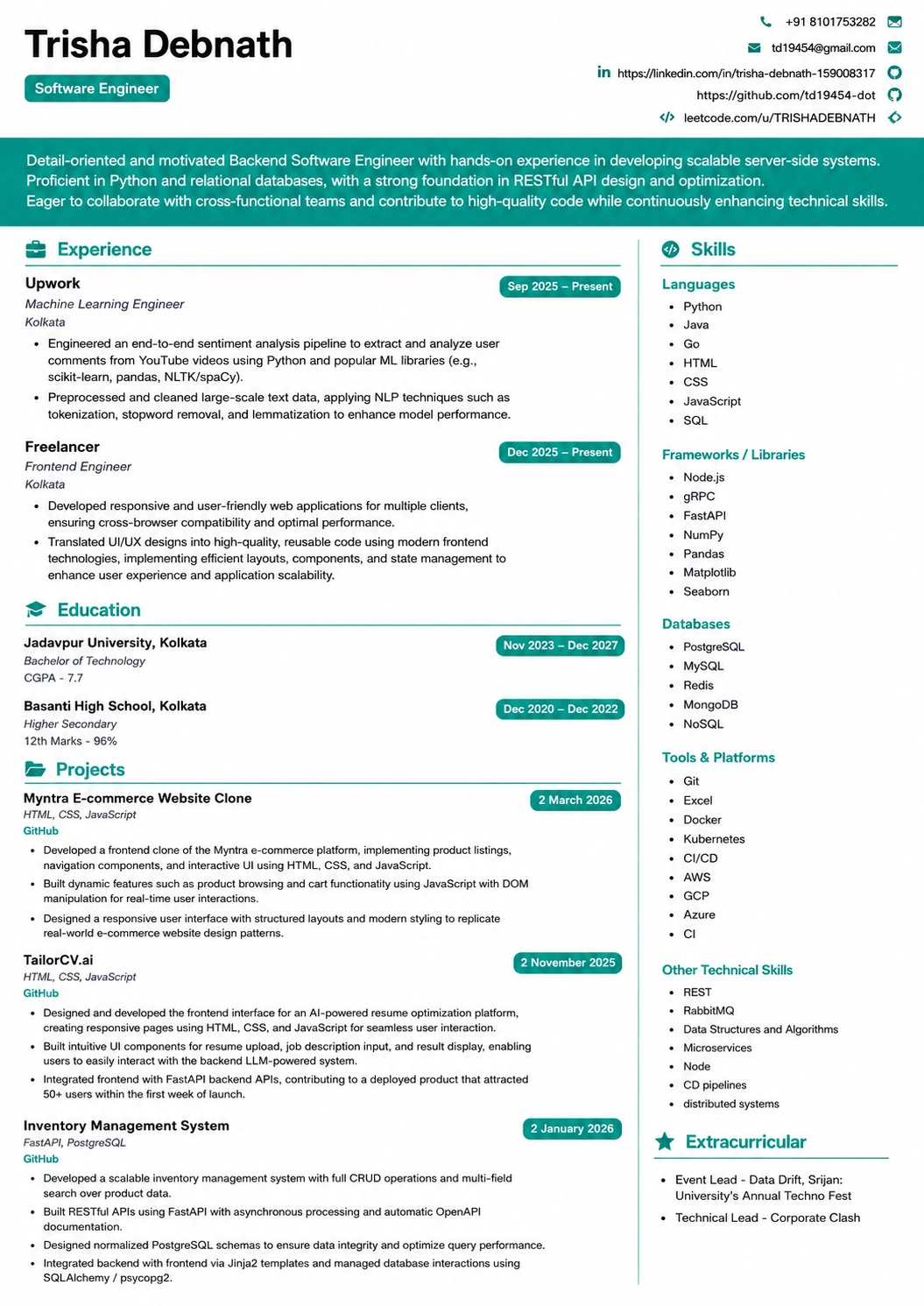
This template is ATS-tested — start from it and the formatting rules in this guide are already handled.
Was this guide useful?
Be the first to rate it.