 SS
SS
Key Takeaways
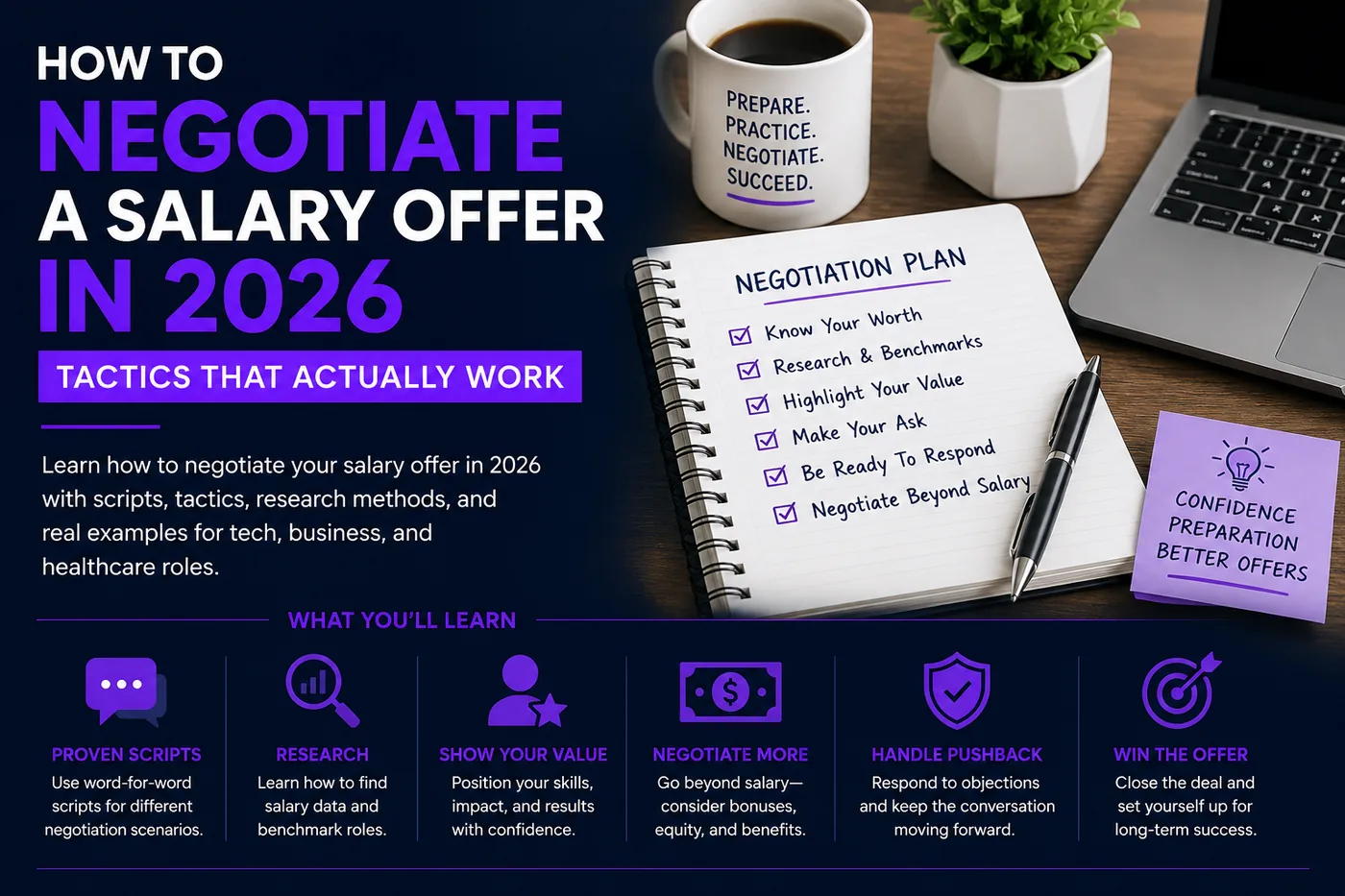
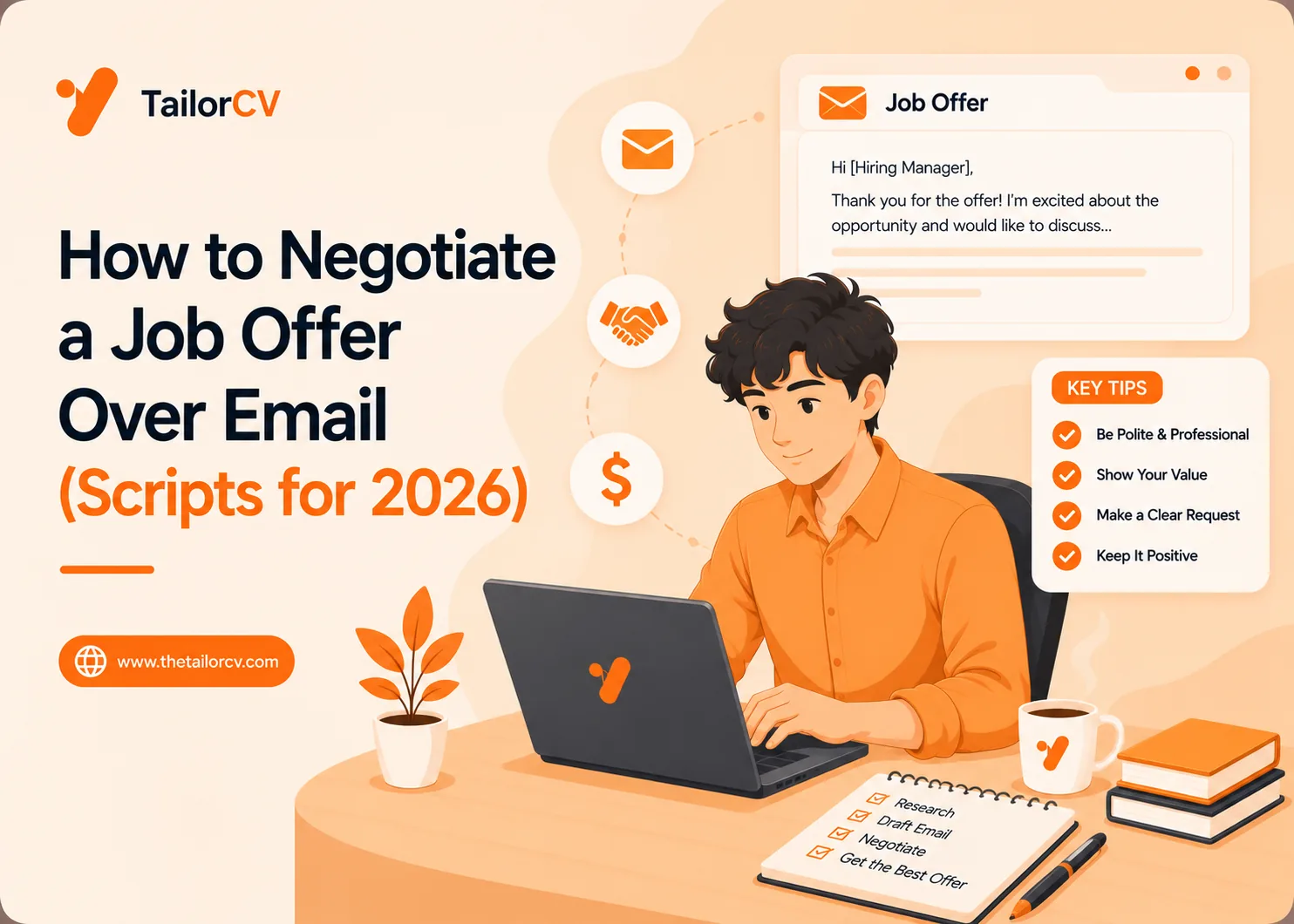
- Almost every offer has room; not asking leaves money on the table.
- Negotiate in writing when you want time to be precise and keep a record.
- Anchor to market data and your value, never to personal need.
- Stay warm and enthusiastic — you are joining these people next week.
You Can Almost Always Ask
Employers expect a counter and usually build in room for one. A polite, well-reasoned ask rarely costs you an offer that was genuinely coming — companies do not rescind over a respectful negotiation. The downside is small; the upside compounds over every future raise, which is calculated from your starting number.
Why Email Works
Email lets you choose your words carefully, cite numbers precisely, and avoid being pressured into an on-the-spot yes. It also creates a paper trail of what was agreed. If they call to negotiate live, it is fine to say, "I'd love to put my thoughts together and send them over this afternoon."
The Counteroffer Script
Hi [Name],
Thank you so much for the offer — I'm genuinely excited about joining [Company] and the [Role]. I've done some research on comparable roles, and based on the market and the experience I bring in [specific area], I was hoping we could get the base closer to [your number].
I'm confident I'll [specific value you'll deliver], and I want to start on the right footing for both of us. Is there flexibility on the base? I'm also happy to discuss [signing bonus / equity / start date] if that's easier to move.
Either way, I'm looking forward to it and grateful for the opportunity.
Best, [Your Name]
Anchor to Value, Not Need
- Do: cite market rates, your relevant experience, and specific results you will deliver.
- Do not: mention rent, loans, or another job's cost of living. Personal need is not the employer's lever, and it weakens your position.
Give one clear number, slightly above your target, so there is room to meet in the middle.
Negotiate Beyond Base Salary
If base is capped, other levers often have room: signing bonus, equity, remote flexibility, extra PTO, a earlier review date, or a title bump. Ask which pieces are flexible: "If the base is fixed, is there room on the signing bonus or start date?"
If They Say No
Accept gracefully and stay positive: "Completely understand — I'm still very happy to accept, and I look forward to starting." A firm no on money is not a reason to sour the relationship you are about to build.
Do Your Research First
You cannot anchor to market data you do not have. Before you counter, spend an hour gathering numbers:
- Salary databases and levels sites for the role, level, and location.
- The posting itself — many now list a range; if yours does, aim for the upper half if your experience justifies it.
- Your network — a discreet question to a peer in a similar role is often the most accurate data of all.
- Recruiter signals — if they asked your expectations early and the offer matches, there may be less room; if they came in low, there is usually room to move.
Walk into the negotiation with a specific target number and a specific "walk-comfortably" floor. Vague hopes lose to prepared numbers.
Know Your Leverage
Your negotiating power comes from a few sources, and knowing which you have shapes how hard you push:
- A competing offer is the strongest leverage. You do not have to name the company; "I'm weighing another offer" is enough.
- Scarce, in-demand skills give you room even without a competing offer.
- Being their clear top choice — if they moved fast and chased you, they are invested and less likely to walk over a reasonable ask.
- Market data that shows the offer is below range for the role.
If you have none of these and the offer is already fair, one polite ask is still reasonable — but calibrate your expectations accordingly.
Beyond Base Salary: The Full List of Levers
When base is capped, these often have room, and asking about them signals sophistication rather than greed:
- Signing bonus — a one-time lever that does not affect the company's salary bands.
- Equity or stock — meaningful at startups and larger tech firms.
- Annual bonus target — worth clarifying and sometimes negotiable.
- Start date — a later start to rest, or an earlier one for cash flow.
- Remote or hybrid flexibility — sometimes worth more than money.
| Check | What to look for |
|---|---|
| Extra PTO | a few extra days is a common, low-friction win |
| A signing-on review | an agreed salary review at six months instead of twelve |
| Professional development budget | courses, conferences, certifications |
| Title | a better title can pay off at your next job search |
Ask which pieces are flexible: "If the base is fixed, is there room on the signing bonus, equity, or start date?"
Common Negotiation Mistakes
- Not negotiating at all. The most common and most expensive mistake. Most offers have room.
- Anchoring to personal need. Rent and loans are not the employer's lever; market value is.
- Giving a range instead of a number. Employers hear the bottom of your range. Give one clear number, slightly above target.
- Negotiating before you have the written offer. Get the offer in hand first.
- Being adversarial. You are about to join these people. Stay warm and collaborative throughout.
- Accepting on the spot out of excitement. It is fine to say, "Thank you — I'm thrilled. Can I take a day to review and get back to you?"
After You Agree: Get It in Writing
Once you settle on terms, confirm them in writing before you resign anywhere. A quick email — "Just confirming the base of [X], signing bonus of [Y], and start date of [Z]; excited to join!" — protects you and creates a clean record. Only after the final offer is documented should you decline any other offers and give notice at your current role.
The Psychology of the Ask
The reason most people do not negotiate is fear — fear of seeming greedy, fear of the offer being pulled, fear of an awkward conversation. Understanding what is actually happening on the other side dissolves most of it. Employers expect a counter; many deliberately leave room for one, and a candidate who negotiates reasonably is often respected more, not less, because it signals they know their value and will advocate well on the job too. The company has already chosen you — they invested hours interviewing, they do not want to restart the search, and they are not going to torch that over a polite, well-reasoned ask. Reframe the negotiation not as a confrontation but as the first collaborative problem you and your future employer solve together: how do we structure this so you start motivated and fairly paid? Framed that way, it is not adversarial at all.
A Full Negotiation, Start to Finish
Here is how a clean negotiation actually unfolds:
- Receive the verbal offer and respond with genuine enthusiasm — "I'm thrilled" — without committing to the number.
- Ask for the written offer and a day or two to review. This is normal and expected.
- Do your research: market data for the role, level, and location, plus any competing-offer leverage.
- Send the counter in writing — warm, specific, one clear number anchored to market value, with a note that you are flexible on the mix.
- Expect a response, which may be a yes, a partial yes, or "the base is fixed but here's room on the bonus." Engage collaboratively.
- Confirm the final terms in writing before you accept, decline elsewhere, or resign.
The whole exchange is usually two or three emails over a few days, conducted warmly throughout. It is not a battle; it is a short, respectful conversation with a predictable shape.
When Not to Push
Negotiation is almost always worth one polite ask, but reading the situation keeps you from overplaying it. If the offer already came in strong — at or above your target and the market range — one gracious ask is fine, but do not grind for marginal gains at the cost of goodwill. If the recruiter has signaled the number is truly firm (a rigid public band, a strict internal-equity policy), accept that gracefully rather than pushing a fourth time. And once you have agreed to a number, honor it — reopening a settled negotiation, or continuing to squeeze after a fair yes, is the one thing that can genuinely sour the relationship you are about to start. Know your value, make your case once clearly, and know when a good outcome is good enough.
Frequently Asked Questions
Will negotiating make them rescind the offer?
Very rarely, if you are respectful and reasonable. Companies expect a counter; a polite ask is normal and professional.
How much higher should I counter?
Aim 5–15% above the offer, anchored to real market data, so there is room to settle near your actual target.
Should I negotiate if the offer is already great?
You can still ask once, warmly. If it is genuinely strong and you are thrilled, it is also fine to accept — trust your read of the situation.
What if they ask my current salary?
You can redirect to your target range: "I'd rather focus on the value I'd bring to this role — I'm targeting [X to Y] based on the market." In many places employers can no longer require salary history, and anchoring to your target is smarter regardless.
How long should I take to respond to an offer?
It is reasonable to ask for one to three days to review. Say thank you, express enthusiasm, and give a specific date you will respond by. A short, respectful pause is normal and expected.
Can I negotiate a job offer over the phone instead?
You can, but email lets you word things carefully and creates a record. If they call to negotiate live, it is fine to listen and then say you will send your thoughts in writing shortly.
What if there's no room on salary at all?
Pivot to the rest of the package: signing bonus, equity, extra PTO, remote flexibility, an earlier review date, or a title bump. Ask directly which elements are flexible. Many companies with rigid salary bands have real room on these other levers.
Should I get the final offer in writing before resigning?
Always. Confirm every agreed term — base, bonus, equity, start date — in writing and have the formal offer in hand before you resign from your current role or decline any other offers. Verbal agreements occasionally fall through, and you never want to be left with nothing.
Negotiating as a New Graduate or Career Starter
Early-career candidates often assume they have no room to negotiate, and so they accept the first number without a word — leaving money on the table that compounds across every future raise. Even at entry level, a polite, well-reasoned ask is usually appropriate and rarely costs you the offer. The framing shifts slightly: with less experience to anchor to, lean harder on market data for the role and location, on any competing offers, and on the specific skills or projects you bring. Keep the ask modest and gracious — "Based on my research for this kind of role, I was hoping we could get the base a little closer to [X]; is there any flexibility?" If the base is truly fixed, as it sometimes is for standardized new-grad programs, pivot to a signing bonus or an earlier review date. And remember that your starting salary sets the baseline for years of percentage raises, so a small increase now is worth far more than it appears. The worst outcome of a respectful ask is almost always just "no," and a graceful "understood, I'm still thrilled to accept" keeps everything warm.
Putting It All Together
Almost every offer has room, and the cost of a polite, well-reasoned ask is far smaller than the compounding cost of leaving money on the table. Do your research, anchor to market value rather than personal need, give one clear number, and negotiate the full package — not just base — while staying warm throughout. Get the final terms in writing before you resign or decline elsewhere. Handle it this way and you start the new job on better terms and with a relationship that is stronger, not strained.
What is your resume scoring right now?
Scan it against a job description and get your ATS match score in about a minute.
Drop your resume here or choose a file
PDF only. Max 2 MB.
We never share your data or use it to train AI models.

Was this guide useful?
Average 5.00 / 5.00 · 1 rating