 TD
TD
Key Takeaways
- Remote roles draw huge applicant volume, so a tailored application matters more, not less.
- Prove remote-readiness explicitly: async communication, self-direction, past remote results.
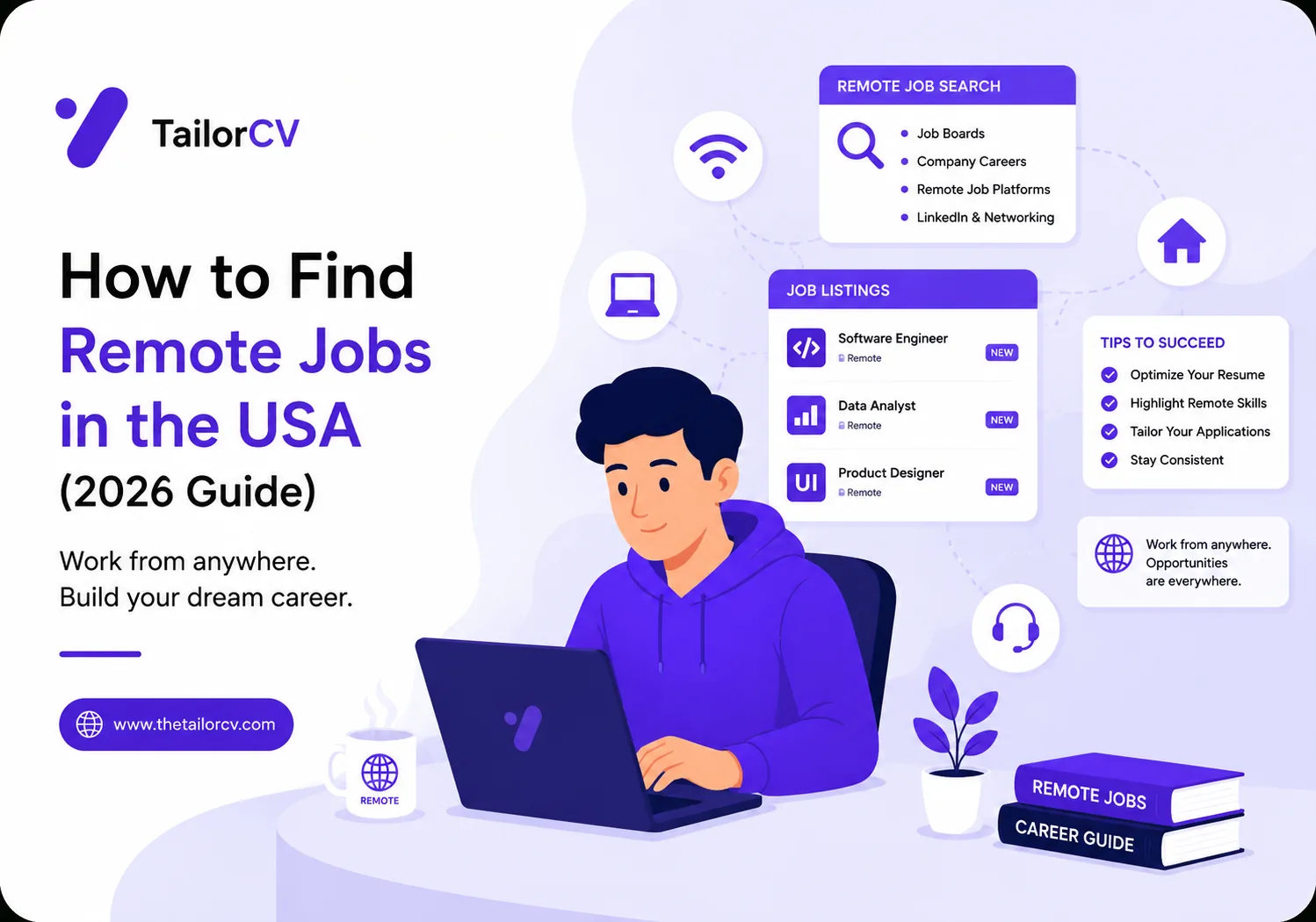
- Go beyond the giant job boards to remote-specific and company career pages.
- Time-zone overlap and location eligibility are silent filters — address them upfront.
Why Remote Is Harder to Land
A remote posting is open to a whole country or continent, so a single listing can pull thousands of applicants. That means the generic "spray and pray" approach fails worse for remote roles than for local ones. The winners are the people who tailor tightly and prove they can be trusted to work unsupervised.
Where the Real Listings Are
- Remote-specific boards for curated roles.
- Company career pages directly — the least crowded channel, since they predate the aggregators.
- LinkedIn with the "Remote" filter, but move fast; popular remote posts fill their applicant quota within days.
- Your network. A referral cuts through the applicant flood better than any board.
Prove You Can Work Remotely
Hiring managers worry about trust and communication with someone they will rarely see. Defuse that directly:
- Add remote results to your bullets: "Led a fully distributed team across three time zones to ship on schedule."
- Show async communication skills — clear writing is the remote worker's core competency.
- Mention self-direction: projects you drove without close supervision.
Address the Silent Filters
- Time zone: if the posting wants overlap with a region, state your working hours upfront.
- Location eligibility: many "remote" roles are remote within a country for tax and legal reasons. Confirm you qualify before investing effort.
Tailor Every Application
Because remote roles are so competitive, a tailored resume is the highest-leverage move. Match the posting's exact keywords, mirror its language, and make sure your remote-relevant strengths are visible. Tailoring each application — rather than sending one resume everywhere — is what separates the interview pile from the no-response pile. A resume optimizer reads each posting and adjusts your resume to match it, which matters far more for a remote role drawing a thousand applicants than for a local one drawing thirty.
What optimizing actually does to your resume
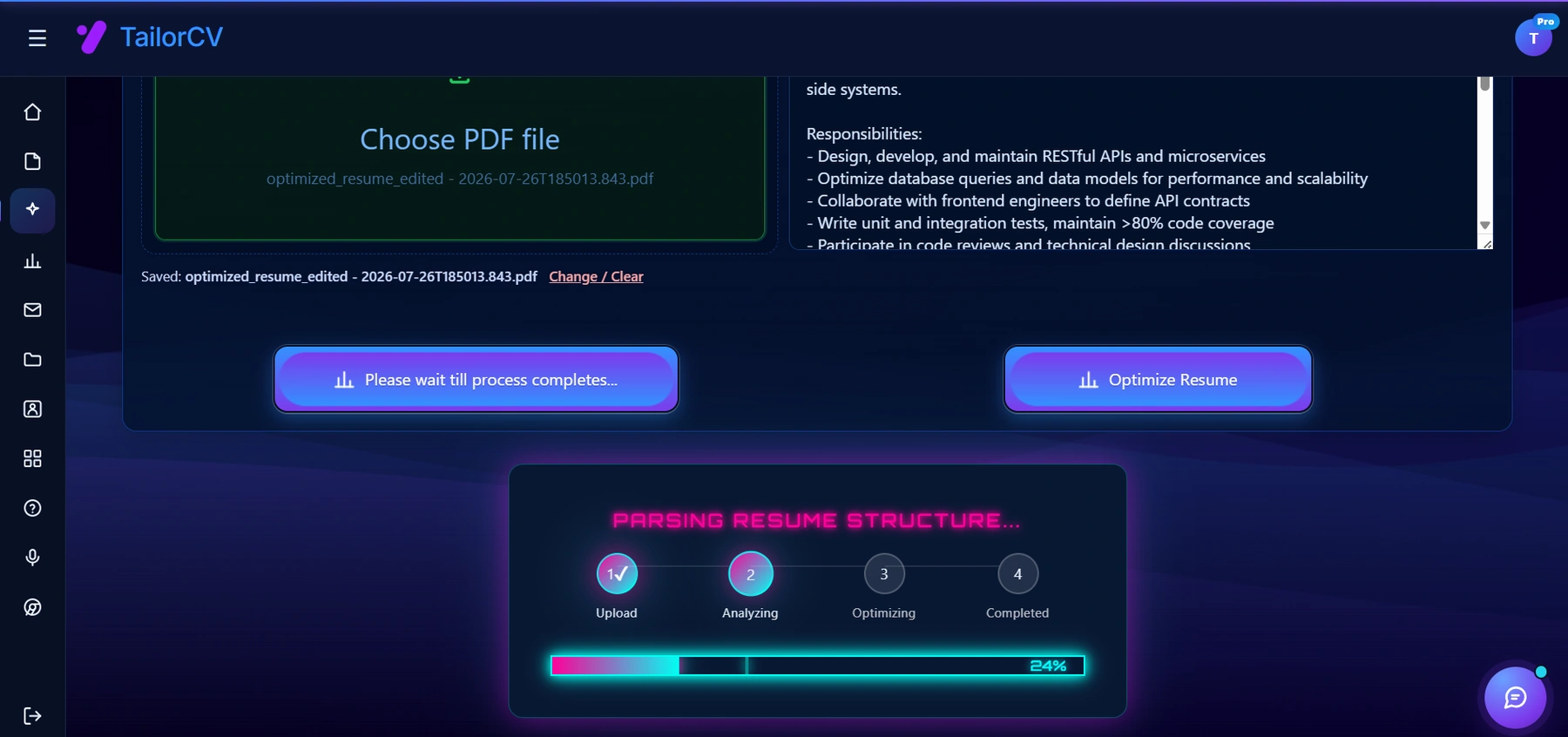
The tool parses your resume the way an ATS would before it changes anything, so the edits it suggests are grounded in the posting itself.
Tailoring without leaving the job board
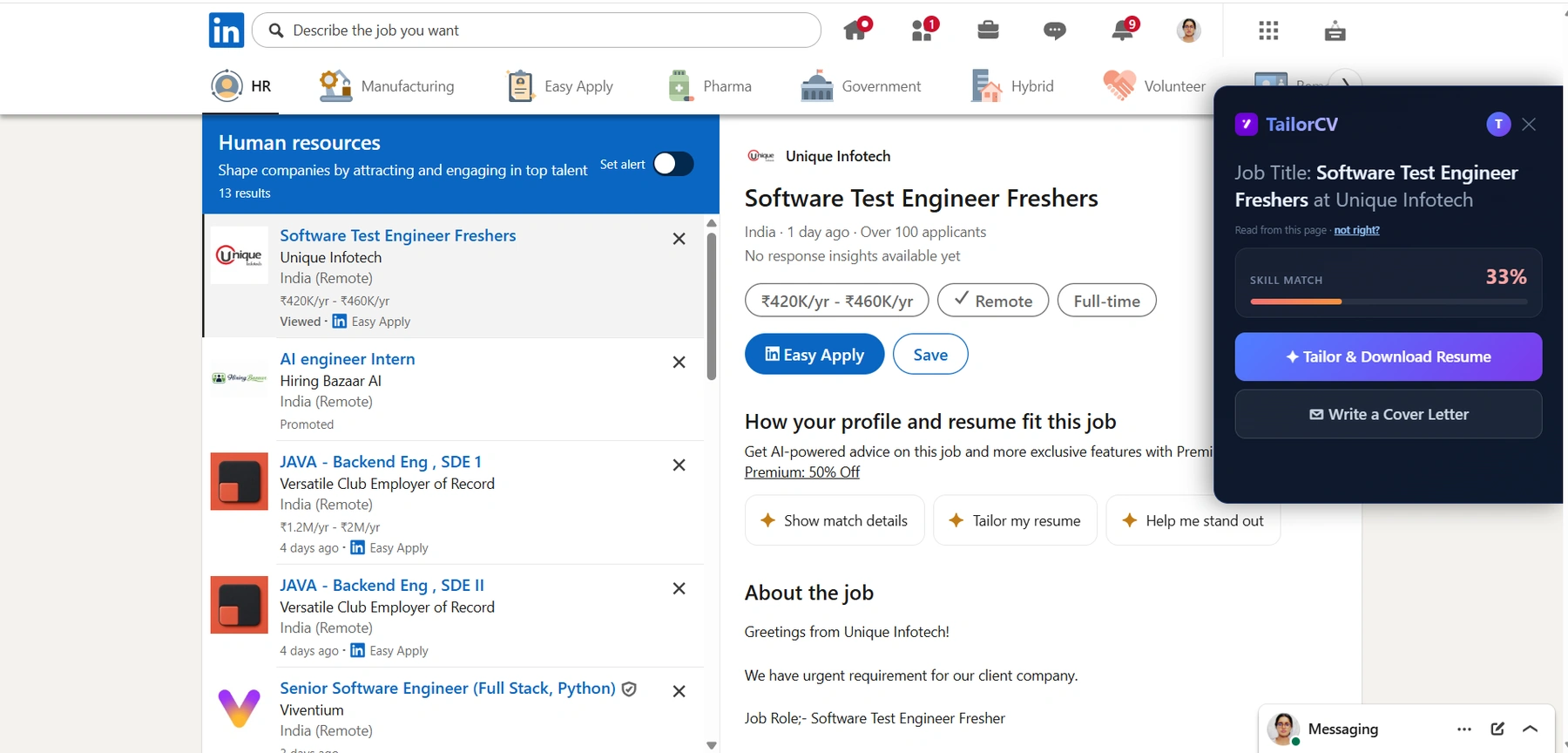
Whichever board you are on, the extension opens beside the listing, reads the description off the page and scores your resume against that role - so "tailor each application" takes a click rather than a detour.
Why Volume Alone Fails for Remote Roles
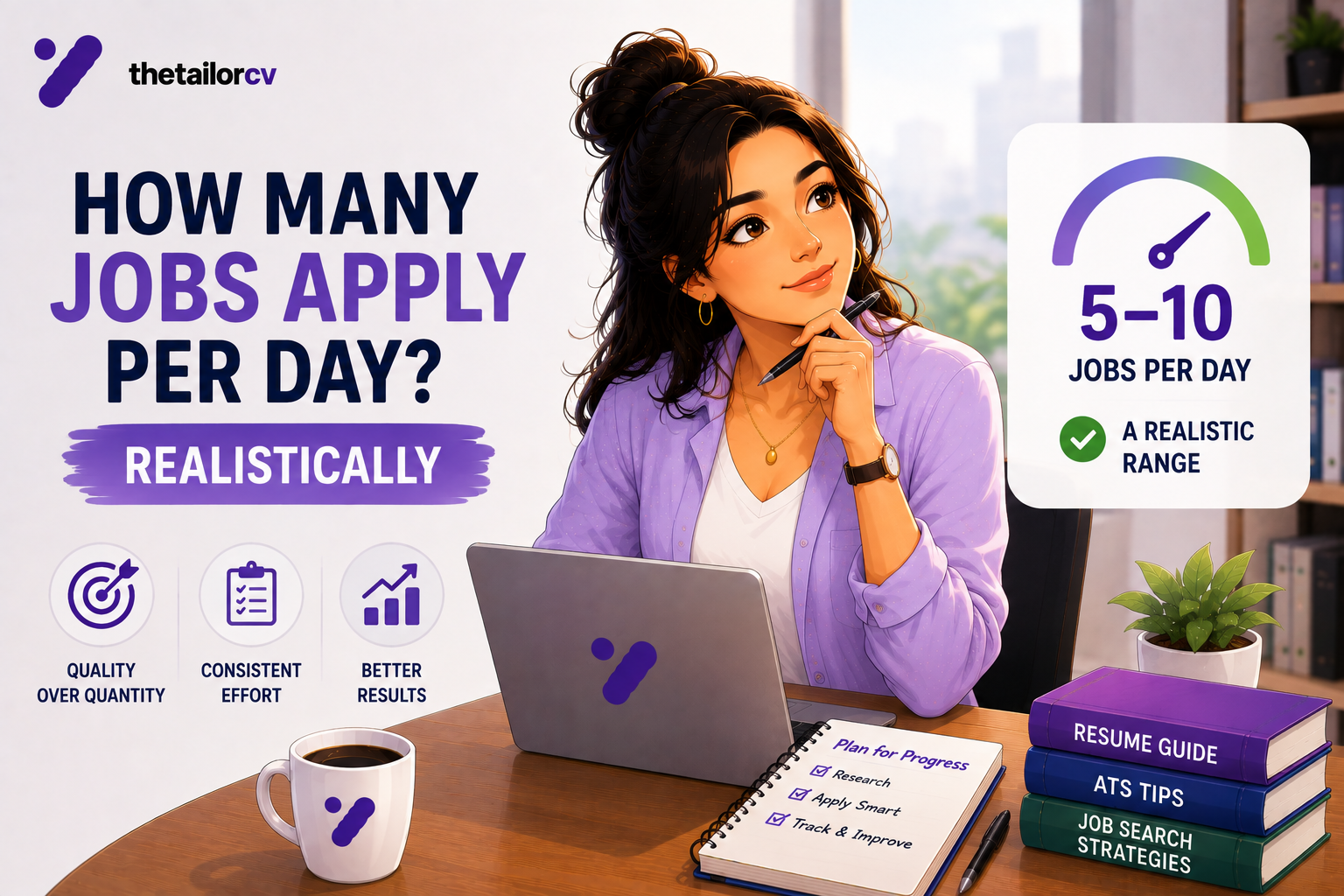
The instinct in a competitive market is to apply to more jobs faster. For remote roles, that instinct is exactly wrong. A remote posting can attract thousands of applicants, so a generic resume is a needle in a haystack of needles. The math favors selectivity: ten tightly tailored applications to roles you genuinely fit will out-perform a hundred generic ones. Every hour you would spend firing off identical resumes is better spent tailoring five and finding a referral for the roles you want most.
Building a Remote-Ready Resume and Profile
A hiring manager for a remote role is quietly asking one extra question: can I trust this person to work well without me watching? Answer it before they ask.
- Put remote results in your bullets. "Led a fully distributed team across three time zones to ship on schedule" says more than "remote-friendly."
- Foreground written communication. Clear writing is the core competency of remote work; your resume and cover letter are the first sample of it. Sloppy writing is disqualifying for a remote role in a way it is not for an in-office one.
- Show self-direction. Projects you drove without close supervision signal you will not need hand-holding.
- State your time zone and availability. A line like "Remote (GMT+5:30, 4-hour daily overlap with US Eastern)" removes a silent filter.
If you are building from scratch, the resume builder gives you a clean, ATS-friendly base, and a quick ATS score tells you whether a remote posting's keywords are actually present in your resume before you apply.
Proving Remote Skills in the Interview
The remote interview is itself a test of remote-readiness. A crisp, well-lit, technically smooth video interview is evidence that you can operate professionally over a screen — which is most of the job. Come with examples of how you communicate asynchronously, how you stay unblocked without a manager nearby, and how you have collaborated across time zones. These stories reassure a hiring manager far more than the phrase "I'm very self-motivated."
Watch for Remote Job Scams
The remote market attracts scammers, and a job search is a vulnerable moment. Be cautious of:
- Offers with no interview. Legitimate employers interview before hiring.
- Requests for money or bank details upfront. Never pay to get a job or share banking info before a real offer.
- Vague companies with no web presence. Verify the company exists and the recruiter works there.
- Pressure and urgency. "Accept within the hour" is a manipulation tactic, not a real offer.
When in doubt, slow down and verify. A real opportunity survives a day of due diligence; a scam does not.
A Realistic Remote Job Search Plan
- Define your targets. Role, seniority, and the time zones you can genuinely cover.
- Build a remote-ready resume with distributed-work results and clear communication.
- Find roles on company career pages and remote-specific boards, not just the crowded aggregators.
- Tailor every application to the posting's exact language.
- Pursue referrals for your top targets — they cut through the applicant flood best.
- Prepare for polished video interviews as proof of remote competence.
- Verify every employer before sharing personal details.
Where Remote Roles Actually Hide
The crowded aggregators are where everyone looks, which is exactly why they are the hardest place to stand out. Spread your search across channels with less competition:
- Company career pages directly. The least crowded channel, because it predates the aggregators. Make a shortlist of companies known to hire remotely and check their pages regularly.
- Remote-specific job boards. Curated for genuinely remote roles, with less noise than the giant boards.
- Niche community boards. Many professional communities, newsletters, and Slack or Discord groups post remote roles to members before they hit the big boards.
- Your network. The single best channel — a referral cuts through the applicant flood that makes remote roles so hard to win cold.
- LinkedIn with the Remote filter, but move fast — popular remote posts hit their applicant quota within days.
The pattern: the less crowded the channel, the higher your odds. Trade the comfort of one giant search box for the edge of several quieter ones.
Managing a Remote Job Search Across Time Zones
Time zone is one of the silent filters that quietly eliminates remote candidates, so address it head-on. If a role wants overlap with a particular region, state your working hours and overlap explicitly on your resume and in your application: "Remote (GMT+5:30, 4-hour daily overlap with US Eastern)." This removes the recruiter's biggest unspoken worry — that you will be asleep when the team needs you. If you are genuinely flexible on hours, say so. And be realistic: a role demanding full overlap with a time zone twelve hours from yours is a hard sell no matter how strong you are, so weight your effort toward roles where your hours actually work.
Staying Motivated and Organized
A remote job search is often longer and more competitive than a local one, which makes organization and morale part of the strategy. Keep a simple tracker of every application, its status, and your contacts, so nothing slips and follow-ups are effortless. Set a weekly target for tailored applications rather than chasing a giant daily number, because ten well-targeted applications beat a hundred generic ones. And protect your energy: the volume of competition for remote roles means more silence and more rejection, none of it personal. Candidates who keep a steady pipeline and treat the search as a process — not a referendum on their worth — interview better and last longer than those who burn out spraying applications.
Frequently Asked Questions
Are remote jobs still common in 2026?
Yes, though many are hybrid or region-restricted. The market is competitive but active — the key is applying selectively and tailoring well.
How do I stand out in a huge applicant pool?
Tailor tightly, prove remote-readiness, and use referrals. Volume of applications matters less than the fit and specificity of each one.
Should my resume say I'm "open to remote"?
Yes — a short line or a location like "Remote (GMT+5:30)" signals availability and time zone at a glance.
How do I explain wanting remote without sounding like I just want to avoid the office?
Frame it around output and fit: "I do my best focused work remotely and have a track record of delivering in distributed teams." Tie it to results, not to avoiding a commute.
Are remote roles worse for career growth?
Not inherently, but you have to be more intentional — over-communicate your wins, stay visible to your manager, and build relationships deliberately. Candidates who manage that often grow just as fast.
What's the fastest way to stand out for a remote role?
A tailored application plus a referral. Tailoring gets you past the ATS and the sheer volume; a referral gets a human to actually look. Together they beat any amount of mass applying.
How do I show I can work independently if I've never worked remotely?
Point to any self-directed work you have done — projects you drove without close supervision, deadlines you owned, or situations where you figured things out alone. Independence and clear communication are the traits that transfer; frame your existing experience around them.
Are remote roles more competitive than in-office ones?
Generally yes, because a single remote posting is open to an entire country or region and can draw thousands of applicants. That is precisely why selectivity, tailoring, and referrals matter more for remote roles than the mass-application approach that sometimes works locally.
Hybrid and Region-Locked "Remote" Roles
Not every job labeled "remote" is fully or globally remote, and understanding the variations saves you wasted applications. Many "remote" roles are actually hybrid — remote most days but requiring occasional office visits — so check whether you are within commuting range of any listed hub. Others are region-locked: remote, but only for candidates in a specific country or set of countries, usually for tax, legal, and payroll reasons. A role that says "remote (US)" genuinely cannot hire someone in another country, no matter how strong. And some are time-zone-locked, requiring substantial overlap with a particular region's working hours. Read the fine print before investing effort, and when you apply, address the relevant dimension head-on — confirm your eligibility, your location, or your overlap — so the recruiter's biggest unspoken concern is answered before they have to ask.
The Remote Interview Process
Remote roles almost always mean a fully remote hiring process, which has its own rhythm. Expect more asynchronous steps — a written exercise, a recorded video answer, or a take-home task — alongside live video rounds. Each of these is also testing your remote-readiness: your written exercise samples the clear communication the job demands, and your video interview demonstrates whether you present well over a screen. Treat the whole process as a preview of the job itself. Communicate promptly and clearly at every step, handle any technical hiccups with grace, and show that you can operate professionally without an office around you. Candidates who are polished, responsive, and self-directed throughout a remote process reassure a hiring manager that they will be the same once hired — which is the core thing a remote employer is trying to find out.
Putting It All Together
Remote roles are abundant but fiercely competitive, so the winning strategy is the opposite of spraying applications. Target selectively, build a resume that proves you can thrive in a distributed team, tailor every application to the posting, and lean on referrals for your top choices. Prove your remote competence in a polished video interview, and verify every employer before sharing personal details. Do that and you rise above the flood of generic applicants — which is exactly where a remote offer is won.
What is your resume scoring right now?
Scan it against a job description and get your ATS match score in about a minute.
Drop your resume here or choose a file
PDF only. Max 2 MB.
We never share your data or use it to train AI models.

Was this guide useful?
Be the first to rate it.