 SS
SS

Key Takeaways
- Executive resumes focus on business impact and transformation rather than just tasks and outputs, highlighting strategic leadership and P&L ownership.
- Resumes for VP and C-suite roles are typically reviewed by executive search firms, board members, and peer interviewers who seek evidence of leadership philosophy and strategic thinking.
- The ideal length for an executive resume is two pages, emphasizing the importance of concise and relevant content tailored to the specific role.
- An executive summary should clearly define leadership identity, scale of operation, signature achievements, and the type of organization that benefits from the candidate's experience.
You have built a career worth talking about.
P&L ownership. Teams of hundreds. Transformations that saved companies or scaled them to the next level.
Now you are applying for a VP, SVP, or C-suite role.
And your resume looks like a longer version of the one you used when you were a senior manager.
That is the problem.
Executive resumes are not bigger versions of mid-level resumes. They are fundamentally different documents, built around different signals, reviewed by different people, and evaluated against completely different criteria.
This guide walks you through every difference - and exactly how to tailor your resume for executive-level applications. If you are 50+ and navigating this landscape, also read resume tailoring for job seekers over 50 for additional considerations.
How Executive Hiring Is Different
At the mid-level, you are evaluated on what you did. At the executive level, you are evaluated on what happened because of you.
The difference matters:
| Mid-Level Resume | Executive Resume |
|---|---|
| Tasks and outputs | Business impact and transformation |
| Team contributions | Organizational leadership |
| Skills and certifications | Strategy and decision-making |
| Role responsibilities | P&L ownership and board visibility |
| Managed by a hiring manager | Selected by a committee or board |
| Reviewed by one recruiter | Reviewed by executive search firms (headhunters) |
| ATS-screened first | Often human-reviewed first |
At the executive level, you are not filling a role. You are being entrusted with a function or a company.
The resume needs to reflect that.
Who Is Reading Your Executive Resume
At VP and above, your resume may be reviewed by:
| Check | What to look for |
|---|---|
| Executive search firms (headhunters) | They are filtering for specific board-level signals, track records, and cultural fit for the client company. They are experienced resume readers who can immediately distinguish executive presence from manager-level presentation. Understanding how recruiters read resumes applies here - but the stakes and the speed of judgment are different |
| Board members or board committees | For C-suite roles, board members are often involved in final selection. They want strategic thinkers and proven P&L leaders |
| HR at large enterprises | They still use structured criteria, but at senior levels, criteria are more qualitative |
| Peer interviewers | Other VPs and C-suite members often participate in executive hiring |
None of these readers want a list of your past responsibilities. All of them want evidence of business impact, leadership philosophy, and strategic thinking.
The Executive Resume Framework
1. Length: 2 Pages Maximum
At the mid-level, one page is ideal. At the executive level, two pages is standard. Check ideal resume length guidance - more than two pages signals that you cannot edit, a concerning trait for someone who will need to communicate strategy clearly.
Prioritize ruthlessly. Everything that does not directly support your candidacy for this specific role does not belong on this resume.
2. Executive Summary (Not a Summary Statement)
Your executive resume should open with a powerful 3-5 sentence executive summary.
Not a list of adjectives. Not a generic paragraph about your "passion for leadership."
Read how to write a resume summary for the foundational framework - then elevate it to executive level.
An executive summary that answers:
- What is your leadership identity? (transformational, operational, revenue, turnaround, growth)
- At what scale have you operated? (team size, budget, company revenue stage)
- What are your two or three signature achievements?
- What type of organization do you create the most value for?
Weak executive summary:
"Dynamic, results-oriented leader with 20+ years of experience in technology operations. Strong communicator and strategic thinker. Proven track record of success."
This says nothing. A headhunter reads it as filler.
Strong executive summary:
"Operations executive with 18 years of experience scaling B2B SaaS companies from $30M to $250M+ ARR. Led three successful platform transformations, each resulting in 40-60% COGS reduction within 24 months. Known for building high-retention engineering orgs and driving capital efficiency without sacrificing product velocity. Seeking COO or VP Operations role at growth-stage enterprise software company."
Every sentence answers a real question. The reader knows exactly who this person is in four sentences.
3. Replace Responsibilities With Business Outcomes
Every bullet point on an executive resume should describe a business outcome, not a task.
Manager-level bullet: "Oversaw the engineering team's sprint planning and backlog prioritization."
Executive-level bullet: "Rebuilt engineering sprint cadence and introduced OKR alignment across 4 product teams, reducing time-to-ship by 35% and cutting critical bug backlog by 68% over 9 months."
The executive version answers: What changed? By how much? In what timeframe?
Lead with scale and result. End with context and method.
Quantify your achievements aggressively at this level:
- Revenue impact (grew revenue by X, reduced churn by X%)
- Team scale (led 120-person organization, built from 8 to 45 engineers)
- Budget ownership (managed $18M annual technology budget)
- Time to impact (turned around operation in 6 months)
- Comparative outcomes (company returned to profitability for first time in 3 years)
4. Board and Investor Visibility
At the C-suite level, one of the most valuable signals is that you have operated at board level.
If you have:
- Presented to a board of directors
- Worked directly with investors during fundraising
- Participated in an M&A process
- Prepared board reporting materials
-
Served on a board yourself (advisory or otherwise)
-
these belong on your resume. They signal that you can operate at the top of the organizational structure.
5. Strategic Initiatives, Not Operational Tasks
Executives are hired to drive strategy. Your bullet points should show strategic decisions you made, not operational tasks you completed.
Operational (wrong for executive): "Managed vendor relationships for cloud infrastructure providers."
Strategic (right for executive): "Negotiated a multi-year cloud infrastructure consolidation that reduced vendor contracts from 9 to 2 and achieved $4.2M in annual cost savings while improving SLA compliance from 94% to 99.6%."
The second version shows strategic thinking, negotiation at scale, and measurable outcome.
Tailoring an Executive Resume for a Specific Role
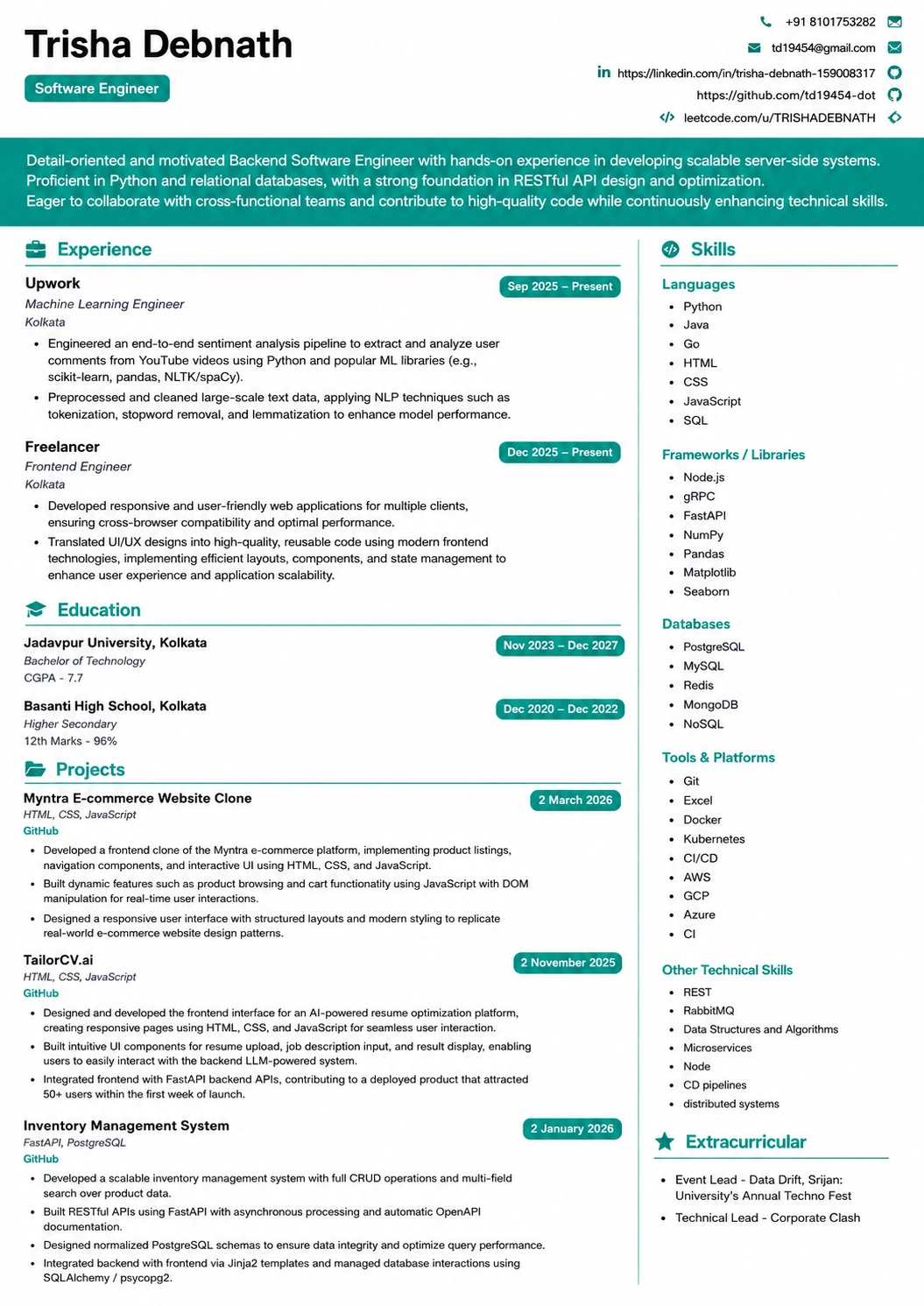
Your resume after optimization
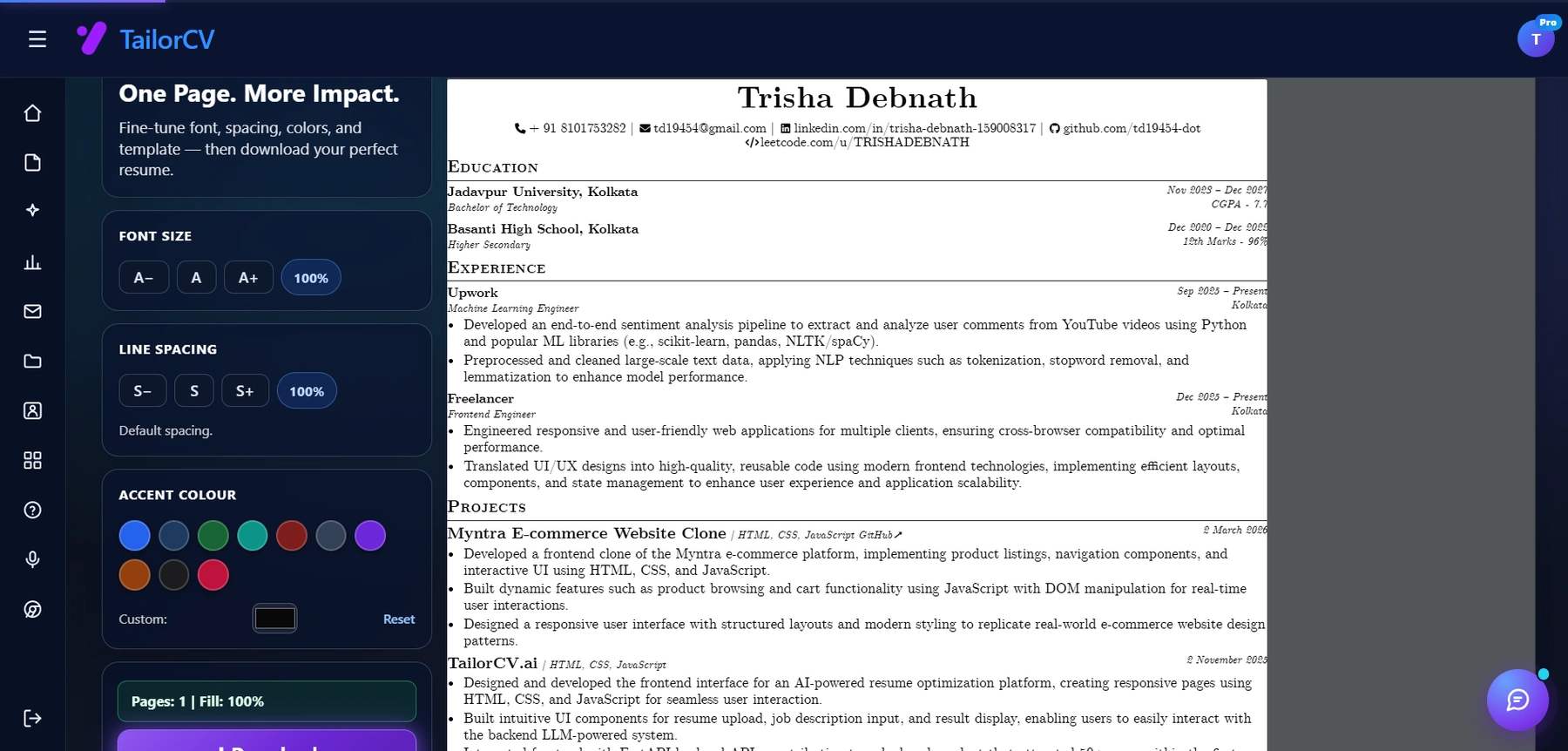
This is the optimized result, and it is usually how a spilling two-page draft gets back onto one page without deleting anything worth keeping.
Read the Brief, Not Just the Job Description
Executive roles are often accompanied by a position brief or specification document (prepared by the search firm).
This document is more valuable than a standard job description. It contains:
- The specific business challenges the role must address
- The current state of the function being hired for
- What has not been working
- What success looks like in 12-18 months
Use the hidden keywords technique to decode the subtext of this document - often the real priorities are buried in how the brief is written, not just in what it lists explicitly.
Mirror the Company's Growth Stage
The executive competencies that matter at a $5M Series A company are different from those that matter at a $500M pre-IPO company. See startup vs enterprise resume tailoring for how this plays out across different company types.
- Early stage: Speed, scrappiness, 0-to-1 building, tolerance for ambiguity
- Growth stage: Scaling systems, building process while preserving culture, hiring and developing teams
- Enterprise/public company: Governance, compliance, cross-functional alignment, board reporting, shareholder focus
Tune your resume language to the stage.
Check ATS Even at the Executive Level
At large enterprises, even executive applications go through some form of applicant tracking. Executive search firms use their own database systems.
Use TailorCV's resume optimizer to check keyword match against the role description. The keywords at executive level are different - "P&L ownership," "organizational transformation," "board-level communication," "M&A integration" - but they still matter. Understanding how ATS works helps you format your executive resume to pass both systems and human review.
What to Leave Off an Executive Resume
Remove:
- Early-career roles (anything more than 20 years ago is typically irrelevant)
- Responsibilities that are below your current level (you do not list "attended team standups")
- Adjectives that are not backed by evidence ("dynamic," "passionate," "innovative")
- Technical skills that are no longer your core differentiator (unless directly relevant)
- References to references ("available upon request" - no executive resume includes this)
Reduce:
- education detail for established executives (institution + degree is usually sufficient)
- Older certifications that are outdated or no longer material
Common Executive Resume Mistakes
Being too humble Executives must advocate for themselves clearly. If you buried your biggest achievement in bullet six of your third role, no one will find it. Put your highest-impact achievements at the top.
Using mid-level language "Responsible for" is manager language. Action verbs like "Drove," "Transformed," "Built," "Led," "Owned" are executive language.
No executive summary Starting an executive resume with work experience is a missed opportunity. Your summary is where you set the frame before the reader even reaches your history.
Ignoring company culture fit signals At the executive level, cultural fit is scrutinized as heavily as competency. Research the company's leadership culture and include one or two genuine alignment signals in your summary.
Neglecting your LinkedIn profile After reviewing your resume, hiring committees and search firms always check your LinkedIn profile. Misalignment between the two can undermine a strong executive application.
Make This Practical
Do not guess whether the resume is ready. Upload it to the free ATS score checker, compare the result with the ATS Score Guide, and fix formatting issues using ATS Resume Formatting Mistakes and ATS Resume Parser Friendly Format.
After the technical cleanup, improve relevance. Use Resume Matching With Job Description, strengthen keyword coverage with the Resume Keywords Guide, and avoid overdoing it by checking ATS Keyword Mistakes. If the layout itself is weak, rebuild with an ATS-friendly resume template.
FAQ
Does an executive resume go through ATS?
Sometimes, depending on the hiring process. Large enterprises use ATS even for senior roles. Executive search firms use their own databases. In both cases, keyword relevance and clear formatting matter.
How far back should an executive resume go?
Generally 15-20 years of relevant experience. Earlier roles can be summarized in one line or omitted entirely.
Should I include compensation on an executive resume?
No. Compensation is discussed during the interview process or in initial conversations with the search firm. Learn how to negotiate a salary offer when the time comes.
What if I am moving from a functional executive role to a general management or CEO role?
This is one of the most common executive transitions. Your tailoring challenge is to show that your functional expertise translates to organizational leadership. Emphasize cross-functional initiatives, P&L ownership, and board-level exposure to strengthen your application.
Related Guides
- How to Tailor Your Resume for Every Job
- Resume Matching with Job Description - Complete Guide
- How to Write a Resume Summary
- How to Quantify Resume Achievements
- Resume Matching for Experienced Professionals
- How to Negotiate a Salary Offer
- How to Tailor Your Resume When Overqualified
- Personal Branding for Professionals
- LinkedIn Profile Optimization Guide
- Resume Tailoring for 50+ Job Seekers
- Resume Extension vs Manual Tailoring: What You Actually Save (2026)
Conclusion
An executive resume is a leadership document.
It tells a story about what you have built, what you have fixed, and what kind of leader you are - not a list of places you have worked.
Every line should answer: "What is the business case for hiring this person?"
Drop the responsibilities. Amplify the outcomes. Lead with your signature achievements. Speak to the company's specific stage and challenge.
Then check your keyword match for the specific role.
You have earned the right to apply for this. Now give your resume the weight it deserves.
Tailor My Executive Resume - Free
See what tailoring is worth on your resume
Score your current resume against a real job description before you change a word.
Drop your resume here or choose a file
PDF only. Max 2 MB.
We never share your data or use it to train AI models.

Start from a template that tailors well
Clean structure means swapping keywords per job takes minutes, not a re-layout every time.
Was this guide useful?
Be the first to rate it.