 TD
TD
Key Takeaways
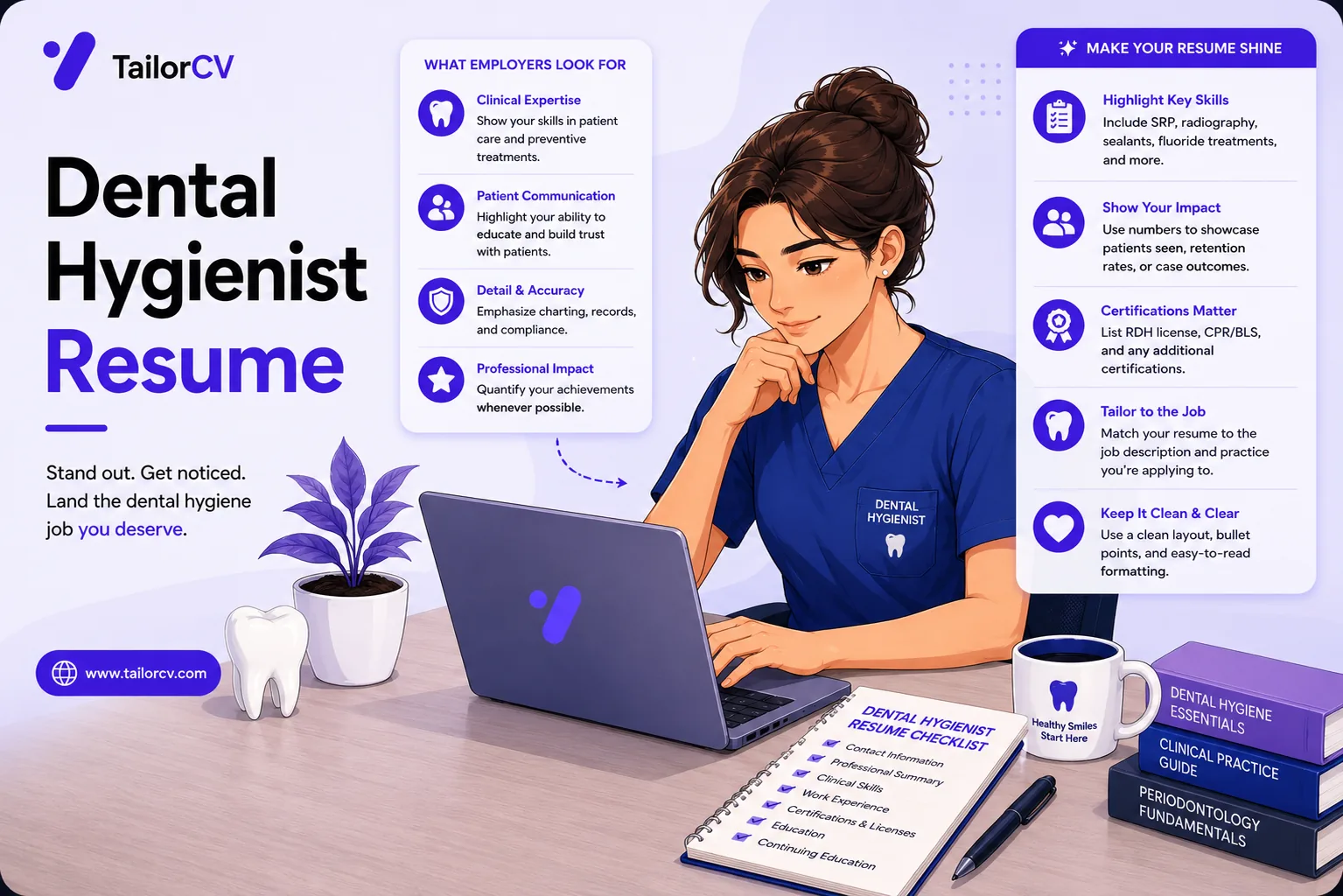
- Dental practices are small, busy businesses - the hiring dentist often reviews applications between patients, so your resume has seconds.
- Licensure is a gatekeeper, so put your RDH licence and state where it cannot be missed.
- The skills section is where the ATS looks for procedure and tool keywords, so mirror the job description honestly.
- Healthcare is measurable, and a hygienist resume that quantifies patient impact stands out immediately.
- A pediatric office, a periodontal specialist, and a general family practice each want something slightly different.
A strong dental hygienist resume balances clinical competence with the soft skills that keep patients comfortable and a practice running smoothly. Dental offices scan quickly for licensure, procedures, and reliability — and increasingly they use an ATS to filter applications before a human ever looks. This guide shows you how to build a hygienist resume that passes the ATS, impresses the hiring dentist, and lands the interview.
Before you send anything, run your draft through the free ATS score checker, start from an ATS-friendly template, and skim the ATS score guide so you know how the software reads your resume. If you work in an adjacent healthcare field, the nursing resume guide, physiotherapist resume guide, and pharmacist resume guide use the same principles.
Why dental hiring is different
Dental practices are small, busy businesses. The hiring dentist or office manager often reviews applications between patients, so your resume has seconds to prove three things: you're licensed, you're clinically capable, and you're reliable with patients. Larger dental service organizations (DSOs) add an ATS layer, which means your keywords have to match the job description before a human sees you. Nailing both audiences — the software and the dentist — is the whole game.
Put credentials and licensure up top
Licensure is a gatekeeper, so make it impossible to miss. List your RDH license and state, plus certifications like local anesthesia, nitrous oxide administration, and CPR/BLS, near the top of your resume. Because these are exact-match keywords, the ATS scores them directly — use the official credential names, as explained in how to list certifications on a resume.
A short summary at the very top ties it together:
"Licensed dental hygienist (RDH) with 5 years in high-volume general and periodontal practice. Skilled in scaling, root planing, digital radiography, and patient education. Known for a calm chairside manner and 95%+ recall rates."
For the difference between a summary and an objective, see resume objective vs summary. Lead with a clear target — "Dental Hygienist" — so both the recruiter and the ATS register the fit instantly.
Show clinical and technical skills
The skills section is where the ATS looks for procedure and tool keywords. Mirror the job description and include what's genuinely true for you:
Your resume after optimization
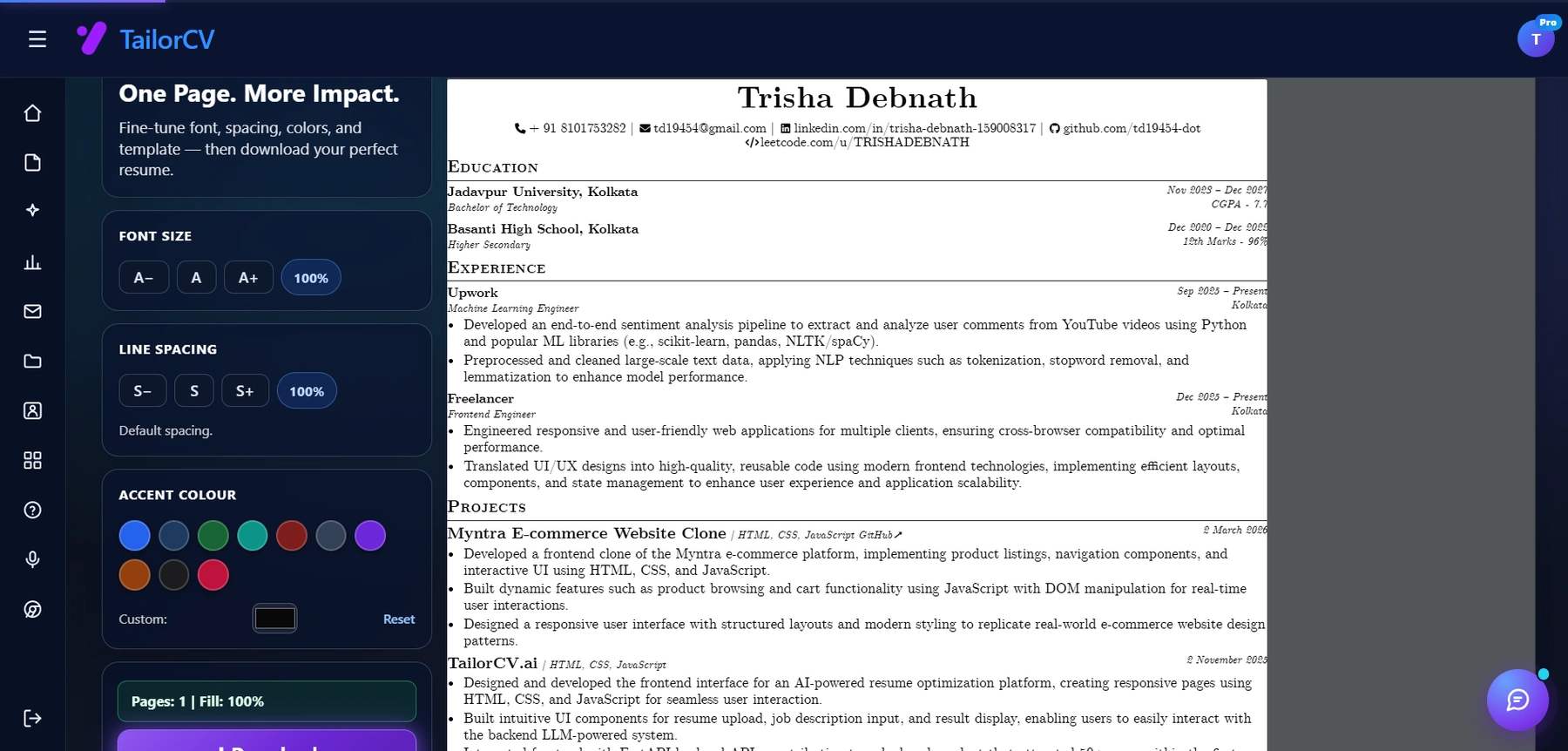
This is the resume after tailoring - the content is already matched, and these controls are how you fit it onto one page.
- Clinical: prophylaxis, scaling and root planing, periodontal charting, sealants, fluoride application, digital and panoramic radiography, oral cancer screening.
- Tools & software: ultrasonic scalers, intraoral cameras, and practice-management systems like Dentrix, Eaglesoft, or Open Dental.
- Patient care: patient education, anxiety management, infection control, OSHA compliance.
Group them for readability using the approach in how to list skills on a resume, and confirm coverage with the ATS score checker. Remember that soft skills like communication belong in your experience bullets, not just a list — the skills section guide explains the split between hard and soft skills.
Prove patient impact with numbers
Healthcare is measurable, and a hygienist resume that quantifies impact stands out immediately. Use the bullet point formula — a strong action verb, what you did, and a measurable result:
- "Managed 12–16 patients per day while maintaining a 95% recall rate."
- "Reduced chart-prep time 20% by streamlining the digital intake workflow."
- "Educated 300+ patients annually on home care, improving compliance scores."
- "Trained two new hygienists on the practice's periodontal protocol."
If your bullets read like a list of duties, the quantify achievements guide will fix that fast. Vague, duty-only bullets are one of the top reasons for a resume that gets no responses and a common generic resume mistake.
Highlight the soft skills that matter chairside
Dental care is personal, and dentists hire hygienists patients will love and return to. Communication, patient education, empathy, and reliability all matter — but show them through experience, not a bare list. A single bullet about calming an anxious patient or building a loyal recall base says more than the word "compassionate." These human qualities are also what carry you through the interview, so keep a few stories ready.
Structure your dental hygienist resume
A clean, predictable structure helps both the ATS and the busy dentist:
- Header — name, credentials (RDH), phone, email, city.
- Summary — three lines, licensure-forward.
- Licensure & certifications — RDH, state, anesthesia, CPR/BLS.
- Clinical skills — procedures and software.
- Experience — quantified bullets per role, newest first.
- Education — hygiene program and degree.
This mirrors the layout in the resume builder, which handles spacing and formatting so you can focus on content. For section ordering, see the resume section order guide.
Keep the format ATS-safe
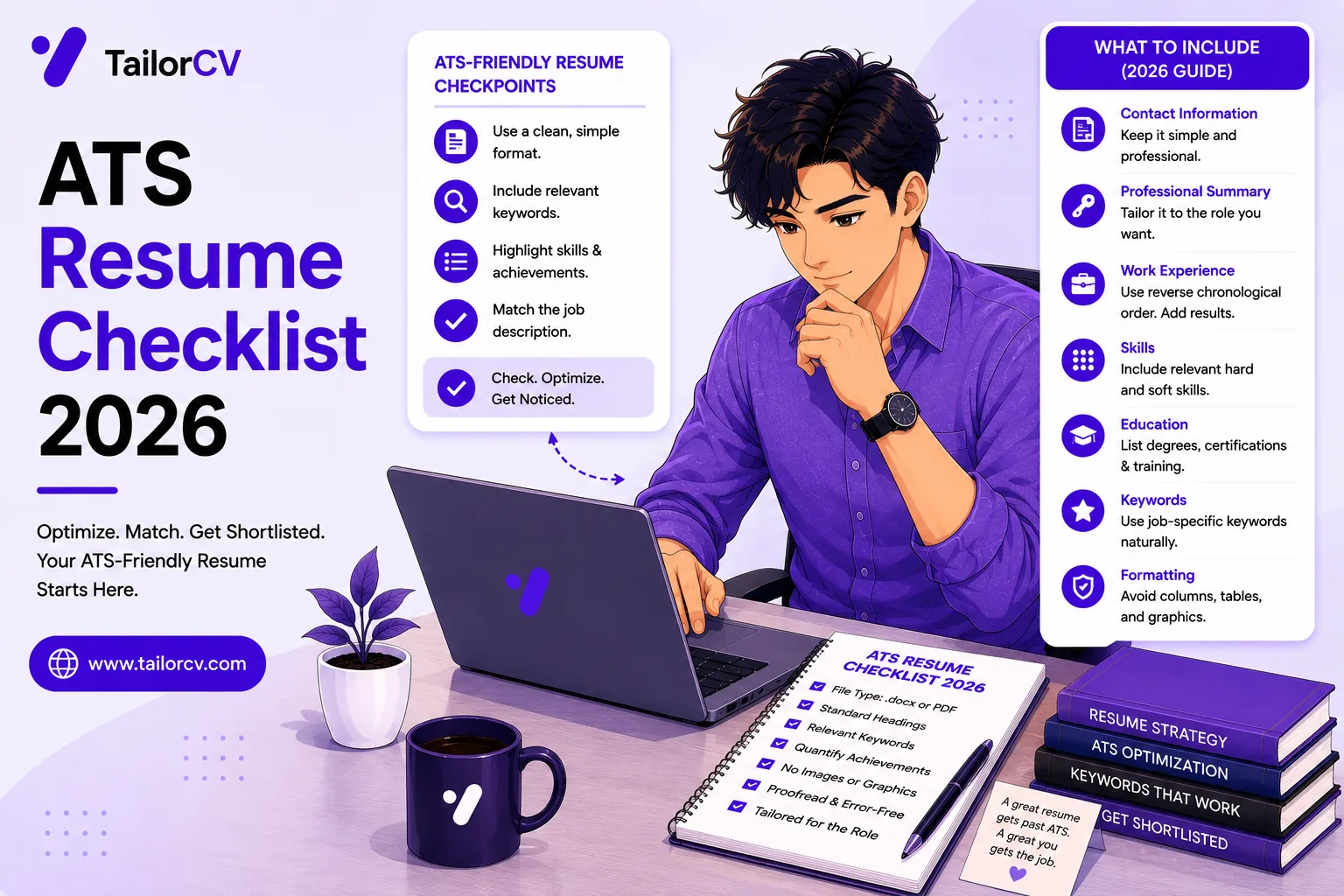
Many clinics and DSOs run applications through an ATS, so keep your layout clean. Use a single-column, ATS-friendly template, standard headings, and a readable font. Keep it to the right length — one page is ideal for most hygienists.
Avoid tables and graphics for key content; they're a leading cause of parsing errors, as covered in how to make your resume ATS-friendly and ATS formatting mistakes. Then verify it parses with the ATS score checker and aim for a strong ATS score. If your score is low, why is my ATS score low explains the usual culprits.
Tailor to each practice
A pediatric office, a periodontal specialist, and a general family practice all want slightly different things. Tailor each application by pasting the posting into the resume optimizer so your keywords match the exact role. The habit takes only minutes once you have a base resume — see how much to change your resume for every job and how to tailor your resume in 5 minutes.
New graduate? Lead with clinicals and training
If you're a recent hygiene-school graduate, you still have plenty to show: clinical rotations, patient counts, externships, and any specialty exposure. Lead with those instead of a thin work history — the resume with no experience guide and technical skills for freshers guide show how to present training as real experience. A short list of projects or clinical highlights can carry an early-career resume.
Prepare for the interview, too
Once your resume lands the interview, prepare like a professional. Build a STAR story bank of patient and teamwork examples, practice with a free AI mock interview, and use the interview prep tool. Know what to bring to the interview and what to wear. Afterward, send a thank-you email and follow up on the right timeline. If the role asks for one, generate a tailored cover letter.
Specialization can strengthen your resume
If you've focused in periodontics, pediatric dentistry, or public health, say so — specialization is a strong differentiator and a valuable keyword the ATS rewards. Note advanced training, the patient populations you've served, and any procedures beyond general practice. A hygienist who can write "3 years in periodontal therapy, managing SRP and maintenance for 200+ active perio patients" reads as a specialist, not a generalist, and that specificity moves your resume up the pile. Pair it with quantified outcomes so the depth is obvious.
Continuing education matters here too. List recent CE courses relevant to the role, and format them the way recruiters expect using how to list certifications on a resume. If you're eyeing a move into management or a lead-hygienist role, add leadership and training bullets, and read the how to get a promotion guide for framing.
Common dental hygienist resume mistakes
Avoid the errors that quietly cost hygienists interviews:
- Burying licensure. Put your RDH and certifications near the top, not at the bottom.
- Listing duties, not results. Every role needs quantified bullets, not a job description.
- Skipping software keywords. Name Dentrix, Eaglesoft, or Open Dental if you know them — the ATS scans for them.
- One resume for every office. Tailor each application to the practice.
- Over-designing. A decorative layout can break the ATS; keep it clean and run the ATS score checker.
For a broader list of what silently sinks applications, read why your resume gets no responses and common resume mistakes for freshers.
Where dental hygienists find jobs
Beyond the general job boards, dental hygienists often find roles through dental-specific networks, staffing agencies that place temp and permanent hygienists, and direct outreach to practices you'd like to join. A cold email to a practice manager with a strong resume attached can open a door before a role is even posted. Working with a recruitment agency that specializes in dental placements can also speed things up, and the best job search websites guide covers where to look. Whichever channel you use, keep your resume tailored and ATS-ready so you're always prepared to apply fast.
Salary, benefits, and negotiating your offer
Dental hygiene is a well-paid profession, and a strong resume plus interview performance gives you leverage. Once you have an offer, don't accept the first number reflexively — research the local market and negotiate professionally using how to negotiate a salary offer and the salary negotiation guide. Consider the full package: days per week, benefits, continuing-education support, and bonus structure, not just the hourly rate. Coming across as calm and prepared here reflects the same professionalism your resume promised.
Dental hygienist resume FAQ
How long should a dental hygienist resume be? One page for most hygienists. Two only if you have extensive, relevant experience — see the ideal resume length guide.
Do I list my license number? List your RDH license and state; the number itself is usually only needed if the employer verifies it. Format credentials with how to list certifications on a resume.
I'm a new grad with only clinical rotations — what do I put? Lead with clinicals, patient counts, externships, and software exposure. The resume with no experience guide shows how to present training as real experience.
How do I get past the ATS for DSO jobs? Mirror the job description keywords, keep the format clean, and confirm with the ATS score checker. If your score is low, why is my ATS score low explains the fixes.
Should I include a cover letter? When the posting asks for one, yes — a tailored cover letter helps a smaller practice see your fit and personality.
Final checklist
Your dental hygienist resume is ready when it:
- unchecked: Leads with RDH licensure and certifications.
- unchecked: Names the exact clinical procedures and software from the job description.
- unchecked: Backs every role with quantified patient impact.
- unchecked: Uses an ATS-friendly template and passes the ATS score checker.
- unchecked: Reads cleanly after a final pass with the resume review checklist.
Do those things and your clinical skill will finally be seen by the hiring dentist instead of getting filtered out by software. Start in the resume builder, score it with the free ATS checker, and tailor it to every practice you apply to.
What is your resume scoring right now?
Scan it against a job description and get your ATS match score in about a minute.
Drop your resume here or choose a file
PDF only. Max 2 MB.
We never share your data or use it to train AI models.

Templates that keep this structure intact
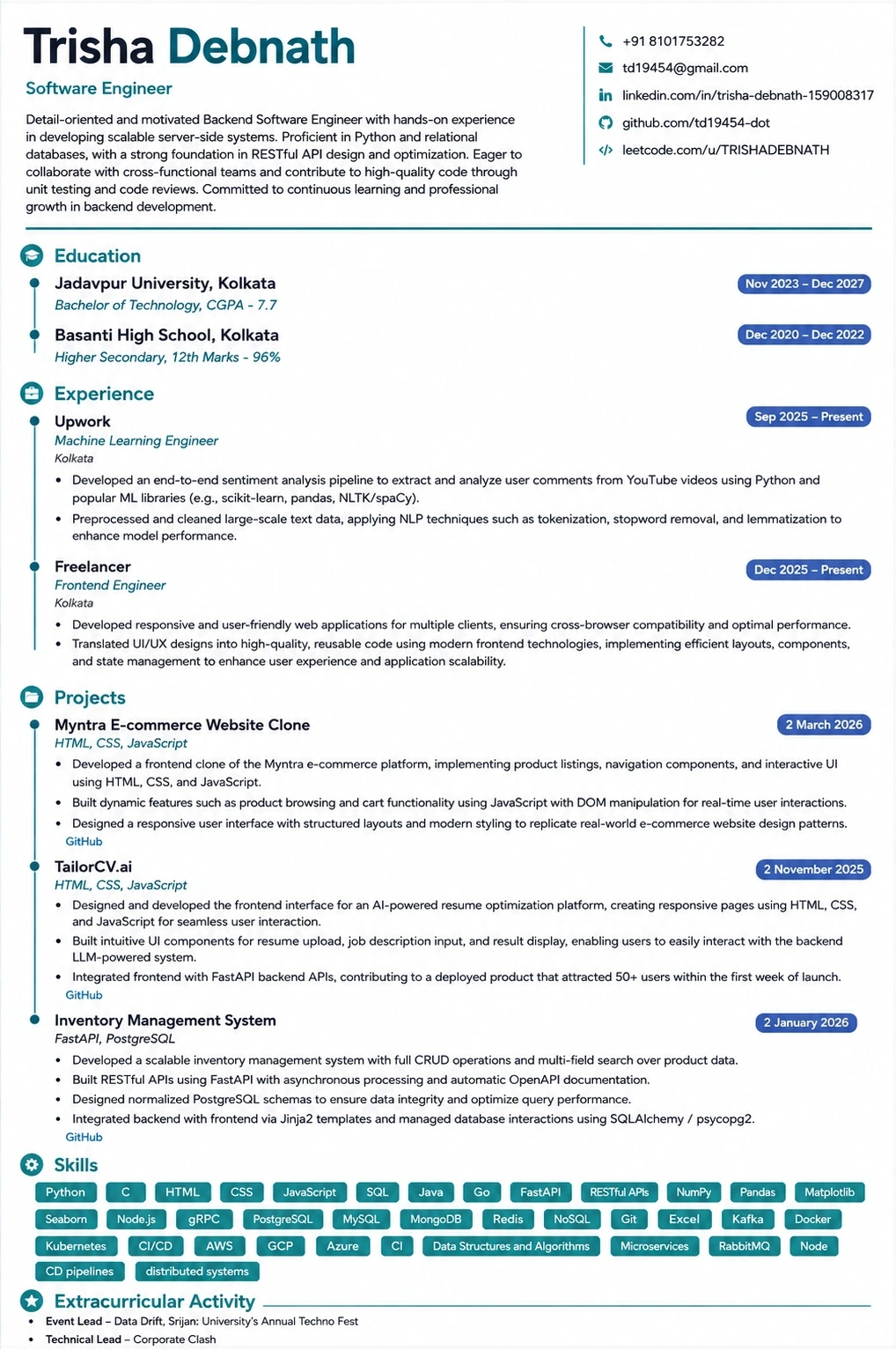
This template is ATS-tested — start from it and the formatting rules in this guide are already handled.
Was this guide useful?
Be the first to rate it.