TD
TD
Key Takeaways
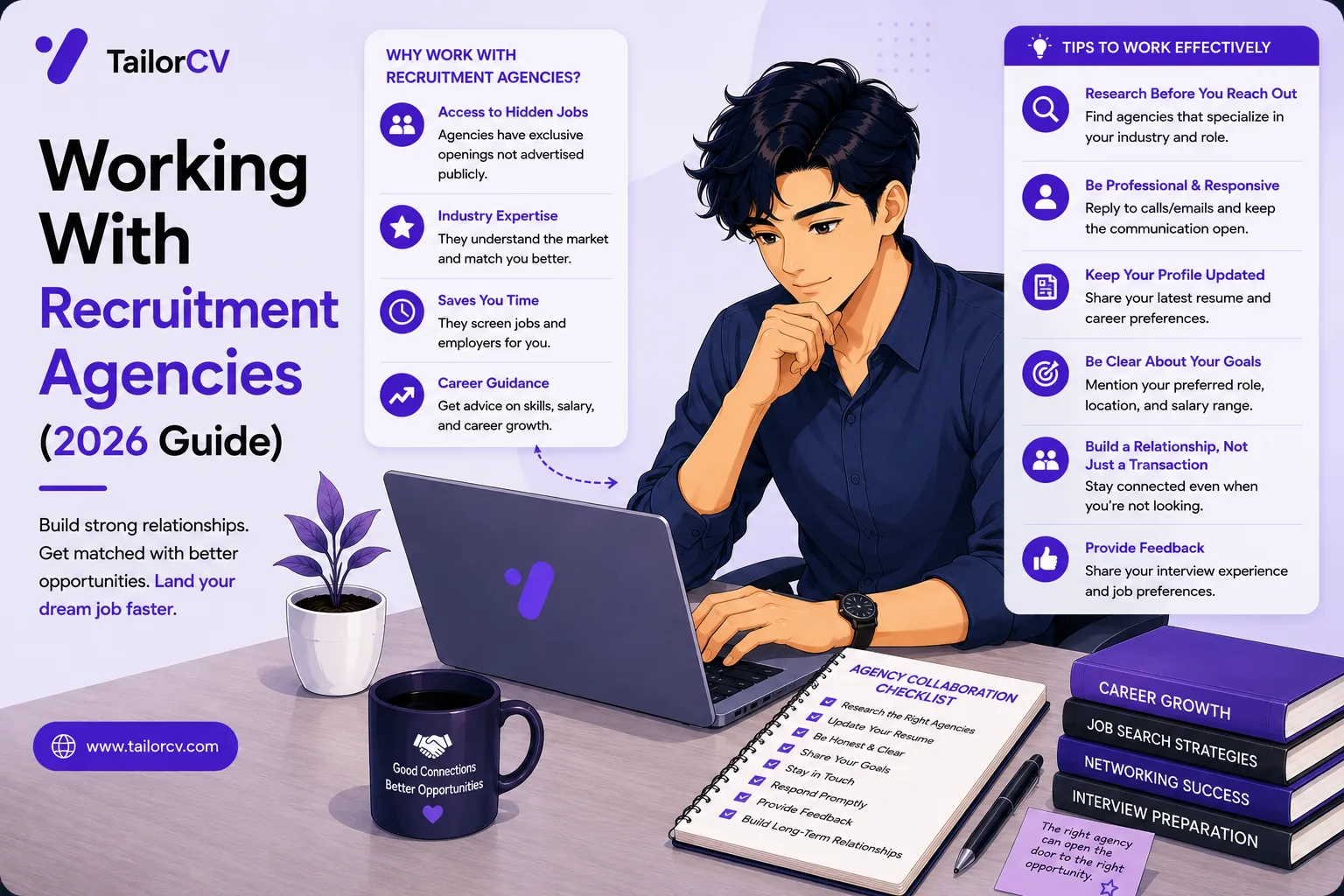
- Agency recruiters are paid a fee by the employer when they fill a role, which explains most of how they behave.
- Look for agencies that specialise in your field, industry, or seniority level - a niche recruiter knows the market.
- Recruiters place candidates who are easy to work with, so be clear about target role, salary, and location up front.
- Recruiters often submit your resume directly, sometimes on their own letterhead, so make it ATS-friendly and excellent.
- Treat recruiters as long-term relationships, and never rely on agencies as your whole strategy.
Recruitment agencies can open doors to roles you'd never find on a job board — including unadvertised positions and relationships with hiring managers who trust the agency's judgment. But they only work in your favor if you understand how they operate. Recruiters are paid by employers, not by you, so the relationship works best when you make yourself easy to place. This guide shows you how to get recruiters genuinely working on your behalf.
Whether you go through an agency or apply directly, the foundation is the same: a strong, tailored resume that passes the ATS. Build it in the resume builder and score it with the ATS checker before you engage a single recruiter.
Understand how agencies get paid
Agency recruiters are paid a fee by the employer when they successfully fill a role — usually a percentage of the hire's salary. That's not sinister; it just means recruiters prioritize candidates they can confidently place. It also means their client is the employer, so they'll present you when you fit a live role and go quiet when you don't. Understanding this incentive helps you set realistic expectations and makes you a candidate they want to champion: responsive, clear about what you want, and genuinely placeable.
Choose the right agencies
Not all agencies are equal for your search. Look for ones that specialize in your field, industry, or seniority level. A niche recruiter knows the market, the companies, the salary bands, and the hiring managers far better than a generalist, and they'll match you to genuinely relevant roles rather than spraying your resume everywhere. Research a few specialists in your space, check their live roles, and reach out with a clear, tailored message. For technical or specialized roles, the right agency's network is a real advantage — the same way a strong LinkedIn presence is.
Be clear, responsive, and honest
Recruiters place candidates who are easy to work with. Tell them exactly what you want — target role, salary range, location or remote preference, and any deal-breakers — so they don't waste your time or theirs. Respond quickly, because opportunities move fast and the responsive candidate often gets submitted first. And be honest about your experience and situation; recruiters have long memories and wide networks, and misrepresenting yourself, like lying on a resume, damages the relationship permanently.
Give them a strong, tailored resume
Recruiters often submit your resume directly to employers, sometimes reformatted onto their letterhead, so make it excellent. Use an ATS-friendly template, lead with quantified achievements, and tailor it to the kinds of roles they pitch you. A recruiter can only sell what's on the page — a sharp, results-driven resume makes their job easy and your placement more likely. Ask whether they'll tweak keywords for specific submissions, and provide a version aligned to each job description.
What optimizing actually does to your resume
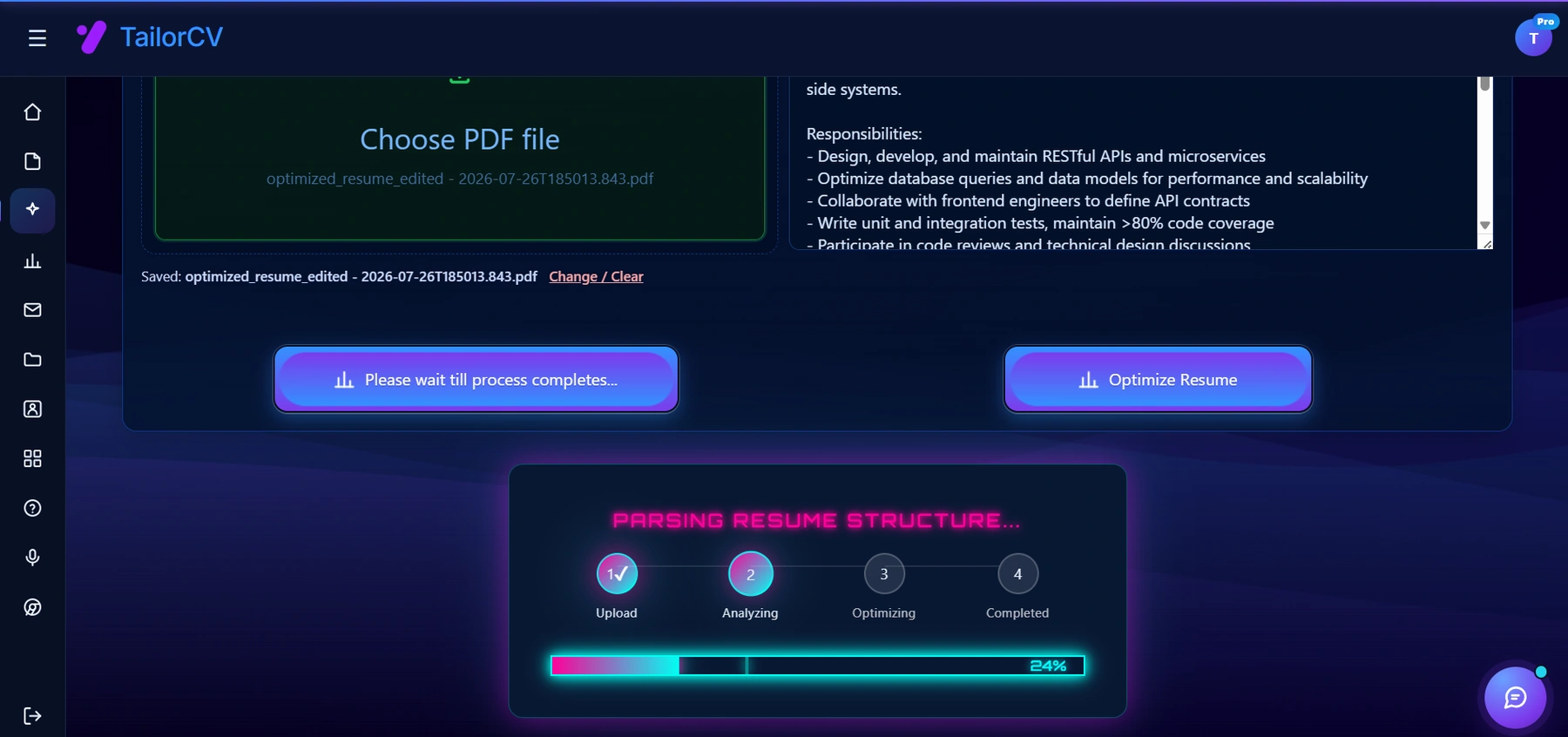
The tool parses your resume the way an ATS would before it changes anything, so the edits it suggests are grounded in the posting itself.
Manage the relationship over time
Treat recruiters as long-term relationships, not one-off transactions. Keep in touch periodically even when you're not actively looking, update them on your situation, and be gracious when a role doesn't work out. A recruiter who knows and trusts you will think of you first when the right opening appears. This is really a form of professional networking — the more genuine the relationship, the more it pays off over a career. If a recruiter goes quiet, a polite check-in is fine; if one behaves unprofessionally, simply focus your energy elsewhere.
Don't rely on agencies alone
Agencies are one channel, not your whole strategy. Keep applying directly, networking, using job boards, and sending cold emails to hiring managers in parallel. The candidates who land roles fastest run several channels at once, as how to apply to jobs faster and how to find a job fast explain. Recruiters accelerate your search; they don't replace it.
Recruitment agency checklist
To get recruiters working for you:
- unchecked: Choose specialists in your field, not generalists.
- unchecked: Be clear, responsive, and honest about what you want.
- unchecked: Give them a strong, tailored resume that's ATS-ready.
- unchecked: Nurture the relationship and run other channels in parallel.
Work with agencies this way and they become a powerful accelerant. Start with a standout resume in the resume builder, scored with the ATS checker, so every recruiter has something great to sell.
What is your resume scoring right now?
Scan it against a job description and get your ATS match score in about a minute.
Drop your resume here or choose a file
PDF only. Max 2 MB.
We never share your data or use it to train AI models.

Was this guide useful?
Be the first to rate it.