TD
TD
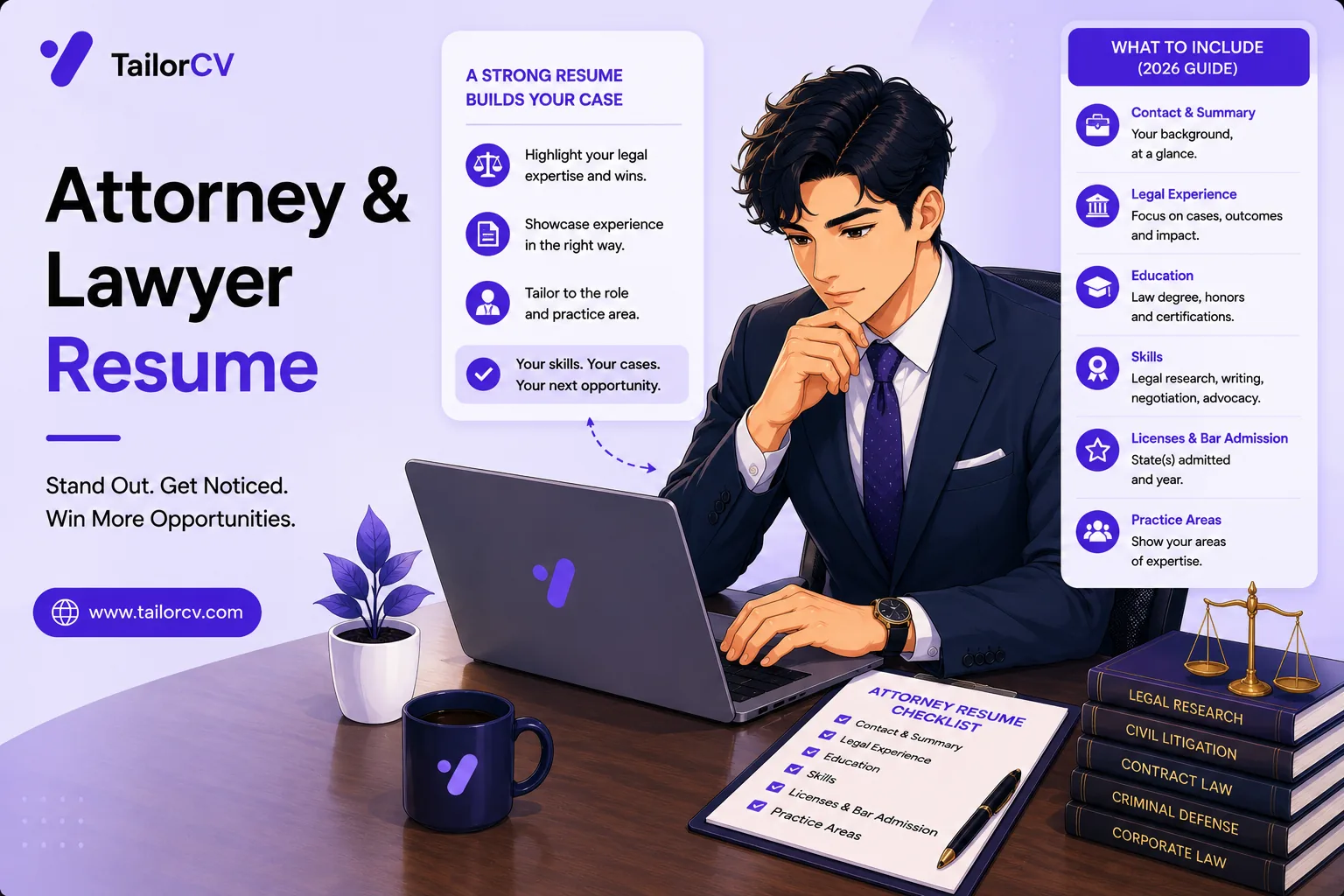
Key Takeaways
- A legal resume is a writing sample - one typo or inconsistent citation signals carelessness in a profession built on care.
- Lead with bar admissions (states and dates), your JD, law school, and honours such as law review or moot court.
- State your practice area clearly; a generic "attorney" reads weaker than a specific focus.
- Show scale and results without breaching confidentiality by pairing a strong action verb with a measurable outcome.
- Litigation, transactional, law-firm, and in-house resumes each emphasise different things, so tailor every application.
Legal hiring is precise, and your resume should be too. Whether you're a new associate or a seasoned litigator, firms and legal departments look for clear practice areas, credentials, and evidence that you deliver results — with zero typos. And with more firms and corporate legal teams using an ATS to screen applications, your resume now has to satisfy both software and a detail-obsessed hiring partner.
This guide walks through every section of an attorney resume, the keywords that matter, and how to pass the ATS. Before you send anything, run your draft through the free ATS score checker, start from an ATS-friendly template, and read the ATS score guide. If you support a legal team as a paralegal, that guide covers your path.
Why legal resumes are held to a higher bar
In law, your resume is a writing sample. A single typo, an inconsistent citation, or a formatting slip signals carelessness in a profession where carelessness is unforgivable. Hiring partners read closely, and the ATS reads mechanically — so you need flawless precision and exact-match keywords. Get both right and you clear the two gates that filter out most applicants.
Lead with bar admissions and credentials
List your bar admissions (with states and dates) prominently, along with your JD, law school, honors (law review, moot court, class rank if strong), and any clerkships. In law, these credentials are a primary screening filter, and the ATS treats them as high-value keywords. Use exact names — "Admitted to the New York State Bar (2022)" — and see how to list certifications on a resume for formatting.
A tight summary sets the frame:
"Corporate associate with 4 years at an AmLaw 100 firm, focused on M&A and private equity. Closed 20+ transactions worth a combined $3B. Admitted in New York and Delaware."
For the difference between a summary and an objective, see resume objective vs summary.
Define your practice areas clearly
State your focus — litigation, corporate, IP, employment, real estate, tax — and align it with the role. A generic "attorney" reads weaker than a specialist who matches the posting. Your practice area is one of the strongest keywords the ATS scans for, so mirror the language in the job description. Use the job description analysis checklist to pull out the exact terms a firm uses.
Quantify impact without breaching confidentiality
Legal work is confidential, but you can still show scale and results using the bullet point formula — a strong action verb, what you did, and a measurable outcome:
- "Managed a caseload of 40+ matters simultaneously."
- "Drafted and negotiated commercial contracts worth over $10M combined."
- "Won summary judgment in 8 of 10 dispositive motions."
- "Led a document review team of 6 across a complex litigation."
If your bullets read as duties, the quantify achievements guide will sharpen them. Vague bullets are a common reason a strong candidate's resume gets no responses.
Structure an attorney resume
- Header — name, bar-admitted states, phone, email, city.
- Summary — three lines, practice-area-forward.
- Bar admissions — states and dates.
- Experience — firm, role, and quantified matter highlights.
- Education — JD, honors, journal, moot court.
- Skills — practice areas, tools (Relativity, Westlaw, LexisNexis, iManage).
This mirrors the layout in the resume builder, which handles formatting so your resume stays clean. For section ordering, see the resume section order guide.
Formatting bar admissions and jurisdictions
How you present admissions matters. List each jurisdiction with its admission year, and if you're admitted in multiple states, order them by relevance to the role. For federal courts, note the specific districts. If you're registered as in-house counsel or have a limited license, state it accurately — precision here reflects the precision the profession demands, and it doubles as an ATS keyword when a role requires a specific bar. Keep the formatting clean and consistent so it parses correctly, per how to make your resume ATS-friendly, and confirm with the ATS score checker.
Precision is the whole game
Impeccable formatting, consistent citations, and flawless proofreading matter more in law than almost any field. Run a careful pass with the resume proofreading checklist and the resume review checklist. Use a conservative, ATS-friendly template and a professional font — no graphics or columns that could break parsing, as covered in how to make your resume ATS-friendly and ATS formatting mistakes.
Resume length for lawyers
Junior associates should aim for one page; experienced attorneys with substantial matter history can run two. Let relevance decide, as explained in the ideal resume length guide and how far back your resume should go. Every line should earn its place — quality over volume.
New graduate or lateral move?
If you're a recent law graduate, lead with your JD, honors, journal, clerkships, and internships, and treat significant coursework and moot-court experience as real experience — the resume with no experience guide shows how. If you're switching practice areas or moving in-house, reframe transferable skills using the career change resume guide, and tailor with the resume optimizer.
Tailor every application
Different firms and legal departments weight practice areas and skills differently, so tailor each application. Paste the posting into the resume optimizer to align your keywords, then re-check your ATS match. See how much to change your resume for every job.
Your resume after optimization
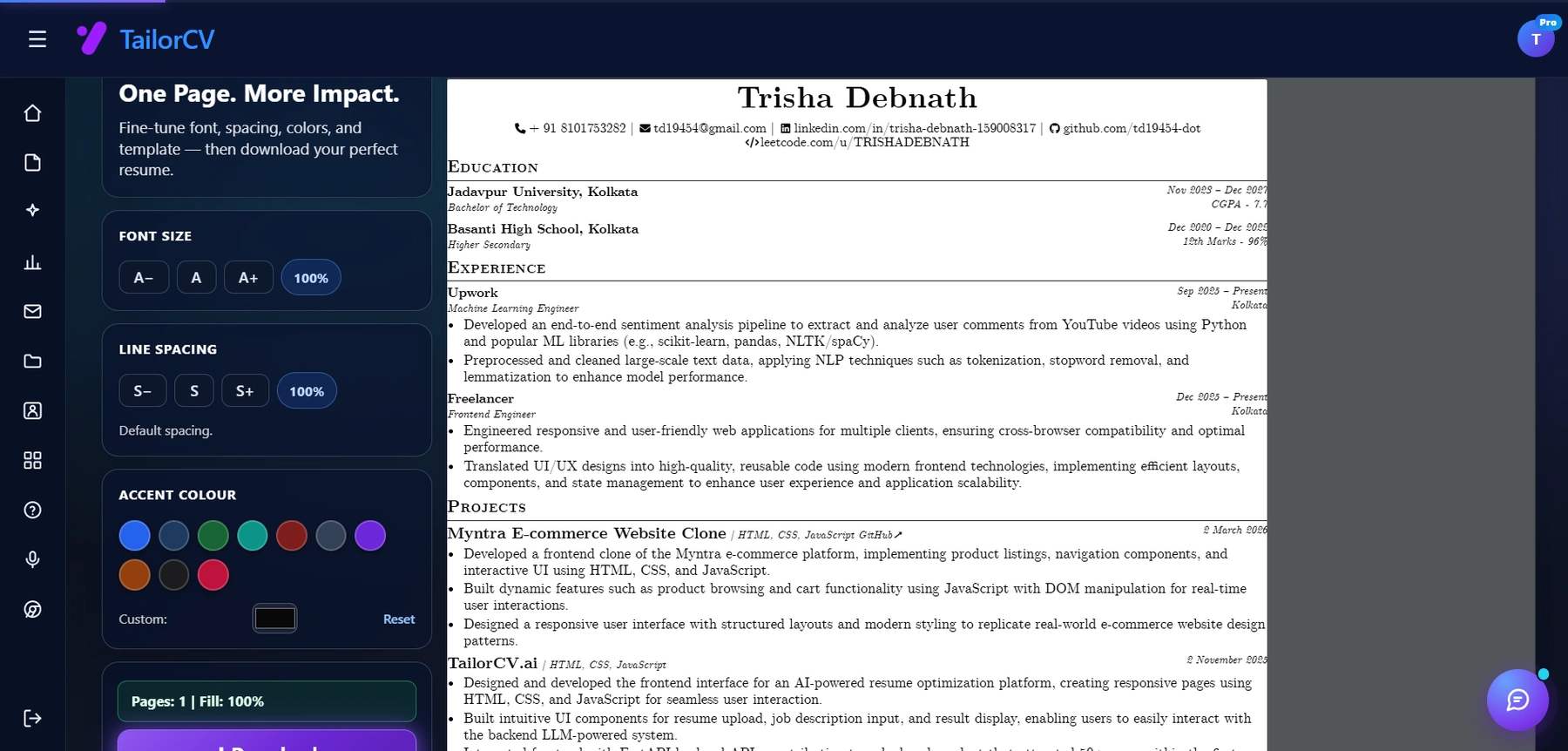
This is the resume after tailoring - the content is already matched, and these controls are how you fit it onto one page.
Prepare for legal interviews
Legal interviews probe judgment and communication. Build a STAR story bank of matters and challenges, practice with a free AI mock interview, and use the interview prep tool. Prepare for behavioral questions and know what to bring to the interview. Afterward, send a thank-you email and follow up. If a cover letter is required, generate a tailored one with the AI cover letter tool.
Litigation vs transactional resumes
Litigators and transactional attorneys tell different stories. A litigation resume should emphasize case management, motion practice, discovery, depositions, trial experience, and outcomes — win rates, dispositive motions, and caseload size. A transactional resume should foreground deals: types (M&A, financings, real estate), sizes, your role in drafting and negotiation, and closings. In both cases, mirror the job description and lead with quantified results, because the ATS and the hiring partner both look for the exact practice-area keywords they're hiring for. When you tailor each application, the resume optimizer shows whether your language matches the role's focus.
Clerkships, journals, and pro bono work
For associates and recent graduates, credentials beyond the JD carry real weight. Judicial clerkships are prestigious and belong prominently near the top. Law review or a journal editorship signals writing and analytical strength. Moot court and trial advocacy competitions show courtroom aptitude. And pro bono work demonstrates commitment and, often, hands-on experience you couldn't otherwise get early in your career — treat it like real experience, as volunteer work on a resume suggests. If your paid experience is still thin, these credentials help you build a compelling resume using the same principles as the resume with no experience guide. List academic honors and class rank if strong, and format credentials cleanly with how to list certifications on a resume and how to list education on a resume.
In-house vs law firm resumes
A law-firm resume and an in-house resume emphasize different things. Firms want billable expertise, matter volume, and practice-area depth. In-house teams want business judgment, risk management, and the ability to partner with non-lawyers — so translate your firm experience into commercial impact for those roles. If you're making that move, the career change resume guide shows how to reframe transferable skills, and the resume optimizer helps you align keywords to each posting. For an internal move up, read how to get a promotion and the internal job application resume guide.
Common attorney resume mistakes
Avoid the errors that undercut otherwise strong candidates:
- Typos or inconsistent citations. In law, this is disqualifying — proofread relentlessly.
- Vague "attorney" positioning. Name your practice area and match the posting.
- Duty lists instead of results. Quantify matters and outcomes.
- Over-formatting. A decorative layout breaks the ATS — keep it clean and run the ATS score checker.
- One resume for every firm. Tailor each application.
For a wider list of what quietly sinks applications, read why your resume gets no responses and generic resume mistakes that cost interviews.
Newly admitted or awaiting bar results?
If you're a recent graduate or waiting on bar results, be transparent about your status — "Admitted, New York (2026)" or "Awaiting July 2026 bar results, New York." Firms hire around bar timelines constantly, so clarity helps rather than hurts. Lead your resume with your JD, honors, clerkships, and internships, and treat substantial coursework and moot court as real experience using the resume with no experience guide. Prepare thoroughly for interviews with a free AI mock interview and the interview prep tool, and rehearse behavioral questions that probe judgment. Afterward, a prompt thank-you email reinforces the professionalism the profession expects.
Salary and offer negotiation for lawyers
Legal compensation varies enormously by market, practice area, and firm size, so know your worth before you accept. Research market rates, and when an offer comes, negotiate professionally using how to negotiate a salary offer and the salary negotiation guide. Consider the whole package — bonus structure, billable-hour expectations, partnership track, and benefits — not just base salary. If you're weighing multiple offers, negotiating multiple job offers explains how to do it without burning bridges.
Attorney resume FAQ
One page or two? Junior associates: one page. Experienced attorneys with substantial matter history: up to two. Let relevance decide, per the ideal resume length guide.
Should I list every case? No — highlight representative matters that show scope and results, kept confidentiality-safe. Quality over volume.
How do I show impact without breaching confidentiality? Use aggregate figures — caseload size, deal values, win rates — rather than client names or privileged details.
Do I need a different resume for firm vs in-house? Yes. Firms want billable expertise; in-house teams want business judgment. Tailor each application and re-check with the ATS score checker.
How important is proofreading, really? Critical. In law, a typo signals carelessness with filings. Proofread meticulously and run the review checklist.
Final checklist
Your attorney resume is ready when it:
- unchecked: Leads with bar admissions and a clear practice area.
- unchecked: Mirrors the job description keywords.
- unchecked: Backs experience with quantified, confidentiality-safe results.
- unchecked: Is flawlessly proofread with consistent formatting.
- unchecked: Uses an ATS-friendly template and passes the ATS score checker.
In law, precision wins. Build your resume in the resume builder, score it with the free ATS checker, and tailor it to every firm you apply to.
What is your resume scoring right now?
Scan it against a job description and get your ATS match score in about a minute.
Drop your resume here or choose a file
PDF only. Max 2 MB.
We never share your data or use it to train AI models.

Templates that keep this structure intact
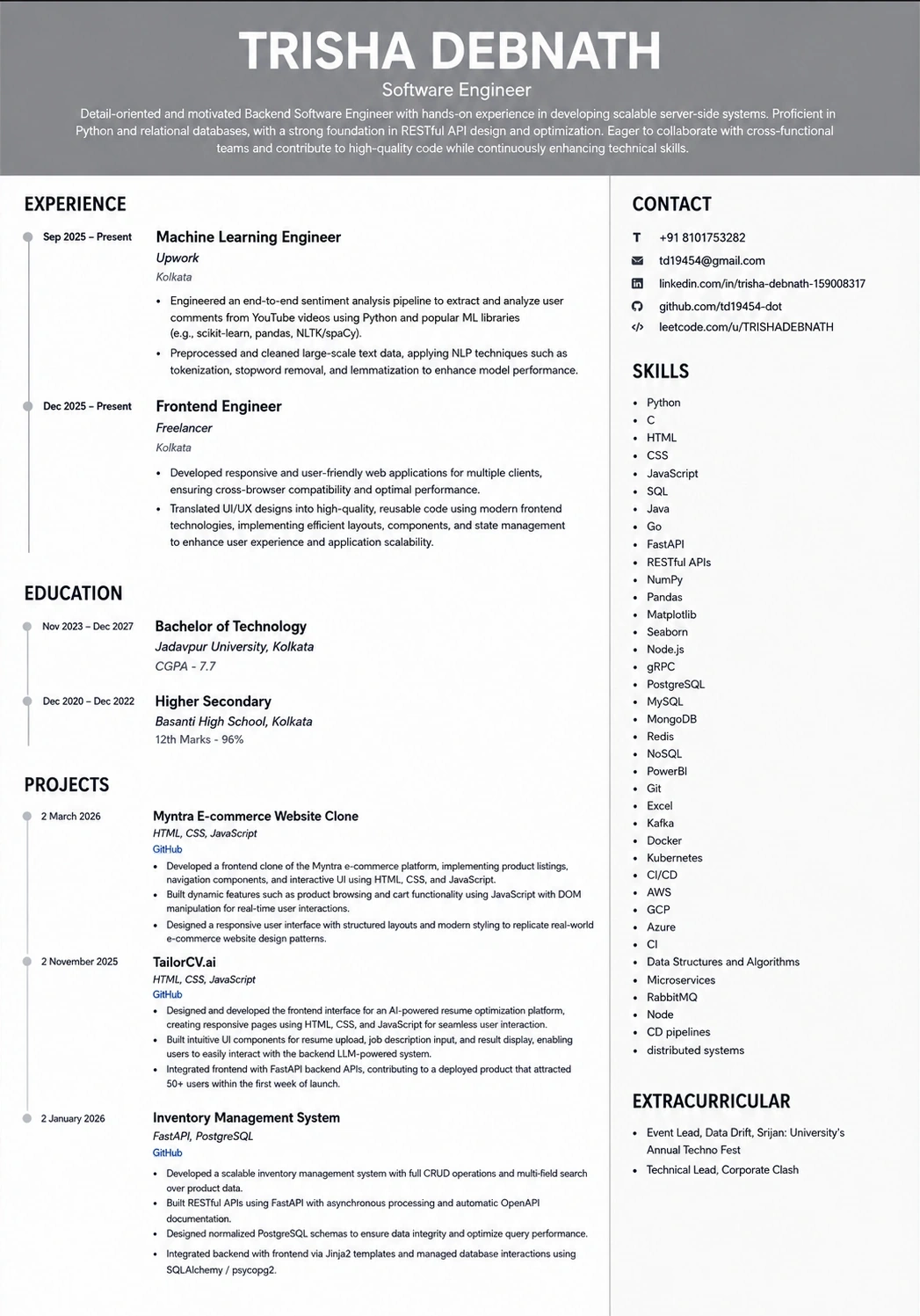
This template is ATS-tested — start from it and the formatting rules in this guide are already handled.
Was this guide useful?
Be the first to rate it.