 SS
SS

Key Takeaways
- The About Me section should be specific, human, and concise, avoiding lengthy narratives and empty adjectives.
- Use a formula that includes who you are, proof of your skills, what you are looking for, and a personal touch.
- Start with a strong opening line that clearly summarizes your professional identity and avoid jargon.
- Provide evidence of your skills through notable achievements or metrics that demonstrate your value.
- Tailor your tone and content to resonate with your target audience, and keep your resume and portfolio aligned in messaging.
The About Me section is where a visitor decides whether to trust you - and most people get it wrong by writing either a life story or a wall of empty adjectives. A great About Me is specific, human, and short. Pair this with How to Build a Professional Portfolio and Personal Branding for Professionals.
The Formula
- Who you are + what you do (one sharp line)
- Proof - a result, a specialty, or a signature strength
- What you are looking for - the role or work you want
- A human touch - one genuine detail that makes you memorable
Examples
- Developer: "I'm a frontend developer who turns complex dashboards into fast, accessible UIs. I cut a fintech app's load time by 40% and genuinely enjoy a tricky animation. Currently open to React roles."
- Designer: "I'm a product designer focused on fintech onboarding. My last redesign lifted activation 18%. I care about the boring screens everyone ignores."
- Writer: "I write SEO content that ranks and converts - one client guide hit page one in three months. B2B SaaS is my home turf."
Step-by-Step Guide to Writing Your About Me Section
1. Identify Your Core Message
Before you start writing, take a moment to reflect on what you want to convey. Ask yourself:
- What is my professional identity?
- What unique value do I bring to my field?
- What kind of opportunities am I seeking?
Action Item: Jot down keywords and phrases that resonate with your professional experience and aspirations.
2. Crafting the Opening Line
Your first line is crucial. It should grab attention while succinctly summarizing who you are and what you do.
Tips:
- Use clear, straightforward language.
- Avoid jargon unless it's commonly understood in your industry.
Example: "I'm a digital marketing strategist specializing in social media campaigns that drive engagement and conversions."
3. Provide Evidence of Your Skills
Once you've introduced yourself, back it up with proof. This could be a notable achievement, a project you're proud of, or a specialty that sets you apart.
Examples of Proof:
- Metrics (e.g., "increased website traffic by 50% in six months").
- Awards or recognitions (e.g., "awarded Best New Designer 2023").
- Specific skills (e.g., "expert in Adobe Creative Suite").
4. Define Your Aspirations
Clearly state what you're looking for. This helps potential employers or collaborators understand your goals and how they align with their needs.
Example: "Currently seeking opportunities in a dynamic agency where I can leverage my skills in UX design."
5. Add a Personal Touch
Include a detail that makes you memorable. This could be a hobby, an interesting fact, or a personal philosophy that influences your work.
Example: "When I’m not designing, you can find me hiking the trails in my local national park, drawing inspiration from nature."
Do
- Write in first person
- Lead with value, not chronology
- Match the tone to your field
- End with a clear next step (see your work, contact you) - link to Portfolio Contact Section
Avoid
- Generic adjectives ("passionate, hard-working, detail-oriented")
- Long paragraphs no one reads
- Buzzword soup with no proof
Keep it to 3-5 sentences. Borrow techniques from How to Write a Resume Summary - the resume summary and the About Me are cousins.
Common Mistakes to Avoid
To make your About Me section effective, steer clear of these common pitfalls:
1. Writing a Novel
Long-winded narratives can bore readers. Stick to the essentials.
Tip: Aim for clarity and brevity. If it doesn’t add value, cut it out.
2. Using Clichés
Phrases like "I'm a team player" or "I think outside the box" are overused and lack impact.
Tip: Instead, show how you embody these traits through specific examples.
3. Neglecting the Audience
Your About Me should resonate with your target audience. Avoid overly technical language if it may alienate potential clients or employers.
Tip: Tailor your tone and content according to who will be reading it.
Keep Your Resume and Portfolio in Sync
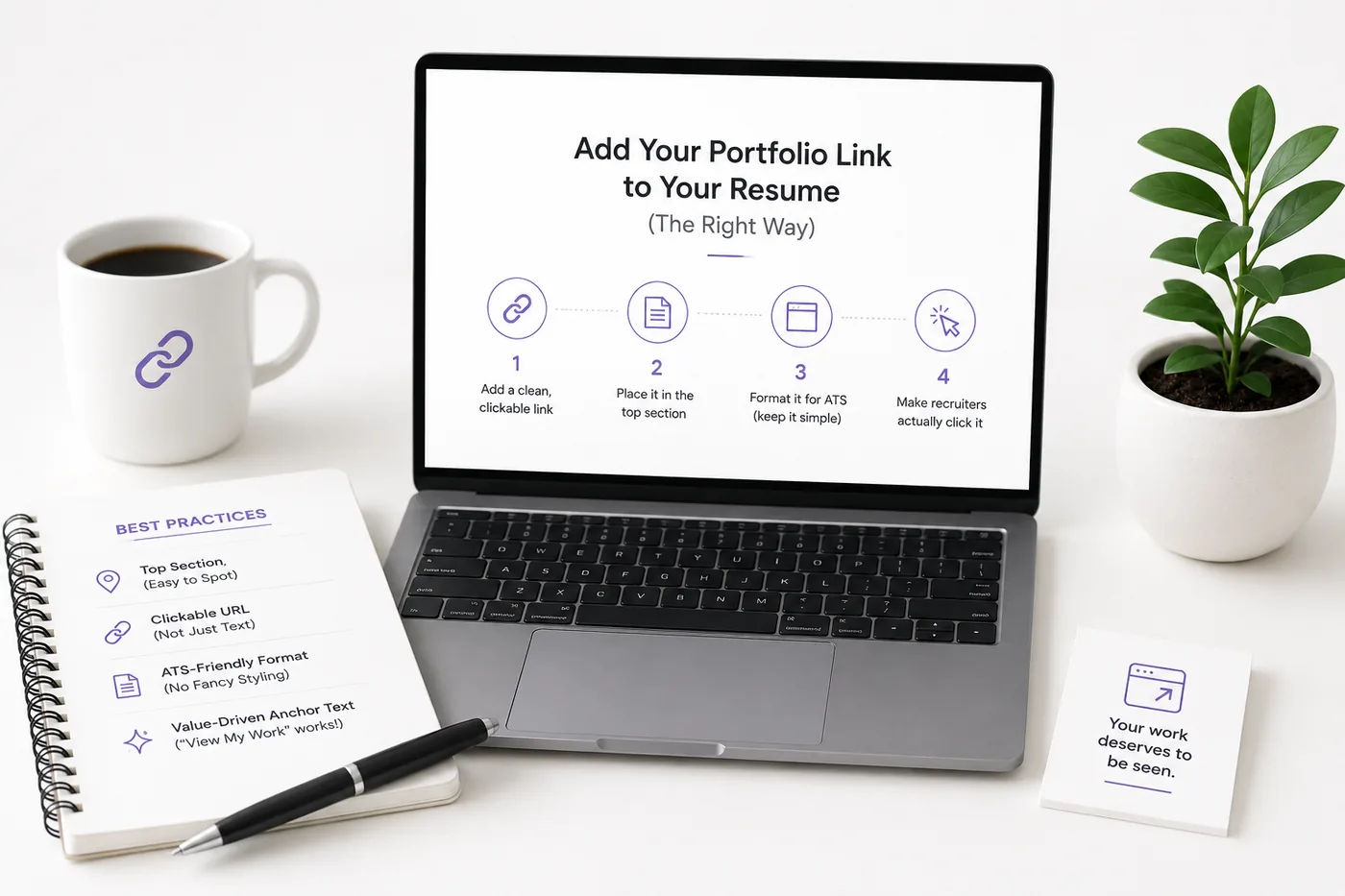
Your resume, LinkedIn, and portfolio should tell the same story - same name, same headline, same top projects - just at different levels of depth. A recruiter who sees a 'Full Stack Developer' resume and a portfolio headlined 'Aspiring Designer' gets confused, and confusion loses interviews. Lock the resume down first with the ATS score checker and an ATS-friendly template, then mirror that exact positioning in your portfolio. When they reinforce each other, every recruiter touchpoint pushes you forward. See How to Add Your Portfolio Link to Your Resume for placing the link correctly.
Turning a resume into a portfolio site
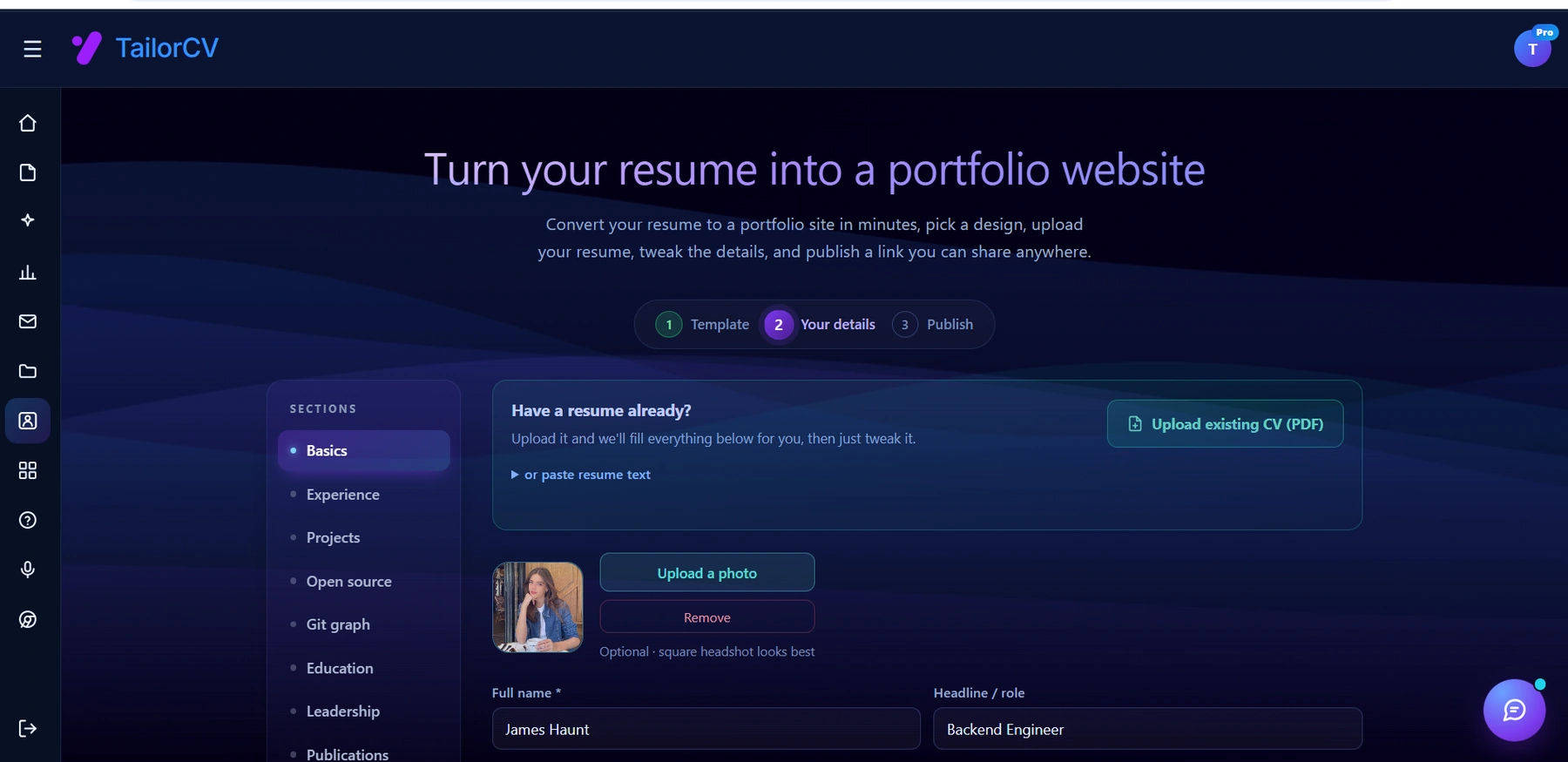
The three steps are template, details, publish. Uploading an existing CV fills in the details step for you, which is why this takes minutes rather than a weekend.
Pro Tips
- Add a Real Photo: Faces build trust. Use a professional headshot that reflects your personality.
- Optimize for SEO: Include your specialty in the first six words to enhance visibility for search engines and skimmers. Learn more in Portfolio SEO: Get Found.
- Use a Portfolio Builder: Publish your About Me on a site built with the portfolio builder to ensure a professional presentation.
Enhancing Your About Me with Analytics
To continuously improve your About Me section, consider using analytics tools to gauge interest. Using Portfolio Analytics to Gauge Recruiter Interest can provide insights into how visitors are interacting with your portfolio, allowing you to make informed adjustments.
Checklist for Your About Me Section
Before finalizing your About Me section, make sure to check off the following:
- unchecked: Is it concise (3-5 sentences)?
- unchecked: Does it include a strong opening line?
- unchecked: Is there proof of my skills and achievements?
- unchecked: Have I clearly stated what I am looking for?
- unchecked: Did I add a personal touch?
- unchecked: Is the tone appropriate for my industry?
- unchecked: Have I avoided clichés and jargon?
- unchecked: Is there a call to action at the end?
Final Thoughts
Your About Me section is your chance to make a memorable first impression. By following the steps outlined above, you can create a compelling narrative that not only showcases your professional identity but also resonates with potential employers or collaborators. Remember, your portfolio is a living document; revisit and revise your About Me as your career evolves.
For more guidance on creating a standout portfolio, check out our Content Writer & Copywriter Portfolio Guide (2026) and learn how to effectively present your work through How to Write a Portfolio Case Study (Template + Examples).
Frequently Asked Questions
How long should an About Me be?
Three to five sentences for the main blurb. You can add a longer 'more about me' section lower down if you want.
First person or third person?
First person for most portfolios - it reads as authentic. Third person suits very formal or agency contexts.
What do I write with no experience?
Lead with your focus and what you have built or are learning. See Build a Portfolio With No Experience. You might also want to check out our guide on How to Turn Your LinkedIn Profile Into a Portfolio Website for additional tips. Consider using our Portfolio builder to create a professional-looking portfolio that showcases your skills and projects.
Build Your Portfolio Now
You do not need to code a site from scratch or spend a weekend wrestling with a website builder. Turn your existing resume into a live, shareable portfolio website in minutes with the TailorCV portfolio builder - choose a template, upload your CV, tweak the details, and publish a link you can drop straight onto your resume and LinkedIn. Before you start applying, run your resume through the free ATS score checker and switch to an ATS-friendly template so your portfolio and resume tell one clean, consistent story to every recruiter.
Related Guides
- How to Build a Professional Portfolio
- Personal Branding for Professionals
- Portfolio Contact Section
- How to Write a Resume Summary
- Portfolio Mistakes to Avoid
- LinkedIn Profile Optimization Guide
- Portfolio SEO: Get Found
- Personal Website vs Portfolio
- Build a Portfolio With No Experience
- How to Write a Resume Headline
- Turn Your Resume Into a Portfolio in Minutes
- Portfolio Checklist Before You Apply
Make This Practical
If this topic connects to your work samples, turn the advice into a live proof page with the TailorCV portfolio builder. After publishing, add the link correctly using How to Add Your Portfolio Link to Your Resume, tighten the page with the Portfolio Checklist Before Applying, and make sure recruiters can contact you through a clean Portfolio Contact Section.
Your portfolio works best when it supports the resume, not when it replaces it. Run the resume through the free ATS score checker, choose an ATS-friendly resume template, and use Portfolio SEO: Get Found so your name, role, and strongest projects are easier to discover.
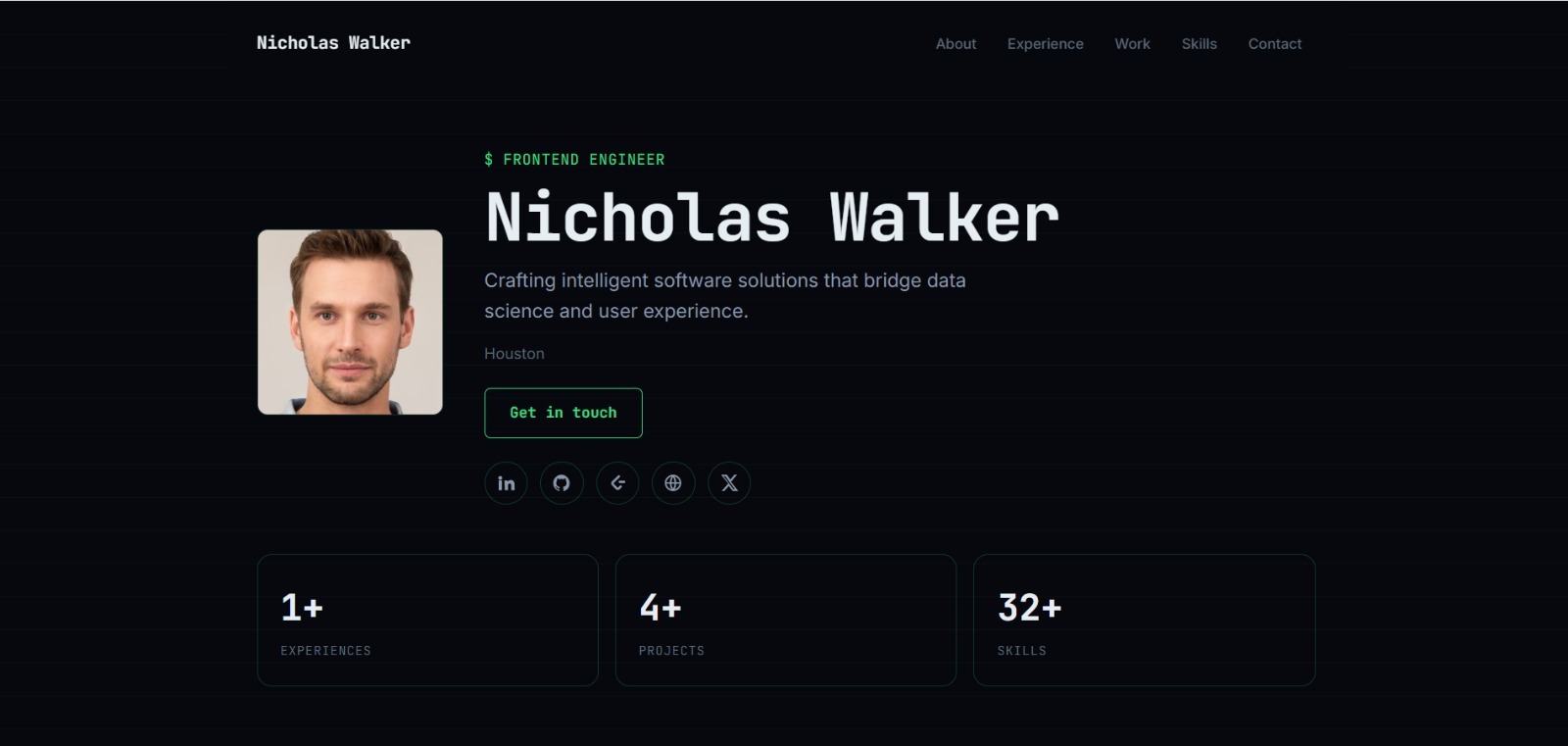
See what your portfolio could look like
This theme is built straight from your resume — pick one and your portfolio is live in minutes.
Was this guide useful?
Be the first to rate it.