TD
TD
Key Takeaways
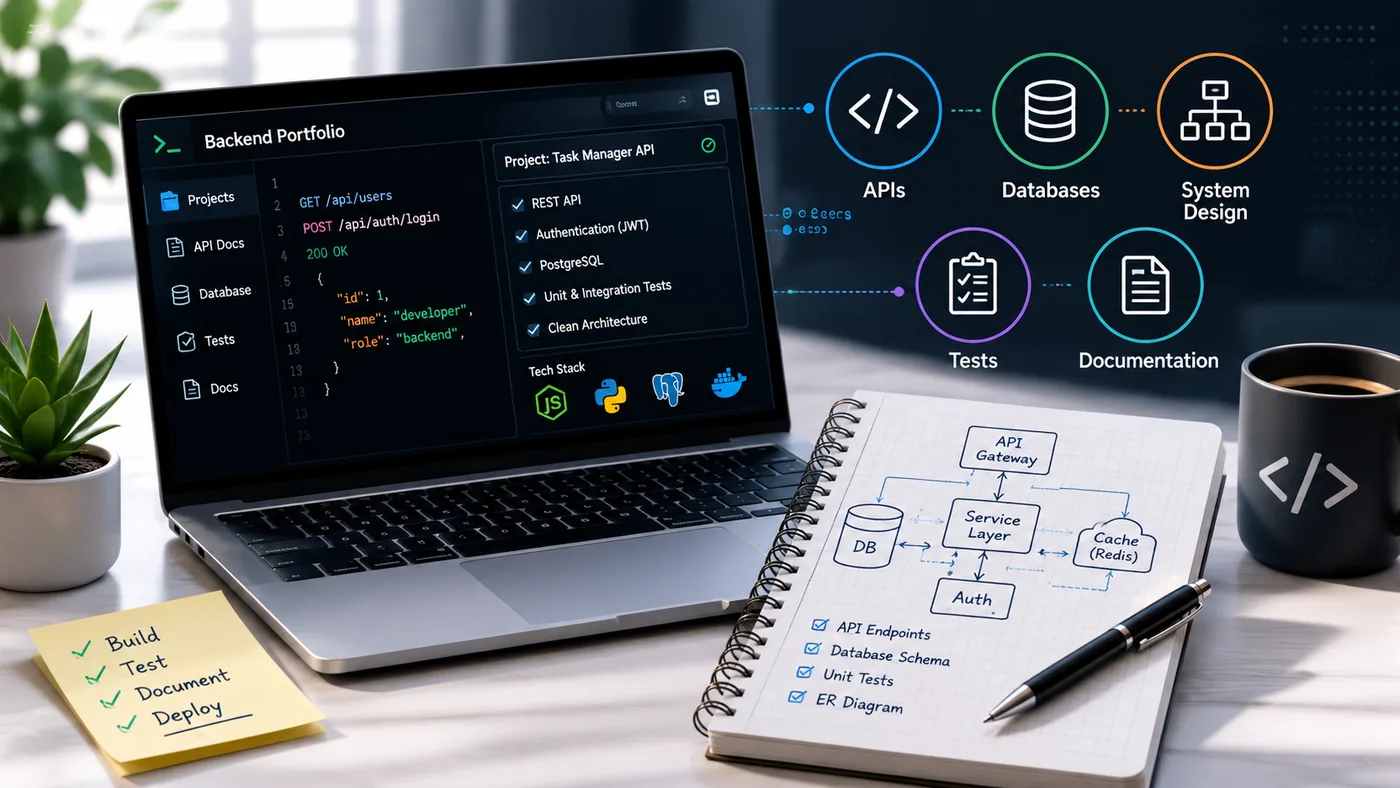
- Highlight your APIs with documented specifications and live hosting for potential employers to test.
- Create clear architecture diagrams and explain your data models, including trade-offs and interactions.
- Demonstrate production readiness through unit tests, security measures, and performance metrics.
- Maintain effective documentation with setup instructions, architecture overviews, and a decision log.
- Ensure consistency across your resume, LinkedIn, and portfolio to present a cohesive professional narrative.
Backend Developer Portfolio Guide (2026): Make the Invisible Visible
Backend work is invisible by nature - there is no UI to admire. So your portfolio has a harder job: it must make architecture, reliability, and production thinking visible to someone skimming for 30 seconds. Done well, a backend portfolio signals seniority faster than years on a resume.
Pair this with How to Build a Professional Portfolio, 15 Developer Portfolio Project Ideas, and Full Stack Developer Portfolio Guide.
Lead With APIs and Architecture
Highlight Your APIs
- A documented API (REST or GraphQL) with OpenAPI/Swagger.
- Include sample requests and responses in your documentation.
- Ensure your API is hosted live, allowing potential employers to test it.
Create Clear Architecture Diagrams
- Use tools like Lucidchart or Draw.io to create architecture diagrams for your projects.
- Ensure your diagrams are simple, using boxes and arrows to represent components and interactions.
- Consider including a narrative that explains the architecture choices you made.
Explain Your Data Models
- Provide a clear explanation of your data models and the trade-offs you chose.
- Include examples of how your data models support the functionality of your applications.
- Document the relationships between different models and how they interact.
Prove Production Readiness
This is what separates hobby projects from hireable ones:
- Unit and integration tests plus CI: Use tools like Jest, Mocha, or JUnit to demonstrate your testing process.
- Auth, input validation, rate limiting, and error handling: Detail how you handle security and user input.
- Caching, queues, or background jobs where relevant: Include specific technologies used (like Redis for caching or RabbitMQ for queues).
- A short reliability/performance note (latency, throughput, what you measured): Use real numbers to show how your system performs under load.
Example of Production-Ready Project
- A web application that processes user data in real-time, with a documented API, automated tests, and performance metrics showing a response time under 200ms.
Documentation Is Part of the Engineering
A README with setup, architecture, and a "why I built it this way" section signals exactly the judgment teams pay for. Add the decisions you made and rejected.
Key Components of Effective Documentation
- Setup Instructions: Clear steps to get the project running locally.
- Architecture Overview: A brief description of the project's architecture, including technologies used and why.
- Decision Log: A section documenting significant decisions made during development and the rationale behind them.
Strong Backend Project Ideas
- A multi-tenant API with auth and role-based access.
- A rate-limited public API with docs and a client SDK.
- A job queue / worker system processing real tasks.
- A data-heavy service with caching and pagination.
More Project Ideas
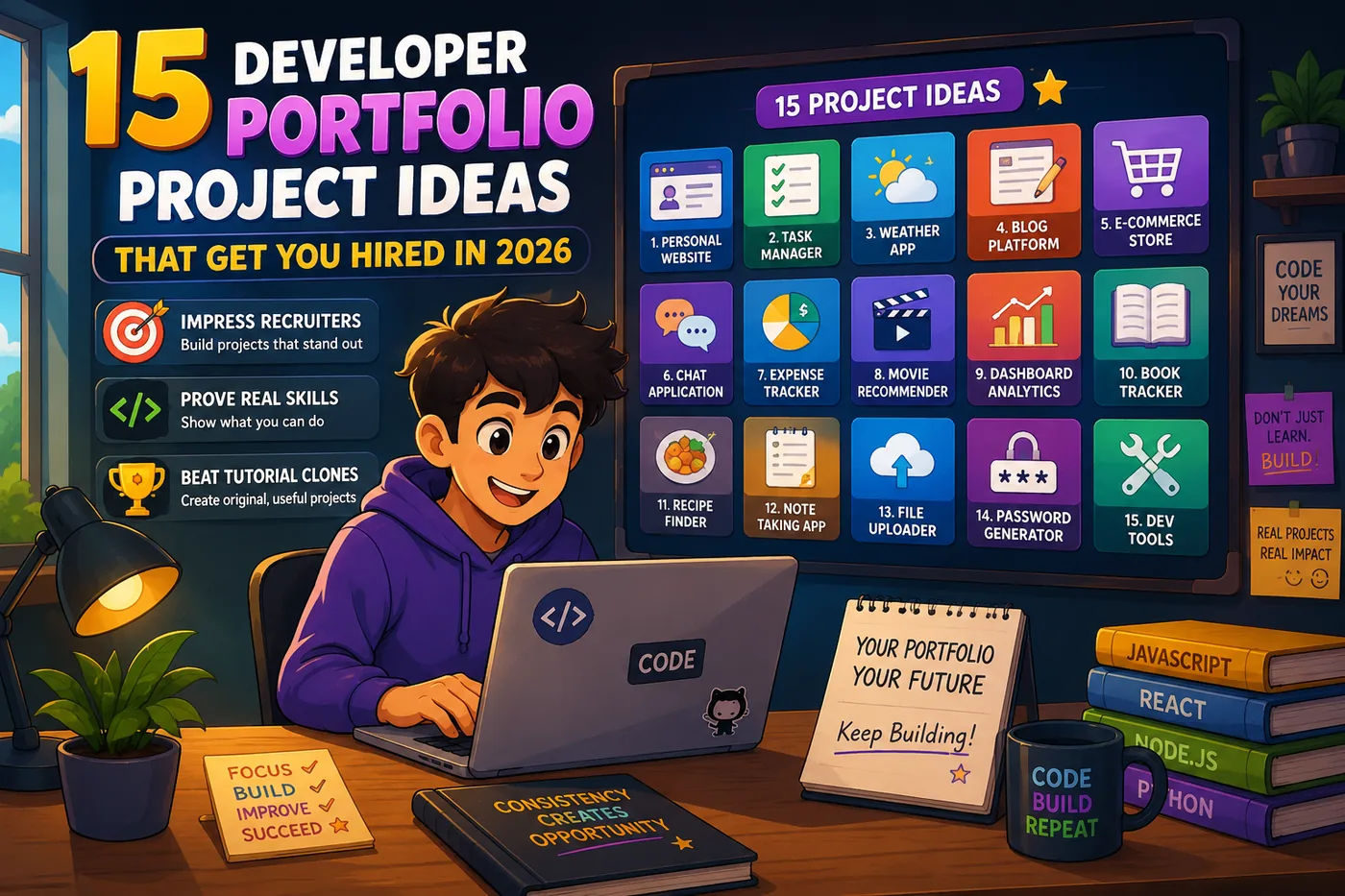
Consider exploring 15 Developer Portfolio Project Ideas for inspiration. Projects that showcase different technologies or methodologies can help you stand out.
Keep Your Resume and Portfolio in Sync
Your resume, your LinkedIn, and your portfolio should tell the same story - same name, same headline, same top projects - just at different levels of depth. A recruiter who sees a 'Full Stack Developer' resume and a portfolio headlined 'Aspiring Designer' gets confused, and confusion loses interviews.
Steps to Ensure Consistency
- Lock the resume down first with the ATS score checker and an ATS-friendly template.
- Mirror that exact positioning in your portfolio.
- Use the same project descriptions and technologies across all platforms.
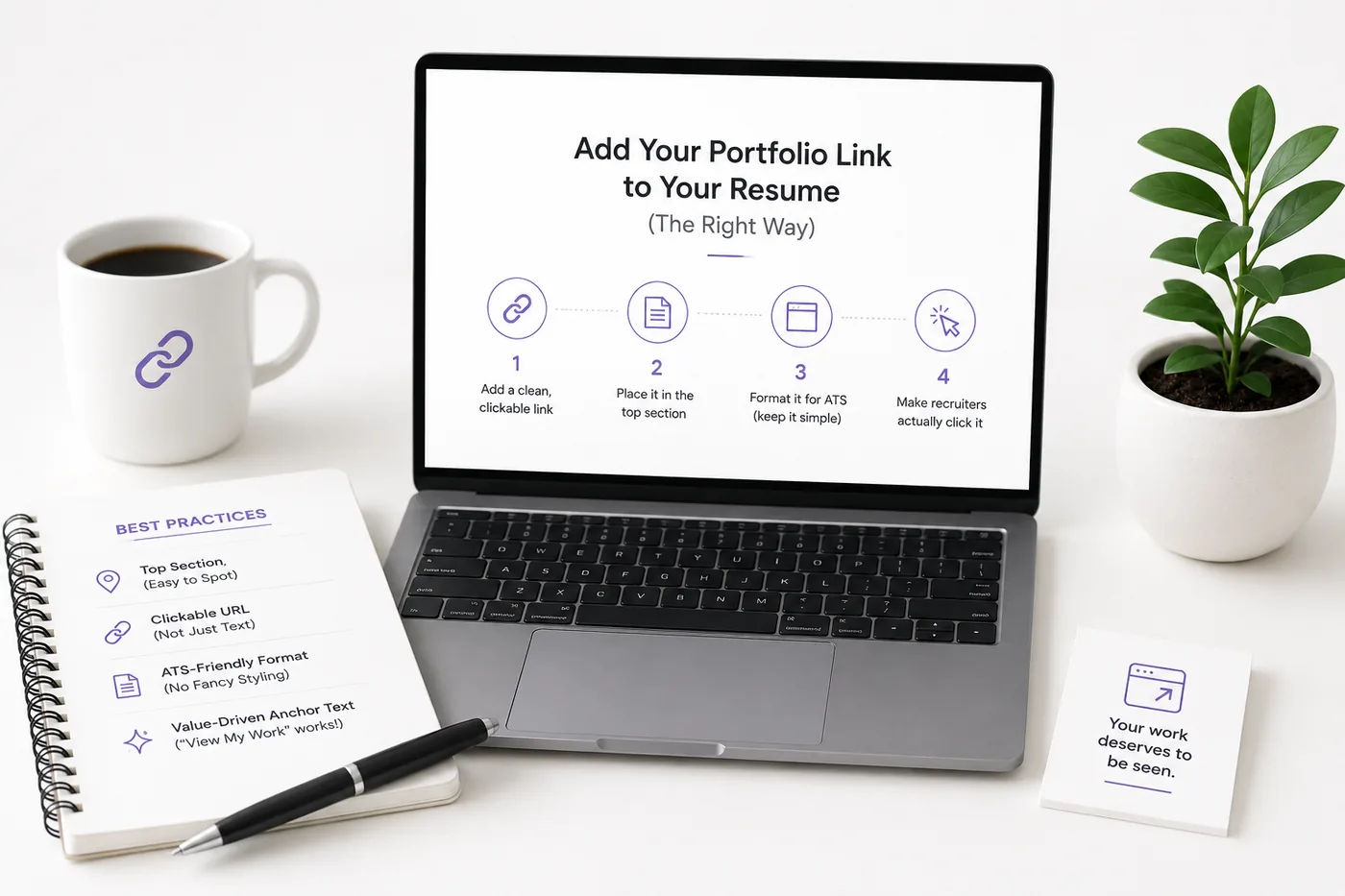
When they reinforce each other, every recruiter touchpoint pushes you forward. See How to Add Your Portfolio Link to Your Resume for placing the link correctly.
Common Mistakes
Identifying and avoiding common pitfalls can greatly enhance your portfolio's effectiveness:
Turning a resume into a portfolio site
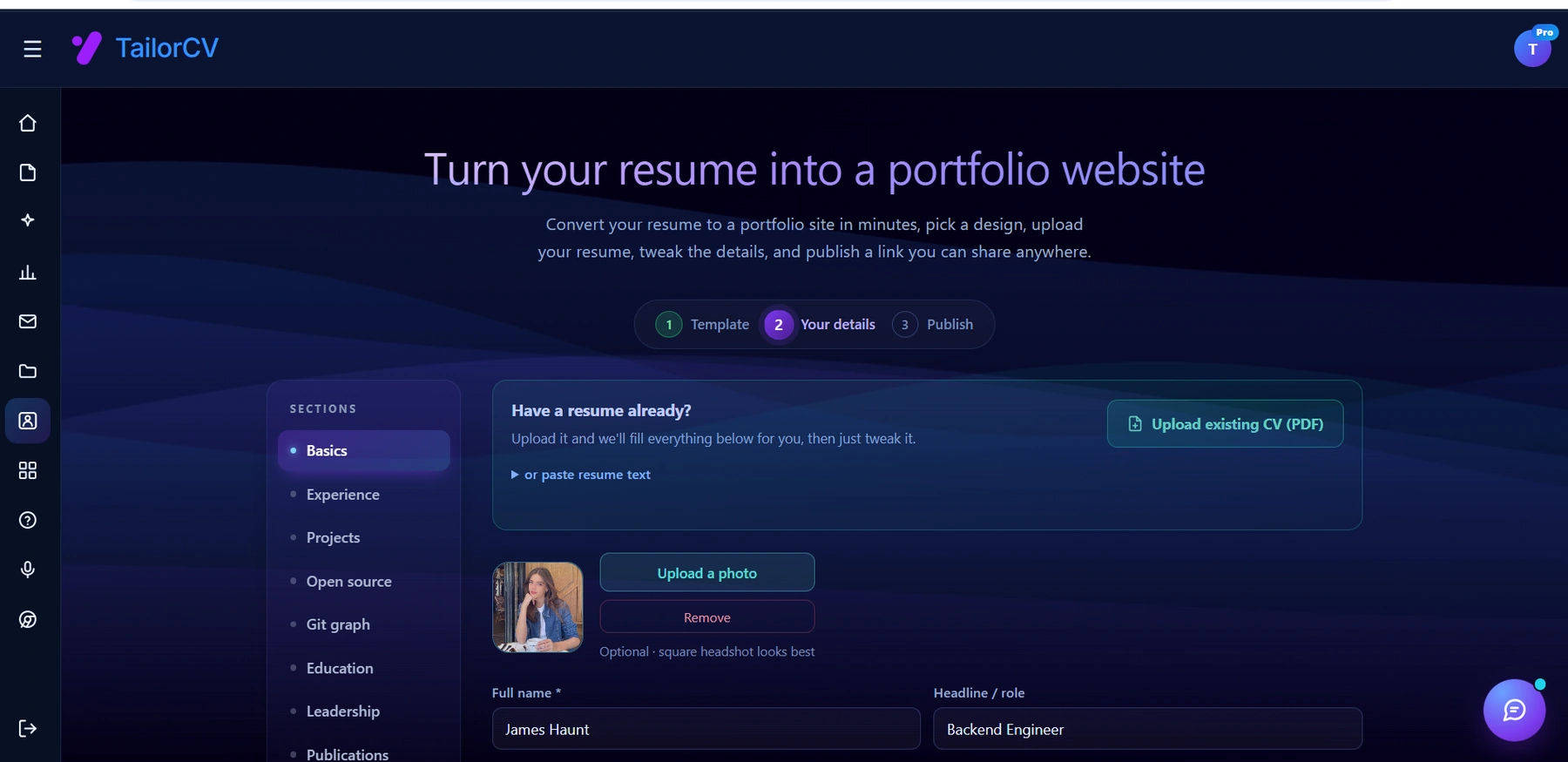
You upload the resume you already have and the sections fill themselves in - basics, experience, projects, education - so building the site is editing rather than starting from an empty page.
| Mistake | Why it costs you |
|---|---|
| Shipping code with no tests or docs | Always include tests and documentation |
| No deployed endpoint to actually call | Ensure your projects are live and accessible |
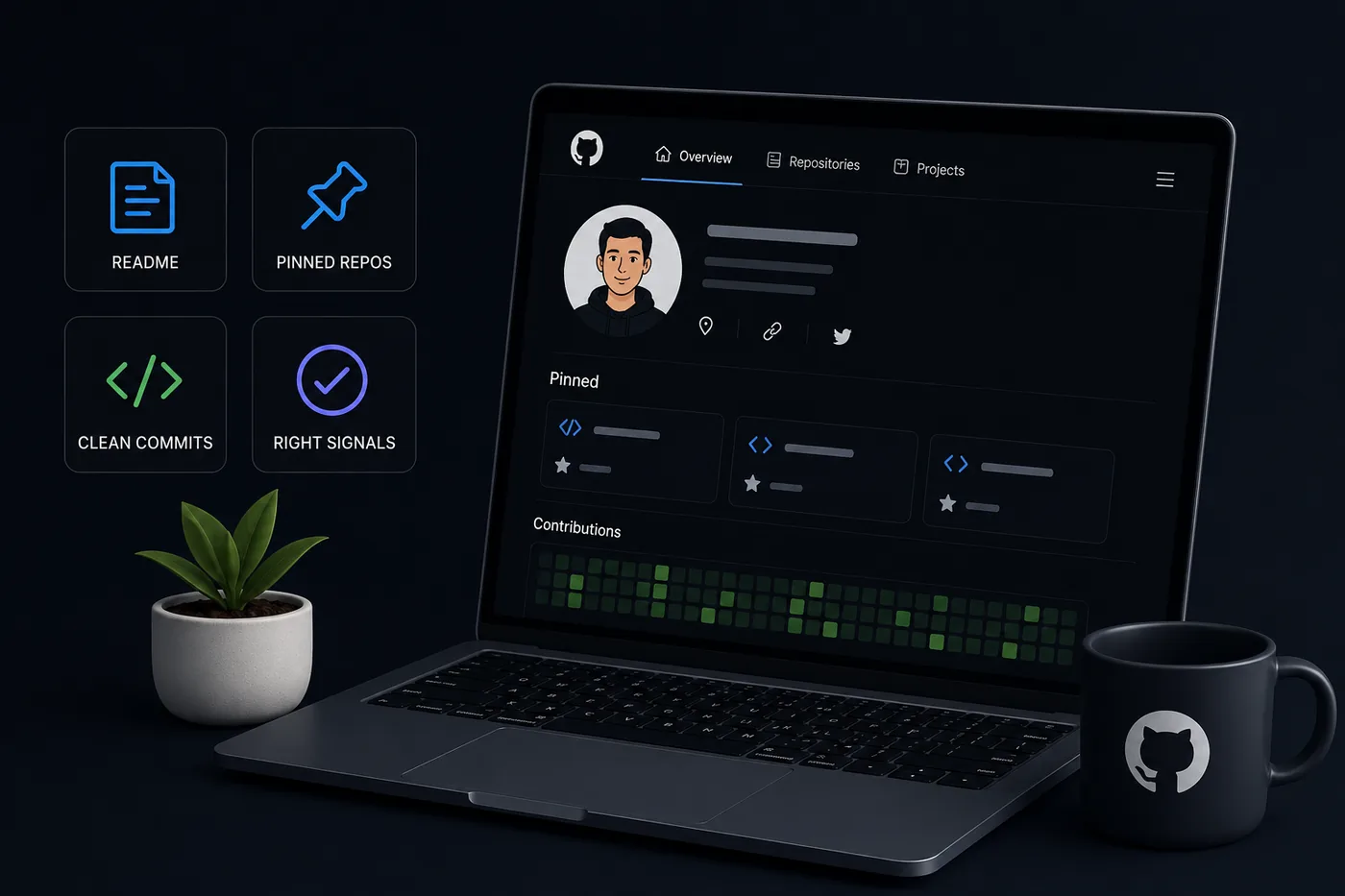
| Hiding everything in private repos | Make your best work visible with GitHub Portfolio Optimization |
| Dead links | Run the Portfolio Checklist Before You Apply to ensure everything works |
Additional Pitfalls to Avoid
- Overcomplicating your projects: Focus on quality over quantity.
- Ignoring feedback: Seek input from peers or mentors to improve your portfolio.
- Neglecting design: While backend work is invisible, a clean and professional design can enhance perceived quality.
Pro Tips
- Provide a live, callable endpoint: This allows recruiters to interact with your work directly.
- Add a tiny Postman collection or curl examples to the README: This demonstrates how to use your API effectively.
- Generate your portfolio site from your resume with the portfolio builder: Link each repo + demo for easy access.
- Consider free hosting options: Learn How to Host Your Portfolio Website for Free (2026 Guide) to ensure your projects are publicly available.
- Use analytics: Track visitor interactions on your portfolio site to understand what interests potential employers the most.
Conclusion
Creating a standout backend developer portfolio in 2026 requires careful thought and execution. Focus on showcasing your APIs, architecture, and production readiness while maintaining clear and consistent documentation. By avoiding common mistakes and leveraging practical tips, you can present your skills effectively and attract the right opportunities. Don't forget to keep your portfolio synced with your resume and LinkedIn profile for maximum impact. For further insights, consider checking out the Backend Developer Resume 2026 - Complete Guide with Examples and prepare for interviews with the Behavioral Interview Questions and Answers - Complete 2026 Guide.
Frequently Asked Questions
How do I show backend work without a UI?
Architecture diagrams, a hosted API with docs, test coverage, and a written case study of one hard problem. A short Loom-style walkthrough also works well.
Should I deploy my APIs?
Yes - a callable endpoint or live Swagger page is far more convincing than a repo alone. Free hosts make this easy; see How to Host Your Portfolio for Free.
How do I align my resume?
Use the Backend Developer Resume guide and quantify impact with How to Quantify Resume Achievements. For more insights, consider checking out 15 Developer Portfolio Project Ideas to enhance your portfolio.
Build Your Portfolio Now
You do not need to code a site from scratch or spend a weekend wrestling with a website builder. Turn your existing resume into a live, shareable portfolio website in minutes with the TailorCV portfolio builder - choose a template, upload your CV, tweak the details, and publish a link you can drop straight onto your resume and LinkedIn. Before you start applying, run your resume through the free ATS score checker and switch to an ATS-friendly template so your portfolio and resume tell one clean, consistent story to every recruiter.
Related Guides
- How to Build a Professional Portfolio
- Backend Developer Resume 2026
- System Design Interview Guide
- Full Stack Developer Portfolio Guide
- 15 Developer Portfolio Project Ideas
- GitHub Portfolio Optimization
- How to Write a Portfolio Case Study
- How to Quantify Resume Achievements
- Portfolio Checklist Before You Apply
- How to Host Your Portfolio for Free
- DevOps Engineer Resume 2026
- Portfolio Mistakes to Avoid
- Portfolio SEO Guide 2026 - Getting Found by Recruiters
Make This Practical
If this topic connects to your work samples, turn the advice into a live proof page with the TailorCV portfolio builder. After publishing, add the link correctly using How to Add Your Portfolio Link to Your Resume, tighten the page with the Portfolio Checklist Before Applying, and make sure recruiters can contact you through a clean Portfolio Contact Section.
Your portfolio works best when it supports the resume, not when it replaces it. Run the resume through the free ATS score checker, choose an ATS-friendly resume template, and use Portfolio SEO: Get Found so your name, role, and strongest projects are easier to discover.
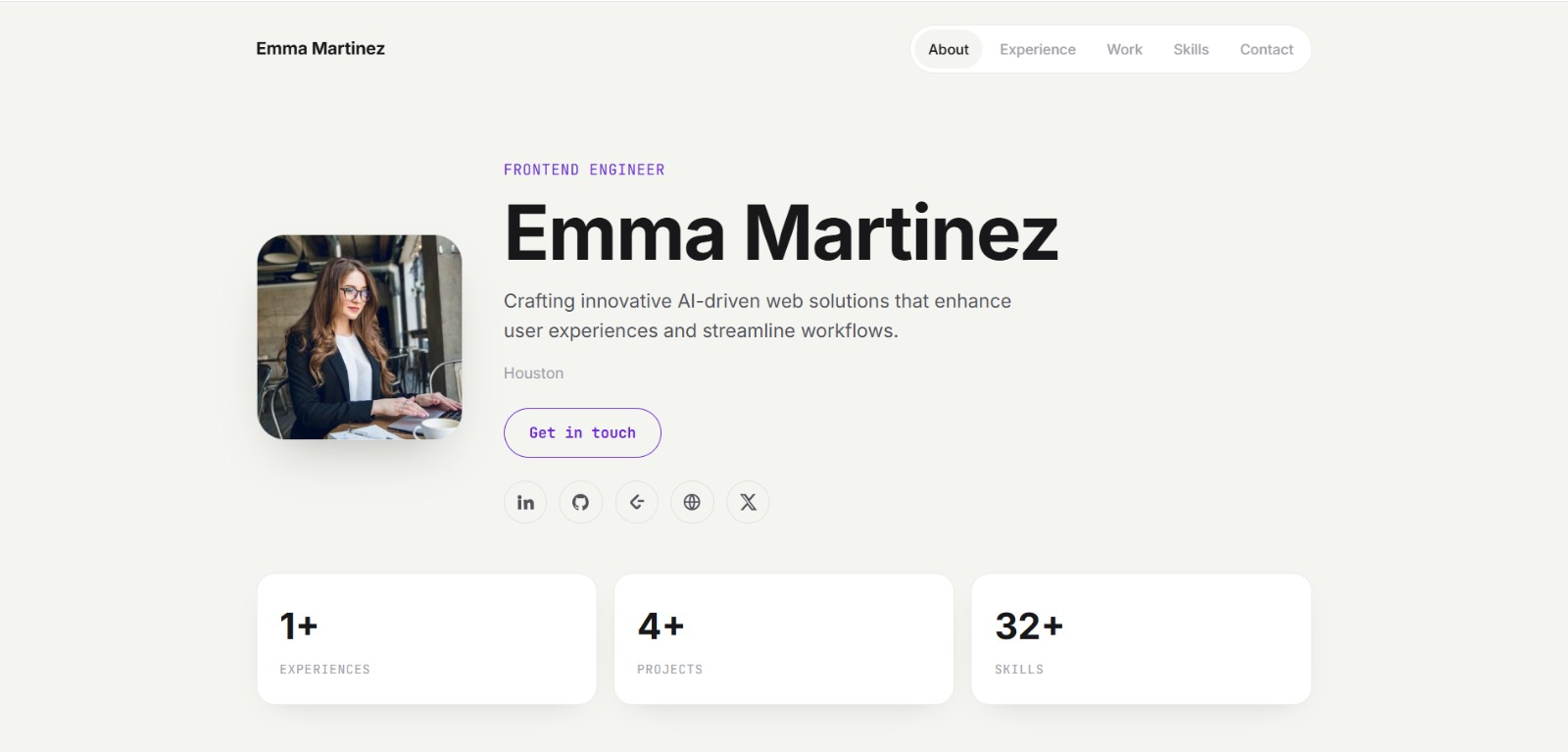
See what your portfolio could look like
This theme is built straight from your resume — pick one and your portfolio is live in minutes.
Was this guide useful?
Be the first to rate it.