 TD
TD
Key Takeaways
- The three main resume formats are reverse chronological, functional, and combination, each affecting how recruiters and ATS systems read your experience.
- The reverse chronological format is the most common and recommended, showcasing recent experience and career progression effectively.
- The functional format can obscure work history and may raise suspicion among recruiters, making it less ideal for most candidates.
- The combination format is beneficial for career changers, allowing for a focus on skills while still providing chronological work history.
- Always run your resume through an ATS score checker to ensure it parses correctly, regardless of the format you choose.
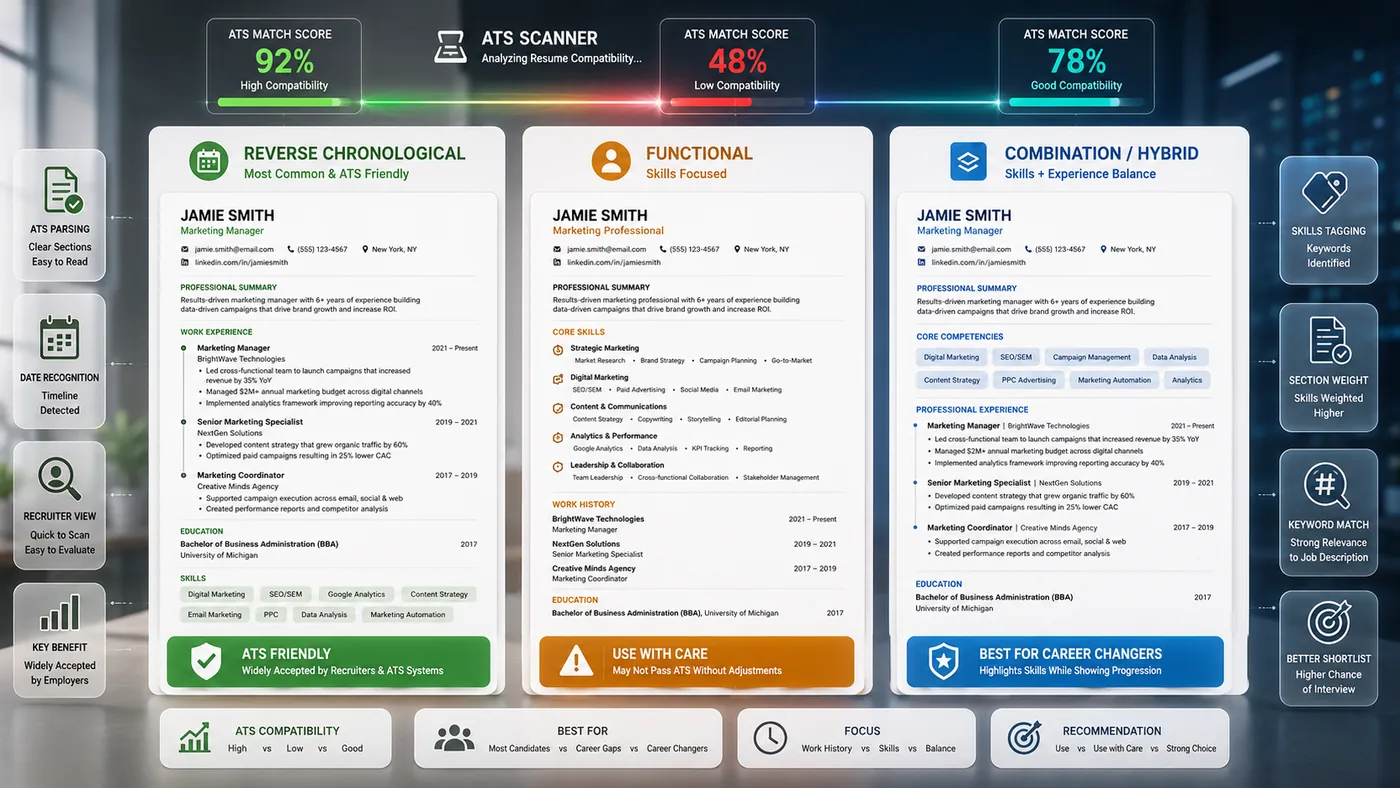
Choosing the right resume format affects how recruiters and ATS systems read your experience. There are three main formats: chronological, functional, and combination (hybrid). Each presents your experience differently, and the wrong choice can hurt your chances - especially with ATS systems.
This guide explains each format, when to use it, and which to avoid.
Whichever format you choose, run your resume through the ATS score checker to verify it parses correctly, and start from an ATS-friendly template.
The Three Resume Formats
1. Reverse Chronological (Most Common, Recommended)
Lists your work experience from most recent to oldest. The standard, expected format that ATS systems handle best.
Structure:
- Contact info
- Summary
- Skills
- Work experience (newest first)
- education
2. Functional (Skills-Based)
Organizes your resume around skill categories rather than chronological work history. Work history is minimized or relegated to the bottom.
Structure:
- Contact info
- Summary
- Skills grouped by category with achievements
- Brief work history (sometimes just company names and dates)
- education
3. Combination (Hybrid)
Combines a strong skills section with a chronological work history. Leads with skills/qualifications, then provides full chronological experience.
Structure:
- Contact info
- Summary
- Skills / core competencies
- Work experience (chronological, with bullets)
- education
Reverse Chronological - When to Use (Most People)
Use reverse chronological if you have:
- A consistent work history
- Relevant experience in your field
- Career progression you want to highlight
- No major employment gaps you need to hide
This is the format recruiters expect and ATS systems parse most reliably. For the large majority of candidates, this is the right choice.
Pros
- Recruiters are familiar with it
- ATS-friendly
- Shows career progression clearly
- Highlights recent, relevant experience
Cons
- Highlights employment gaps
- Less ideal for major career changes
Functional - Use With Caution (Often Avoid)
The functional format is often recommended for career changers and people with employment gaps because it de-emphasizes work history. However, it has serious downsides in 2026.
Why to Be Cautious
- ATS struggles with it: Many ATS systems expect chronological work experience with dates. A functional format can parse poorly, scattering or losing your experience data.
- Recruiters distrust it: Experienced recruiters know the functional format is often used to hide gaps or job-hopping, so it can raise suspicion rather than help.
- It hides context: Skills without the context of where and when you used them are less credible.
When Functional Might Help
- You are making a dramatic career change and your skills matter more than your titles
- You have very fragmented work history
- You are returning to work after a long gap
Even in these cases, a combination format is usually better than a pure functional format.
Combination (Hybrid) - Best for Career Changers
The combination format is the best middle ground for candidates who want to emphasize skills while still satisfying ATS and recruiter expectations for chronological history.
When to Use Combination
- Career changers (emphasize transferable skills, but keep chronological history)
- Candidates with strong skills but less conventional career paths
- Senior professionals with both deep skills and a solid work history
Why It Works
- Leads with your most relevant skills and qualifications
- Still includes full chronological work experience for ATS and credibility
- Balances skill emphasis with career context
Read the career change resume guide for combination format examples.
Format Recommendation by Situation
| Your Situation | Recommended Format |
|---|---|
| Consistent career in your field | Reverse chronological |
| Recent graduate / fresher | Reverse chronological (with projects) |
| Career changer | Combination |
| Employment gaps | Reverse chronological (address gaps directly) |
| Senior professional | Reverse chronological or combination |
| Returning to work after long break | Combination |
| Dramatic industry switch | Combination |
Notice that reverse chronological or combination covers almost every situation. Pure functional is rarely the best choice.
How to Handle Employment Gaps Without Functional Format
Many people choose functional format to hide gaps. But there are better ways:
- Use year-only dates to compress short gaps
- Add a brief line explaining longer gaps (caregiving, education, etc.)
- Address gaps directly and confidently
Read the how to explain resume gaps guide - addressing gaps honestly in a chronological format is more effective than hiding them in a functional one.
ATS Compatibility by Format
- Reverse chronological: Excellent ATS compatibility
- Combination: Good ATS compatibility (if work experience has clear dates)
- Functional: Poor ATS compatibility (often loses or scatters experience data)
Your resume after optimization
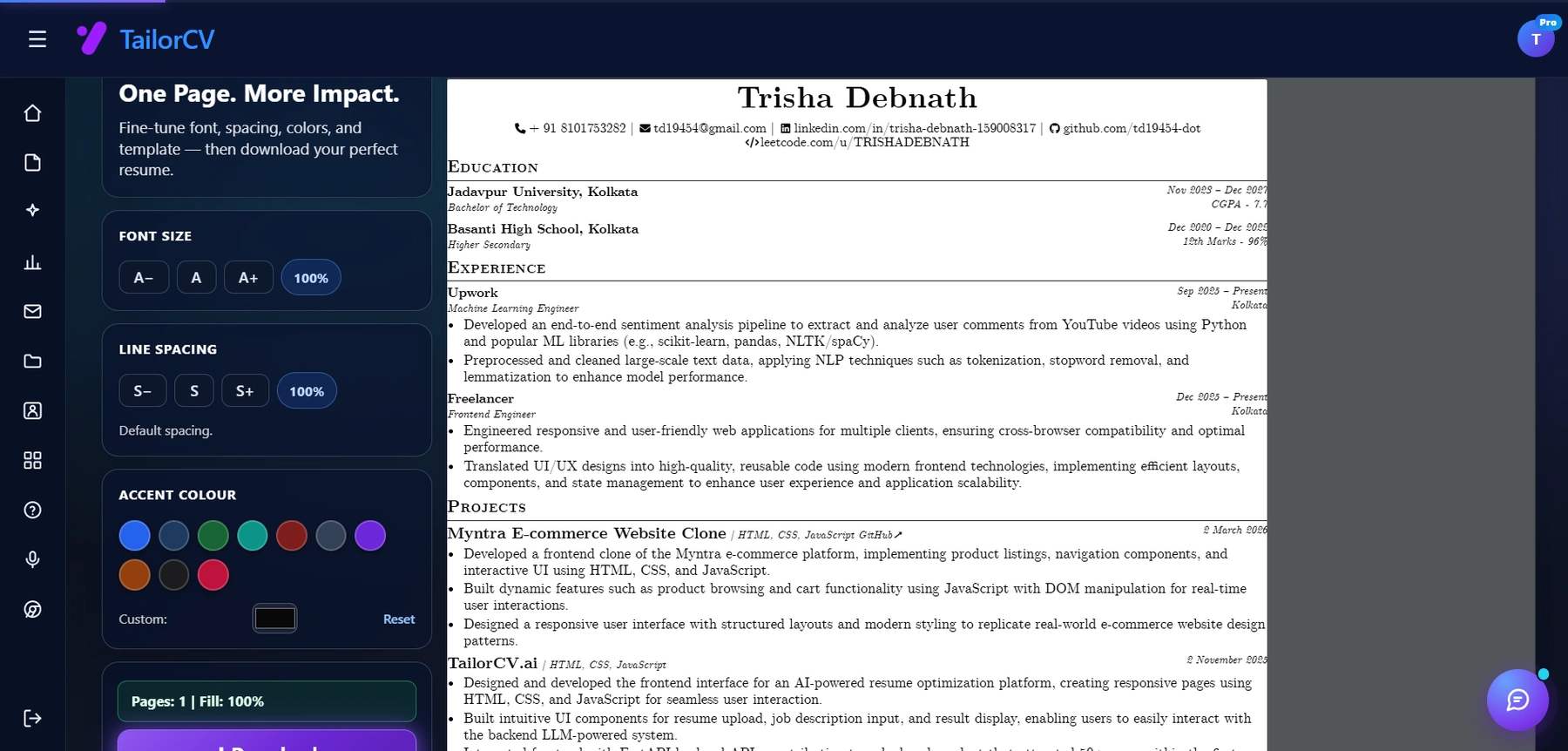
This is the resume after tailoring - the content is already matched, and these controls are how you fit it onto one page.
Whichever format you choose, verify it with the TailorCV ATS score checker by checking that your experience parses correctly.
Common Format Mistakes
Mistake 1: Using functional format to hide gaps
It often backfires - recruiters recognize it and ATS struggles with it. Address gaps directly instead.
Mistake 2: Two-column "designer" formats
Regardless of chronological vs functional, avoid two-column layouts - they break ATS parsing. Read the ATS-friendly resume guide.
Mistake 3: Inconsistent date formatting
Whatever format, keep your dates consistent (e.g., "Jan 2023 - Present" throughout).
Related Guides
- How to List Certifications on a Resume
- How to List Education on a Resume
- How to Make Your Resume ATS-Friendly
- How to Write a Resume with AI
- Resume Keywords Guide
- 200 Best Action Verbs for Resume
- How to Quantify Resume Achievements
- How to Write a Resume Headline
- How to Write a Resume Summary
- How to Add Projects in Resume for Freshers: 10 Smart Tips to Impress Recruiters
- 10 Powerful Resume Templates for Beginners With No Experience That Actually Get Interviews
- First Time Resume With No Experience: Complete Guide for Freshers & College Students
- 10 ATS Resume Formatting Mistakes That Get You Rejected Before a Human Reads Your Resume
- Flight Attendant Resume Guide 2026
Make This Practical
Use this guide as part of a complete job-search workflow. Check your resume with the free ATS score checker, improve targeting with the Resume Optimization Guide, and choose a clean format from the ATS-friendly resume templates.
After the resume is ready, strengthen the rest of the application. Draft a targeted letter with the AI cover letter generator, practice interviews with the AI mock interview tool, and create a project-backed proof page with the portfolio website builder if you need a stronger online presence.
Conclusion
For most candidates in 2026, the reverse chronological format is the best choice - it is ATS-friendly, recruiter-expected, and shows career progression clearly. Career changers and those with unconventional paths should use a combination format. Avoid the pure functional format in most cases.
Verify your chosen format parses correctly with the TailorCV ATS score checker, use an ATS-friendly template, and read the resume optimization guide for complete guidance.
Frequently Asked Questions
What is the difference between a chronological and functional resume?
A chronological resume lists your work experience in reverse order, highlighting your most recent roles first. This format is preferred by many employers and is better recognized by ATS systems. In contrast, a functional resume focuses on skills and achievements rather than work history, making it ideal for those with gaps in employment or changing careers. For more insights on structuring your resume, check out our Resume Section Order Guide - What Comes First on a Modern Resume.
When should I use a functional resume instead of a chronological one?
Consider using a functional resume if you are transitioning careers, have significant gaps in your work history, or want to emphasize specific skills over job titles. This format allows you to showcase your abilities and achievements more prominently. However, be cautious as some employers may prefer the clarity of a chronological format. To effectively match your skills with job descriptions, refer to our Resume Keyword Map Template - Match Your Resume to Any Job Description.
Are combination resumes effective for ATS compatibility?
Yes, combination resumes can be effective for ATS compatibility if structured correctly. This format leads with a strong skills section followed by a chronological work history, allowing you to highlight both your capabilities and relevant experience. To ensure your resume meets ATS standards, consider using our Free ATS score checker before submitting your application.
What are common mistakes to avoid when formatting my resume for ATS?
Common mistakes include using unconventional fonts, excessive graphics, or incorrect section headings that ATS may not recognize. It's crucial to keep your formatting simple and straightforward to increase your chances of passing the ATS screening. For a detailed list of pitfalls to avoid, read our article on 10 ATS Resume Formatting Mistakes That Get You Rejected Before a Human Reads Your Resume.
How can I enhance my resume to stand out in 2026?
To make your resume stand out, focus on using action verbs and quantifiable achievements that demonstrate your impact in previous roles. Tailoring your resume for each job application is essential, so consider using our resource on 200 Best Action Verbs for Resume in 2026 - By Role and Category to make your accomplishments pop.
Does your formatting survive the parser?
Upload your resume and see what an ATS actually reads back.
Drop your resume here or choose a file
PDF only. Max 2 MB.
We never share your data or use it to train AI models.

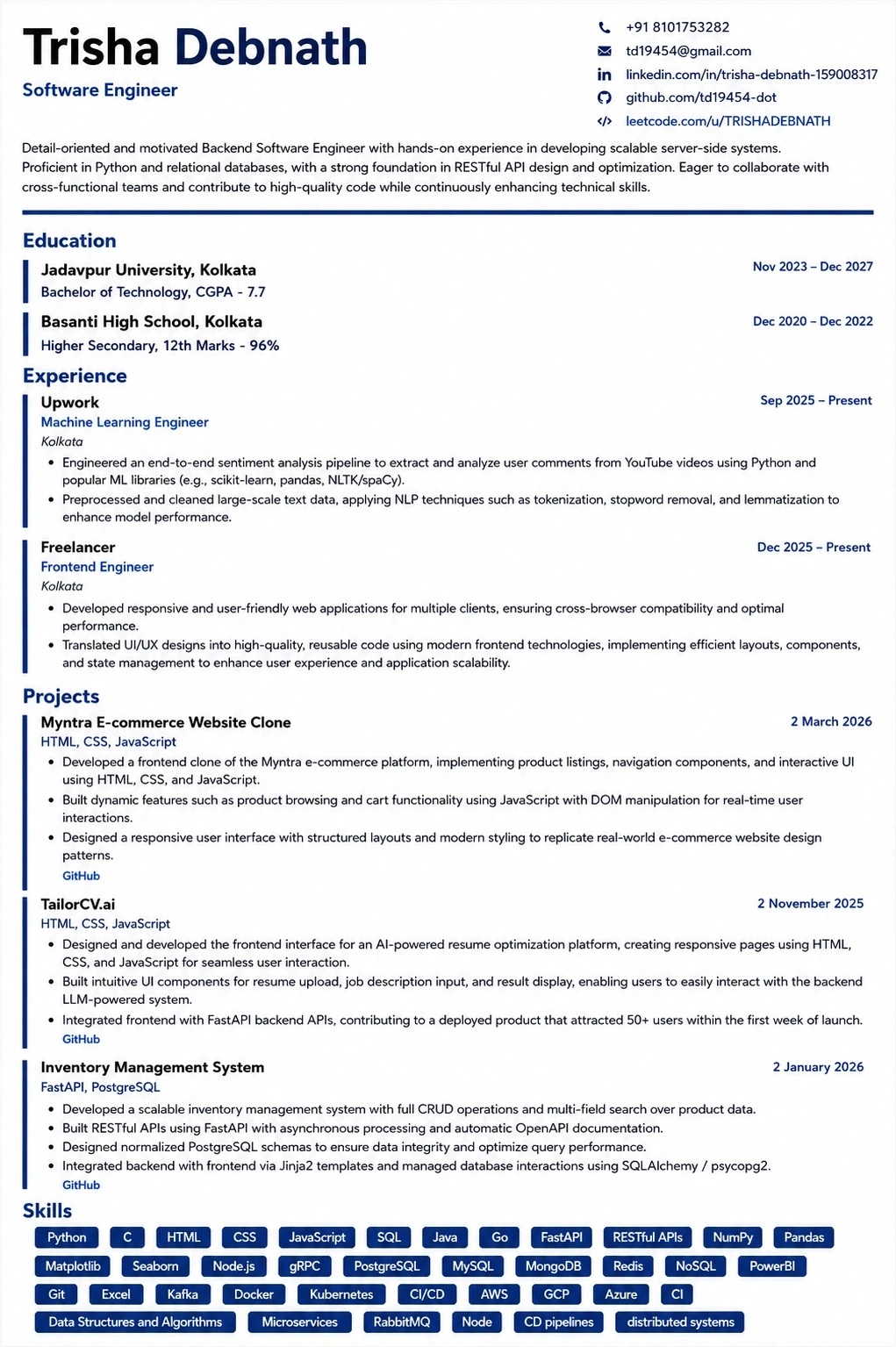
A layout that parses cleanly
Single column, standard headings, no text boxes — the formatting rules in this guide, already applied.
Was this guide useful?
Be the first to rate it.