 TD
TD
Key Takeaways
- A resume's match score indicates how well its keywords align with a job description but does not reflect overall qualifications or external factors.
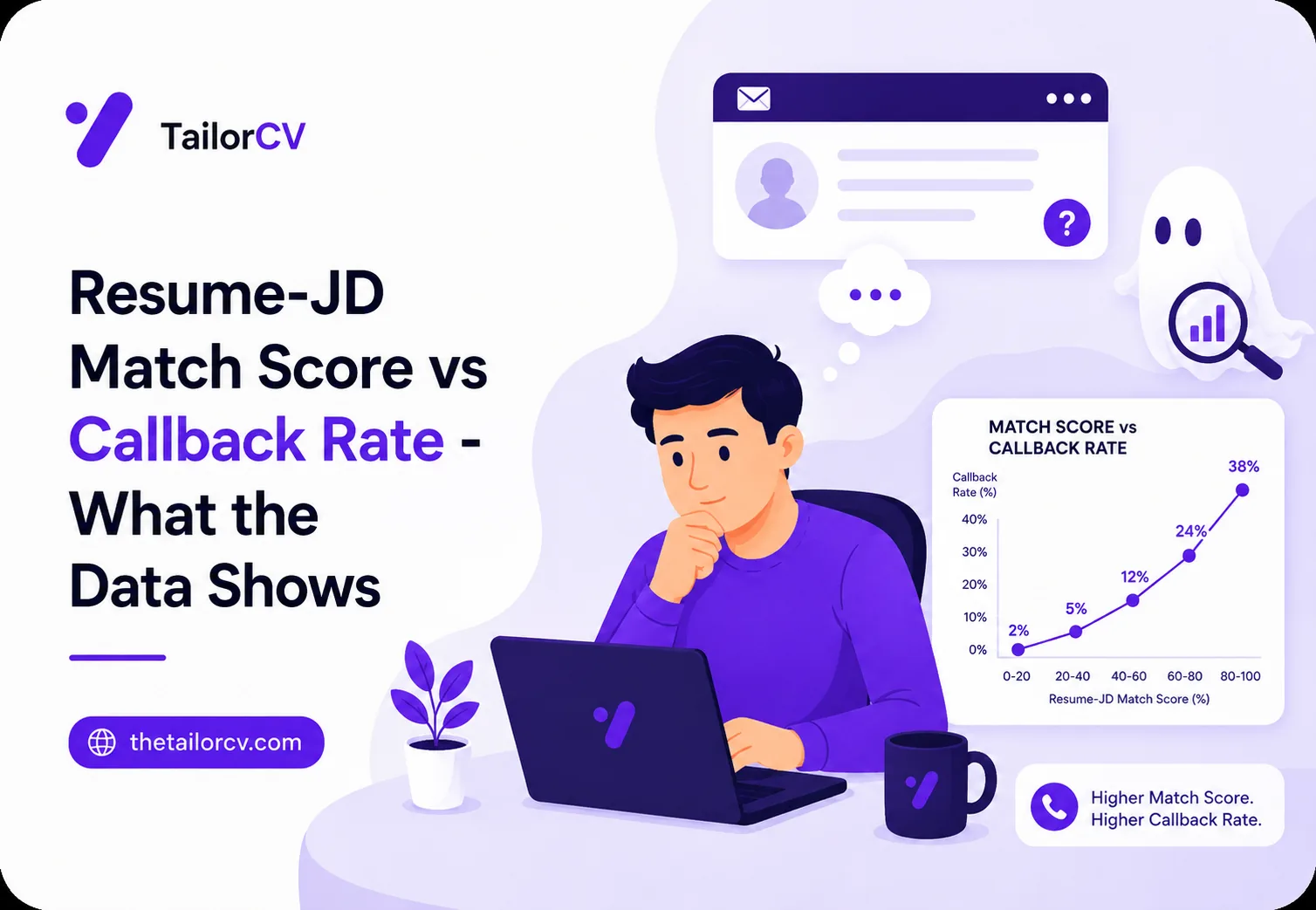
- Callback likelihood increases significantly for scores below 50%, moderately for scores between 65% and 80%, and flattens above 85%.
- Candidates with scores below 65% should focus on closing keyword gaps to improve their chances of passing initial filters.
- For scores between 65% and 80%, both keyword optimization and the quality of presentation are crucial for standing out to recruiters.
- Above an 80% score, candidates should prioritize quantifying achievements and refining formatting over chasing marginal score increases.
Every job seeker asks a version of the same question after checking their ATS score: "Is this number actually good enough?" A 65% match feels uncertain. An 80% feels safer. But what does the data actually say about the relationship between a resume-to-job-description match score and the odds of getting a callback?
This piece looks at that relationship directly, using patterns observed across TailorCV's resume optimization data, and what it means for how you should think about your own match score before applying.
Check your own resume's match score against any job description with the TailorCV ATS score checker, free and unlimited.
Why Match Score Alone Doesn't Tell the Whole Story
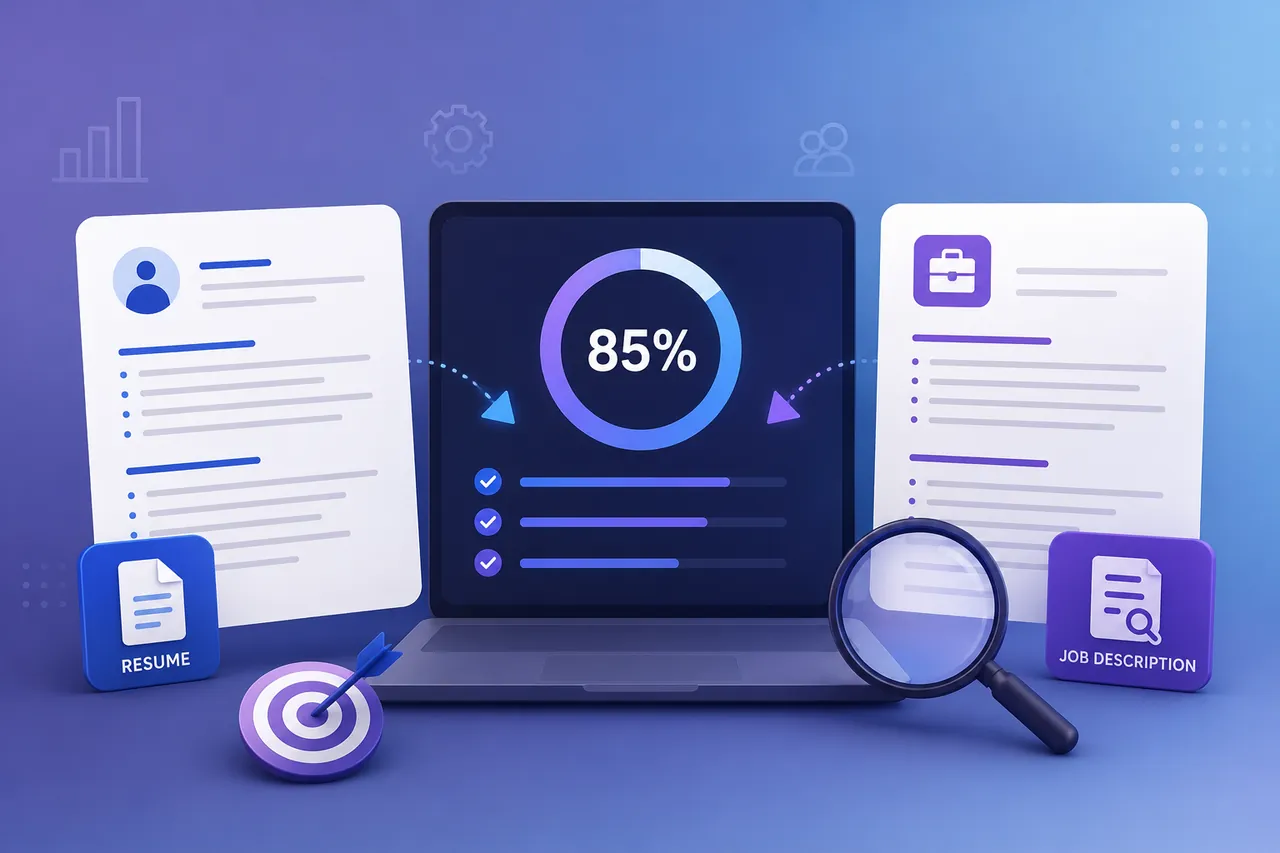
Before diving into the data, it is worth being precise about what a match score actually measures: how well your resume's keywords, skills, and language align with a specific job description. It does not measure your qualifications directly, your interview performance, or factors outside your resume entirely (referrals, timing, market competition).
What an ATS score report actually shows you

This is what a score actually looks like. The number matters less than the breakdown: each check tells you what failed and why it matters.
That said, match score is one of the few resume-quality signals a candidate can measure and improve before applying, which is exactly why it is worth understanding closely.
The General Pattern: Match Score Bands and Callback Likelihood
| Match Score Range | General Pattern Observed |
|---|---|
| Below 50% | Very low callback likelihood; resumes in this range are frequently filtered before human review |
| 50-64% | Low to moderate; often passes basic parsing but loses ground on keyword and requirement alignment |
| 65-79% | Moderate; increasingly competitive, especially when paired with strong, quantified bullet points |
| 80%+ | Strong; resumes in this range consistently perform best in both ATS filtering and recruiter first impressions |
Read job description resume match percentage guide for a full breakdown of what each range means practically.
Why the Curve Isn't Perfectly Linear
Callback likelihood does not increase in a smooth, straight line as match score rises. Instead, it behaves more like a threshold effect for the lower range, then flattens somewhat at the top:
- Below the low-50s, small improvements in match score tend to produce large jumps in callback likelihood, because many resumes in this range are failing basic parsing or missing multiple required keywords entirely.
- Between roughly 65% and 85%, improvements still matter, but the gains are more incremental, since resumes in this range are already clearing most initial filters and competing more on quality of presentation.
- Above 85-90%, further gains flatten out, and other factors (quantified achievements, formatting, relevant experience depth) start to matter more than squeezing out a few more matched keywords.
This pattern reinforces a core idea from the resume matching guide: matching is necessary, but it is not sufficient on its own. Once you clear a strong match threshold, the quality of your bullets and results matters more than chasing a perfect score.
What This Means Practically
If Your Score Is Below 65%
Prioritize closing keyword gaps first. This is the range where match score improvements have the largest, most direct impact on your odds of passing an initial filter. Read how to increase your ATS score for a step-by-step approach.
If Your Score Is Between 65% and 80%
You are in a competitive but viable range. Focus on both remaining keyword gaps and the quality of your top bullets, since recruiters reviewing resumes in this range are comparing quality of presentation, not just raw keyword count.
If Your Score Is Above 80%
Diminishing returns set in for further keyword optimization. Shift your remaining effort toward quantifying your achievements, tightening your formatting, and preparing for the interview stage rather than chasing a marginally higher score.
Why Some High-Match Resumes Still Don't Get Callbacks
A strong match score is a necessary condition, not a guarantee. Resumes with high match scores can still underperform for reasons match score alone cannot capture:
- Weak or unquantified bullet points, where the right keywords appear but without measurable results behind them
- Formatting issues that cause parsing errors despite strong content, covered in ATS resume formatting mistakes
- Market factors entirely outside the resume: role competitiveness, timing, internal candidates, budget freezes
- Keyword stuffing, where a high score was achieved by over-optimizing rather than genuinely reflecting relevant experience, covered in ATS keyword mistakes
Read why is my ATS score low and why your resume gets no responses if a strong score still is not translating into callbacks.
The Practical Takeaway
Aim for a match score in the 75-85% range as a strong general target before applying, rather than chasing 100%, which often signals keyword stuffing rather than genuine fit. Once you are in that range, shift your energy toward the quality of your bullets, your formatting, and your interview preparation, since those factors increasingly determine outcomes once your resume reliably clears initial filters.
How TailorCV Helps You Act on This Data
TailorCV's ATS score checker gives you an instant, free, unlimited match score for any job description, along with a specific breakdown of exactly which keywords and requirements are missing. Once your score is in a strong range, use the AI mock interview tool to prepare for the next stage, since match score alone stops being the deciding factor once you clear the initial filter.
Step-by-Step Guide to Improving Your Resume Match Score
To effectively enhance your resume match score, follow these actionable steps:
-
Analyze the Job Description: Begin by thoroughly reading the job description. Highlight keywords, skills, and qualifications that are frequently mentioned. This will help you understand what the employer values most.
-
Utilize a Resume Matcher Tool: Use a resume matcher tool for job descriptions to compare your existing resume with the job description. This tool will provide insights into areas that need improvement.
-
Tailor Your Resume: Based on the analysis, customize your resume. Incorporate the highlighted keywords and phrases naturally into your work experience and skills sections. Ensure that your achievements align with the job requirements.
-
Check Formatting: Ensure your resume is formatted properly for Applicant Tracking Systems (ATS). Use standard fonts, avoid images, and utilize clear headings.
-
Seek Feedback: After making adjustments, seek feedback from peers or mentors. They can provide valuable insights on how well your resume aligns with the job description.
-
Test Your Changes: Re-run your updated resume through the ATS checker to see if your match score has improved.
-
Iterate: If your match score is still not satisfactory, iterate on the feedback and continue to refine your resume until you achieve a desirable score.
Common Mistakes to Avoid When Analyzing Match Scores
-
Ignoring the Job Description: One of the biggest mistakes is not aligning your resume with the specific job description. Always tailor your resume to each application.
-
Overloading with Keywords: While including keywords is essential, overstuffing your resume can make it feel unnatural. Aim for a balance that maintains readability.
-
Neglecting Soft Skills: Employers often seek soft skills alongside hard skills. Make sure to include relevant soft skills that are mentioned in the job description.
-
Using Generic Templates: Relying on a one-size-fits-all resume template can hinder your chances. Use customizable templates that allow you to highlight specific experiences and skills.
-
Underestimating the Importance of Formatting: A well-formatted resume not only looks professional but also increases your chances of passing through ATS filters. Pay attention to the structure and layout.
Do's and Don'ts for Maximizing Callback Rates
Do's
- Do Tailor Each Resume: Customize your resume for every job application to match the skills and experience required.
- Do Use Action Verbs: Start bullet points with strong action verbs to convey your accomplishments effectively.
- Do Highlight Achievements: Quantify your achievements with numbers and statistics to provide context and impact.
- Do Keep It Concise: Aim to keep your resume to one page (or two if you have extensive experience) to ensure hiring managers can quickly assess your qualifications.
Don'ts
- Don't Include Irrelevant Experience: Focus on experiences that are directly related to the job you are applying for.
- Don't Use Jargon: Avoid industry jargon that may not be understood by all hiring managers. Use clear and accessible language.
- Don't Forget to Proofread: Spelling and grammatical errors can damage your credibility. Always proofread your resume before submission.
- Don't Rely Solely on Match Scores: While match scores are helpful, they are not the only factor in hiring decisions. Be sure to prepare for interviews and networking as well.
Mini Checklist for Resume Optimization
- unchecked: Have I tailored my resume to the specific job description?
- unchecked: Did I include relevant keywords from the job posting?
- unchecked: Are my achievements quantified and impactful?
- unchecked: Is my resume formatted correctly for ATS?
- unchecked: Have I sought feedback from peers or mentors?
- unchecked: Did I proofread for any spelling or grammatical errors?
- unchecked: Have I included both hard and soft skills relevant to the position?
- unchecked: Am I using clear, concise language throughout my resume?
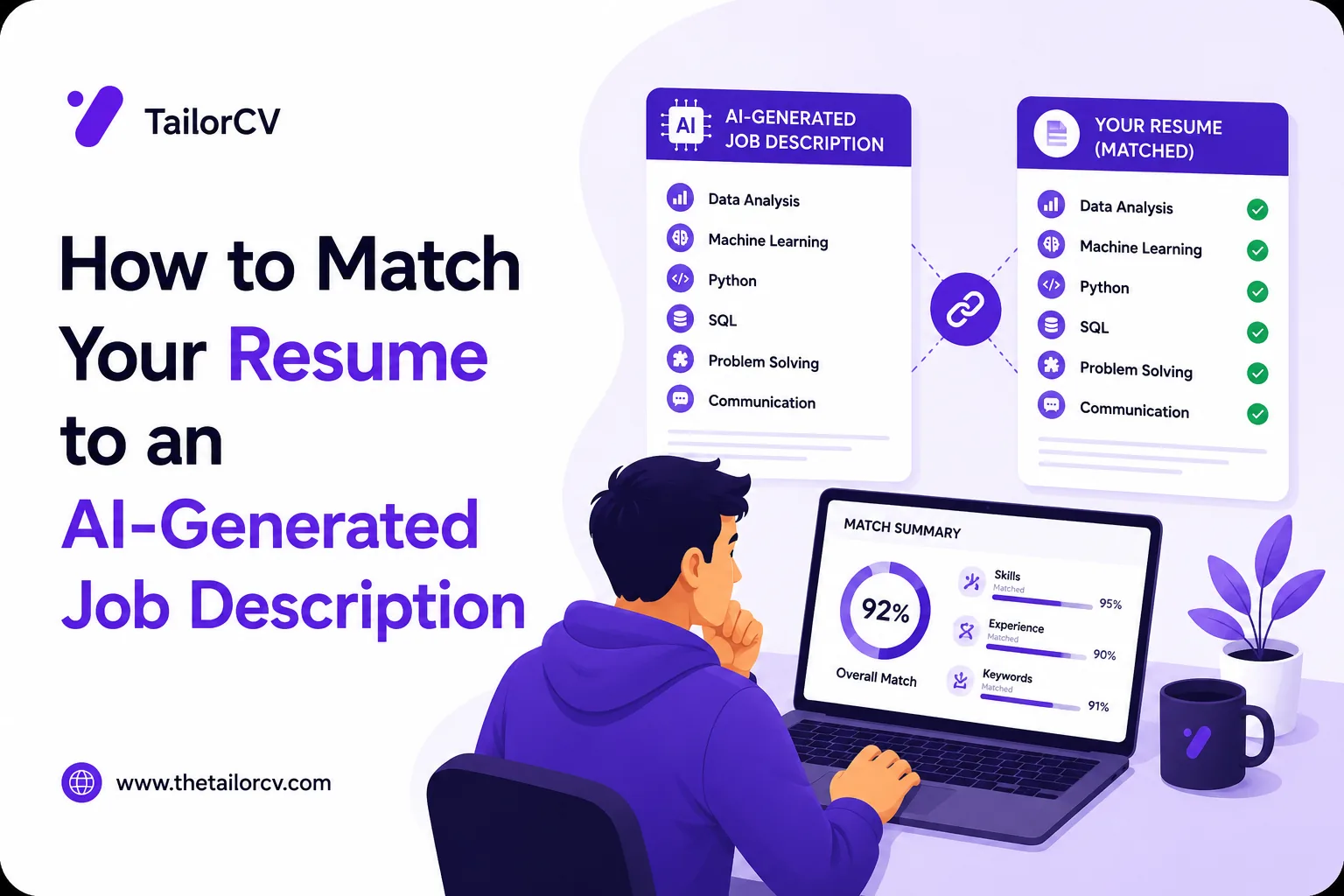
By following this comprehensive guide, you can improve your resume match score and increase your chances of receiving callbacks. For further insights, check out our guide on how to match your resume to an AI-generated job description and our resume matching checklist.
Frequently Asked Questions
What match score should I aim for before applying?
A general target of 75-85% represents a strong, competitive match without the keyword-stuffing risk that can come with chasing a perfect score.
Does a 100% match score guarantee an interview?
No. A very high score can sometimes indicate keyword stuffing rather than genuine fit, and callback outcomes still depend on bullet quality, formatting, and factors outside the resume entirely.
Is it worth spending more time optimizing once I'm above 80%?
Diminishing returns typically set in above this range. Your time is often better spent quantifying achievements and preparing for interviews rather than chasing marginal score gains.
Why did my resume get a low callback rate even with a high match score?
Formatting issues, unquantified bullets, or market factors unrelated to the resume itself can all suppress callbacks even with a strong match score. Review why your resume gets no responses for a full troubleshooting list.
How do I check my own resume's match score?
Use the TailorCV ATS score checker for a free, unlimited match score against any job description, with a detailed breakdown of what is missing. You can also explore resume matching techniques to improve your application.
Related Guides
- Resume Matching with Job Description - Complete Guide
- Job Description Resume Match Percentage Guide
- How to Increase Your ATS Score
- Why Is My ATS Score Low
- Why Your Resume Gets No Responses
- ATS Keyword Mistakes
- How to Quantify Resume Achievements
- ATS Resume Data Study 2026
- ATS Score Guide 2026
- ATS Score vs Resume Score
Conclusion
Match score matters most at the low end, where small improvements can significantly boost your odds of clearing an initial filter, and matters less at the high end, where bullet quality and formatting take over as the deciding factors. Aim for a strong 75-85% range, then shift your focus to the rest of your application.
Check your resume's real match score, free and unlimited, with TailorCV.
What is your resume scoring right now?
Scan it against a job description and get your ATS match score in about a minute.
Drop your resume here or choose a file
PDF only. Max 2 MB.
We never share your data or use it to train AI models.
Templates that keep this structure intact
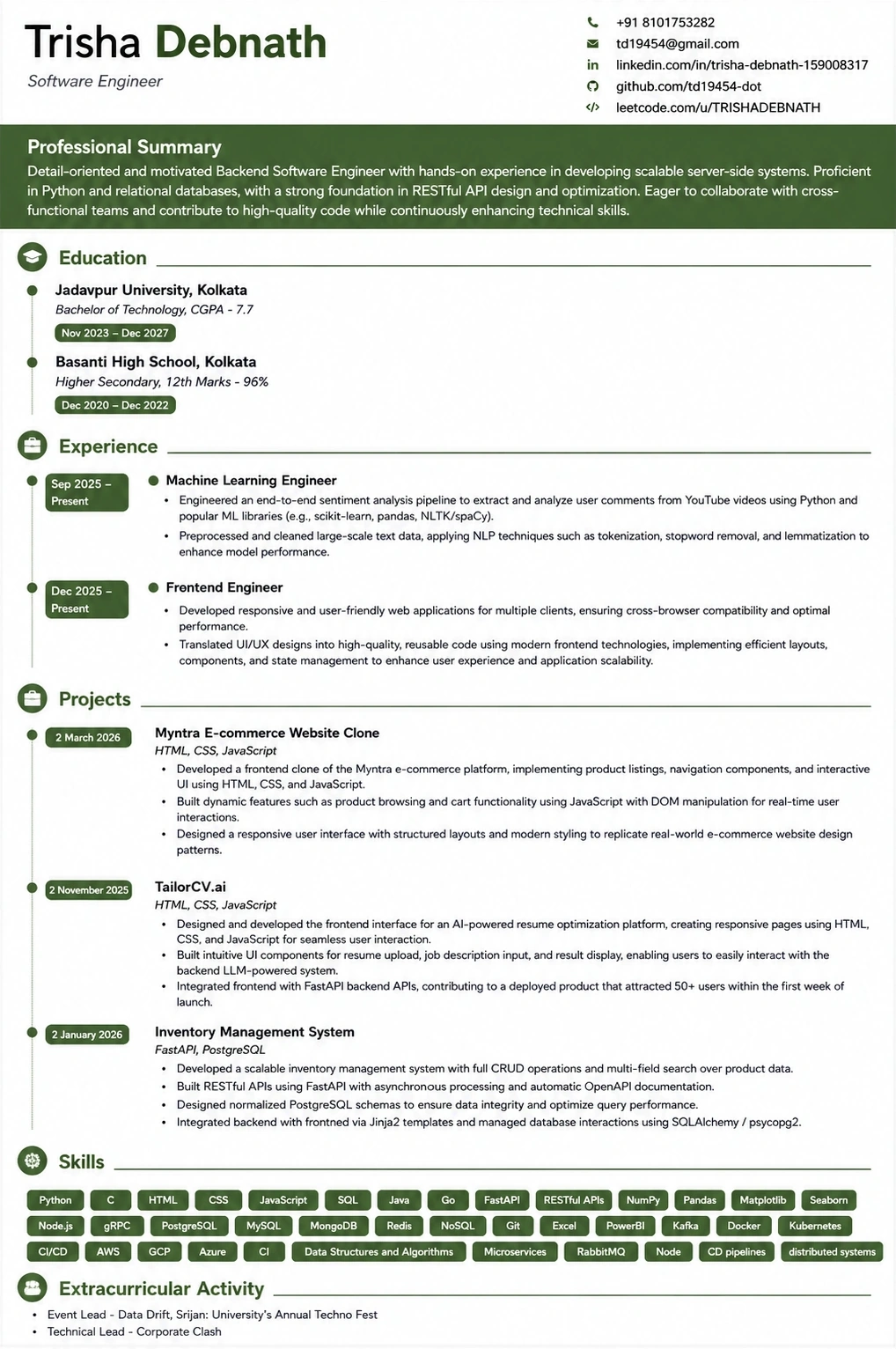
This template is ATS-tested — start from it and the formatting rules in this guide are already handled.
Was this guide useful?
Be the first to rate it.