 TD
TD

Key Takeaways
- Including a photo on your resume is generally not expected in the US, Canada, UK, and Australia, and may lead to bias or discrimination concerns.
- In countries like Germany, France, Spain, and Japan, including a photo is often expected as part of the standard application process.
- Anti-discrimination laws in the US and UK discourage the use of photos to avoid bias in hiring decisions.
- Applicant Tracking Systems (ATS) cannot read images, so including a photo can disrupt text parsing and negatively affect your resume's visibility.
- When a photo is required, use a professional headshot with appropriate attire, a neutral background, and ensure it is recent and of high quality.
The photo question divides job seekers more than almost any other resume decision. In some countries, sending a resume without a photo is unusual. In others, including a photo can get your application immediately discarded - or worse, expose you to discrimination claims. The answer depends entirely on where you are applying.
This guide gives you a clear answer by country and situation, plus the risks and rules you need to know.
For overall resume structure, read the anatomy of a perfect resume. Use an ATS-friendly template and test your document with the TailorCV ATS checker.
The Short Answer
| Country/Region | Photo on Resume? |
|---|---|
| United States | No - generally not expected, can invite bias |
| Canada | No - same as US |
| United Kingdom | No - not standard, may invite discrimination concerns |
| Australia | No - not standard |
| Germany | Traditionally yes (though changing) |
| France | Traditionally yes (optional now) |
| Spain, Portugal, Italy | Often expected |
| Netherlands, Scandinavia | Not standard |
| Japan, South Korea | Generally expected |
| China | Often expected |
| India | Not required in most tech/corporate roles |
| Middle East | Varies by employer; often included |
Why Not to Include a Photo in the US, Canada, and UK
Anti-Discrimination Laws
In the United States, the Civil Rights Act, Age Discrimination in Employment Act, and other laws prohibit hiring decisions based on race, gender, age, appearance, disability, or national origin.
Many US employers train their HR teams and recruiters not to use photos in screening - specifically to avoid liability. A photo can put the recruiter in an awkward position and may lead to your resume being set aside to avoid any appearance of bias-based decision-making.
ATS Can't Read Images
ATS systems parse text. A photo embedded in a resume is simply an image - ATS ignores it. But more importantly, resumes using graphics and images sometimes have their text parsing disrupted, causing the ATS to miss your keywords and experience.
Run your resume through the TailorCV ATS checker to verify your document is being read correctly.
Recruiter Preferences
Many US and UK recruiters explicitly state they prefer resumes without photos. Including one can signal unfamiliarity with professional norms.
When a Photo Might Help (Outside the US/UK)
In countries where photos are expected and culturally normal, including a professional headshot is part of the standard application package. Not including one may actually make your resume look incomplete.
Countries where photos are commonly expected:
- Germany: Historically expected, though this is evolving among international companies
- South Korea: Common, especially for large corporations (chaebols)
- Japan: Expected for most applications
- France: Traditional expectation, though optional now for many modern employers
- Spain, Italy, Portugal: Common in traditional industries
If applying to an international company with offices in photo-required countries, follow the conventions of the country where the role is based, not where the HQ is.
What Makes a Good Resume Photo (When Required)
If you are in a country or industry where a photo is expected:
| Option | What to know |
|---|---|
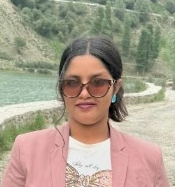
| Do: | Use a professional headshot (head and upper shoulders, not a casual selfie) · Wear professional clothing appropriate to the industry · Use a neutral, clean background · Smile naturally - approachable but professional · Use a recent photo (within 1-2 years) · Use a square or portrait format, small enough not to dominate the page |
| Don't: | Use a casual holiday or party photo · Include a photo with other people in the background · Use a blurry or low-resolution image · Use a photo older than 3-4 years |
| Technical: | Embed the photo as a small element in the top corner (top right is common in Europe) · Keep file size small to avoid bloating the document |
What About LinkedIn Photos?
LinkedIn is different from your resume. A professional photo on LinkedIn is strongly recommended everywhere - including the US. Your LinkedIn profile is a public, social professional presence, and a photo dramatically increases profile views and recruiter engagement.
Make sure your LinkedIn photo is professional and consistent with how you present yourself. Read LinkedIn profile optimization guide for complete advice.
What If an Employer Asks for a Photo?
If a job posting explicitly asks for a photo and you are applying to a country where it is the norm, include it. If you are in a country where photos are not expected and an employer requests one, use your judgment - this may be a small or international company operating under different cultural norms.
In the US or UK, if a job posting requests a photo, it may signal the company has not updated their practices - or it may be an international employer. You can include one if specifically requested without significant risk.
The Bottom Line
- US, Canada, UK, Australia: No photo on your resume. A clean, professional, text-only document is correct. Your photo goes on LinkedIn.
- Germany, France, Spain, South Korea, Japan: A professional photo is often expected or at least accepted - follow local conventions.
- India, most tech/startup environments globally: Photo not required; text resume is standard.
Whatever you decide, make sure your resume content is strong. Read how to write a resume from scratch for a step-by-step content guide, and check your document with the TailorCV ATS checker.
Related Guides
- The Anatomy of a Perfect Resume
- Resume Contact Section Guide
- ATS Resume Formatting Mistakes
- How to Make Your Resume ATS-Friendly
- LinkedIn Profile Optimization Guide
- Resume Design and Color Guide
- Resume vs CV: What's the Difference?
Make This Practical
Use this guide as part of a complete job-search workflow. Check your resume with the free ATS score checker, improve targeting with the Resume Optimization Guide, and choose a clean format from the ATS-friendly resume templates.
After the resume is ready, strengthen the rest of the application. Draft a targeted letter with the AI cover letter generator, practice interviews with the AI mock interview tool, and create a project-backed proof page with the portfolio website builder if you need a stronger online presence.
Conclusion
In the US, Canada, UK, and Australia: do not include a photo on your resume. In Germany, South Korea, Japan, France, and several other countries: a professional photo is often expected. Follow the convention for the country and industry you are targeting - never assume your home country's norms apply universally.
Focus your energy on building a strong, ATS-optimized resume. Use an ATS-friendly template and run your document through the TailorCV ATS checker to make sure your content reaches every recruiter who looks at it.
Frequently Asked Questions
Should I include a photo on my resume if I'm applying in Germany?
In Germany, including a photo on your resume has traditionally been expected, although this trend is gradually changing. Many applicants still choose to include a professional headshot, as it can help personalize their application. However, it's essential to ensure that your resume adheres to the latest ATS-friendly template guidelines, especially if you're applying to international companies.
What are the risks of including a photo on my resume in the UK?
In the UK, including a photo on your resume is not standard practice and can raise concerns about discrimination. Employers are encouraged to focus on qualifications and experience rather than appearance, and a photo could inadvertently lead to bias. To ensure your resume is compliant, you can check its effectiveness with the free ATS score checker.
Is it acceptable to add a photo to my resume when applying for jobs in India?
In India, including a photo is generally not required for most tech or corporate roles. However, some industries might still expect it, so it's best to research specific company norms. If you're looking for more tips on how to present your qualifications effectively, consider reading our guide on creating a resume for returning to work after a career break.
What should I consider when applying for jobs in Japan regarding resume photos?
In Japan, including a photo on your resume is typically expected and can be an integral part of the application process. It's essential to use a professional photograph that aligns with local expectations. For more insights on how to enhance your job application, check out our video resume guide for 2026.
Can a photo on my resume affect my ATS score?
Yes, including a photo on your resume can negatively impact your ATS score, as many Applicant Tracking Systems are not designed to process images. It's advisable to focus on text-based content that highlights your skills and experience instead. For a deeper understanding of what can harm your ATS score, refer to our article on what actually kills your ATS score.
What is your resume scoring right now?
Scan it against a job description and get your ATS match score in about a minute.
Drop your resume here or choose a file
PDF only. Max 2 MB.
We never share your data or use it to train AI models.

Templates that keep this structure intact
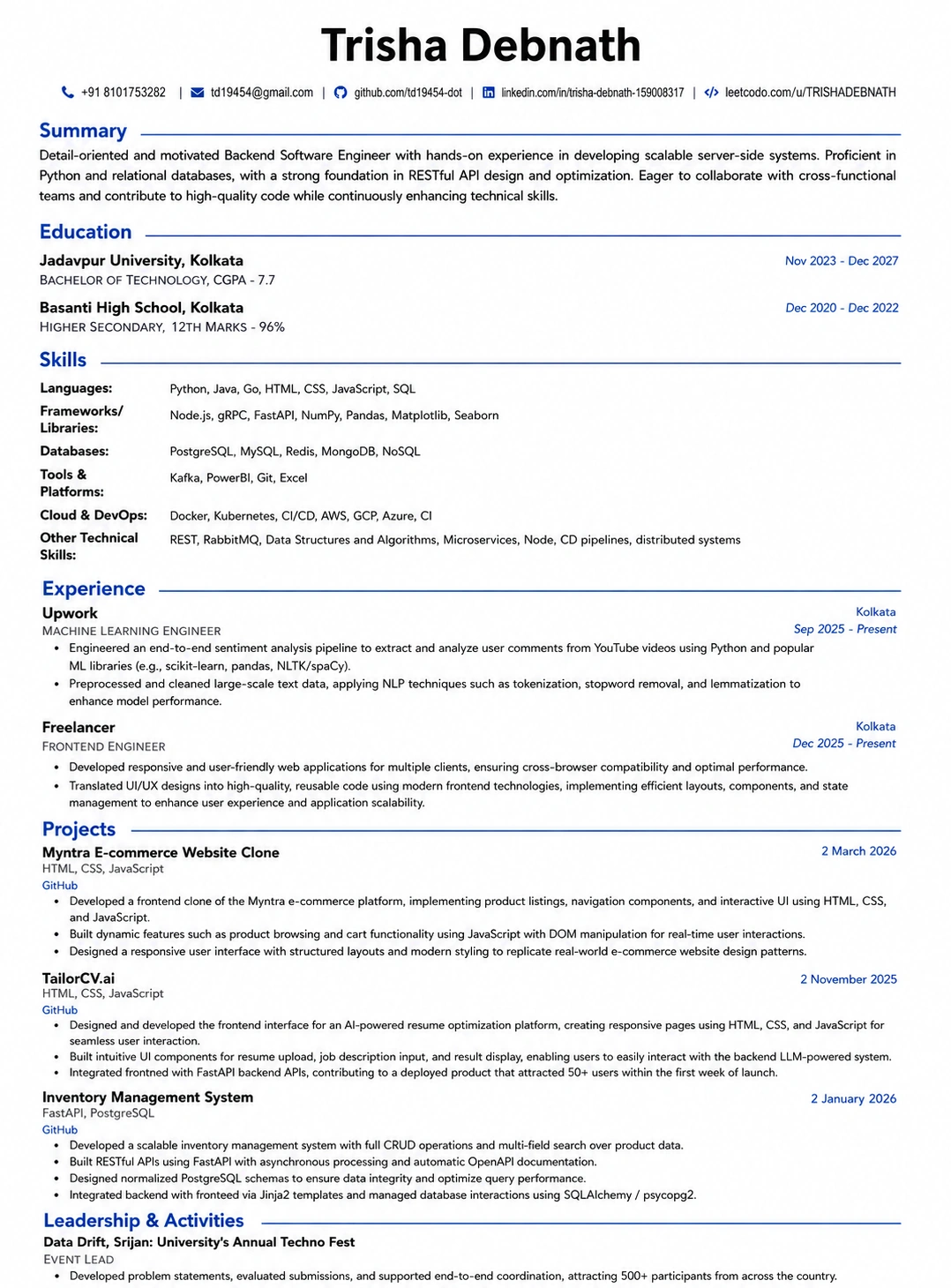
This template is ATS-tested — start from it and the formatting rules in this guide are already handled.
Was this guide useful?
Be the first to rate it.