 SS
SS
Key Takeaways
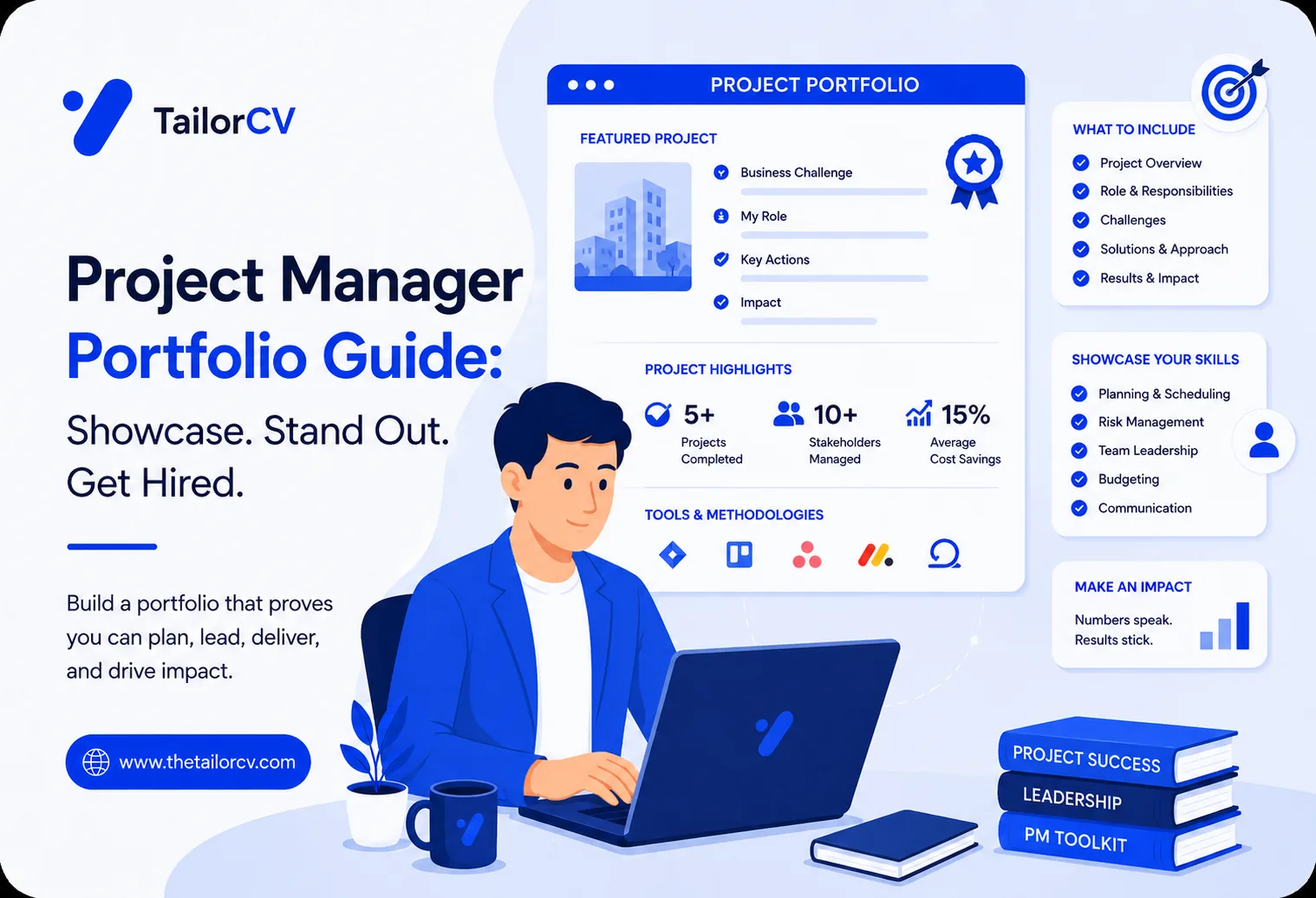
- Include 2-4 project case studies detailing scope, timeline, budget, team size, and deliverables in your portfolio.
- Highlight how you managed obstacles in each project case study, showcasing your problem-solving skills and outcomes.
- Use a personal site or private link to host your portfolio, ensuring it aligns with your resume's content and metrics.
- Avoid common mistakes such as omitting challenges faced, sharing confidential information, or failing to connect your portfolio to your certifications.
- Tailor your portfolio for your target audience and document each project with clear overviews, your role, challenges, and quantifiable results.
Project management is judged on delivery - on time, on budget, on scope, with a team that did not burn out along the way. A resume line like "managed cross-functional projects" says nothing about how well you actually did that. A portfolio with real project case studies does. Pair this with How to Build a Professional Portfolio and Business Analyst Portfolio Guide.
What to Include
| What to include | Why |
|---|---|
| 2-4 project case studies | scope, timeline, budget, team size, and what you delivered |
| A sample project plan or Gantt chart | shows how you structure and sequence work |
| Risk management examples | a risk you identified early and how you mitigated it |
| Stakeholder communication samples | a status report template or a sanitized steering committee update |
| Certifications | PMP, CAPM, PRINCE2, or Agile/Scrum certifications (CSM, PSM) |
Frame Delivery Under Constraint
Anyone can manage a project with no obstacles - what proves skill is how you handled the ones that came up. For each case study:
- The project scope - "Coordinate a platform migration across 4 teams and 12 weeks"
- What went wrong or got hard - a vendor delay, scope creep, a key team member leaving mid-project
- How you resolved it and the outcome - "Re-sequenced the critical path and delivered on the original date with a 3% budget variance"
Where to Host It
- A personal site via the TailorCV portfolio builder - clean way to present case studies and timelines
- A private, unlisted link if project details reference confidential client or company information - see Private Portfolio Sharing Guide
- LinkedIn Featured section linking to your portfolio
Keep Your Resume and Portfolio in Sync
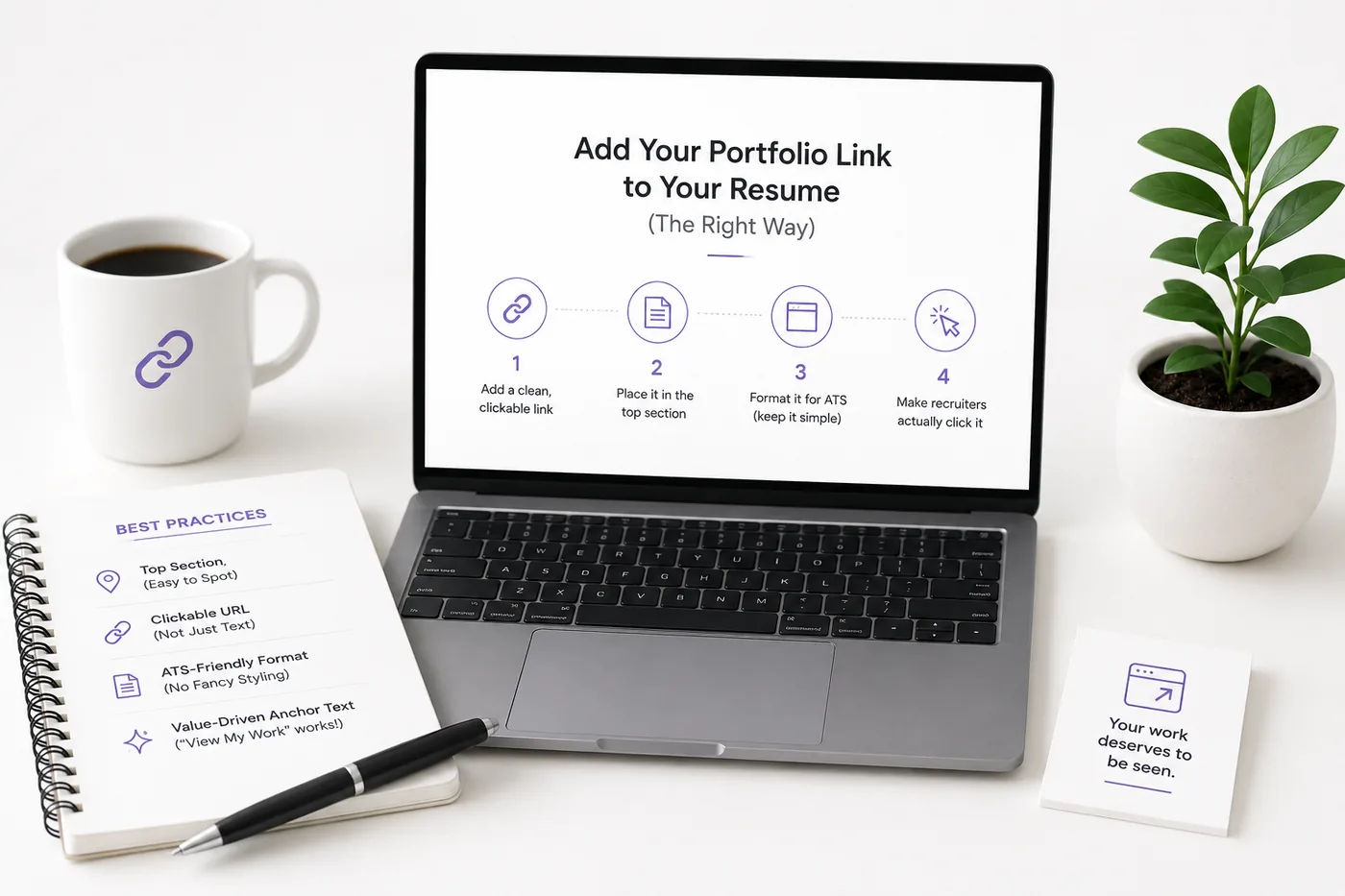
Your resume and portfolio should tell the same story - same methodology (Agile, Waterfall, hybrid), same industry, same headline delivery metrics - just at different levels of depth. Lock the resume down first with the ATS score checker and an ATS-friendly template, then mirror that positioning in your portfolio. See How to Add Your Portfolio Link to Your Resume for placing the link correctly.
Common Mistakes
- Case studies with no obstacle - a project that went perfectly is less convincing than one you actually managed through
- Sharing confidential budget figures or client names without permission
- No mention of team size or your specific role when the project was a joint effort
- A portfolio disconnected from your certifications - list PMP/Agile credentials prominently, they are often a screening filter
Pro Tips
- Include one project where you had to recover a timeline after a major setback
- Show a real (sanitized) status report - it demonstrates communication style, not just planning skill
- Generate your portfolio shell from your resume with the portfolio builder and add your project case studies
Step-by-Step Guide to Building Your Project Manager Portfolio
Creating a project manager portfolio can seem daunting, but breaking it down into manageable steps can simplify the process. Here’s a step-by-step guide to help you assemble a comprehensive and effective portfolio.
-
Identify Your Target Audience: Determine who will be viewing your portfolio. Is it prospective employers, clients, or industry peers? Tailoring your content to your audience will make it more impactful.
-
Gather Your Best Projects: Select 3-5 projects that best showcase your skills and achievements. Ensure these projects highlight diverse aspects of project management, such as planning, execution, and stakeholder communication.
-
Document Each Project: For each project, include the following:
| Step | What to do |
|---|---|
| Project Overview | Briefly describe the project and its objectives |
| Your Role | Clearly define your responsibilities and contributions |
| Challenges and Solutions | Highlight any obstacles faced during the project and how you overcame them |
| Results | Use metrics to quantify your success, such as budget adherence, timeline completion, and stakeholder satisfaction |
-
Design Your Portfolio: Choose a clean, professional layout that reflects your personal brand. Use visual elements like graphs and charts to present data effectively.
-
Include Testimonials: If possible, add quotes or recommendations from colleagues, clients, or supervisors that speak to your project management skills and successes.
-
Review and Edit: Proofread your content for grammar, clarity, and coherence. A polished portfolio reflects your attention to detail.
-
Publish and Share: Once finalized, host your portfolio on a reliable platform. Consider using a custom domain to enhance professionalism. For guidance on this, check out our article on how to put your portfolio on a custom domain.
Common Mistakes to Avoid When Creating a Project Manager Portfolio
While assembling your portfolio, it's easy to fall into certain traps. Here are common mistakes to steer clear of:
Turning a resume into a portfolio site
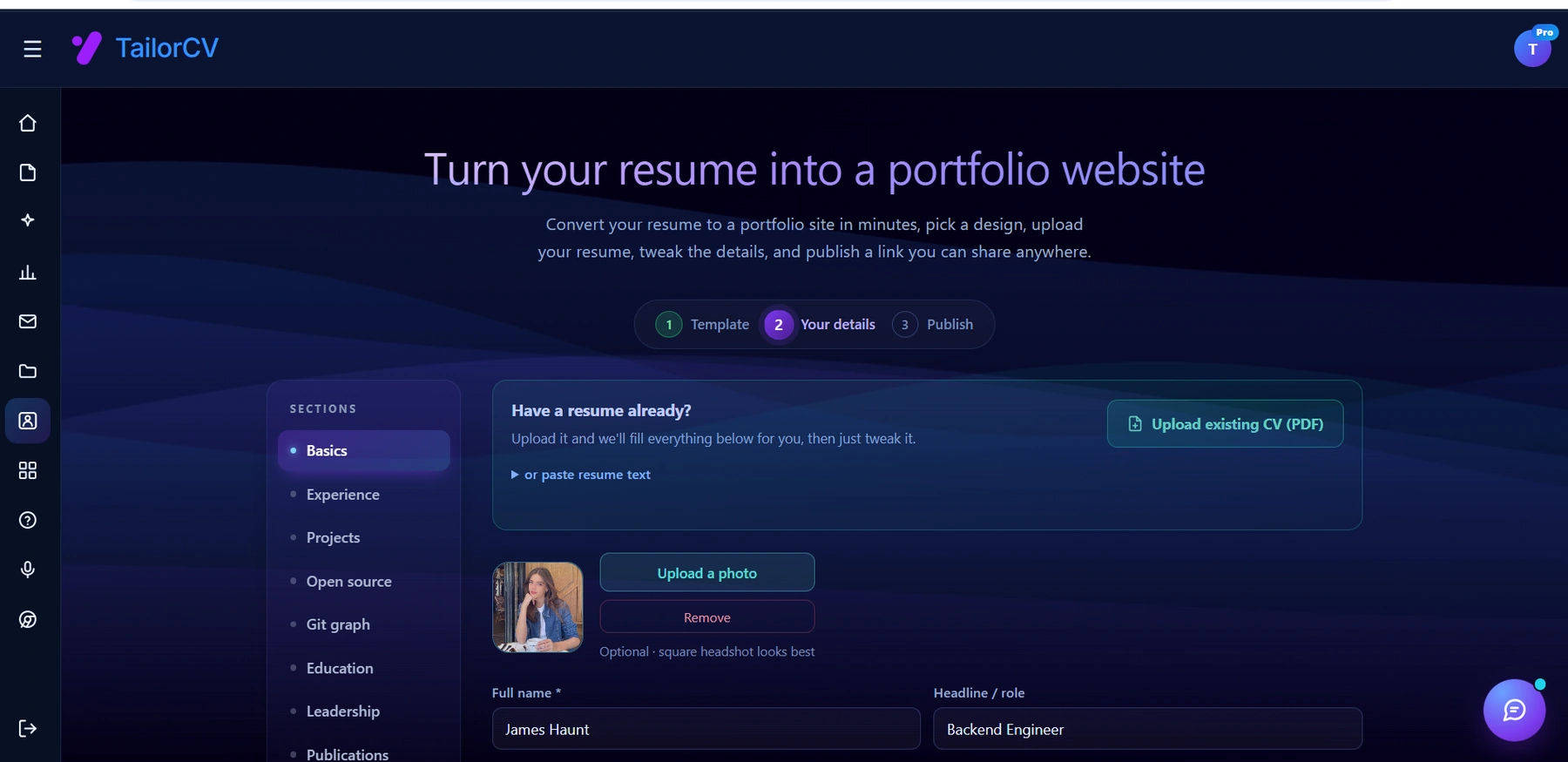
The three steps are template, details, publish. Uploading an existing CV fills in the details step for you, which is why this takes minutes rather than a weekend.
-
Overloading with Information: Avoid cluttering your portfolio with excessive details. Stick to relevant information that showcases your skills effectively.
-
Neglecting Visual Appeal: A well-designed portfolio is crucial. Poor design can distract from your content. Invest time in choosing an attractive layout that enhances readability.
-
Ignoring Updates: Regularly update your portfolio to include new skills and projects. An outdated portfolio can misrepresent your current capabilities.
-
Lack of Personal Branding: Ensure your portfolio reflects your unique style and personality. This helps you stand out in a competitive job market.
-
Forgetting About Accessibility: Ensure that your portfolio is easy to navigate and accessible on various devices. Test it on mobile and desktop to guarantee a seamless user experience.
Mini Checklist for Your Project Manager Portfolio
Use this checklist to ensure your portfolio is comprehensive and effective:
- unchecked: Target Audience Defined: Have you identified who will view your portfolio?
- unchecked: Best Projects Selected: Did you choose 3-5 projects that demonstrate your skills?
- unchecked: Project Documentation: Have you included an overview, your role, challenges, and results for each project?
- unchecked: Visual Elements Included: Are there graphs or charts to illustrate your successes?
- unchecked: Testimonials Added: Do you have endorsements from colleagues or clients?
- unchecked: Professional Design: Is your portfolio visually appealing and easy to navigate?
- unchecked: Proofread: Have you checked for grammar and clarity?
- unchecked: Regular Updates Planned: Will you commit to updating your portfolio regularly?
Scenarios to Illustrate Portfolio Impact
To understand the importance of a strong project manager portfolio, consider these scenarios:
-
Scenario 1: You attend a networking event where potential employers are present. You share your portfolio, which highlights a successful project that increased efficiency by 30%. This specific example resonates with an employer looking for someone to lead similar initiatives.
-
Scenario 2: A client is considering multiple project managers for a contract. Your portfolio showcases a project where you managed a tight budget, delivering results ahead of schedule. This direct evidence of your capability helps you win the contract.
-
Scenario 3: During a job interview, the interviewer asks for examples of how you handle stakeholder communication. Your portfolio provides a case study that outlines your strategies, making your answer more compelling and memorable.
By applying these strategies, avoiding common pitfalls, and utilizing the checklist, you can create a project manager portfolio that not only showcases your skills but also sets you apart in the competitive job market. For additional insights, check out our Project Manager Resume 2026 - Complete Guide with Examples for aligning your resume with your portfolio.
Frequently Asked Questions
Can I show budget and timeline data from past employers?
Only with company names and identifiable figures removed or replaced with ranges/percentages, unless you have explicit permission to share exact numbers.
I managed smaller internal projects, not big client engagements - is that enough?
Yes, if you can show clear scope, a real constraint, and a delivered outcome. Scale matters less than demonstrated judgment. See Portfolio No Projects.
How do I align my resume?
Keep your methodology and certification list identical across resume and portfolio - see How to Quantify Resume Achievements and consider using our resume templates for consistency. Additionally, you might find it helpful to explore our Project Manager Resume 2026 - Complete Guide with Examples for further insights.
Build Your Portfolio Now
You do not need to code a site or spend a weekend on a website builder. Turn your existing resume into a live, shareable portfolio in minutes with the TailorCV portfolio builder - choose a theme, upload your CV, let AI pull in your experience, then add your project case studies and publish a link for your resume and LinkedIn. Before you apply, run your resume through the free ATS score checker and switch to an ATS-friendly resume template so your portfolio and resume tell one consistent story.
Related Guides
- How to Build a Professional Portfolio
- Business Analyst Portfolio Guide
- Product Manager Portfolio Guide
- How to Quantify Resume Achievements
- Private Portfolio Sharing Guide
- Portfolio Website for Job Applications
- Portfolio Checklist Before Applying
- Portfolio Mistakes to Avoid
- Portfolio No Projects
- AI Portfolio Builder: No Code Required
- Resume + Portfolio + Mock Interview System
- Personal Website vs Portfolio
Make This Practical
If this topic connects to your work samples, turn the advice into a live proof page with the TailorCV portfolio builder. After publishing, add the link correctly using How to Add Your Portfolio Link to Your Resume, tighten the page with the Portfolio Checklist Before Applying, and make sure recruiters can contact you through a clean Portfolio Contact Section.
Your portfolio works best when it supports the resume, not when it replaces it. Run the resume through the free ATS score checker, choose an ATS-friendly resume template, and use Portfolio SEO: Get Found so your name, methodology, and strongest deliveries are easier to discover.
Related Guides to Strengthen This Topic
Use these internal guides to connect this topic with the rest of your job-search workflow:
- How to Build a Professional Portfolio
- Portfolio Website for Job Applications
- Portfolio Checklist Before Applying
- Portfolio Mistakes to Avoid
- How to Write Portfolio Case Study
- Add Portfolio Link to Resume
- Resume Matching With Job Description
- ATS-Friendly Resume Builder
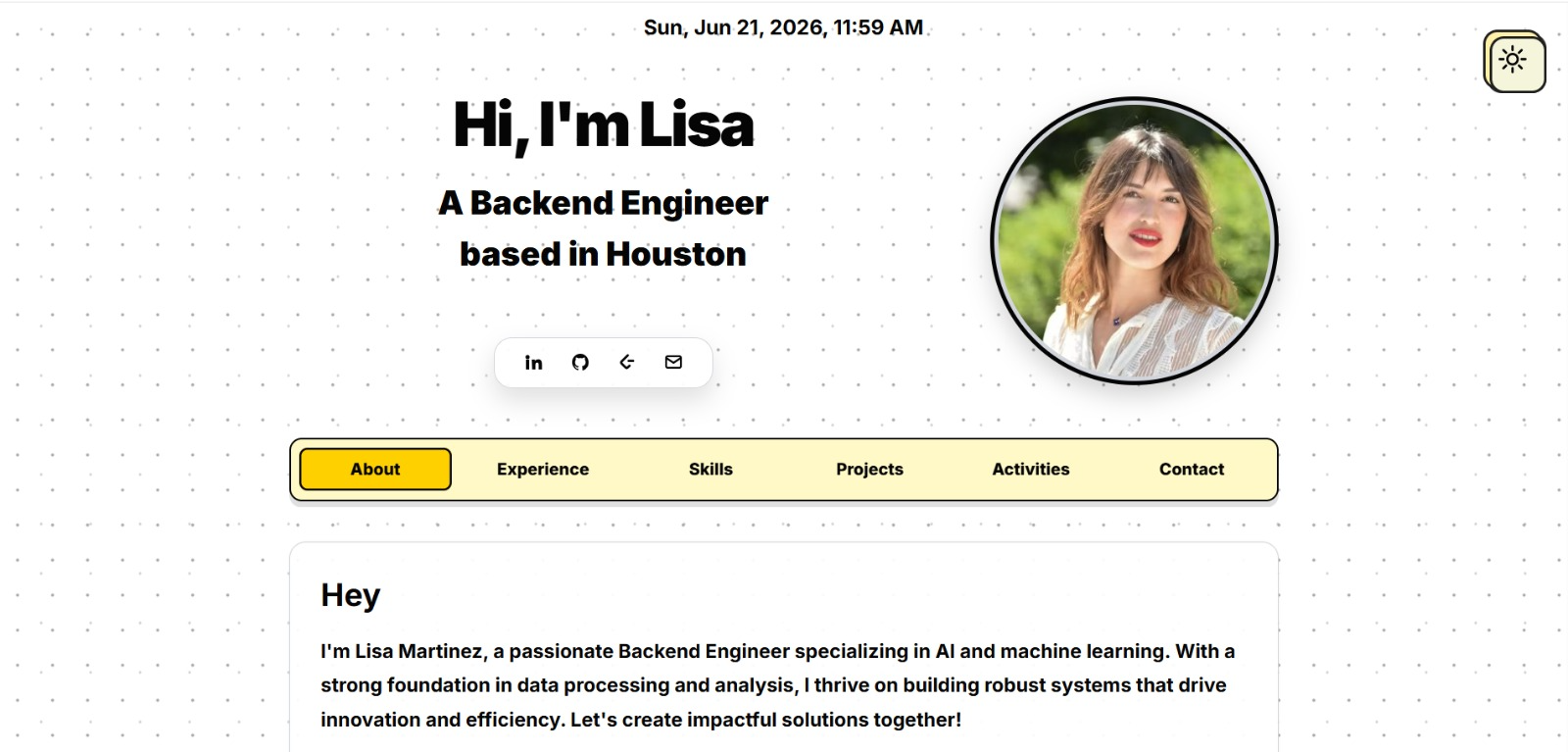
See what your portfolio could look like
This theme is built straight from your resume — pick one and your portfolio is live in minutes.
Was this guide useful?
Be the first to rate it.