TD
TD

Key Takeaways
- Tailor your resume for each work model—remote, hybrid, or on-site—since each attracts different candidates and requires distinct signals.
- For remote roles, emphasize demonstrated remote work experience, async communication skills, and self-direction in your accomplishments.
- Include relevant tools for distributed work, such as Slack, Jira, and Google Docs, to showcase your fluency in remote collaboration.
- Your professional summary should explicitly mention remote work experience and highlight skills in async communication and team coordination.
In 2024, "remote work" changed overnight.
Companies that had been fully remote for four years suddenly announced return-to-office mandates. Other companies doubled down on flexibility as their hiring advantage. A third group landed somewhere in between - two days in, three days out, no one entirely sure how to enforce it.
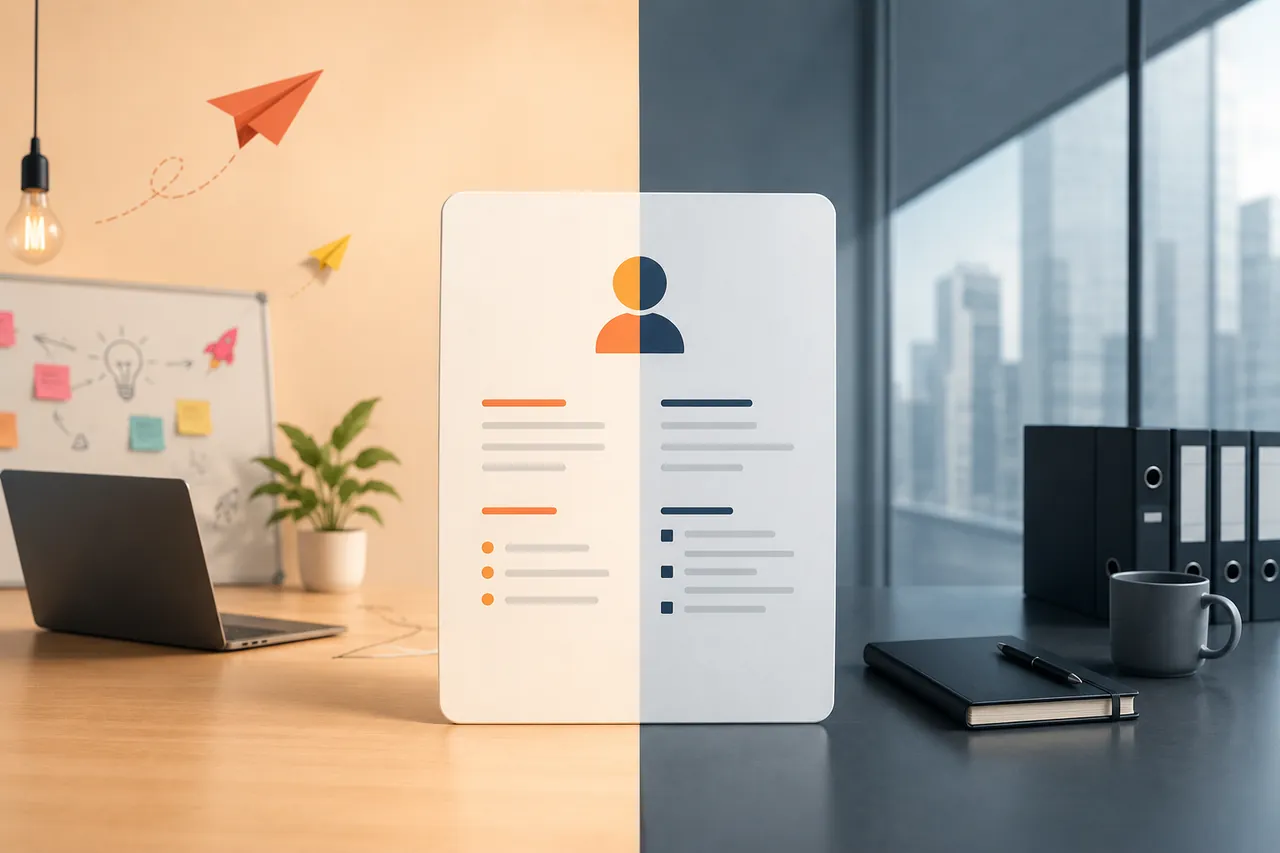
Today's job market has three distinct work models. Each attracts a different type of candidate. Each requires a different set of signals on your resume.
If you are applying to remote roles with the same resume you use for on-site applications - or vice versa - you are leaving interview opportunities on the table.
This guide breaks down exactly what changes, and how to tailor your resume for each work model. For a broader look at how targeting the right type of employer changes your resume strategy, see also startup vs enterprise resume tailoring.
Why Work Model Changes What Recruiters Look For
When a company hires for a remote role, they are making a specific bet:
"This person can deliver results without daily in-person oversight. They can manage their own time, communicate asynchronously, and integrate into a distributed team."
When a company hires for an on-site role, they are making a different bet:
"This person will show up, integrate into our physical culture, and thrive in direct collaboration."
When a company hires for hybrid, they are somewhere in between - and the balance matters depending on the specific team and company culture.
Your resume needs to signal the right things for each bet.
Tailoring Your Resume for Remote Roles
The Key Signals Remote Employers Want
Demonstrated remote work experience If you have worked remotely before, say so explicitly.
Do not just list your job title and company. Add context: "Fully remote role" or "remote-first team" in your experience entry.
Example:
Software Engineer - [Company] (Fully Remote), Jan 2021 - Present
This single parenthetical removes a major uncertainty for the hiring manager.
Async communication and documentation skills Remote work runs on written communication. Companies that operate across time zones need people who can communicate clearly without real-time collaboration.
Include signals like:
- "Produced weekly async status updates consumed by a distributed 12-person team across 4 time zones"
- "Authored technical documentation that reduced onboarding time for new engineers from 3 weeks to 5 days"
- "Managed stakeholder reporting across US, India, and EU teams via async written briefs"
Self-direction and proactive delivery Remote employers worry about candidates who need micromanagement to be productive.
Every bullet point that shows you initiated something - not just completed something - addresses this concern.
"Identified a critical data quality issue in our pipeline and led a 3-week fix project end-to-end, without being asked" is more powerful for a remote role than "Fixed data quality issue as assigned."
Relevant tools for distributed work Remote teams run on specific tools. List the ones you have actually used in your skills section:
- Communication: Slack, Zoom, Teams
- Project management: Jira, Asana, Linear, Notion, Trello
- Documentation: Confluence, Notion, Google Docs
- Design collaboration: Figma
- Version control and async code review: GitHub, GitLab
- Time zone management: World Time Buddy, Calendly
These are not impressive in isolation - but their presence on a resume confirms remote work fluency.
What to Include in Your Summary
Your professional summary should acknowledge remote work experience directly.
"product manager with 3 years of fully remote experience leading cross-functional teams across the US and Europe. Strong in async communication, documentation-first processes, and distributed team coordination."
For remote roles, that sentence is worth three years of office experience.
For more on tailoring for remote positions specifically, also check the remote job search guide.
Tailoring Your Resume for On-Site Roles
On-site employers are often reacting to a perceived failure of remote work. They want presence, energy, collaboration, and culture contribution.
The Key Signals On-Site Employers Want
Physical presence and team culture signals Mention activities that require or benefit from physical co-location:
- Mentoring junior team members in person
- Running in-person workshops, brainstorming sessions, or whiteboarding
- Office-based client relationships
- Team events, offsites, or culture-building initiatives
Cross-functional in-person collaboration "Led weekly cross-functional syncs in our London office across product, design, and engineering teams" reads very differently to an on-site employer than "participated in cross-functional collaboration."
Local market knowledge (if relevant) For roles where geography matters - sales territories, retail management, local operations - include explicit location signals.
Presence and communication style If you are known for effective in-person presentations, client meetings, or executive briefings - these belong on an on-site resume more prominently than on a remote one. Soft skills around communication and collaboration deserve more emphasis for on-site applications.
Tailoring Your Resume for Hybrid Roles
Hybrid is the most ambiguous of the three. It usually means 2-3 days in office per week - but companies define it differently.
For hybrid roles, you need to show:
- Comfort with both independent work and team collaboration
- Flexibility and adaptability
- Strong communication in both async and in-person contexts
Your resume should include examples from both modes:
- "Managed project roadmap independently, with weekly in-person stakeholder reviews"
- "Coordinated a cross-timezone team while maintaining on-site collaboration with local engineering team"
The hybrid employer is trying to solve for both worlds. Show that you thrive in both.
The ATS Angle for Work Model Keywords
Job descriptions for remote, hybrid, and on-site roles contain specific keywords.
| Option | What to know |
|---|---|
| Remote JD keywords to match: | Remote · Distributed team · Async / asynchronous · Self-directed · Independent contributor · Remote-first · Digital-first |
| On-site JD keywords to match: | In-person collaboration · On-site presence · Office environment · Team culture · Physical co-location (less common, but present) |
| Hybrid JD keywords: | Hybrid · Flexible work model · In-office and remote · Collaborative environment |
Match the language the JD uses. This is the same principle as matching resume keywords to the job description - but applied to work model language, not just skills. If the posting says "remote-first," use "remote-first" in your resume. If it says "collaborative office culture," mirror that.
Use TailorCV's keyword matcher to check your ATS score against work-model-specific job descriptions. These keywords are often missed because people focus only on technical skill keywords - but work model language contributes to your overall match score.
What Happens When Your Preference Conflicts With the Role
Sometimes you want remote work but a great opportunity is hybrid or on-site. Sometimes you prefer office but the only option is remote.
If you want remote but the role is hybrid: Apply anyway. In your summary, signal that you are comfortable with both modes. Do not lie - but if you genuinely can work in a hybrid environment, show flexibility.
If you prefer on-site but the role is remote: Apply - but be honest with yourself and in the process. Remote work is genuinely hard for some people. If you need in-person structure to do your best work, a fully remote role may not be the right fit regardless of the resume.
If your past experience doesn't match: If you are applying for a remote role but have never worked remotely, address it: "While my recent experience has been office-based, I've managed independent workstreams, produced documentation-first deliverables, and coordinated with global stakeholders - the foundations of effective remote collaboration."
The Contact Information Signal
One underrated detail: where you list your location.
Your resume after optimization
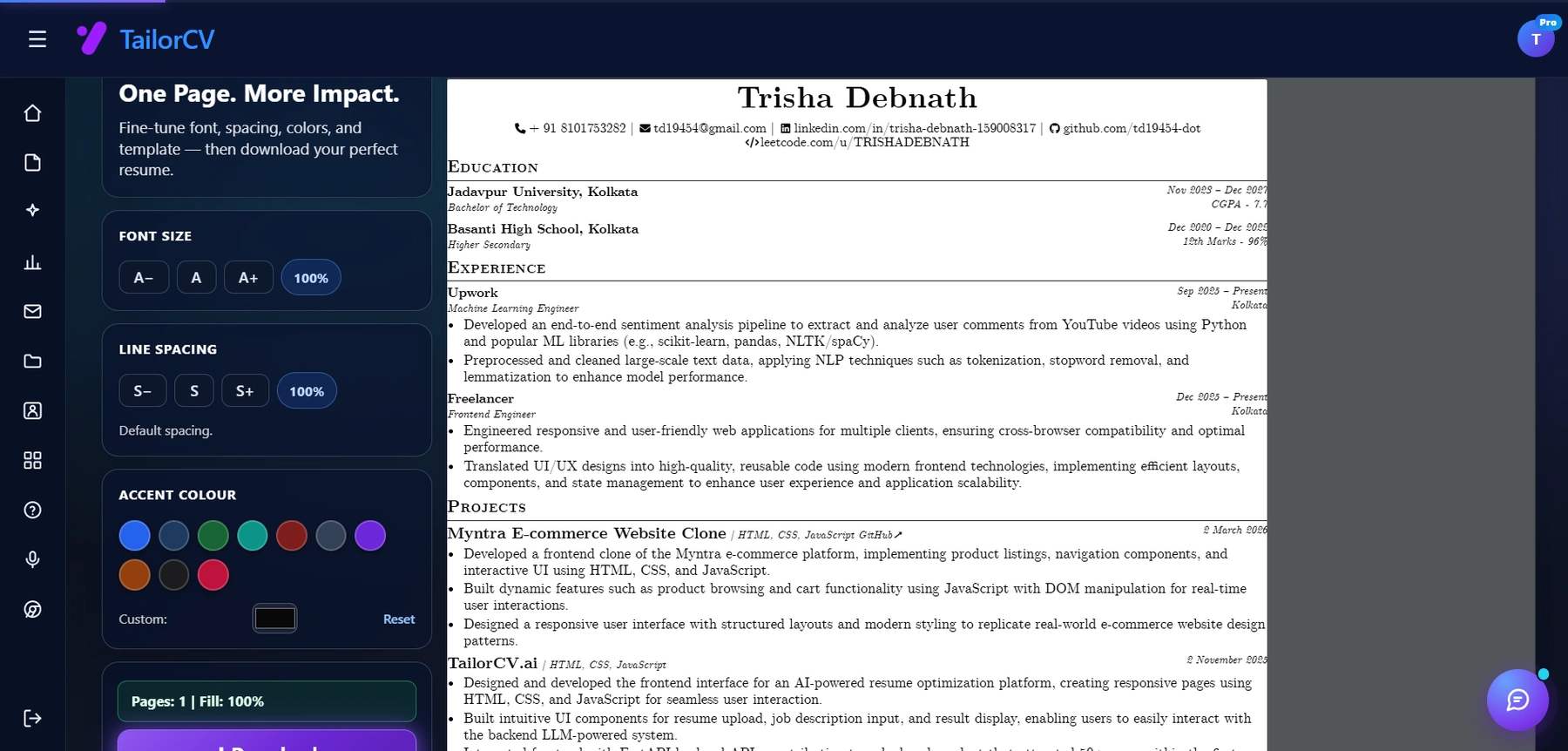
The optimized resume renders live beside the controls, so you see the page count change as you adjust.
For remote roles: List your city and state but do not over-emphasize. Many remote employers are open to any location. For on-site roles: List your city explicitly, especially if it is the same city as the office. For hybrid roles: List your city if you are within reasonable commuting distance of the office.
If you are in a different city but willing to relocate, say so: "San Francisco, CA - Open to relocation to [City]" for on-site roles. "Austin, TX - US-based, available for in-person travel as needed" for hybrid or remote roles with occasional on-site requirements.
Also make sure your LinkedIn profile reflects the same location and work model signals - recruiters check both.
Make This Practical
Do not guess whether the resume is ready. Upload it to the free ATS score checker, compare the result with the ATS Score Guide, and fix formatting issues using ATS Resume Formatting Mistakes and ATS Resume Parser Friendly Format.
After the technical cleanup, improve relevance. Use Resume Matching With Job Description, strengthen keyword coverage with the Resume Keywords Guide, and avoid overdoing it by checking ATS Keyword Mistakes. If the layout itself is weak, rebuild with an ATS-friendly resume template.
FAQ
Should I mention my preference for remote/hybrid/on-site on my resume?
Not explicitly - it can limit you unnecessarily. Instead, signal your experience and competence for the work model you are applying to. Your preference is better discussed after an offer.
Does a fully remote work history hurt me for on-site applications?
It may raise questions about your comfort with in-person culture. Counter it by emphasizing in-person skills in your bullet points - mentoring, presenting, client relationships - even if they happened as part of your remote role's occasional in-person touchpoints.
Do remote-specific tools on my resume help with ATS?
Yes. For remote job descriptions that list tools like Slack, Notion, or Figma as requirements, having them in your skills section improves your keyword match.
Is "remote-first" a keyword worth including in my resume?
Only if you genuinely have experience in a remote-first environment and if the job description uses that language. Natural inclusion is valuable. Forced inclusion is not.
Related Guides
- How to Match Your Resume to a Remote Job Description
- Remote Job Search Guide 2026
- How to Tailor Your Resume for Every Job
- Resume Matching with Job Description - Complete Guide
- Skills to Add to Your Resume in 2026
- ATS Score Guide
- Resume Tailoring Startup vs Enterprise
- LinkedIn Profile Optimization Guide
- How to Match Resume Keywords to Job Description
- Tailored vs Generic Resume
Conclusion
The same experience. Three different resumes.
A remote employer needs to trust you without seeing you every day. An on-site employer needs to believe you will show up and belong. A hybrid employer needs both.
Your resume is where you make that case.
Show the signals that matter for the model. Match the language from the JD. Check your keyword score before applying.
In 2026, work model is not just a perk - it is a core part of the job. Your resume should treat it that way.
Tailor My Resume for My Target Work Model - Free
See what tailoring is worth on your resume
Score your current resume against a real job description before you change a word.
Drop your resume here or choose a file
PDF only. Max 2 MB.
We never share your data or use it to train AI models.

Start from a template that tailors well
Clean structure means swapping keywords per job takes minutes, not a re-layout every time.
Was this guide useful?
Be the first to rate it.