SS
SS
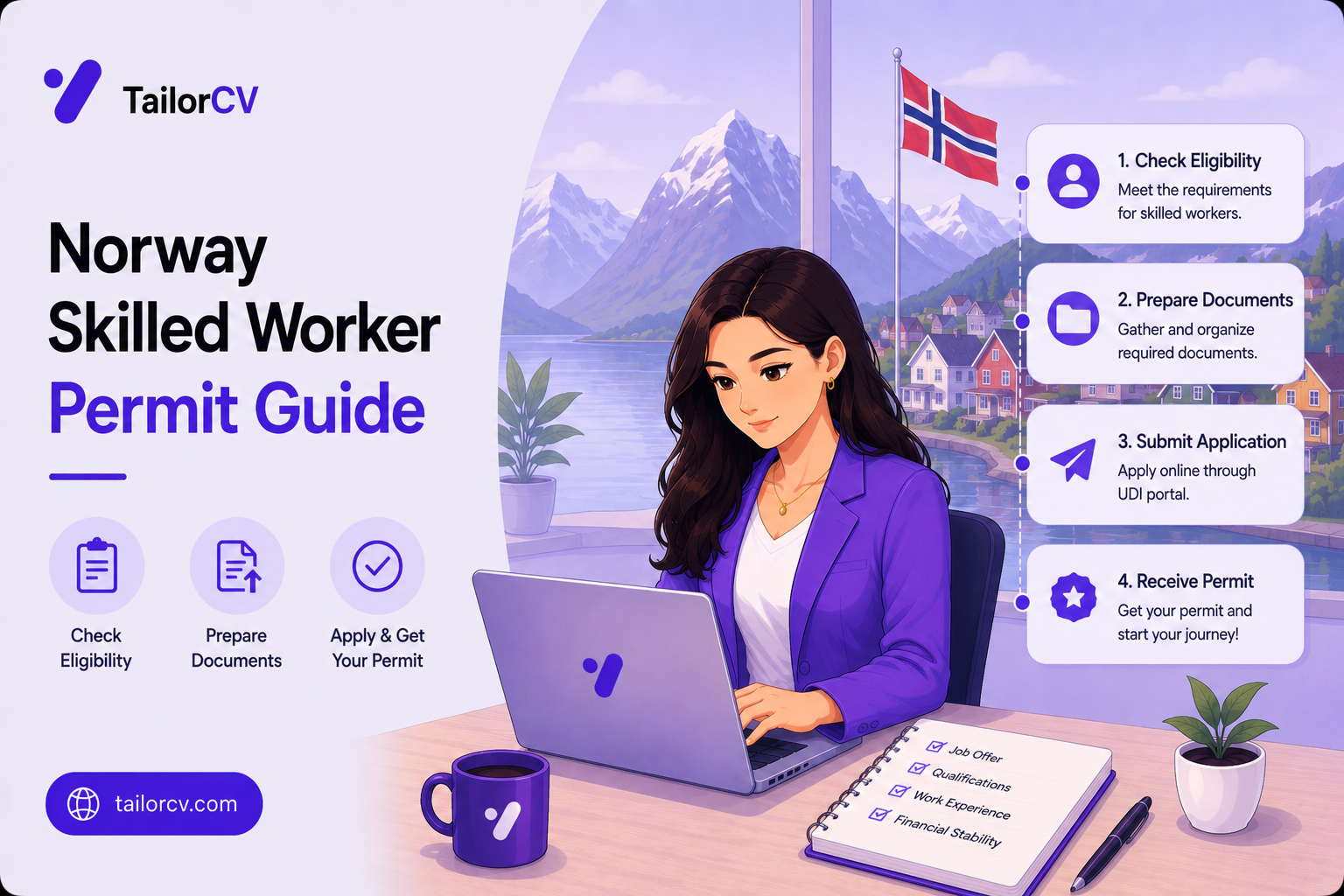
Key Takeaways
- EEA and EFTA citizens need no permit — free movement applies, with registration after arrival.
- Everyone else needs a skilled worker residence permit, which requires a concrete job offer, a relevant qualification, full-time work and Norwegian-standard pay.
- Graduates of Norwegian institutions can apply for a job-seeker permit to stay and look for work without an employer sponsoring them first.
- Norway is not in the EU, so the EU Blue Card does not apply and EU long-term residence rules work differently.
- Permanent residence requires a qualifying period of continuous residence plus language and social studies requirements.
The dividing line
Everything follows from your passport.
EEA and EFTA citizens benefit from free movement. You can enter, look for work, and take a job with no permit application. You register with the police within a defined period after arriving, and that registration is administrative rather than discretionary.
Nordic citizens have additional rights under long-standing intra-Nordic agreements and face essentially no formality at all.
Everyone else falls under the skilled worker route, and the conditions are specific rather than a matter of judgement.
A crucial framing point: Norway is in the EEA and Schengen, not the EU. People assume EU instruments carry over and they do not. The EU Blue Card is not available in Norway. EU long-term resident status works differently. Advice written for Germany or the Netherlands does not transfer, and UDI — the Norwegian Directorate of Immigration — is the authority to read.
What the skilled worker permit requires
Four conditions, all of which have to hold.
A concrete job offer. Norway does not issue a general work-seeking permit to third-country nationals who have not studied there. You need the offer first.
A relevant qualification. Either a completed degree, or completed vocational training, or in some cases special qualifications obtained through long experience. Crucially, the qualification has to be relevant to the job — a history graduate offered a software role has a problem regardless of ability.
Full-time work. The position must be full time, or at least meet the minimum required scope. Part-time offers generally do not qualify.
Pay and conditions at Norwegian standard. Salary must not be lower than the applicable tariff or the normal wage for that occupation in Norway. This protects the labour market and it means an employer cannot hire you cheaply.
The employer is involved. They provide the offer of employment on the prescribed form, and the terms are checked against sector norms.
The job-seeker permit for graduates
This is the route most relevant to anyone reading this while studying.
If you complete a degree at a Norwegian institution, you can apply for a residence permit to seek work in Norway. The defining feature is that no employer needs to sponsor you first — you get the permission, then you look.
It has a defined duration and it is intended as a bridge into a skilled worker permit rather than an end in itself.
There is also a route for skilled workers seeking work in certain circumstances, with its own conditions.
Check the current durations and conditions with UDI, because these have been adjusted and a stale figure leads people to plan badly.
The strategic implication: studying in Norway is by a considerable margin the most reliable way for a third-country national to enter this labour market, because it converts the chicken-and-egg problem — you need an offer to get a permit, and employers hesitate to offer without a permit — into a solved one.
Toward permanent residence
Worth understanding early because it shapes which jobs are worth taking.
Permanent residence (permanent oppholdstillatelse) requires a qualifying period of continuous residence on permits that count, and not every permit counts equally. Time on a student permit is generally treated differently from time on a work permit.
There are additional requirements beyond time: completed Norwegian language training, a test in social studies, and generally a requirement around self-sufficiency and not having received certain benefits.
Continuity matters. Long absences can interrupt the qualifying period, so if permanent residence is the goal, keep records and understand how time abroad is treated.
Citizenship follows a longer path with its own language and residence requirements, and Norway's rules on dual citizenship have changed in recent years — check the current position if you would have to consider renouncing another nationality.
Timelines and how the process runs
Sequence and expectations, so you can plan around them rather than being surprised.
The employer provides the offer on UDI's prescribed form, with the terms specified so they can be checked against sector norms.
You apply, usually online through UDI's portal, then attend an appointment at a Norwegian embassy, consulate or a designated application centre to submit documents and biometrics.
Processing takes time, and it varies by case type and season. UDI publishes indicative case-processing times, which is the figure to plan against rather than a friend's experience.
Some employers can use a faster route. Norway operates arrangements allowing certain employers to have skilled workers start work before the application is finally decided, subject to conditions. If your employer qualifies, this is worth asking about explicitly — it can change your start date by months.
On arrival, order a residence card and complete registration. Everything else — D-number, tax card, bank account — depends on it.
Renewals are applied for before expiry, and continuous compliance with the permit's conditions is what keeps them straightforward.
Changing employer is possible but is not automatic. The permit is tied to the specific job in important respects, so understand what a move requires before you resign.
Family and dependants
The questions that arrive after the offer.
Family immigration is available to skilled worker permit holders for spouses, registered partners and children, subject to conditions.
Income requirements apply. The sponsor generally has to demonstrate a sufficient income over a defined period, and this catches people out when a first Norwegian salary is only a few months old.
A spouse's right to work depends on the permit they receive. Family immigration permits generally allow work, but confirm the specific conditions rather than assuming.
Children's schooling is free and public, taught in Norwegian, with introductory language provision for newcomers.
Kindergarten (barnehage) is heavily subsidised and widely available, which is a substantial financial difference from the UK or US for a family.
Verify everything with UDI for your exact combination. Family provisions are the part of any immigration system that changes most often, and generic advice ages badly.
Common misreadings of the Norwegian system
Five beliefs that cost people months.
"Norway is basically the EU." It is in the EEA and Schengen, not the EU. The Blue Card does not exist here, EU long-term residence works differently, and guidance written for Germany does not transfer.
"Any degree will do." The qualification has to be relevant to the specific job. This is checked, and a mismatch is a common refusal.
"I can come and look for work." Only if you are EEA, or you studied in Norway and hold the job-seeker permit. Third-country nationals otherwise need the offer first.
"A part-time role gets me in." The permit generally requires full-time work.
"I can undercut on salary to make myself attractive." You cannot. Pay below the applicable tariff or the normal wage for the occupation disqualifies the application, which protects you as much as the market.
"Student time counts toward permanent residence the same way." It generally does not count in the same manner as time on a work permit. If settlement is the goal, understand how your specific permits count before you plan around them.
Choosing an employer with the permit in mind
When two offers arrive, the permit changes the comparison.
Permit experience is a hard filter. An employer who has done this before has the forms, the timeline knowledge and someone who understands the process. One who has not may abandon it halfway.
Ask directly whether they have sponsored before. It is an ordinary question and hesitation is itself an answer.
Check the salary against the tariff yourself. An employer offering below the applicable rate cannot sponsor you regardless of enthusiasm, and it is better to know before contracts are drafted.
Confirm the role is full time and that the job title and duties genuinely match your qualification.
Ask whether they qualify for early start arrangements, which can move your start date by months.
And ask what happens at renewal. A permit tied to a job you might outgrow in a year is worth thinking about before you sign, not after.
Mini checklist
- unchecked: Passport position established — EEA or third country
- unchecked: UDI checked for current requirements rather than secondhand advice
- unchecked: Qualification confirmed relevant to the target occupation
- unchecked: Offer confirmed as full time
- unchecked: Salary checked against the applicable tariff
- unchecked: Job-seeker permit considered if you studied in Norway
- unchecked: Employer's experience with the process confirmed
- unchecked: Permanent residence requirements understood early
- unchecked: Language and social studies obligations planned for
Scenarios
Scenario 1: You are an EEA citizen with an offer
Straightforward. Move, start work, register with the police within the required period. State your EEA status in the first line of applications so employers know there is nothing to solve.
Scenario 2: You are a third-country national with no Norwegian degree
You need an offer before a permit, which means targeting employers who sponsor routinely — energy, offshore engineering, maritime and the large corporates. A small local employer is unlikely to take this on.
Scenario 3: You are finishing a degree at NTNU or UiO
Apply for the job-seeker permit as soon as you are eligible. It removes the sponsorship obstacle for its duration, which is exactly the leverage a graduate needs.
Tip: Check that your qualification is genuinely relevant to the job you are offered, not merely that you hold a degree. Relevance is an explicit condition of the skilled worker permit, and a mismatch between your field and the role is a common and avoidable refusal.
Do's and Don'ts
Do
- Read UDI directly for current rules
- Confirm your qualification matches the occupation
- Target employers with permit experience
- Use the job-seeker permit if you studied in Norway
- Plan for language and social studies requirements
- Keep records of your residence and absences
Don't
- Assume EU rules apply in Norway
- Expect a general job-seeking permit without a Norwegian degree
- Accept a part-time offer expecting it to qualify
- Assume any degree satisfies the relevance test
- Leave permanent residence requirements until late
- Rely on figures quoted anywhere but UDI
Common Mistakes
- Assuming EU instruments apply. Norway is EEA, not EU — no Blue Card here.
- Ignoring the relevance requirement. Your qualification must match the occupation.
- Expecting to job-hunt on a permit you do not have. Third-country nationals need the offer first unless they studied here.
- Part-time offers. The permit generally requires full-time work.
- Underestimating the language requirement. Permanent residence needs completed Norwegian training and a social studies test.
- Losing track of absences. Continuity affects the qualifying period.
Related Guides
Keep building on this with the related guides in this series:
- Working in Norway as an International Graduate
- Writing a CV for the Norwegian Market
- Energy and Offshore Careers in Norway
- Nordic Graduate Job Markets Compared
- Working in Sweden as an International Graduate
You can also check your resume's ATS score for free, generate a tailored cover letter, or build a portfolio website in minutes.
Frequently Asked Questions
Do EEA citizens need a Norwegian work permit?
No. Free movement applies, and you register with the police after arriving rather than applying for a permit.
Does the EU Blue Card work in Norway?
No. Norway is in the EEA but not the EU, so EU instruments including the Blue Card do not apply. UDI is the authority for Norwegian routes.
What does the skilled worker permit require?
A concrete job offer, a qualification relevant to that specific job, full-time work, and pay matching Norwegian standards for the occupation.
Can I stay after studying in Norway?
Yes — graduates of Norwegian institutions can apply for a job-seeker permit to remain and look for work without an employer sponsoring them first.
How do I get permanent residence?
A qualifying period of continuous residence on permits that count, plus completed Norwegian language training and a social studies test, and self-sufficiency requirements.
Does my degree have to match the job?
Yes. Relevance to the occupation is an explicit condition, and a mismatch between field and role is a common cause of refusal.
How long does a Norwegian work permit take?
It varies by case type and season. UDI publishes indicative case-processing times — use those rather than someone else's anecdote.
Can I start work before the permit is decided?
Sometimes. Norway operates arrangements letting certain employers have skilled workers begin before a final decision, subject to conditions. Ask your employer whether they qualify.
Can my family join me?
Yes, subject to conditions including an income requirement on your side. A spouse's right to work depends on the permit they receive, so confirm it rather than assuming.
What are the most common reasons a Norwegian permit is refused?
A qualification that does not match the specific job, part-time work, salary below the applicable tariff, or applying for a work-seeking route not open to third-country nationals without a Norwegian degree.
How do I choose between two employers when I need a permit?
Ask each whether they have sponsored before, confirm the salary clears the tariff, check the role is full time and matches your degree, and ask whether they qualify for early-start arrangements.
What is your resume scoring right now?
Scan it against a job description and get your ATS match score in about a minute.
Drop your resume here or choose a file
PDF only. Max 2 MB.
We never share your data or use it to train AI models.

Was this guide useful?
Be the first to rate it.