 SS
SS
Key Takeaways
- Stavanger is the centre, with Bergen, Oslo and Trondheim holding significant parts of the sector.
- Equinor anchors everything, surrounded by a deep supply chain — Aker Solutions, TechnipFMC, Subsea 7, DNV, Kongsberg and hundreds of smaller specialists.
- The energy transition draws on the same skills: offshore wind, carbon capture and storage, and hydrogen all use offshore engineering capability rather than replacing it.
- These employers sponsor international staff routinely and operate in English, which makes the sector the most accessible entry into Norway for a third-country engineer.
- Pay is strong, rotation and offshore allowances are significant, and the offshore roster is a lifestyle decision rather than a detail.
Why this sector is the accessible one
For an international engineer, Norwegian energy is the path of least resistance, and it is worth understanding why.
They have been hiring internationally for decades. Offshore oil and gas has always drawn on a global labour pool, and Norwegian energy companies have mature processes for permits, relocation and international staff.
They operate in English. Project documentation, safety standards, engineering reviews and much internal communication run in English because the workforce and the supply chain are international.
The qualification relevance test is easy to satisfy. A petroleum, mechanical, subsea, chemical, electrical or materials engineering degree maps cleanly onto the roles, which matters because relevance is an explicit permit condition.
They pay at or above Norwegian tariff, which is the other permit condition, without anyone having to think about it.
Contrast that with a small Oslo startup, which may have never sponsored anyone, may not clear the salary requirement, and where a permit application is a genuine imposition.
The map of the sector
| Location | What sits there |
|---|---|
| Stavanger | Equinor's operational heart, ConocoPhillips, Aker BP, and the densest supply chain |
| Bergen | Subsea, maritime, Equinor operations, marine research |
| Oslo | Head-office functions, trading, finance, renewables strategy |
| Trondheim | NTNU and SINTEF research, technology development, spin-offs |
| Kongsberg | Maritime technology, automation, defence systems |
| Haugesund / Ålesund | Shipbuilding, offshore vessels, maritime engineering |
DNV deserves a specific mention — a classification and assurance body headquartered near Oslo with global reach, hiring engineers across maritime, energy and certification work. It is a genuinely different kind of career from an operator or a contractor.
SINTEF in Trondheim is one of Europe's largest independent research organisations, doing applied engineering research with industry. For someone who wants research without academia, it is unusual and under-known.
The transition, and what it actually means for jobs
The phrase "energy transition" is used loosely. Concretely, here is what it has created.
Offshore wind. Norway's offshore engineering capability — floating structures, subsea cabling, marine operations, harsh-environment design — transfers directly. Equinor is a significant offshore wind developer, and the supply chain has followed.
Carbon capture and storage. Norway has been injecting CO2 offshore for decades and is building large-scale transport and storage infrastructure. This is reservoir engineering, subsea and process work.
Hydrogen and ammonia, as fuels and as industrial feedstock, with the process and maritime engineering that implies.
Battery manufacturing, though this sector has proved volatile and some announced projects have not materialised as planned.
Electrification of offshore installations, connecting platforms to shore power — a large, ongoing engineering programme in its own right.
The honest framing: the transition is not replacing oil and gas employment in Norway in the near term. It is adding adjacent work that uses the same skills, which is why the sector's engineering demand has stayed strong rather than collapsing.
Offshore rotation, and what it means
If a role is offshore rather than onshore, that is a lifestyle decision.
Rotation schedules mean working a defined period offshore followed by a defined period at home. The pattern varies by role and employer.
Pay is higher for offshore work, with allowances reflecting the conditions and the schedule.
Time at home is genuinely free. People with offshore rotations often have far more consecutive time off than any onshore job provides, which suits some lives extremely well.
Safety training is mandatory. Offshore work requires certified survival and safety training, plus a medical, before you can go out.
It is not for everyone, and the honest thing to say is that it is worth talking to someone who does it before accepting a role that involves it. Most engineering roles in this sector are onshore.
Pay, and what an energy package includes
Norwegian energy pays well and the structure has specifics worth knowing.
Base salary sits within the applicable collective agreement for most roles, which sets a floor and compresses the range.
Offshore allowances are substantial where they apply, reflecting the rotation and conditions.
Overtime is regulated and paid, and in project-heavy periods it is a real part of annual income rather than a token.
Pension is occupational and employer-contributed, on top of the state scheme.
Relocation support is common for international hires — flights, temporary accommodation, sometimes a settling-in allowance. Ask explicitly, because it is frequently discretionary rather than fixed.
Then subtract Stavanger. Housing in Stavanger and Oslo is expensive, and while the sector pays well, the local cost base absorbs a meaningful share. Run the comparison against real listings.
Tax is high and funds a great deal, and there is a simplified flat-rate scheme available to many foreign workers in their early years in Norway which is worth asking payroll about.
Getting the application right
The mechanics for this sector specifically.
Name your standards and codes. NORSOK, API, DNV standards, ISO references — whichever you have genuinely worked to. In a sector this standards-driven, naming them is the strongest signal of real experience.
Name your software. The specific analysis, design and simulation packages you have used, exactly as the advert names them.
Quantify by project. Water depth, pressure, project value, tonnage, throughput — whatever the natural unit is in your discipline. Energy recruiters read scale immediately.
State your permit position in one line at the top. It is the first thing screened.
Include safety certifications if you hold them, and note if your medical is current.
Run the document through an ATS check — the large operators and contractors screen at volume before anyone reads.
And write a real cover note. In a sector where many applications are identikit engineering CVs, three specific sentences about the particular project or asset stand out disproportionately.
Breaking in without offshore experience
The common worry from graduates, and the honest answer.
Graduate programmes exist. Equinor, Aker Solutions, DNV and the larger contractors run structured intakes, and they are the cleanest entry for someone with no sector experience.
Your thesis is relevant if it touches the physics. Fluid mechanics, structural analysis, materials under load, control systems, process engineering, geoscience — all of it maps onto this sector even if the words "oil" and "subsea" never appeared in your degree.
NTNU and adjacent research is a genuine feeder. If you can do a master's project with an industry partner, that connection frequently becomes the job.
Contractors hire more readily than operators. Aker Solutions, TechnipFMC, Subsea 7 and the engineering consultancies take on more early-career people than Equinor does, and moving operator-side later is a well-worn path.
Software and data skills are in demand here. The sector runs enormous amounts of simulation, monitoring and analysis, and a graduate who can both understand the physics and write code is genuinely scarce.
Say plainly what you have and have not done. In a safety-critical sector, overstating experience is the single worst thing you can do — and understating clearly is respected.
The sector's rhythm and what it means for timing
Energy hiring moves with the industry's own cycle, and understanding it helps you time an application.
Project phases drive demand. When large field developments or transition projects are sanctioned, contractors staff up rapidly; between sanctions, hiring is quieter. Following which projects have reached investment decision tells you where hiring is about to happen.
Graduate intakes run on an annual calendar at the large employers, typically opening in autumn for the following year. Missing it means waiting.
Contract roles are common and are a genuine entry route rather than a lesser option. Many permanent staff started on a contract with a supply-chain company.
Summer internships matter disproportionately in this sector, and at several large employers they are the main graduate pipeline.
The transition projects have their own timelines, often tied to public funding decisions and regulatory milestones, which makes them somewhat more predictable than commodity-driven oil investment.
Practical advice: follow two or three specific projects rather than the sector generally, and apply when their engineering phase is beginning rather than when it is finishing.
Mini checklist
- unchecked: Discipline matched to the sector's actual needs
- unchecked: Stavanger, Bergen and Trondheim all considered
- unchecked: Operators, contractors and DNV/SINTEF all on your list
- unchecked: Permit relevance confirmed between degree and role
- unchecked: Offshore versus onshore understood before applying
- unchecked: Safety training requirements checked if offshore
- unchecked: Specialist energy recruiters engaged
- unchecked: English-language CV in Norwegian convention
- unchecked: Salary compared against real Stavanger housing costs
Scenarios
Scenario 1: You are a subsea or petroleum engineer outside the EEA
This is the strongest position in this whole guide. The employers sponsor routinely, they clear the salary requirement, and your degree maps cleanly onto the permit's relevance test.
Scenario 2: You want to work in renewables specifically
Apply into offshore wind and carbon capture within the established energy companies rather than only to pure-play renewable startups. The large employers do more of this work than their brand suggests and they can sponsor.
Scenario 3: You want research rather than industry or academia
Look at SINTEF in Trondheim and DNV near Oslo. Both do applied technical work with industry, both hire internationally, and neither is on most graduates' radar.
Tip: If you need a permit, apply into the established energy employers rather than startups. They clear the salary requirement automatically, your engineering degree satisfies the relevance test cleanly, and they have run the process hundreds of times.
Do's and Don'ts
Do
- Target Stavanger for operational and offshore roles
- Include DNV and SINTEF on your list
- Apply into renewables within established energy companies
- Confirm your degree matches the role for permit purposes
- Use specialist energy recruiters
- Understand offshore rotation before accepting
Don't
- Assume the sector is declining
- Restrict yourself to pure-play renewables companies
- Expect a small startup to handle a permit
- Accept an offshore role without understanding the roster
- Ignore Trondheim and Kongsberg
- Compare salary without Stavanger housing costs
Common Mistakes
- Writing off oil and gas. Norwegian energy engineering demand remains strong and pays accordingly.
- Only targeting renewables startups. The established operators do more transition work and can sponsor.
- Ignoring DNV and SINTEF. Both hire internationally and neither is widely known to graduates.
- Mismatching degree and role. Relevance is an explicit permit condition.
- Taking an offshore role blind. The rotation is a lifestyle decision, not a scheduling detail.
- Assuming Oslo is the centre. Stavanger is, for this sector.
Related Guides
Keep building on this with the related guides in this series:
- Working in Norway as an International Graduate
- Writing a CV for the Norwegian Market
- The Norwegian Skilled Worker Permit
- Nordic Graduate Job Markets Compared
- Working in Sweden as an International Graduate
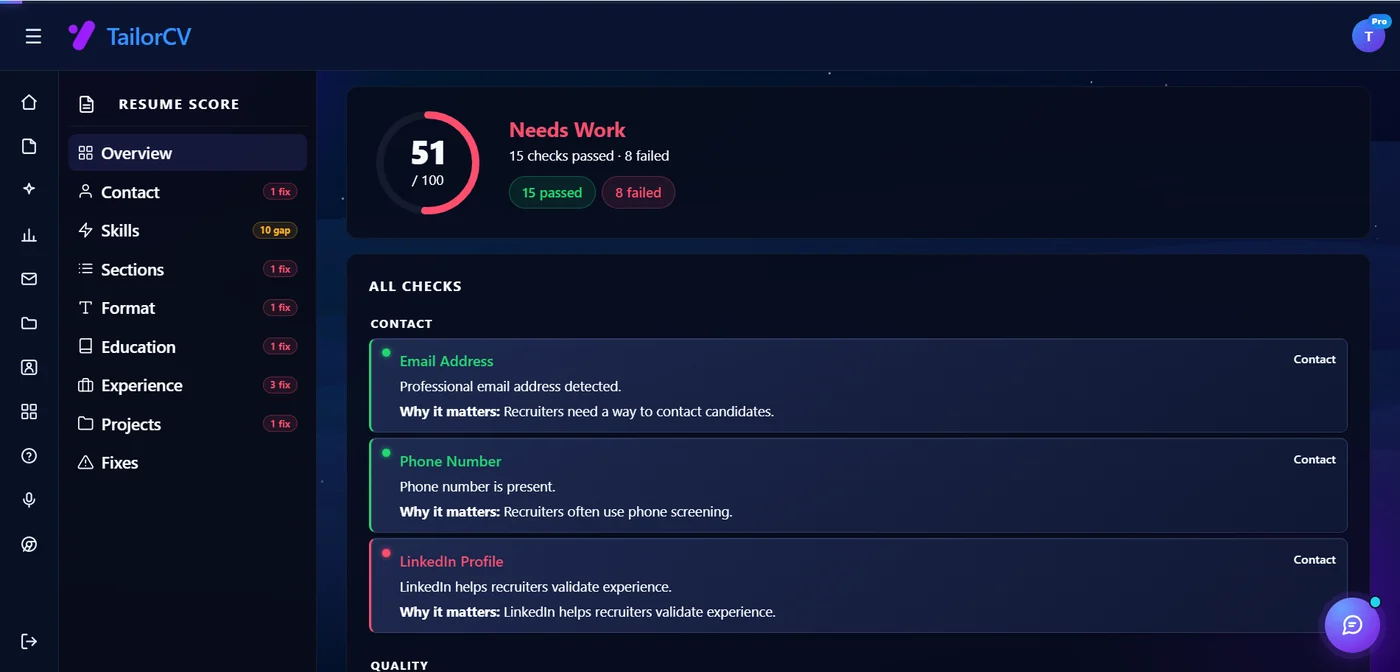
You can also check your resume's ATS score for free, generate a tailored cover letter, or build a portfolio website in minutes.
Frequently Asked Questions
Is Norwegian oil and gas a declining industry to join?
Not in employment terms. Engineering demand remains strong, and transition work in offshore wind, carbon capture and electrification uses the same skills rather than replacing them.
Which city should I target?
Stavanger for operations and offshore, Bergen for subsea and maritime, Oslo for head-office and trading, Trondheim for research and technology development.
Do energy employers sponsor international staff?
Routinely. They have decades of experience with international hiring, they operate in English, and they clear the permit's salary and relevance conditions without difficulty.
What is DNV?
A classification and assurance organisation headquartered near Oslo, working across maritime, energy and certification. It hires engineers internationally and offers a different career from an operator or contractor.
What does offshore rotation involve?
Working a defined period offshore followed by a defined period at home, with higher pay and mandatory safety and survival training. Most engineering roles in the sector are onshore.
Do I need Norwegian for these roles?
Frequently not. Project documentation and engineering work run substantially in English because the workforce and supply chain are international.
How is pay structured in Norwegian energy?
Base salary within a collective agreement, plus offshore allowances where applicable, paid regulated overtime, and occupational pension. Relocation support is common for international hires but often discretionary — ask.
What should an energy CV emphasise?
Named standards and codes you have worked to, the exact software packages, project scale in your discipline's natural units, safety certifications, and your permit position in one line at the top.
What is your resume scoring right now?
Scan it against a job description and get your ATS match score in about a minute.
Drop your resume here or choose a file
PDF only. Max 2 MB.
We never share your data or use it to train AI models.
Was this guide useful?
Be the first to rate it.