 TD
TD
Key Takeaways
- EU/EEA and Nordic citizens need no permit; registration is the only formality.
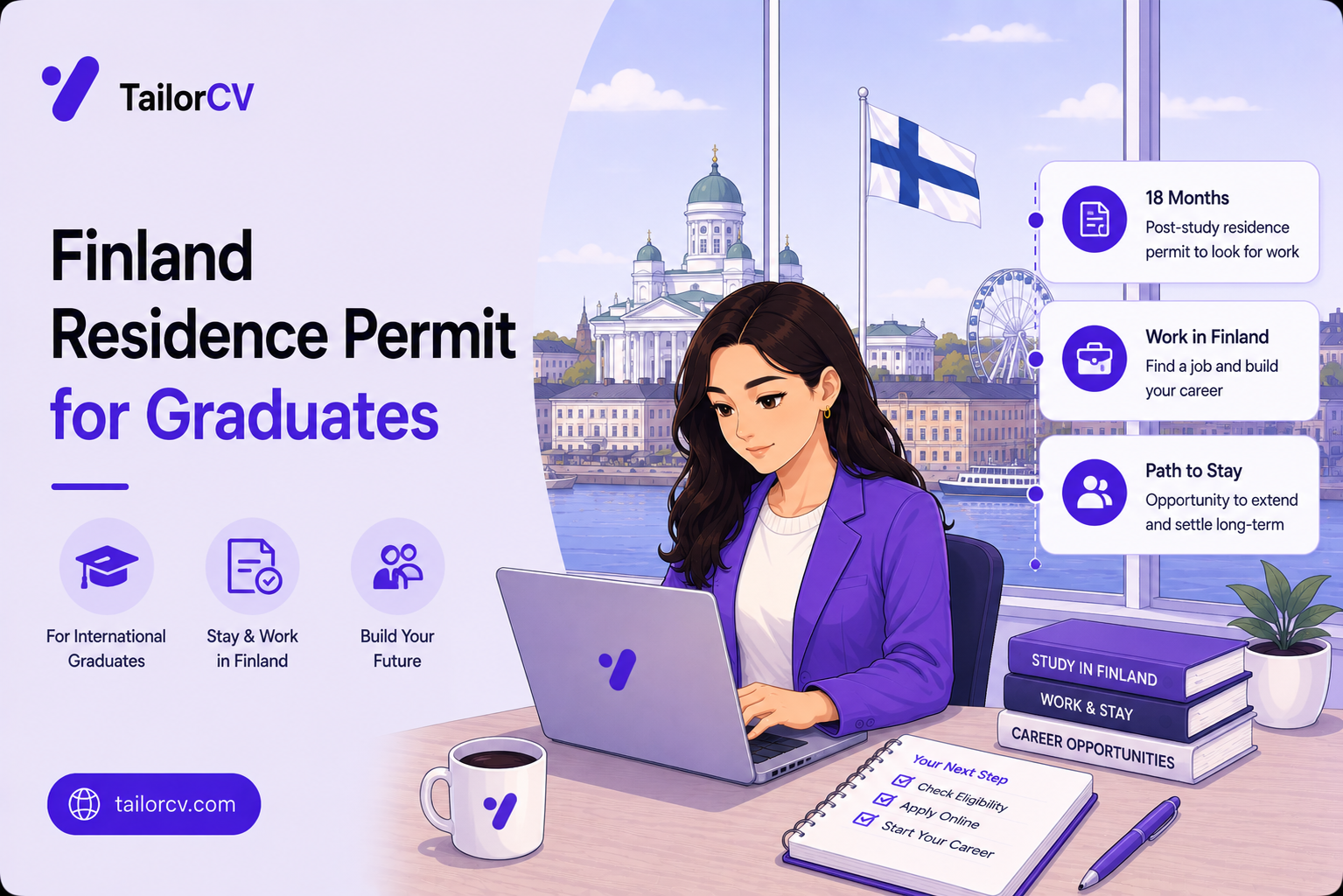
- Graduates of Finnish institutions can apply for a residence permit to look for work or start a business, and Finland has deliberately extended this route.
- The main employment routes are the residence permit for an employed person (with a labour market test) and the specialist permit (faster, no test, for expert roles).
- Finland has committed to fast processing for specialists and their families, which is a genuine policy commitment rather than marketing.
- Migri, the Finnish Immigration Service, is the authority — check it directly rather than relying on secondhand figures.
The three main routes
Finland's system is more legible than most, and the distinction between routes matters.
Residence permit for an employed person (TTOL). The general route. It involves a partial labour market test — the employment authorities consider whether suitable labour is available in the local market — and it is tied to a specific sector.
Specialist permit. For expert roles, typically requiring a higher education degree and a salary above a defined level. Crucially, there is no labour market test, and processing is fast. This is the route most graduates in technology, engineering and other professional fields should be aiming at.
EU Blue Card. Finland participates, with its own salary threshold and conditions, and it offers advantages around mobility within the EU.
And separately, the post-study route, covered below.
The practical instruction: find out which route your offer falls under before anything else. A specialist permit and a general employed-person permit are quite different experiences in speed and certainty.
The post-study job-seeking permit
This is the route that matters most to anyone reading this while studying in Finland.
Graduates of Finnish higher education institutions can apply for a residence permit to look for work or to start a business after completing their degree.
Finland extended this route deliberately as part of its policy of retaining international students, and the duration is generous by European standards. It is also available to those who completed research in Finland.
There is an application window running from a defined point relating to your graduation. Check the current period with Migri, because this is the detail people miss.
It does not require a job offer, which is the whole point — you get the permission first and search from inside the country with the right to work.
It converts into an employment-based permit once you have a role, and being already resident with the right to work removes the employer's largest objection.
The strategic read: studying in Finland is a genuinely effective route into the Finnish labour market, and the country has structured its policy specifically to encourage that.
Speed, and why it is a real advantage
Finland has made processing speed an explicit policy commitment.
Specialist permits are processed quickly — Finland has publicly committed to short handling times for specialists and their family members, and it publishes its performance against that.
Family members are included in the fast handling, which is unusual. In many systems the worker is processed promptly and the family waits.
Applications are made online through Migri's service, with an identification visit at a Finnish mission or service point.
Certified employers — a designation for organisations meeting certain criteria — get faster handling still for their applicants.
What this means practically: if you have a choice between countries and speed matters, Finland compares well. A specialist permit here is a considerably more predictable timeline than several larger European systems.
Toward permanent residence
A continuous residence permit (A permit) accrues toward permanent residence; a temporary one (B permit) generally does not in the same way. Knowing which you hold matters and people frequently do not check.
Permanent residence requires a qualifying period of continuous residence on permits that count.
An EU long-term residence permit is a separate option with its own conditions and the advantage of mobility rights within the EU.
Citizenship requires a longer residence period plus a demonstrated language skill in Finnish or Swedish — and that language requirement is the binding constraint for most people rather than the time.
Absences affect continuity, so if settlement is the goal keep records and understand how time abroad is treated.
Applying, step by step
The mechanics, so you can plan the timeline.
Apply online through Enter Finland, Migri's electronic service. Paper applications are possible but slower.
Identification visit. After applying you visit a Finnish mission abroad or a Migri service point in Finland to prove your identity and give biometrics.
Documents you will need: passport, the employment contract or offer with terms specified, evidence of your qualification, and proof of sufficient income or funds depending on the route.
The employer supplies terms of employment, and for the general employed-person route the employment authority assesses the labour market condition.
Decision and residence permit card, which you collect or receive.
On arrival, register with the Digital and Population Data Services Agency to obtain your personal identity code and register your municipality.
Extensions are applied for before expiry, through the same service, and continuous compliance keeps them routine.
Changing employer depends on the permit type — some are tied to a sector or an employer and some are not. Check before you resign rather than after.
Family members
The questions that follow an offer.
Family reunification is available to permit holders for spouses, registered partners and children, subject to conditions.
Income requirements apply and are set by reference to defined levels depending on family size.
Specialists' families are included in fast processing, which is a genuine and unusual advantage.
A spouse's right to work depends on the permit they receive; family members of many workers do receive the right to work, but confirm the specific case.
Schooling is free and publicly funded, taught in Finnish or Swedish, with preparatory language provision for newcomers. Some international and English-language schools exist in Helsinki, mostly fee-paying.
Early childhood education is heavily subsidised and widely available, which is a substantial financial difference for a family compared with the UK or US.
Verify your exact combination with Migri. Family provisions change more often than any other part of an immigration system.
Common misreadings of the Finnish system
Five beliefs that cost people time.
"All Finnish work permits are the same." They are not. The specialist permit skips the labour market test and is processed fast; the general employed-person permit does neither.
"The post-study permit is a formality I can do later." It has a window tied to your graduation, and missing it closes the most useful route you have.
"Any permit counts toward permanent residence." Continuous (A) permits accrue; temporary (B) permits generally do not in the same way.
"Finnish is optional if I plan to stay." For working in technology, largely true. For citizenship, a demonstrated skill in Finnish or Swedish is required, and for most people it is the binding constraint.
"Processing will take forever." Finland has committed publicly to fast handling for specialists and their families, and certified employers are faster still. It compares well against larger European systems.
Choosing an employer with the permit in mind
When the offer arrives, a few questions change the outcome.
Ask which permit route they intend to apply under. If your role plausibly qualifies as a specialist position, that route is faster and cleaner — and some employers default to the general one out of habit.
Ask whether they hold certified employer status. It speeds handling for their applicants.
Confirm the salary clears the applicable threshold for the route you are aiming at, before contracts are drafted.
Ask who handles the paperwork. An employer who has done this repeatedly is a different proposition from one starting fresh.
Confirm what happens at renewal, and whether the permit ties you to a sector or employer in ways that would constrain a later move.
Practical life on a Finnish permit
The obligations and entitlements that follow the permit.
Register your municipality of residence. This is what unlocks public healthcare and municipal services, and it is separate from the permit itself.
Report changes. Address changes and, depending on your permit type, changes of employer need reporting.
Healthcare access follows municipal registration, with occupational health care usually added by your employer on top.
Kela, the social insurance institution, administers a range of benefits, and eligibility depends on whether you are considered permanently resident — worth checking your own position rather than assuming.
Extensions before expiry, applied for through the same electronic service.
Keep documents. Contracts, payslips and permit decisions. A permanent residence application later is evidence-based and reconstructing years of employment from memory is unpleasant.
Watch your passport expiry, since permits cannot extend beyond it and renewing from abroad takes longer than people plan for.
Mini checklist
- unchecked: Nationality established — EU/EEA or third country
- unchecked: Which permit route your offer falls under, confirmed
- unchecked: Specialist permit eligibility checked against salary and role
- unchecked: Post-study permit window diarised if you studied in Finland
- unchecked: Migri consulted for current thresholds and durations
- unchecked: Employer's certified status asked about
- unchecked: A permit versus B permit understood for your case
- unchecked: Language requirement for citizenship understood early
- unchecked: Personal identity code obtained on arrival
Scenarios
Scenario 1: You have an offer in technology or engineering
Check whether it qualifies as a specialist permit. No labour market test and fast processing make it a materially better position than the general employed-person route, and employers do not always know to apply under it.
Scenario 2: You are finishing a degree at a Finnish university
Apply for the post-study permit inside the window. It gives you the right to work without an employer sponsoring you, which is the single biggest obstacle removed.
Scenario 3: You are comparing Finland against a larger European country
Weigh processing speed seriously. Finland's committed handling times for specialists and their families are a real advantage over systems where the timeline is unpredictable.
Tip: Ask whether your offer can be processed as a specialist permit rather than a general employed-person permit. There is no labour market test on the specialist route and handling is fast — and employers unfamiliar with the distinction sometimes default to the slower one.
Do's and Don'ts
Do
- Identify which permit route applies to your offer
- Aim for the specialist route where you qualify
- Apply for the post-study permit inside the window
- Ask whether your employer is certified
- Check whether you hold an A or B permit
- Read Migri directly for current figures
Don't
- Assume all work permits are the same in Finland
- Miss the post-study application window
- Rely on salary thresholds quoted secondhand
- Assume a B permit counts toward permanent residence
- Underestimate the language requirement for citizenship
- Let absences accumulate unrecorded
Common Mistakes
- Not distinguishing the routes. The specialist permit skips the labour market test and is far faster.
- Missing the post-study window. It runs from a defined point tied to graduation.
- Assuming B permits count. Continuous (A) permits accrue toward permanent residence; temporary ones generally do not.
- Using stale thresholds. Salary levels are revised — check Migri.
- Ignoring certified employer status. It speeds handling further.
- Planning citizenship without the language. Finnish or Swedish ability is the binding requirement for most people.
Related Guides
Keep building on this with the related guides in this series:
- Working in Finland as an International Graduate
- Writing a CV for the Finnish Market
- Technology and Gaming Jobs in Finland
- The Norwegian Skilled Worker Permit
- Nordic Graduate Job Markets Compared
You can also check your resume's ATS score for free, generate a tailored cover letter, or build a portfolio website in minutes.
Frequently Asked Questions
What is the Finnish specialist permit?
A route for expert roles, typically requiring a higher education degree and a salary above a defined level. It skips the labour market test and is processed quickly.
Can I stay in Finland after graduating?
Yes. Graduates of Finnish institutions can apply for a residence permit to look for work or start a business, and Finland has deliberately extended this route.
Does the post-study permit need a job offer?
No. That is its purpose — you receive the permission first and then search from inside the country with the right to work.
How fast is Finnish permit processing?
Finland has publicly committed to short handling times for specialists and their family members, and certified employers get faster handling still.
What is the difference between an A and a B permit?
A continuous (A) permit accrues toward permanent residence; a temporary (B) permit generally does not in the same way. Check which you hold.
What does Finnish citizenship require?
A qualifying residence period plus demonstrated skill in Finnish or Swedish. For most people the language requirement is the binding constraint rather than the time.
How do I apply for a Finnish residence permit?
Online through Enter Finland, followed by an identification visit at a Finnish mission abroad or a Migri service point, with your contract, qualification evidence and passport.
Can my family join me in Finland?
Yes, subject to income conditions. Specialists' family members are included in Finland's fast processing commitment, which is unusual and genuinely useful.
Are all Finnish work permits equivalent?
No. The specialist permit has no labour market test and is processed quickly; the general employed-person permit involves an assessment of local labour availability and takes longer.
What should I ask an employer about the permit?
Which route they will apply under, whether they hold certified employer status, whether the salary clears the threshold for the specialist route, and who handles the paperwork.
What is your resume scoring right now?
Scan it against a job description and get your ATS match score in about a minute.
Drop your resume here or choose a file
PDF only. Max 2 MB.
We never share your data or use it to train AI models.

Was this guide useful?
Be the first to rate it.