SS
SS
Key Takeaways
- Norway pays the highest graduate salaries in Europe and has the highest living costs to match, so the real gain is smaller than the headline gap suggests.
- Norway is in the EEA but not the EU, which matters for permits and for how EU-wide instruments like the Blue Card apply.
- Energy, maritime, seafood and the public sector dominate, and the energy transition is creating genuine engineering demand.
- Wages are set by collective agreements, not by individual negotiation, so your leverage sits in choosing the employer rather than haggling.
- English works in energy, technology and academia; Norwegian opens everything else, and free tuition is available to residents.
The shape of the Norwegian economy
Norway is small, wealthy and unusually concentrated, and knowing where the money is tells you where the jobs are.
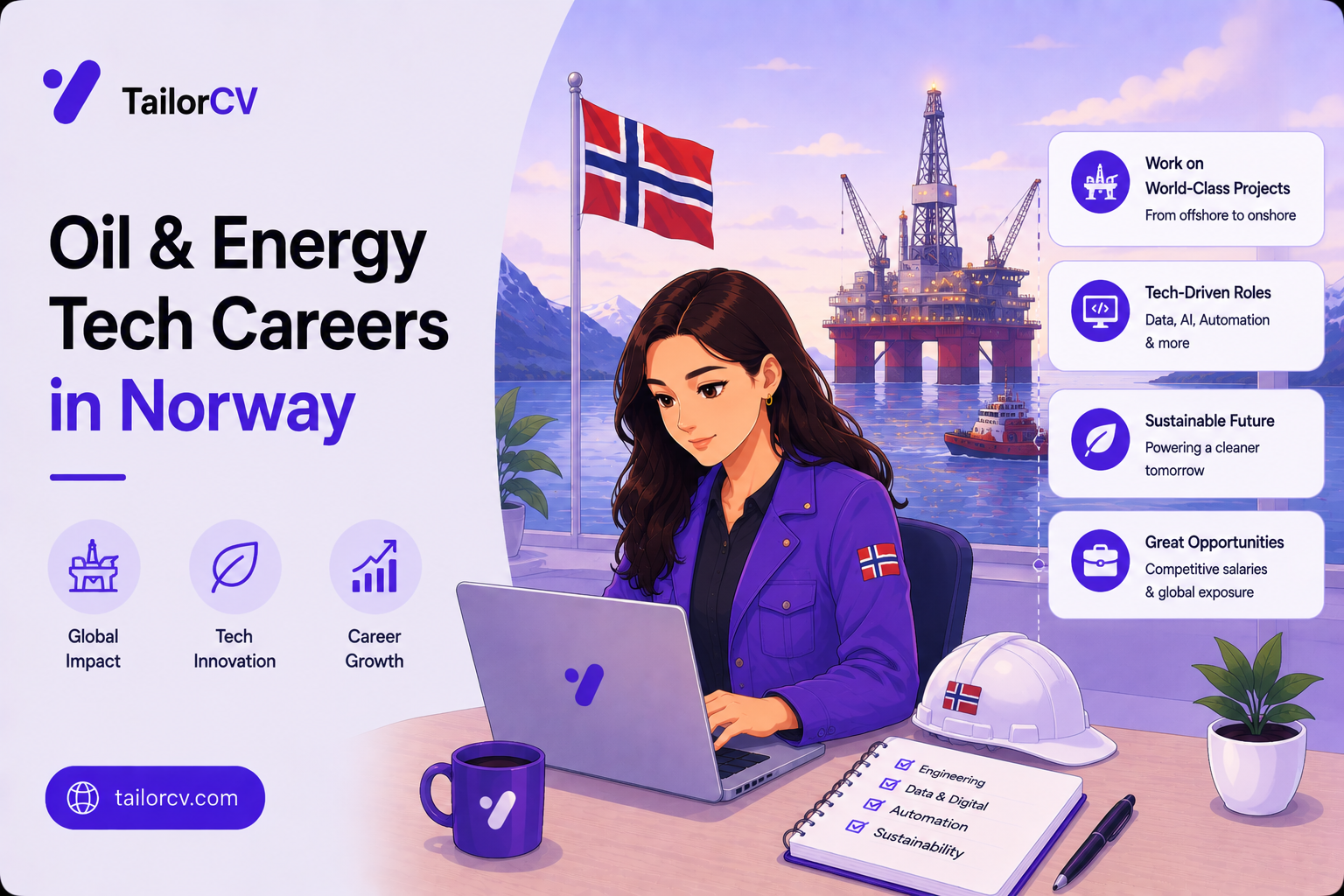
Oil and gas remain the backbone. Equinor is the dominant employer, surrounded by a deep supply chain of engineering, subsea, drilling and services companies concentrated around Stavanger and Bergen. This is genuine high-end engineering work, not a declining industry, and it pays accordingly.
The energy transition is the growth story. Offshore wind, carbon capture and storage, hydrogen and battery manufacturing all draw on the same offshore and heavy-engineering skills the oil sector built. Companies that were petroleum firms a decade ago now run substantial renewables divisions.
Maritime and shipping is a real specialism. Norway has one of the world's most significant maritime clusters — shipping, classification (DNV), ship design, marine technology — spread along the west coast.
Seafood and aquaculture is a serious industrial sector with technology attached: Norway is the world's largest salmon producer, and the automation, biology and logistics around that are professional careers rather than farm work.
The public sector is large. Norway employs a substantial share of its workforce in health, education and administration, and these roles almost always require Norwegian.
Technology exists but is smaller than in Sweden or Denmark. Oslo has a real startup scene, and the large corporates all run engineering teams, but nobody should move to Norway expecting Stockholm's density.
Cities and what each holds
| City | What concentrates there |
|---|---|
| Oslo | Head offices, finance, technology, public administration, consulting |
| Stavanger | Oil and gas capital — Equinor, engineering, subsea, services |
| Bergen | Maritime, shipping, seafood, energy, university research |
| Trondheim | NTNU, research, technology spin-offs, engineering |
| Tromsø | Arctic research, fisheries, marine biology |
| Kristiansand / Ålesund | Maritime technology, offshore, shipbuilding |
Trondheim deserves a specific mention. NTNU is Norway's technical university and the ecosystem around it produces a steady stream of engineering and technology roles, with living costs meaningfully below Oslo's.
Stavanger is the most internationally staffed city in the country. Decades of offshore work means a large expatriate professional population and workplaces that genuinely operate in English.
The permit question
Your passport determines nearly everything, and Norway's position is slightly unusual.
EEA and EFTA citizens have free movement under the EEA agreement. You can move, look for work, and take a job. You register with the police after arriving and there is no permit application in the ordinary sense.
Nordic citizens have additional long-standing rights under intra-Nordic agreements and face essentially no barrier at all.
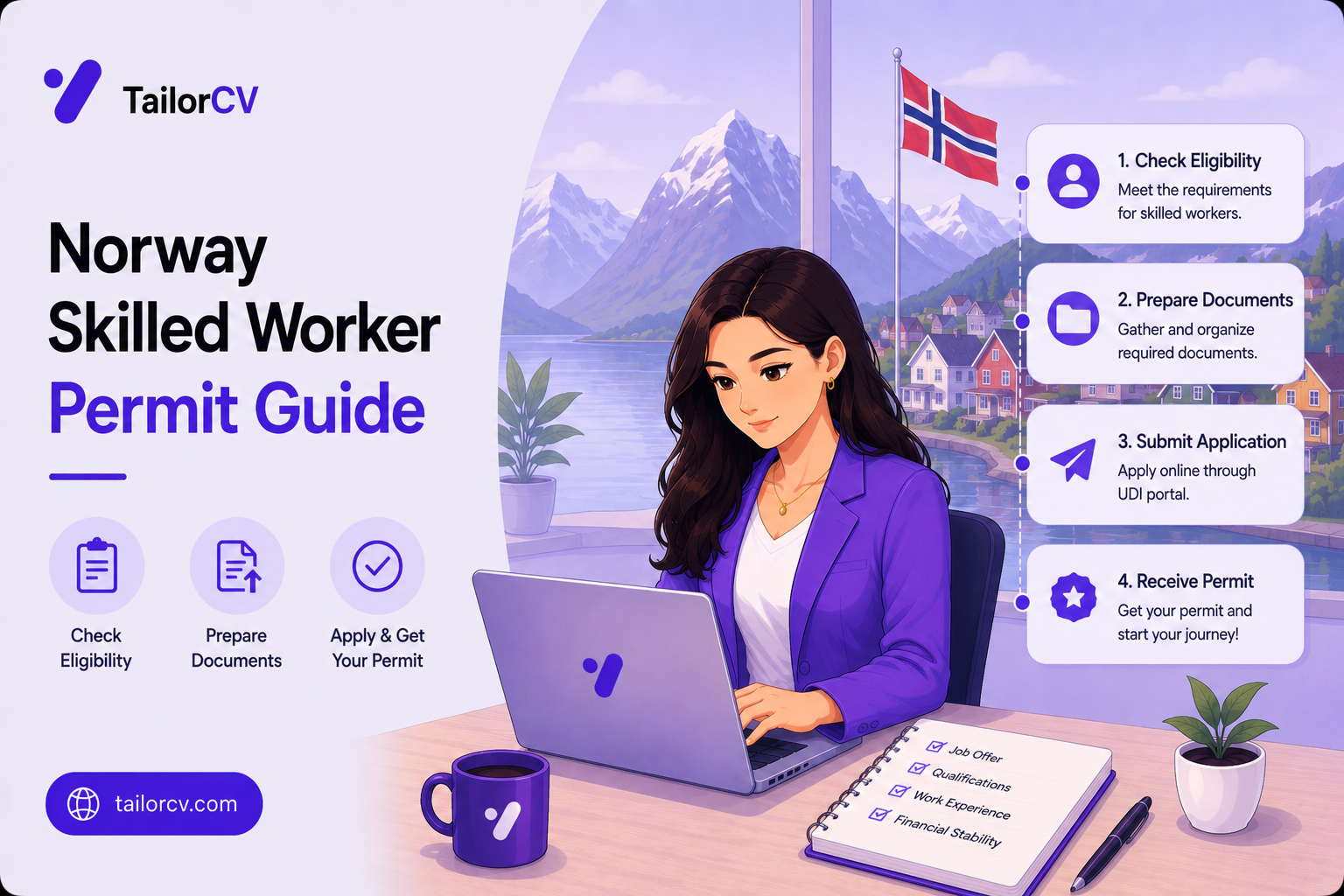
Everyone else generally needs a skilled worker residence permit. It requires a concrete job offer, a qualification at degree level or a completed vocational training relevant to the role, full-time work, and pay and conditions matching Norwegian norms for that occupation.
Graduates of Norwegian institutions can apply to stay and look for work after completing their degree — a job-seeker permit that gives you a defined period without needing an employer to sponsor you first.
Norway is not in the EU, so the EU Blue Card does not apply here and EU-wide long-term residence rules work differently. Check UDI, the Norwegian Directorate of Immigration, rather than assuming EU rules transfer.
Wages, and why negotiation works differently
This is the part that surprises people arriving from the UK or US.
Most Norwegian wages are set collectively. Trade unions and employer associations negotiate agreements covering pay scales, working hours and conditions for whole sectors. A large share of the workforce is covered, and individual haggling over a starting salary is far less consequential than it is elsewhere.
What this means for you: your leverage is in which employer and which sector you choose, not in how assertively you negotiate. Research the collective agreement covering the role rather than preparing a negotiation script.
Wage compression is real. The gap between junior and senior, and between ordinary and highly paid professions, is narrower than in most countries. A Norwegian graduate salary is excellent by international standards; a Norwegian senior salary is good rather than spectacular.
Everything costs more. Housing, food, alcohol, restaurants, transport, services. Alcohol is sold through the state monopoly Vinmonopolet at high prices, and eating out is genuinely expensive.
The net position is still favourable, particularly for a single graduate, but run the comparison against real Oslo rent rather than assuming the salary difference lands in your account.
Where roles are advertised
A small number of channels carry almost the whole market.
finn.no is dominant. Norway's main classifieds platform carries the large majority of advertised jobs, and it has no real international equivalent in how central it is. If you look in one place, look here.
NAV, the public employment service, runs its own listings and is worth using once you are resident.
Company career pages carry the large corporate and energy roles, many of which appear nowhere else.
LinkedIn works in Oslo and Stavanger because of the international professional population, and is thinner elsewhere.
Specialist recruiters are active in energy, engineering and finance. In the offshore sector especially, agencies place a substantial share of contract and permanent roles.
University career services matter if you studied in Norway, and NTNU in particular has close employer relationships.
Open applications are normal. Writing to a company that has not advertised is an accepted practice in Norway, and a well-researched one gets read.
Setting up when you arrive
The administrative sequence has hard dependencies and getting it wrong costs weeks.
A D-number first, then a personnummer. The D-number is a temporary identifier for people staying under six months; the personnummer is the permanent national identity number issued for longer stays. Almost everything downstream depends on having one of them.
Register with the police if you are an EEA citizen, or complete your residence permit process if you are not.
Tax card (skattekort). Register with Skatteetaten so your employer deducts the correct amount. Without a tax card you are taxed at a high flat rate until it is sorted.
Bank account and BankID. BankID is the national digital identity used for banking, public services and much of daily life. It requires a personnummer, and getting it is the point at which living in Norway becomes straightforward.
Health care registration. Once registered as a resident you are assigned a fastlege — a regular GP — under the public system.
Housing is expensive in Oslo, Stavanger and Bergen, and the rental market moves quickly. Budget for a deposit held in a dedicated account, which is the standard Norwegian arrangement.
Working culture, honestly
Worth calibrating before you arrive, because the gap from Anglo-American norms is real.
Hierarchies are flat and genuinely so. Managers are approachable, first names are universal, and a graduate disagreeing with a director in a meeting is unremarkable. Silence is read as having no opinion.
Hours are protected and taken seriously. The standard working week is short by international standards, overtime is regulated, and leaving at four to collect children is normal for everyone including senior staff.
Holiday is generous and actually taken. July effectively empties out, and expecting responses during the summer holiday period is unrealistic.
Consensus takes time. Decisions are discussed until broad agreement exists, and pushing for speed reads as not understanding how things work.
Trust is high, supervision is light. You will be given responsibility early and checked on rarely, which suits some people and unsettles others.
Small talk is minimal. Norwegian colleagues can seem reserved at first. It is not coldness, and workplace relationships warm considerably over months rather than days.
And the outdoors is not optional culturally. Friluftsliv — open-air life — genuinely structures how Norwegians spend time, and it is the easiest route into social life for a newcomer.
Mini checklist
- unchecked: Passport position established — EEA or third country
- unchecked: Skilled worker permit requirements checked with UDI
- unchecked: Job-seeker permit considered if you studied in Norway
- unchecked: Sector matched to city — Stavanger for energy, Trondheim for tech
- unchecked: Collective agreement for your role researched
- unchecked: Norwegian tuition planned for
- unchecked: D-number and personnummer sequence understood
- unchecked: Salary compared against real Oslo or Stavanger rent
- unchecked: finn.no and NAV both in use
Scenarios
Scenario 1: You are an engineer from outside the EEA
Target Stavanger and the energy sector. Those employers sponsor routinely, they operate in English, and the skilled worker permit is a well-worn path for them rather than a novel request.
Scenario 2: You want technology work
Oslo and Trondheim, and adjust your expectations about scale. Norway's technology sector is real but considerably smaller than Sweden's, and the best roles are often inside energy, maritime or public-sector organisations rather than at pure technology companies.
Scenario 3: You do not speak Norwegian
You can work in energy, maritime, technology and academia in English. Healthcare, education, public administration and most client-facing roles are closed to you until you learn the language, and free tuition is available once you are resident.
Tip: Look up the collective agreement covering your role before your first salary conversation. In Norway the number is largely set by that agreement, and arriving with a negotiation strategy instead of an understanding of the framework wastes your energy on the wrong thing.
Do's and Don'ts
Do
- Establish your permit position before applying
- Match your sector to the right city
- Research the collective agreement for your role
- Consider Trondheim and Stavanger, not just Oslo
- Start Norwegian study early
- Compare salary against real local rent
Don't
- Assume EU rules apply — Norway is EEA, not EU
- Expect individual salary negotiation to move much
- Assume the technology sector matches Sweden's
- Treat the oil sector as declining
- Underestimate living costs
- Assume English works outside energy, tech and academia
Common Mistakes
- Assuming Norway is in the EU. It is in the EEA, and the Blue Card and EU-wide rules do not apply.
- Preparing to negotiate hard. Collective agreements set most wages; employer choice is your real leverage.
- Comparing gross salaries. Norwegian costs absorb a substantial share of the premium.
- Ignoring Stavanger. It is the most internationally staffed city and the easiest entry for engineers.
- Expecting a large tech scene. It is real but far smaller than Sweden's or Denmark's.
- Delaying Norwegian. It is the difference between a job and a life here.
Related Guides
Keep building on this with the related guides in this series:
- Writing a CV for the Norwegian Market
- The Norwegian Skilled Worker Permit
- Energy and Offshore Careers in Norway
- Nordic Graduate Job Markets Compared
- Working in Sweden as an International Graduate
You can also check your resume's ATS score for free, generate a tailored cover letter, or build a portfolio website in minutes.
Frequently Asked Questions
Is Norway in the EU?
No. Norway is in the EEA and the Schengen area but not the EU, which means EU instruments like the Blue Card do not apply and long-term residence rules work differently.
Do I need to speak Norwegian?
For energy, maritime, technology and academia, frequently not. For healthcare, education, public administration and most client-facing work, yes.
Are Norwegian salaries really the highest in Europe?
For graduates, broadly yes — with the highest living costs in the region to match. Compare net of real rent before treating the gap as your gain.
Can I negotiate my salary in Norway?
Less than elsewhere. Most wages sit inside collective agreements negotiated between unions and employer associations, so your leverage is employer choice rather than haggling.
Which city should I target?
Stavanger for oil, gas and offshore engineering; Oslo for corporate, finance and technology; Bergen for maritime and seafood; Trondheim for research and engineering spin-offs.
Can I stay after studying in Norway?
Yes — graduates of Norwegian institutions can apply for a job-seeker permit giving a defined period to find work without needing an employer to sponsor you first.
Where should I look for jobs in Norway?
finn.no carries the large majority of advertised roles, with NAV for public listings, company career pages for large corporates, and LinkedIn strongest in Oslo and Stavanger.
What is a D-number and a personnummer?
The D-number is a temporary identifier for shorter stays; the personnummer is the permanent national identity number. Banking, tax and public services depend on having one.
Why is my first payslip taxed so heavily?
Probably because you have no tax card yet. Register with Skatteetaten and you move from the high flat rate to your correct deduction.
What is Norwegian workplace culture like?
Flat, consensus-driven and protective of hours. Managers are approachable, disagreement is expected rather than risky, and leaving on time is normal for everyone including senior staff.
Is it hard to make friends in Norway?
Socially it is slower than professionally. Colleagues are reserved initially and warm over months. Outdoor activities and organised clubs are the most reliable way in.
Find out where a fresher resume stands
Score yours against a real posting - no account, no cost.
Drop your resume here or choose a file
PDF only. Max 2 MB.
We never share your data or use it to train AI models.

Was this guide useful?
Be the first to rate it.