 SS
SS

Key Takeaways
- Recruiters spend only 6-10 seconds initially scanning resumes, focusing on pattern-matching rather than reading in detail.
- Use a tailored professional summary instead of an outdated objective statement to reflect the job's language and context.
- Highlight achievements with specific metrics rather than listing generic responsibilities to stand out to recruiters.
- Mirror the job description's language and include relevant skills to avoid being flagged as generic by ATS systems.
- Avoid using the same resume for multiple applications, as it signals low interest and effort to recruiters.
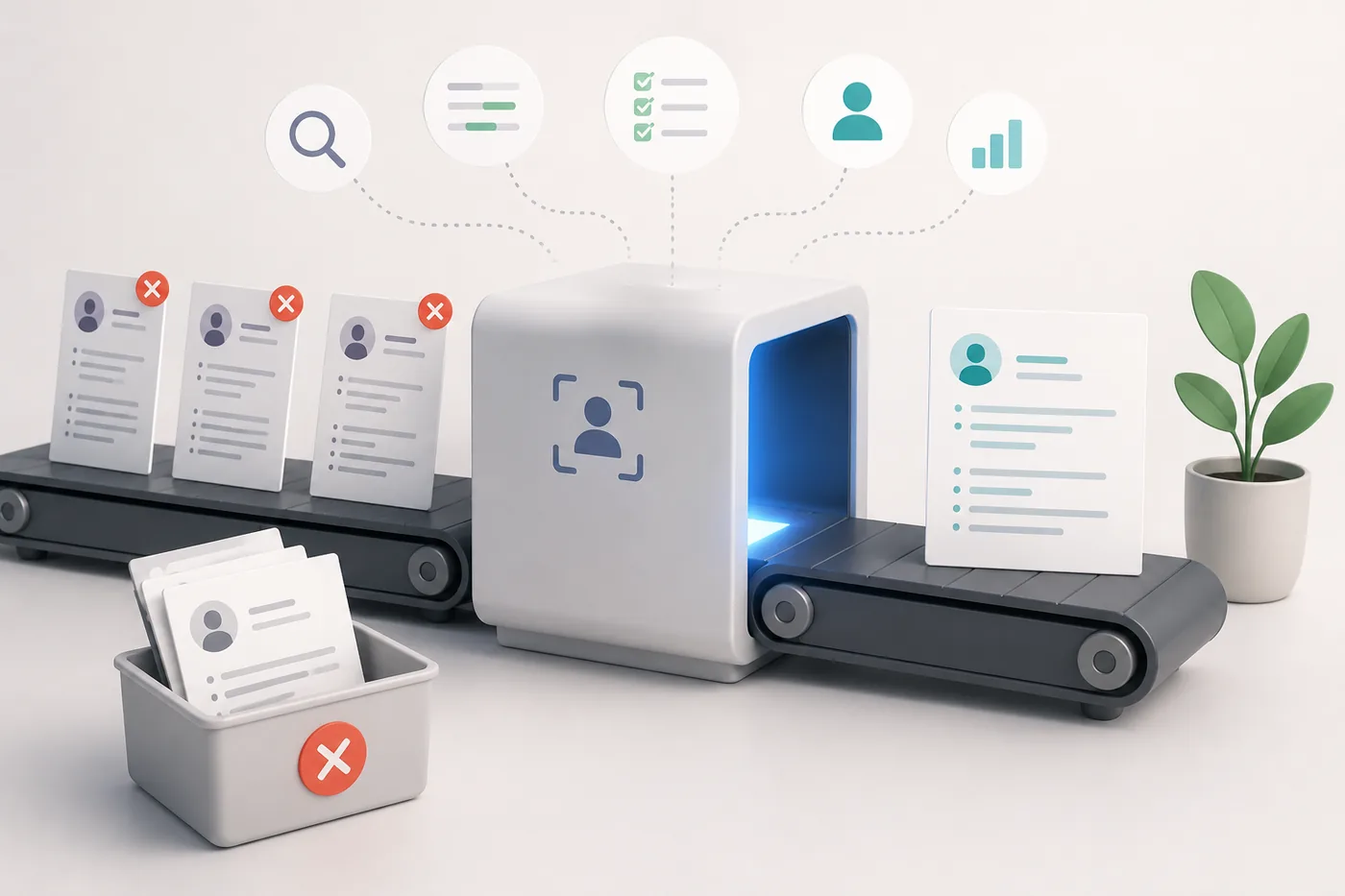
Recruiters review hundreds of resumes per week. In that volume, they develop a near-instant radar for the generic ones - and those resumes get passed over before a human ever reads beyond the header. This guide breaks down exactly what triggers that radar and how to make sure your resume doesn't.
Scan your own resume for generic signals instantly with the free ATS and resume checker.
The 6-Second Rule Is Real
Eye-tracking research consistently shows recruiters spend 6-10 seconds on an initial resume pass. In that window, they are not reading - they are pattern-matching. Generic resumes fail the pattern match immediately.
7 Signals That Tell a Recruiter "This Is Generic"
1. An Objective Statement Instead of a Summary
The objective statement - "Seeking a challenging position where I can grow" - was retired in the 1990s. Any recruiter who sees one knows the resume was not updated for this role or this decade. A tailored professional summary that mirrors the job's language signals the opposite.
Learn how to write a strong resume summary that actually gets read.
2. Responsibilities Instead of Achievements
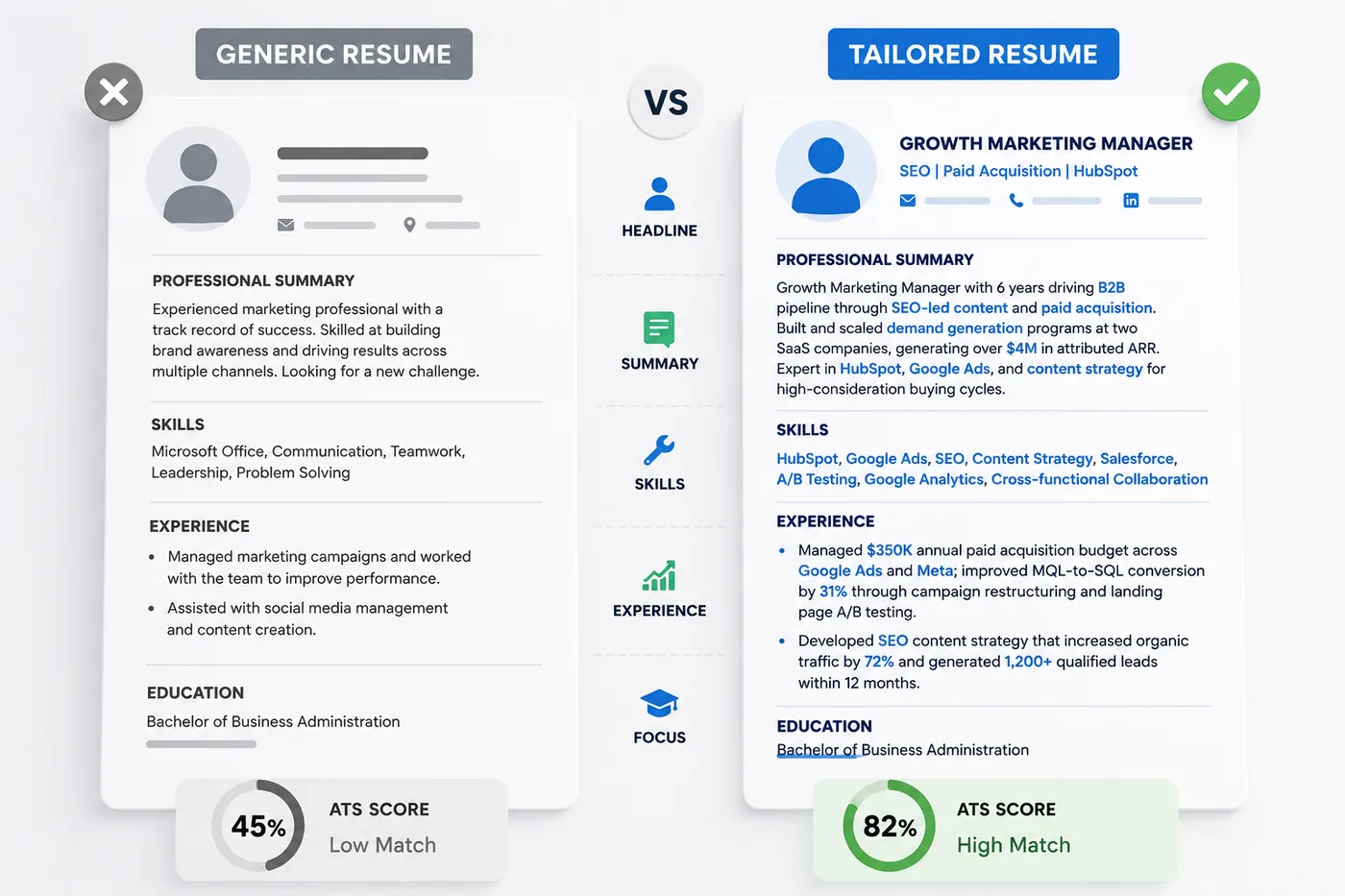
Generic resumes describe what the role is supposed to do. Tailored resumes describe what you actually did.
| Generic | Tailored |
|---|---|
| "Responsible for managing a team" | "Led a 6-person team that shipped 3 major features on schedule" |
| "Handled customer complaints" | "Resolved 97% of escalations within 24 hours, improving CSAT by 18%" |
| "Assisted with marketing campaigns" | "Managed paid campaigns on Google Ads and Meta with a combined $120K budget" |
Recruiters have read the generic versions thousands of times. The moment they see bullets that start with "Responsible for," the resume gets filed under "no."
Read how to quantify resume achievements for a step-by-step framework.
3. No Mirror of the Job Description's Language
Every job posting uses specific language. A company that calls the role "Customer Success Manager" and a resume that says "Client Relations Specialist" will create a mismatch - both for the recruiter and the ATS. Generic resumes use the candidate's preferred language. Tailored resumes mirror the posting.
This is also how ATS systems detect generic resumes before a recruiter even opens the file.
4. Skills That Don't Match the Level
A generic skills list reads like a Wikipedia article on the profession. A tailored one matches the specific tools and competencies named in the job description.
Generic skills section:
"Microsoft Office, Communication, Teamwork, Problem Solving, Leadership"
Tailored skills section (for a data role):
"Python, SQL, Tableau, BigQuery, A/B testing, stakeholder reporting, cross-functional collaboration"
For a deep dive on which keywords matter most, see best resume keywords to beat ATS systems.
5. The Same Resume Sent to Every Job
Recruiters at the same company often talk. When they see identical resume language across multiple different applications, it confirms the candidate is carpet-bombing. That pattern signals low interest and low effort - two things no recruiter wants to flag to a hiring manager.
6. Overused Buzzwords With No Evidence
Words like "passionate," "results-oriented," "dynamic," "team player," and "hardworking" appear on roughly 80% of resumes. They mean nothing unless backed by evidence. A recruiter's eye slides right past them.
Replace buzzwords with specifics:
- "Passionate about marketing" -> "Grew email list by 34% in one quarter through A/B-tested campaigns"
- "Strong team player" -> "Collaborated with engineering and design to launch product 2 weeks ahead of schedule"
7. A Generic Headline or No Headline
If your headline says "Marketing Professional" and the job is "Growth Marketing Manager," you've already signalled a disconnect. Tailored resumes mirror the exact job title from the posting - which is the first thing a recruiter's eyes land on.
Read how to write a resume headline that locks in the recruiter's attention from line one.
What Recruiters Actually Want to See
When a recruiter opens a resume, they are trying to answer three questions in 6 seconds:
- Did this person do work like this job requires?
- Did they get results, not just do tasks?
- Are they talking our language?
A tailored resume makes all three answers obvious immediately. A generic one forces the recruiter to work for those answers - and they won't.
The Fast Fix: Tailor Before You Send
You do not need to rewrite your resume from scratch for every job. You need to:
Your resume after optimization
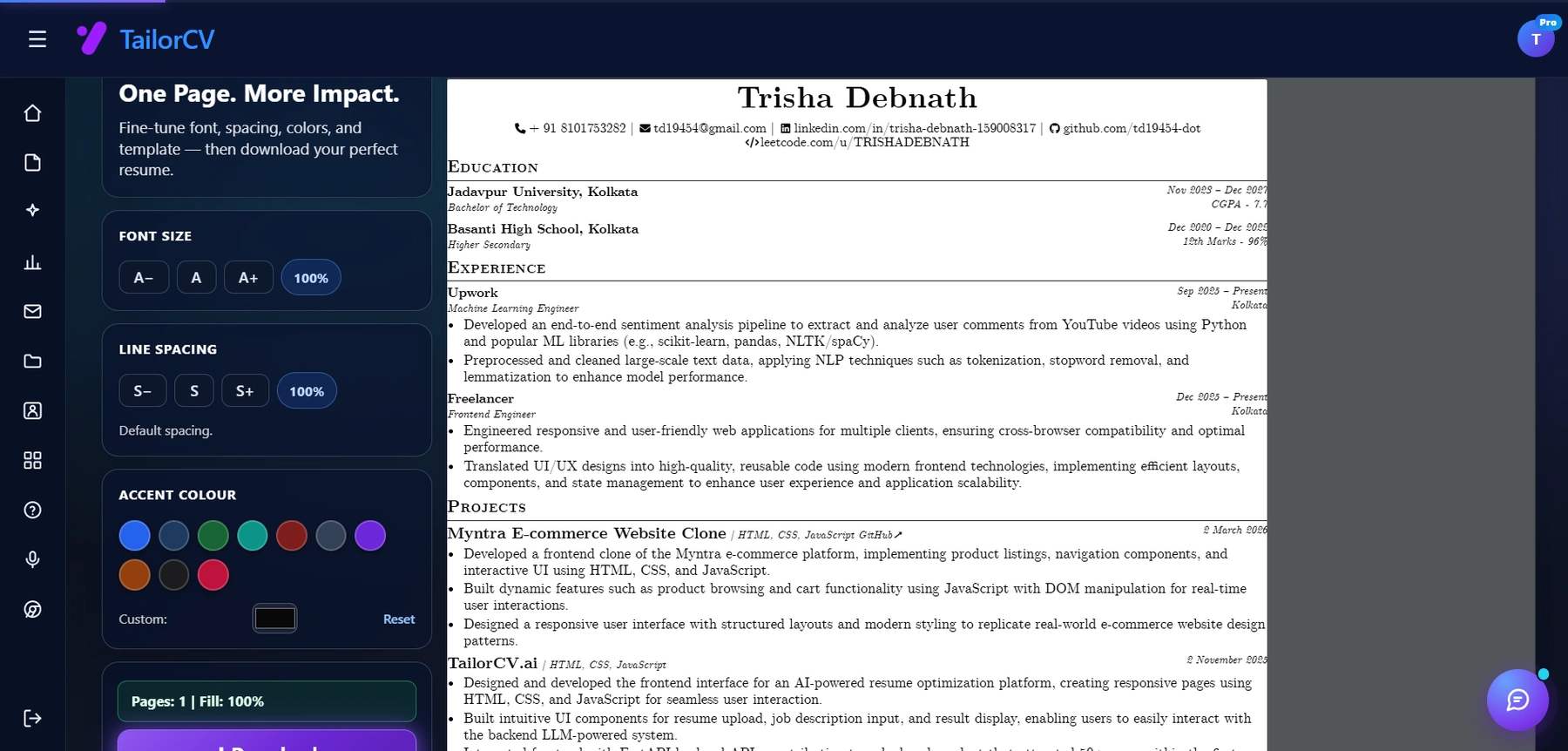
Font size, spacing, accent colour and template are all adjustable, with a live page counter.
- Swap your summary to mirror the job description
- Add 3-5 keywords from the posting into your bullets
- Update your headline to match the exact job title
- Move the most relevant bullets to the top of each role
The entire process takes about 5 minutes. Read how to tailor a resume in 5 minutes for a checklist you can run before every application.
You can also run the free ATS checker at TailorCV to see exactly which keywords your resume is missing for the specific job you're targeting - before a recruiter ever sees it.
Frequently Asked Questions
Do recruiters really notice if a resume is generic?
Yes, immediately. Recruiters who review hundreds of resumes develop a near-automatic detection for the signals above. Generic resumes are filed within seconds.
Can ATS software also detect a generic resume?
Yes. ATS systems score resumes based on keyword match, job title fit, and skill alignment. A generic resume that wasn't tailored to the posting will score low and may never reach a human recruiter. See how ATS detects a generic resume.
How different should each version of my resume be?
Most of the time, only the top third needs to change - the headline, summary, and top skills. Read how much you should change your resume for every job for specific guidance.
What is the fastest way to tailor a resume?
Use a tool that compares your resume to the job description and highlights the gaps. TailorCV's free scanner does this in under 60 seconds. For more tips on avoiding a generic resume, check out how to stop sounding generic on your resume.
Related Guides
- How to Tailor a Resume in 5 Minutes
- How ATS Detects a Generic Resume
- Best Resume Keywords to Beat ATS Systems
- How to Write a Resume Summary
- How to Quantify Resume Achievements
- How to Write a Resume Headline
- How Much Should You Change Your Resume for Every Job
- ATS Keywords - How to Find and Add Them to Boost Your Score
- How to Match Your Resume to a Job Description
- Does My Resume Pass ATS? A 12-Point Checklist
- ATS Resume Formatting Mistakes
- Common Resume Job Description Mismatch Mistakes
Make This Practical
Use this guide as part of a complete job-search workflow. Check your resume with the free ATS score checker, improve targeting with the Resume Optimization Guide, and choose a clean format from the ATS-friendly resume templates.
After the resume is ready, strengthen the rest of the application. Draft a targeted letter with the AI cover letter generator, practice interviews with the AI mock interview tool, and create a project-backed proof page with the portfolio website builder if you need a stronger online presence.
Conclusion
Recruiters are not looking for perfection - they are looking for fit. A generic resume signals no fit because it is not trying to fit. Swap your summary, mirror the job's language, replace responsibilities with achievements, and verify your keyword match. Those four changes take 5 minutes and are the difference between the shortlist and the trash.
Check your resume for generic signals - free
Find out why your score is low
Scan your resume against the job description and see exactly which checks fail.
Drop your resume here or choose a file
PDF only. Max 2 MB.
We never share your data or use it to train AI models.

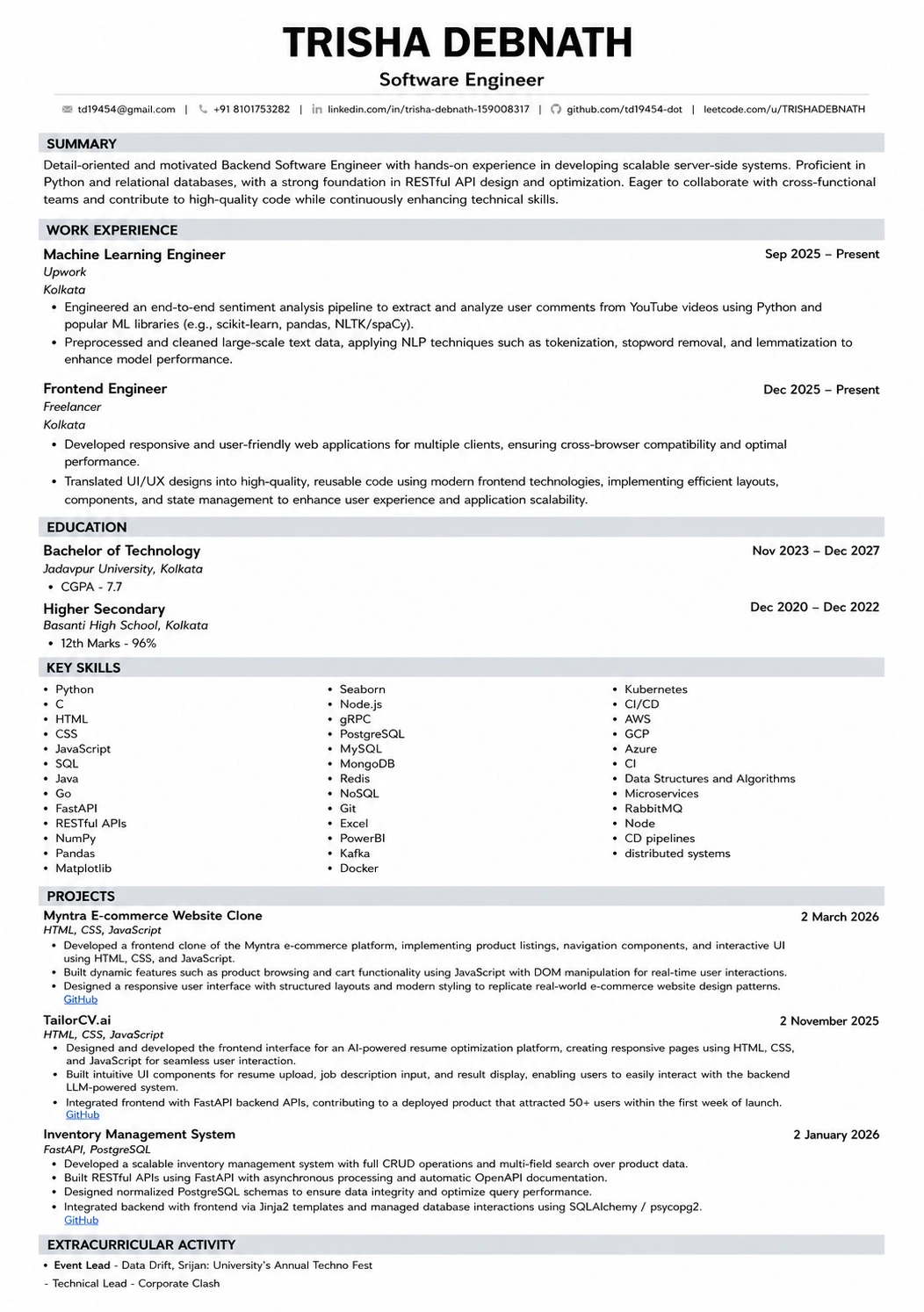
Templates that keep this structure intact
This template is ATS-tested — start from it and the formatting rules in this guide are already handled.
Was this guide useful?
Be the first to rate it.