SS
SS
Key Takeaways
- Hiring chefs care about three things: can you cook their cuisine, can you run a station or team under pressure, and are you reliable.
- State your specialty and level clearly, because restaurants hire for fit with their concept.
- Volume, team size, and cost control are what matter in hospitality, so quantify them.
- List food-safety certifications, station experience, menu development, and inventory skills in the skills section.
- A fine-dining room, a hotel banquet operation, and a fast-casual chain want different things, so tailor each application.
Kitchens move fast, and so do the people who hire for them — but a sharp resume still gets you the interview over a walk-in. Whether you're a line cook or an executive chef, your resume has to show your cuisines, your leadership, and the numbers behind a well-run kitchen. And because hotel groups and restaurant chains increasingly screen with an ATS, your keywords have to match the job description before a chef ever reads it.
Before you apply, run your draft through the free ATS score checker, start from an ATS-friendly template, and read the ATS score guide. This guide covers every level, from your first kitchen job to a head-chef role.
What restaurants and hotels hire for
Hiring chefs and F&B managers care about three things: can you cook the cuisine they serve, can you run a station or a team under pressure, and are you reliable. Your resume should answer all three in seconds. For high-volume and hotel roles, the hospitality resume matching guide covers the language these employers scan for.
Lead with cuisine and level
State your specialty and level clearly: "Sous Chef — French & Mediterranean, high-volume fine dining." Restaurants hire for fit with their concept, and cuisine is a strong keyword the ATS scans for.
A short summary sets the tone:
"Sous chef with 6 years in fine dining and high-volume hotel kitchens. Ran a line serving 250+ covers nightly, cut food cost 6%, and trained a brigade of 10. French and Italian specialty."
See resume objective vs summary for the opening lines.
Chef resume summary examples
Your summary should match your level and cuisine:
Your resume after optimization
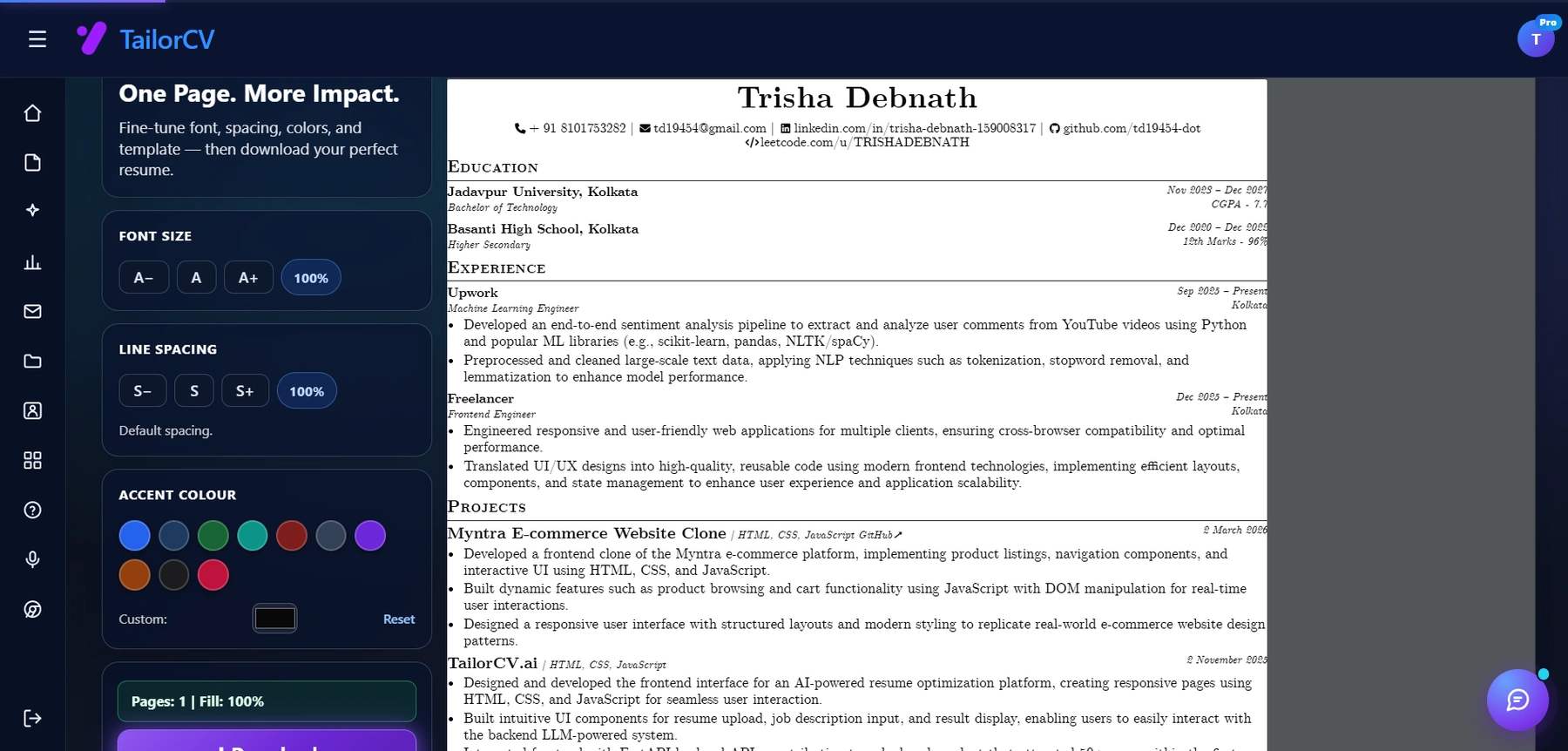
Font size, spacing, accent colour and template are all adjustable, with a live page counter.
- Line cook: "Line cook with 3 years in high-volume Italian and American kitchens, fast and consistent across grill and sauté stations. ServSafe certified."
- Sous chef: "Sous chef with 6 years in fine dining and hotel kitchens. Ran lines serving 250+ covers nightly, trained a brigade of 10, and cut food cost 6%."
- Executive chef: "Executive chef with 12 years leading concepts from opening to profitability, owning menu development, purchasing, and P&L across teams of 25+."
Each leads with the target level and a proof point, the approach in how to write a resume summary. Keep it to three lines, mirror the job description, and confirm your keywords land with the resume optimizer.
Show kitchen leadership and scale
Volume, team size, and cost control matter in hospitality. Use the bullet point formula with a strong action verb and a measurable result:
- "Ran a line serving 250+ covers a night with a team of 8."
- "Cut food cost 6% by tightening ordering and reducing waste."
- "Trained 10 line cooks and standardized 30+ recipes."
- "Maintained a 5-star health inspection score across 3 years."
Numbers turn a duty list into proof — the quantify achievements guide shows how. Duty-only bullets are a top reason a strong cook's resume gets no responses.
Include the practical essentials
The skills section should list food-safety certifications (ServSafe), station experience (grill, sauté, pastry, garde manger), menu development, inventory and cost control, and any POS or kitchen-management systems. Mirror the job description and confirm coverage with the ATS score checker. List certifications the way recruiters expect using how to list certifications on a resume.
Structure a chef resume
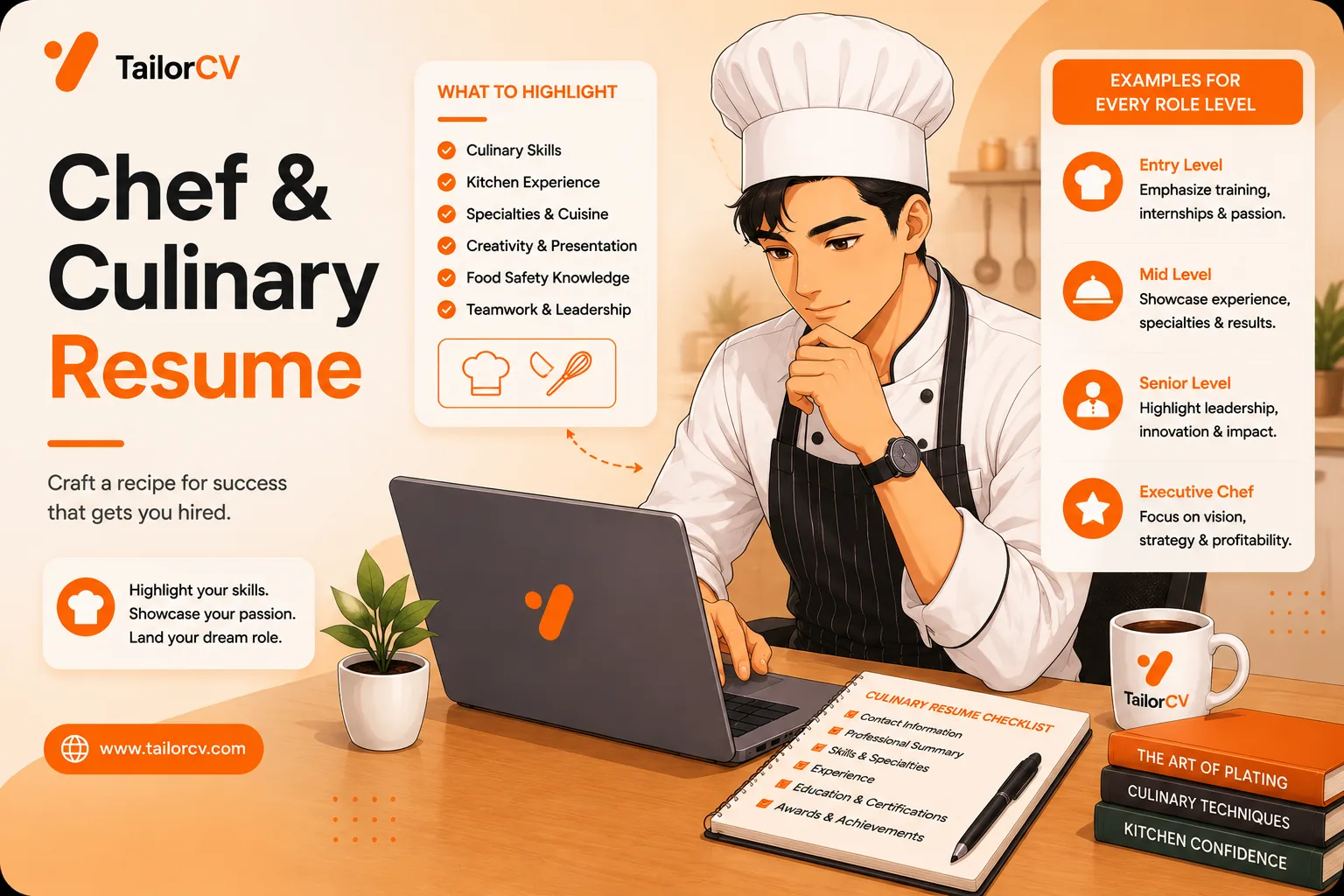
- Header — name, level (e.g., Sous Chef), phone, email, city.
- Summary — three lines, cuisine- and level-forward.
- Skills & certifications — stations, ServSafe, cost control.
- Experience — restaurant, role, quantified bullets.
- Education & training — culinary school, apprenticeships.
This mirrors the layout in the resume builder. For ordering, see the resume section order guide.
Sample chef resume bullets
Strong culinary bullets pair a action verb, the work, and a quantified result:
- "Ran the sauté station on a line serving 250+ covers nightly with consistent ticket times."
- "Developed a seasonal menu that lifted average check 12% and cut food cost to 28%."
- "Trained and scheduled a brigade of 10, reducing turnover 20% over a year."
- "Maintained a perfect health-inspection record across three years and two openings."
Each bullet shows scale, skill, and impact — the difference between a resume that lists duties and one that proves you run a tight kitchen, as explained in how to write resume bullet points. Run your finished bullets through the resume optimizer to confirm they carry the keywords the concept wants, and check the whole resume with the ATS score checker.
Where chefs find the best roles
Beyond job boards, kitchens hire heavily through word of mouth, stages, and direct outreach. A cold email to a chef you admire — with your resume attached and a genuine note about their food — can land a trail shift faster than any application. Hospitality recruitment agencies place chefs into hotels and groups, and the best job search websites guide covers where to look. Networking matters enormously in this industry, so keep your resume current and ATS-ready.
Keep it readable and ATS-safe
Hiring chefs skim, and applicant systems parse. A clean one-page resume with strong bullet points beats a cluttered two-pager. Use a readable font, keep it to the right length, and avoid graphics that break parsing — see how to make your resume ATS-friendly. Confirm it parses with the ATS score checker.
Starting out? Lead with training and stages
If you're early in your career, lead with culinary school, stages (unpaid trials), apprenticeships, and any station experience — the resume with no experience guide and first job resume for a teenager show how to frame limited experience. Even a part-time kitchen job becomes strong with the right action verbs and numbers.
Moving up to executive chef
For head- or executive-chef roles, add menu development, P&L ownership, purchasing, staffing, and food-cost percentages. Show leadership scale and business impact, and read how to get a promotion for framing your rise. A portfolio or link to menus and press can strengthen a senior application.
Tailor to each restaurant
A fine-dining room, a hotel banquet operation, and a fast-casual chain want different things. Tailor each application with the resume optimizer so your keywords match, and see how much to change your resume for every job.
Prepare for the interview (and the tasting)
Culinary interviews often include a working interview or tasting. Prepare stories with a STAR story bank, practice with a free AI mock interview, and use the interview prep tool. Know what to bring, then send a thank-you email and follow up. Generate a tailored cover letter if needed.
Common chef resume mistakes
The errors that keep good cooks out of good kitchens:
- No numbers. Covers per night, food cost, team size — quantify everything.
- Cuisine left vague. Name your specialties; they're keywords the concept hires for.
- Missing certifications. List ServSafe and food-safety credentials — see how to list certifications.
- Two cluttered pages. Keep it one clean page.
- Same resume everywhere. Tailor to each restaurant.
For a broader list, read why your resume gets no responses and generic resume mistakes that cost interviews.
Applying abroad or to hotel groups
Culinary careers are global, and international kitchens and hotel groups have their own expectations. If you're applying abroad, read the international resume tailoring guide, and for large hospitality employers, the hospitality resume matching guide covers the language they scan for. Note visa status where relevant, and keep an ATS-friendly format since big groups screen with software. Always confirm your match with the ATS score checker.
Salary and career growth for chefs
Kitchen careers ladder from commis and line cook to sous chef, chef de cuisine, and executive chef, and each step should show more scope on your resume — bigger brigades, higher covers, budget ownership. When an offer comes, negotiate professionally with how to negotiate a salary offer and the salary negotiation guide, and weigh the whole package — schedule, benefits, and growth path — not just the wage. For a promotion within a restaurant group, how to get a promotion helps you make the case.
Chef resume FAQ
How long should a chef resume be? One page for most cooks and sous chefs; two only for executive chefs with extensive history. See the ideal resume length guide.
I've only done stages and part-time cooking — what do I put? Lead with stages, apprenticeships, and any station experience — the resume with no experience guide shows how to frame it.
Do I list every restaurant? Focus on relevant, recent roles that show cuisine fit and growth; group older or brief roles. Quantify covers and cost wherever you can.
How do I pass the ATS for hotel groups? Mirror the job description, list ServSafe and stations, keep it clean, and check the ATS score.
Should I include a cover letter? For a concept you love, yes — a tailored cover letter shows genuine fit with the restaurant.
Final checklist
Your chef resume is ready when it:
- unchecked: Leads with cuisine and level.
- unchecked: Shows kitchen scale, leadership, and cost control with quantified bullets.
- unchecked: Lists ServSafe and station skills.
- unchecked: Stays one page, ATS-safe, and passes the ATS score checker.
Cook up a strong resume in the resume builder, score it with the free ATS checker, and tailor it to every kitchen you apply to.
What is your resume scoring right now?
Scan it against a job description and get your ATS match score in about a minute.
Drop your resume here or choose a file
PDF only. Max 2 MB.
We never share your data or use it to train AI models.

Templates that keep this structure intact
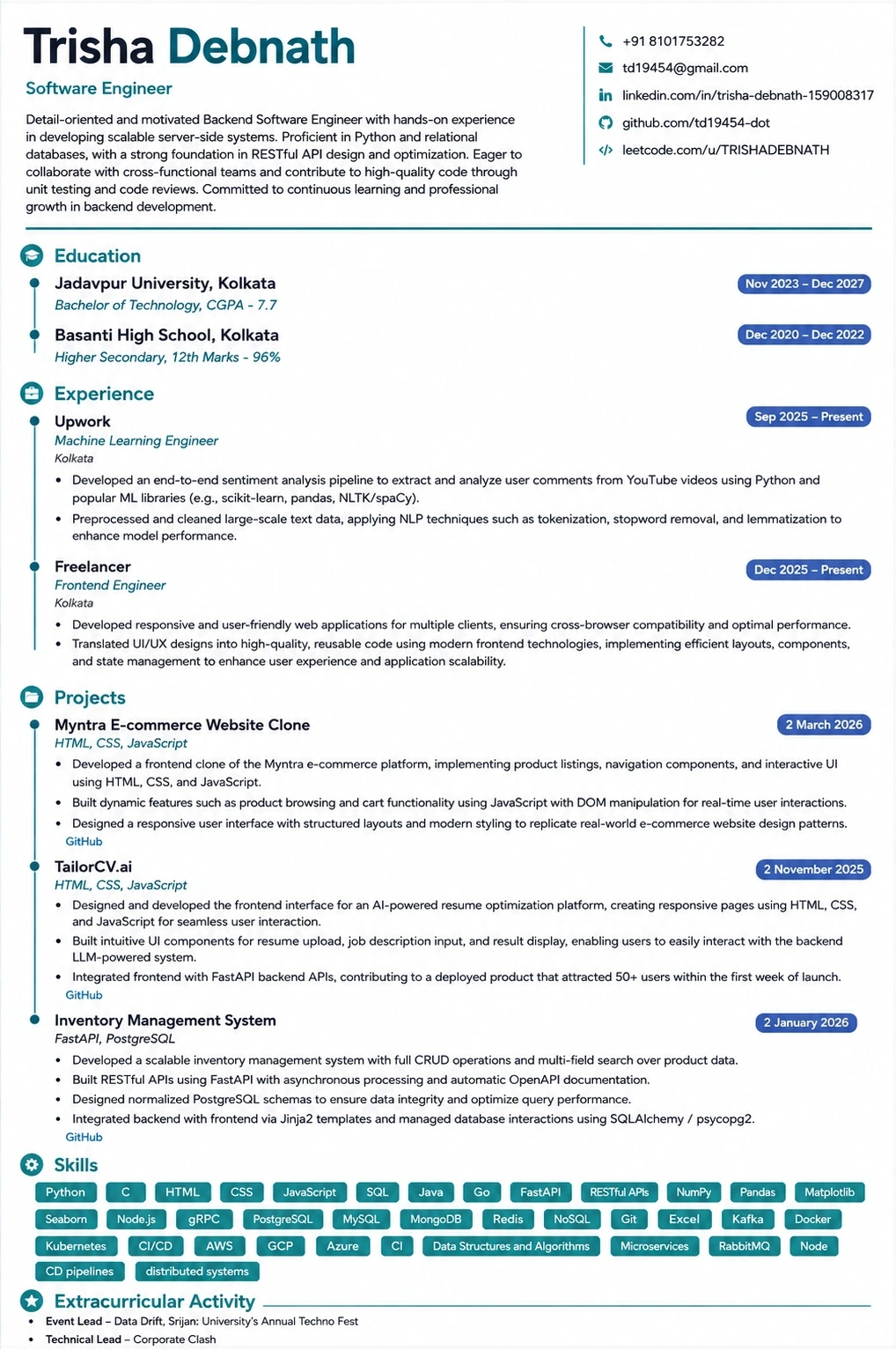
This template is ATS-tested — start from it and the formatting rules in this guide are already handled.
Was this guide useful?
Be the first to rate it.