TD
TD
Key Takeaways
- For a first job, managers care about attitude and dependability far more than experience.
- You have more material than a blank page suggests - school, activities, volunteering and informal work all count.
- Open with a one-line objective, since you have no work-experience section to lead with.
- Turn ordinary activities into evidence of workplace skills rather than listing them flatly.
- Never invent experience, and keep the whole thing to one clean page.
Writing your first resume with no work history feels impossible — but employers hiring teenagers aren't expecting a career. They're looking for reliability, a good attitude, and a little proof that you'll show up and try. You have far more to work with than you think, and this guide shows you exactly how to turn school, activities, and odd jobs into a first resume that gets you hired.
The same principles that help any candidate with no experience apply here, just scaled to a teen's situation. Build it in the free resume builder, keep it to one page, and confirm it's clean with the ATS score checker if you're applying online.
What employers actually want from a teen
For a first job — retail, food service, tutoring, lifeguarding, a summer role — managers care about attitude and dependability far more than experience. They want someone who's punctual, polite, willing to learn, and responsible. Your resume doesn't need to be impressive; it needs to be clean, honest, and show those qualities through what you have done.
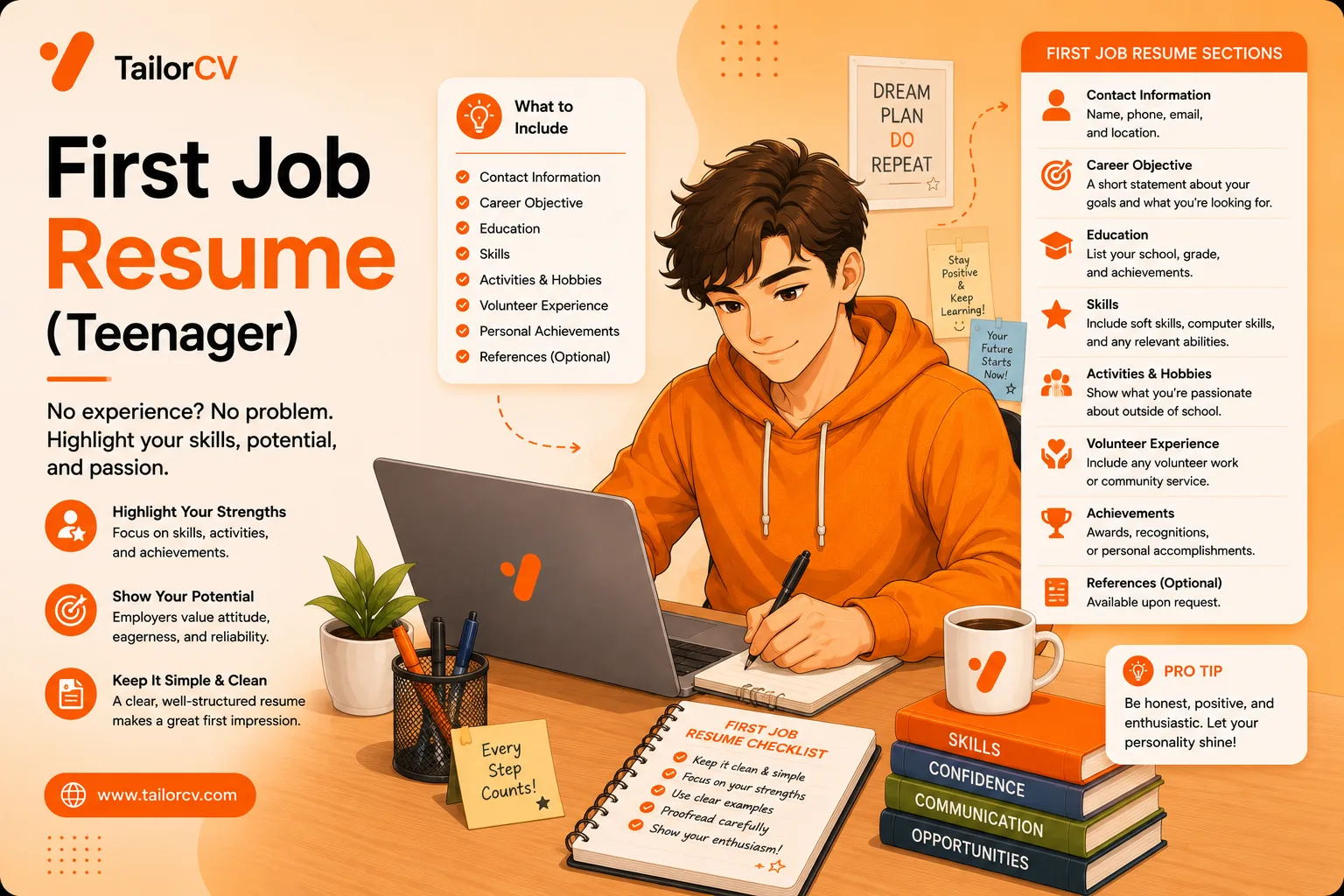
What to include instead of work experience
You have more material than a blank page suggests. Draw from:
- School activities: clubs, sports, student council, teams, and leadership roles.
- Volunteering: community service, tutoring, event help, religious or civic groups. Volunteer work counts as real experience — see volunteer work on a resume.
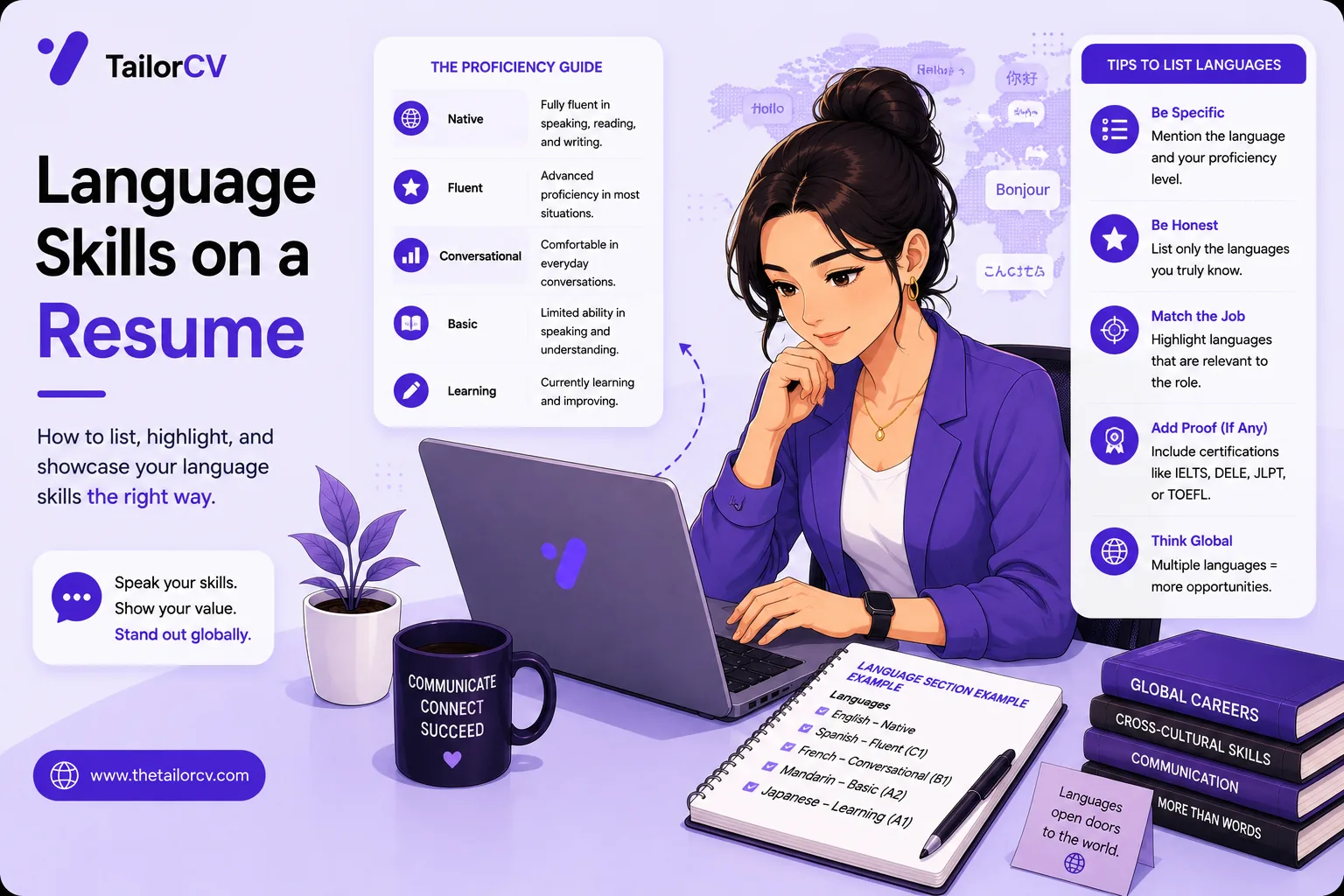
- Skills: languages, computer skills, or anything hands-on. List languages honestly, per how to list language skills.
- Achievements: honor roll, awards, competitions, certificates. See best free online certificates.
- Odd jobs: babysitting, lawn care, pet sitting, tutoring — they absolutely count and show initiative.
Present these like real experience, giving each an action verb and, where possible, a number.
Add a short objective at the top
Because you don't have a work-experience section to lead with, open with a one-line objective that states who you are and what you want: "Responsible high school student seeking a part-time retail role, offering strong communication, reliability, and a willingness to learn." This is one case where an objective works better than a summary — see resume objective vs summary for the difference.
Frame everything as skills and results
The trick is to turn ordinary activities into evidence of workplace skills. "Captained a soccer team of 15" shows leadership and teamwork. "Tutored younger students weekly for a year" shows responsibility and communication. "Babysat regularly for three families" shows trust and time management. This is the same skill you'll use your whole career — quantifying achievements — just applied to teen experiences. A number ("100+ transactions per shift" once you have a job, or "team of 15" now) always beats a vague claim.
Your resume after optimization
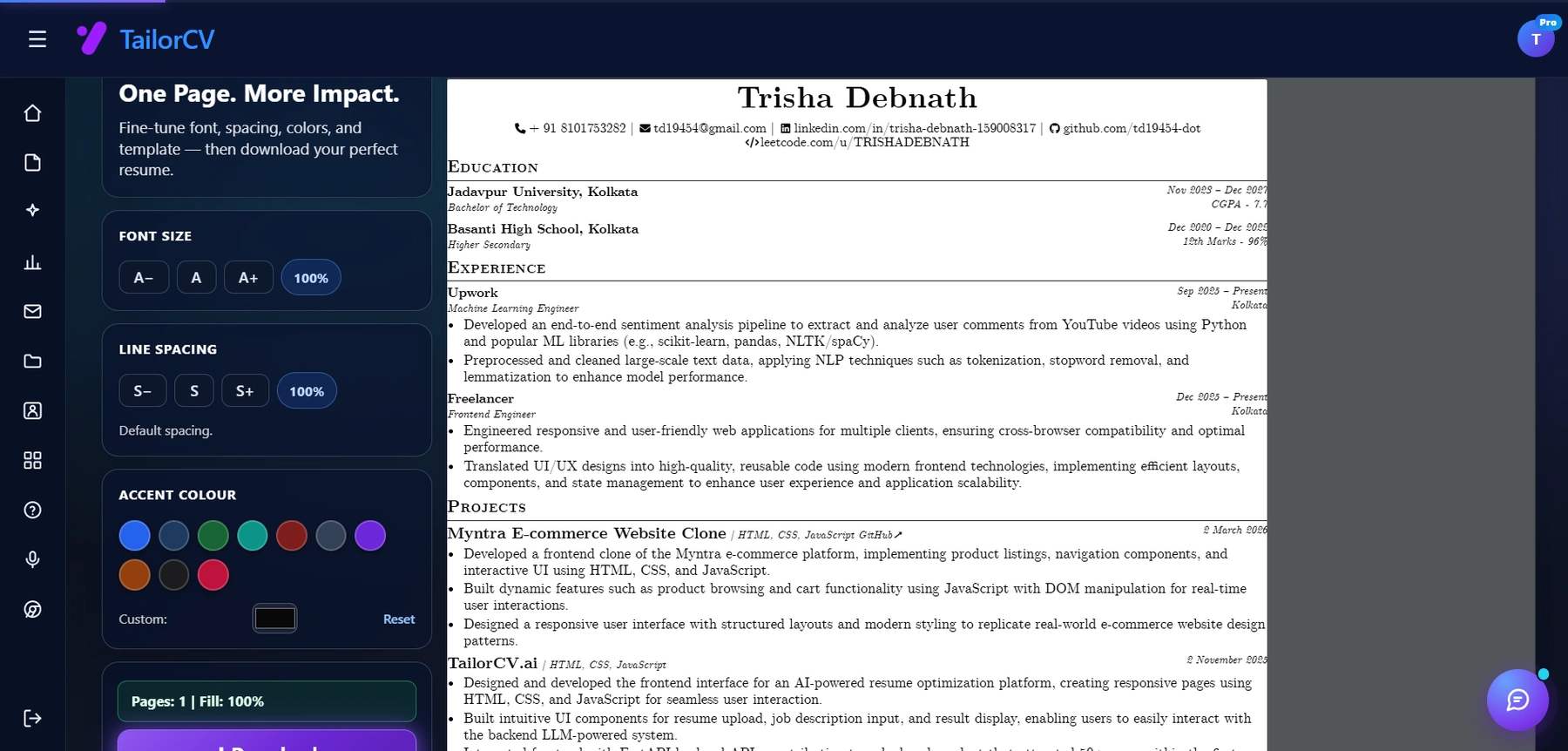
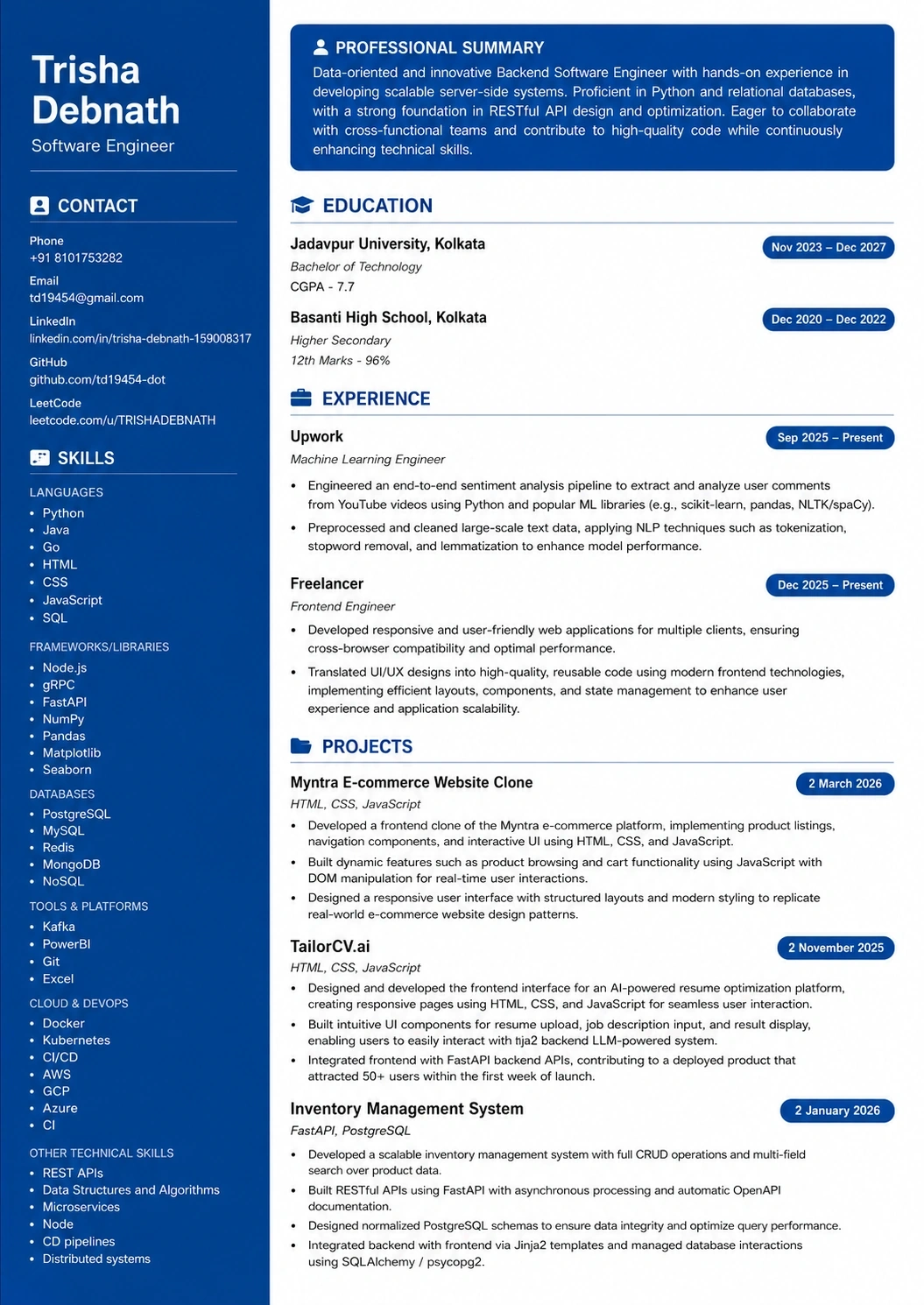
This is the resume after tailoring - the content is already matched, and these controls are how you fit it onto one page.
Structure a teenager's first resume
Keep it simple and one page:
- Header — name, phone, email (use a professional address), city.
- Objective — one line, as above.
- Education — your school, expected graduation, GPA if strong.
- Experience & activities — combined, with action-verb bullets.
- Skills — languages, software, and practical abilities.
- Achievements — awards and honors.
Use a clean, simple template and the resume builder so the formatting is handled for you. For section order, see the resume section order guide.
Keep it honest, clean, and one page
Never invent experience — honesty matters, as should you lie on your resume explains, and it's easy to get caught. Keep the resume to one page (you won't need more), use a readable font, and proofread carefully — a mistake-free page shows the care employers want. If you apply through an online system, keep it ATS-friendly.
Preparing for the interview
Once your resume lands an interview, a little practice goes a long way for a first job. Rehearse simple answers to "tell me about yourself" and "why do you want this job" with a free AI mock interview, review first job interview tips, plan what to wear and what to bring, and send a short thank-you email afterward. That level of preparation will set you apart from other teen applicants.
First-resume checklist
Your first resume is ready when it:
- unchecked: Opens with a clear objective.
- unchecked: Turns school, volunteering, and odd jobs into skill-focused bullets.
- unchecked: Is honest, one page, and proofread.
- unchecked: Uses a clean template and passes the ATS check for online applications.
Everyone starts somewhere. Build your first resume in the resume builder, and you'll have a clean, confident page ready for that first job.
What is your resume scoring right now?
Scan it against a job description and get your ATS match score in about a minute.
Drop your resume here or choose a file
PDF only. Max 2 MB.
We never share your data or use it to train AI models.

Templates that keep this structure intact
This template is ATS-tested — start from it and the formatting rules in this guide are already handled.
Was this guide useful?
Be the first to rate it.