 TD
TD
Key Takeaways
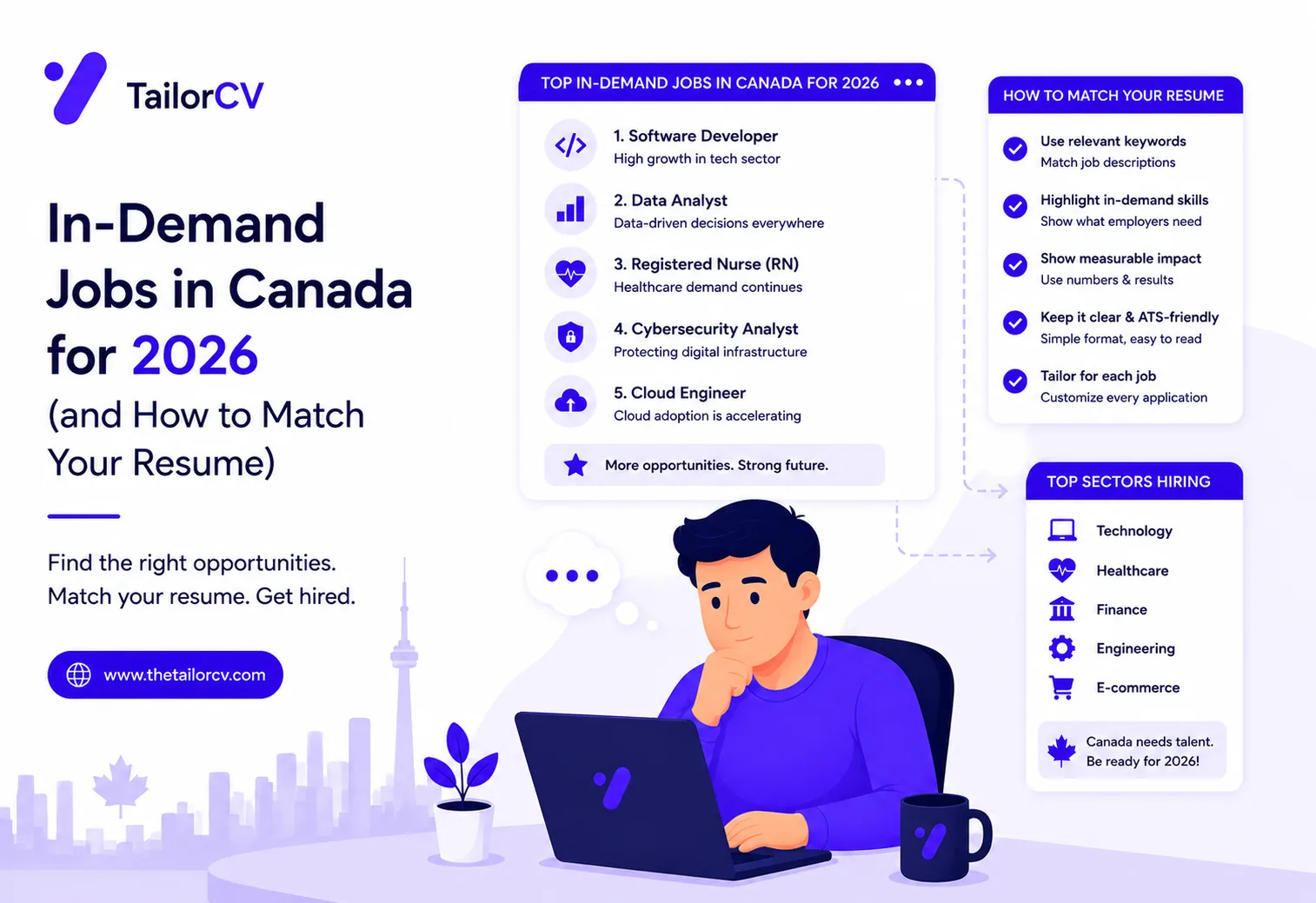
- In-demand jobs in Canada for 2026 include roles in technology, healthcare, skilled trades, renewable energy, and education.
- Key positions in technology are data scientists, cybersecurity specialists, and software developers, driven by digital transformation.
- The healthcare sector will see a demand for nurses, health information technologists, and mental health professionals due to an aging population and increased awareness of mental health.
- Skilled trades such as electricians, welders, and plumbers are essential for infrastructure and urban development.
- To optimize your resume for Canadian employers, use relevant keywords, follow Canadian resume norms, and customize your application for each job.
In the rapidly evolving job market of Canada, staying ahead of the curve is essential for job seekers, especially as we approach 2026. With advancements in technology and shifting economic demands, certain roles are projected to be in high demand. Understanding these trends not only helps you target your job search effectively but also allows you to tailor your resume to meet the specific expectations of Canadian employers. In this article, we'll explore the in-demand jobs in Canada for 2026 and provide practical advice on how to enhance your resume to match these roles.
In-Demand Jobs in Canada for 2026
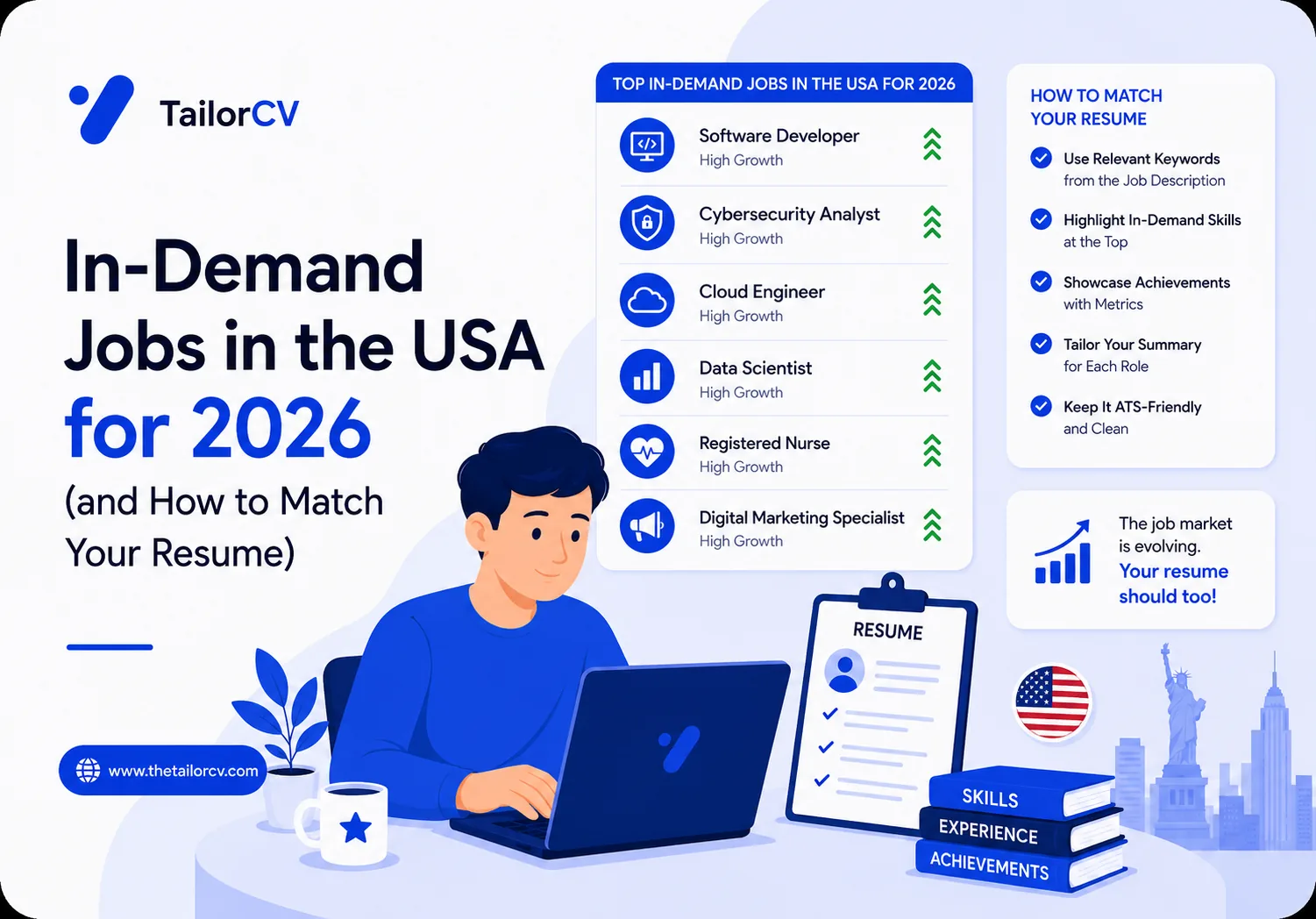
As we look toward 2026, several sectors are expected to experience significant growth. Here are some of the most promising fields:
1. Technology and IT
The technology sector continues to flourish, driven by innovation and digital transformation. Key roles include:
- Data Scientists: With businesses relying more on data-driven decisions, data scientists are crucial for interpreting complex data sets.
- Cybersecurity Specialists: As cyber threats increase, the demand for professionals who can protect systems and networks is paramount.
- Software Developers: From mobile apps to enterprise software, developers skilled in various programming languages are in high demand.
2. Healthcare
The healthcare sector remains a cornerstone of the Canadian job market. Notable positions include:
- Nurses: With an aging population, registered nurses will be essential in providing care.
- Health Information Technologists: As healthcare systems become more digital, experts in health informatics will be needed to manage and analyze patient data.
- Mental Health Professionals: The growing awareness of mental health issues is creating a demand for psychologists and counselors.
3. Skilled Trades
The skilled trades are critical to Canada’s infrastructure and economy. Key roles include:
- Electricians: With the rise of renewable energy, electricians are essential for installing and maintaining new technologies.
- Welders: Industries such as construction and manufacturing require skilled welders for various projects.
- Plumbers: With ongoing urban development, plumbers are always in demand.
4. Renewable Energy
As Canada moves towards sustainability, the renewable energy sector is expanding. Key roles include:
- Wind Turbine Technicians: With wind energy on the rise, technicians are needed to install and maintain turbines.
- Solar Panel Installers: The shift towards solar energy requires skilled installers to meet increasing demand.
5. Education
The education sector is evolving, especially with the rise of online learning. Important roles include:
- Educators: Teachers and educators who can develop and deliver online courses are increasingly sought after.
- Instructional Designers: Professionals who can create effective educational programs and materials are essential in this digital age.
Matching Your Resume to In-Demand Jobs
To successfully land a job in one of these growing sectors, your resume must be tailored to highlight relevant skills and experiences. Here are some strategies to optimize your resume:
Understand Canadian Resume Norms
Before diving into specifics, familiarize yourself with Canadian resume norms:
- Length: A two-page resume is acceptable, especially for those with extensive experience.
- No Personal Information: Avoid including your photo, age, or marital status.
- References on Request: It’s common to state that references are available upon request.
Keywords and ATS Optimization
Many Canadian employers use Applicant Tracking Systems (ATS) to filter resumes. To ensure your resume gets noticed:
- Use Relevant Keywords: Analyze job descriptions for keywords related to skills, qualifications, and industry jargon. Incorporate these into your resume.
- Format Properly: Use standard headings and bullet points to make your resume ATS-friendly. For guidance, refer to our resume optimization guide.
Customize for Each Application
Tailoring your resume for each job application increases your chances of success:
- Match Job Descriptions: Use our guide on resume matching with job description to ensure your resume aligns with the specific requirements of the job.
- Highlight Relevant Experience: Focus on experiences and skills that are directly related to the job you’re applying for.
Leverage TailorCV Tools
Utilizing tools from TailorCV can significantly enhance your job search:
- Free ATS Score Checker: Use our free ATS score checker to evaluate how well your resume performs against ATS.
- AI Cover Letter Generator: Create a compelling cover letter using our AI cover letter generator to complement your resume.
Showcase Your Skills
In-demand jobs often require specific skills. Here’s how to present them effectively:
- Technical Skills: List relevant technical skills prominently, especially in fields like IT and healthcare.
- Soft Skills: Don’t forget to include soft skills such as communication, teamwork, and problem-solving, which are valuable in every sector.
Format and Presentation
Your resume’s format and presentation matter:
- Clean Layout: Use a clear and professional layout. Consider using our resume templates for inspiration.
- File Format: Save your resume in a compatible file format. For more details, check our resume file format guide.
Prepare for Interviews
Once your resume gets you through the door, the next step is acing the interview. Here are some tips:
- Mock Interviews: Practice your interview skills using our AI mock interview tool to gain confidence.
- Research the Company: Understand the company’s culture and values to tailor your responses during the interview.
Step-by-Step Guide to Tailoring Your Resume for Specific Job Roles
When applying for in-demand jobs in Canada for 2026, tailoring your resume is crucial. Here’s a step-by-step guide to ensure your resume stands out:
-
Research the Job Description: - Read the job description thoroughly. Identify key skills, qualifications, and experiences that the employer values. - Make a note of specific terminology and phrases used in the listing.
-
Match Your Skills: - Compare the job requirements with your skills and experiences. Highlight the qualifications that align best with the role. - Use the same keywords found in the job posting to enhance relevance.
-
Customize Your Professional Summary: - Rewrite your professional summary to reflect the specific role you're applying for. Focus on how your background directly relates to the job. - For instance, if applying for a tech position, emphasize your technical skills and relevant projects.
-
Highlight Relevant Experience: - Rearrange your work experience to prioritize roles that are most relevant to the job. Use bullet points to showcase achievements that align with the job requirements. - Quantify your accomplishments to demonstrate impact (e.g., “Increased sales by 30% in one year”).
-
Include Relevant Certifications: - If the job requires specific certifications, ensure they are prominently displayed on your resume. - Consider adding a section for certifications if you have multiple applicable ones.
-
Use an ATS Checker: - Before submitting your resume, use an ATS checker to ensure it’s optimized for Applicant Tracking Systems.
-
Proofread: - Finally, proofread your resume for any typos or grammatical errors. A clean, error-free resume reflects professionalism.
Common Mistakes to Avoid When Tailoring Your Resume
While tailoring your resume is essential, there are pitfalls to avoid. Here’s a list of common mistakes:
- Using a Generic Resume:
-
Avoid sending the same resume for every job application. This can lead to missed opportunities, as employers seek candidates who demonstrate a clear fit.
-
Ignoring Keywords:
-
Failing to incorporate relevant keywords from the job description can result in your resume not passing through ATS filters.
-
Overloading with Irrelevant Information:
-
Keep your resume concise. Avoid including outdated skills or experiences that do not pertain to the job.
-
Neglecting the Cover Letter:
-
A tailored resume should be accompanied by a customized cover letter. Make sure to explain how your experiences relate to the job in question.
-
Forgetting to Update Contact Information:
- Ensure your contact details are current and professional. An outdated email or phone number can hinder communication.
Mini Checklist for Tailoring Your Resume
Use this handy checklist to ensure your resume is tailored effectively:
What optimizing actually does to your resume
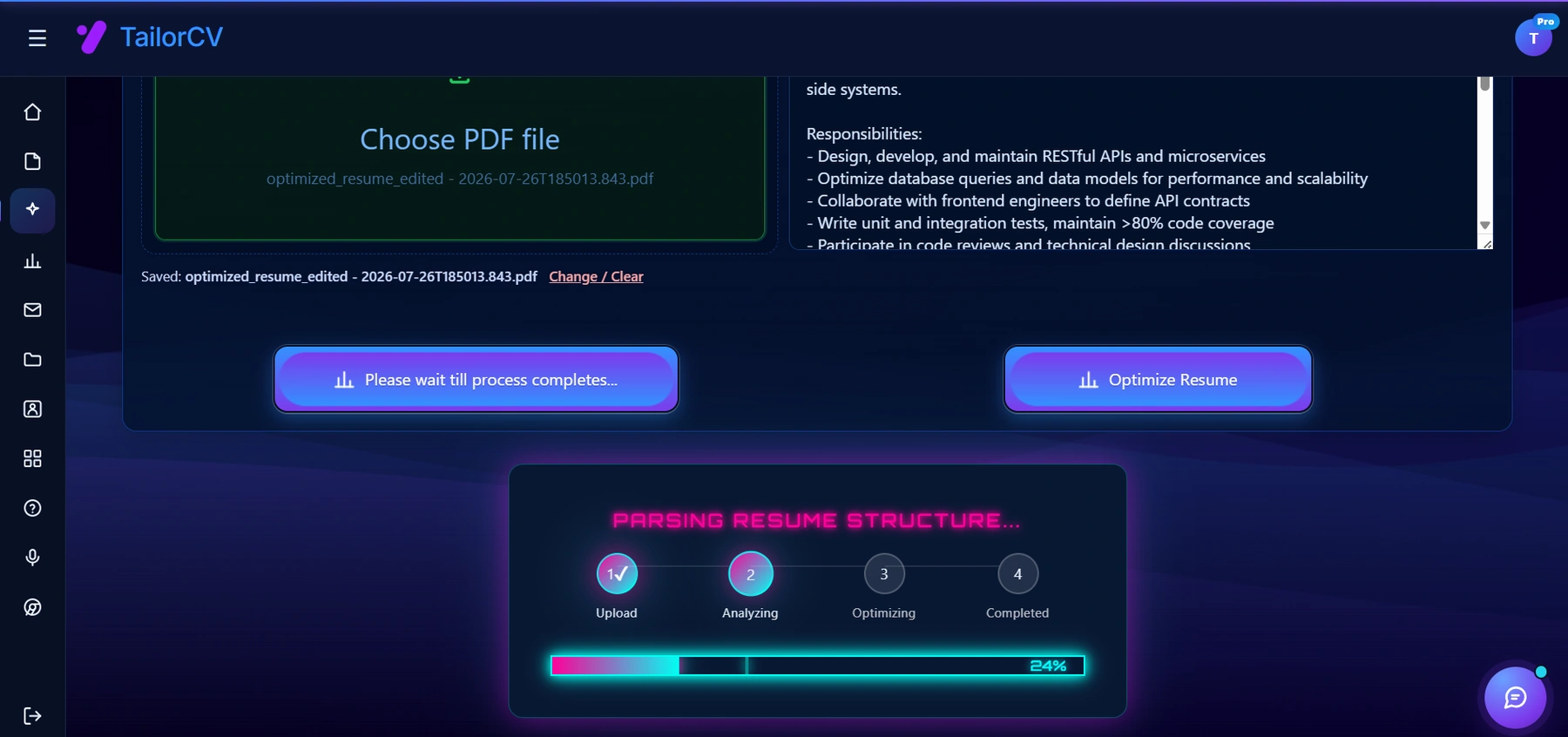
The tool parses your resume the way an ATS would before it changes anything, so the edits it suggests are grounded in the posting itself.
- unchecked: Reviewed the job description thoroughly.
- unchecked: Highlighted relevant skills and experiences.
- unchecked: Customized the professional summary to fit the job.
- unchecked: Prioritized relevant work experiences.
- unchecked: Included necessary certifications.
- unchecked: Utilized an ATS checker for optimization.
- unchecked: Proofread for errors and clarity.
Scenarios: Resume Tailoring in Action
Scenario 1: Applying for a Data Analyst Position
Job Description Highlights:
- Proficiency in SQL and Python
- Experience with data visualization tools
- Strong analytical skills
Tailoring Actions:
- Professional Summary: “Data Analyst with over 5 years of experience in SQL and Python, specializing in data visualization and analytics.”
- Experience Section: Focus on previous roles where you utilized SQL and Python, quantifying your contributions (e.g., “Developed a data visualization dashboard that improved decision-making speed by 25%”).
Scenario 2: Transitioning to a Marketing Role
Job Description Highlights:
- Strong understanding of digital marketing strategies
- Experience in social media management
- Excellent communication skills
Tailoring Actions:
- Professional Summary: “Dynamic professional with a robust background in digital marketing and social media management, committed to driving brand engagement.”
- Experience Section: Include any marketing-related tasks from previous jobs, even if they weren’t your primary role, and emphasize communication skills in your accomplishments.
Best Practices for Networking to Find In-Demand Jobs
Networking remains one of the most effective ways to find job opportunities, especially for in-demand roles. Here are some best practices:
- Utilize LinkedIn Effectively:
-
Regularly update your LinkedIn profile to reflect your skills and experiences. Engage with industry-related content to increase visibility.
-
Attend Industry Events:
-
Participate in workshops, conferences, and webinars related to your field. These events provide networking opportunities and insights into industry trends.
-
Leverage Informational Interviews:
-
Reach out to professionals in your desired field for informational interviews. This can provide insights into job roles and help you build connections.
-
Follow Up:
- After networking events or meetings, send a follow-up message expressing your gratitude and interest in staying connected.
By implementing these strategies, you can effectively tailor your resume and enhance your job search for in-demand positions in Canada for 2026.
Related Guides
Keep building your Canadian job search with these related TailorCV guides:
- How ATS Works in Canada: Beating Applicant Tracking Systems for Canadian Jobs
- Canadian Resume Format Guide (2026): How to Write a Resume for Canada
- How to Write a Cover Letter for Canadian Jobs (With Structure)
- How to Get a Job in Canada in 2026: A Step-by-Step Guide
- How to Handle Job Rejection in 2026 - Practical Guide for Job Seekers
- How to Negotiate a Salary Offer in 2026 - Tactics That Actually Work
- How to Quit Your Job Professionally in 2026 - Complete Guide
- How to Use LinkedIn for Job Search in 2026 - Complete Guide
- Canada Skilled Trades Jobs Guide 2026 - Red Seal and Getting Certified
You can also check your resume's ATS score for free, generate a tailored cover letter, or build a portfolio website in minutes.
Frequently Asked Questions
What are the best jobs in Canada for newcomers?
Newcomers can find opportunities in sectors like healthcare, technology, and skilled trades. For a comprehensive guide, check out our article on how to get a job in Canada in 2026.
How can I improve my ATS score?
Improving your ATS score involves optimizing your resume with relevant keywords and ensuring proper formatting. Use our ATS score checker to assess your resume.
What should I include in a Canadian resume?
Your Canadian resume should include your contact information, a summary or objective, work experience, education, and skills, while omitting personal details like age or marital status. For more details, refer to our Canadian Resume Format Guide (2026).
How do I tailor my resume for a job application?
To tailor your resume, analyze the job description for keywords and required skills, then adjust your resume to emphasize those elements. For a detailed approach, read our resume matching with job description.
What is the best way to prepare for an interview?
Preparation involves researching the company, practicing common interview questions, and possibly conducting mock interviews. Check out our interview preparation guide for more tips.
What is your resume scoring right now?
Scan it against a job description and get your ATS match score in about a minute.
Drop your resume here or choose a file
PDF only. Max 2 MB.
We never share your data or use it to train AI models.

Templates that keep this structure intact
This template is ATS-tested — start from it and the formatting rules in this guide are already handled.
Was this guide useful?
Be the first to rate it.